
Inactive· since Jun 13, 2026
- 31
- days it ran
- 0
- relaunches
Ad copy
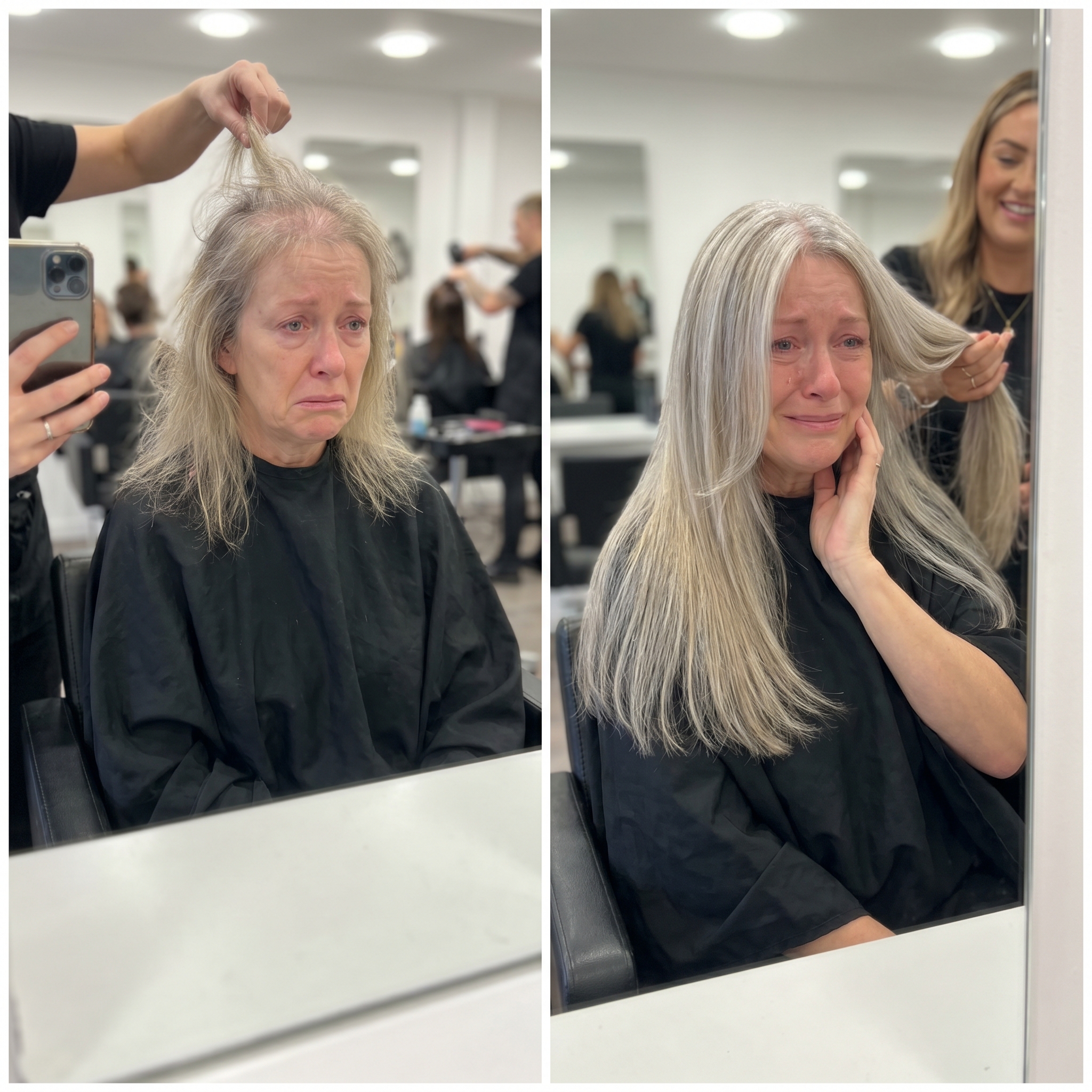
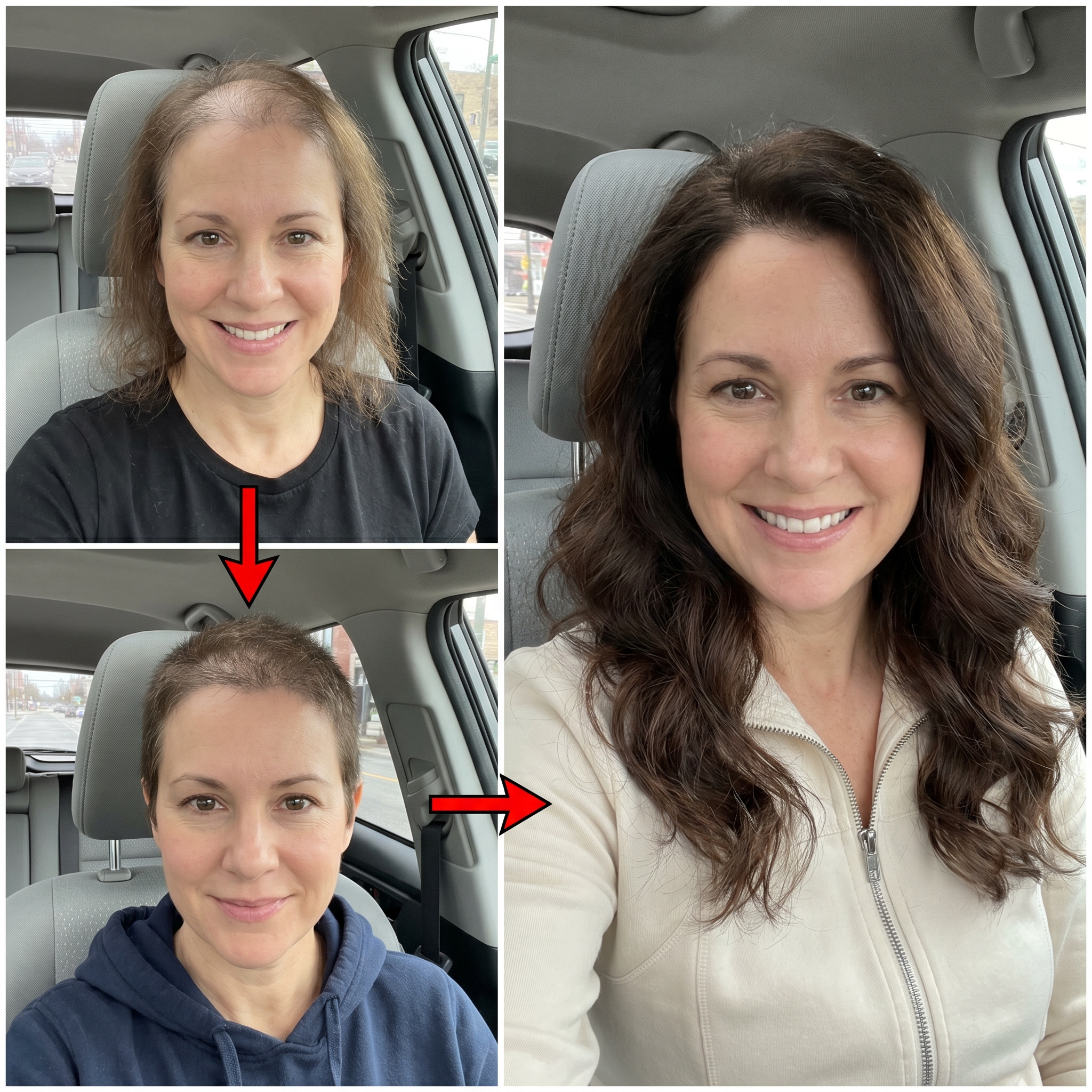
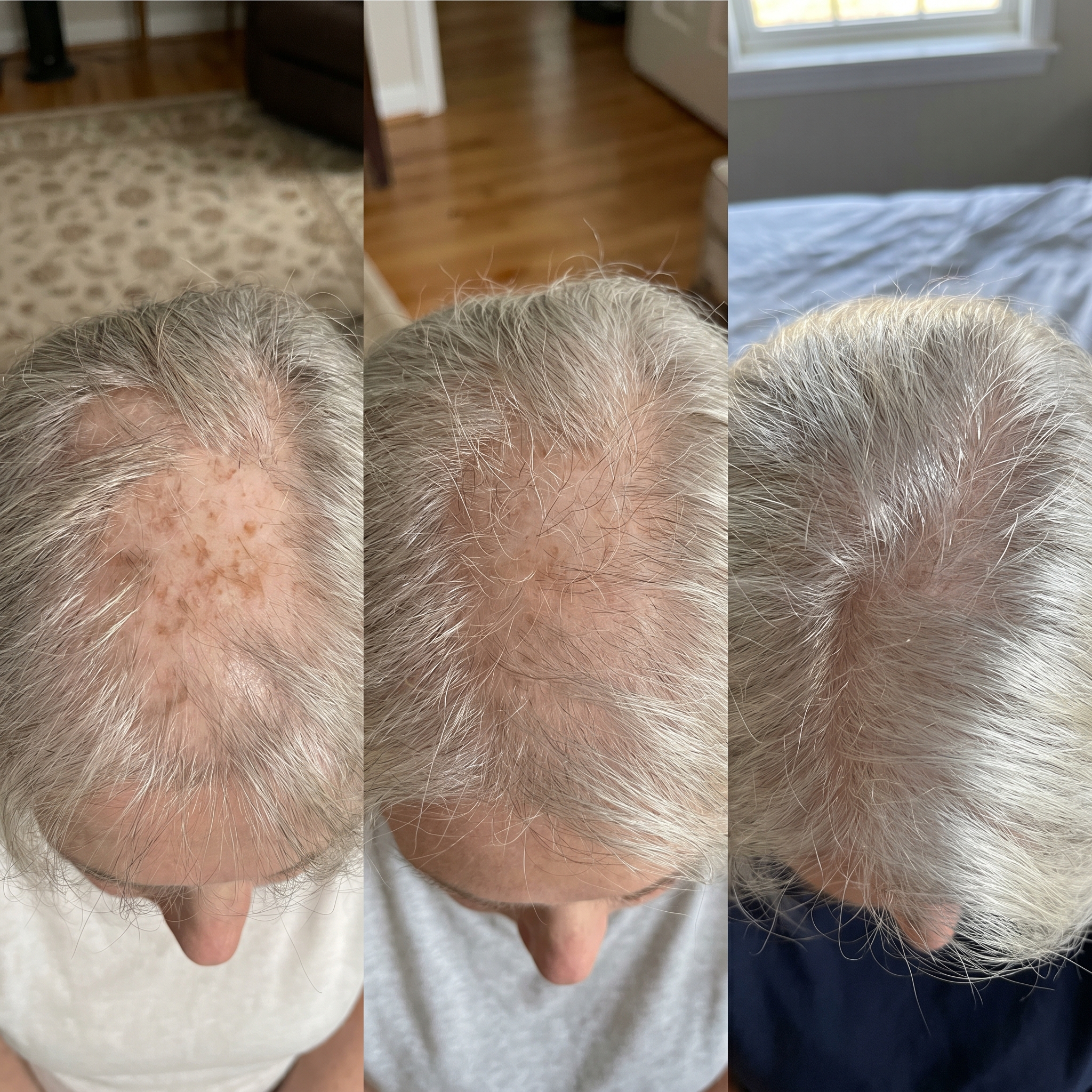
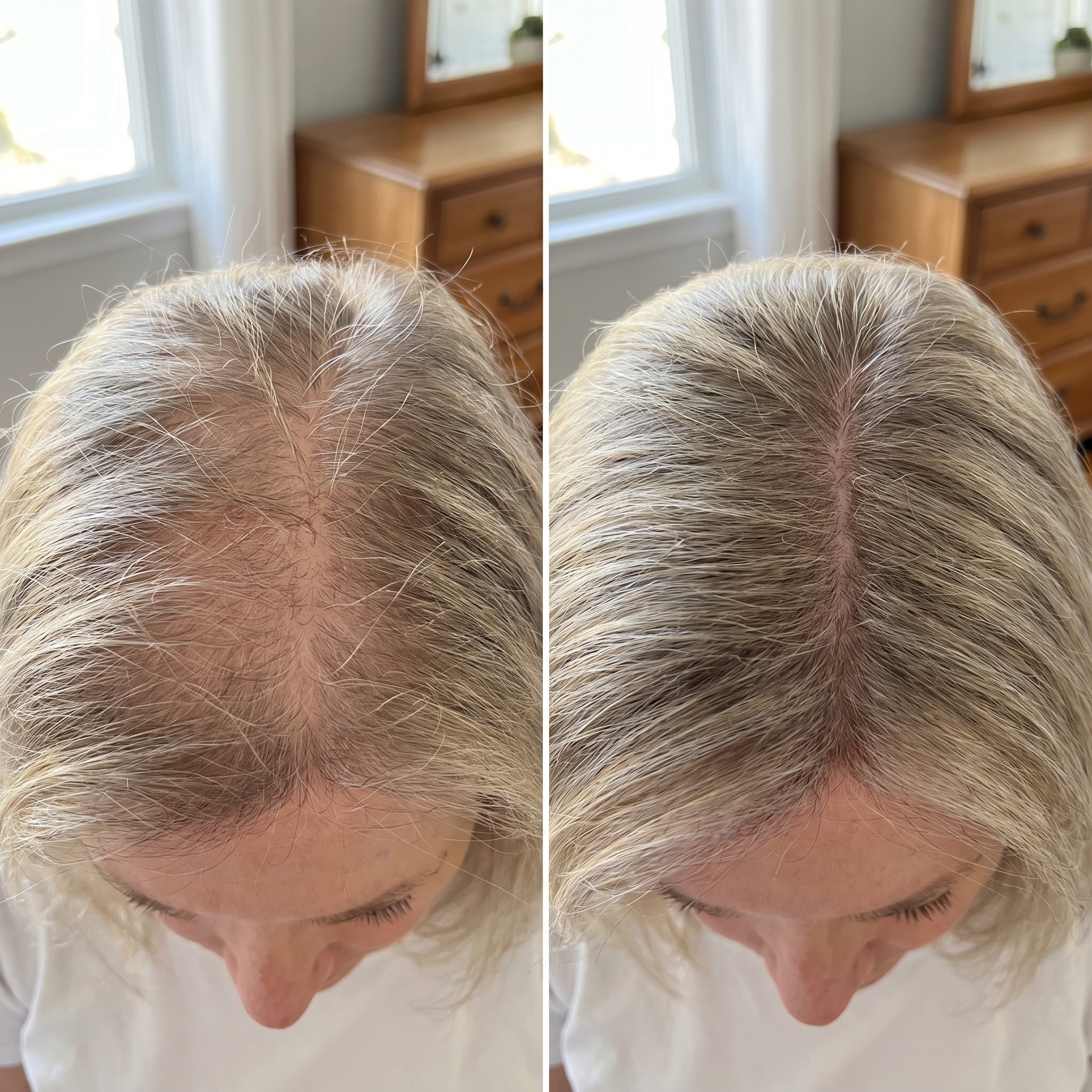
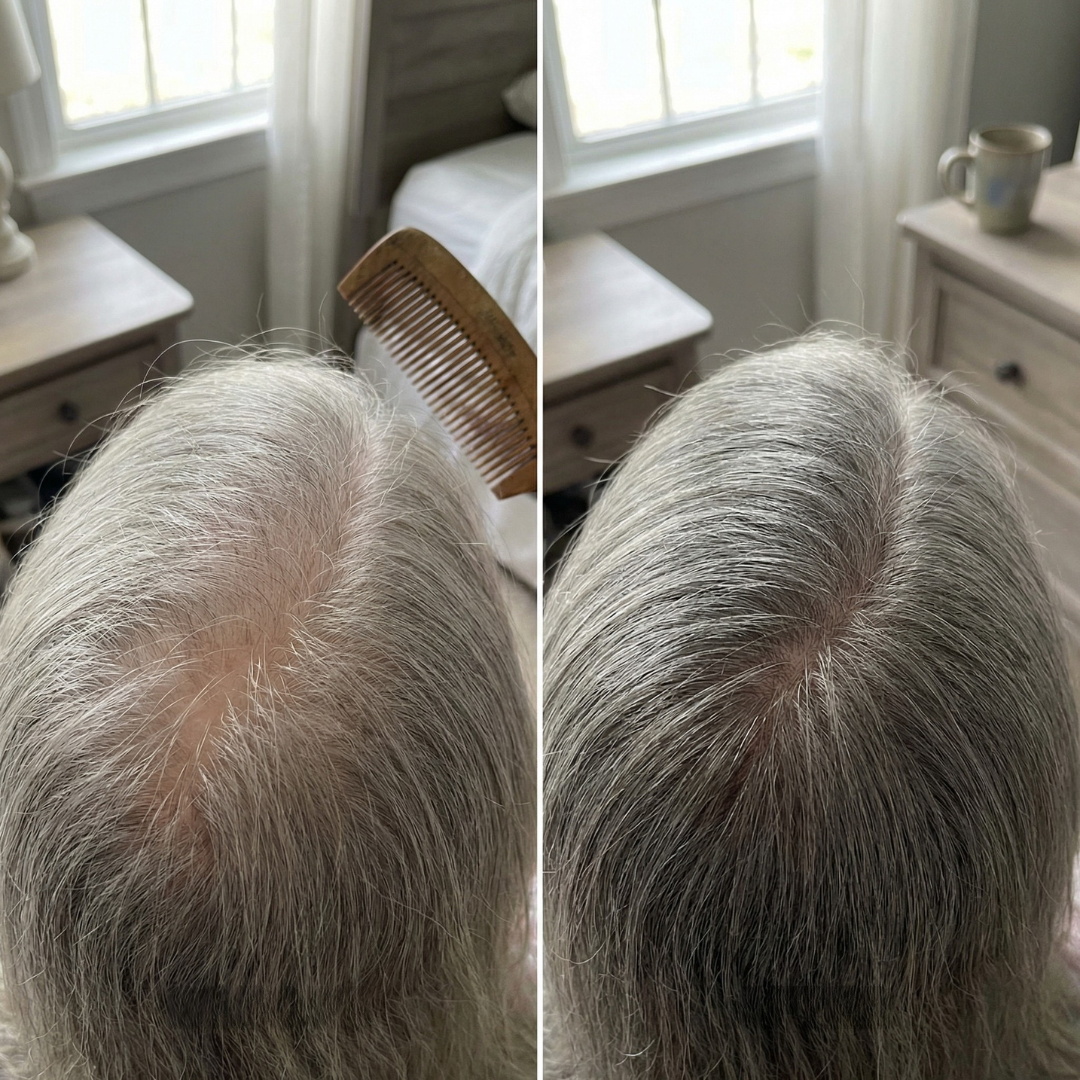
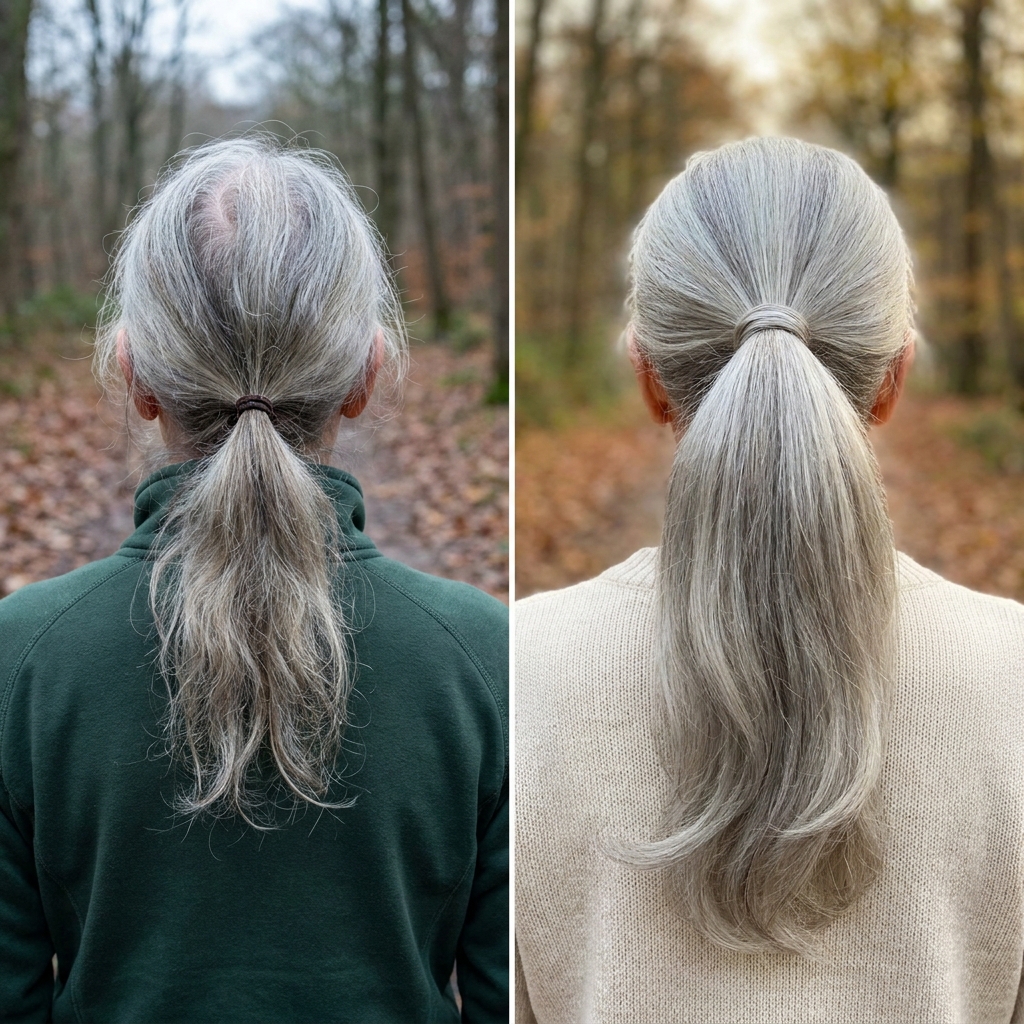
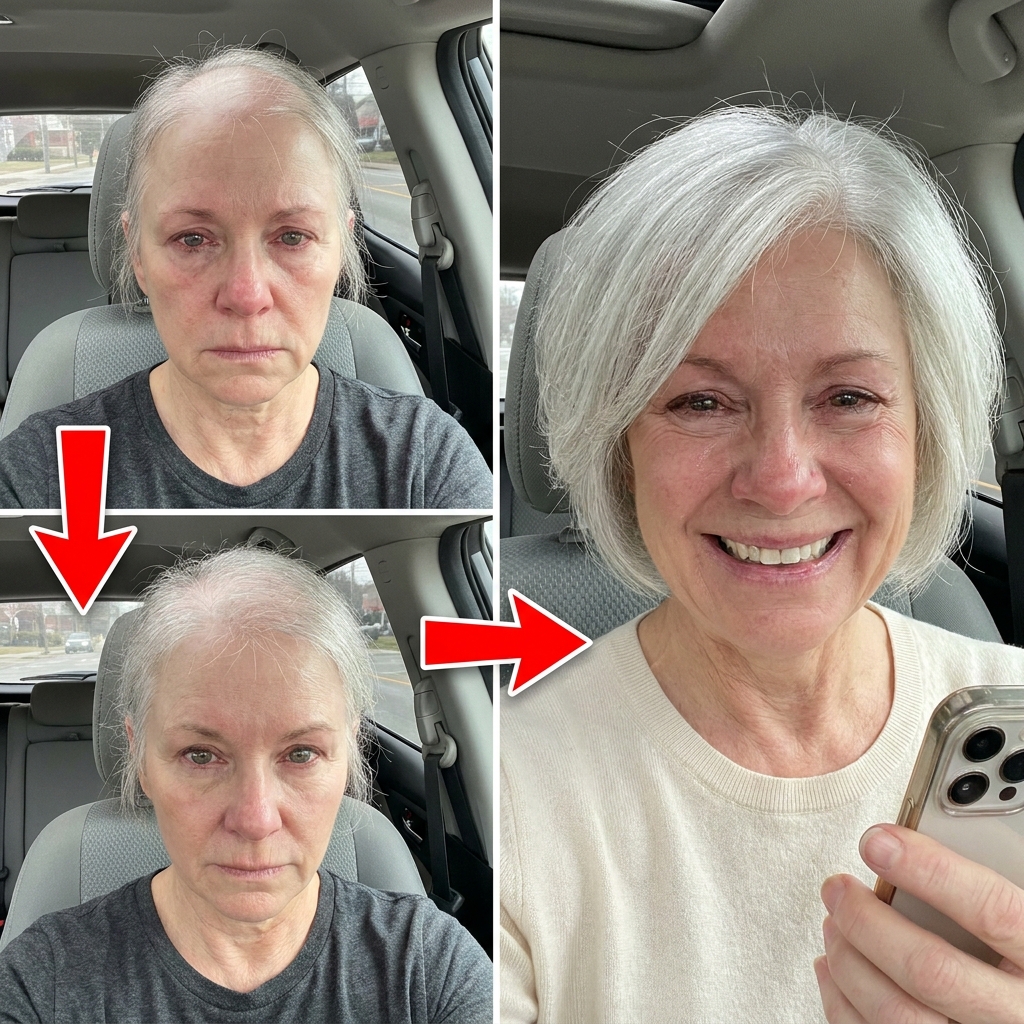
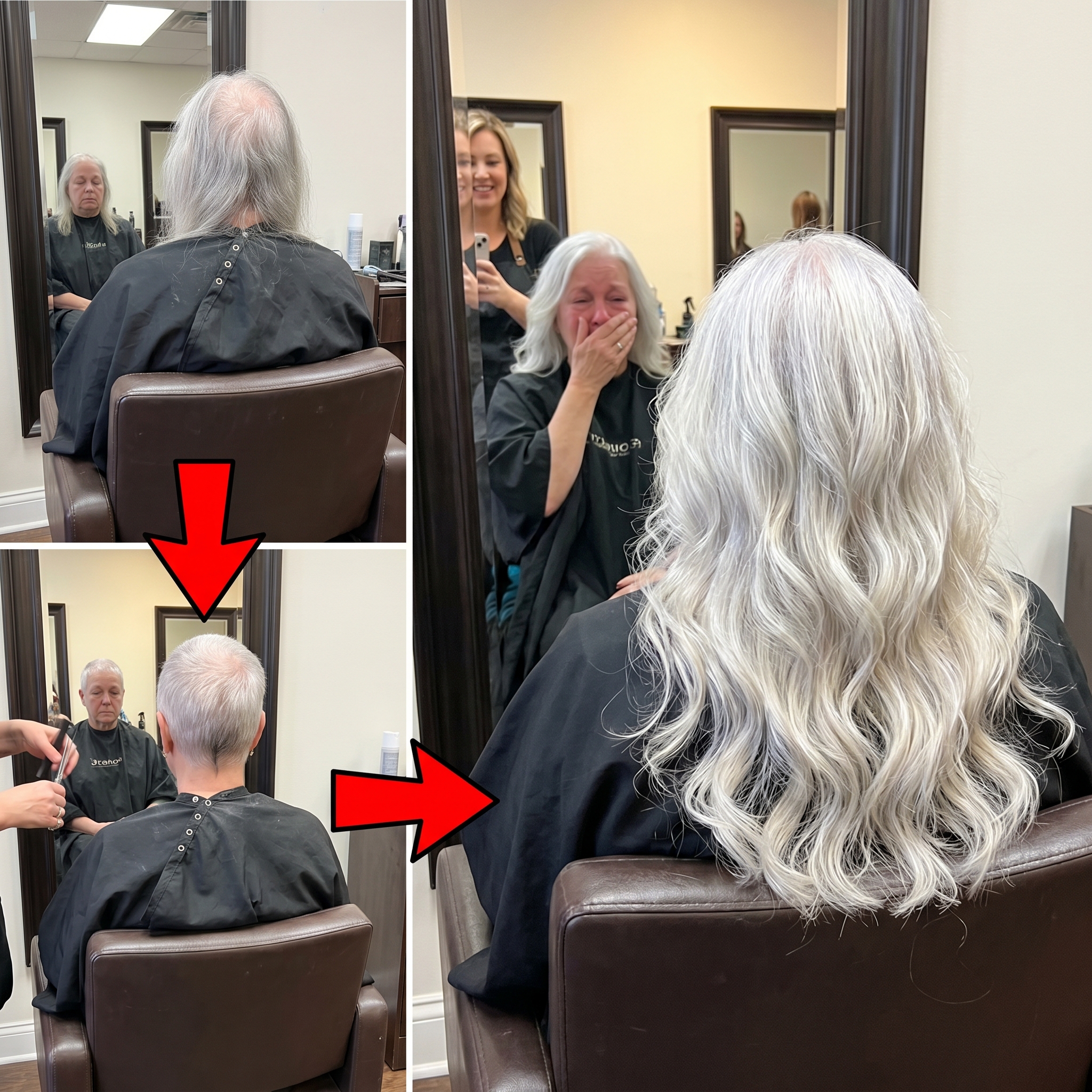
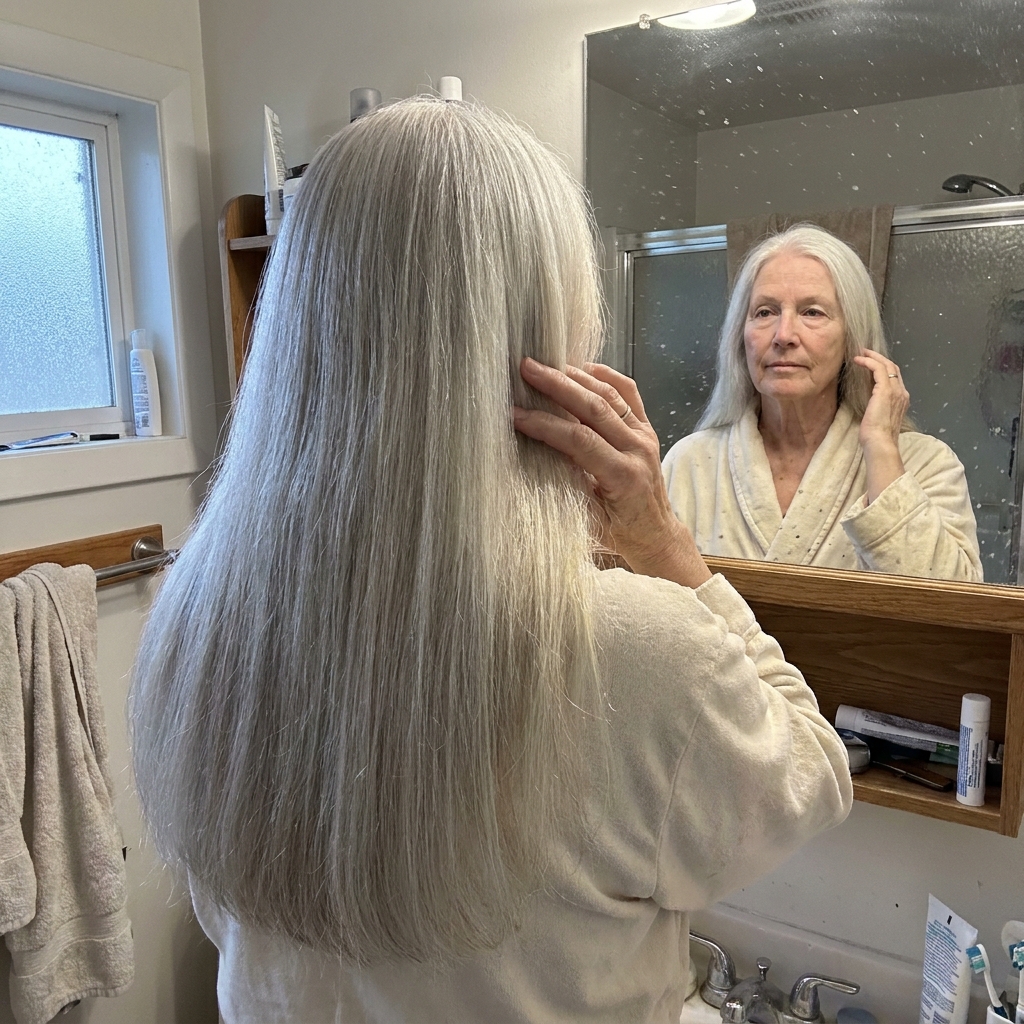
If you have started tilting your head from the mirror, or standing at the back of every photo, read this before you spend on something that swears it will fix you. Every morning at 6:42, the bathroom light finds my parting, and I have learned the exact angle to tilt my head so I don't have to see it. Fifty-seven years old, and I had organised my mornings around not looking at myself. It is the overhead light that does it. Our bathroom in Sheffield has one of those flush ceiling fittings, and at 6:42 — I know it is 6:42 because that is when I brush my teeth, before I open the shop — it comes down at an angle that lands directly on the centre of my head. On a good day, you would not notice. But I had stopped having good days with my hair some time around my fifty-fifth birthday, and by the time I am telling you this I had two years of practice at the tilt. Chin slightly down. Weight on the left foot. Eyes on the toothbrush, not the mirror. If you do it for long enough, your body learns it on its own, the way it learns the stairs in the dark. I want to be honest about what this did to me, because I think a lot of women reading this will recognise it and have never once said it out loud. It was not the hair, in the end. It was that I had become a person who would not look at her own reflection in the morning. I run a florist. I have stood in front of brides on the worst and best mornings of their lives and told them they look beautiful and meant it. And I could not stand in front of my own mirror at 6:42 without flinching. I want to tell you what I did about it. All of it, including the things that did not work, because I think the long list of failures is the most important part of the story and it is the part the adverts always skip. I noticed it properly about three years ago, though looking back it had been creeping for longer. My ponytail used to take two turns of the elastic. Then it took three. Then four, and the fourth one was loose. When I washed my hair I would feel a thinness at the back of my crown against my own hand that I did not recognise as my head. My hairdresser, who is kind, started leaving my parting a little to the side without being asked. We both knew. Neither of us said. So I did what you do. I went to my GP. I was given eight minutes, a sympathetic look, the words "it's very common at your age", and a leaflet. I came home and cried in the car first, then went inside and started spending money. I bought minoxidil. The women's foam, the branded one, then the cheaper one when the branded one did nothing after four months. It made the front of my hairline itch and I was forever finding a greasy patch on my pillowcase, and the one time I stopped, more came out than before, which frightened me into starting again. Roughly £25 a month for the best part of a year. I went back on HRT, which my doctor and I had been circling anyway. It transformed a great many things. My sleep came back. The night sweats stopped. The fog lifted. It transformed everything except my hair, and nobody had warned me it might not touch my hair at all. I bought the biotin everyone swears by. Then I bought the fancier hair-and-nails one in the rose-gold tub from the chemist, £18 a pot, and I bought it three times. I bought Viviscal and took it religiously for the full recommended run. I tried a collagen powder in my morning coffee for months because a woman in a Facebook group said it changed her life. I booked a scalp treatment at a salon in town that came to £340 for a course, sat under the steamer, came out with shiny hair and exactly the same parting. I bought a laser comb thing off the internet for a frightening amount of money and used it dutifully three evenings a week in front of the television until my husband gently asked whether I thought it was doing anything, and I had to admit I did not. The worst of it, money aside, was the private dermatologist. £190 for the consultation. I had saved for it and I had pinned real hope on it. He looked at my scalp for what could not have been more than ten minutes, used a word — "androgenetic" — that I had to look up in the car park afterwards, told me it was progressive, and suggested I might want to look into "toppers and integration pieces" for the future. I drove home and did not cry that time. I think I was too tired. I had started, quietly, researching toppers that evening. Just in case. I did not tell my husband. I add all of that up sometimes and it comes to well over £700 over about eighteen months, and that is only the receipts I can remember. But the number that actually mattered was the one I could not put a price on, which was that I had become a woman who tilted her head away from her own mirror at 6:42 every single morning. I am telling you the ledger in full because I need you to understand that by the time I found what I am about to describe, I was not a hopeful person. I was a sceptic with a drawer full of expensive disappointments. If you are reading this with your arms folded, thinking here we go, another one — good. That was me. Keep them folded. Just keep reading. It was a Tuesday in February, about two in the morning, and I could not sleep. This happens to me more than I would like. Rather than lie there I had taken my phone through to the spare room so as not to wake my husband, and I was sitting in the dark doing the thing you are not supposed to do, which is reading about your own problem at 2am with the brightness turned down. I do not even remember the exact words I typed. Something like "why does menopause hair loss not grow back" — the sort of desperate, badly-worded thing you type when it is the middle of the night and you have given up on dignity. And somewhere past the adverts and the listicles I found a comment. A long one, on a forum, from a woman who described herself as having worked in a dermatology lab. She was responding, a little impatiently, to another woman who had written that her follicles were "dead". And she said, more or less: they are almost certainly not dead. She said the language we are given — dying, miniaturising, progressive — makes it sound like a light going out, when what is actually happening is closer to a light being switched off at the wall. The bulb is fine. The wiring is fine. Something is holding the switch down. I read it twice. Then I read it a third time. Then I went looking for what she was referring to, and I found my way, eventually, to a description of work published by a European dermatology team back in 2011 — fifteen years ago now — that, as far as I can tell, should have changed how women like me are spoken to and largely has not. Here is the part that undid two years of quiet grief at two in the morning. Hair does not simply grow. It cycles. Each follicle goes through a long growth phase — they call it anagen — that normally runs for years, then a brief winding-down, then a rest, and then it starts again. After menopause, your body converts more of your hormones into something called DHT, and DHT binds right at the follicle and cuts the growth phase short. So the follicle spends less and less time growing and more and more time resting. Each new hair comes through a little finer, a little shorter, a little less sure of itself. Do that for long enough and the hair looks as though it has stopped. But — and this was the whole night, this single word — the follicle has not died. The blood supply is still there. The structure is still there. The little factory is still standing. It has simply been told to stay quiet. It has been, and this is the phrase that I have not been able to unthink since, chemically silenced. A silenced follicle is not a dead follicle. A dead thing cannot be woken. A silenced thing is, by definition, waiting. And the silencing is local. The DHT is doing its work right there at the follicle, on the scalp. Which means — and once you see it you cannot unsee it — that swallowing things was never going to be the most direct way to reach it. You can pour all the goodness you like down your throat and ask your bloodstream to please carry some of it up to the precise spot on your scalp where the trouble is. Or you can go to the spot. That, finally, explained my drawer of failures to me. I had spent eighteen months sending help to the general area and hoping. I had never once treated the actual place where the switch was being held down. I am wary of telling you what I found next, because this is the point in every one of these stories where you brace for the sell, and I do not blame you for bracing. So let me just say it plainly and let you decide. I found a serum called Mellenza. It was the first thing I had come across that was built around the mechanism I had just read about, rather than around a vitamin or a shampoo I would forget to rinse out. It is a topical scalp serum. You spray it on your scalp at night — at the crown, along the parting, at the thinning bits by your temples — and you leave it. You do not swallow it. It goes where the silencing is, because the silencing is local. Not a shampoo. Not a volumiser. Not a supplement. I had spent the better part of a year rubbing a foam into my hairline that I hated, so a spray you simply mist on and forget did not sound like much. But the logic of it was the part I could not argue with. The lead ingredient is caffeine — applied topically, it works against the very enzyme that converts your hormones into DHT, right there at the follicle, which is exactly the switch being held down. The idea is to interrupt the local silencing so the growth phase has room to run longer again. There is an extract called polygonum multiflorum, which is studied in Korean dermatology research for follicle activity. There is arginine, which supports the small circulation around each follicle. There is a little biotin, for the keratin of new growth, though I would not have you choose anything on the strength of biotin alone — that was half the tubs in my drawer. And there is ginger root extract, which is there purely to calm an inflamed scalp, nothing more. None of it is swallowed. All of it goes to the place. Let me deal with the obvious objections, because I had every one of them. Why a spray and not a pill. Because the problem is in one specific place — the scalp — and a pill has to travel through your entire body and hope enough of it arrives. The most direct route to a local problem is local. That is the whole argument, and once it lands it is hard to argue back. Is it safe alongside HRT. I asked this too, because I am on it. It is applied to the outside of your scalp, not taken into your system the way a tablet is. I would say the same thing I would say about anything — if you have a specific medical situation, ask your own GP or pharmacist. But it is not another thing to swallow, and that mattered to me. Why has no doctor ever told me any of this. I have thought about this a great deal and I have made my peace with the answer, which is not a conspiracy, it is just arithmetic. The 2011 work is fifteen years old and it does not fit into an eight-minute appointment. My GP had eight minutes and a leaflet. The dermatologist had ten and a sample-book of toppers. None of that is a window in which to explain a hair cycle and a silenced follicle to a frightened woman. So they reach for the word everyone reaches for — progressive — and they move on. I do not think badly of them. But I no longer let their eight minutes be the last word on my own head. Twelve weeks, though. That is the real objection, isn't it. It is a long time to keep faith when you have already kept faith with six things that let you down. I will come to how they handle that. First let me tell you what actually happened, because I wrote it down, the way I imagine you might, and I am going to give it to you plainly. Week four. The first thing I noticed was not on my head, it was in the plughole and on the pillow. There was less. I had, embarrassingly, been counting — not with a tally, but you know the daily handful, the dread of touching your own head. It was less. I told myself I was imagining it, then I noticed it again the next morning, and the morning after. Week six. The texture changed before the look did. The fine, fragile, flyaway feeling at my crown started to soften into something with a little more weight to it. When I ran my hand over the back of my head it did not feel like a stranger's anymore. Week nine. I took a photograph. I had taken one on the first night, in our bathroom, and I made myself take this one in the same spot — same bedroom, same morning light, same angle, head straight, no tilt. I put them side by side on my phone and I sat on the edge of the bed and looked. The parting was narrower. The crown showed less. And along the edge of my part there were short, fine, upright little hairs — baby hairs, the kind you only get from something that is actually growing. I sat there and cried for about fifteen minutes. Quietly. Not dramatically. My husband asked if I was alright and I said yes, which was, for the first time in two years, entirely true. Month four. My colourist found it before I told her. She had her hands in my hair, stopped, tilted my head under her lamp — the lamp I would normally have dreaded — and said, "Margaret, what have you been doing, there's new growth coming through at your crown here." She showed me in her mirror. I had not said a word. Month five. There was a wedding. A florist learns to dread weddings a little, all that overhead marquee lighting and everyone with a camera. The photographer was doing the big group shot and asked a few of us to come forward, and I did. I stepped forward into the front row, under the light, and I let him take it. I have spent fifteen years putting other women in front of cameras on their wedding day. That afternoon I stepped into the photo myself and did not think about my parting once. Now — that twelve weeks. The reason I was able to keep faith through it, when I had run out of faith for everything else, is the one thing that told me Mellenza were not like the others. Every bottle comes with a 90-day money-back guarantee. You can use the whole thing, the entire bottle, and if your head looks no different you send it back and they refund you. I want you to sit with what that means. A company that will refund an empty bottle is a company that has watched a great many empty bottles come back, and decided it is still worth the offer. The people who sold me minoxidil never offered me that. The £190 dermatologist certainly did not. That guarantee is not a marketing line. It is them telling you what they have seen, and it is what let a tired sceptic give it the one thing it actually needed, which was twelve weeks. It ships from the UK. It comes with a soft silicone scalp-massage brush, which I genuinely use every night now to work the serum in, and which feels rather lovely. And it comes with an ebook about the menopausal hair cycle that explains all of this — the anagen phase, the DHT, the silencing — far better and far more patiently than my eight minutes ever did. I read it cover to cover. I wish someone had handed it to me three years and £700 ago. If you would like to understand the mechanism for yourself, the link is below. Read it the way I read that forum comment at two in the morning — slowly, twice, with your arms folded. That is all I would ask. It is 6:42 in the morning as I finish writing this. The light is coming down off the ceiling onto the centre of my head, the way it always has. The difference is that I am looking straight into the mirror while it does. I am not tilting my head. I had genuinely forgotten I used to. P.S. — The one idea, if you take nothing else: your follicles are almost certainly not dead. After menopause they are being held quiet — chemically silenced — by DHT working right there at the scalp. Silenced is not the same as dead. A silenced follicle is a waiting one. And because the silencing happens in one specific place, the most sensible way to interrupt it is in that same place — sprayed on the scalp at night, not swallowed. Not a shampoo. Not a volumiser. Not a supplement. P.P.S. — If your honest worry is the twelve weeks, that worry is exactly what the 90-day money-back guarantee is for. You are not being asked to gamble. Use the full bottle, give it the time the hair cycle actually needs, and if your parting looks no different in the mirror, send it back for a refund — even empty. The guarantee takes the risk off your side of the table and puts it on theirs, which, after everything I had been sold without one, told me more than any claim could. Each order also comes from the UK with the silicone scalp-massage brush and the menopausal-hair-cycle ebook, both included. P.P.P.S. — One practical note. It is made in small UK batches, so it does occasionally go quiet for a little while between runs. If it is in stock when you read this, I would not wait for a tidier moment to look — there rarely is one. The link is below. Read it slowly, the way I did.
I'd stopped looking in the mirror.
Women's Health · Updated April 2026 Menopause · Hair Routine 7 Mistakes That Make Menopausal Hair Loss Worse, And the 30 Second Ritual 10,000 Women Used to See Regrowth in 8 Weeks Dr. Sarah Mitchell — Women's Health Writer. If you're standing in front of the mirror doing the 3-elastic ponytail t...
LEARN MORELike this ad? Make it yours.
Crush rebuilds this exact creative around your product — your brand, your colors, your offer — in about a minute.