
Inactive· since Jul 16, 2026
- 37
- days it ran
- 0
- relaunches
Ad copy
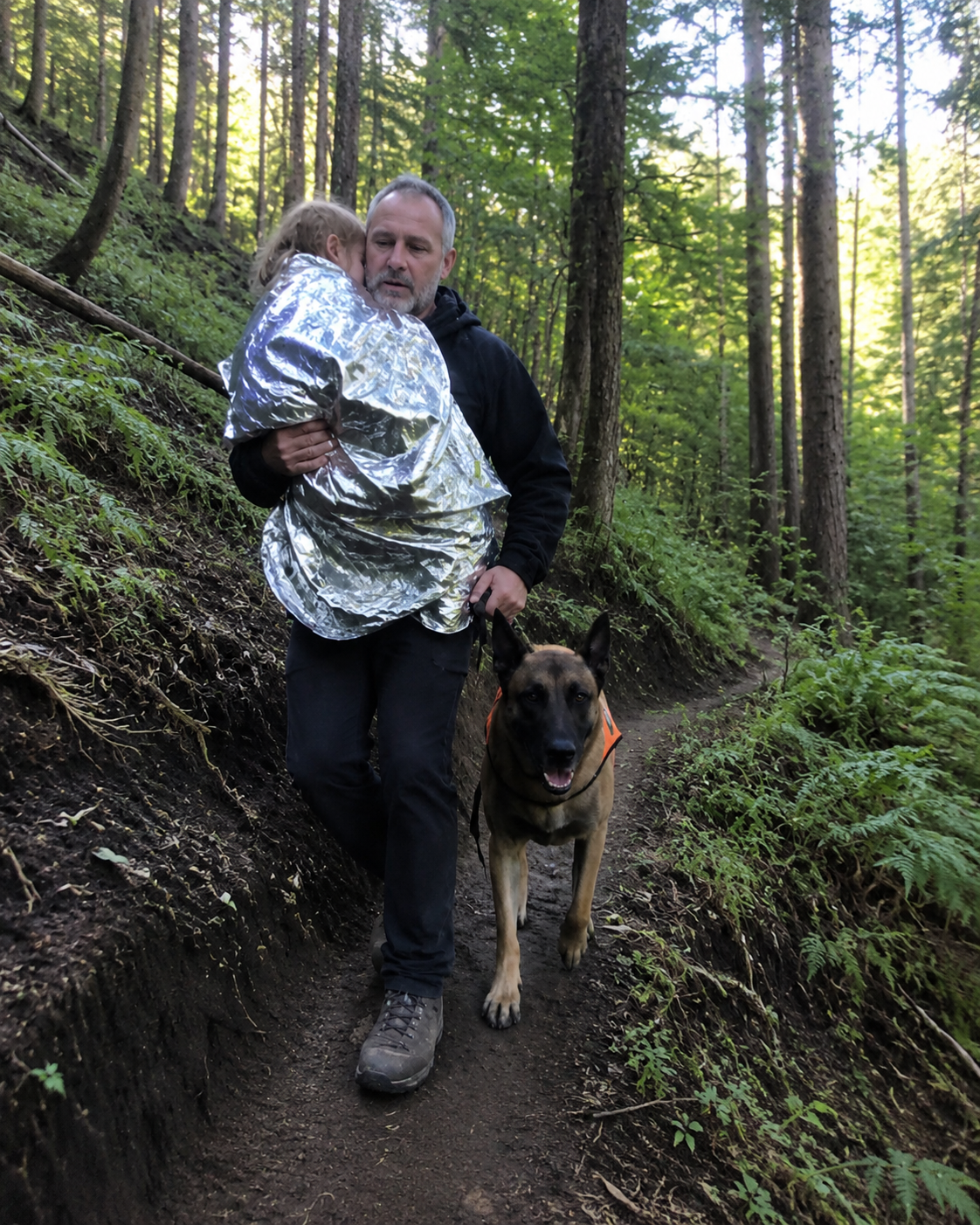
23 people found alive in 15 years. One missed. The dog was right all 24 times. His handler was wrong once. That was enough. I know because that handler trained me. What took him down almost took me down too. It started the night my dog found a missing girl alive after three days in the woods. I need to tell you what happened — not the rescue, that part made the news. I need to tell you what they found in my blood at the hospital afterward. And if your doctor has been pushing you toward a medication you're not sure about — or if you're watching someone you love slow down and nobody can explain why — you need to read this. All of it. My name is Jack. I'm 56 years old. I'm a fire department dispatcher by day and a volunteer search-and-rescue K-9 handler by nights and weekends. I've been doing SAR for twelve years. My dog Koda — a Belgian Malinois, seven years old — is certified for wilderness trailing. We've been on over forty searches together. Found six people alive. Koda is not a pet. She's a partner. She reads wind the way I read maps. She processes scent the way I process radio traffic. We work on a thirty-foot trailing lead and after twelve years I can tell you what she's thinking by the tension in that line before she makes her next move. I'm telling you this because what happened in March wasn't luck. It was twelve years of training, a thousand hours in the field, and a dog who is better at her job than most people are at theirs. The callout came at 4:15 AM on a Wednesday. Missing eight-year-old girl. Lily Chen. Separated from her family during a hiking trip in the state forest three days earlier. Seventy-two hours missing. Temperature had dropped to thirty-one degrees overnight. Other teams had gridded the main trails, the campgrounds, the creek access points. Nothing. They assigned me and Koda to a secondary drainage on the east side of the ridge. The long shot. The terrain nobody wanted — steep, overgrown, full of boulder fields and deadfall. The kind of place an eight-year-old would wander into if she was following a creek downhill the way every lost child does. I pulled Koda's search harness out of the truck. Orange vest. Reflective strips. The moment that harness goes on, something changes in her. She's not a dog anymore. She's an instrument. Her ears come forward. Her eyes lock on me and don't let go until I give her the scent article and the command. Lily's mother handed me the girl's jacket. Pink fleece. Smelled like sunscreen and campfire smoke. I held it to Koda's nose. She inhaled twice — long, deep pulls — and her head snapped up. "Find her." We pushed into the drainage at 5:10 AM. The brush was thick — wild grape, thorny locust, fallen hemlock blocking every third step. For two hours we worked uphill through terrain that would have turned back a less driven dog. The lead between us transmitted everything — tension meant she was pulling toward scent. Slack meant she was casting. At 7:20 she changed. I know the difference between working and knowing. Working is deliberate, head sweeping side to side. Knowing is fast. Direct. Head locked forward. Tail high and rigid. She drove uphill toward a rocky outcropping at a pace that had me scrambling to keep my footing. The lead was taut. I could feel her urgency in my hands — that electric rigidity that means one thing. Koda stopped at the base of a rock ledge. Hard stop. Nose locked. Body rigid. She looked back at me once — confirmation — then pushed her head under the overhanging rock. I came around the boulder and looked under the ledge. And there she was. Curled in a ball under three feet of granite overhang. Covered in dirt and dead leaves and pine needles. She'd pulled branches over herself for warmth the way some animal instinct teaches children to do when nothing else is left. Her lips were cracked. Her cheeks were streaked with dried tears and mud. But her eyes were open. Koda was already there. Pressed against the girl. Body heat. Instinct. The dog who'd been an instrument for the last two hours was suddenly gentle — lying with her flank against the child's chest, warming her the way she'd warm a puppy. I keyed my radio. My hand was shaking. Twelve years of SAR and my hand was shaking. "Base, Handler Seven. I have her. I have the girl. She's alive. She's conscious. I need medical at my coordinates." The radio erupted. I turned the volume down. I knelt in the dirt next to the ledge. "Lily? My name is Jack. This is Koda. She found you." The girl lifted one arm — slowly, like it hurt — and put it around Koda's neck. "I heard her," she whispered. "I heard her coming through the bushes. I thought it was a bear." "It was something better than a bear." "She's warm." "She's the warmest dog I know." Lily pressed her face into Koda's fur. Koda didn't move. Just lay there. Breathing. Warming. That was the rescue. Here's what nobody talks about. At the hospital, after the paramedics had Lily stabilized — IV fluids, warming blankets, her mother holding her and not letting go, her father shaking my hand with both of his and trying to speak and not being able to — the SAR team went through standard post-search protocol. After an extended deployment, handlers get checked. Dehydration. Overexertion. Routine bloodwork. The ER doctor who pulled me aside wasn't the same one who'd treated Lily. He was younger. Clipboard. Reading glasses pushed up on his forehead. "Mr. Calloway, your search performance was remarkable. But your blood panel is concerning." He turned the clipboard so I could see the numbers. LDL: 178. Total cholesterol: 261. "These numbers need attention. I'd recommend you follow up with your primary care physician about starting a statin. Atorvastatin is the standard first-line treatment." Atorvastatin. One word. And everything inside me went cold. Karen was in the waiting room. She'd driven to the hospital the moment I'd called her from the field — not because I'd asked her to, but because that's what she does. Every callout. Every time the phone rings before dawn and I reach for my boots, she's already awake. When I came out of the exam room she was sitting in a plastic chair with two coffees. She handed me one and looked at my face. "What's wrong?" "Nothing. Just tired." "Jack." "Blood panel came back a little high. Cholesterol. They want me to follow up." She studied me the way she studies everything — quietly, carefully, filing away what I'm not saying. But I could feel her watching me on the drive home. She watched me grip the steering wheel a little too tight. She watched me carry Koda's harness into the house and stand there with my hand on it for a few seconds too long. She's been watching me for months. I know that now. The way I hold the porch railing going down the steps — not because I need to, but because my legs are stiff in a way they weren't two years ago. The way I fell asleep during Maya's school concert in November. Not dozed — fell asleep. Hard. Karen had to nudge me and I startled awake and Maya saw it from the stage. The way I forget things that used to stick — names of neighbors, whether I already fed Koda her evening meal. Small things. The kind of things you stop noticing you're forgetting because the forgetting itself is quiet. Karen has noticed all of it. But I saw her face in that hospital waiting room. She wasn't surprised by the blood panel. She was surprised it took this long for someone besides her to see it. Because I knew what that word — atorvastatin — meant. Not from a medical journal. From watching a man I admired more than almost anyone disintegrate on it over three years. His name was Hank Mercer. And he trained me. Hank started in SAR twenty-eight years ago with a German Shepherd named Rex — the best wilderness trailing dog the state program had ever produced. Over fifteen years, Hank and Rex found twenty-three people alive. The find that made Hank's reputation was a night search in 2009. Missing teenager — seventeen years old, fell off a trail during a school camping trip. Rained for six hours after the fall. Surface scent destroyed. Two dog teams had already been pulled off. Hank took Rex to the last known point. Stood there for two minutes. Didn't move. Just watched Rex work the air. Rex lifted his nose, caught something, swung his head west — and Hank committed. Didn't check the map. Didn't consult the wind. He read his dog in the dark, in the rain, with no scent on the ground, and said: "He's got it. We're going west." They found the boy forty minutes later at the base of a granite cliff. Broken femur. Hypothermic. Nine hours in a creek bed. Hank carried that kid on his back for almost a mile to the nearest fire road. Rex walked next to him the entire way, pressed against Hank's leg, matching his pace step for step. Shoulder to thigh. Zero distance. That was Hank at fifty-four. When Hank was fifty-eight his doctor put him on atorvastatin. The first year it was small things. Hank got winded on long searches. Said it was the terrain — the hills were getting steeper, not him getting weaker. The second year was different. The fog. Hank started second-guessing Rex's signals. When Rex alerted — that hard stop, nose locked, the body language that meant I have something — Hank would hesitate. He'd look at the terrain. Look at the wind. Look at his map. By the time he committed, Rex was already pulling and Hank was being dragged instead of directed. The dog was right every time. But Hank's brain couldn't process what his eyes were seeing fast enough to trust it. I said something once. After a training exercise where Rex had alerted clean and Hank had hesitated for almost thirty seconds. "Hank. Rex had that scent locked in three seconds. You know that." He didn't look at me. Just stared at the treeline. "I know. I just — I couldn't see it." "You used to see it before Rex did." "I used to see a lot of things." The third year, it happened. A search for a missing hiker. Female. Forty-three years old. Last seen on a ridge trail. Rex alerted on a secondary trail coming off the main ridge. Hard alert. Everything right. Textbook. The alert that Rex had given a hundred times over fifteen years and been wrong exactly zero times. Hank read it as a false alert. The terrain didn't match. The wind was wrong. His foggy, slowed judgment said no. He called Rex off. Another team found the hiker two hundred yards from where Rex had alerted. She was alive. Hypothermic. Twelve more hours and she would have died. Hank never forgave himself. He retired from SAR the next month. Rex was retired with him. A dog in his prime — grounded because his handler couldn't keep up. I drove to Hank's house three weeks after the retirement. His wife let me in. Said he was on the back porch. I walked through the kitchen and out the screen door and saw something I've never been able to forget. Hank was sitting in a metal folding chair. Rex was lying at his feet. But there was a gap between them that hadn't been there before. Rex used to press against Hank's leg. Nose against his knee. Eyes on his face. That's what bonded K-9 teams look like — the dog's body is always touching the handler's body because the communication is constant. Physical proximity is trust. Rex was lying three feet away. Not withdrawn. Not hostile. Just — waiting. The way a dog waits for a person who used to speak their language and stopped. I thought about the night search in 2009. Rex pressed against Hank's leg for a mile in the rain. Zero distance. And now three feet of porch between them. Hank looked at Rex. Then at me. "He knows," Hank said. "He knew before I did. Before the missed find. Before the hesitation. The dog knew I was losing it six months before I knew." He looked back at Rex. "The dog always knows." I drove home with the windows down. Walked through the front door. Karen looked up from the couch and said "How's Hank?" I said "Not great." And I went upstairs and sat on the edge of the bed. Koda was on the floor next to the nightstand. Pressed against the bedframe. Nose against my dangling fingers. I looked at her and I thought about Hank. About the three feet. How long before she feels it? Before my grip on the lead slows half a beat. Before she pulls and I don't follow fast enough. Dogs don't lie. They don't cover for you. If my body starts failing, Koda will know. She'll start compensating — pulling less hard because she's learned that pulling hard doesn't work anymore. The day she starts compensating is the day I become Hank. I made an appointment with my primary care doctor. Same numbers. LDL 178. Total cholesterol 261. Same word. "Atorvastatin. Ten milligrams daily." I told him what I do. Told him what happened to Hank. "The cardiovascular benefits outweigh the risks." I left without filling the prescription. The pharmacy printout was in my jacket pocket when I got home. I hung the jacket on the kitchen chair and went to shower. Karen found it. I know she found it because two nights later I couldn't sleep and came downstairs at 1 AM and the kitchen light was on. Karen was at the table with her laptop. The screen was angled away from me but I could see the reflection in the window behind her. She was reading a medical page. The word I caught in the reflection was "rhabdomyolysis." She closed the laptop when she heard me. "Can't sleep?" "No. You?" "No." Neither of us said anything about the jacket. She made tea. I sat across from her. Koda came padding in from the hallway and lay down between our chairs. After a while Karen said: "Hank's wife told me something at the team dinner last year. She said the worst part wasn't the retirement. It was watching him sit in his chair every evening and not be the person she married. She said 'I can see him in there, but he can't get out.'" She looked at the jacket pocket. Then at me. "I'm not going to watch that happen to you, Jack. We'll find another way." She didn't say it with hope. She said it like a decision. What I didn't know then — what I wouldn't learn until months later — was that Karen didn't stop at rhabdomyolysis. She kept going. After I went back to bed that night, she stayed at that table. She typed "alternatives to statins for high cholesterol" into the same search bar where she'd just learned what rhabdomyolysis means. She found oxidized cholesterol. She found the same research I'd eventually find through Sarah — the betalain studies out of Germany and Italy, the selective antioxidant mechanism, the European clinical trials that had been sitting there for decades. She read them. She bookmarked them. And she said nothing. Because she knows me. She knows if she hands me a solution I'll resist it. I have to find it myself or I'll fight it out of stubbornness. So she waited. She sat on the answer for weeks and watched me struggle toward it on my own. That kind of patience costs something. Weeks of knowing and not saying. Weeks of watching me fail toward an answer she was already holding. I started the diet changes the next morning. Karen overhauled the kitchen. Less red meat. More fish. More vegetables. I pushed harder. Earlier mornings. Longer runs. Three months. Retest. LDL: 171. Seven points. Three months of effort and Karen quietly replacing everything in the refrigerator. Seven points. Not enough. My doctor looked at me over his glasses. "Jack. The numbers are clear. You need pharmaceutical intervention." The trap was closing. Take the statins — become Hank. Or don't take them — and my heart fails. My daughter Maya is twelve. She idolizes Koda. She wants to be a K-9 handler. I promised I'd train her. That promise sits in my chest next to everything else I'm afraid of losing. That's where I was when Sarah found me. Dr. Sarah Padilla is the SAR team's volunteer veterinarian. She has a DVM and a background in molecular biology. Her doctoral research was on oxidative stress in working dogs. She'd watched Hank's decline from a veterinary perspective — watched Rex before she watched Hank. Seen the dog's behavior shift, the gap widening. She understood it as a communication breakdown caused by cognitive and physical decline. It was a training day. Koda was running scent problems in a field. Sarah walked over and stood next to me while we watched Koda work. "I heard about your bloodwork." Quietly. Direct. "Good news travels fast." "In a SAR team it does." She watched Koda. "You're thinking about Hank." "Every day." "Can I tell you something? Not as your vet. As someone who studies what happened to Hank at the cellular level." "Go." "Your doctor wants to lower your LDL number. That's what atorvastatin does — it walks into your liver and shuts down the production line that makes cholesterol. Less made, lower number on the chart." "I know how statins work." "Do you know what they don't do?" I didn't answer. "They don't touch what actually kills you. They chase a number. They don't chase the rust." "The what." "That's what I want to show you. Give me a stick." She turned to face me. "Jack, I study oxidative stress in working dogs. The same reactions that damage a high-drive dog's brain damage your cholesterol. That's why dogs like Koda need targeted antioxidant support — not blanket antioxidants. Targeted ones. The same thing applies to what's building in your arteries. And nobody's explaining it to you." She picked up a stick and knelt in the dirt. Drew a circle. "This is your cholesterol. Here's what nobody explains — your body makes this on purpose. Your liver builds it. Your brain runs on it. Your hormones depend on it. Cholesterol isn't poison. Your brain is sixty percent cholesterol." She tapped the circle. "The problem was never how much of it you have. It's what happens to it." She dragged the stick across the dirt beside the circle. "You ever slice an apple and leave it on the counter? Come back at lunch and the cut face has gone brown. Nobody touched it — the air did that. Oxidation. Same word as the rust on an old fender." "The same thing happens inside you. Free radicals attack the cholesterol in your blood and it goes rancid. Rusts. Turns sticky. And that sticky, rusted cholesterol is what works into your artery walls and builds up, year after year, into plaque. Not the cholesterol you have. The cholesterol that's gone brown." I stared at the drawing. "And here's the part nobody ever explained to me until I understood the chemistry. When cholesterol rusts, your body reads that rust as damage. An injury. So it sends more cholesterol to the wound to patch it. Which gives the rust more to work on. Which the body reads as more damage. So it makes more still." She drew a wheel around the circle. "It's a wheel. The rust drives your body to make more cholesterol. The more it makes, the more there is to rust. The wheel spins faster." "Now here's what atorvastatin does. It grabs that wheel and forces it to slow — by brute force, from the outside. It shuts down the production line so your body makes less. The number on the chart drops. Your doctor writes 'managed.' Everyone's happy — because everyone's watching that number." "But it never stops the rust. The rust is still there. Still spinning the wheel. Still turning what cholesterol you have left into the stuff that sticks to your arteries. And the drug is bailing water as fast as it can. It never finds the hole the water's coming in through." "That's what happened to Gene Hartwell," I said. Ruth's husband. SAR families talk. Lipitor for fourteen years. LDL of 91. Widowmaker in his hallway. Perfect numbers. Dead anyway. "That's exactly what happened to Gene. And there's a second cost. This is the part that connects to Hank." "What." "That production line the statin shuts down to lower your cholesterol — it doesn't only make cholesterol. It also makes something called CoQ10. The spark every muscle in your body burns for energy. Your heart. Your legs. Your brain." "Clamp the line shut to force the number down, and you throttle that spark at the same time. In the same motion. You can't do the one without the other. They come off the same switch." I looked at her. "Hank's legs." "Hank's legs. His hands. The bone-deep tiredness sleep didn't touch. The half-beat delay reading Rex. Everyone called it aging. It wasn't aging, Jack. It was the drug draining the fuel his brain and his muscles ran on — while the rust in his arteries kept going the whole time. Two hits, coming off the same pill. And nobody told him." I thought about Hank on the metal folding chair. Rex three feet away. The gap. The man who used to carry a boy on his back for a mile in the rain and read a dog in the dark without a map — sitting on a porch unable to see what his own dog was telling him. That wasn't age. That was chemistry. Sarah looked at me. "And you're not on the drug yet, Jack. But the rust doesn't stay in your arteries. It stiffens your blood vessels. Chokes your circulation. Oxygen stops reaching where it needs to go — including your brain. The fog you've been blaming on dispatch stress and turning fifty-six? That's the rust choking your blood flow while you sleep." I thought about Maya's concert. Falling asleep hard in the middle row. "So what does?" "There's one thing I've seen actually go after the rust. And I only trust it because I've watched what it does at the cellular level in the dogs I treat." "And?" "It's not a drug. It's a pigment." She turned the stick, tapped the circle again. "You know the deep red that stains your fingers when you cut a beet? That color has a name. Betalains. And it isn't decoration. It's a rust-fighter. One of the most selective ones anyone's ever measured." "A beet." "I know how it sounds. I didn't believe it either until I read the research. German and Italian labs have been studying these pigments for decades. There's more real research behind this than behind half of what's in a pharmacy." I thought about the fish oil Karen had bought me. The CoQ10 capsules. The heart-health multivitamin that sat on the kitchen counter for two years. None of them moved a number. None of them made me feel anything. Sixteen different bottles over the years and not one of them was selective about what it targeted. "Most antioxidants are a carpet bomb. You take them, they flood your body and knock out every free radical they touch — including the ones your immune system needs, the ones your cells use for signaling. Blanket damage. That's why throwing more of them at the problem never did much." "Betalains don't work like that. They're a smart missile. They hunt one specific reaction — the exact one that turns your cholesterol rancid — and they neutralize it. Turn the rust to plain water. And they leave every other free radical your body actually needs completely alone." "Smart missile, not carpet bomb." She smiled. "Yes. And they do it right where it matters. The betalains fold into the cholesterol particle itself and stop the rust from the inside — before it can ever turn sticky, before it can build the plaque." "And this is the part that made me start recommending it to my SAR handlers. The betalains never touch the production line in your liver. They leave your CoQ10 completely alone. All of the help. None of the cost. Goes after the rust. Leaves the spark your muscles and your brain run on intact." "And when the rust stops — the loop unwinds. The body stops panicking. Stops overproducing. And the number comes down on its own — not because you forced it, but because you fixed what was driving it." Koda finished her trail and came trotting back. Sat at my left side. Pressed against my leg. Nose against my knee. The way Rex used to sit with Hank. Before the gap. "Where do I get it?" "I'll send you the research first. Read it. Then decide." She sent me nine studies that night. I read them at the kitchen table after Karen and Maya went to bed. Koda at my feet. At some point Karen came through the kitchen for water. She paused behind my chair. I felt her looking at the screen — the journal article, the betalain headline, the clinical trial data. She didn't say a word. Just filled her glass and went back to bed. I ordered beetroot capsules the next morning. Found a bottle on Amazon with good reviews. Looked legitimate. The label said standardized beetroot extract. I took them every morning for three weeks. First week — maybe a small energy lift, but I wasn't sure if it was real. Second week — I felt roughly the same as before. No shift. By the end of the second week I started searching. "Why isn't my beetroot working." "Beetroot capsules no effect." What I found was a mess. Some products were spray-dried at high temperature. Some used regular grocery beets ground into powder. Some had 500mg on the label but nobody explained why the studies I'd been reading used 1,300mg. Some had "proprietary blends" that hid the actual dose entirely. I read reviews where people said "this brand is basically overpriced dirt" next to reviews where people said "changed my numbers in eight weeks." Same ingredient on the label. Wildly different results. The pattern I kept seeing: the people getting results were specific about strain and how the beet was dried. The people getting nothing were buying whatever had the most stars on Amazon. I was buying whatever had the most stars on Amazon. Third week — I brought the bottle to Sarah at training. She twisted the cap off, tipped a little of the powder into her palm. "Jack. Look at that." "It's brown." "It's dust. You've been eating dead powder for three weeks." That landed. "Two problems. First — the beet itself. Grocery beets have been bred for a hundred years to be sweeter. Bigger. Easier to ship. Every time they bred one for sugar, they bred the betalains down. What ends up in the store now is candy dressed up as medicine. A fraction of what the old beets carried." "Second — heat. Betalains are fragile. Heat tears them apart. Almost every beetroot powder on the shelf is spray-dried at high temperature. Fast and cheap. By the time it's sealed in the capsule the betalains are already gone. That's the brown in your palm. Dead before you bought it." She handed me back the bottle. "There's a tell. Live betalains are deep red. Almost violet — like the stain you can't scrub off a cutting board. If you twist a capsule open and it's brown, it's dust. If it's crimson, it's alive. It's the first thing I check on any bottle I recommend." "So I need a specific brand." "You need a specific beet, dried a specific way, at the right dose. There's one that gets all three right. It's the one referenced in most of the research I sent you." She wrote a name on a scrap of paper. Block letters. Underlined it twice. Rosabella. "Heirloom Blutwurzel strain. Blood root. Amish families up in Lancaster County have been saving the seed by hand for a hundred and fifty years. Never crossed with the sugar beet. Carries something like ten times what a grocery beet does." "They hand-harvest it after the first frost — that's when the plant pulls everything back down into the root. Then they dry it slow, in the shade, never with heat. So the betalains reach the capsule alive. 1,300 milligrams per capsule — the same dose the actual studies used. Not a proprietary blend." "That's the whole secret. The right beet, dried the right way, at a dose that does something. Everything else on that shelf is candy or dust." I ordered it that night. When the package arrived three days later, I did exactly what Sarah told me. Twisted one capsule open over a white saucer first — I had to see it for myself. The powder was deep red. Almost violet. A drop from the kitchen tap and it bloomed — bled crimson across the white dish like a fresh cut. Not the brown from the Amazon bottle. The real thing. I took two with a tall glass of water. Walked out to the back porch. Koda followed me. Seventeen minutes. I know it was seventeen minutes because I looked at my phone when I felt it. A lift. Not dramatic. More like someone had adjusted the oxygen levels in my blood. The low-grade mental haze I'd been blaming on dispatch stress and being fifty-six — it thinned. Like fog burning off. Warmth moving out through my hands. I understood later what I was feeling. It wasn't the cholesterol — that takes weeks and shows up on bloodwork, not on a porch. What I felt that fast was something simpler. My blood moving easier. Oxygen reaching where it had been starved. That's what beetroot does fast, before it ever touches the rust. A first sign the betalains were alive and in me. I looked at Koda watching a squirrel at the base of the oak tree. Noticed the micro-movements — the slight ear rotation tracking the squirrel's path, the weight shifting forward, the nostril flare when the wind changed. I'd been missing those details. Not during searches — adrenaline sharpened everything on a callout. But the baseline observation that keeps a handler sharp between callouts — that had been fading. I hadn't noticed it fading because that's the thing about cognitive decline. You don't notice what you're not noticing. That first evening I noticed. Week two. Karen looked at me across the dinner table. "You seem different." "Different how?" "Clearer. You were telling Maya about the search and you remembered every detail. Normally you leave things out. You've been leaving things out for a while." Week three. SAR training day. Full wilderness problem. I took Koda off the truck and put the harness on her and felt something I hadn't felt in months. My hands were steady. Not adrenaline-steady — just steady. When she alerted on a sharp turn near a deadfall, I didn't hesitate. I read her body language — ears locked, tail high, weight forward, lead tension spiking — and I committed. In the moment. The way Hank used to know. Sarah was watching. After the problem she walked over. "Your lead handling is different." "I know." "You're reading her faster." "I know." That Saturday I noticed something at home. The screen door to the back porch had been broken since August — the hydraulic closer had failed and the door slammed shut every time someone walked through it. I'd been saying I'd fix it for three months. Twenty-minute job. Four screws. I just never got to it. The energy wasn't there. Every weekend I'd look at the door and think "next Saturday" and then next Saturday I'd feel the same exhaustion that made twenty minutes feel like an expedition. That Saturday I went to the hardware store at 8 AM. Replaced the closer. The door closed smooth and quiet for the first time in three months. Maya was at the kitchen table. "You fixed the door." "I fixed the door." "Finally." She grinned. "Can you look at my bike too? The chain keeps slipping." I fixed the bike chain after lunch. Tightened the loose railing on the back steps. Karen was at the kitchen counter when I came inside. Her back was to me but she was watching my reflection in the window above the sink. Watching the way I moved through the door. Steady. Not gripping the frame. She didn't turn around. But I saw her press her hand flat against the counter — the way you press your hand against something solid when a feeling hits you that you need to hold still for. She was seeing the man who used to fix things on Saturday mornings. The man who'd been sitting in a chair for three months where a person used to be. She was seeing him come back. Week six. New blood panel. LDL: 133. Total cholesterol: 208. My doctor stared at the screen. Refreshed it. Stared again. "Jack. What happened?" "I didn't fill the atorvastatin." "What did you do?" I told him. The oxidized LDL research. The betalains. The selective antioxidant mechanism. He listened. "I need to review these studies. But your numbers are significantly improved. Whatever you're doing, continue." He didn't tell me to start atorvastatin. First time. I sat in my truck and called Karen. Told her everything. The ER bloodwork. The LDL of 178. The atorvastatin I never filled. The Rosabella that moved the needle forty-five points. Why I hadn't told her sooner. She was quiet. Then: "You should have told me, Jack. I found that prescription slip the week you brought it home. I've been reading about atorvastatin ever since. I've been lying next to you every night for months not knowing if I should be terrified or grateful." "I won't do that again." "133?" "133." She exhaled. Long and shaky. "Thank God." Then she said something I wasn't expecting. "Jack. I found those studies months ago." "What studies?" "The ones Sarah sent you. The betalain research. The oxidized LDL mechanism. I found them weeks before Sarah walked up to you at that training field." I didn't say anything. "I knew if I handed you a printout and said 'try this,' you'd argue with me for a month. You had to find it yourself. So I waited. When you came home from that training day and sat at the kitchen table reading those journal articles — Jack, I'd already read every one of them. I recognized the titles from across the room." "Why didn't you tell me?" "Because you're my husband. I know how you work. You needed a scientist to draw it in the dirt. You wouldn't have taken it from me." She was right. And she knew it. And she'd waited. "The bottle you find on the counter every morning," she said. "Next to your coffee. That's not just support. That's months of research I did at one in the morning while you slept." When I got home Karen was on the back porch. Koda was lying next to her with her head on Karen's foot. Karen's hand resting on Koda's back. She looked up when I came through the screen door — the door that closed smooth and quiet now — and reached for my hand. Two months later. October. 6:40 AM callout. Missing elderly man. Seventy-eight years old. Dementia. Walked away from his home. Twenty-four hours missing. Koda worked the scent article — one of his slippers. She picked it up fast. The trail went down a slope toward a creek. She alerted at a bend in the creek. Hard stop. I read it in half a second. Committed. The man was sitting under a cottonwood tree by the water. Confused but calm. Uninjured. I sat down next to him while we waited for extraction. He looked at Koda. "Is that your dog?" "She's my partner." "She found me?" "She found you." He reached out with an unsteady hand and put it on Koda's head. She leaned into it. "Smart dog." "The smartest." He looked at the creek for a while. Then he said, quietly: "I was trying to get home. I know the way. I've walked it a hundred times. But I got here and I couldn't remember which direction home was." I looked at his unsteady hand on Koda's head. Thought about the rust Sarah drew in the dirt. The wheel spinning quietly for years. Nobody told him. He just woke up one evening and couldn't remember which way the creek ran. I held the lead a little tighter. Koda pressed against my leg. I looked at my hands. Steady. The grip that almost failed. The hands that almost became Hank's hands. That evening my phone rang. It was Hank. I'd brought him a bottle of Rosabella six weeks earlier. Told him about Sarah. About the oxidized LDL research. About the mechanism. He'd listened the way Hank listens to everything — quiet, skeptical, measuring every word against twenty-eight years of field experience. He'd stopped taking atorvastatin the day he started Rosabella. "Jack." His voice sounded different. Lighter. Clearer. "Hank." "I took Rex on the training trail today. The old one. The one we used to run." "How'd he do?" "He alerted twice. Wildlife scent. And Jack — I saw it. Both times. The ears. The tail. The weight shift. I processed it the way I used to process it. Half a second. No hesitation. No second-guessing." He stopped talking. I could hear him breathing. "I could see it again," he said. "I could see what he was telling me." He was crying. Hank Mercer — twenty-eight years in SAR, twenty-three lives saved, the toughest handler I've ever known — was crying on the phone because his dog spoke to him and he understood. Then he said the thing that made me write this. "Jack, why didn't anyone tell me about this five years ago? Rex and I had three more years of searches in us. Three years of people we could have found. How many of them didn't get found because nobody told me there was another way?" I sat in my truck in the driveway with Koda in the back seat and the phone against my ear. If I don't tell the next person, they'll be sitting on a porch in three years asking the same question Hank just asked me. And the dog will be lying three feet away. I'm telling you. If your husband's hands are stiff in the morning. If he sits on the edge of the bed before dawn and flexes his fingers and thinks you're asleep. If he's forgetting things he used to remember — names, appointments, the birthday party that was on the calendar and discussed that morning. If he's tired by 3 PM and asleep by 8 and the projects that used to define his weekends are piling up. If his doctor keeps saying "your numbers look great" and you keep watching the man attached to those numbers become someone quieter, slower, smaller — if there's a screen door in your house that's been broken for months because the person who used to fix things can't get off the couch. It might not be aging. It might not be stress. It might be the drug draining the spark he runs on. And the rust the drug was never built to touch, still turning underneath. One path leads to the prescription. The pill that lowers a number on a chart while the wheel keeps spinning underneath. The pill that drains the spark his brain and his muscles run on. The fog that steals half a beat, then a full beat, then two. The hands that stiffen. The gap between him and the life that used to fit him — widening so slowly neither of you notices until the day he misses something that matters. The other path is the one I took. Stop the rust at the source. Leave the spark alone. Keep the hands. Keep the mind. Keep the man you married — not a slower version, not a foggy version, not a version that sits in a chair where a person used to be. Rosabella has a 90-day money-back guarantee. If his numbers don't move, every penny back. No questions asked. I chose the second path. And the man under the cottonwood tree is alive because of it. And Koda is still pressed against my leg. And the screen door closes quietly. And Karen's hand reaches for mine through a door that doesn't slam anymore. And Hank can see what Rex is telling him again. The dog always knows. Make sure you can still hear what she's telling you. 👉 https://track.tryrosabella.com/bfcb877b-9f52-4175-9be6-9bc1a89ce3a8 P.S. — Sarah is the one who changed everything. A veterinarian who studies oxidative stress in working dogs. She told me: "The same rust that damages your cholesterol chokes the blood flow to your brain. That's not aging. That's chemistry." The product she pointed me to is Rosabella. Heirloom Blutwurzel beetroot at 1,300 milligrams — the same dose the studies used, shade-dried so the betalains reach you alive. If something in your husband's body is slowing down — the hands, the mind, the energy that used to fill a Saturday — go to the link above and order it today. Not because I'm selling anything. Because a dog named Rex spent three years lying three feet from his handler and that gap didn't have to happen. P.P.S. — You'll feel it working within seventeen minutes of the first dose. Not the cholesterol benefit — that takes weeks to show on bloodwork. But the lift. The clarity. That's the betalains going to work — your blood moving easier, oxygen reaching where the rust has been choking it. Something no statin has ever done. If he's taken supplements before and felt nothing, that's because they were never selective — they scattered through his body and concentrated nowhere. Rosabella is different. He'll know it's different the moment he takes it. P.P.P.S. — Three months after the rescue, Lily's school invited me and Koda for a presentation. Lily saw Koda walk through the classroom door and ran across the room and dropped to her knees and put her arms around Koda's neck — the same way she'd held on under that rock ledge, except this time she was laughing. Afterward, Lily's mother pulled me aside. She said: "You saved her. But someone saved you too. Who was it?" I told her about Karen. About the research Karen did at midnight. About the bottle Karen leaves next to my coffee every morning. She looked at me and said: "Tell the other wives." I'm telling you. Rosabella works the same in women — Karen takes it now too. But if you're reading this for him, hand him the bottle. He won't hand it to himself. P.P.P.P.S. — Rosabella has a 90-day money-back guarantee. If the numbers don't improve, full refund. Hank never got a guarantee on his atorvastatin. Three years of decline and nobody offered to give him his career back. Nobody offered to close the three-foot gap. The system doesn't do refunds. Rosabella does. You risk nothing. The only risk is waiting. P.P.P.P.P.S. — Rosabella is a small operation. They sell out. The Blutwurzel strain is grown by a handful of Amish families in Lancaster County and hand-harvested once a year. If your husband's next bloodwork is in thirty to sixty days and you want him to walk into that appointment with real numbers instead of hope — check availability now. They have a buy 3 get 3 free deal at $11.99 per bottle. Not next week. Now. Every day the rust keeps spinning is another day closer to the gap Hank spent three years in. Don't wait for your three feet. P.P.P.P.P.P.S. — Do not forget about their 90-day money-back guarantee. 👉 https://track.tryrosabella.com/bfcb877b-9f52-4175-9be6-9bc1a89ce3a8
Support stamina and heart health every day
LEARN MORELike this ad? Make it yours.
Crush rebuilds this exact creative around your product — your brand, your colors, your offer — in about a minute.