
Active· since Jun 24, 2026
- 81
- days running
- 0
- relaunches
Ad copy
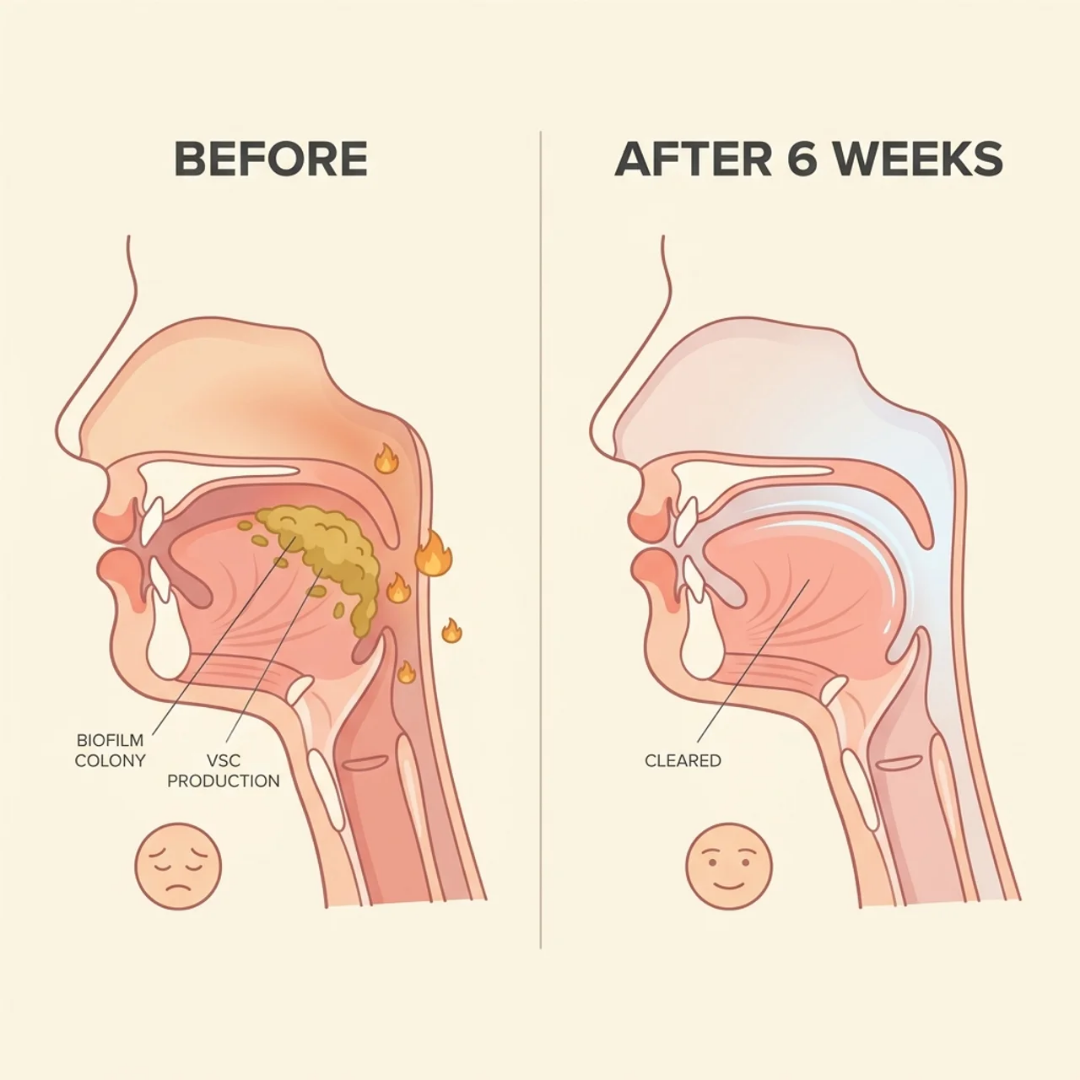
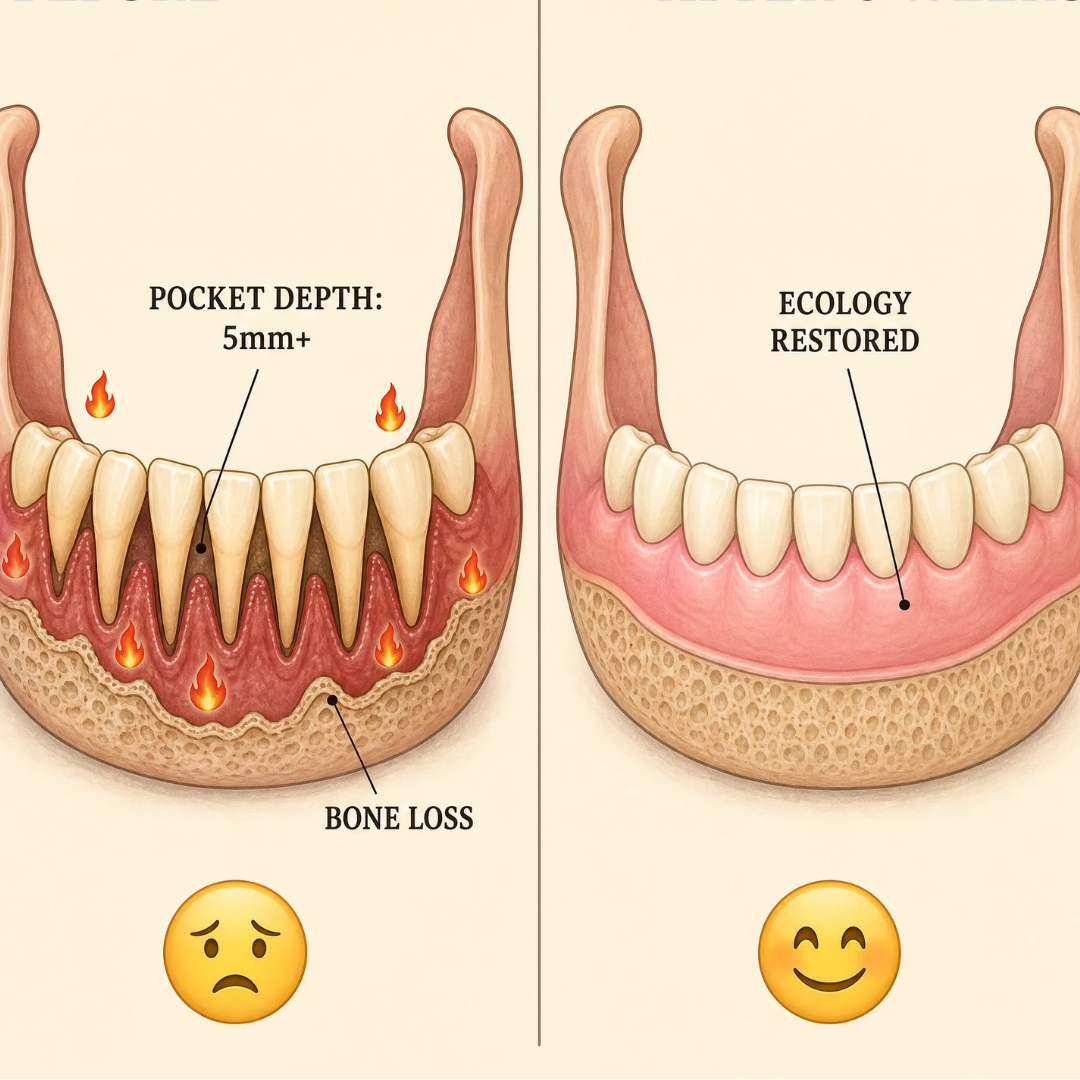
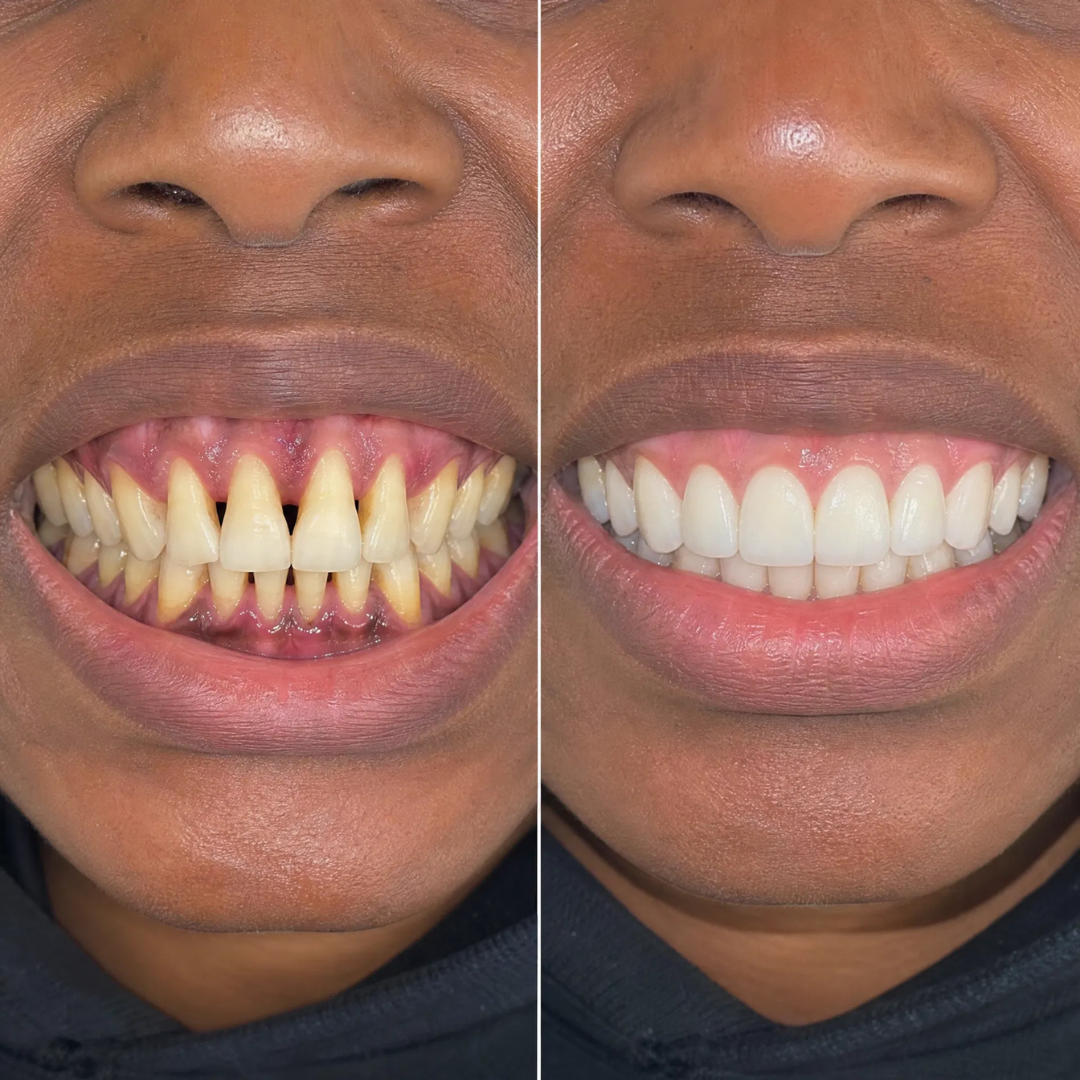
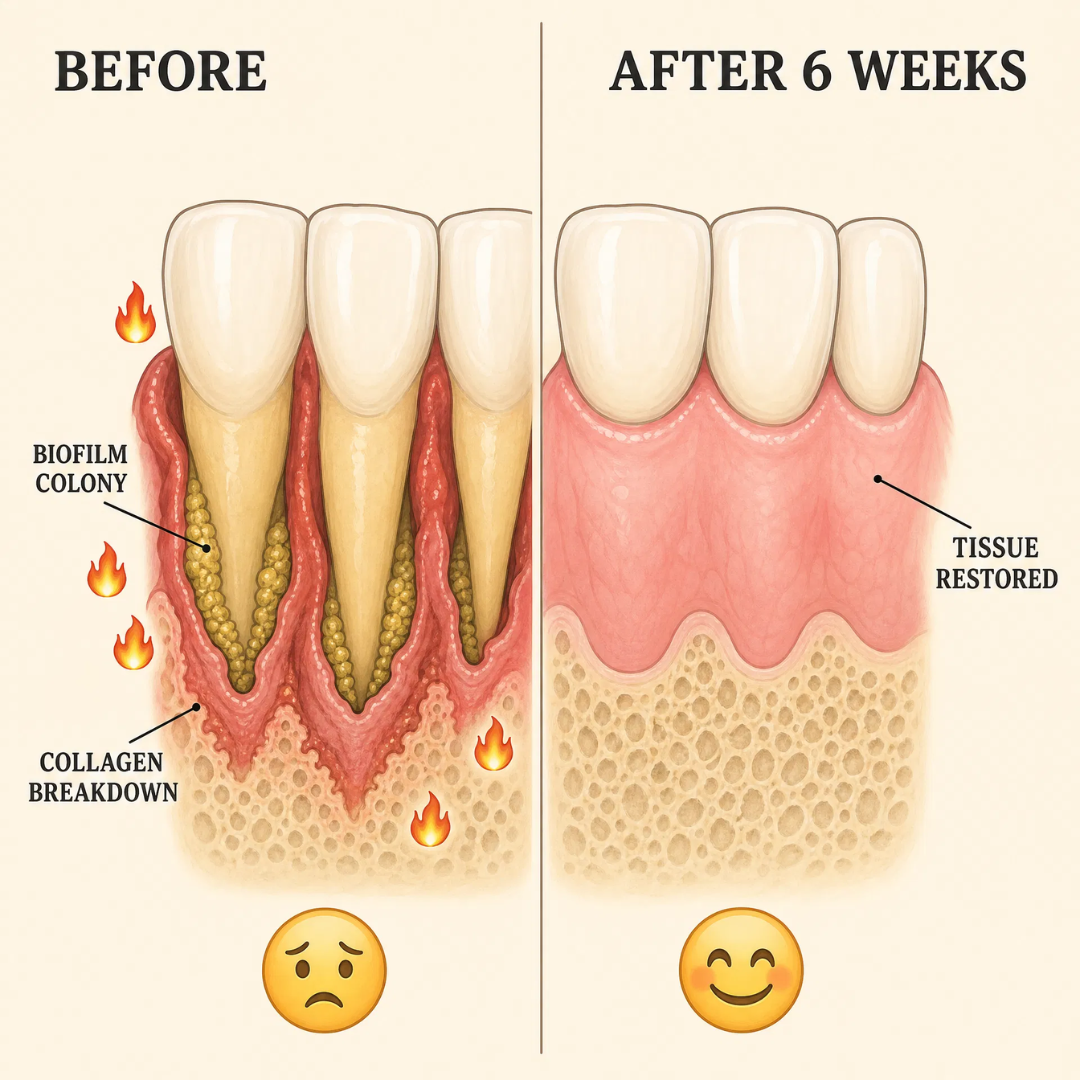
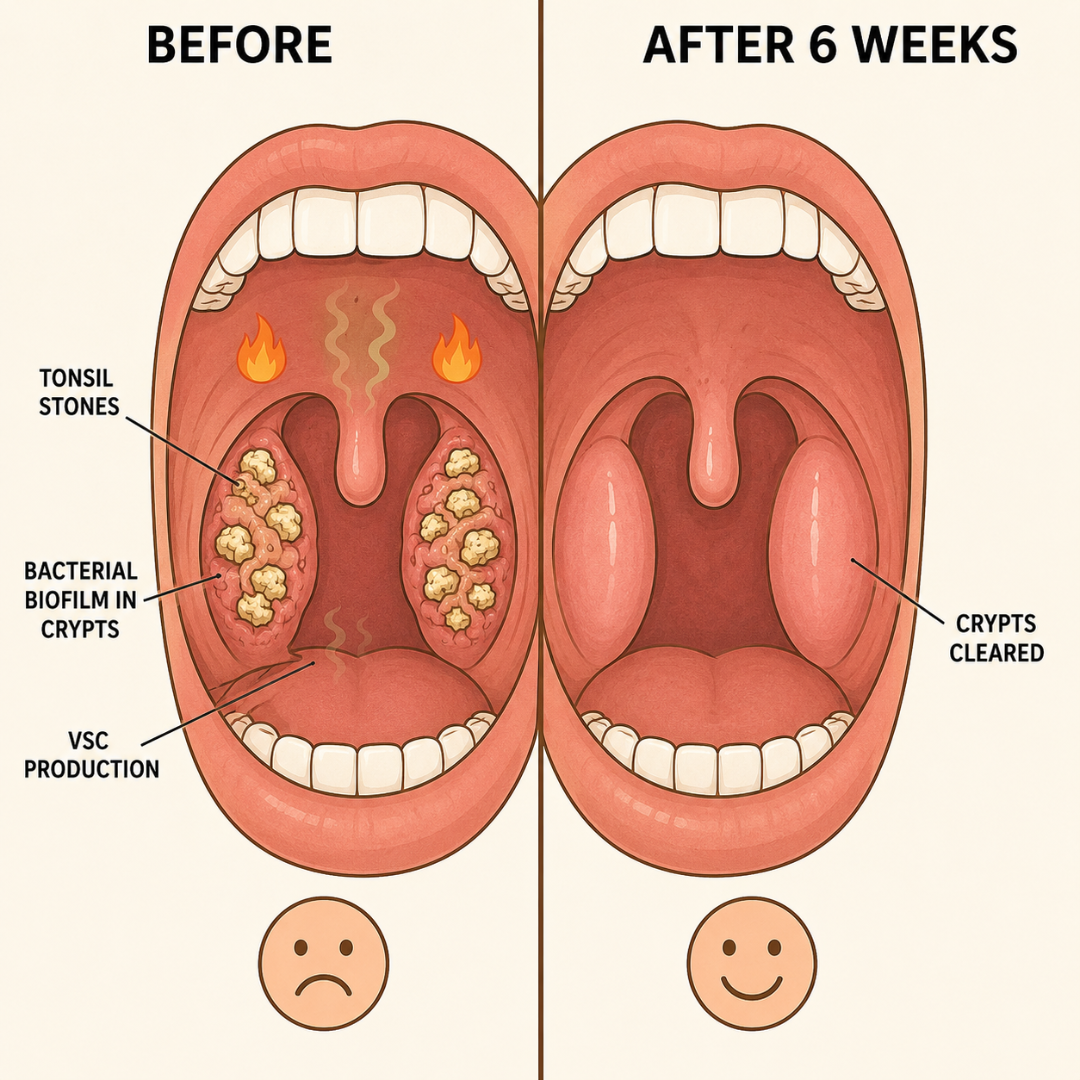
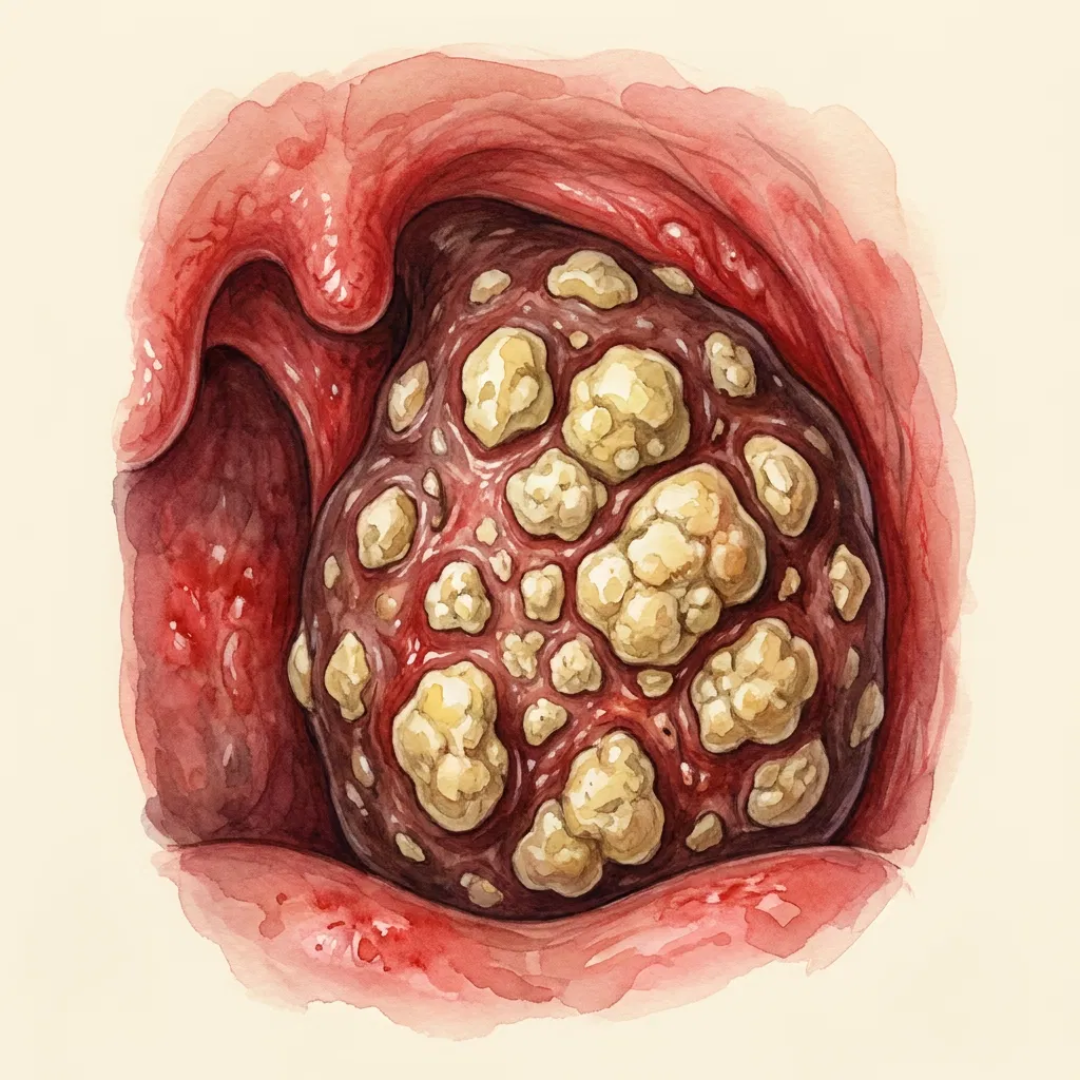
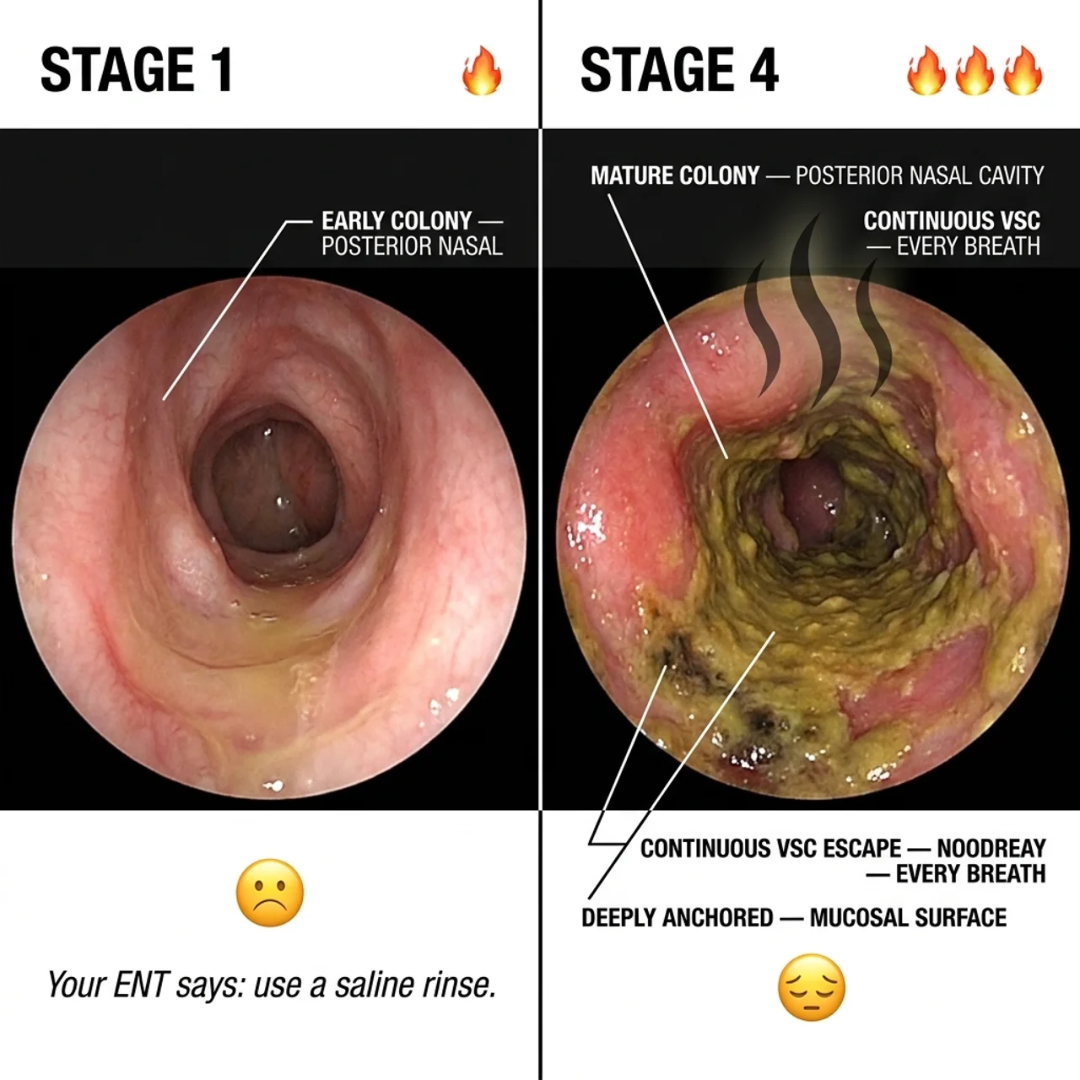
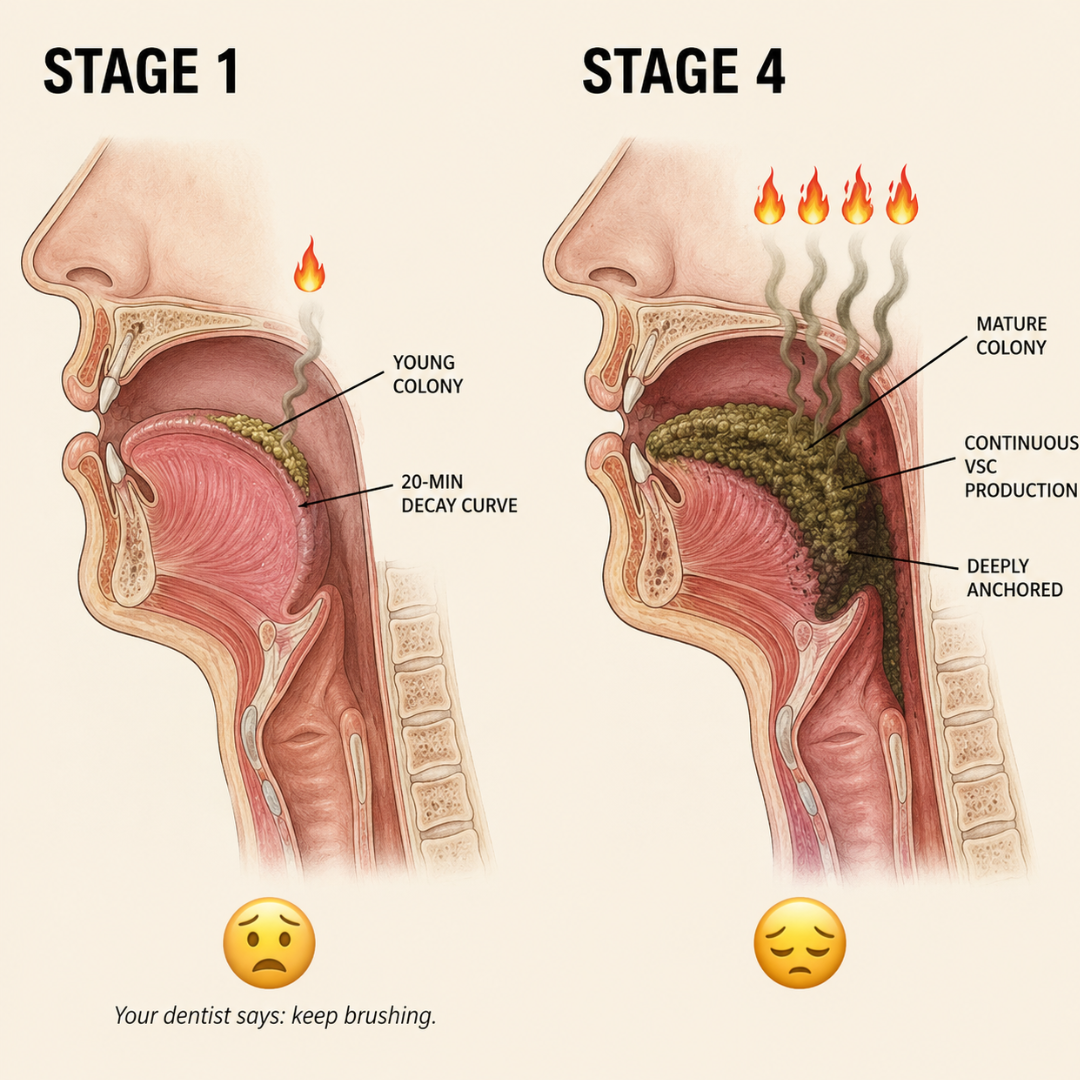
Chronic bad breath has four stages. The first three are completely reversible. Most American dentists won't tell you that — because they're only trained to manage stage four. I've been a halitosis specialist for 22 years. The first 20, I practiced in Milan. I moved to the United States two years ago when my wife's company transferred her to Seattle. I joined a dental practice here. Good practice. Good dentists. And in my first three months, I saw something that kept me up at night. Women in their 30s and 40s walking in humiliated. Carrying mints in every pocket. Brushing three times a day. Scraping their tongues every morning with metal scrapers they'd researched for two hours on Reddit. Every one of them said the same thing. "My dentist keeps telling me my teeth are fine." Fine. In Italy, we don't say fine when someone is suffering. We find the cause. Because by the time a patient has tried six different products and still can't get through a two-hour dinner without planning her exit strategy — something has already been failing structurally for years. Here's what no one has told you about where chronic bad breath actually leads. ──────────────────── Your tongue is lined with tissue. In the deep posterior crevices — the back third, where the tissue is thick and folded — lives a structured bacterial colony called a biofilm. This colony is not bacteria the way people think of bacteria — individual cells floating loosely. It is a physical matrix. An architectural structure. The bacteria live inside it the way people live inside a building, shielded from anything applied to the outer surface. These bacteria are anaerobic — they don't need oxygen. They thrive in exactly the low-moisture, low-oxygen environment that your current oral care routine creates: sealed inside the tongue tissue, protected from every rinse, every scrape, every spray you've tried. They produce Volatile Sulfur Compounds. VSCs. The metallic, sulfurous, faintly rotten odor that returns within 20 minutes of your most thorough routine. When chronic bad breath goes unaddressed at the root, this colony doesn't stay the same. It progresses. Systematically. Through four identifiable stages. Most American dentists are trained to manage the symptom at stage four. They are not trained to recognize stages one, two, and three — when the colony is still fully reversible. Here is every stage. And here is what happens to the women who stay in the management cycle too long. ───────────────── STAGE ONE — The 20-Minute Decay Curve Most people don't even notice stage one is a stage. Your routine works — for about 20 minutes. Morning freshness from brushing and rinsing fades as you drive to work. By the time you're at your desk, the metallic taste is already returning. You add a tongue scraper. You switch to alcohol-free mouthwash. You try TheraBreath. Each new product gives you another 5 to 10 minutes. The underlying colony is untouched. Your dentist says: "Keep up the good work. Your teeth look great." This is the moment most American dentists recommend a better mouthwash. I understand why. The freshness fades. The mouthwash extends it. The patient feels like something is being done. But mouthwash suppresses surface bacteria for 20 to 30 minutes. It hits the outer layer of the biofilm and turns back. The bacteria inside resume VSC production within minutes. The colony continues to mature — undisturbed, unaddressed, growing more established with every passing month. At stage one, the biofilm is still relatively young. The structural matrix is not yet fully dense. Enzymatic penetration works fastest here. Most people see the morning decay curve lengthen meaningfully within the first two weeks. But nobody tells patients they're at stage one. So they stay in the management cycle, month after month, adding products that address the symptom and leave the colony untouched. Until stage two begins underneath. ─────────────────────── STAGE TWO — The Stuck Layer Forms Stage two is what happens while the surface looks managed. The mature biofilm doesn't just produce VSCs. It begins expanding into the deeper tongue tissue crevices — anchoring more firmly to the mucosal surface. The tongue coating becomes thicker. Denser. More adhesive. The white-to-yellow film that used to rebuild in 2 hours now rebuilds in 45 minutes. Tongue scraping stops working the way it used to. You remove the visible layer. The coating is back by mid-morning. Not because you scraped wrong. Because the colony isn't in the top layer anymore — it's in the matrix beneath it. You're removing the roof and leaving the structure entirely intact. This is when the social withdrawal begins in earnest. Mints in the coat pocket. Gum in the desk drawer. A travel spray in the bag. Bathroom trips timed before important meetings. A slight angle on conversations that used to be face-to-face. The management system stops being something you do sometimes. It becomes something you do constantly. My patient Sarah came to me at stage two. She was 34. An elementary school teacher in Austin — warm, well-liked, a close group of friends and a full social calendar. On paper, doing well. She sat in my chair with her hands folded too tightly in her lap. She had the look of someone who had rehearsed what she was about to say. "I need you to tell me the truth," she said. "Not the polite version." She had been through standard mouthwash, alcohol-free alternatives, charcoal toothpaste, two types of tongue scrapers, TheraBreath, two different oral probiotics, chlorophyll drops, oil pulling, and a complete dietary elimination of garlic and onions. She had spent over four hundred dollars. In return, she had received approximately 25 minutes of freshness per product before the odor came back every single time. She had been on eight dates in the past year. She had not kissed a single person. Not because the dates went badly. "I engineered every exit," she told me. "Before they could get close enough." At stage two, the colony is well-established but still fully addressable. Enzymatic disruption combined with probiotic recolonization changes the oral environment itself — not just the surface. Most people experience the deepest clearing between days 9 and 14, as the disrupted biofilm matrix breaks loose. The coating rebuilds more slowly. The morning decay curve extends measurably. But Sarah had not been told she was at stage two. She had been told to keep brushing. So she stayed in the management cycle. And stage three began. ─────────────────── STAGE THREE — The Social Cost Takes Over Stage three is not just about the breath anymore. At stage three, the biofilm colony is mature and deeply anchored. VSC production is continuous and high-volume. The morning decay curve has shortened to the point where the routine barely holds through the commute. The tongue coating is thick enough to see clearly in the phone camera — a dense, adhesive film that rebuilds within 30 to 40 minutes of scraping. But the most consequential damage at stage three is not happening in the mouth. It's happening in the life. The management system has become the personality. Friends interpret the slight conversational angle as a personality quirk — she's always been 'a little reserved like that.' Colleagues see the constant gum as a habit. Dates are engineered to end before a first kiss can occur, and the exits are smooth enough that nobody notices they were engineered. The monitoring loop — the internal surveillance running under every conversation, calculating breath level, timing mints, reading facial reactions — never stops. It runs under every social interaction, every professional meeting, every moment of potential closeness. The cognitive bandwidth this consumes is not small. Every conversation costs more than it should. Every date costs more than it should. Every classroom moment costs more than it should. Sarah told me what stage three actually felt like. "I stopped laughing with my mouth open. I stopped leaning in when someone said something quiet. I started choosing seats at restaurants based on which direction my breath would travel, not who I wanted to sit near. I've had this for so long I thought it was just — me. Just who I'd become." She paused. "My last relationship ended two years ago. I've never said this out loud, but I think my breath created a distance that slowly closed off the physical part of things. He never said anything. I just watched the spontaneous closeness stop happening. And I never fixed it because I didn't know what to fix." She looked at the wall for a moment. "I'm 34 and I feel like I'm disappearing from my own life. And every dentist I've seen has told me my teeth are fine and to keep brushing. I don't know what I'm doing wrong." She wasn't doing anything wrong. The entire protocol she had been following was designed for a different problem than the one she had. At stage three, the colony is dense and requires consistent enzymatic and probiotic intervention over a sustained period — most people need six to eight weeks before the baseline shifts meaningfully. But the lining is still fully responsive. The colony can still be disrupted and displaced. The territory it holds can be reclaimed. This is the critical window. Every month in the management cycle makes the next month harder to reverse. Because stage four is not a breath problem anymore. ─────────────────── STAGE FOUR — The Management Cycle Becomes the Life At stage four, the patient has stopped believing there is an answer. She has tried everything on the Reddit lists. She has been through the specialized products. She has read the PubMed abstracts and the forum threads and the ingredient explanations. She has had the dentist tell her she is fine so many times she has stopped mentioning it. She has accepted — quietly, without announcing it — that this is simply her life now. The management system has been running so long it's invisible. The mints are always in her pocket. The slight angle on conversations is always there. The exits from dates are always engineered. She doesn't plan it anymore. It's automatic. And underneath the acceptance is something harder: the quiet belief that she is not safe to be close to. That closeness is something she has to earn through preparation and management. That the spontaneous, unpremeditated intimacy that other people seem to navigate easily is simply not available to her. This is what I watch happen, step by step, in patients who were told for years to keep brushing and stay hydrated. The colony didn't stay the same. It matured. It expanded. The morning decay curve shortened until the routine barely held. The social withdrawal deepened until the avoidance felt like personality. The management system became so embedded that removing it feels impossible to imagine. But the biofilm, even at stage four, is still responsive. The bacteria can still be disrupted. The territory can still be displaced. The oral environment can still change. What the industry doesn't tell you at stage four — what your dentist won't tell you because there's no prescription for it — is that the same mechanism that could have reversed stage one can still reverse stage four. It takes longer. It requires consistency. But the lining is still there. The tissue is still there. The colony has not won permanently. It has just been given too long a head start. ───────────────── Here's what your mouthwash is not telling you about why it stops working. The $17 billion oral care industry has known for decades that their products don't reach the biofilm environment at the back of your tongue. They've known that alcohol-based mouthwash temporarily suppresses surface bacteria and then makes conditions worse — drying the oral environment, reducing saliva flow, creating the conditions VSC-producing bacteria thrive in. They kept selling it anyway. Because masking the symptom for 20 minutes is enough to bring you back next month. Treating the cause would eliminate the repeat purchase. Tongue scraping removes the top layer of the coating. But the bacteria are not in the top layer. They're in the matrix beneath it. That's why the coating rebuilds within an hour. You're removing the roof. The colony is untouched. Your dentist says your teeth are fine because your dentist was trained to assess teeth. Chronic halitosis is a bacterial environment problem in tissue your dentist's tools were not designed to evaluate or treat. You were not failing the protocol. The protocol was treating the wrong problem. ───────────────── In Milan, we had moved past mouthwash recommendations entirely in chronic halitosis cases more than a decade ago. The research out of Bologna had made it clinically irresponsible to keep recommending surface-level interventions for a biofilm-level problem. The protocol we use targets three sequential actions that surface products cannot perform: ✅ Enzymatic penetration — specific enzyme compounds that dissolve the structural glue holding the biofilm matrix together. Not suppressing surface bacteria. Breaking the colony architecture itself. Exposing the VSC-producing bacteria that have been shielded inside it for months or years. ✅ Iron sequestration via Lactoferrin — cutting off the iron supply that anaerobic bacteria require to reproduce. Without iron, the colony cannot rebuild at the rate it normally would after disruption. The clearing holds. ✅ Competitive probiotic recolonization — introducing beneficial bacterial strains that occupy the oral territory the disrupted colony leaves behind. They compete against re-colonization by VSC-producing species. The results compound over time. Each day builds on the previous one. And unlike mouthwash, the format matters as much as the formula. A rinse that passes through your mouth in 30 seconds does not stay in contact with the posterior tongue environment long enough for enzymatic penetration to occur. A slow-dissolving lozenge positioned at the back of the tongue delivers those compounds at the site of the colony — and holds them there while the enzymes work. This is not a preference. It is the entire mechanism. ──────────────── The product I recommend to my patients is VeroCare™ Oral Defence by VeroGlow. Enzyme Trio. Lactoferrin. Probiotic Recolonization Complex. Strictly alcohol-free. Slow-dissolving lozenge format for sustained contact at the site of the colony. Third-party tested. No alcohol. Formulated for the biology of genuine chronic halitosis — not for someone who had too much garlic. I have no financial relationship with this company. I recommend it because the mechanism matches the research and I have watched it work. Here is what happened to Sarah. ───────────────── I spent 40 minutes with her that first appointment. I showed her the biofilm diagram. I explained the VSC mechanism. I told her, for the first time in four years of dentist appointments, exactly what was happening inside her mouth and why every product she had tried was designed for a different problem than the one she had. She cried. Not from sadness — from the specific exhausted relief of having something finally named correctly after years of being told it was fine. I told her about the three things that needed to happen. I wrote them down. I told her about VeroCare. She looked at me. "Another one?" "This one goes after the colony," I said. "Not the odor it's producing. The colony itself." She ordered it that night. Day 4 — Made it to 11am before she reached for gum. That had not happened in two years. She texted me. I told her not to get her hopes up yet. Give it more time. She said: "I know. But still." Week 1 — Tongue coating visibly thinner in the phone camera. Less yellow at the edges. The morning taste still present but — different in character. Less metallic. Week 2 — Made it through a two-hour team meeting without touching the mints in her pocket. Checked them afterward. Still there. She sat in the staff bathroom for a moment trying to understand what had just happened. Week 3 — Talking to her best friend for 90 minutes without the monitoring loop running. She didn't realize it until she got home. 90 minutes of just being present in a conversation. She called me. She said: "Is this what it's supposed to be like?" I told her yes. That's what it's supposed to be like. Week 6 — First date. Dinner downtown. She wore a coat with an empty mint pocket. Forgot to refill it before she left. He walked her to her car at the end of the night. She didn't engineer the exit. He kissed her. And she was entirely, completely just — present. No countdown. No calculation. No cost. She sat in her car for a long time afterward. She called me the next morning. I asked how she was. "I think I've been using this as a reason to stay out of my own life," she said. "And it turns out it's not a reason anymore." ─────────────── I have recommended VeroCare to 14 patients now. Every one has come back reporting the same pattern. The morning decay curve extends in the first week. The tongue coating reduces in the first two weeks. The monitoring loop quiets by week three. The social behaviors begin to shift by week four. The dates — for the ones who have been avoiding them — start going somewhere by week six. ⭐ Jane T., 43, Texas — "Tried BLIS K12, TheraBreath, two oral probiotics, every Reddit recommendation for three years. Six weeks in I went on a date and didn't think about my breath once. Didn't time a mint. Didn't engineer the exit. He kissed me and I was just there for it." ⭐ Trish M., 39, Oregon — "Got through a full day of parent-teacher conferences — back to back, close quarters — and found my mints still in my cardigan pocket at the end of the day. Hadn't touched one. Didn't even notice until I got home." ⭐ Carolyn R., 44, Florida — "I stopped laughing with my mouth open. I stopped leaning in when people said something quiet. I'd been doing it so long I thought it was just my personality. Eight weeks in I caught myself laughing in a meeting — fully, openly — and nobody shifted away. I cried in the car afterward." ────────────────── Here is where the stages matter for you, right now. If you're at stage one — the routine works for 20 to 30 minutes and then the taste returns — the colony is still young. The matrix is not yet dense. Enzymatic penetration works fastest here. Most people see the decay curve extend within the first two weeks. If you're at stage two — the tongue coating rebuilds faster than it used to, the mints are lasting a shorter time, the management system is becoming constant — the colony is established but fully addressable. The clearing phase typically happens between days 9 and 14 as the disrupted matrix breaks loose. The shift is real and measurable. If you're at stage three — the monitoring loop is running under every conversation, you've developed exit strategies you no longer consciously plan, the social behaviors have become invisible to the people around you — this is the critical window. The colony is dense but still fully disrupted by consistent enzymatic and probiotic intervention. Six to eight weeks of commitment produces a baseline shift that patients describe as the odor simply no longer being the organizing principle of their social life. If you're at stage four — you've stopped believing there's an answer, the management system has become the personality, you've accepted this as your life — the colony can still be addressed. It takes longer. It requires consistency. But the bacterial environment can still change. The territory can still be reclaimed. The lining has not crossed the threshold where it loses the ability to reset. Every month in the management cycle makes the next month harder to reverse. The 60-day guarantee means the first two months cost you nothing if the decay curve does not extend, if the tongue coating does not reduce, if the monitoring loop does not quiet, if your dentist does not look up at your next appointment and ask what you changed. ─────────────────────────────────── If you are living with: A metallic taste that returns within 20 minutes of your most thorough routine — no matter what you have tried. A tongue coating that rebuilds faster than you can clear it, denser and more adhesive than it used to be. A management system — mints, gum, travel spray, bathroom timing, conversational angles — that has been running so long it feels like personality. Dates that go well and end without a kiss because you engineered the exit before anyone could get close enough. A dentist who keeps saying your teeth are fine while the colony at the back of your tongue matures, undisturbed, every single month. The quiet belief that closeness is something you have to earn through preparation — and the even quieter belief that you've been using this as a reason to stay out of parts of your life you actually want. Try VeroCare risk-free. Sixty-day money-back guarantee. No questions asked. If the decay curve does not extend, if the coating does not reduce, if the monitoring loop does not quiet, if nothing shifts — every penny back. One lozenge nightly. That is the protocol. Here is what happens if it works. The morning routine starts holding longer. Not immediately. Gradually — the way a sound you've been bracing for every morning slowly stops being the first thing. You make it past 10am. Then past lunch. Then through a full dinner with empty mint pockets you didn't notice were empty. The monitoring loop gets quieter. The slight conversational angle stops being automatic. The exit engineering fades because the exit isn't necessary anymore. And at some point — maybe on a date, maybe in a meeting, maybe just talking with a friend for an hour — you realize you've been entirely, completely present. No cost underneath. No calculation. Just there. Your mouthwash was masking the odor at the surface. VeroCare goes after the colony producing it. Try it at getveroglow.com/products/verocare-oral-defence-for-bad-breath ─────────────── ~ Dr. Michael Carter, DDS Halitosis Specialist — formerly Milan, now Seattle "By the time I see a patient at stage four, the protocol has failed them for years. The colony wasn't the problem. The silence around the colony was."
Like this ad? Make it yours.
Crush rebuilds this exact creative around your product — your brand, your colors, your offer — in about a minute.