
Inactive· since Jul 16, 2026
- 20
- days it ran
- 0
- relaunches
Ad copy
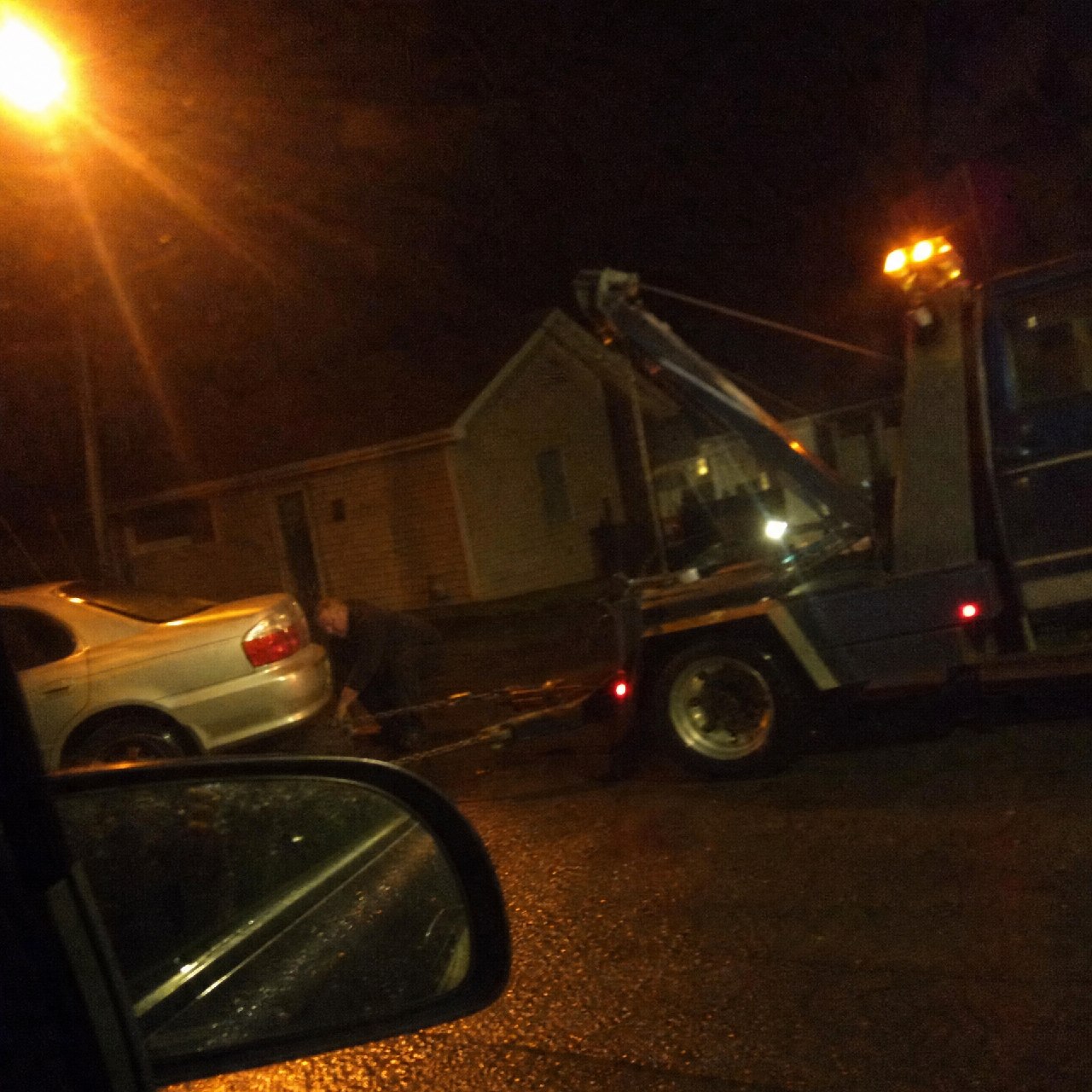
I have repossessed 4,000 cars in 34 years. Last Tuesday I hooked a 2019 Honda Civic behind my wrecker at 3 AM in a Bakersfield driveway, and heard a baby crying from inside the car. I stopped the winch. I got out of the cab. I walked to the back window and shined my Maglite through the glass. The baby was in a car seat in the back. She was asleep now. She had a small pink blanket pulled up over her chest. Sitting on the seat next to her was a gray diaper bag. Someone had written a name across the canvas in black Sharpie. RUBY BOLAND. Boland is my last name. Nobody else in Kern County has that last name. I was standing in a driveway in the middle of the night, holding the remote control for a hydraulic winch, about to take a car from my own granddaughter. A repo man learns to read a driveway in 4 seconds and see everything he needs to see. I read 4,000 driveways and never once read the one where my own life was parked. To understand how I ended up in that driveway, and why I almost didn't live long enough to see that baby turn 1 year old, I have to tell you how I got here. My name is Wendell Boland. The guys at the yard call me Wendy. I am 63 years old. I run Boland Towing and Recovery out of a dirt lot on Cottonwood Road. I grew up in Enid, Oklahoma. My father worked the oil fields. My mother worked the school cafeteria. I understood from a young age that a man who does not work does not eat. I enlisted in the Marines at 18. I got out at 22 and spent 4 years working oil field service in Kern County, pulling double shifts on the rigs until my hands went numb at the knuckles. I married June in 1985. I was 23. She was 21. We had a son named Kyle in 1986. I started driving tow for a company up in Delano in 1988. By 1993, I had saved enough to buy my own yard. I bought 2 used wreckers and put my name on the doors. I ran 24-hour dispatch. I lived in the cabs of those trucks. I missed dinners, birthdays, and school plays because a car doesn't wait for a man to finish his meal. June left in 1997. Kyle was 11. She took him to Fresno to live with her sister. I drove up on weekends to see him. I did that for 4 years. Then came a Saturday afternoon when Kyle was 15. We were standing in the parking lot of a bowling alley. He looked at me, his face hard, and said the words that ended it. "You are not my dad. My dad would have come sooner." I got back in my truck and drove to Bakersfield. I didn't go back the next weekend. I thought he needed the anger. I thought I was giving him time. I gave him too much time. Kyle joined the Army at 18. He did 2 tours in Iraq. He came home in 2007, and he brought the war back with him. He started drinking. He started fighting. In April 2009, he got into a bar fight in Bakersfield. It went too far. The other guy ended up in a coma. Kyle was 22 years old. I heard about it on the local news. I sat in my office at the tow yard and watched my son's face on a small television sitting on top of a filing cabinet. The anchor said his name. Said the address of the bar. Said the victim was in critical condition. I didn't go to the trial. June went. Kyle got 8 years for aggravated assault. I told myself I would go visit him at Corcoran. I never did. Once a year, I wrote him a letter. I put it in an envelope, wrote his inmate number on the front, and put it in the top drawer of my desk. I never sent a single one. There are 8 of those letters still in that drawer. I have never been able to throw them away. I became the yard. Not a father. Not a husband. Just the yard. The yard doesn't need a family. The yard just needs to hook cars. I worked 6 days a week for 34 years because I didn't have anything else. I stayed alive out of habit, not intention. I haven't been to a doctor since 2018. I eat at truck stops, gas stations, and Waffle House at 2 in the morning. My coffee starts at 3 AM. I drink a 6-pack of Coors Light in the office most nights before I fall asleep in the cracked leather recliner in the back room. My only company is Diesel, an 8-year-old black lab I inherited from a driver who quit in 2017. Diesel sleeps on a dog bed next to the recliner. He doesn't ask questions. He is the easiest relationship I have ever had. I convinced myself after June left and Kyle stopped talking to me that my body was just a tool for work. It didn't need maintenance. It didn't need care. It just needed to pull the levers and hook the cars until it couldn't do it anymore. Then came the Tuesday morning in October. I was running a 2019 Honda Civic that had slipped into repo status. The address was a small rental house in East Bakersfield. Chain link fence around the front yard. A citrus tree in the back. I backed the wrecker into the driveway without headlights. I dropped the wheel lift. I slid the L-arms under the front tires. I had the car hooked in 40 seconds. That was when I heard the crying. I walked up to the back window. I shined the light. I saw the baby. I saw the pink blanket. Then I saw the diaper bag. RUBY BOLAND. The handwriting was sharp and slanted. Someone had written it so the bag wouldn't get mixed up at daycare. I stood in the driveway and stared at those black letters for 40 seconds. I didn't breathe. I looked at the baby's face. She was asleep again, her face puffy from crying. She had my nose. She had my ears. Small, low set. I walked back to the wrecker. I dropped the L-arms. I retracted the wheel lift. I unhooked the Honda Civic and left it exactly where I found it. I got back in the cab. I sat with my hands gripping the steering wheel. My hands were shaking so hard they rattled against the plastic. Diesel was sitting in the passenger seat. He looked at me. "I know," I said to the dog. "I know, Diesel." I drove out of the driveway without headlights. I drove back to the Cottonwood Road yard. I sat in the recliner in the office until 6 AM. I didn't sleep. I didn't drink my coffee. I just sat there in the dark. I spent 6 days not knowing what to do. I knew Kyle had gotten out of prison in 2019. I knew he had been out for 5 years. I knew he was 39 now. I didn't know he was married. I didn't know he had a child. I drove past the house in East Bakersfield 3 times in those 6 days. I parked down the street and watched the Civic sitting in the driveway. I bargained with myself. I told myself to leave them alone. I told myself a repo man showing up after 20 years of silence was the last thing they needed. On day 6, a Sunday, I drove my personal truck to the house. I parked at the curb. I walked up the concrete path. I knocked on the front door at 10 AM. A woman opened the door. She was in her early thirties. She had her hair pulled back in a low ponytail. She was holding the baby on her hip. I looked at the baby's face in the daylight, and I knew. "Ma'am," I said. My voice sounded like gravel. "My name is Wendell Boland. I own Boland Towing and Recovery. Your Civic was scheduled for repossession Tuesday night. I unhooked it and left. I need to talk to Kyle." She stared at me. She didn't look scared. She looked like someone who had been waiting for a very long time. "Kyle," she called over her shoulder. Kyle came to the door. He was lean. He had dark hair, buzzed short. He had tattoos on his forearms. He had a pale scar on his left cheekbone from the bar fight that cost him 8 years of his life. He stopped in the doorway. He looked at me. 6 seconds passed. The street was perfectly quiet. "Dad," Kyle said. I sat down at their small kitchen table. The woman's name was Ashley. She made coffee. She kept the baby on her hip while she poured. I couldn't look at the baby yet. I stared at my hands on the table. My knuckles were scarred from 34 years of work. My right index finger had a crooked set from a break I never had looked at. I had never noticed how old my hands looked until I was sitting in my son's kitchen trying to figure out what to say. Kyle sat across from me. We didn't know how to begin. Ashley started. She set a mug in front of me. "Kyle has been meaning to call you for 4 years," she said. "Ever since Ruby. He was scared. I have been telling him to try. I am sorry it took a repo to bring you here." I nodded. I couldn't speak. "Dad," Kyle said. "I got out in 2019. I have been sober since." "I know," I said. "You know." "I saw you at the county courthouse in 2020," I told him. "From across the parking lot. You didn't see me. I was there for a repo hearing. I saw you. I couldn't do anything else that day." Kyle was silent. He looked down at the table. He was wearing a silver St. Christopher medal around his neck. The chain was thin. It looked like the kind a woman picks out for a man she loves. Ashley put the baby down in a wooden highchair. The baby reached out her small hand toward the center of the table. "Ba," the baby said. "That is her word for banana," Ashley said softly. I looked at the baby for the first time properly. I looked at her dark eyes. I looked at the shape of her jaw. I saw Kyle at 1 year old, sitting in the front yard of a house I lost in 1988. I put my large, scarred hand over my mouth. My chest caved in. Ashley handed the baby a slice of banana. Then she looked at me. "This is Ruby," Ashley said quietly. "She is your granddaughter." "I know," I said through my hand. "I am sorry." Over the next 4 weeks, I learned who they were. I started coming for dinner on Sunday nights. Ashley cooked the kind of food that takes all afternoon, the kind that fills a house with a smell that makes you feel guilty for having missed it. Roasted chicken. Enchiladas. A pot of beans that had been going since morning. Kyle and I would sit in the small backyard afterward, under the citrus tree Ashley had planted the day they moved in. The tree was small but it had fruit on it. Kyle said she talked to it. He said it the way a man says something about his wife that embarrasses him but that he is also proud of. We didn't talk about prison unless Kyle brought it up. We did talk about the years I didn't come. "Mom told me you didn't want me," Kyle said one night, watching the porch light hit the leaves of the tree. "I believed her until I was 20. And I didn't have time to think about it anyway, because I was drinking." "She said what she said," I told him. "Some of it was true. I didn't know how to come and see a teenager who had told me I wasn't his father. I gave you too much time. I am sorry." Kyle nodded. He didn't offer empty forgiveness. He just said, "Okay." It was enough. It was a start. I brought Ruby a small stuffed animal every Sunday. A bear. A rabbit. A dog that looked like Diesel. By week 4, she had them lined up on the shelf above her crib. Ashley sent me a photograph of the shelf without a caption. She didn't need one. Ashley started calling me Wendy, just like the guys at the yard. Kyle called me Dad. He didn't stumble over the word. He used it like he had been saving it up. On a Saturday morning, I took Kyle to the tow yard. I introduced him to the drivers. Diesel followed him around the lot like he had known him his whole life. Kyle laughed. First time I had heard it. It sounded like me. Kyle sat in my office. He looked at the 8 envelopes in the open top drawer of my desk. He looked at them for a long time. He didn't ask. I didn't explain. He just looked at them and then looked at me. He had lost his warehouse job in October. He was applying everywhere. He needed work. "You want to learn," I said. Kyle looked up. "I don't know if I can." "You have hands and eyes," I told him. "You have that. Come back Saturday." He came back. I showed him how to back a wrecker, drop the wheel lift, slide the L-arms. He picked it up faster than most 20-year-old trainees. He had my hands. The following Wednesday afternoon, Ashley came to the yard. She brought Ruby. I was sitting in the office going over dispatch logs. Ashley sat down in the chair across from my desk. Ruby was holding the stuffed dog I had bought her. She held it by one ear and dragged it against her cheek. "I am glad you unhooked the car," Ashley said. "I didn't have a choice," I said. "You had every choice," she replied. "I know how repo works." I nodded. I looked at the diaper bag sitting on the floor next to her chair. The one with my name written across it in black Sharpie. Ashley leaned forward. Her voice dropped. "I am asking you not to leave again," she said. "Not now. Not ever." I looked at her. I looked at the woman who had kept my son alive when I wasn't there. Who had married him when he was a man with a record and no prospects and a father who had never once shown up. "I will not," I promised her. I meant it. I meant every word of it. But a promise is only good if you are alive to keep it. The body had been sending warnings for months. I had been signing for them and filing them away unread. One morning in the office, I fumbled the ring of keys off the dispatch board. My fingers just would not close on them. I picked them up off the floor and told myself it was the cold. Two weeks later, I dropped a heavy chain hook in the dirt beside the wrecker. My grip vanished for a split second and came back. I told myself I hadn't eaten yet. A week after that, I had to use two hands to shift the primary rig into gear. First time in 34 years. I told myself the linkage was going stiff. I told myself to grease it. The linkage was fine. Then came a Tuesday afternoon. Kyle was there for a training shift. I was showing him how to work the winch controls on the primary rig. It requires grip strength. You have to hold the tension release lever while you feather the cable out. I had been showing him for 40 minutes. My right arm was feeling heavy. The air in the yard felt thick, even though it was November. "Show me the release angle one more time," Kyle said. I reached for the heavy metal hand control. I wrapped my fingers around the lever. I went to squeeze. My grip failed. The muscle simply quit. My fingers went slack. The heavy metal control unit slipped out of my hand and crashed against the metal running board of the wrecker. Kyle reached out and caught it before it hit the dirt. I took a step back. I sat down heavily on the diamond-plate steel deck of the wrecker. My chest squeezed. It felt like someone had wrapped a heavy tow strap around my ribs and pulled it tight with a winch. My vision narrowed. The edges of the tow yard went gray. For 4 seconds, I couldn't see Kyle's face. "Dad," Kyle said. The gray pulled back. The pressure eased slightly. I put my hand on the metal deck to steady myself. The steel was cold. I focused on the cold. "I am okay," I breathed out. "Give me a second." Kyle set the control unit down. He climbed onto the deck and sat down next to me. Diesel trotted over from the office and rested his heavy black head on my knee. "Dad," Kyle said again. His voice was tight. "What is going on." I looked at my right hand. It was trembling against my leg. "My body is going," I said. "I haven't told anyone." "How long." "A year." Kyle was quiet for a long moment. He looked out across the dirt lot, at the chain link fence, at the street beyond it. A truck went by on Cottonwood Road. We both watched it pass. "Dad," Kyle said. He didn't look at me. "I got out of prison to come home to you. You didn't know that. Because I didn't tell you. But that is why I did the work. That is why I stayed sober." He turned and looked me directly in the eyes. "I am not losing you now that I finally got here." I couldn't speak. The tightness in my chest had nothing to do with my heart this time. "You are seeing a doctor," Kyle said. "Tomorrow." I nodded. Dr. Martinez at Bakersfield Family Medicine sat across from me with a tablet in his hands. He was younger than I expected. He had a neat beard and a wedding ring and the careful eyes of a man who has learned to deliver bad news without flinching. "Wendell, your LDL cholesterol is 224," he said. "Your blood pressure is elevated. You are in a high-risk category for a major cardiac event." I sat on the exam table. The paper crinkled under me. I didn't say anything. "I am writing you a prescription for atorvastatin," Dr. Martinez said, tapping the screen. "Twenty milligrams to start. We need to get that LDL number down immediately." "No," I said. He stopped tapping. "Excuse me?" "No statins." "Wendell, this isn't a suggestion. With an LDL of 224, you are playing Russian roulette every time you exert yourself. You indicated on your intake form that your father had heart disease." I had. Because he did. Died at 63. But that wasn't why I was saying no. "I am not taking the pill," I said. He leaned forward. He set the tablet down on the counter beside him. He put his hands together in his lap. "Can I ask why?" "I have seen what that pill does to a man's hands," I said. "I work with my hands. I will not lose them." He spent ten minutes explaining plaque buildup, arterial blockages, and stroke risks. He was thorough. He was not unkind. I let him talk. I didn't hear most of it. I was thinking about Big Sammy Delgado. Big Sammy ran the largest repo operation in Fresno for 35 years. Sammy and I trained under the same tow instructor in 1988. We competed for accounts across the Central Valley for three decades. We were friends despite it. Sammy was a giant. He could manually hook a one-ton dually truck in the rain without breaking a sweat. His forearms were the size of most men's calves. In 2020, Sammy failed his DOT physical because of high cholesterol. His doctor put him on rosuvastatin. Within 14 months, Sammy couldn't work the winch controls on his own wrecker. His grip strength vanished. He tried to stay in the office and dispatch, but eventually, his hands shook so badly he couldn't hold a clipboard steady enough to fill out a repo ticket. He sold his operation to his nephew Marco in 2022. Now Sammy sits in Marco's office 3 days a week, greeting drivers and telling stories. He never touches a wrecker. Last July, at Marco's tow yard summer party, Sammy and I were sitting at a picnic table. Sammy reached for a bottle of Modelo Especial. It had a twist-off cap. Sammy wrapped his thick fingers around the cap and tried to turn it. His hand shook. He couldn't grip it hard enough to break the seal. He put his left hand over his right and tried with both hands. His face turned red. The cap didn't move. He stopped. He looked at the bottle. Then he looked at me. I reached across the table, took the bottle, twisted the cap off effortlessly, and handed it back. "Thanks, Wendy," Sammy said quietly. He took a drink. He set the bottle down. He looked at his hands resting on the plastic table. He turned them over slowly, palms up, like he was reading something written there that he didn't like. "Don't get old, Wendy," Sammy said. "Or if you do, don't let them put you on the pill." "What pill," I asked. "The one they gave me," Sammy said, flexing his stiff, trembling fingers. "The one that did this." I didn't ask any more questions. I didn't want to know. But sitting in Dr. Martinez's office, staring at the prescription pad, I saw Sammy's hands failing to open a beer. I saw my own hands failing to hold the winch control while my son watched. I walked out of the clinic without the prescription. I drove back to the yard. I climbed into the cab of the primary rig. I shut the door. The cab smelled like diesel and old coffee. I gripped the steering wheel and looked out at the chain link fence. If I take the pill, my hands go. I lose the yard. I lose the only work I know how to do. I become a man who sits in an office and watches other men hook cars. If I don't take the pill, my heart goes. And I lose the son who just found me, and the granddaughter I just met. I lose the family I finally got back. I sat in the cab and felt the walls close in. Both choices cost me everything. I told Kyle about the refusal. We were sitting in his backyard. Ashley had gone inside to put Ruby down for the night. "Dad," Kyle said, his voice tight. "If not the pill, then what." "I do not know yet," I told him. "I am figuring it out." "You have a granddaughter," Kyle said. "She is going to walk in about 3 months. She is going to want you to see it. Figure it out fast." I tried to figure it out. I threw out the Coors Light. I stopped eating at Waffle House. I started walking the perimeter of the tow yard every morning before dawn. Two laps, then three. I counted steps. I timed myself. But the body kept slipping while I walked. One morning I tried to open a jar of instant coffee in the office and my hand shook against the lid. I stood there holding that jar and I saw Big Sammy at the picnic table, both hands wrapped around a bottle cap that would not move. I was watching Sammy's hands grow out of the ends of my own wrists. I did it for 3 months. I lost 15 pounds. I went back to the clinic. They drew the blood. LDL: 217. Three months of discipline, and the number had dropped 7 points. Dr. Martinez pushed the statin again. He said lifestyle changes were not enough. He said my genetics were working against me. I refused again. I left the clinic and drove to Kyle's house. Ashley was sitting at the kitchen table. She looked at me. "He pushed the pill again," I said. "Then what are you going to do," Ashley asked quietly. "I didn't have an answer." That Saturday afternoon, I was sitting in the office at the yard. The door opened, and Cornelius Whitaker walked in. Everyone calls him Corny. He is 72 years old. He is a retired diesel mechanic. He spent 47 years working on heavy trucks, wreckers, and hydraulic systems. He ran his own shop in Oildale until 2018. He did all the service on my fleet for 25 years. He has the kind of knowledge that only comes from having your hands inside every system that can fail. Corny still comes by the yard once a week to drink coffee and watch the operation. He never asks for anything. He just sits. He walked in, poured a cup from the pot, and turned to look at me. He stopped. "You look like hell, Wendy," Corny said. "I know," I said. Corny pulled up a metal folding chair and sat down across from my desk. He put his coffee down. "Talk to me," he said. I talked. I told him about the chest pressure. I told him about the grip failing on the winch. I told him about the 224 LDL, the statin refusal, and the 217 lab result. I told him about the driveway at 3 AM, and the diaper bag with my own last name written across it in Sharpie. Corny listened. He didn't interrupt. He didn't look at his phone. He just sat there with his coffee in both hands and listened to the whole thing. When I finished, he set his coffee down. He looked at me. "I pulled men out of truck cabs for 47 years," Corny said. "I have seen people with perfect numbers have the worst outcomes. I watched 12 guys drop on the night shift over 3 decades. Half of them had lab reports that their doctors loved. Their numbers were beautiful, and they died anyway." He reached across my desk and picked up a blank tow ticket. He flipped it over to the blank white back. He pulled a black BIC pen out of his shirt pocket and uncapped it. "Wendy," Corny said, his voice serious. "You know what happens to a hydraulic line under pressure for years." "It cracks," I said. "Cracks. Same word. Same reaction," Corny said, drawing a thick line on the ticket. "Oxygen going after the rubber from the inside. The rubber is not the problem. The rubber does its job for a long time. The oxidation is the problem." He tapped the paper with the pen. "Same thing happens to the fat in your bloodstream. The cholesterol number your doctor watches is only the pressure reading. It says absolutely nothing about how many of the lines have already started cracking. A rig with a beautiful pressure gauge can still have a line one shift away from blowing." Corny drew jagged, lightning-bolt marks along the line he had drawn. "Rusted cholesterol turns sticky," he explained. "It burrows into the artery wall. It packs in year after year. One day, a chunk breaks off. The line blows. Heart attack. It is the exact same thing as a hose failure at a job site. The line had been failing for months. Nobody read the wear." Then he drew a circle with an arrow chasing its own tail. "This is the wheel," Corny said, tapping the circle. "Body reads the crack as damage. Sends more fat to patch it. More fat means more surface to crack. More crack means more damage. Round and round. A wheel chasing its own tail." He looked up at me. "That is why your number kept climbing while you walked laps and ate rabbit food, Wendy. It was never your diet. It was never your discipline. The wheel was spinning the whole time, and nothing you did ever touched the rust that spins it." He drew a heavy X through the circle. "Statins chop the pressure count down," he said. "They never touch the crack that keeps spinning the wheel. They are bleeding pressure without finding the leak." Corny leaned forward. He looked me right in the eye. "And here is the killer, Wendy. That production line the pill closes in your liver? It makes cholesterol, yes. But it also makes CoQ10. That is the hydraulic fluid every muscle in your body burns to work." He held up his own right hand. He opened and closed his fingers slowly. "Same production line. Same switch. Shut off one, and you shut off the other. That is what happened to Big Sammy Delgado. His grip is not aging. His grip is starving. The exact fluid the muscle needs to fire is not there because the pill closed the line." I stared at Corny's hand. I saw Sammy's face. "I had a cardiac event in 2019," Corny said quietly. "They put me on atorvastatin. I spent 8 months on it. I lost the grip in my hands. I am a mechanic, Wendy. My grip is my career. I came off the pill against my doctor's advice. I found a new doctor. And I started reading." He pointed the BIC pen at me. "There is a pigment in a very old strain of beetroot," Corny said. "Not the sugar beet you buy at the grocery store. This pigment is called betalains. It is not a carpet bomb like most antioxidants. It is a smart missile. It targets only the exact reaction that turns your cholesterol rancid, and it leaves the rest alone." He tapped the circle again. "It gets inside the cholesterol particle itself. Folded right in where the rusting starts. A statin cannot reach in there. Fish oil cannot. Nothing on a shelf can. The betalains go in and stop the rust at the source." Corny pointed his pen at me. "And they do all of this without touching the CoQ10 production line. So they stop the rust the pill ignores, and they leave the spark the pill drains. Stop the rust. Leave the spark. The one thing the pill cannot do, this does. The one thing the pill does to you, it does not." He capped his pen. "That is what I know. Do what you want with it." I took it. Or I tried to. I drove to the CVS on Rosedale Highway. I walked down the supplement aisle. I found a bottle of beetroot capsules. I bought them. I figured a beet was a beet. I also figured the capsules would do what the diet couldn't. I stopped walking the perimeter of the yard before dawn. I stopped being as strict. I went back to Waffle House for breakfast. I told myself it didn't matter now that I was taking the thing that actually addressed the problem. I took them for 4 weeks. I actually felt a difference. I had a small energy lift in the afternoons. My grip felt slightly more secure on the winch controls. I was sleeping 5 hours a night instead of 3. I thought I had solved it. I thought I had found the backdoor. On a Thursday morning, I drove the wrecker to a walk-in lab in Bakersfield. I paid out of pocket. I sat in the waiting room in my work boots, still in my uniform shirt from the morning run. The nurse handed me the paper. LDL: 218. The number had gone back up. Worse than where I had been after three months of diet and exercise. The beetroot capsules from the drugstore had done absolutely nothing to stop the rust in my arteries. I walked out to the parking lot. I climbed up into the cab of the wrecker. I shut the door. I pulled out my phone. Ashley had sent me a text message two hours earlier. It was a photograph. Ruby was standing up next to their wooden coffee table. She was holding onto the edge with both of her small hands, her legs wobbly but straight. She was wearing her pink blanket draped over her shoulders like a cape. Under the photo, Ashley had typed: She wants Grandpa to see. I stared at the screen. I am 63 years old. I looked at the lab printout resting on the dashboard. I couldn't tell Kyle this number. He had come out of prison for me. Ashley had opened her front door to me. Ruby was standing up next to a coffee table for me. And I was about to be the man who didn't show up to the birthday party. Same man I had been for 20 years. Same failure. Same story. I crushed the printout in my fist. The next morning I started walking the perimeter of the yard again before dawn. I tightened the diet back up. It was all I knew how to do, and I already knew it wasn't enough. That Saturday afternoon, I drove back to the yard from a morning run and Corny was there, drinking coffee. I threw the crushed printout on the desk. Then I pulled the CVS bottle out of my pocket and set it down. "This doesn't work," I said. Corny picked up the bottle. He looked at the label. He unscrewed the cap, shook a capsule into his palm, and twisted it open over a blank tow ticket. A dull, brick-brown powder spilled out. "Wendy. Look at that. What color is that?" "Brown." "Brown. Betalains are deep crimson. Almost violet. That is the pigment. That is the whole medicine. If it is brown, the betalains are dead. This was cooked before it ever reached you." "Cooked?" "Heat kills the pigment. Same reason you never overheat hydraulic fluid. You destroy the additives that do the work. And look at the label. It just says beetroot powder. That is the grocery beet. We spent 100 years breeding that one for sugar, and every year we bred the sugar up, we bred the pigment down. Grocery beet is candy, Wendy. You have been swallowing red dust for a month." He tapped the crushed lab printout. "That little lift you got off the drugstore capsules? That part was real. Even a weak beet moves your blood a little. That is the fastest thing a beet does, and it is how the cheap ones fool you. You feel a little something and you think it is working. Meanwhile the rust never got touched. The feeling is not the proof, Wendy. The lab sheet is the proof." He picked up his BIC pen and turned the tow ticket over. He wrote 4 words in block letters. STRAIN. "Blutwurzel," Corny said. "Old Amish seed line from Lancaster County. Not the grocery beet. Blutwurzel is medicine." DRYING. "Shade dried. Heat kills the pigment." DOSE. "1,300 milligrams per capsule. Not a fraction hidden inside a proprietary blend where they hope you do not check." LAB REPORT. "Outside lab, actual batch, published for you to read. You would not put a fluid in a hydraulic system without knowing the spec sheet. Same principle. If they will not show you the sheet, they are hiding what is not in the load. The clinical study from Wageningen University showed a 15 point drop in 12 weeks. That is the proof you look for." Corny slid the tow ticket across the desk to me. "Cross reference it yourself," Corny said. "Do not trust me. Trust the sheet." I drove home that night. I sat in the recliner in the office. Diesel laid his head on my boots. The yard was quiet. The dispatch radio was off. I opened my laptop. I pulled the tow ticket out of my pocket. I cross-referenced every beetroot brand I could find against Corny's four criteria. The CVS brand I had been taking? Heat processed. The top sellers on Amazon? The wrong strain entirely, bred for sugar. The ones that claimed a high dose hid it in a proprietary blend with no lab report anywhere on their site. One brand kept coming up. ROSABELLA. Blutwurzel strain. Grown in Lancaster County. Shade dried slowly. 1,300 milligrams per serving. And a certificate of analysis from an independent lab posted right on the product page. Four for four. I ordered three bottles. More expensive than the drugstore. I didn't care. The box arrived at the tow yard on a Wednesday. I took the bottle out to the garage bay. I set it on my heavy steel workbench. I took a small aluminum drip pan, the kind I use to catch transmission fluid, and wiped it clean with a rag. I twisted open one of the Rosabella capsules over the aluminum pan. The powder that fell out was DEEP CRIMSON. It was almost violet. It looked nothing like the brown dust I had bought at the drugstore. I dipped my finger in a cup of water and let a single drop fall onto the powder. The red pigment bled across the shiny aluminum metal instantly, like brake fluid on a garage floor. I have cleaned brake fluid off a lot of floors. I know that color. But this was a different red. This was alive red. I took two capsules right there at the workbench and swallowed them with water. I walked back into the office. I sat down in the recliner. And I waited. SEVENTEEN MINUTES LATER, I felt it. It started as a warmth moving down my shoulders, into my forearms, all the way to my fingertips. Then the heavy, dull pressure behind my eyes began to thin out. It felt like someone was slowly turning the lights up in an office I didn't even know had gone dim. I knew this wasn't my cholesterol dropping. Corny had been clear: stopping the rust takes weeks, and you only see it on the lab sheet. What I was feeling was blood moving easier. Oxygen reaching muscles and joints that had been starving for years. The days began to accumulate. By week two, my grip was coming back. I lifted the ring of keys off the dispatch board without thinking about it, the way I had for 34 years. I carried a heavy chain hook across the lot without a single tremor. I shifted the primary rig into gear with one hand. The linkage had never needed grease. It was the hand. The hand was back. By week three, I was sleeping without waking up at 3 AM. I cut my schedule back to 4 days a week at the yard. Kyle covered 2 of my shifts as a trainee. The first morning I woke up in my own bed at 6 AM feeling rested, I lay there trying to figure out what was different. Then I realized. The pressure behind my eyes was gone. The fog was gone. I won't pretend the capsules did all of it. I was walking the perimeter of the yard again every morning. Eating better. One thing feeds the next. But I had done all of that for three straight months before, and my grip still failed on the winch control while my son watched. Something had turned. At week 4, I drove back to the walk-in lab. LDL: 175. Down from 218. Down from 224. The rust was stopping. At week 6, I went back to Dr. Martinez for full bloodwork. He walked into the exam room. He looked at the tablet. He looked at me. He looked back at the tablet. He scrolled down. He scrolled back up. "Wendell," he said slowly. "Your LDL is 158." "I know," I said. He scrolled through the rest of the numbers. He shook his head slightly. Not in disbelief. More like a man recalculating something he thought he had already figured out. "Whatever you're doing, keep doing it," Dr. Martinez said. "These numbers are heading in the right direction." He set the tablet face-down on the counter. He didn't ask what supplement I was taking. He didn't push the statin. He just let me keep my win. I left the clinic. I got in my truck. I drove straight to East Bakersfield. I knocked on the door. Ashley opened it. Ruby was sitting in her high chair in the kitchen, eating a banana. She had banana on her chin and on the tray and on the stuffed dog she had dragged into the high chair with her. I walked into the kitchen. I placed the lab printout flat on the kitchen table. Ashley picked it up. She read it. She read it again. She looked up at me. Her eyes were bright. "Wendy," Ashley said. Her voice shook. "Are you going to be at Ruby's birthday?" "I am going to be at Ruby's birthday," I said. Kyle walked into the kitchen from the hallway. He had grease on his hands from working on his truck in the driveway. He looked at Ashley. He looked at the paper in her hand. "Good," Ashley said fiercely. She said it the way a woman says something she has been waiting a long time to be allowed to say. "Ba," Ruby said from the high chair, holding out her small hand. I reached onto the table, picked up a slice of banana, and handed it to my granddaughter. Two weeks later, on January 12th, Kyle was working a training shift with me at the yard. We had a heavy recovery job. I stood at the primary rig. I held the heavy metal hand control for the winch lever. The exact same lever that had slipped from my fingers and crashed onto the steel deck months ago. I held it for an hour. My hand did not tremble. The cable feathered out perfectly. Kyle watched my hand. He didn't say anything. He just nodded once, slowly. That afternoon, I parked my truck in front of Kyle and Ashley's house. The Central Valley sky was clear and blue. The air was cold but the sun was out and the light was the kind of flat, sharp winter light that makes everything look more real than usual. I walked through the side gate into the small backyard. There were 15 people there. Kyle's NA sponsor and his wife. Two women from Ashley's call center. A handful of my tow yard guys with their families. Diesel was lying in the grass on a long leash, letting the kids pet him. Ashley had baked a simple chocolate cake. It sat on the patio table with one single candle in the center. She had written RUBY in white frosting across the top. Ruby was wearing a small pink dress. I sat down in a green canvas lawn chair under the citrus tree. The tree had new fruit on it. Small, green, not ready yet. Ashley picked Ruby up. She walked over to me and gently set Ruby down on my lap. Ruby had her pink blanket clenched tightly in her small fist. The same pink blanket I had seen through the back window of the Civic at 3 AM in October. Sitting next to my chair was the diaper bag with her name written across it in black Sharpie. I wrapped my arms around her. I held her exactly the way I held Kyle when he turned 1 year old in the front yard of a house I lost in 1988. My arms held. My chest was steady. My heart was quiet. Not silent the way a neglected heart is silent. Quiet the way a strong, working heart is quiet when it is doing its job. Ruby looked up at me. She pointed a small finger at my face. "Ba," she said. "Not banana today, Ruby," I told her, smiling. "Cake." Kyle walked over carrying the chocolate cake. He set it on the small table in front of us. Ashley struck a match and lit the single candle. All 15 people in the backyard started singing Happy Birthday. I sang the loudest. My chest didn't tighten. My breath didn't catch. My heart just beat steady and strong. Ruby stared at the flame, her eyes wide. When the song ended, Ashley leaned in close to her. "Okay, Ruby," Ashley said softly. "Blow it out." Ruby puffed her small cheeks, but she couldn't do it alone. Ashley blew the candle out with her. The smoke drifted up into the branches of the citrus tree. Kyle pulled his phone out of his pocket. He held it up and took a photograph. Me sitting in the chair with Ruby on my lap. Ashley standing beside us. The smoke rising from the candle. The citrus tree in the background. Ashley looked down at Ruby. She stroked the baby's hair. "Ruby," Ashley said, her voice clear and certain. "This is Grandpa. Grandpa is here." Thirty-four years ago, I started hooking cars in the dark. In October, I stood in a driveway at 3 AM with a diaper bag in my hand, about to take a car from a family I didn't know I had. Today, I am the man who showed up to the party. The doctor watches the pressure gauge. The people who love you watch the man. If your doctor is pushing a statin, and something inside you knows it is the wrong answer, you are not crazy. You are seeing the rust the numbers don't show. Rosabella supports the body where it needs it most. It helps fight the rust from the inside out, without draining your spark. 2 capsules. 1 glass of water. The proof that you got the real thing comes today. https://track.tryrosabella.com/bfcb877b-9f52-4175-9be6-9bc1a89ce3a8 Wendell "Wendy" Boland P.S. Corny told me something important after that first lab result came back at 175. He said the wrong fight is arguing with a doctor about a number on a pressure gauge. The right fight is stopping the actual cracked lines the gauge doesn't measure. Rosabella fights the right fight. They offer a 90-day money-back guarantee, which means you have absolutely nothing to lose except the rusted plaque that is quietly building in your arteries while you wait. P.P.S. You will feel it in the first 20 minutes. It starts as a warmth moving down your arms. It feels like the lights coming up in a room you didn't even know had gone dim. Let me be clear: that is not the cholesterol benefit. Cholesterol takes weeks to change and only shows up on a lab sheet. What you feel that fast is much simpler. It is your blood moving easier. It is oxygen finally reaching places where it hasn't flowed in a long time. If the powder in the capsule is the deep crimson one, you will know. P.P.P.S. I sent a bottle of Rosabella to Big Sammy Delgado. Sammy didn't just throw his prescription in the trash because a repo man handed him a beet. He took what I gave him to his own doctor, showed him the independent research, and they made the call together. Coming off one of these pills on your own can be dangerous. Don't do it alone. Do it with the person who can monitor your blood while you transition. Sammy has been off the statin for a month now. His hands are still shaky. The damage was deep. But last Saturday, he picked up a heavy chain hook for the first time in 2 years. His hand still trembled, but he held it. His nephew Marco called me that night. He could barely get the words out. I don't know if Sammy will ever get all the way back to where he was. But I know he is holding the steel again. P.P.P.P.S. I want to say something to the women reading this. If your husband is the one with the high numbers, and the doctor is pushing pills, and you are watching him stubbornly resist, I want you to know that Ashley is the reason I am alive today. Not because she found the capsules for me. Because she looked me in the eye and told me not to leave them again. You might be the person who makes him go to the doctor. You might be the person who hands him the glass of water. Do not ask him. Tell him. "Just take it. For me." P.P.P.P.P.S. Rosabella is a small company, and they sell out frequently. They use one heirloom seed line grown by Amish families in Lancaster County. It is hand-harvested once a year after the first frost and shade-dried slowly. You simply cannot scale a 150-year-old seed line the way you scale a commercial sugar beet. When a season's batch is gone, it is gone until the next harvest. They have a buy 3 get 3 free deal running right now. That is 3 months for you, and 3 months for the person you have been thinking about this whole time. If your bloodwork is coming up in 30 to 60 days, check their availability now. Every week you wait is another week of rust that didn't need to happen. Don't forget their 90-day money-back guarantee. https://track.tryrosabella.com/bfcb877b-9f52-4175-9be6-9bc1a89ce3a8
Support stamina and heart health every day
LEARN MORELike this ad? Make it yours.
Crush rebuilds this exact creative around your product — your brand, your colors, your offer — in about a minute.