
Inactive· since Aug 6, 2026
- 5
- days it ran
- 0
- relaunches
Ad copy
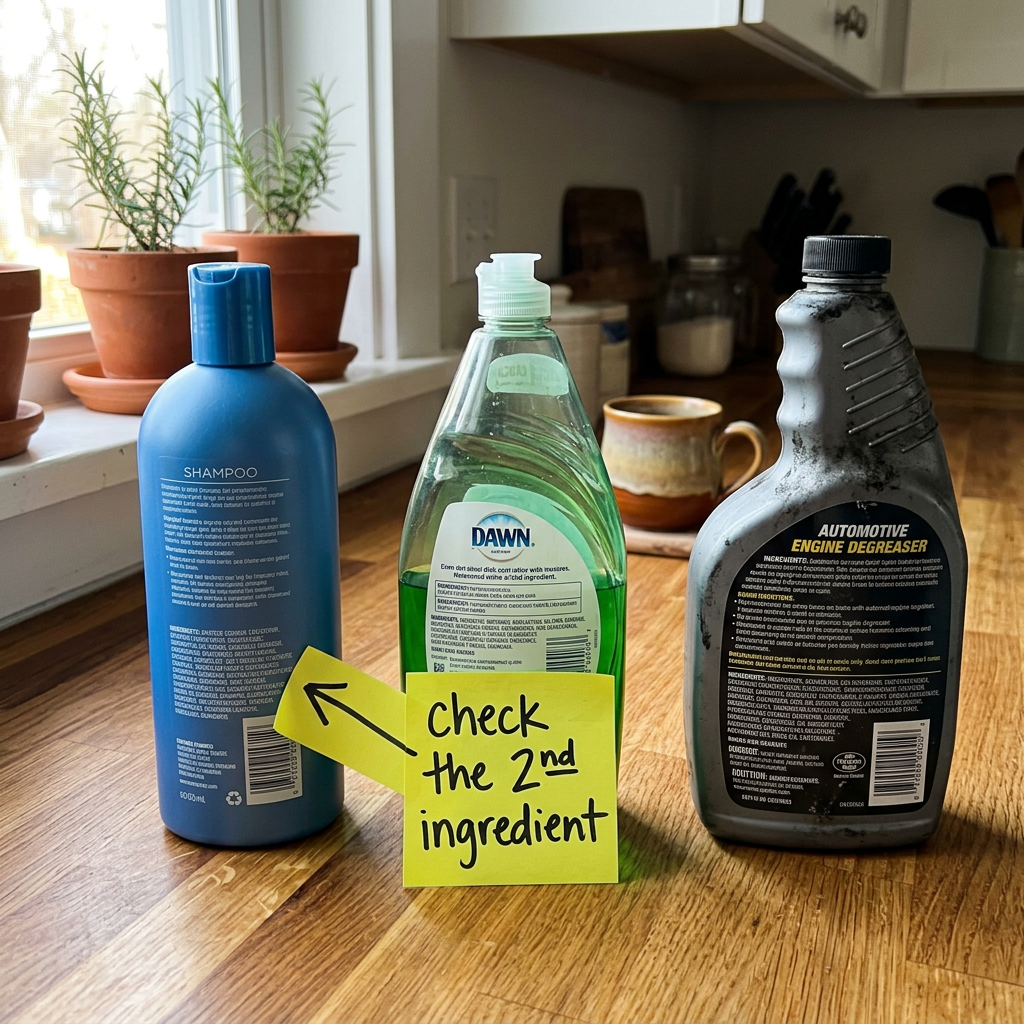
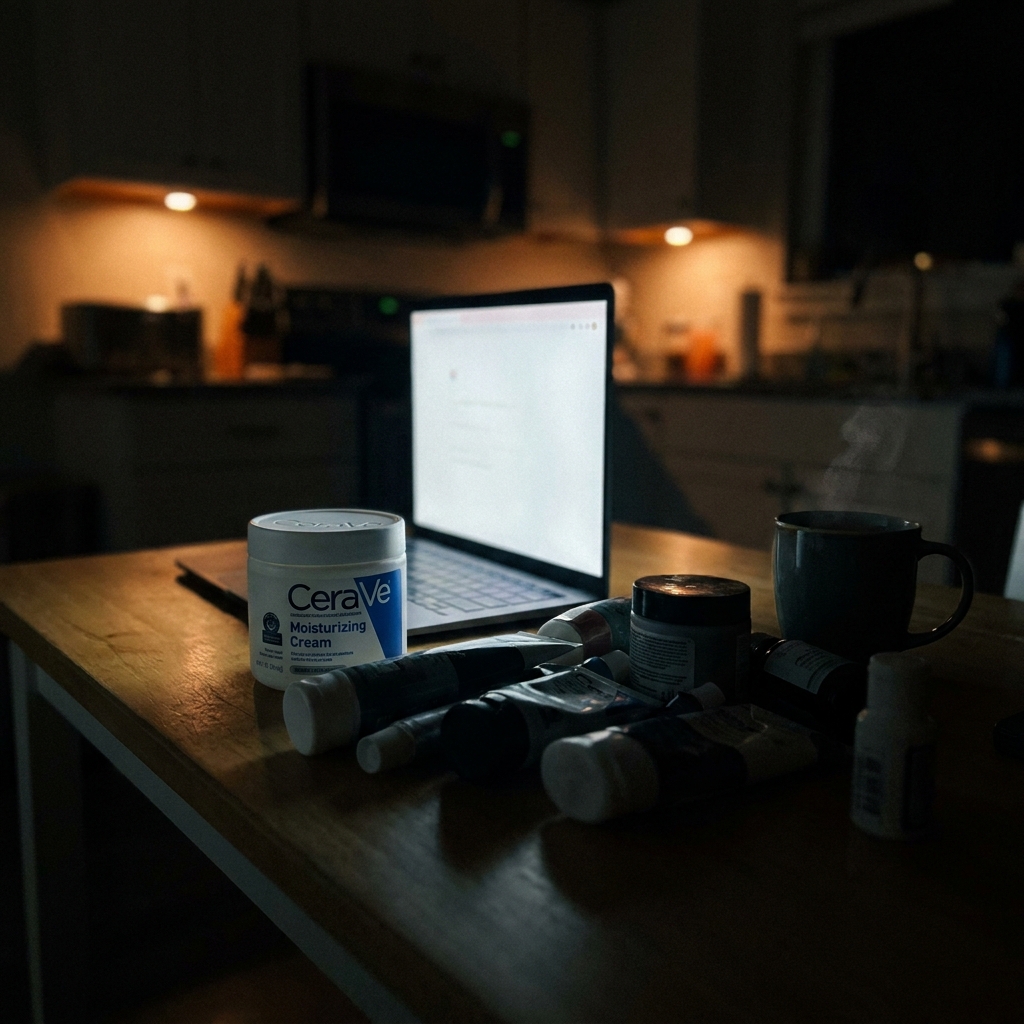
Please STOP buying eczema creams for your child until you read the back of the ones already in your bathroom. I know how that sounds. But I spent $1,483 and almost two years working my way through twelve different tubes and jars for my daughter. The ones from the pharmacy shelf, the ones from the doctor's office, the "gentle" ones, the "clinically tested" ones, the $34 one an influencer swore by. None of it calmed her skin for longer than two weeks. And the reason none of it worked was so obvious, so simple, so infuriating that when I finally understood it, I sat down on the edge of the bathtub and cried into a towel. The thing keeping my daughter's skin raw was sitting in our medicine cabinet the entire time. My daughter used to have that ridiculous baby skin. The kind strangers commented on. Lucy is five now. The patches started a little after she turned three. One rough pink spot inside her right elbow crease, small enough that I assumed it was from the slide at the park. That is the cruel part of eczema. It moves so gradually you keep explaining it away. The spot got bigger. Then it had a twin inside the other elbow. Then her forearms. Then a patch on her tummy the size of my palm, rough like fine sandpaper, pink turning red, red turning angry. She started scratching in her sleep. I would stand in her doorway at night and listen to it, this soft, steady sound like someone sanding wood in the dark. Some mornings there were little rust-colored dots on her sheets. If you know, you know. Nobody warns you about the sheets. Bedtime became a forty-five minute negotiation, and twenty of those minutes were the cream. She would see the tube in my hand and put her arms behind her back. But the moment I actually broke, the moment I stopped pretending this was a phase, was her fifth birthday party. My sister took photos while Lucy leaned over the cake. That night I scrolled through them in bed, and in the best one, the one where she's mid-laugh with frosting on her chin, both of her arms are covered in red patches you can see from across the table. I zoomed in on her arms instead of her face. Then I deleted the best photo of my daughter's fifth birthday, because I couldn't look at it. The next morning I did what every parent in this story does. I googled. "Toddler eczema won't go away" "Best cream for child eczema" "Why does my child's eczema keep coming back" Every article said versions of the same things. Moisturize constantly. Lukewarm baths. Fragrance-free everything. Ask your doctor about something stronger. So I did. All of it. The pediatrician sent us home with the standard mild cream. It worked for nine days, then the patches came back in the same spots, plus one new one. We went back and got a stronger one, with instructions that came with their own anxiety: thin layer, twice a day, two weeks on, then take a break. During the on weeks her skin would quiet down. During the break it would come crawling back, wider, like it had used the time to plan. We bought the drugstore aisle. The blue tub everyone recommends. The one for "extra dry skin." The baby one with the lamb on it. The oatmeal one. The $34 "miracle balm" from Instagram with 40,000 five-star reviews, which stung her so badly the first night that she hid the jar under her bed so I couldn't use it again. I found it there three months later. Lukewarm baths with oatmeal packets. Cotton pajamas one size up so nothing pressed on the patches. Free-and-clear detergent, double rinse. A humidifier. Cutting dairy for six weeks on the advice of a Facebook group, which changed nothing except birthday parties. One night I couldn't sleep and did the math in my email receipts and the insurance portal. Twenty months. Twelve tubes and jars. Six office visits at a $55 copay. $1,483. And my daughter's skin was worse than when we started. I want to say something about our doctors, because I'm not here to trash them. They were kind. They were doing their jobs. But at the last visit, when I said it was spreading again, the answer I got was: "A lot of kids grow out of it. Keep her moisturized and try not to let her scratch." She said it the way you'd tell someone it might rain this afternoon. Try not to let her scratch. She scratches in her sleep. Should I hold her hands until morning? I smiled and said thank you and buckled Lucy into her car seat and sat in the parking lot for a while. "A lot of kids grow out of it" is not a plan. It is a shrug with a medical degree behind it. Here is the part I didn't tell anyone for a long time. Twice a day, on a schedule, I put creams on my daughter that made her flinch. Some of them stung her. I knew they stung her, because she told me, and I kept doing it, because every instruction I had came from someone with a framed certificate. She stopped fighting it after a while. She would just go stiff, hold her breath, and stare at the ceiling until I finished. Compliance is somehow worse than the fighting. A five-year-old should not have a coping routine for her own mother's hands. I started dressing her in long sleeves for daycare. Partly for the scratching. Partly, if I'm honest, because I couldn't handle one more grownup glancing at her arms and then at me. One night Kyle, my husband, found me sitting on the bathroom floor at midnight with my phone, reading the same forums I'd read a hundred times. He asked what he could do. I snapped at him. He didn't deserve it. I felt like my child's body was a test I kept failing. The person who ended it was my next-door neighbor, Diane. Diane is 61. She was a pediatric nurse for 24 years before she retired, the kind of nurse who has seen ten thousand kids and cannot be surprised anymore. It was a Saturday in April. Lucy was helping me carry groceries in, short sleeves because it was suddenly warm, and Diane was at her mailbox. I watched her eyes go to Lucy's arms. Not in a rude way. In a professional way. Like a mechanic hearing your engine from across the street. That evening she knocked on our door with lemon bars, which I now understand were a pretext, and we ended up on my porch steps with coffee while Lucy rode her scooter up and down the driveway. Diane watched her for a minute and then asked, quietly: "What are you putting on her arms?" I laughed. Not a nice laugh. And then I gave her the whole tour: the twelve tubes, the two-week cycles, the oatmeal baths, the $1,483, the long sleeves. Diane nodded along like she'd heard this exact speech before. Because, as it turns out, she had. Hundreds of times. Then she said: "Can I be honest with you, and you promise not to be offended?" "Please." "I think the creams are part of the problem." I remember actually looking behind me, like she might be talking to a different mother on a different porch. The creams? The creams were the treatment. The creams were the plan. "I spent twenty-four years in pediatrics," she said. "By the end, half my job some weeks was eczema kids. And every single family came in carrying the same plastic bag of the same tubes. And almost none of those kids were getting better. You know what that tells you? When everyone is following the instructions and everyone is stuck?" She let that sit. "The instructions are wrong." Then she explained my daughter's skin to me in four sentences, on a porch, for free, better than anyone had in two years of appointments. "Eczema isn't dirty skin and it isn't bad luck. It's a barrier problem. Her skin can't make enough of its own sealing fats, so it can't hold water in or keep the world out. Everything she touches gets in, everything gets angry, she scratches, and the wall gets worse." "Now look at what we give these kids. The strong creams from the doctor quiet the anger down. That's all they do. They're a screen protector on a cracked phone. The crack is still there, you've just muted it, and with enough use they make the skin thinner. Thinner. On a kid whose whole problem is a thin barrier." "And the shelf creams? Turn one around sometime. First ingredient, water. Then alcohols, then preservatives so it can sit in a warehouse for three years. You are painting water onto a wall with holes in it, and the parts that aren't water are why it stings her. Her skin isn't being dramatic. It's telling you the truth twice a day." I sat there with my coffee going cold. "So what does she actually need?" I asked. "Fat," Diane said, like it was the most obvious thing in the world. "Her skin is starving for the exact thing it can't make. Not medicine. Fat. The old nurses I trained under knew this. Farm families knew it for two hundred years. We put rendered beef tallow on cracked and broken skin before any of this existed, and it worked, and then everyone forgot, because nobody can charge you monthly for something your great-grandmother kept by the sink." I went inside and opened the medicine cabinet. Twelve containers. I turned them around one at a time, under the bathroom light, and read. The blue tub everyone recommends: water, first ingredient. Then a parade of things I couldn't pronounce. The baby one with the lamb on it: water. Then more of the same. The $34 Instagram balm, the "clean" one, the one that made her hide the jar: eleven ingredients, including three different botanical extracts and a fragrance, on a product marketed for eczema. And the tubes from the doctor's office, the ones I'd treated like something sacred: I finally sat down and read the folded paper insert I had thrown away, unread, every single refill. It's all in there. The thinning. The two-week limits. The rebound. Printed in six-point font, folded into a square, tossed in the bathroom trash by tired parents every night of the year. I had spent twenty months and $1,483 layering water and alcohol onto a wall with holes in it, and quieting the alarm whenever the wall complained. I felt my face get hot. Then I got angry in a way that felt, for the first time in two years, useful. That night I couldn't sleep, but for a new reason. At 1:47 AM I got up, sat at the kitchen table with my laptop and the entire contents of our medicine cabinet in a pile next to it, and typed a search I had never typed before. Not "best eczema cream." I'd done that a hundred times. I typed: "eczema skin barrier missing fats" Three hours later I looked up and it was almost five. Everything Diane said was sitting in plain sight. Decades of published research on the skin barrier. Eczema skin fails to produce enough of its own sealing fats. The barrier leaks. That is the ground-level problem, and not one product in my pile addressed it. You cannot rebuild a wall out of water. You cannot patch a roof with the sound of the rain turned off. And the two things that kept coming up, over and over, in the research and in a hundred years of practice before the research existed: Tallow. Rendered beef fat, from cattle raised on grass. Its fat profile is nearly identical to the sealing fats human skin makes for itself. That's the entire trick. It isn't a clever new molecule. It's the missing material. Skin takes it in like it recognizes it, because chemically, it just about is it. And raw honey. Which sounds like folklore until you learn that hospitals, today, right now, dress burns and broken skin with medical-grade honey, because it holds moisture in damaged skin and keeps the surface clean while it settles down. Fat for the wall. Honey for the weather. People treated ruined skin this way for centuries, in farm kitchens, before pharmacies existed. At 4:51 AM I had one question left: if it's this simple, why had nobody in two years of appointments and twelve products ever said the word "tallow" to me? And then I answered my own question. Because there is no money in it. A four-ingredient jar you can't patent, that lasts for months, that ends the monthly repurchase cycle. The skincare aisle does not want your kid's skin fixed. It wants it managed. Forever. On subscription. I spent the next two evenings researching tallow balms, and I learned the same annoying lesson I'd learned about everything else. Most "tallow" products are cut. Cheap filler oils. Fragrance. Essential oil blends that have no business near broken skin. A drop of tallow for the label, a paragraph of other things after it. The same trick as everything else in my cabinet, wearing a farmhouse costume. Then I found a small company called Based Supplies, and the reason I trusted them had nothing to do with marketing, because there barely was any. It's a family. They started rendering tallow in their own kitchen because their own little boy had eczema, and everything from the doctor's office stung his damaged skin and left it worse, and they were exactly as desperate as I was at 1:47 AM. They went backward in time on purpose, to what people used before all of this, and it worked, and other exhausted parents kept finding them. Their balm is four ingredients. I'm going to list the entire label, because after twenty months of paragraphs I couldn't pronounce, this was the part that undid me: Grass-fed and grass-finished beef tallow. Raw honey. Cold-pressed olive oil. Beeswax. That's it. That's the whole label. Fat for the wall, honey for the weather, olive oil so it spreads thin, beeswax so it stays on through the night. And the detail that told me they actually understood kids like mine: they make a version with no essential oils at all. Nothing added. No lavender, no "calming blend," none of the botanical shrapnel that "natural" brands sneak in and that had already made my daughter hide a jar under her bed. Four ingredients, full stop. That version exists specifically for babies and ultra-sensitive skin. It's $30 for a 2 oz glass jar, which is the size of your palm. I did the math against my $1,483 and ordered without standing up from the table. There's a 30-day money-back guarantee, no questions asked, which mattered to me, because I had a drawer full of proof that I know what it's like to buy hope that doesn't work. It was sold out the first time I looked. Small family, small batches, you sign up and you wait. The restock email came ten days later. I ordered in the school pickup line. When the jar arrived I was nervous about two things. First, that it would feel like rubbing a steak on my child. It doesn't. It looks like soft butter, goes on thin, and sinks in. It smells like almost nothing. The faintest honey, gone in a minute. Nobody at daycare will ever know. Second, and really: I was braced for the flinch. Twenty months builds a flinch into both of you. That night after her bath, I sat Lucy on the bath mat and told her the truth: this one is made of butter and honey, basically, and if it hurts even a little bit, we stop, forever, no arguing. She put her arms behind her back anyway. Then, slowly, she gave me the right one. I did the elbow crease. She was holding her breath. Nothing happened. I watched my daughter wait for the sting, and I watched the sting not come, and I watched her let her breath out and look up at me with an expression I can only describe as suspicious. She said: "Is that the new one?" I said yes. She said "okay," rolled her sleeve down herself, and went to pick out a book. That was the whole event. Two years of bedtime warfare, and it ended in forty seconds of absolutely nothing happening. The absence of the flinch was the loudest silence I have ever stood in. I went downstairs and cried into the same towel as before, for the opposite reason. Here is exactly what happened next, because I wrote it down as it happened. I had been burned too many times to trust my own memory. Week 1. The nighttime scratching got quieter by about the third night. Not gone. Quieter. On day five I did the thing I do every morning, pulled back her duvet to check the sheets, and they were clean. First time in months. I stood there holding the duvet like an idiot. Bedtime cream time went from twenty minutes of negotiation to under one minute. She does her own tummy patch. Badly. We let her. Week 2. The elbow creases changed texture first. That sandpaper roughness went smooth in patches, and the color started backing down from angry red to a quiet pink. Her tummy patch, the palm-sized one, shrank to the size of a silver dollar. She slept through the night four times in one week. I know because I was awake anyway, listening for the sanding sound, and not hearing it. Week 3. She stopped the absent-minded scratching at dinner. That one I didn't notice until Kyle pointed it out, which is its own kind of proof, because this is a man who once failed to notice a new couch. He was buckling her into her car seat on a Saturday, sleeves pushed up, and he stopped and looked and said: "Her arms look, like, normal." Normal. We stood in the garage grinning at each other over the word "normal" like we'd won something. Because we had. Week 4. The right elbow crease, the one where all of this started when she was three, was just skin. A little pink ghost of the patch left behind, and the crease of a regular five-year-old arm. I took a photo of it. I realized while I was taking it that my camera roll is full of photos of her arms at their worst, taken as evidence for doctors, and this was the first one I had ever taken because things were good. Week 6. Her daycare teacher caught me at pickup and asked, carefully, the way teachers do, what had changed, because Lucy had stopped scratching at circle time and was wearing short sleeves again. I had not noticed she'd started choosing short sleeves. She had just quietly done it, the same way she had quietly stopped, two years ago. Kids don't announce these things. They just adjust to the body they're in that week. Week 8. Her cousin's birthday party. Frosting, a bounce house, a disposable-camera situation. My sister, the same sister, took photos. That night I scrolled them in bed, and there she was mid-laugh with cake on her face and her arms bare, and I zoomed in on her face this time, because there was nothing on her arms to zoom in on. Faint pale marks where the worst patches lived, fading, and that's all. I printed that one. It's on the fridge. Same fridge, eight feet from the medicine cabinet where the whole problem sat for two years. It has been a little over four months now. The jar lives on the edge of the tub. Bath, balm, book. That is the entire routine. I threw out eleven tubes and kept one strong one from the doctor in the back of the cabinet for genuine emergencies, and I have not opened it once. I need to be honest with you about where we are, because the posts that lie about this part are the reason I cried so much in year one. Lucy still has eczema. There is no jar on this earth that changes what her skin is. Pool chlorine will pink her up, and the first cold dry week of December roughed up one elbow again for a few days. The difference is what happens next: we put the balm on, it settles in days, not months, and she does not fear the jar. She hands it to me. Managed used to mean hiding it. Now it means it barely comes up. Diane still checks her arms at the mailbox, professionally, the way she does. Last time she nodded and said, "That's what skin looks like when you feed it instead of arguing with it." Then she told me she'd given the same porch speech to at least two hundred parents over the years, and that half of them never believe her. "It sounds too simple," she said. "People trust a system with fourteen ingredients more than a jar with four. The tubes look like science. The jar looks like your great-grandmother. And the jar is the one that works, hon." If you're reading this with a child asleep down the hall who scratches in the dark, here is the only thing I want you to do tonight. Go to your bathroom. Take out whatever you're using. Turn it around and read. If the first ingredient is water, you are painting water on a wall with holes in it, and the rest of that label is why it stings. And if it's one of the strong ones from the doctor's office, unfold the paper insert you always throw away, and read what it says about long-term use and thin skin. It's printed right there. It has been the whole time. Your child's skin is probably not broken beyond fixing. It is starving. For fat. The exact fat it can't make, which comes off a grass-fed cow, mixed with the same honey hospitals put on burns, and almost nobody will tell you that, because there's no subscription in it. Stop quieting her skin. Start feeding it. We spent $1,483 to learn that sentence. The jar that ended it costs $30 and they give the money back within 30 days if it does nothing for your kid. That is the entire risk, and I say that as the world's most burned skeptic. P.S. My biggest regret isn't the money. It's the twenty months of bedtimes where my daughter went stiff and stared at the ceiling while I applied the problem with my own hands, twice a day, on a schedule, because the instructions said so. If a neighbor with lemon bars hadn't been a pediatric nurse, we would still be in that bathroom. Read your labels tonight. Don't be me. P.P.S. If you try it, give it three weeks before you judge. Week one is quieter nights and, if your house is like mine, one shocking clean-sheet morning. Week two is texture, smooth patches where the sandpaper was. Week three or four is when it starts just looking like skin again. It goes on like soft butter, smells like nothing, and a fingertip does both arms, so the little jar lasts longer than you think. And no, your kid will not smell like a steak. I promise. Ask my daughter, who now applies her own tummy patch, badly, every single night. 😊
Like this ad? Make it yours.
Crush rebuilds this exact creative around your product — your brand, your colors, your offer — in about a minute.