Cristina Smith
 Facebook ad: “Read this if you have menopause brain”
Ran for 25 days, from October 14 to November 8, 2026, the last day Crush saw it.
Run by Cristina Smith on Facebook. Crush is not the advertiser and does not verify its claims. See this ad in Meta's Ad Library(opens in a new tab)
Make your own version of this ad
Crush makes it, launches it in your own Meta ad account, scales the winners and pauses the losers.
About this ad
- Meta Ad Library ID
- 1595362014940376
- Platforms
- Facebook, Instagram, Audience Network, WhatsApp and Threads
- Relaunches
- 0
Ad text
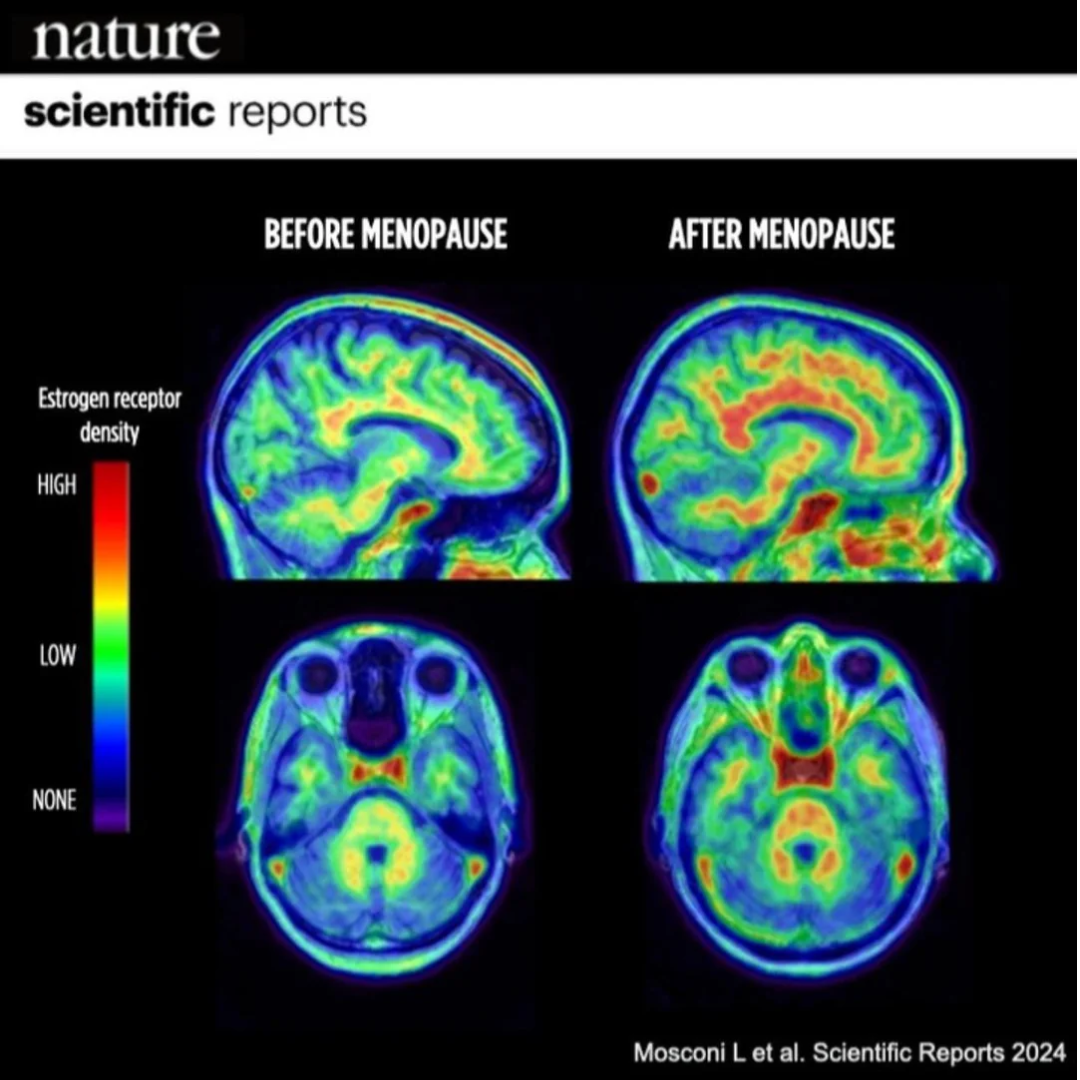
My mother was on HRT for 12 years and she still went crazy. The hot flashes stopped. The night sweats stopped. Her brain kept getting worse and not one doctor ever told her why. She was the sharpest woman I knew. Ran Thanksgiving dinner to the minute. Every dish timed, every side plated before the turkey came out. She remembered everything about everyone. Your birthday. Your kid's school play. The thing you mentioned at Easter that nobody else caught. She held the conversational threads of our entire family in her head and never dropped one. When menopause hit, the fog started. She told her doctor. He said it was stress. Told him again six months later. "Some cognitive slowing is normal at your age." They put her on HRT. The hot flashes and night sweats stopped. But her mind never got any better. The fog was a footnote in a conversation about hot flashes. The first time it scared me, she was telling a story at Sunday dinner. Mid-sentence she just stopped. Not a pause. Stopped. Her mouth still open. Eyes somewhere else. The rest of us sat there. She didn't finish. Picked up her fork and started eating like nothing happened. My sister and I looked at each other across the table. Neither of us said anything. Then it was Thanksgiving. The woman who timed every dish for forty years served the turkey still cold in the center. Someone cut into it and stopped. Forks went down around the table. Nobody said a word. She didn't notice. The phone calls changed. She'd lose the thread, ask the same question twice without registering. One year she asked my sister to help with Thanksgiving. By the third year she just showed up and sat in the living room. My sister said it one night on the phone. Quiet. Like she'd been holding it for months. "That's not Mom anymore. That's just her body in the chair." No diagnosis. No disease. Just fifteen years of something quietly happening to her brain that nobody identified while the woman who raised us became someone we didn't recognize. She lives with my brother now. At holidays, the family talks around her. Not to her. I'm 47. I'm on HRT. And the same fog just started. Except it's destroying my career. Last month I wrote down Diane's name before a meeting. My MANAGER. A woman I've worked under for six years. Her name just vanished mid-sentence the week before. I was looking right at her and it was gone. I keep a secret notes document on my phone now. Names I should know. Project deadlines I confirmed the day before. Client details I used to carry effortlessly. I re-read every email three times before sending. Not for typos. Because I don't trust the sentences to make sense anymore. One morning I pulled into the parking lot at work. Engine off. Hands on the wheel. And I couldn't remember if I'd already been inside that day. Five minutes. Sitting there. Trying to figure out if I was arriving or coming back out to my car. And the whole time, the only thing in my head was my mother. Sitting in that chair at Thanksgiving. Smiling at nothing. Present and gone at the same time. I whispered it with my hands still on the wheel. "I'm not following her path." I tried everything after that. I fixed my sleep. Changed my diet. Started exercising again. Meditated every morning for ten weeks straight. Then creatine. Women on Reddit swearing by it. Two weeks of maybe-something, then bloating started and the fog still there. Lion's Mane next. Six weeks. By the end I couldn't tell if it was doing anything or if I just wanted it to. A nootropic blend from Amazon. Three days. Heart racing, jittery, wired but still foggy. Threw it away. Ashwagandha and magnesium for a month. Calmer. Better sleep. Fog didn't move. A "hormone balance" blend that tasted like dirt and did about as much. Ginkgo biloba. Omega-3. Vitamin D. I was willing to try skittles if someone said they worked. My kitchen counter looked like a pharmacy. Nine bottles. A powder tub. A pill organizer I filled every Sunday night. On top of the HRT that should’ve already fixed this. And I still couldn't remember Diane's name. Two weeks later my boss called me into his office. I knew before I sat down. "I need to talk to you about your performance." Twenty years. Not one flag. Not one review below exceeds expectations. Twenty years of being the person they pulled into the room when something was hard. "The processing speed, the follow-through. I need you back to where you were." He slid a document across the desk. Performance improvement plan. Documented. Official. First one in my career. I signed it. Walked out with my face perfectly still. Made it to my car. And then I fell apart. The kind of crying where you can't breathe. Where your whole body shakes. Where you grip the steering wheel just to feel something solid because everything else is dissolving. I sat there for over an hour. Couldn't drive. Couldn't call anyone. I whispered it alone in my car, mascara running down my face: "I don't feel like the person I used to be." I'm on HRT. My estrogen is stable. The hot flashes are gone. But the one symptom actually destroying my life, the one taking my career, my confidence, my identity, HRT isn't touching it. I almost gave up. Started doing what I watched my mother do. Not fighting it. Just letting the fog become normal. But every time I caught myself settling, I'd see her. The chair. The silence where her voice used to be. Fifteen years of doctors saying give it time. I couldn't accept that. So I started researching. Not my symptoms, I'd Googled those a hundred times. Same useless answers. Sleep hygiene. Leafy greens. Meditation. The exact playbook my mother followed while her mind quietly disappeared. I changed the question. "Why would a woman on HRT for 12 years still decline cognitively?" That's what opened it up. Reddit. Facebook groups. Forums. Dozens of women describing the same pattern, on HRT, stable estrogen, hot flashes gone, fog still there. No real answers. Then in one thread, someone mentioned a podcast with Dr. Lisa Mosconi, a neuroscientist who's been studying what menopause does to the female brain for over two decades. I found the episode. Started listening on my drive home. An hour and thirty-two minutes in, she said something that made me pull over. "Here's what everyone gets wrong about estrogen." she told the host. "It's not just a hormone. It's the delivery system for three specific chemicals your brain needs to retrieve words, stay calm under pressure, and maintain mental energy." The host asked what happens during perimenopause. "It doesn't just drop. It swings. Wildly. Sometimes multiple times in a single day. And every time it swings, those deliveries fail. The brain runs out of the chemicals it needs to function." She named the first one. "Acetylcholine. The chemical that carries words from your memory to your mouth. When your brain runs out of it, the word is still there. But the signal that retrieves it goes dead." I was gripping the steering wheel. Two images at once. Me, standing in front of Diane and her name gone. My mother, stopping mid-story at Sunday dinner. The words didn't disappear. The chemical that delivered them did. "GABA," she continued. "The chemical that keeps your nervous system calm under pressure. When it's depleted, your brain floods with cortisol instead. You freeze. You blank." My boss's office. My mind going silent when I needed it most. My mother going quiet at family gatherings, not because she had nothing to say, but because the system just shut down. "And dopamine. The chemical that gives you mental energy and drive. When dopamine runs low, everything feels harder than it should. It's not laziness. It's not burnout. It's a brain running without fuel." That's what I feel every morning. That's why my mother stopped being the woman who ran everything. The energy to organize, to hold it all together, it just drained away. Then she said something and I stopped breathing. "This goes for every woman thinking they're losing their mind. You're not. HRT got your estrogen stable. But it didn't refill what had already run out. By the time most women start it, those chemicals have been depleted for months. Sometimes years. Millions of women are being told this is just aging. The cognitive symptoms are treated as a footnote in a conversation about hot flashes. But this isn't a personality change. It's a neurochemical deficiency, and almost nobody is identifying it." I sat there with the podcast paused. Crying. Not because it was bad news. Because someone had just explained what happened to my mother. And what was happening to me. My mother was on HRT for over a decade. Nobody identified that the chemicals themselves needed to be restocked. The tank ran dry and the damage built up silently until the woman she was had faded away. Not aging. Not inevitable. A biological process nobody identified. And suddenly every supplement I'd tried made sense. The sleep, the diet, the exercise, the meditation. All of it helped my overall health. None of it manufactured the three specific chemicals my brain had run out of. Creatine gave my cells a general energy boost, but it didn't supply the three chemicals my brain was missing. Lion's Mane helped repair the wiring between brain cells, but if the chemicals aren't traveling on those wires, repaired connections don't help. Ashwagandha calmed my nervous system, but my brain was still running on empty underneath the calm. Nootropics flooded me with adrenaline, but they didn't restore a single one of the three chemicals that actually went missing. Even stacking them. Even taking all of them together. Nine supplements at different doses, none of them targeting the same system, none of them formulated to work together. That’s why nothing ever held. Every bottle on my counter had solved one piece. None of them had solved the architecture. I unpaused the podcast. Mosconi kept going. "There are specific compounds that can directly restock what your brain ran out of. Not new science. The research has been building for over two decades. It's just never been applied to menopause. Citicoline for acetylcholine. L-Theanine for GABA. N-Acetyl L-Tyrosine for dopamine." When I got home, I couldn't stop thinking about everything. That night I sat at my kitchen table and pulled up everything I could find. PubMed. Clinical journals. Menopause forums. Study after study confirming the same pattern. Acetylcholine depletion during perimenopause. Dopamine decline. GABA disruption. Women in forums describing the exact timeline I'd been living. The science matched Mosconi. Their experiences matched mine. The compounds checked out too. I found clinical trials on citicoline at 250mg showing measurable improvement in word recall. L-Theanine and GABA synthesis research. N-Acetyl L-Tyrosine feeding the dopamine production line. Clinical doses documented. Real studies. But here's what I didn't expect to find. Research out of Weill Cornell. A team that had been imaging women’s brains during perimenopause for over a decade. And what they found wasn’t just depletion. Your brain hasn't been missing these chemicals for a week. It's been months. For some women, years. That kind of prolonged depletion doesn't just leave an empty tank. It leaves damage. Every time you blank in public, your body floods your brain with cortisol, and cortisol attacks the hippocampus, your memory center, the exact part you need to not blank next time. The shame causes cortisol. The cortisol causes more blanks. A loop running on its own. Meanwhile the neural wiring thins out from months of running on empty. And blood flow drops, so less oxygen reaches a brain already on fumes. The fuel has to come back and the damage has to be repaired. Both. I went looking for a formula that did all of it. And that's where everything fell apart. I found citicoline supplements. Just citicoline. Nothing else. L-Theanine bundled with melatonin in a sleep formula. Tyrosine buried in a pre-workout designed for men at the gym. Each compound existed. None of them existed together. Then I looked at the "brain health" blends on Amazon. One or two of the three at doses so low they wouldn't do anything. Proprietary blends hiding what's actually inside. Fillers. Caffeine. A cortisol support formula but nothing for the three chemicals. Labels that looked clinical but delivered nothing. So I tried building the stack myself. Found a formula that had L-Theanine and N-Acetyl L-Tyrosine. Added a citicoline capsule on the side. Two weeks. Nothing changed. Added the cortisol formula on top. Another two weeks. Four bottles open on my counter, and the fog hadn't moved. So I went back to the research. Then I found something I’d missed. B-vitamins. Specific forms, specific doses. Without them, your brain can't actually convert the raw compounds into usable chemicals. Like handing someone all the ingredients for a meal and no kitchen to cook in. Most formulas skip them entirely. I went back and looked at what I'd been taking. None of them had the B-vitamin cofactors. I'd been swallowing compounds my brain couldn't fully use. And now I was about to add another bottle. Another $30. Still doing the exact same thing, stacking pieces and hoping they'd somehow become a system. I started to believe what I was looking for didn't exist. Nobody had assembled the full protocol. Then I came across one I almost scrolled past in a private Slack community. I pulled up the supplement facts panel. Read it the way I read everything now, like a forensic auditor. Citicoline at 250mg. Clinical dose. The signal that carries your words. L-Theanine at 100mg. The calm under pressure. N-Acetyl L-Tyrosine at 175mg. The fuel. All three. At clinical doses. In one formula. Bacopa Monnieri at 150mg. Preserves the acetylcholine that citicoline restores. Repairs the pathways that thinned while the brain was running on empty. Lion's Mane at 500mg. The clinical dose, not the 200mg in the tinctures that did nothing. For rebuilding the connections that wore down during the depletion. Phosphatidylserine and Rhodiola for the cortisol loop. Maritime Pine Bark. For the inflammation. The thick, heavy fog that no amount of caffeine ever touched. B-vitamins. The enzymatic machinery to actually convert the raw materials into usable chemicals. The label said Brain Bloom. I'd never heard of it. I didn't care what it was called. I cared that someone had finally put it all together. This wasn't another brain blend. This wasn't a menopause supplement with ashwagandha and a pink label. They had a 90-day money-back guarantee. After everything I'd already spent on supplements that didn't work, ninety days of zero risk felt like the easiest decision I'd made in a year. I ordered it that night. Took the two capsules with my coffee on a Monday morning the same way I'd taken everything else. Out of obligation. Not belief. The first few days, nothing happened. By the end of the first week, something felt different. Like the static in my head had turned down a notch. The heavy feeling behind my eyes lighter. I didn't trust it. I'd felt this before with creatine, the almost-something that turns into nothing. Week two. I caught myself sending an email without re-reading it three times. Just wrote it, checked it once, hit send. First time in months. And I told myself not to trust it. Week four. A client called with a problem. I handled it on the spot. Found the right words. Not just common words. The precise, specific language I'd built over twenty years. Budget. Acquisition. Consolidation. They were just there. A colleague pulled me aside after. "You were really on it today." And then in a meeting that afternoon, I looked across the table and her name was just there. Diane. The woman whose name I'd written on a sticky note and pressed to my laptop for three months. I said it mid-sentence without reaching for it. Week eight. My boss pulled me into his office. Same office. Same chair. "Your recent work has been excellent. Whatever you're doing, keep doing it." I walked out. Locked the bathroom door. And cried. Not the broken crying from the car. The kind where you're so relieved you can't hold it in. The vocabulary was fully back. I stopped carrying 283 entries of secret notes. Didn't need it. Twelve weeks in, my doctor ran a follow-up cognitive assessment. Same tests I'd barely gotten through four months earlier. Word recall. Processing speed. Executive function. Twenty minutes in, she put the scoring sheet down and looked at me. "These results are significantly improved from your baseline. What changed?" I told her. The three chemicals. The depletion that builds up before HRT even starts. The downstream damage that nobody looks for. Brain Bloom. She wrote it all down. The compounds. The doses. The name. Then she said something I wasn't expecting. "Thank you for telling me this. I have patients who sit in that chair every week convinced they're developing dementia." She paused. "And every time, I tell them to give it time." Give it time. The same answer they gave my mother for fifteen years. I walked to my car. Sat there for a minute. And then I thought about my mother. And I felt two things at the same time. Grief for the woman she was. And the quiet recognition that I'm not on her path anymore. She faded because nobody understood what was happening. Nobody identified the gap. Nobody restocked what was draining out of her brain for fifteen years. I caught it because I refused to accept the same answer. I'm not following her path. If you're where I was, on HRT, estrogen stable, hot flashes gone, and still blanking in meetings, still re-reading emails, still keeping secret notes just to survive, here's what I wish someone had told me. The fog isn't just uncomfortable. It's a signal. Your brain is running on empty. And I know what happens when that signal goes unaddressed for years because I didn't have to read about it. I watched it. The difference between my mother and me isn't genetics. It isn't luck. It's information. You have it now too. I don't know if Brain Bloom will work for you the way it worked for me. Every brain is different. But it's the only formula I found that addresses the complete picture. The three chemicals. The downstream damage. In one bottle. At clinical doses. Nothing missing. The intervention my mother never got. It doesn't replace HRT. It completes it. Ninety days. That's enough time to know. I put the link below. P.S. The moment I keep coming back to happened on a Thursday morning. I was driving to work. And I caught myself humming. Just humming along to the radio. Not rehearsing what I was going to say in my first meeting. Not scanning for the next blank. Not bracing. The low hum of dread that had lived in my chest every morning for over a year was just gone. Not empty-gone the way the fog made things quiet. Calm-gone. The kind of quiet that means everything is running and you don't have to monitor it anymore. I almost didn't notice. That's what hit me.
Where the ad sends people
getavellon.com
Read this if you have menopause brain☝️
You didn't lose your drive. You didn't lose your edge. You just lost your brain — and you know it. The words that used to come easily. The focus that kept you sharp in every room. The version of you that fired on all cylinders. She's still in there. Brain Bloom is a daily cognitive support supplem...
See details: getavellon.com(opens in a new tab)