
Inactive· since Jul 4, 2026
- 26
- days it ran
- 0
- relaunches
Ad copy
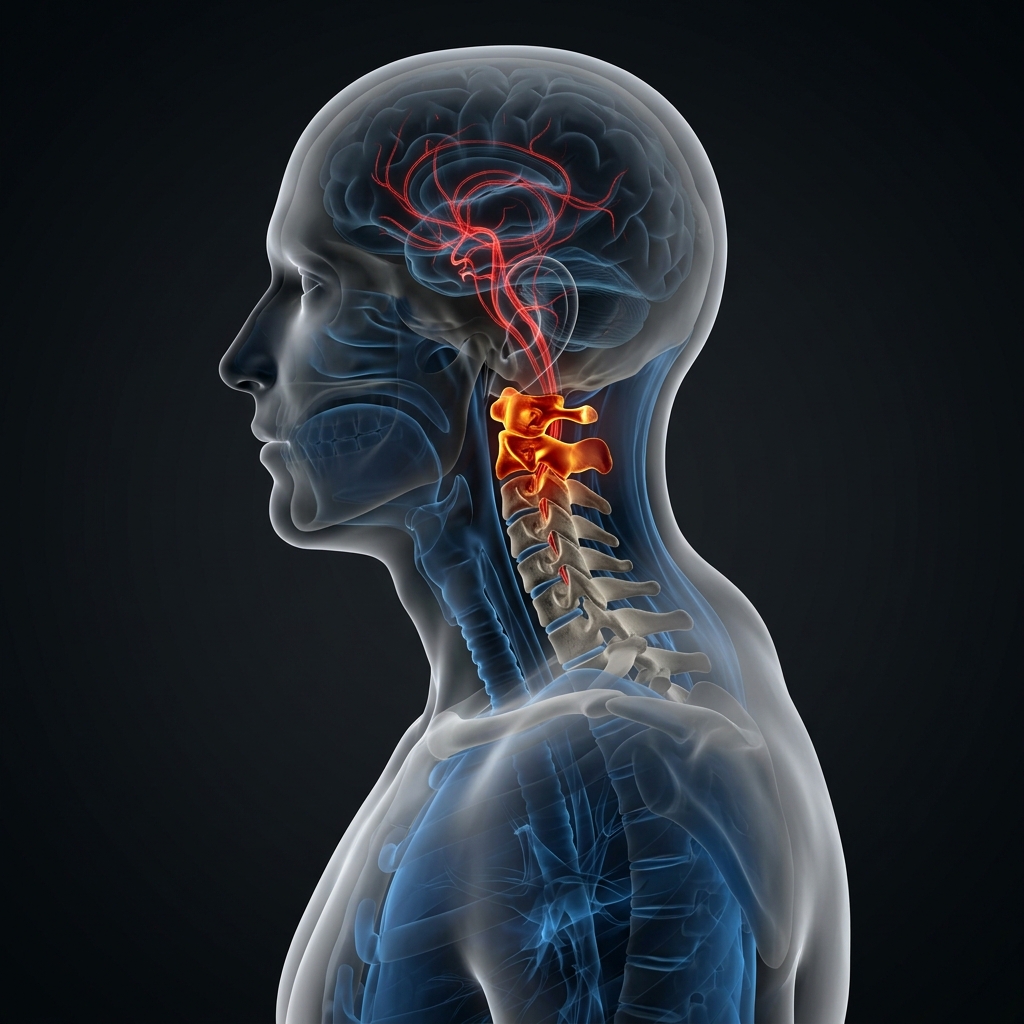
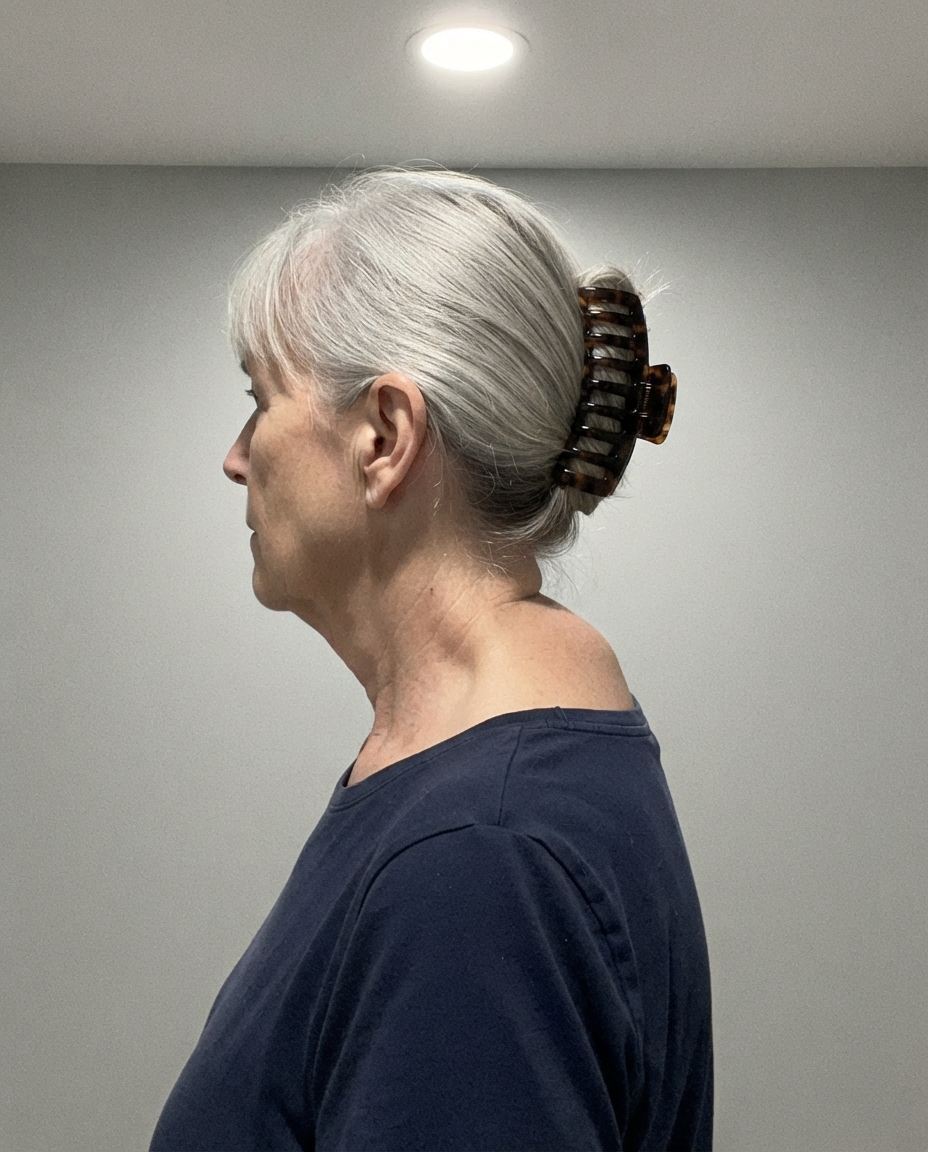
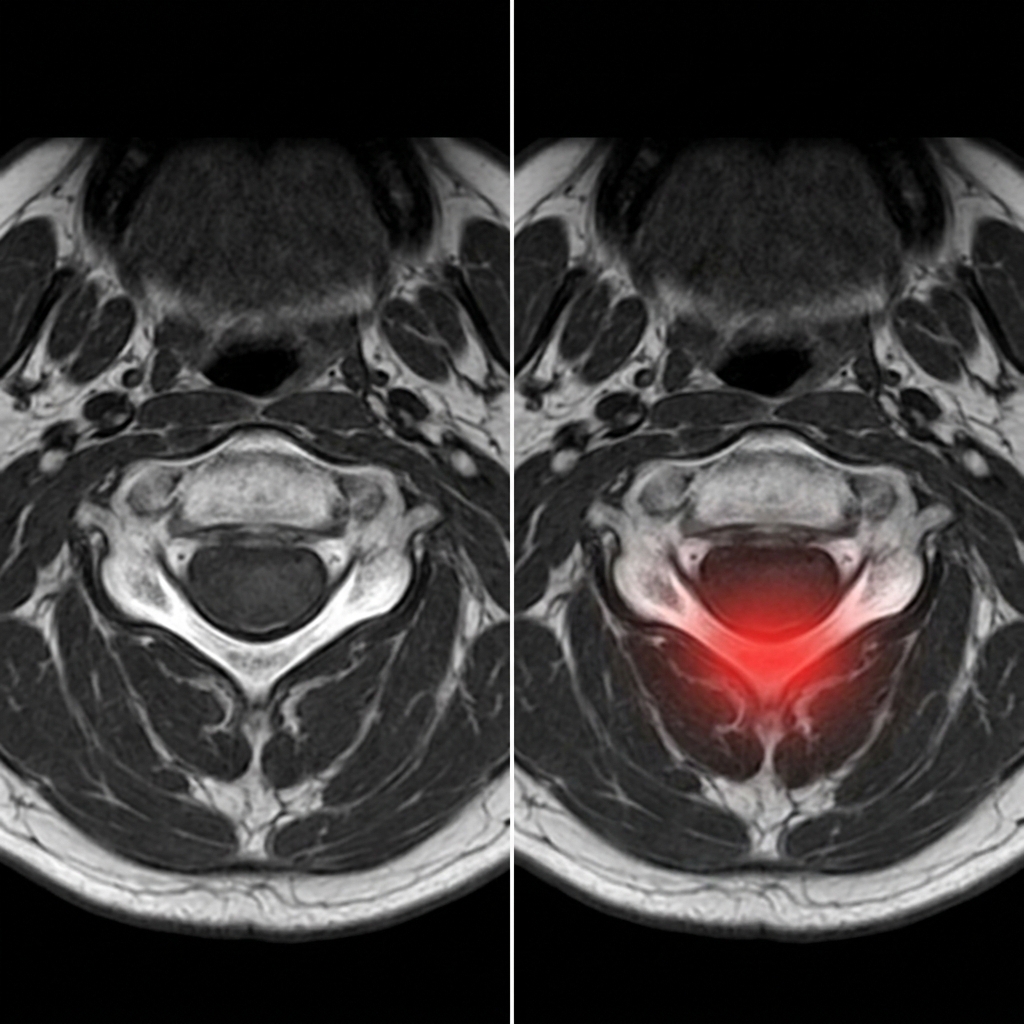
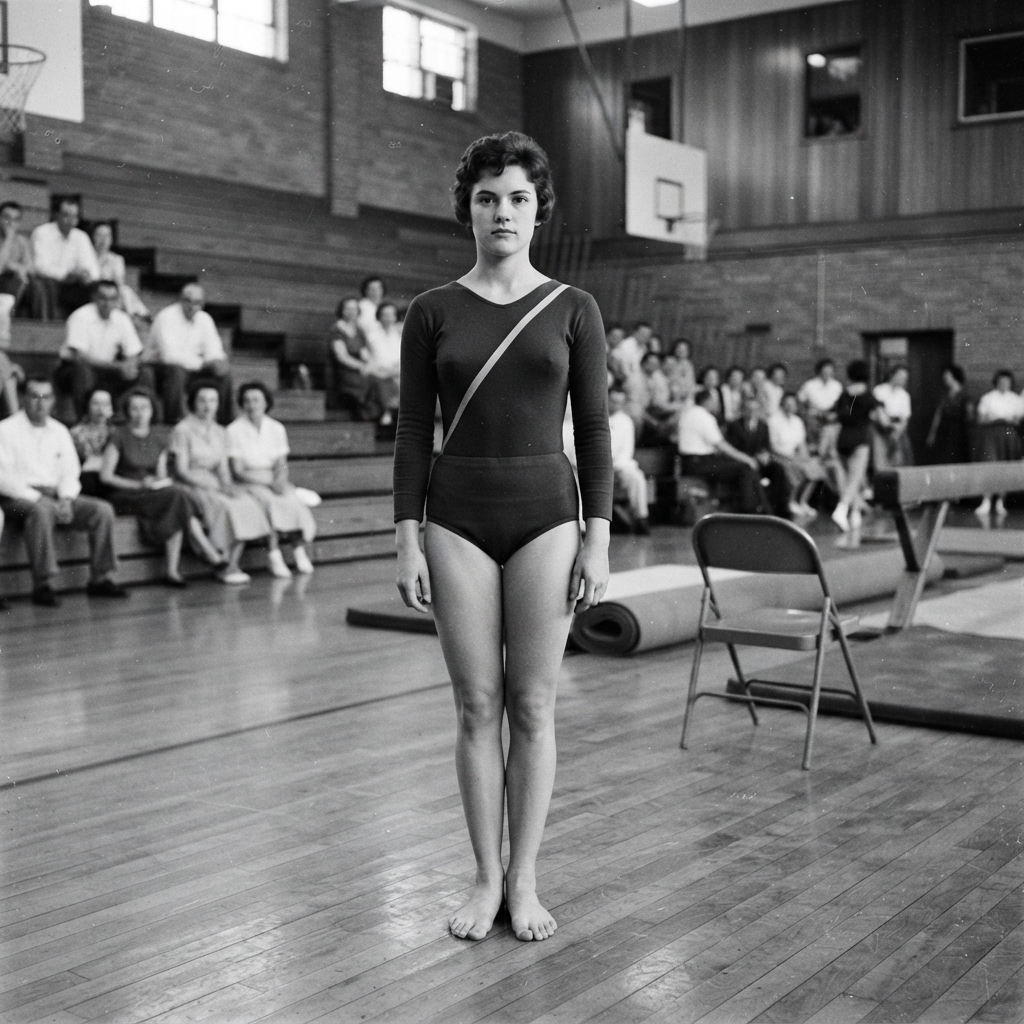
Johanna Quaas stepped onto the gymnastics mat at age 90 and performed a full parallel bars routine that would challenge athletes half her age. Perfect form. Zero hesitation. Zero self-consciousness. She's been competing internationally for over 20 years — tumbling, flipping, swinging from bars with the presence of someone decades younger. No neck hump. No forward head position. No visible cervical thickening. Just the upright, present posture of a woman who simply never lost her signal. When sports medicine doctors first saw footage of Johanna competing at the 2012 Senior Olympics in Germany, they assumed it was edited or exaggerated. So a team from the University of Leipzig tracked her down to run tests. They expected to find a cervical system held together by compensation and habit. A forward head position built up from decades of loading. Tissue thickening at the base of the neck from years of postural stress. Instead, they found something impossible. A 90-Year-Old With a Cervical Profile Healthier Than Sedentary 40-Year-Olds The researchers ran every test. Cervical MRI. Postural assessment. Neuromuscular signal measurements. Blood panels for inflammatory markers. Johanna — who'd been doing high-impact gymnastics for over 70 years — had a cervical system that looked pristine. No forward head displacement. No tissue thickening. No chronic neuromuscular inhibition. Her deep cervical signal markers were stronger than women who never exercised at all. Dr. Klaus Reinhardt, the lead researcher, was baffled. "This makes no sense," he told his team. "She should have significant cervical compensation from decades of loading. Her signal should be severely degraded." But it wasn't. Here was a 90-year-old woman still performing full-body-weight gymnastics, with zero cervical thickening and a holding capacity most women lose in their fifties. Meanwhile, 50-year-old office workers were being referred to posture specialists after a few years of desk work. Something wasn't adding up. Her Training Routine Wasn't Special At All The team spent four months studying everything about Johanna's lifestyle. They analyzed her posture habits — nothing deliberate or corrective. They studied her stretching protocols — standard gymnastics warmups. They tested her genetics — completely normal Northern European markers. They examined her training intensity, her recovery methods. Nothing explained it. Dr. Reinhardt was ready to chalk it up to "one-in-a-million genetic lottery" and publish a brief case study. That's when one of the junior researchers noticed something the medical team had dismissed as trivial. The "Old-Fashioned" Training Pattern Nobody Took Seriously Anna Becker was a neuromuscular PhD student, not a sports medicine doctor. While the others focused on training load and recovery protocols, she paid attention to something Johanna did every single day without thinking about it. And she noticed something odd. In every training session and every casual movement — Johanna never used passive support for her neck or posture. No braces. No corrective devices. No deliberate posture correction. She just moved. Freely. Without intervention. "What if it's not her genetics?" Anna asked during a team meeting. "What if it's what she never did to her cervical system?" The doctors were skeptical. "You think not wearing a brace prevents cervical degeneration?" one said. But Anna wasn't talking about the absence of braces. She was talking about what happens to your cervical signal when it's never asked to wait for external support. The Experiment That Shocked the Rehabilitation Community Anna convinced them to run one final test. She brought in neuromuscular signal analysis equipment to measure how Johanna's deep cervical muscles fired when she moved. Signal timing. Bilateral activation. Deep muscle recruitment. Holding pattern under load. Then she compared Johanna's neuromuscular profile to retired gymnasts in their 60s and 70s who'd stopped competing due to postural problems. The difference was staggering. The retired gymnasts — who had used posture braces and corrective protocols as their primary intervention — showed severe signal degradation in their deep cervical musculature. Their deep muscles waited for external cues. Their holding was passive, not active. Johanna? Her deep cervical signal fired continuously and bilaterally. Left and right. Simultaneously. Automatically. Without effort. Zero passive dependency. Zero signal lag. "Her cervical system is self-regulating completely," Dr. Reinhardt muttered, staring at the readings. Then Anna asked them to review something else. Medical records from Johanna's past — specifically, from age 60. At Age 60, Johanna's Cervical Signal Was Already Degrading It had happened decades earlier. After years of gymnastics and daily life with standard posture management approaches, Johanna's cervical signal had started to weaken. By age 60, her practitioners told her she had early cervical neuromuscular inhibition. Signal degradation. Forward head drift beginning. They recommended she begin a standard brace and exercise protocol immediately. But Johanna refused. Instead, she made one simple change. She stopped using external support entirely and started using direct bilateral electrical stimulation to her deep cervical muscles — activating the signal directly, every evening before bed. Within six months, her forward head drift had reversed. Within two years, her cervical signal had measurably restored on follow-up assessments. By age 70, she was competing internationally again — upright, present, signal fully active. Her rehabilitation specialist was stunned: "I've never seen cervical signal restore itself like this at this age. This doesn't happen." But it did happen. And Anna's research revealed exactly why. The Two Hidden Mechanisms Destroying Your Cervical Signal Here's what those Leipzig researchers finally understood: Cervical degeneration isn't just about aging or "wear and tear." It's about two specific things happening to your signal with every year of passive management. Problem #1: The Dependency Trap When your deep cervical muscles are supposed to hold your head in position, they need a continuous active signal to do it. That signal is supposed to fire automatically — left and right, simultaneously, without conscious effort. But when you rely on a brace or a posture corrector to hold your position, the deep muscles stop waiting for the signal. They wait for the external support instead. The automatic pathway goes quiet. The muscle sits there, present but inactive. The moment you take the brace off, the head drifts forward — because the signal never came back. That's passive dependency. And it deepens with every month of brace use. Problem #2: The Surface Trap But there's a second problem most people never notice. Standard exercise protocols target the muscles you can consciously activate — the surface muscles you can feel contracting. Your deep cervical system operates below the level of conscious recruitment. It doesn't respond to voluntary exercises the same way surface muscles do. When you do your exercises, you feel the surface muscles working. You feel productive. But the deep signal pathway that actually holds your head in position — the one that's been degrading for years — is receiving almost nothing. The surface gets stronger. The deep system stays quiet. Your forward head position keeps advancing. The tissue keeps building. And the gap between what the exercises promise and what they deliver just keeps growing. Johanna Never Had Either Problem After Age 60 Every evening, she activated her deep cervical muscles directly — bypassing whatever surface-level fatigue the day had created and going straight to the signal pathway. Left and right. Simultaneously. Automatically. Zero passive dependency. Zero surface-only training. And because the activation was direct and bilateral — reaching the deep muscles the way voluntary exercise never could — her signal never degraded the way every other gymnast's did. Her cervical system never accumulated the passive dependency that destroys most women over 60. One Researcher Brought This Secret to Rehabilitation Clinics Dr. Reinhardt returned to Leipzig obsessed with one question: Could you restore cervical signal just by bypassing the passive dependency and activating the deep muscles directly? He started working with rehabilitation specialists treating chronic forward head displacement and cervical thickening. They had patients stop using their braces and passive supports and switch to direct bilateral cervical stimulation — activating the deep signal pathway the way Johanna's system had been activating it for decades. The results were undeniable. Forward head displacement reduced by 58% within eight weeks. Patients who'd been scheduled for specialist referrals were holding upright without thinking about it. One woman with cervical thickening that hadn't responded in two years showed measurable tissue softening after four months. The rehabilitation specialists were stunned. But the research never went mainstream. Because you can't patent natural signal activation. Big Rehab Makes Billions Annually on Passive Management Custom orthotics for your posture. Brace replacements every few months. Expensive "supportive" devices that actually deepen the dependency. And the referral cascade: specialist to specialist to eventual surgical option. The entire rehabilitation-industrial complex is built on the idea that cervical degeneration is inevitable with age. That your body breaks down and there's nothing you can do about it except manage symptoms with passive devices and monitoring. But Johanna Quaas proves that's a lie. Cervical degeneration isn't inevitable. It's what happens when your deep signal is never directly activated and passive support is offered as the substitute. For 30 years, the solution has been sitting in the neuromuscular research. And the passive management industry buried it to protect their protocols. The Problem Is You Can't Activate Your Deep Cervical Signal Manually Every Day Dr. Reinhardt knew this. You can't exactly go to a clinical rehabilitation session three times a week indefinitely. But traditional device companies refused to change their approach — because passive support was more profitable. So, a specialized team of neuromuscular engineers stepped in. Their mission was simple: take the exact activation mechanism from Johanna's protocol and build it into a device designed for modern life. The Breakthrough: Bilateral Calibrated EMS The problem with most cervical devices is simple: They either hold the position from outside OR stimulate with a single generic pulse that never reaches the deep musculature. Companies use passive support and single-channel generic output because it's simpler and cheaper to manufacture. But they replace your signal with a crutch — and deepen the dependency with every use. The breakthrough came from neuromuscular research. If you could create a device that delivered calibrated bilateral stimulation across multiple programs at adjustable intensity — reaching the deep cervical muscles directly, the way Johanna's signal reached them... You'd eliminate both mechanisms destroying your cervical system. The bilateral delivery reaches both sides simultaneously — creating the co-activation pattern the holding system was designed to use. The calibrated programs meet the deep muscles at whatever stage of inhibition they're currently in — not a generic pulse but a protocol matched to where the signal failure actually lives. The 19 intensity levels mean the stimulation progresses as the signal rebuilds — not fixed output that either undershoots or overdoes it. Fifteen minutes. Before bed. That's the whole protocol. After Two Years of Testing, They Finally Perfected It Bilateral delivery with calibrated programs for signal restoration throughout the deep cervical system. Made with clinical-grade parameters and third-party tested construction. Just place it. Use it for fifteen minutes. Your deep cervical system activates properly. Signal pathway restores throughout the holding system. Thickening softens naturally. That's how the Cevera Posture Release Pulse was born. It's a bilateral EMS device engineered specifically to restore your cervical signal by activating the deep muscles the way nature intended. Since then, thousands of women have experienced what Johanna Quaas discovered at age 60: Your cervical system wants to hold. You just need to stop asking it to wait for a brace and start giving it the signal it was always supposed to have. Here's What Happens When You Let Your Cervical Signal Activate Properly Every Day Carol, 62, had been dealing with forward head drift for 15 years. Two rehabilitation specialists told her the thickening would only continue. She was adjusting her collar before every social situation just to get through the day. Her daughter bought her the Cevera Pulse as a last resort. The first week, she noticed the morning forward pull was quieter. By week three, the constant collar habit had dropped by half. Two months in, she was in family photos without stepping to the edge. Six months later, her practitioner cancelled her escalated referral. Her specialist was confused: "Your alignment is better than it was five years ago." Carol just smiled. She knew why. Susan, 58, couldn't attend gatherings for more than an hour without her self-consciousness overwhelming her. Her cervical thickening was so visible it had changed how she moved through every room. She'd tried premium braces. They worked for a few weeks, then the forward drift came roaring back. She started using the Cevera Pulse daily. Within 10 days, the sharp self-consciousness in social situations was quieter. Within a month, she had her presence back. Three months later, she was hosting dinners for hours without thinking about her neck. Patricia, 55, had thickening at both the cervicothoracic junction and visible forward head position. Her neck was so visibly changed every morning, she couldn't walk into any room without calculating her angle. Her rehabilitation specialist said it would only worsen with age. She tried the Cevera Pulse. The first thing she noticed was she didn't need to pull her collar up anymore. Then, after about two weeks, she woke up and realized she hadn't checked the mirror before leaving the house. The calculation was gone. Her movement felt natural. She's been using it for a year now. Her thickening hasn't progressed at all. If anything, it's reversing. The Science Is Clear Now A 2022 study measured cervical signal activity in patients before and after switching to calibrated bilateral EMS protocols. Participants showed: 54% reduction in forward head displacement after six weeks 62% improvement in deep cervical signal activation 47% decrease in cervical thickening Measurably restored bilateral co-activation pattern This isn't placebo. This is your cervical system finally getting the activation it's been starving for. That's What Makes the Cevera Pulse Different Bilateral delivery — reaches both sides of the deep cervical system simultaneously, creating the co-activation pattern the holding system was designed to use. Eight calibrated programs — meets the deep muscles at their actual stage of inhibition, not a generic pulse that misses the problem entirely. 19 intensity levels — progresses as your signal rebuilds, never over or undershooting. This isn't a watered-down imitation. This is the real thing. That's why thousands of women swear by it. That's why I use it every night. That's why I recommend it to everyone I care about who's dealing with a growing neck hump. Here's the Deal Right now, Cevera is running a BOGO promotion: 2 for $69.95. They're so confident you'll feel the difference — less thickening, better holding, easier presence in every room — they're backing it with a 90-day money-back guarantee. Use it for 90 days. If you don't feel the difference... Send it back for a full refund. No questions. No hassle. But fair warning: Cevera is a small company. They use clinical-grade parameters and precision calibration, which means they can't mass-produce like the cheap knockoff brands. Their last restock sold out in 72 hours. If you click and they're already gone, I'm sorry. I wish I could hold one aside for you, but I can't. A 90-Year-Old Gymnast Maintained a Perfect Cervical Profile for Decades Rehabilitation researchers buried the findings because it threatens a billion-dollar passive management industry. But now you know the truth. Your cervical system isn't broken. It's just been waiting for a signal that passive support was never designed to deliver. And you can fix it today. 👟 Try the Cevera Posture Release Pulse risk-free before they sell out again. https://trycevera.com/pages/adv2-womens-wellness-report
The 90-Year-Old Gymnast With a Perfect Neck
Let me save you the time and money I wasted. Over the past 3 years, I've tried posture braces, foam rollers, cervical pillows, physiotherapy protocols, those exercises my practitioner recommended, two different specialist referrals, some $40 Amazon posture gadgets with 5-star reviews, and finally, t...
LEARN MORELike this ad? Make it yours.
Crush rebuilds this exact creative around your product — your brand, your colors, your offer — in about a minute.