Matthew Smith
Matthew Smith Facebook ad: “Support your liver today”
Ran for 25 days, from August 6 to August 31, 2026, the last day Crush saw it.
Run by Matthew Smith on Facebook. Crush is not the advertiser and does not verify its claims. See this ad in Meta's Ad Library(opens in a new tab)
Want an ad like this for your product?
Crush makes new ad images for your product from this ad: your logo, your product photo, your offer.
Trials from $19.95 USD, then $79.95 USD a month. Cancel anytime.
About this ad
- Meta Ad Library ID
- 1599825575179986
- Platforms
- Facebook, Instagram, Audience Network, Messenger and Threads
- Relaunches
- 1
Ad text
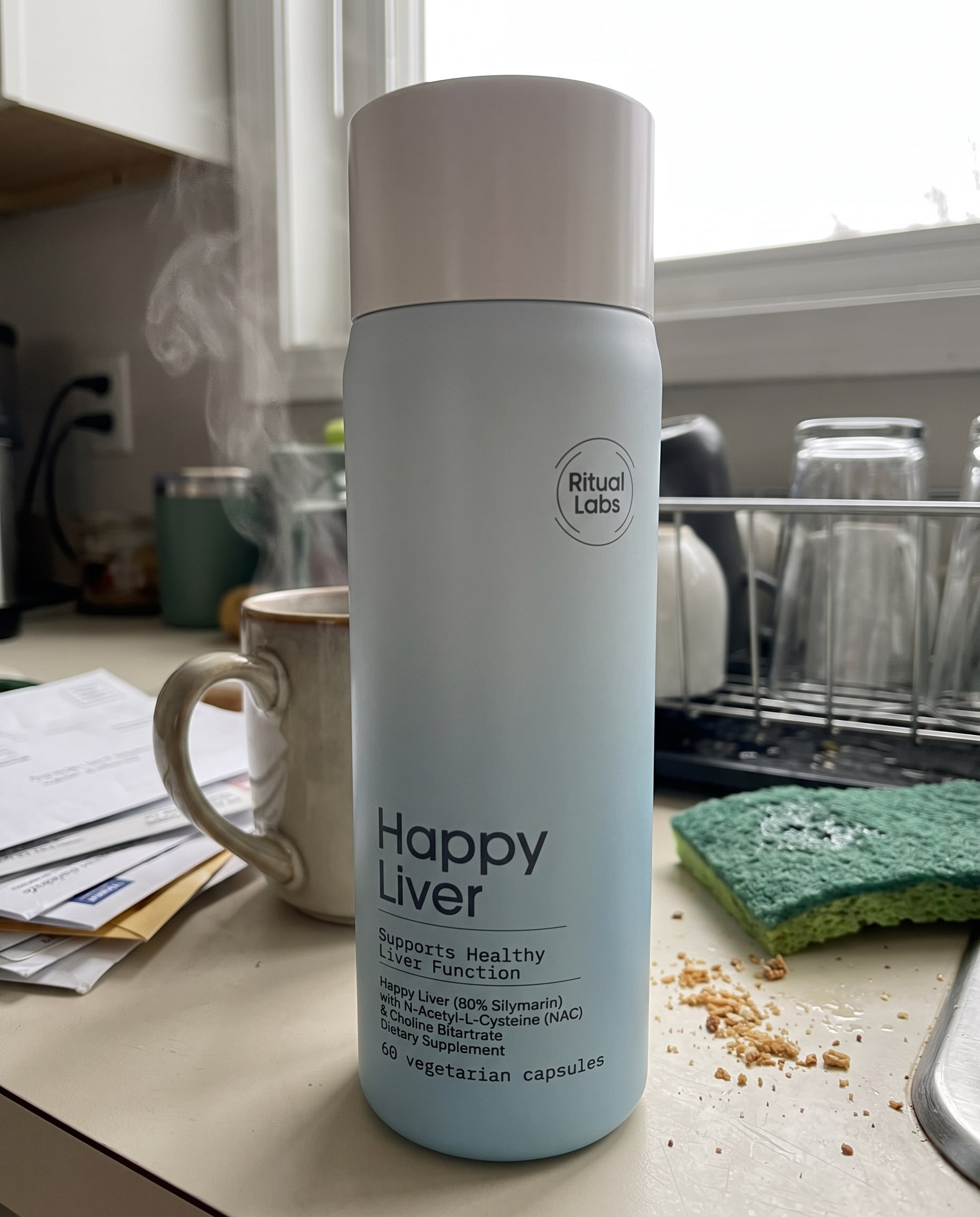
I could see it on his face before he even said it. The doctor had that careful look, the one where someone is about to tell you something and is already bracing for how you'll take it. And I remember thinking, here it comes, in the half second before he said the words. Your liver is showing some fat on the scan. And then, without me saying a thing, he added, "How much do you drink?" That question is the whole reason I'm writing this. Because I barely drink. I never have. A beer at a cookout maybe twice a summer. A glass of something at a wedding that I usually leave half full. I am, genuinely, the most boring person at every party, the guy nursing a club soda and driving everyone home. So when the word "liver" and the word "drink" landed in the same breath, something in me flinched. Not because I was guilty. Because I could already feel the assumption forming, and I knew that assumption was about to follow me around. I told him the truth. I don't, really. And he nodded, and moved on, and it was fine. But I drove home turning it over the whole way, and here is the thing that actually stung. It wasn't fear. It was shame I hadn't earned. Because I knew exactly how it would sound if I said it out loud to anyone. "I have a fatty liver." I could already hear the little pause. The raised eyebrow. The unspoken so how much are you really drinking, buddy. If you have ever gotten this news, especially if you're someone who barely touches the stuff, you know the exact feeling I mean. You didn't do the thing everyone assumes you did. And yet there you are, holding a diagnosis that comes pre-loaded with a story about you that isn't true. I'll admit something a little embarrassing. For about a week, I didn't tell anyone. Not my wife, not my brother, nobody. A grown man sitting on a completely ordinary piece of health news like it was a confession, quietly rehearsing how I'd explain that no, really, it wasn't the drinking. That is exactly what shame does. It makes you hide a thing you have no reason to hide, and it makes you carry it alone, which is the worst possible way to carry anything. So I did what I do with anything that bothers me. I went and learned about it. Quietly, at night, trying to understand what was actually going on inside me instead of carrying around a guilt that didn't fit. And within about ten minutes of honest reading, the shame started to lift. Because I had the entire picture wrong, and so does almost everyone. Here is what I learned. The kind of fatty liver most people get told about today has nothing to do with drinking. It's common enough now that it has a newer name, MASLD, and the single most striking fact about it is how ordinary it is. A huge number of the people who hear those words barely drink or don't drink at all. Regular people. Busy people. People who eat what they think is a pretty normal diet and are just living normal, modern lives. It is connected to metabolism, to weight, to genetics, to a dozen quiet everyday things, and for a great many of us, alcohol is not even in the story. I cannot tell you how much that one fact helped me. I wasn't some secret drinker in denial. I wasn't a special failure. I was, apparently, extremely typical. There are a lot of us, and most of us are walking around a little ashamed of a thing we didn't do. I read that this kind of fatty liver is now one of the most common liver conditions there is, precisely because it tracks with the way most of us live and eat, not with a bar tab. And the more of that I read, the more the knot in my chest loosened. It is genuinely hard to describe how much lighter you feel when a thing you'd quietly decided was a private failing turns out to be an ordinary, well understood, incredibly common part of modern life. I finally told my wife that night. She just shrugged and said, half your friends probably have it and don't even know. She was right, and somehow that made the whole thing feel human instead of humiliating. And here is the quiet trap I almost fell into, and I think a lot of people fall into it, so I want to name it. When you are ashamed of your body, you don't take care of it. You avoid it. You skip the follow-up, you don't read the information, you push the whole thing to the back of your mind because looking at it directly feels bad. The shame doesn't protect you. It just keeps you from doing the calm, boring, useful things that actually help. Letting go of the embarrassment was, strangely, the exact thing that let me finally start. The second thing I learned is that a fatty liver is usually completely silent. You don't feel it. Most people who have a bit of extra fat in the liver have no symptoms at all, which is exactly why mine turned up as a footnote on a scan I was having for something else entirely. It's not some dramatic event. It's a quiet, common thing that a doctor happens to notice. Now, I want to be careful and honest here, because this is a subject where a lot of nonsense gets sold, and shame makes people easy to sell to. When you feel guilty about something, you'll grab at anything that promises to fix it fast. So let me be very clear before I go one word further. I am not a doctor. A fatty liver is something a doctor diagnoses and keeps an eye on with proper tests, and anything a doctor flags for you deserves real medical attention, not a guess and not a supplement. Nothing I'm about to say is a substitute for that. If your liver has been mentioned to you, keep up with your doctor. That part is not optional and I would never pretend otherwise. With that said, here is the calm I found, because it was real. The calm came from understanding that supporting a liver is not some dramatic rescue mission, and it is definitely not a punishment for a crime I didn't commit. The things that genuinely matter are boring, and they are mostly in your own hands. Eating a bit better, more often. Moving your body. Managing your weight where that's appropriate. Being sensible with alcohol, which in my case meant basically nothing to change. And keeping up with your doctor. That is the real foundation, it does the actual work, and nothing replaces it. So I started there, and I started small, because grand overhauls never last. A walk after dinner most nights. Cooking a little more at home. Nothing dramatic. Just quietly being a bit kinder to a body that had apparently been carrying something I never even knew about. And somewhere in that reading, I got genuinely curious about the organ itself, this thing I'd spent my whole life never once thinking about. It turns out the liver is one of the hardest working parts of you, and one of the most overlooked. It's involved in nutrient metabolism. It makes the bile your body uses to help digest the fats in your food. It's central to energy storage, tucking fuel away and releasing it when you need it. It's part of your body's antioxidant defenses. And it's deeply involved in how your body processes and transports fats as a normal, everyday job. It does all of that quietly, around the clock, and never once taps you on the shoulder about it. That reframe did something for me. I stopped thinking of my liver as evidence against me, like some little snitch reporting a lifestyle I didn't even live. I started thinking of it as a hardworking, uncomplaining organ that had been doing an enormous amount of quiet work for forty-some years, and could probably use a little support and a lot less blame. The strange part is that once I stopped being embarrassed, I actually got interested. I started reading the way you read about anything that fascinates you rather than anything that scares you. I learned that the liver is the only organ that can regenerate a meaningful amount of itself, that it handles hundreds of jobs at once, that it filters basically everything you take in and never sends a bill. It stopped being the source of a bad feeling and turned into the most impressive thing in my whole body that I'd never once appreciated. There is something about swapping shame for curiosity that changes the entire relationship. You go from avoiding a part of yourself to quietly rooting for it. So alongside the basics, I looked into the specific nutrients that people interested in normal liver function tend to read about. I was starting from complete zero. Three kept coming up. The first is milk thistle. The one nearly everyone has vaguely heard of. The part that actually gets studied for liver health is a compound called silymarin, and it's known for supporting the liver's own cells while they go about their everyday work. What I didn't know is that products vary enormously in how much standardized silymarin they actually contain. A big word on the front of a bottle tells you very little. So the most useful habit I picked up was to turn the bottle over and check how much standardized silymarin it truly provides. The second is NAC. Completely new to me. Your liver relies on an antioxidant called glutathione as part of keeping itself running smoothly, and NAC is a precursor your body uses to help replenish that glutathione. You're not adding something foreign. You're helping the body top up something the liver already leans on. The third is choline, which I'd honestly never heard of. Choline is an essential nutrient the body uses to package and move fat along as part of normal fat metabolism. It's a real, everyday job. And a lot of people take in less choline than the recommended amount from food, not because they're doing anything wrong, but because it's simply not in much of what lands on the average plate. Three ingredients, each with its own clear, ordinary role in normal liver biology. Not a magic combination. Just three things with complementary roles, and I liked that it wasn't some twenty-ingredient formula I couldn't pronounce. I did not want three separate bottles cluttering the counter, so I was glad to find them together in one. It's called Happy Liver, by a brand called Ritual Labs. Standardized milk thistle, NAC, and choline. Third-party tested, no fillers, no proprietary blend hiding the amounts. Two capsules a day. It's a dietary supplement meant to support normal liver function alongside healthy habits and medical care, never to replace them. For a boring, club-soda-drinking man like me, two capsules with breakfast was about the easiest habit I've ever kept. I'll tell you honestly how my own first sixty days went, and I want to be crystal clear that this is just my experience, one very sober guy's morning, not a promise about yours and not any kind of treatment. The first couple of weeks, I honestly didn't notice anything in particular. I just took my two with breakfast and got on with my day. By a few weeks in, the real change was simply that it had become a habit. It had folded in next to the coffee, and I'd stopped having to remember it. By the time I finished the first bottle, the thing I noticed had nothing to do with any measurement. It was that the shame was gone. I'd stopped flinching when the subject of my liver came up, because I finally understood it, and understanding it turned out to be the whole cure for the embarrassment. I wasn't hiding a secret. I had a common, ordinary thing that a lot of people have, and I was quietly looking after it like an adult. At sixty days I looked back and decided it had earned a permanent spot in the routine. That's genuinely all I can tell you. Everyone is different, and my morning is not a forecast for yours. So here is what I want to say to the person who got the same look from their doctor that I got, and felt that same unearned flush of shame on the drive home. You are almost certainly not the story people assume. This is common, it is often nothing to do with drinking, and it is not a verdict on your character. It is a quiet, ordinary thing about a hardworking organ, and the very best first step is simply to understand it, so it stops being a source of embarrassment and starts being something you calmly take care of. And tell someone, if you can. That was the other quiet lesson in all of this. The moment I finally said it out loud to my wife, it stopped being a secret and became just a fact, the same way telling someone your cholesterol runs a little high is just a fact. Shame lives in silence. It shrinks the second you say the thing plainly to a person who loves you and watch them not flinch. You might be genuinely surprised how many of them say, oh, yeah, me too, my doctor mentioned that last year. It is so much more common than the quiet in everyone's heads would suggest. Keep up with your doctor, because that's the part that does the real work. Get the boring basics right. And if, on top of that, you'd like a bit of nutritional support for a normal, healthy liver, the one I use is Happy Liver by Ritual Labs. I spent one long drive home feeling ashamed of something I didn't do. I wish I could have handed my past self the ten minutes of reading that fixed it. So consider this me handing it to you. You didn't earn the shame. Put it down. https://rituallabs.shop/products/happy-liver13 P.S. The one habit worth keeping from all my late-night reading: when you look at any liver supplement, ours or anyone's, turn the bottle over. Check how much standardized silymarin it actually provides, and whether it includes NAC and choline at all, because a great many of them include none of that. P.P.S. If a doctor has mentioned your liver, please keep up with them and get anything flagged properly evaluated. A supplement is support alongside your medical care, never a replacement for it. Ritual Labs offers a 60-day money-back guarantee subject to its terms, and as with anything, talk to your own doctor about what's right for you, especially if you take medication, are pregnant or breastfeeding, or have a medical condition.
Where the ad sends people
rituallabs.shop
Support your liver today
Ritual Labs
Learn more: rituallabs.shop(opens in a new tab)