Matthew Smith
Matthew Smith Facebook ad: “Don't Stop Drinking. Just Clean Your Liver Daily”
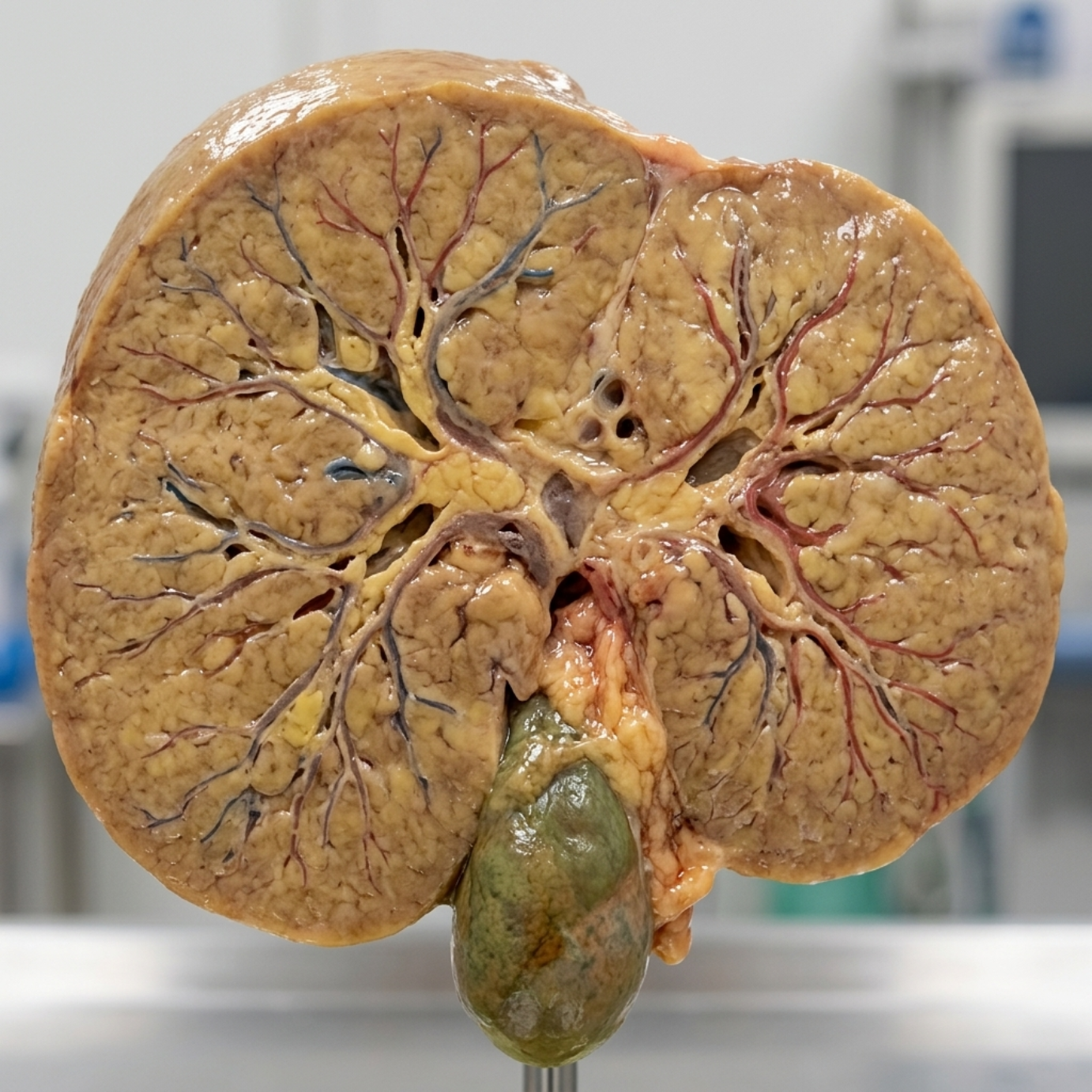
Ran for 3 days, from June 30 to July 2, 2026, the last day Crush saw it.
Run by Matthew Smith on Facebook. Crush is not the advertiser and does not verify its claims. See this ad in Meta's Ad Library(opens in a new tab)
Want an ad like this for your product?
Crush makes new ad images for your product from this ad: your logo, your product photo, your offer.
Trials from $19.95 USD, then $79.95 USD a month. Cancel anytime.
About this ad
- Meta Ad Library ID
- 1785631009479453
- Platforms
- Facebook, Instagram, Audience Network, Messenger, WhatsApp and Threads
- Relaunches
- 1
Ad text
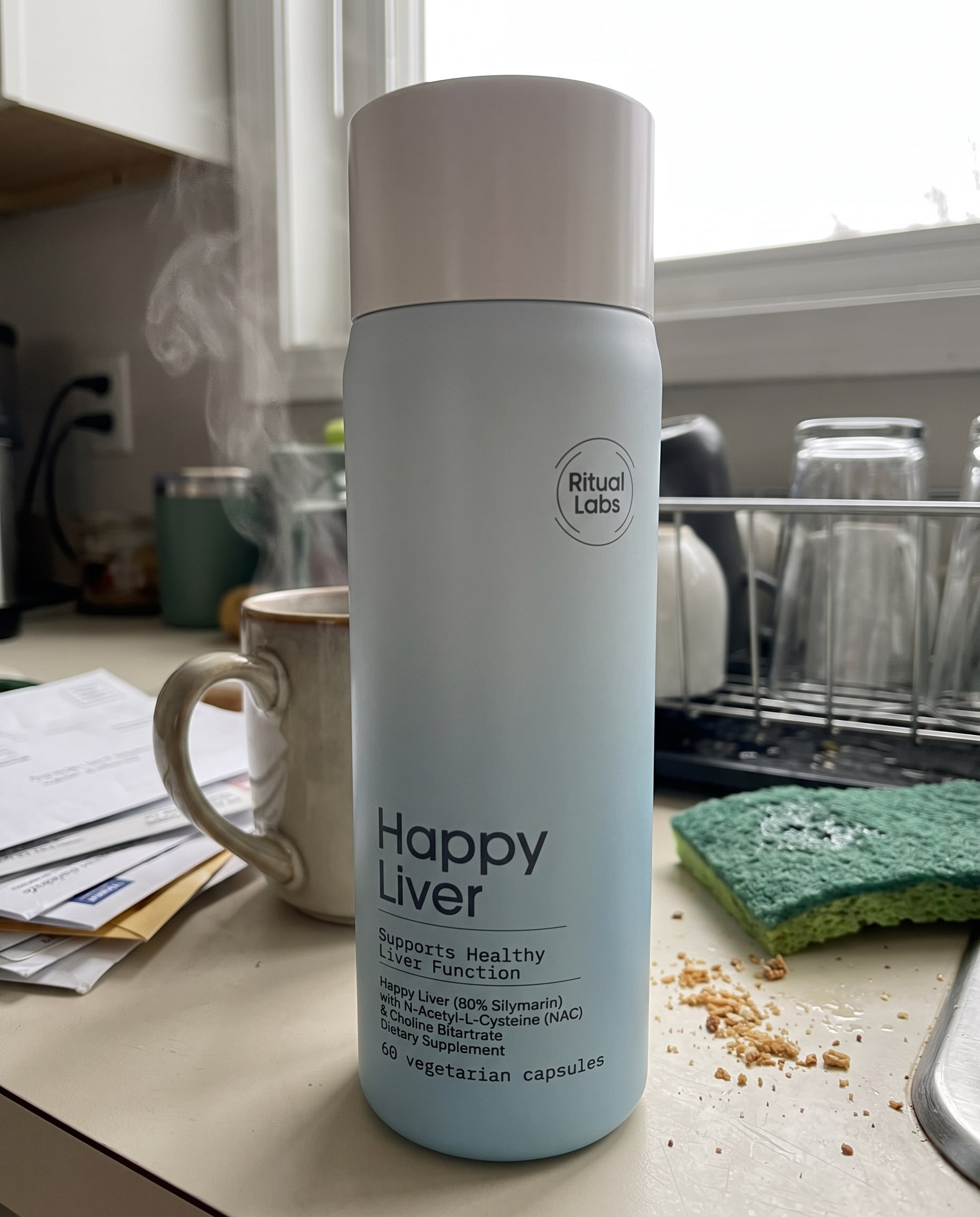
⚠️ In patients with alcoholic liver disease who keep drinking after their diagnosis, roughly 8 out of 10 die within months of liver failure occurring. Not years. Months. And the standard advice those patients received for years before that point was: stop drinking. Most of them tried. Most of them couldn't. And in a lot of cases, even the ones who did stop, it wasn't enough on its own. I work in functional medicine, liver health specifically, and this is a conversation I end up having over and over in the clinic, so I figured I'd write it out once properly because I think a lot of people in these groups are missing a piece of this that actually matters. I'll say upfront that I used to think about this more conventionally too. The logic makes sense on the surface. Alcohol stresses the liver, reduce the stressor, liver heals. For some people, especially with more advanced damage, that really is the priority and I'm not arguing otherwise. But for the large group of moderate drinkers who have elevated enzymes, who have tried cutting back, whose numbers improved a little and then stopped improving, there's usually something else going on that nobody is looking at. Here's what I mean. When you drink, your liver converts the alcohol into a byproduct that's significantly more toxic than the alcohol itself. I'm simplifying here, but the important thing to understand is that a liver in good shape clears that byproduct efficiently. The issue most of my patients have isn't really the drinking. It's that their liver is already behind before they take a single sip, and that's why the byproduct accumulates and keeps causing cell damage even at moderate drinking levels. What makes a liver behind? Usually two things. A chronic low-level inflammation most people never feel and that routine bloodwork often misses until it's already significant. And a liver that has gone years without the specific support it needs to keep up with what alcohol leaves behind. The acetaldehyde has been quietly accumulating the whole time. Stopping removes the incoming source of new stress on the liver. It doesn't clear the backlog. The acetaldehyde that has been accumulating, the inflammation that has been building, none of that goes away just because you switched to sparkling water. A lot of doctors understandably focus on alcohol reduction first, it's the obvious lever and it does do something. But in practice I've found it often isn't the whole answer, and for a lot of patients it leads to years of trying harder at something that was never going to fully solve the underlying problem on its own. When I focus instead on giving the liver what it actually needs to clear what's already there, the pattern changes. I've seen patients with ALT in the 80s and 90s get into normal range within a couple of months. Not everyone, I want to be careful about how I say that, but it happens often enough in my practice that it's genuinely shifted how I approach the whole conversation. So what actually helps. A few things, and I'll go through them properly because this is where most people are getting it wrong. The biggest one, and this took me an embarrassingly long time to understand, is the grade of silymarin in milk thistle. I had patients taking milk thistle for months and seeing nothing, and I kept assuming they were inconsistent or the dose wasn't high enough. The real issue in almost every case was that they were taking the wrong formulation entirely. American milk thistle supplements are tested using a method that inflates the purity percentage on the label without the actual active compound being there at any meaningful level. The silymarin that shows up in clinical research, including studies on liver-related mortality in alcoholic liver disease where the data showed roughly a halving of liver-related death rates compared to placebo, is a European pharmaceutical grade formulation. It performs very differently. What most people are buying at the pharmacy or on Amazon has no real relationship to that compound. They're taking red powder and wondering why their numbers aren't moving. When patients get the European grade specifically, things that were stuck for months start moving. The second thing, and I think this is the most underappreciated piece for people who are still drinking, is pueraria extract. It comes from a root used in traditional medicine across Asia for centuries, specifically for supporting the body's ability to process alcohol. What it does at a biological level is increase the activity of the specific enzyme that converts acetaldehyde into something harmless. Your liver already has this enzyme. The problem is it gets overwhelmed and slows down, and the acetaldehyde accumulates in the gap. Pueraria helps it keep up. When that conversion happens faster, less damage occurs per drink, and the liver has a real chance to stop falling further behind. Most liver supplements don't include it at all. I think it's the reason a lot of people who try milk thistle alone see partial results and nothing more. The third is curcumin for the inflammation, but only at a concentration that actually reaches the liver. Standard turmeric powder doesn't get there. The extraction process matters as much as the ingredient itself, and most products use a form that passes through without doing much. When the extraction is right it addresses the chronic sluggishness that makes the whole organ slow to respond, and it's what allows the other two things to work the way they're supposed to. What I typically see when all three are in place at the right grade: that tight uncomfortable feeling after meals and after drinking quiets down in the first couple of weeks. Energy starts shifting around week 3 or 4. And then the liver enzymes start moving, and they keep moving rather than plateauing, because you're not just reducing the load, you're giving the liver what it needs to actually clear what alcohol has been leaving behind. I know a lot of people in these groups have been told the only path forward is abstinence. In my clinical experience, for moderate drinkers specifically, that's often not the whole answer, and more importantly there's a version of this where your liver enzymes normalize and you don't have to give up wine with dinner to get there. Anyway, that's what I keep seeing and I figured it was worth writing out. Hope it helps someone. 🙏 EDIT: a few people messaged me saying I never included what I actually recommend and they were right, I wrote all of that and forgot the most practical part. The formula I point my patients to when they ask is Happy Liver by Ritual Labs. European pharmaceutical grade silymarin at the purity that matters, pueraria extract at a real dose, and a properly extracted curcumin, plus inositol as a supporting compound. I have no affiliation with them, I'm not compensated in any way, I just looked for a long time for something that had all of these right and that was the one I kept coming back to. They're not on Amazon, their site only. Worth looking into if any of this resonated.
Where the ad sends people
rituallabs.shop
Don't Stop Drinking. Just Clean Your Liver Daily
Your liver processes everything - alcohol, medications, junk food, environmental toxins. Happy Liver provides daily protection with clinical doses of Milk Thistle, Turmeric, Pueraria, and Inositol
Learn more: rituallabs.shop(opens in a new tab)