The Pet Ear Health Foundation
The Pet Ear Health Foundation Facebook ad: “The Night My Own Dog Bit Me (I'm a Vet)”
Ran for 8 days, from May 20 to May 28, 2026, the last day Crush saw it.
Run by The Pet Ear Health Foundation on Facebook. Crush is not the advertiser and does not verify its claims. See this ad in Meta's Ad Library(opens in a new tab)
Want an ad like this for your product?
Crush makes new ad images for your product from this ad: your logo, your product photo, your offer.
Trials from $19.95 USD, then $79.95 USD a month. Cancel anytime.
About this ad
- Meta Ad Library ID
- 1603487727399954
- Platforms
- Facebook, Instagram, Messenger and Threads
- Relaunches
- 0
Ad text
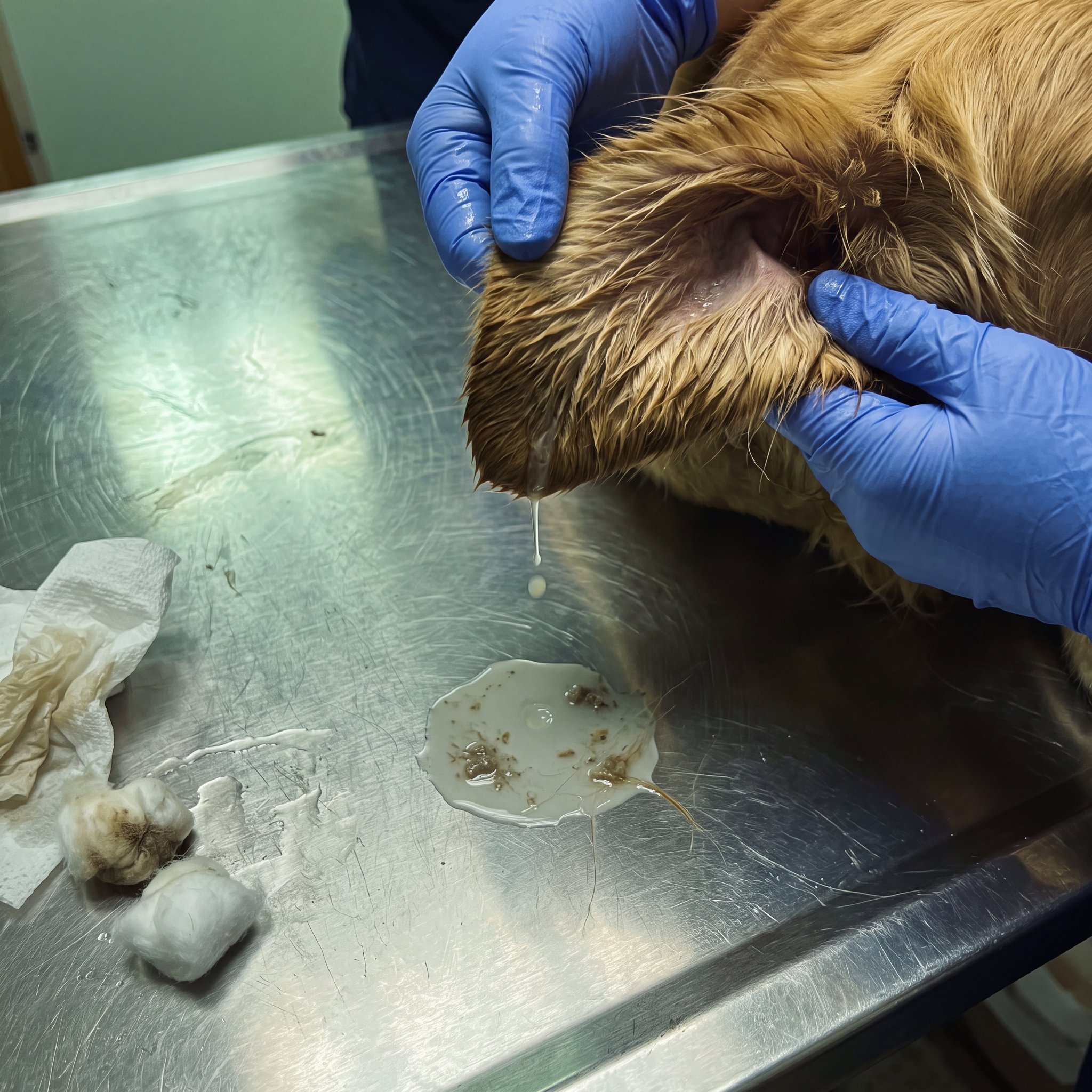
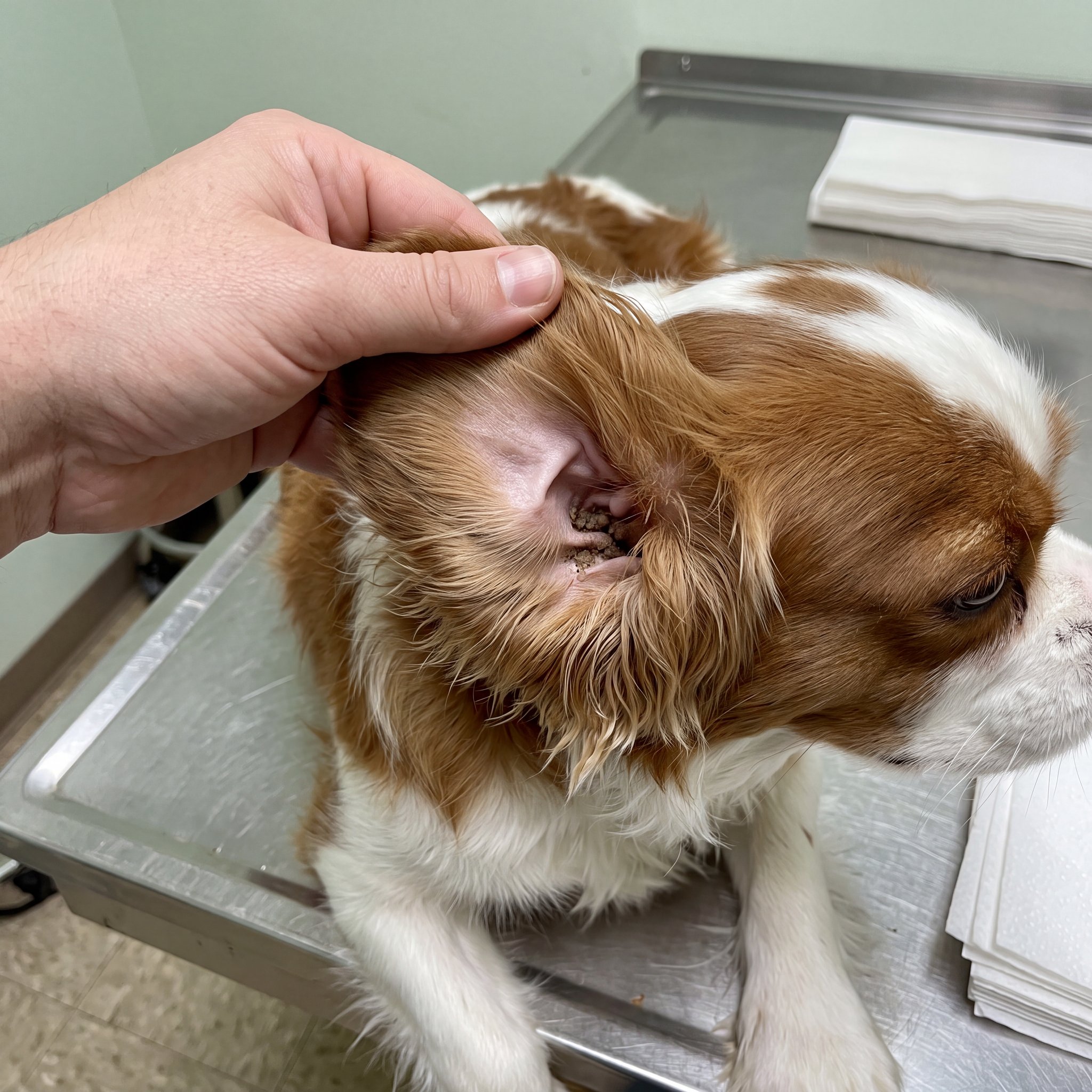
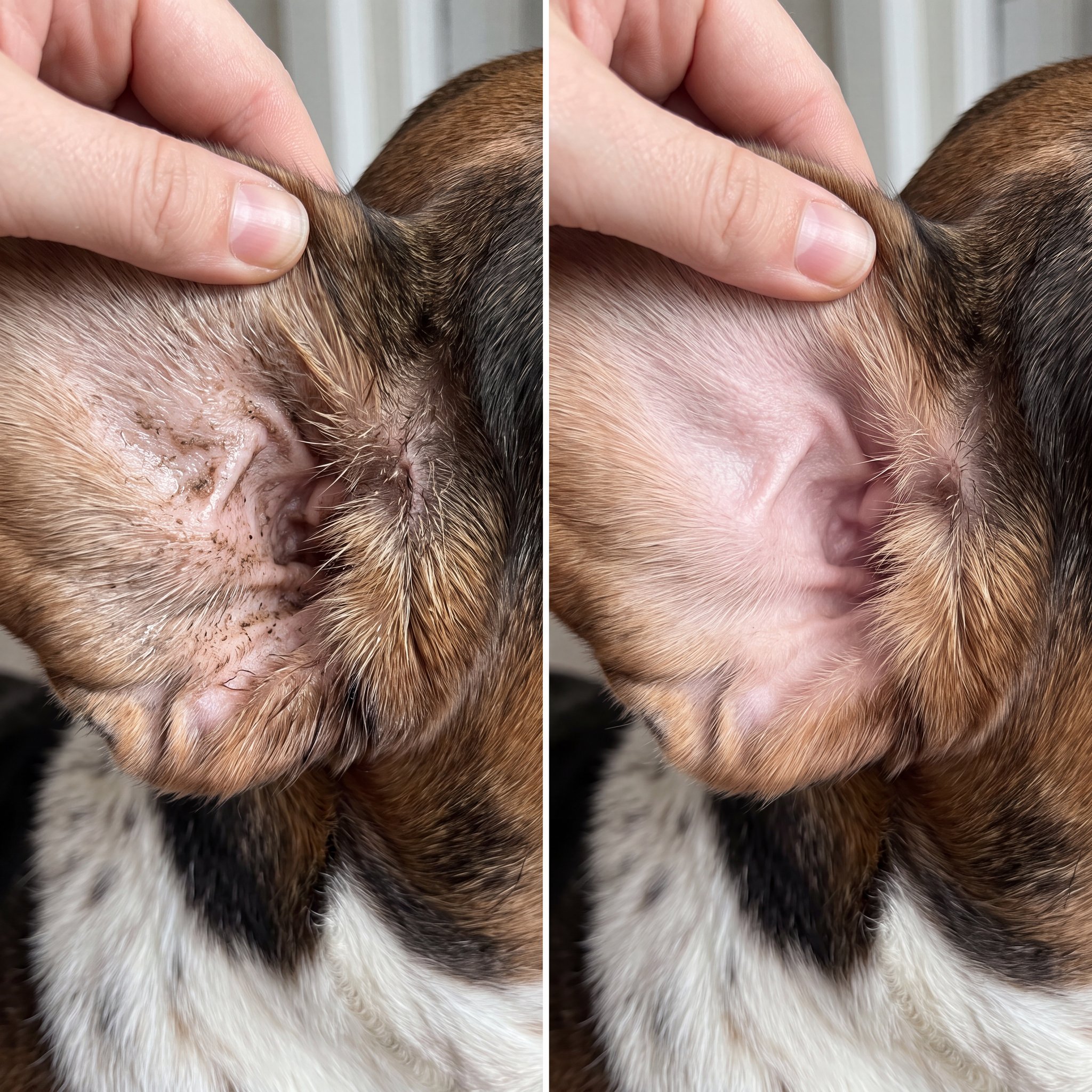
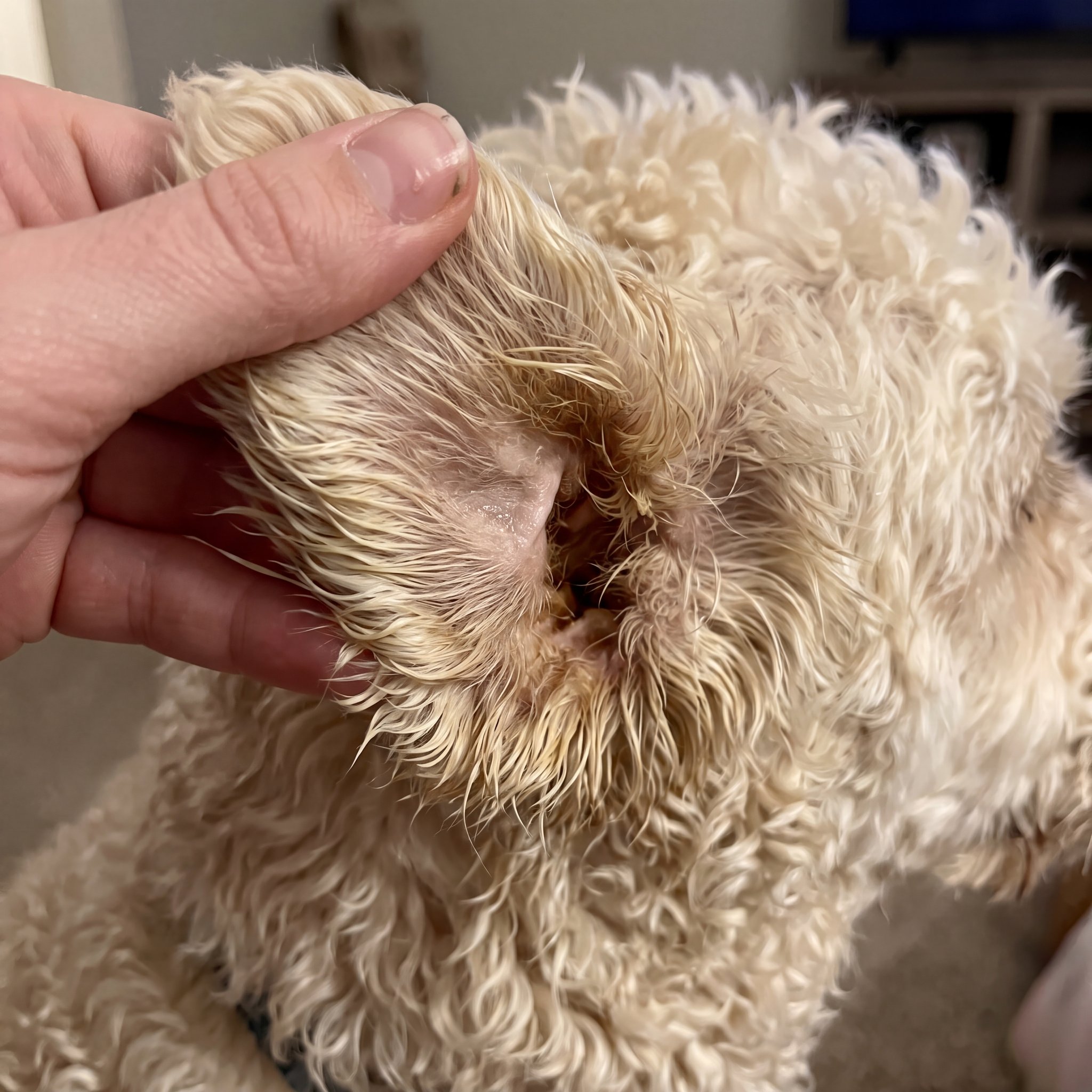
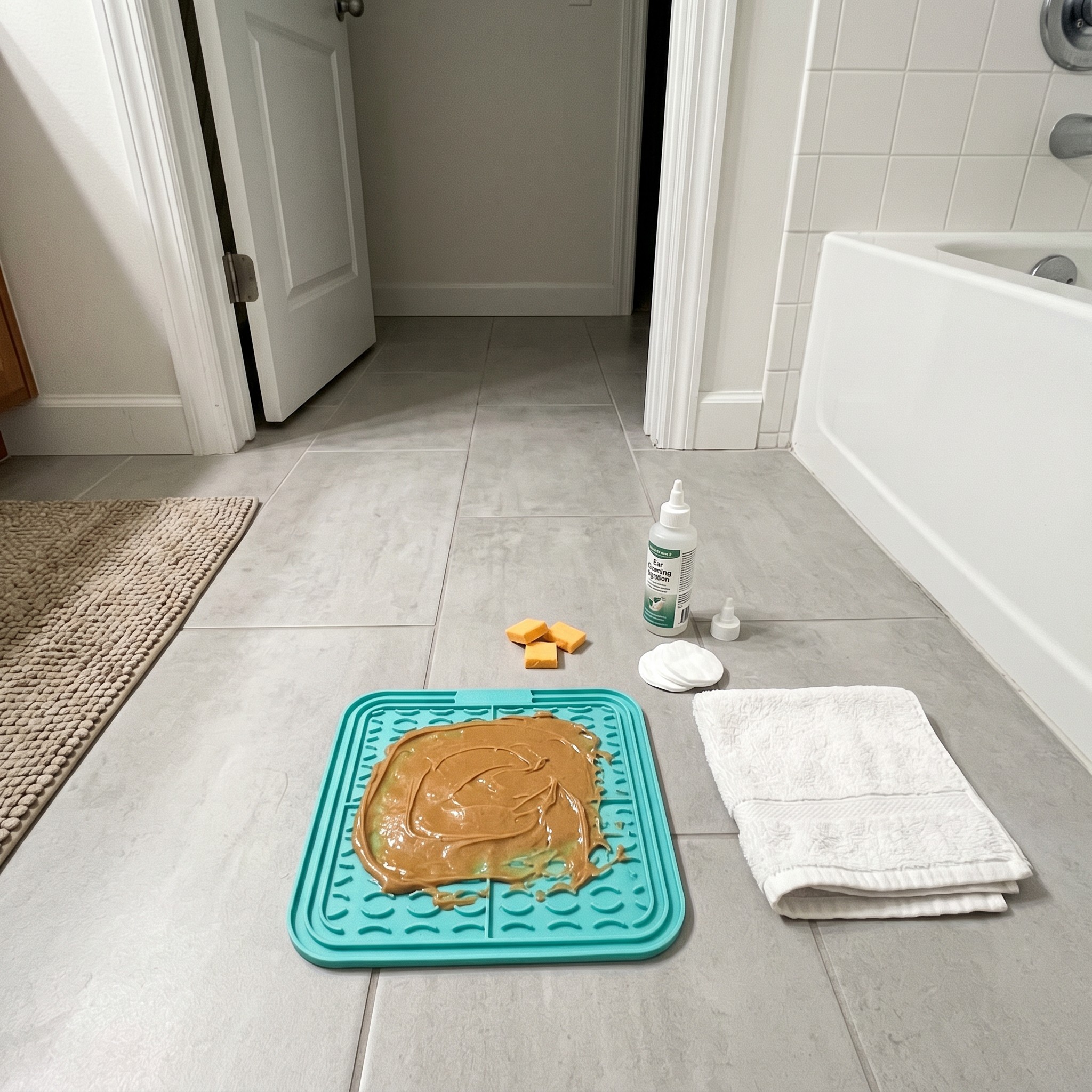
If your dog runs when he sees the ear cleaner bottle - if you've been bitten, scratched, or come close - I need you to read this. Because I'm a fear-free certified veterinarian. And my own dog bit me trying to clean his ears. I run a fear-free certified practice in Asheville, North Carolina. I'm the vet other vets call when they have a dog they can't handle. I've spent 11 years specializing in low-stress veterinary care. I teach continuing education courses on it. And for almost two years, my own dog wouldn't let me clean his ears without a fight. His name is Brindle. Six-year-old Basset Hound. I adopted him from a hoarding case in 2019. He has lifetime chronic otitis - the kind of breed conformation issue that I treat in my clinic three times a week. Floppy ears, narrow canal, deep curve where moisture sits and never fully dries. I knew the science. I knew the protocol. I had the prescriptions. And he still bit me. It happened on a Sunday night in March at 10:23 pm. I had him pinned gently between my knees on the kitchen floor - the way I'd done a hundred times. I squeezed the bottle. He thrashed. His tooth caught the soft pad of my thumb. I felt it before I saw it. That warm wetness. Brindle ran. I sat on the kitchen floor, bleeding into a paper towel. And the thing that broke me wasn't the bite. It was that Brindle was hiding from me under the dining table. My husband came downstairs and asked what happened. I lied. I said I cut myself on a can. Because the truth was - I'm a fear-free certified vet. I teach other people how to handle this. And I'd just gotten bitten by my own dog. Here's what I tell almost every client who comes in with a "behavioral" ear cleaning case: "Your dog isn't being difficult. He's responding to the liquid in his ear canal the way his nervous system is built to respond. And the more you do it, the worse it gets." Most of them don't believe me at first. They tell me their dog used to be fine with ear cleaning. They tell me they've tried high-value treats, lick mats, Thundershirts, and CBD chews. They tell me their groomer can do it, but they can't. Some of them have been working with a trainer for months, trying to "desensitize" their dog to the bottle. (I've heard every version of this.) And every time, I tell them the same thing: "You're treating this like a behavior problem. It's a physiological problem. The liquid itself is the trigger - and no amount of training fixes the trigger if you keep using the thing that triggers it." Then I explain what's actually happening. When liquid enters a dog's ear canal, it does something most pet parents don't know about. It contacts the tympanic membrane and the surrounding canal wall, and it triggers the vestibular system - the same system responsible for balance and spatial orientation. The dog experiences momentary disorientation. To his nervous system, that disorientation reads as a threat. Combined with the unfamiliar pressure of fluid moving through a sealed channel and the temperature differential of room-temperature liquid against 101-degree skin, you get a panic response. And here's the part that nobody tells you. This response gets worse with every cleaning. It's called classical conditioning. The dog's nervous system associates the bottle, your hands, the bathroom, and your tone of voice with the vestibular trigger. So now, before you've even touched him, his stress response is already firing. By the third or fourth cleaning, you're not fighting the cleaner. You're fighting a conditioned response that gets stronger every time you reinforce it. This is why "just be more consistent" makes it worse. This is why high-value treats stop working. This is why your dog used to tolerate it, and now he doesn't. It's not him. It's not you. It's the format of the product. I started noticing the pattern about six years into practice. More and more "behavioral" ear cleaning cases. Owners blaming themselves. Trainers blaming the dog's history. Vets reaching for gabapentin and trazodone. And every single time, I'd look at the dog's record and see the same thing - chronic ear case, on liquid cleaners for years, getting worse, not better. Here's what most dog parents don't understand. When a dog fights ear cleaning, nine times out of ten, there's no trauma history. There's no "anxious personality." The dog isn't broken. He's just been classically conditioned to a trigger his nervous system can't override. And when I explain that in the exam room, the reaction is always the same. The owner goes quiet. Then they say something like, "But the groomer can do it." Yeah. Because the groomer does it once every six weeks, in an unfamiliar environment, with restraint techniques that override the conditioned response temporarily. That doesn't translate to home.At home, you have the bottle the dog has learned to fear. You have the hands he's learned to associate with the disorientation. You have the bathroom he's learned to avoid. And I'll be honest, for a long time, I didn't have a great answer for people. I'd recommend more desensitization. I'd suggest a behaviorist. I'd prescribe trazodone for cleaning days. I'd tell them to "go slower." But I already knew the issue. The trigger was the liquid itself. And as long as they kept using a product that required squeezing liquid into the canal, no amount of desensitization was going to override the vestibular response. The liquid was the problem. And here's why none of the common fixes actually work for these dogs. I mean none of them. Desensitization training? It works for the bottle, the hands, the bathroom - the associated triggers. It can't desensitize the dog to the vestibular response itself, because that's a physiological reflex, not a learned behavior. Every time you actually use the cleaner, you reinforce the original conditioning. High-value treats and lick mats? They work the first two or three times. Then the dog learns the pattern - peanut butter means liquid in my ear is coming. The treat becomes part of the trigger chain. Now he won't take peanut butter from a lick mat anymore. Calming supplements and prescriptions (trazodone, gabapentin, CBD)? They dampen the dog's overall arousal level. They don't address the vestibular trigger. You end up with a sedated dog who still flinches and still gets reinforced - he just doesn't have the energy to fight as hard. Muzzle and restraint? You're now overriding his physiological response with physical force. You'll get the ears cleaned. You'll also accelerate the conditioning. Next time, he'll start panicking before you've even reached for the muzzle. Every solution these dogs go through has the same fatal flaw. It tries to fix the dog's response to the trigger instead of removing the trigger itself. I spent years knowing this and not having an answer. I could pull up the vestibular anatomy on a screen, point to the exact reflex pathway, and explain why nothing the owner had tried was going to work. But I couldn't hand them an alternative that actually cleaned the ear without using the trigger. And then it happened to my own dog. I told you the bite happened in March. What I didn't tell you was what happened in May. I was at a continuing education conference in Nashville. Skipped the afternoon session because I couldn't stop thinking about Brindle alone at home with the pet sitter. Sat in my hotel room and typed something into the notes app on my phone. I'm not going to tell you exactly what I wrote. But it involved the words "sanctuary" and "surrender." I'm a vet. I teach other vets how to handle anxious dogs. And I was sitting in a hotel room typing about surrendering my own dog because I'd made him afraid of me. That night, I ended up at the hotel bar. Sat next to a veterinary behaviorist I vaguely knew from a podcast - Dr. Theo Marwick. He asked how my dogs were. I lied, then broke down halfway through the lie. He listened. Then he said one sentence: "Annika, you're treating this like a behavior problem. It's a vestibular problem." I knew the anatomy. I'd just never connected it to compliance. He explained what I just explained to you. Then he said, "Stop putting liquid in the canal. Find a textured wipe with antimicrobial action. Use it daily on the accessible canal. You'll break the cycle in three weeks." I was skeptical. I've seen every ear wipe on the shelf at PetSmart and Chewy. Most of them are wet wipes with a cleaner soaked in - they wipe the outer flap and do nothing for the actual canal. And I already told you - the outer flap is not the problem. But Theo isn't the kind of vet who recommends things casually. So I looked into it . And what I found actually changed how I practice. There's a textured wipe-based product, originally developed by a small Florida company, that does something different from every other wipe on the market. The texture is specifically designed to physically lift biofilm off the canal wall - the same mechanism we use under anesthesia for deep cleans. The pH is matched to a dog's ear, so it doesn't burn or disrupt the natural barrier. The antimicrobial action keeps working on the residual layer for hours after you use it. And critically - there's no liquid pressure in the canal. No vestibular trigger. No conditioning. I won't get into all the technical details here. But once I understood the format difference, I tried it on Brindle. I knelt on the kitchen floor. Didn't restrain him. Didn't pin him. Just held the wipe up. He sniffed it. I wiped his outer ear flap. He didn't move. Day 1: Both ears, under 30 seconds. No wrestling. No yelping. Day 4: He didn't stiffen when I walked toward him after dinner. Week 2: He brought me the canister in his mouth. I sat on the kitchen floor and cried for a different reason than two months ago. Week 6: My husband said, "He's different. He's actually different." Week 8: I took Brindle to the clinic for his annual. My tech Devon, tried to clean his ears the old way for the exam. Brindle stiffened. I said, "Don't. I've got it." Pulled out a wipe. 30 seconds. Both ears. Devon watched in silence. Then she said: "Wait. That's it? That's all you did?" I started recommending it to every chronic ear case I saw after that. About 40 cases over the last 8 months. And I've lost count of how many owners have come back saying the same thing: "He doesn't hide from me anymore." Not "a little better" or "we're working on it"… he doesn't hide. The ones whose dogs had been on liquid cleaners the longest take the longest to recondition. But every single one of them gets there. Look, I'm not a salesperson. I treat scared dogs for a living. I don't get paid to recommend products, and I don't have a code or a commission or anything like that. But when I find something that actually solves the problem I've been staring at for 11 years - and the problem I almost surrendered my own dog over - I'm going to talk about it. The product is called Uproot Ear Wipes. It's made by a small company out of Florida. They originally made pet hair removal tools, but they followed the research on what's actually happening inside a chronic-ear dog's canal - including the vestibular response to liquid cleaners - and built something specifically for it. I don't know how long the offer they're running right now will last. I just know every time I check, the price is lower than one round of trazodone at most clinics. If your dog runs when he sees the bottle - if you've been bitten or scratched - if you've been told by a trainer that you "just need to be more patient" - then you already know that none of that fixes what's actually happening in your dog's nervous system. This does. Because it removes the trigger entirely. I'll leave the link below. You can grab a box and see for yourself. Brindle is asleep on my feet as I write this. Two months ago, I was typing the word "surrender" into my phone from a hotel room. https://uprootclean.com/products/uproot-ear-wipes
Where the ad sends people
uprootclean.com
The Night My Own Dog Bit Me (I'm a Vet)
Ingredients and Their Benefits Aqua/Water/Eau: Base for a smooth, gentle formula. Propylene Glycol: Hydrates and prevents dryness. Caprylyl Glycol: Moisturizes with antimicrobial benefits. Glycerin: Softens and conditions sensitive ear skin. Citric Acid: Balances pH for gentle, non-irritating cleani...
Shop now: uprootclean.com(opens in a new tab)