
Inactive· since Aug 1, 2026
- 35
- days it ran
- 0
- relaunches
Ad copy
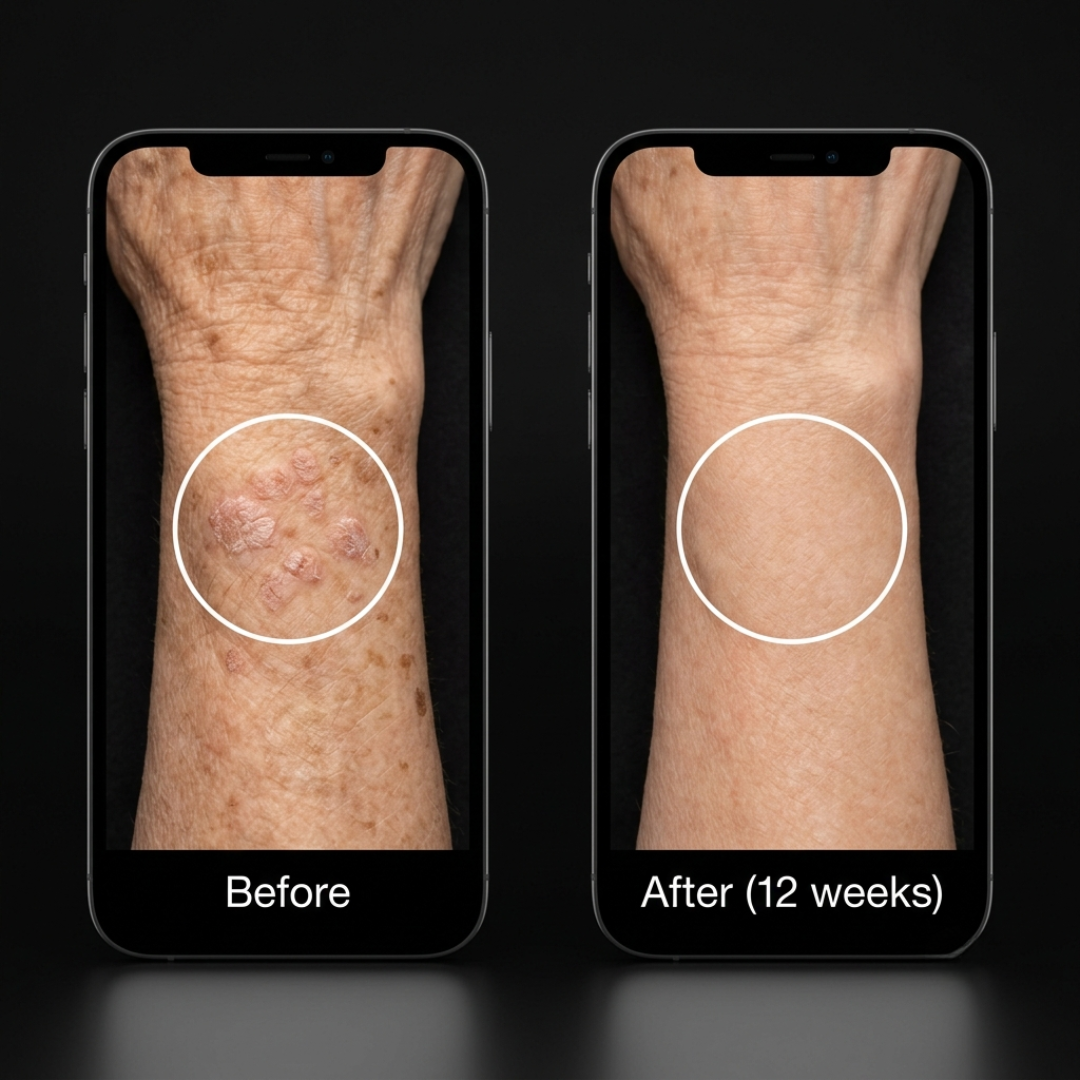
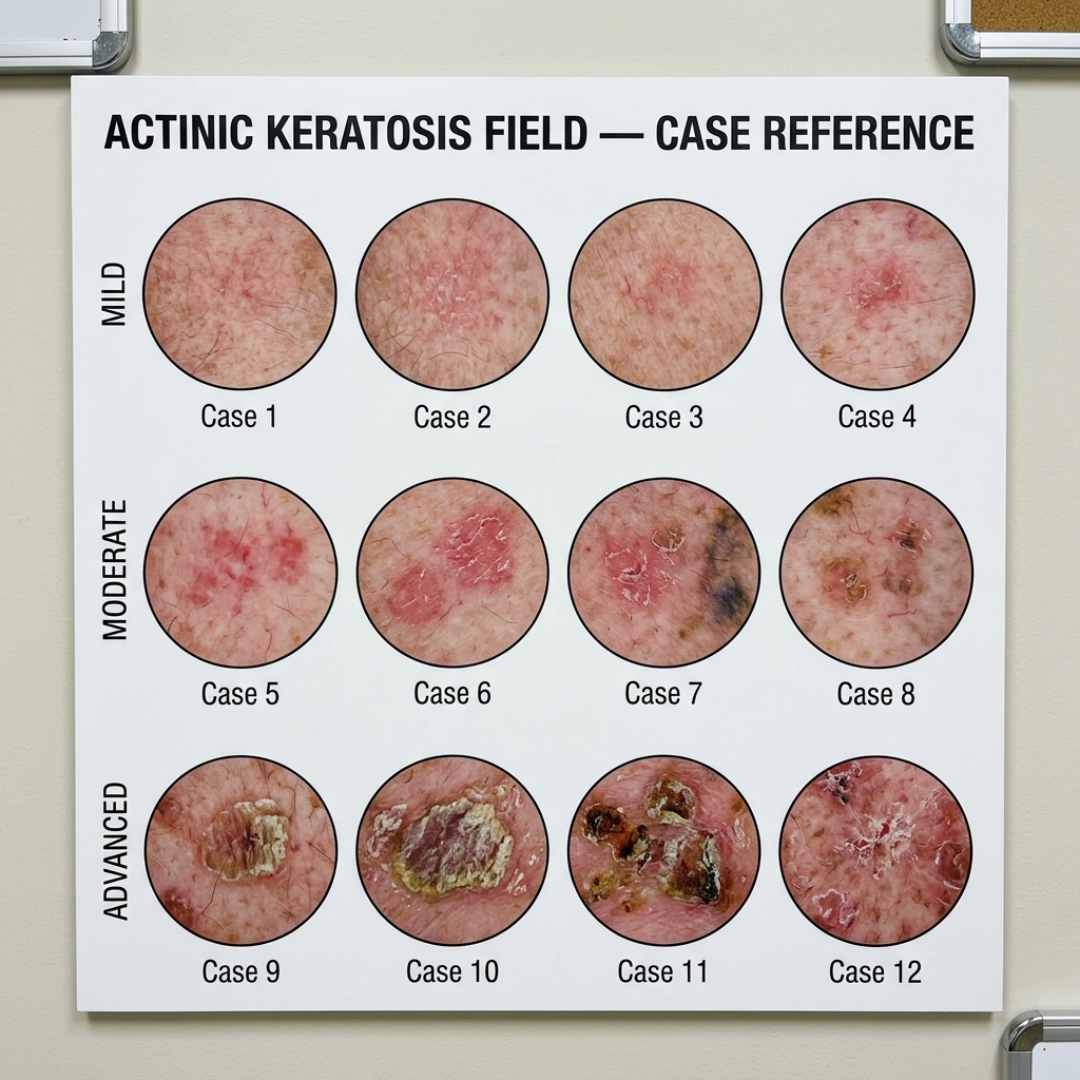
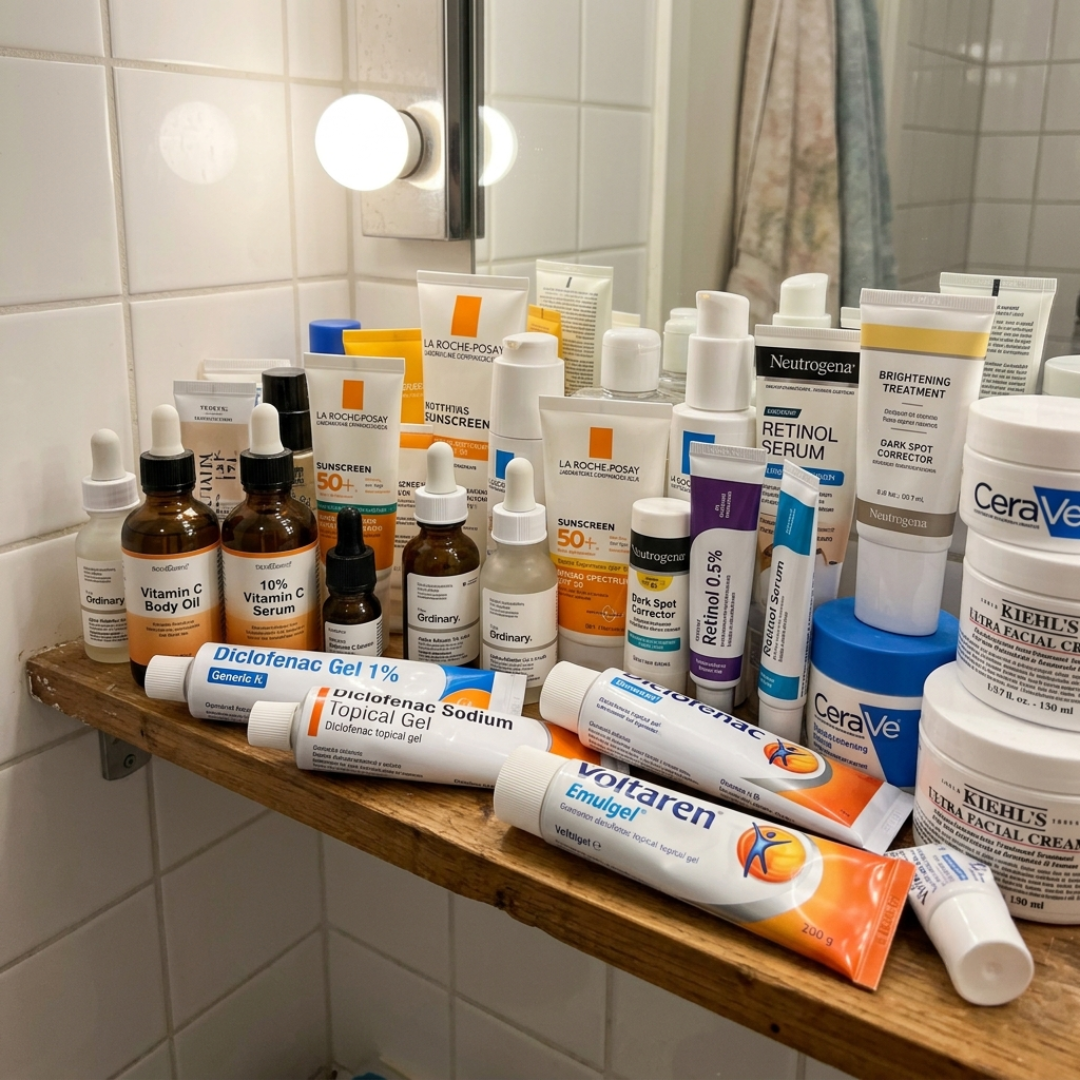
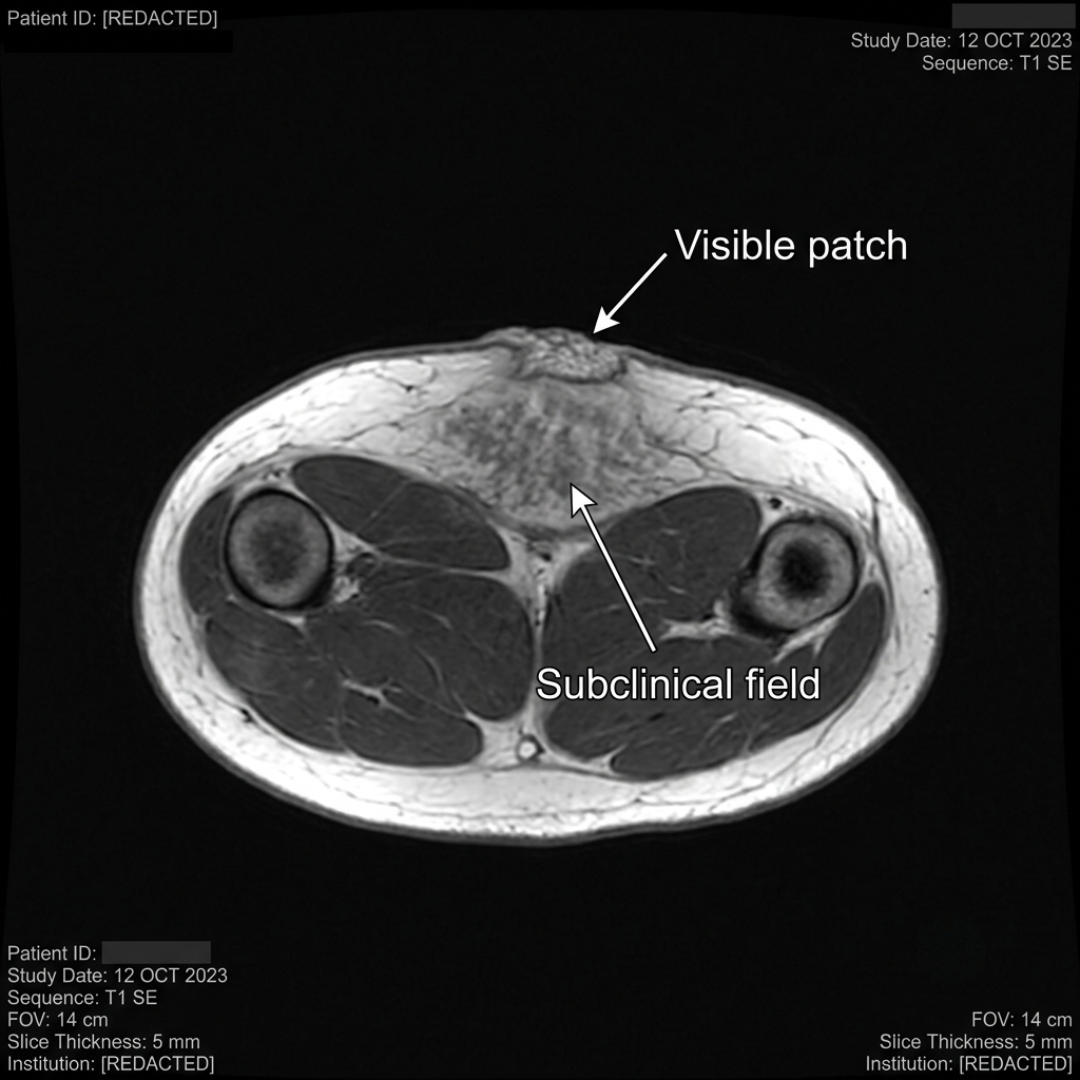
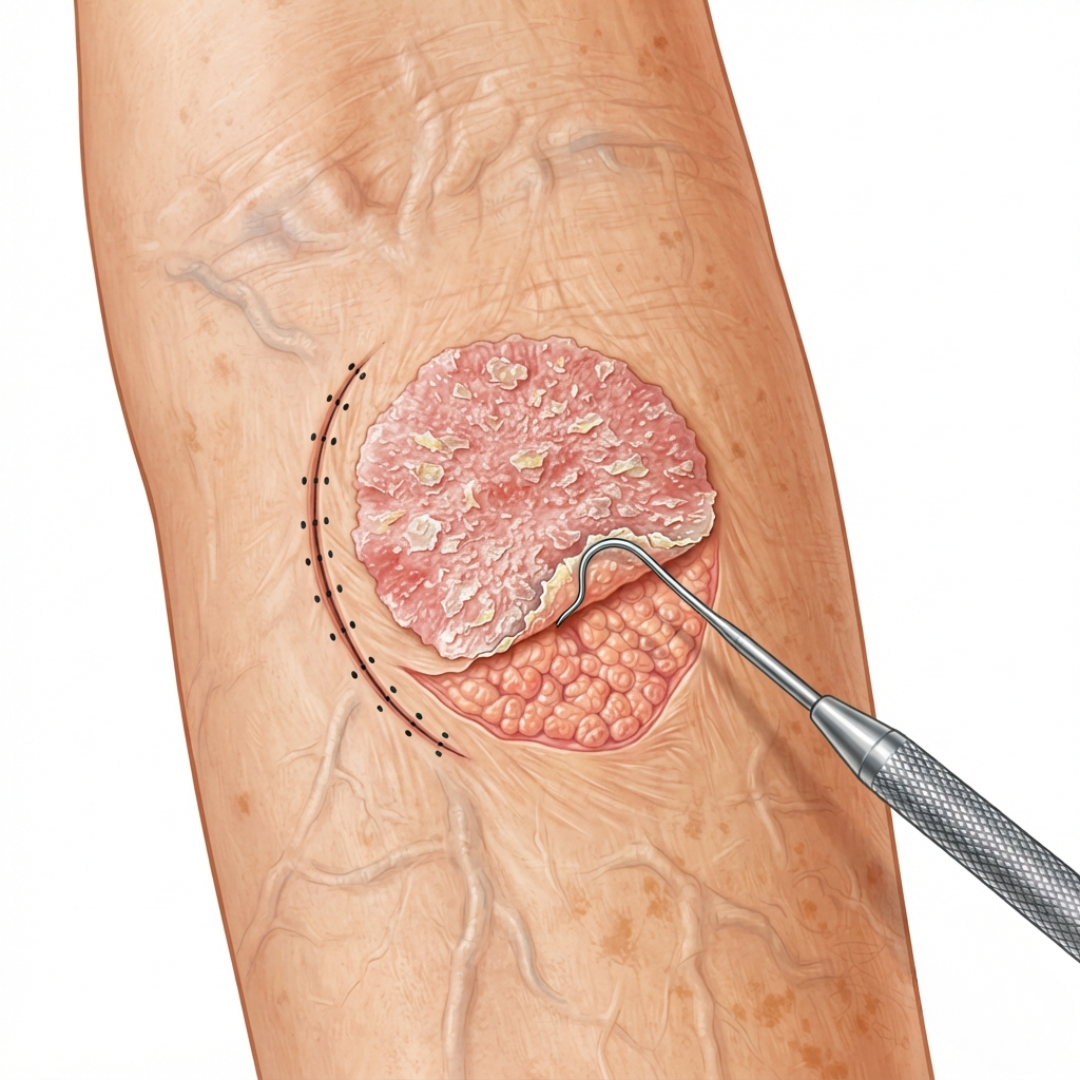
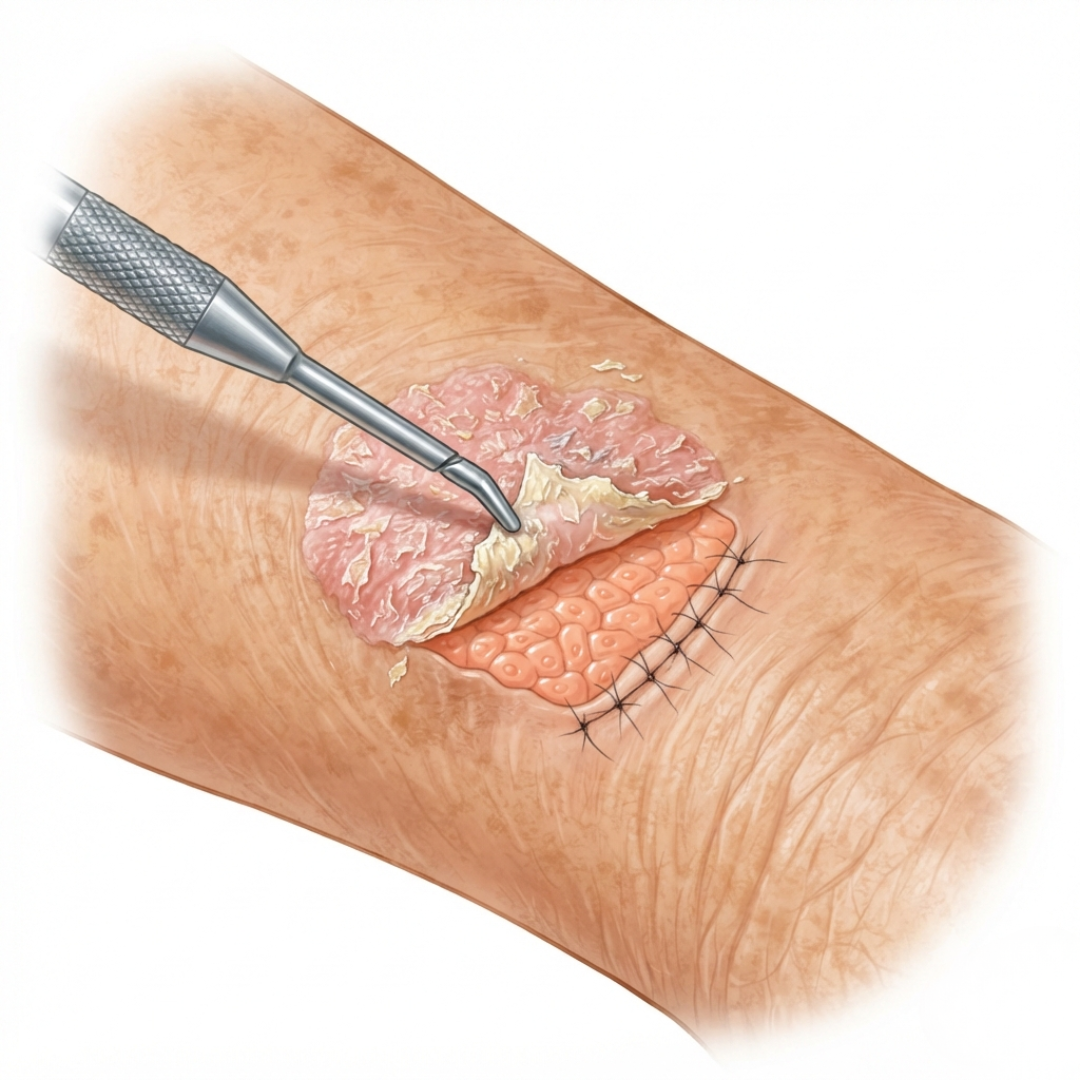
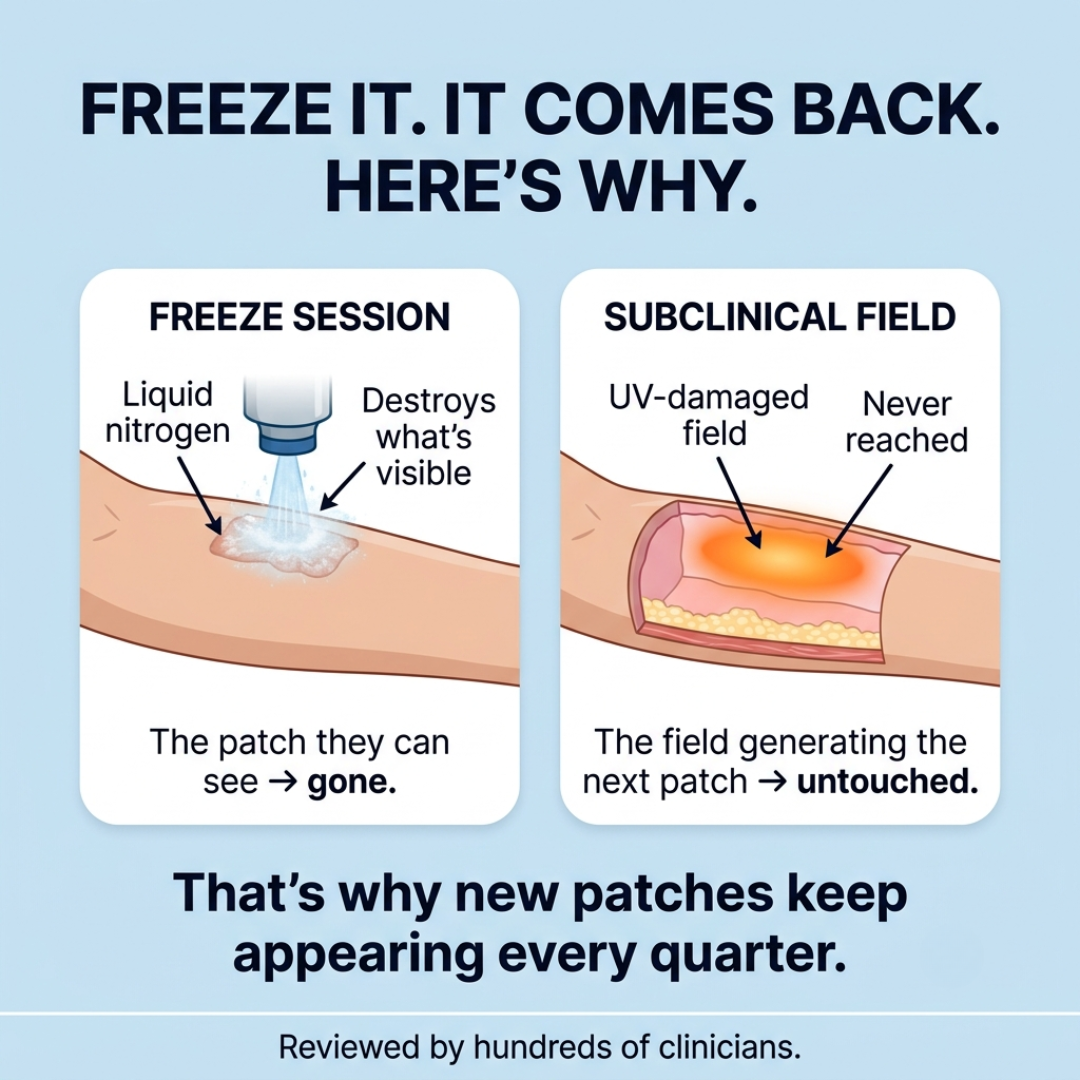
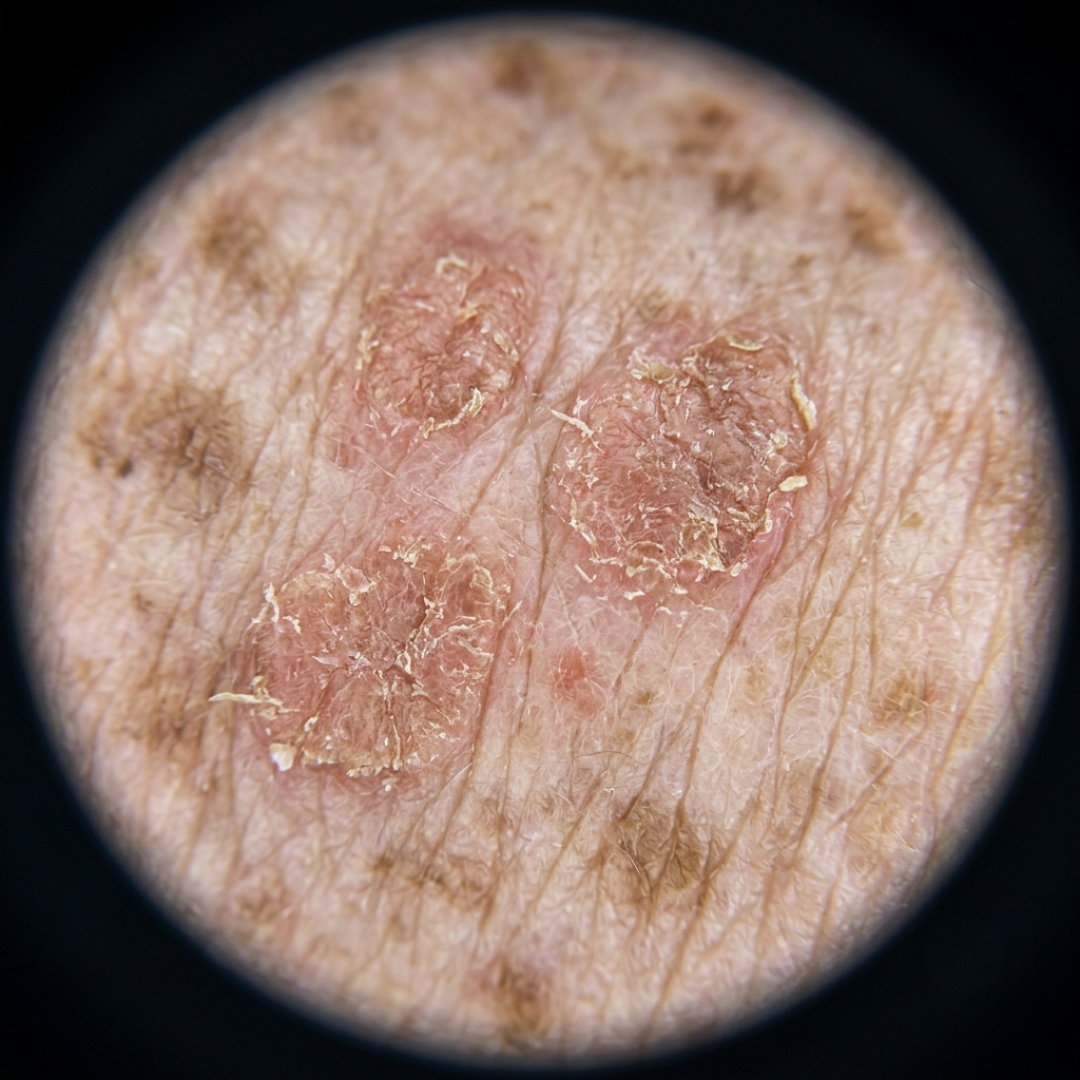
Chronic actinic keratosis has four stages. The first three are reversible without field chemotherapy or photodynamic therapy. Most American dermatologists won't tell you that, because they're only trained to manage stage four. I've been a dermatologist for 22 years. The first 20, I practiced in Zurich. I moved to the United States two years ago. And in my first three months here, I saw something I couldn't stop thinking about. Women in their 50s and 60s sitting in my office. Rough spreading patches on their forearms and hands. Covering their arms every morning before they could leave the house. Planning every outfit around what would hide their skin. Every one of them said the same thing. "My dermatologist has been managing it for years." In Switzerland, we don't manage chronic actinic keratosis with quarterly freeze sessions indefinitely. We treat the field. Because by the time new lesions are appearing every visit in skin that looked clear the appointment before, something has already been failing structurally for years. --- Here's what no one has told you about where chronic actinic keratosis actually leads. Your patches are the visible end of a dermal field that's been generating long before anything appeared on the surface. The problem isn't on your skin. It's in your dermis. Deep in the dermis, UV radiation doesn't damage isolated cells. It creates a subclinical field of UV-damaged keratinocytes spreading invisibly across the surrounding tissue. These cells look normal to the eye. They feel almost normal to the touch. But they're already misfiring at the cellular level — dividing abnormally, generating the next visible lesion weeks or months before it appears on the surface. When cumulative UV damage runs unchecked for months or years, this field locks into a state of chronic abnormal proliferation. The normal keratinocyte cycling breaks. Cells receive a continuous misfiring signal. New lesions emerge from the field on a predictable schedule — every quarter, every season, whether you've been frozen or not. That is stage one. Most people don't even notice stage one as something serious. A small rough patch on the back of a forearm. Maybe one slightly raised spot after a summer. Nothing alarming. Your doctor says "wear SPF daily and come back in three months." You comply religiously. It seems manageable. But the subclinical field underneath isn't manageable. It's progressing. Silently. Every season. This is the moment most American dermatologists schedule the first freeze session and prescribe diclofenac for the visible patches. I understand why. The patches are appearing. The liquid nitrogen destroys them. The diclofenac softens the surface. The patient feels like something is being done. But liquid nitrogen destroys the visible lesion. It was never designed to reach the dermis where the field lives. And diclofenac is water-based — it sits on the stratum corneum, the outermost skin layer, and barely penetrates. The UV-damaged keratinocytes generating new lesions live in the dermis. Deep. Where water-based compounds don't reach. The dermal field is still progressing — in the tissue, in the keratinocyte population, in the skin's ability to regulate its own cell cycling. I have seen three years of "managing" with quarterly freeze sessions and diclofenac followed by patches spreading from a single spot on one forearm to widespread active lesions across both forearms, both hands, the upper arms, and the chest. Because nothing changed structurally. The freeze sessions were clearing the surface of a flood while the field kept generating underneath. --- Stage two is what happens underneath while the surface looks managed. The subclinical field doesn't just generate lesions at the sites you can see. It recruits surrounding tissue into the same abnormal proliferation state. When the field runs unchecked past a certain threshold, the surrounding keratinocyte population begins synchronizing — misfiring together, generating together, spreading the field outward from every visible lesion. That's the stuck layer. The field that won't switch off. The source that no freeze session reaches. It sits at the deep dermal level — deeper than liquid nitrogen, diclofenac, or field chemotherapy can reliably get to. This is when single patches expand into spreading clusters. When new lesions appear on body sites that were always clear before. Then more. And the morning routine of covering your arms begins to consume the day. Because in summer, when UV exposure re-triggers a field that's already primed and entrenched, new lesions form faster than any freeze schedule can address them. The field fires across the entire sun-exposed surface. And by August, the watch list is longer than it was the previous spring. --- Stage three: the hiding takes over. You stop wearing short sleeves. You stop going to the pool with your grandchildren. You wear a cardigan in your own home because the habit of covering your arms has become automatic. You decline being photographed. You reach across a table and pull your sleeve down without thinking about it. The exhaustion of managing your appearance around a condition nobody is fixing steals your confidence — cancelled plans, declined invitations, a life shrinking around something that keeps spreading. This isn't just about skin anymore. It's about your freedom being lost. Your confidence being drained. Your relationships being shaped around something you're hiding. And here's what's happening underneath during stage three: the subclinical field is widening. The abnormal proliferation signal is recruiting more surrounding tissue. The invisible damaged zone around every visible lesion is deepening year after year. Every season without deep-dermis field support makes the next season harder to reverse. --- Stage four: the procedure escalation. Your dermatologist recommends 5-fluorouracil field chemotherapy twice daily for six weeks. Then photodynamic therapy — three sessions at $800 each. Then imiquimod. Then combination protocols. The field chemotherapy forces rapid surface cell turnover across the visible area. Your skin weeps and crusts for weeks. A few months of calmer skin. Then new patches appear at the edges of the treated zone as the seasons change and the unaddressed dermal field re-activates the same keratinocytes. Because the deep field was never reached during the treatment. Meanwhile, the acid protocols and photodynamic sessions bring chronic barrier disruption, increased UV sensitivity, and eventually — for some patients — a cycle of expensive procedures that never actually address why the keratinocytes keep misfiring in the first place. I am not describing a worst-case scenario. I am describing what I watch happen, step by step, in patients who were told for years to keep coming back for freeze sessions and applying diclofenac between visits. Your chronic actinic keratosis is not a surface patch problem. It is a keratinocyte field failure that starts with mild UV activation and progresses to a synchronized abnormal proliferation field, spreading lesions, permanent lifestyle restriction, and eventually procedure dependency with results that never hold. No freeze session repairs the structural dermal field. Diclofenac suppresses the surface temporarily. Neither stops the progression. Published research in European dermatology and photoaging journals has confirmed that chronic keratinocyte field abnormality from sustained UV-triggered signaling — not individual visible lesions — drives progressive actinic keratosis in patients with otherwise normal skin function. In Switzerland, we addressed this with deep-dermis botanical delivery — oil-soluble vitamin C carried in cold-pressed camellia and sea buckthorn oil to penetrate all seven skin layers and reach the keratinocyte field directly, and bakuchiol to modulate the cellular turnover rate and support the normal cycling of UV-damaged cells. Both delivered through lipid-based topical absorption. To the dermal tissue. From the inside of the skin. Published studies showed significant improvement in keratinocyte regulation and lesion reduction — independent of any freeze session or topical anti-inflammatory protocol. Your quarterly freeze schedule doesn't determine this outcome. Your dermal field does. --- Here's where the stages matter for YOU right now: **If you're in stage one** — a few rough patches, occasional new spots after summer, diclofenac seems to help sometimes — your keratinocyte field is just beginning to entrench. The abnormal proliferation is early. Reaching it is fastest here. Most people see texture smoothing and patch flattening within weeks because the dermal tissue is still highly responsive. **If you're in stage two** — patches spreading to new areas each season, diclofenac wearing off faster, new lesions appearing in skin that looked clear last visit — the field is progressing. The abnormal proliferation zone is widening. Reaching it takes longer but is still very achievable. Most people experience visible improvement around week 3-4 as the old proliferation signal starts calming. **If you're in stage three** — covering your arms every morning automatically, declining photos, planning your wardrobe around hiding your skin, life shrinking around the patches — the field is significantly entrenched. But it's still responsive. The dermal tissue can still be reached when given the right compounds. This is the critical window. Every season you wait makes stage four more likely. **If you're at stage four** — your dermatologist is recommending field chemotherapy, photodynamic therapy, and escalating protocols — the dermal field is deeply established. Reaching it is still possible but takes longer and requires consistent daily support. The most important thing is to stop the field from widening to the point where new patches appear faster than any intervention can address. --- The formula I recommend to my own patients is Dermiqua. Cold-pressed camellia and sea buckthorn oil as the lipid carrier. Oil-soluble vitamin C at clinical concentration. Bakuchiol at the concentration used in published research. Sixteen botanicals. Zero water. Zero filler. Applied morning and evening directly to the patches and surrounding field. 90-day money-back guarantee. If the patches don't start calming, every penny back. I have no financial relationship with this company. I recommend it because the mechanism is sound, the research supports it, and I've seen it work. Your dermal field is failing first because chronic UV activation has locked the keratinocyte cascade into permanent abnormal proliferation and your skin can't stop generating new lesions while the field runs unchecked. Your patches are next. Your confidence. Your freedom. Your presence in your own family's photographs. Your ability to reach across a table without thinking about your arms. You just can't see the dermal field yet. But you can see what it's doing. Every morning in the mirror. 👉 dermiqua.com/pages/actinic-keratosis — Dr. Elena Brandt, MD Dermatologist, formerly of University of Zurich Medical Center Currently practicing in Boston, MA
Like this ad? Make it yours.
Crush rebuilds this exact creative around your product — your brand, your colors, your offer — in about a minute.