
Inactive· since Jul 24, 2026
- 42
- days it ran
- 1
- relaunches
Ad copy
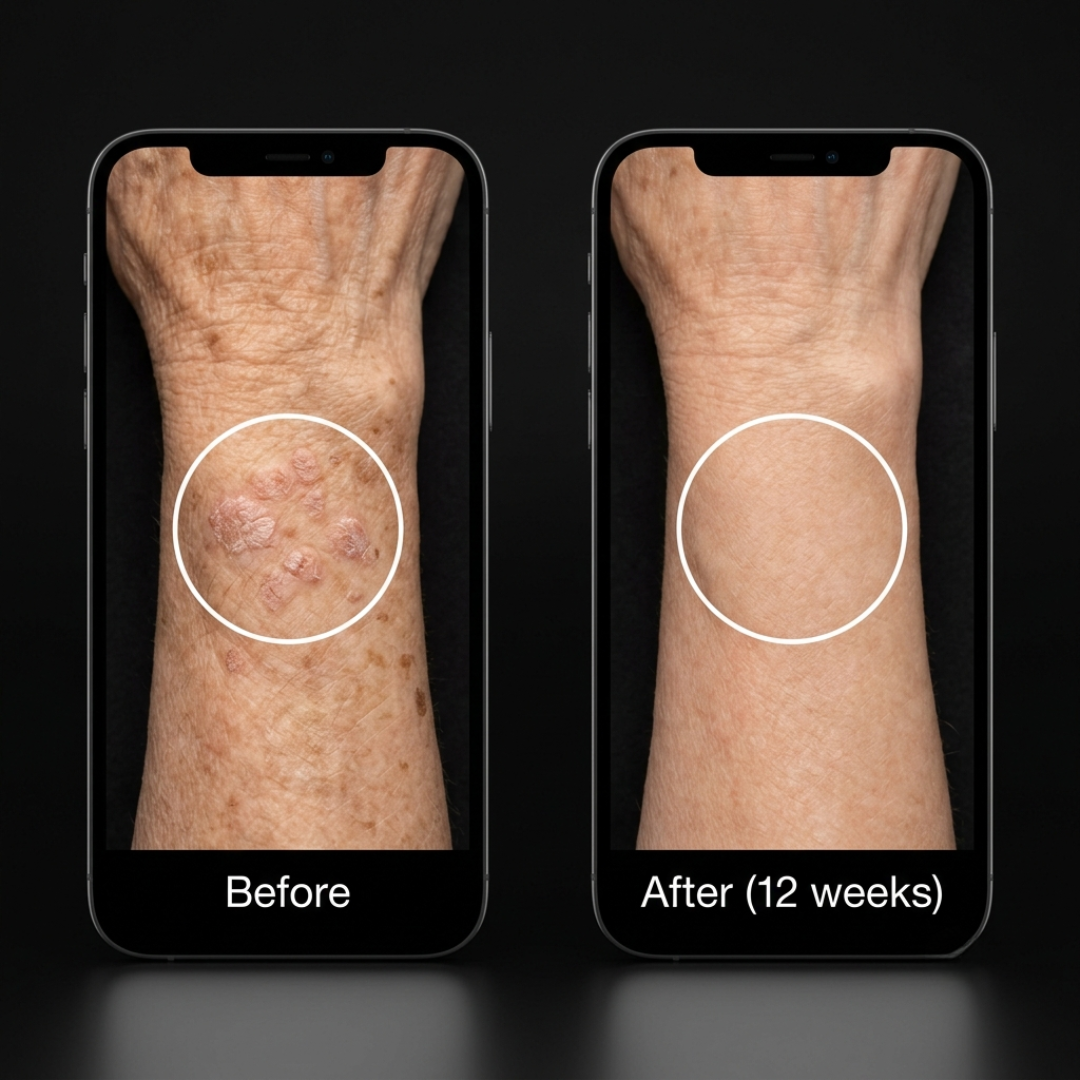
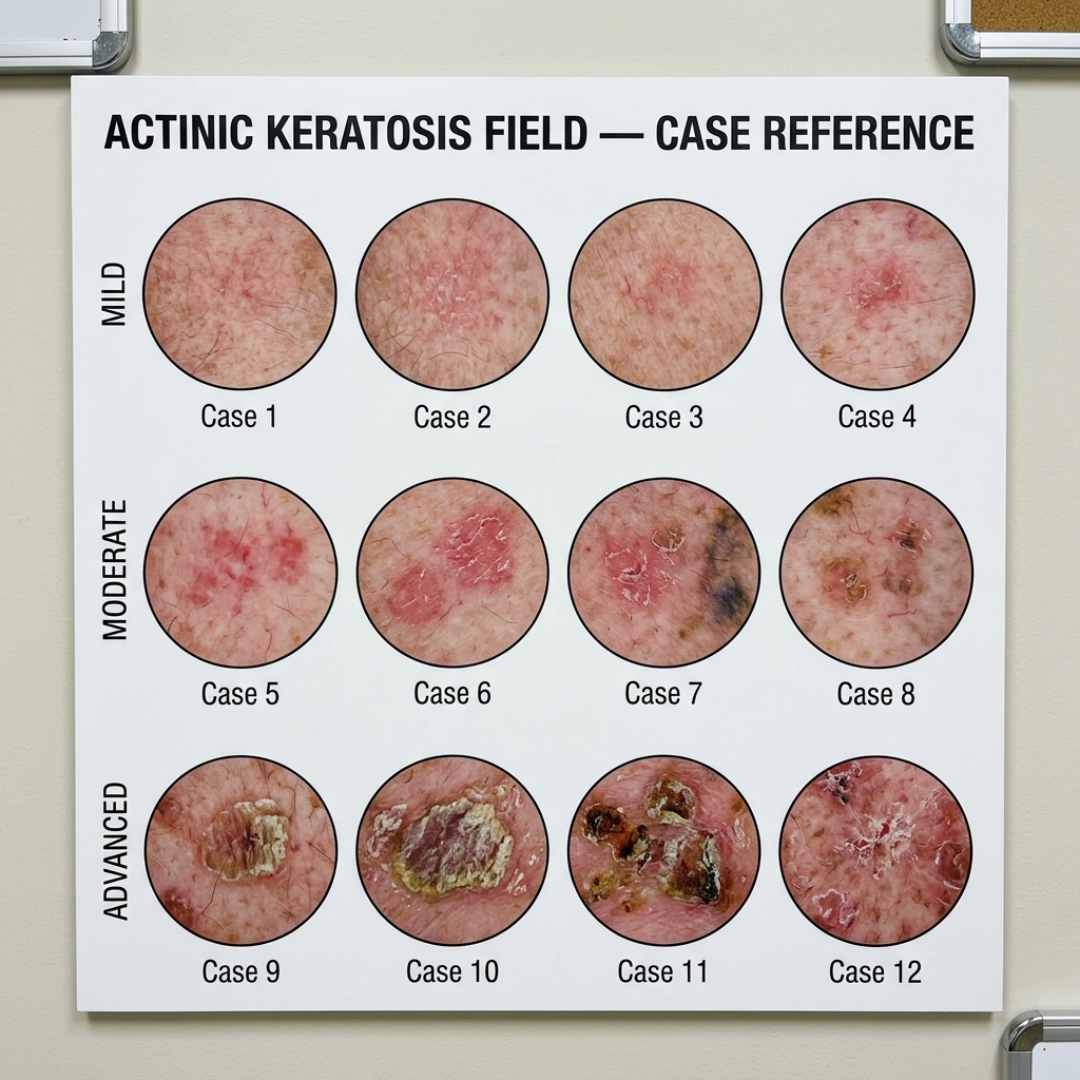
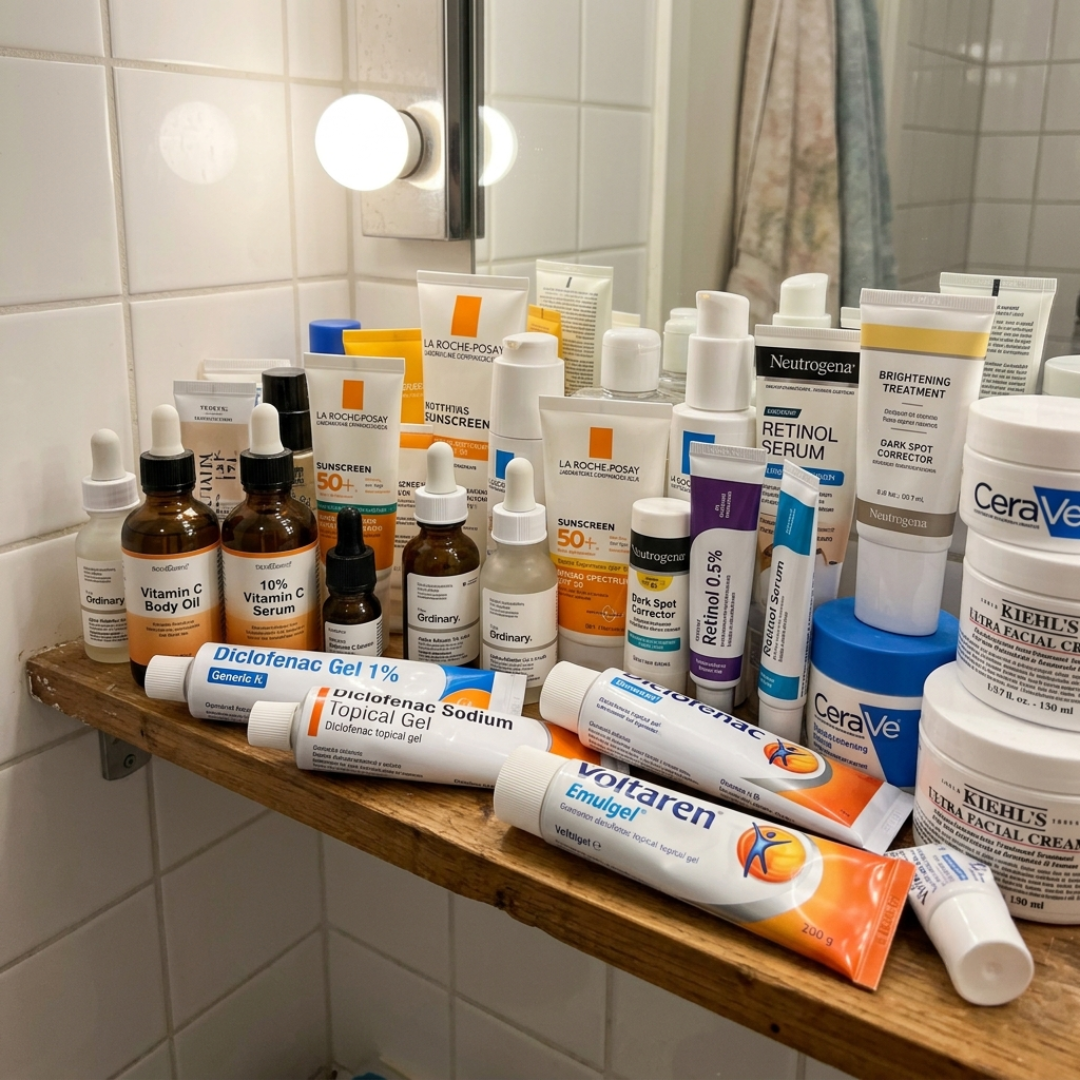
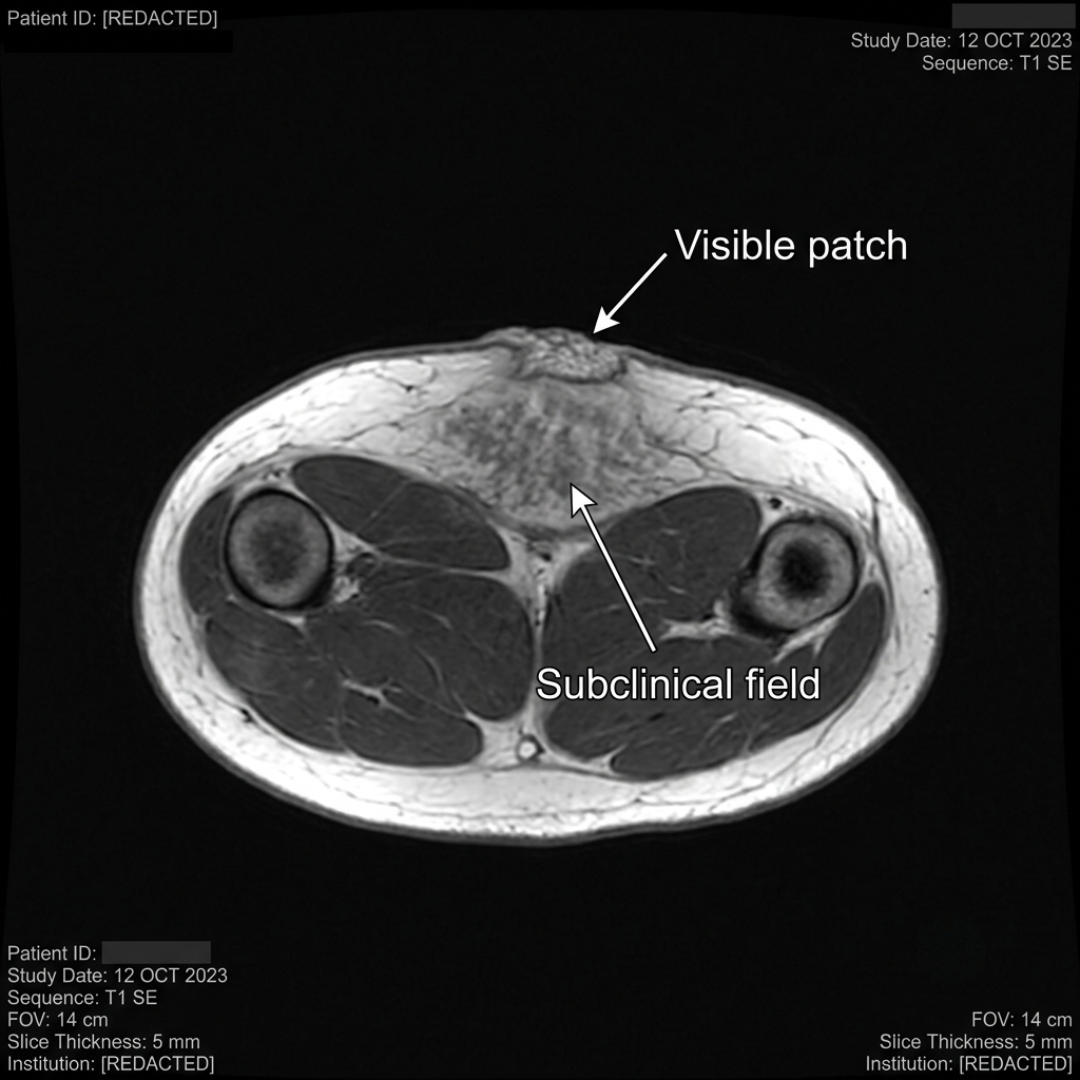
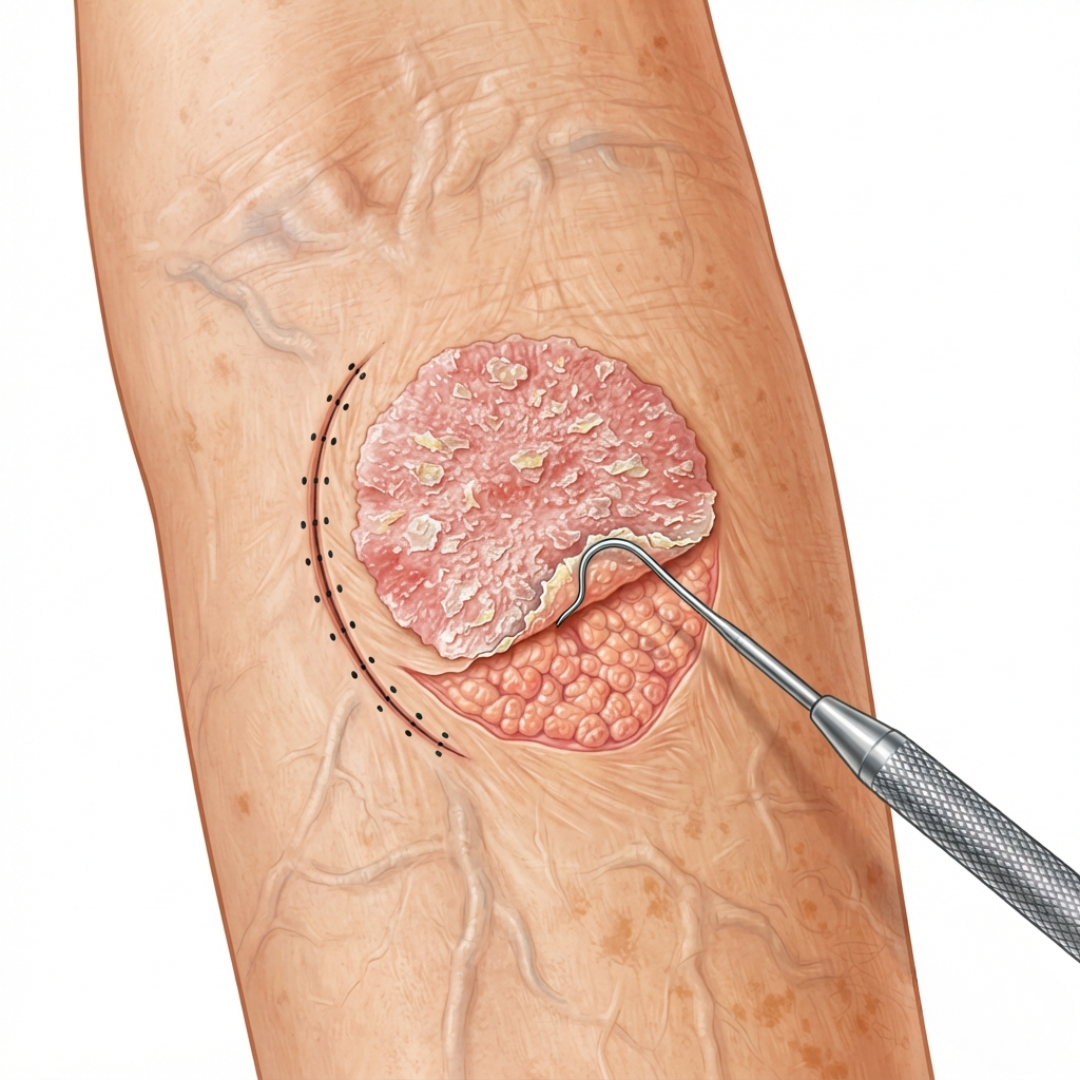
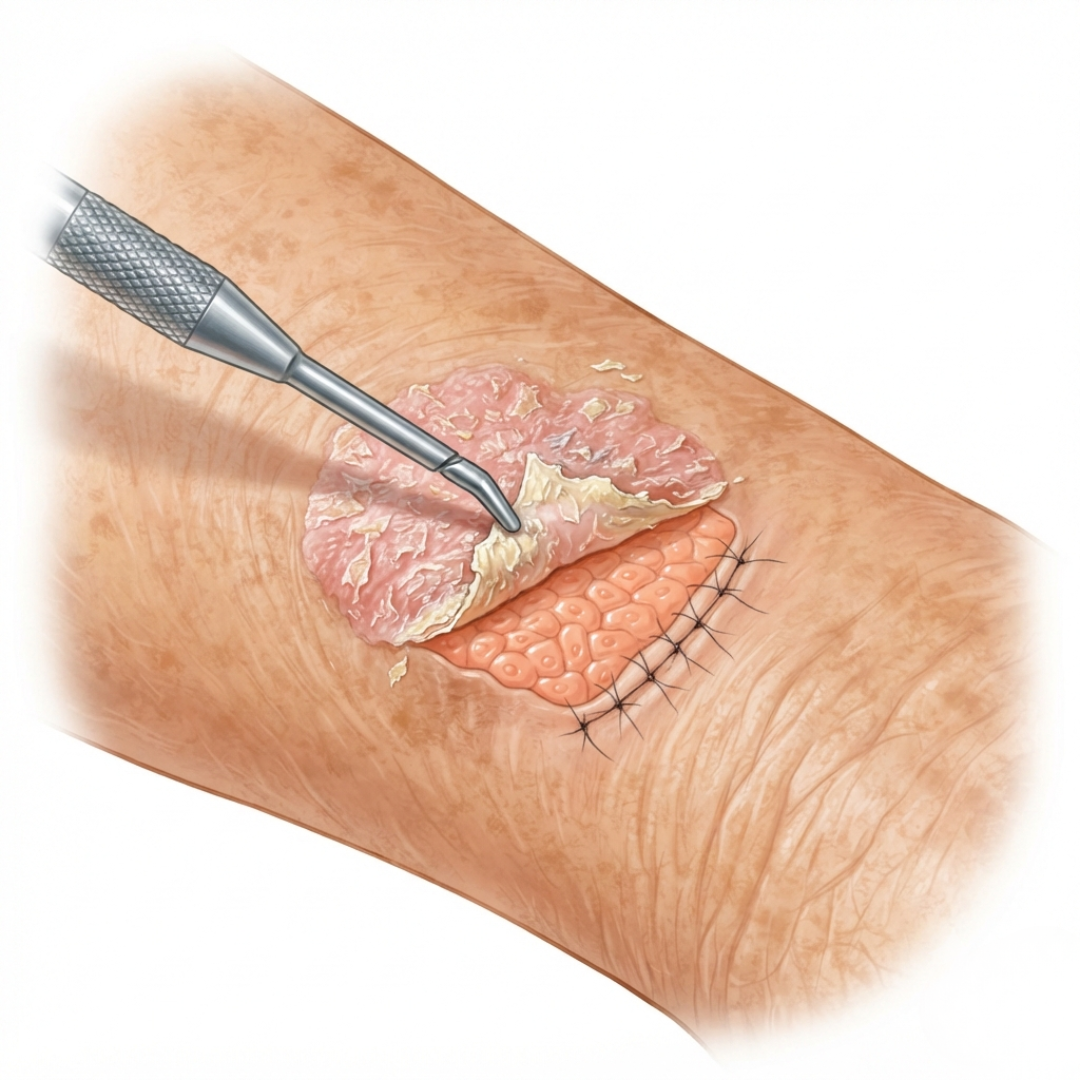
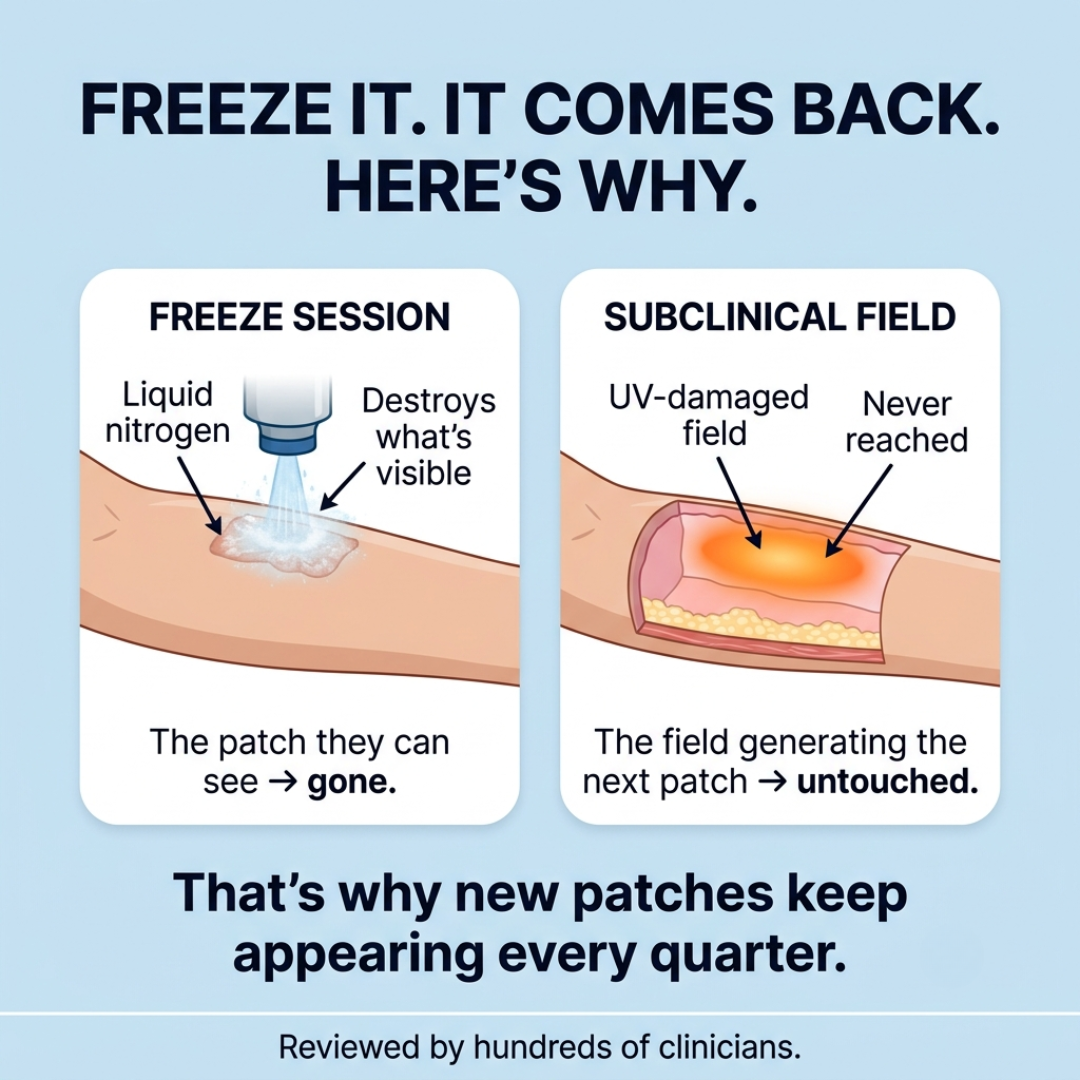
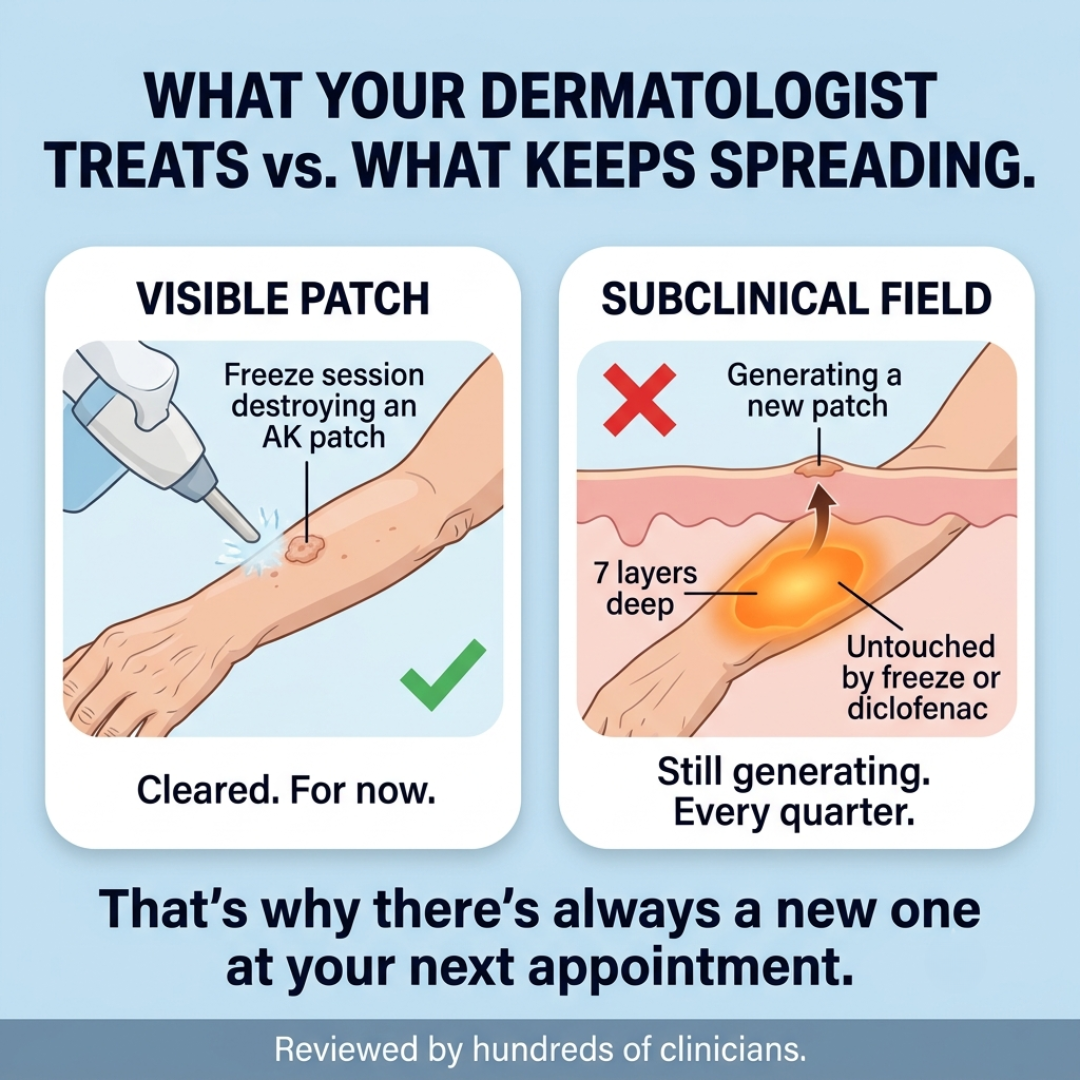
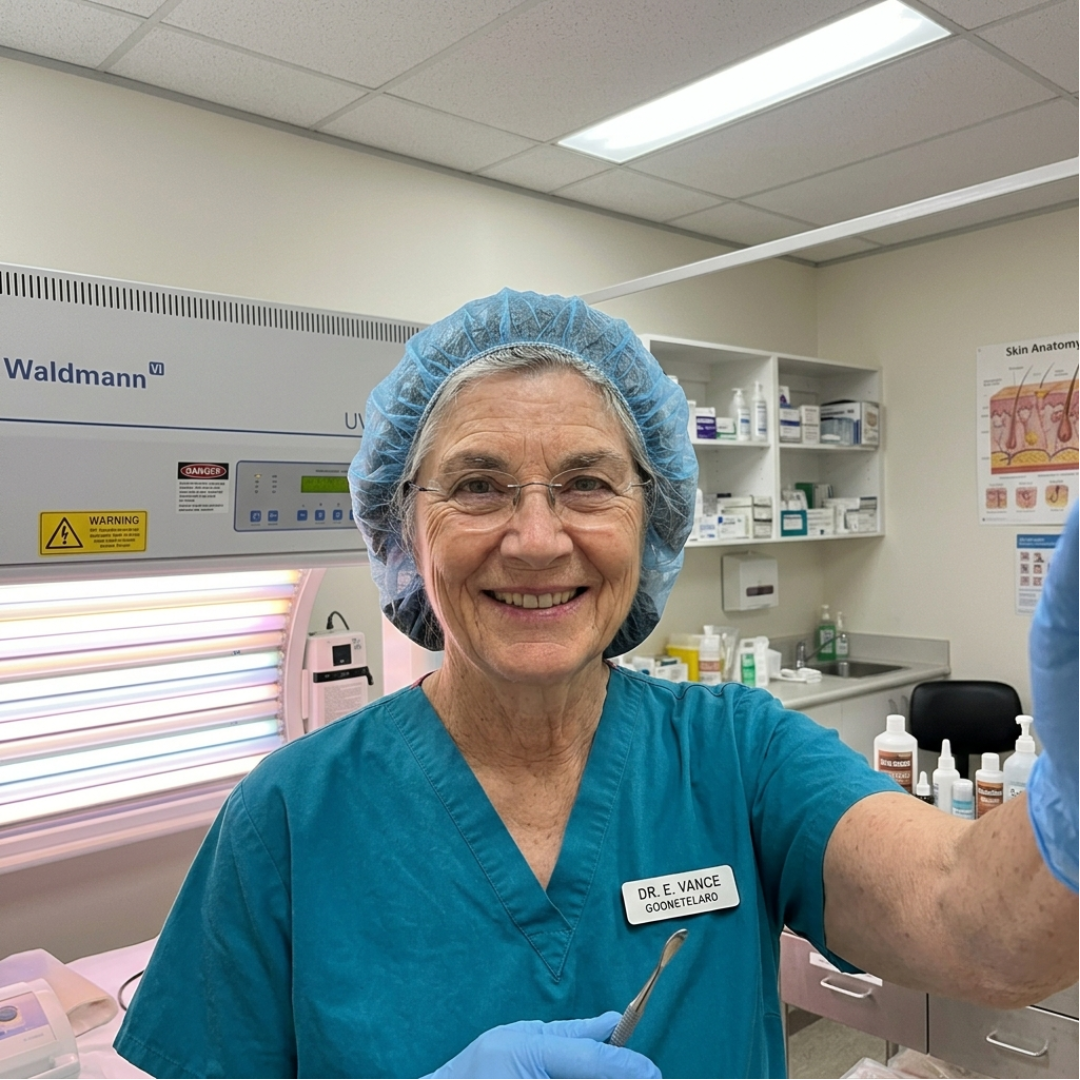
There is a field of UV-damaged cells sitting deep under your skin that your dermatologist has never once mentioned to you. I know this because I am a dermatologist. I spent 27 years performing freeze sessions on women with actinic keratosis. I scheduled the follow-ups. I booked the next round when the patches came back. I told my patients this was normal. That AK is chronic. That we manage it long-term. I was the problem. My name is Dr. Linda Hargrove. I trained at Northwestern. I ran a dermatology practice in Scottsdale, Arizona for over two decades. I have treated thousands of women with actinic keratosis. And for most of those 27 years, I never once explained to a single patient what was actually driving their patches back. Not because I was hiding it. Because I didn't know. Here is what I know now. Actinic keratosis patches do not come from the surface. They come from what researchers call a subclinical field — a wide zone of UV-damaged keratinocytes sitting deep in the dermis, invisible to the naked eye, spreading far beyond the edges of any visible patch. The rough scaly spot you can see on your arm is the end of a process that started deep underneath, long before anything surfaced. Every standard treatment — liquid nitrogen, diclofenac, fluorouracil, photodynamic therapy — targets the visible patch at the surface. Not one of them reaches the dermal field generating new abnormal cells beneath it. That is why your patches keep coming back. Not because your skin is broken. Not because AK is incurable. Because every treatment you have ever had was aimed at the wrong layer. I found this out the hard way. Three years ago I attended a dermatopathology conference in Denver. A researcher named Dr. Elaine Marsh presented 14 years of field cancerization data. She showed slide after slide of patients who had been treated successfully by standard metrics — patches cleared, follow-ups clean — who returned within six months with new patches in the same zones. She overlaid the biopsy maps. The dermal field in every single patient was completely intact after treatment. Untouched. Active. Generating new abnormal keratinocytes upward toward the surface on a cycle that freeze sessions had never once interrupted. I sat in that auditorium and felt something I had not felt since medical school. I felt like I did not know what I was doing. I went back to my practice and pulled the files of my longest-running AK patients. Women I had been treating for six, eight, ten years. Dozens of freeze sessions each. Some had done PDT twice. I looked at their patch maps over time. The patches moved. The field never did. I had been clearing the surface for a decade and calling it treatment. I spent the next eight months in the research. Not dermatology journals — biochemistry. Lipid barrier permeability. Transdermal penetration of oil-soluble versus water-soluble compounds. The stratum corneum as a selective membrane. Here is what the research showed me. The stratum corneum — the outermost layer of the skin — is a lipid barrier. It is designed to keep water out and water in. Water-based compounds, diclofenac gel, fluorouracil cream, every topical treatment in the standard AK protocol, cannot cross it in any meaningful concentration. Studies show less than 4% of a water-based topical ever reaches the dermis. The field sits in the dermis. We were treating the surface with compounds that physically cannot get to where the problem lives. Cold-pressed botanical oils are different. Camellia oil and sea buckthorn oil match the lipid chemistry of the stratum corneum itself. They do not sit on top — they penetrate through, carrying oil-soluble actives with them into the dermis. Oil-soluble vitamin C — ascorbyl tetraisopalmitate — inhibits the UV-induced oxidative cascade in the dermis that keeps the damaged keratinocyte field active. Bakuchiol supports normal keratinocyte cycling from the dermal layer outward. This is not alternative medicine. This is lipid chemistry. It is documented, peer-reviewed, and it has been sitting in the literature for years while dermatologists like me kept booking freeze appointments. I reformulated my own protocol. I stopped recommending diclofenac as a standalone treatment. I started my highest-cycling AK patients on a cold-pressed botanical oil with true lipid-carrier penetration. The results were not subtle. Women who had been on the freeze rotation for years — six sessions, eight sessions, ten sessions — stopped cycling. Patches that had been returning every three to four months flattened and did not come back. Not because I had found a better way to destroy the surface. Because for the first time we were reaching the field underneath it. One patient, Barbara, 71 years old, had been my patient for nine years. Thirty-one freeze sessions across both forearms and the backs of her hands. She came in every quarter. New patches every time. Eight weeks after starting the botanical oil protocol, she came in for her scheduled follow-up. I examined both forearms. The three patches I had frozen four months earlier were flat. No new patches had emerged. The surrounding field — the zone that had been generating new abnormal cells like clockwork for nine years — was quiet. I told her I did not think she needed to schedule another freeze session yet. She looked at me for a long moment. Then she said: "In nine years you have never said that to me." I did not have a good answer. Because there wasn't one. She asked what had changed. I told her. The field. The lipid barrier. The fact that every treatment she had received for nine years had been aimed at the patch and never once at what was generating it. She sat there quietly. Then she said: "Why didn't anyone tell me this sooner?" I am telling you now. If your AK patches keep coming back after every freeze session, it is not because your skin cannot heal. It is not because actinic keratosis is simply chronic. It is because every treatment you have received has been aimed at the surface, and the field sitting in your dermis has never once been reached. The product I now recommend to my AK patients is Dermiqua. Cold-pressed camellia and sea buckthorn as true lipid carriers. Oil-soluble vitamin C at a meaningful concentration. Zero water, zero filler. Formulated to penetrate the stratum corneum and reach the dermal field where standard topicals cannot go. It is not a freeze session. It is not a prescription gel. It will not destroy an existing patch overnight. What it does is reach the layer that generates new ones — and calm it. 90-day money-back guarantee. If you do not see a difference, you send it back. 👉 dermiqua.com/pages/actinic-keratosis I spent 27 years freezing the surface and calling it treatment. I am not willing to keep quiet about what I missed. ~ Dr. Linda Hargrove, MD, Dermatology, Northwestern University, 27 years --- P.S. A few things I wish I had told my patients sooner. One. Liquid nitrogen destroys the visible patch. It does not reach the dermal field. Studies consistently show field cancerization persists after successful patch clearance. New patches are not treatment failure — they are the field doing exactly what it was always doing. Two. Diclofenac and fluorouracil are water-based. The stratum corneum is a lipid barrier. Less than 4% of either compound reaches the dermis under standard application. You are treating a dermal problem with a compound that cannot get there. Three. Timeline with Dermiqua: surrounding skin calms first, usually within two weeks. Existing patches flatten between weeks four and eight. Field cycling slows — meaning new patches stop appearing — between weeks six and twelve. This is not a surface treatment. It works on a dermal timeline. Four. Dermiqua carries a 90-day money-back guarantee. If your field does not respond, you pay nothing. Five. Sun protection every single day. The field was created by UV. New UV exposure keeps it active. The oil reaches the field — sunscreen stops new damage from feeding it. If you have been on the freeze rotation for more than a year. If new patches keep appearing in the same zones. If you have done PDT and watched the patches return. If your dermatologist has told you this is simply chronic and to manage it long-term. It is not chronic. It is undertreated. The field is real. The lipid barrier is real. The fact that standard treatments cannot cross it is documented science. And the solution has been sitting in the research for years. 👉 dermiqua.com/pages/actinic-keratosis
Like this ad? Make it yours.
Crush rebuilds this exact creative around your product — your brand, your colors, your offer — in about a minute.