
Inactive· since Mar 27, 2026
- 44
- days it ran
- 0
- relaunches
Ad copy
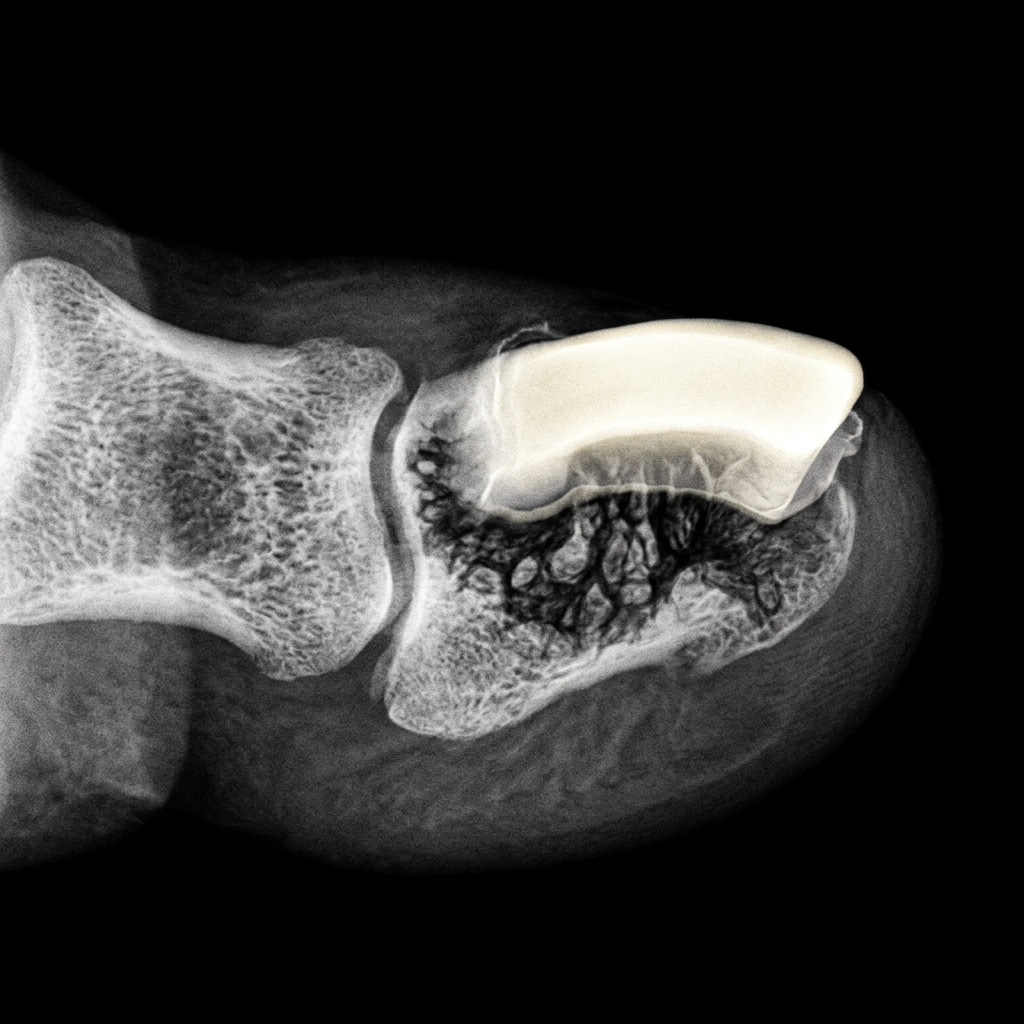
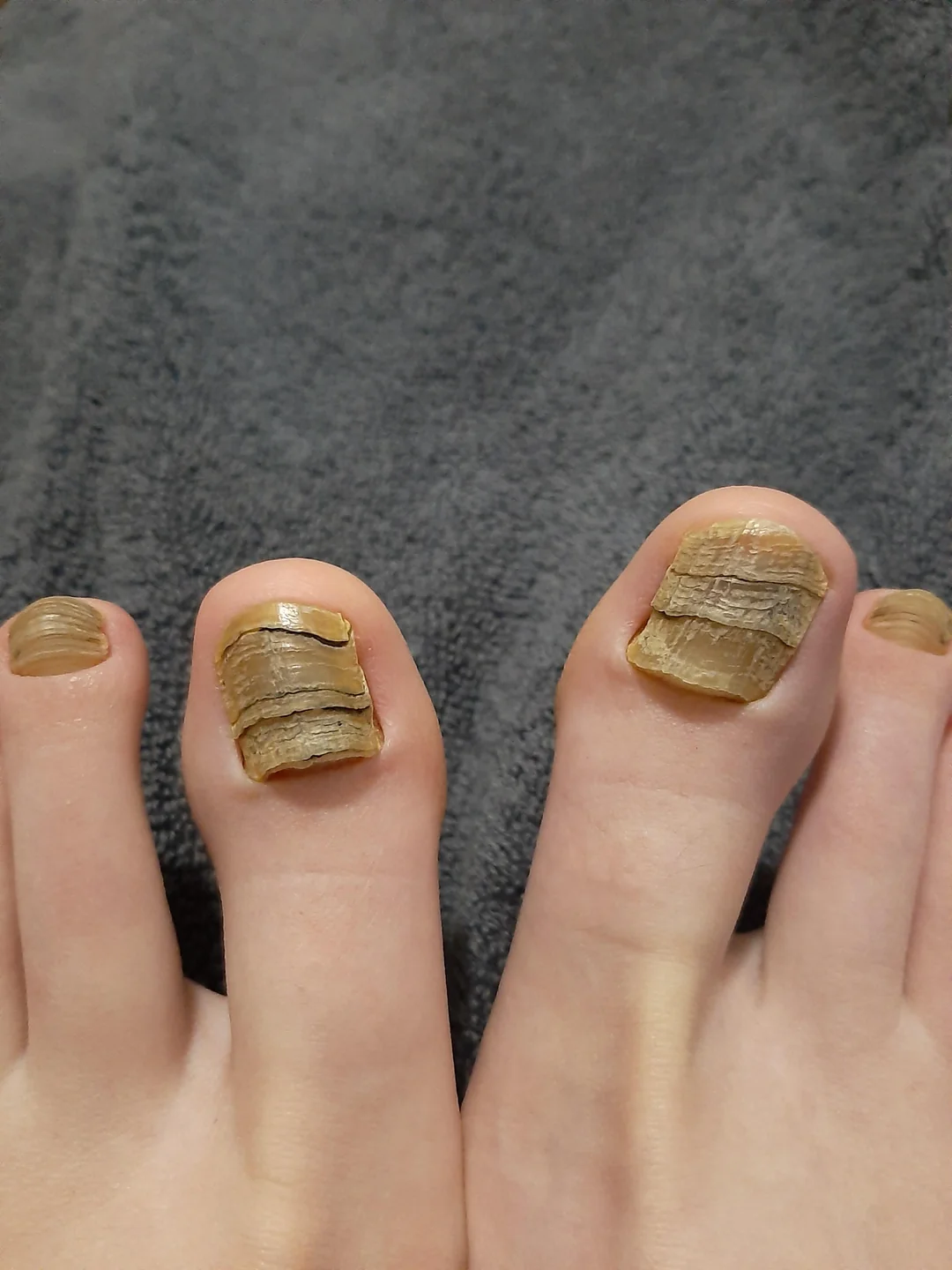
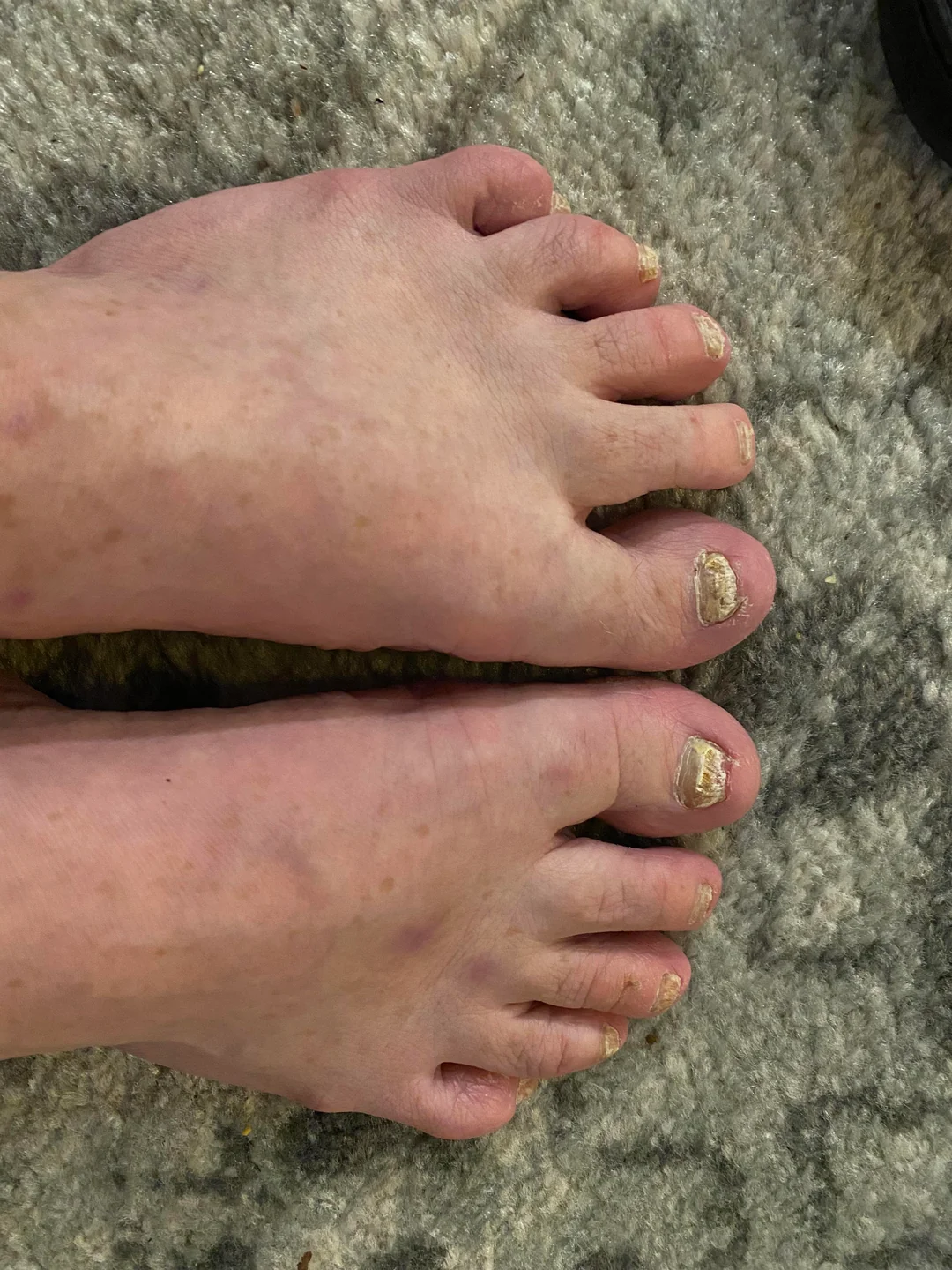
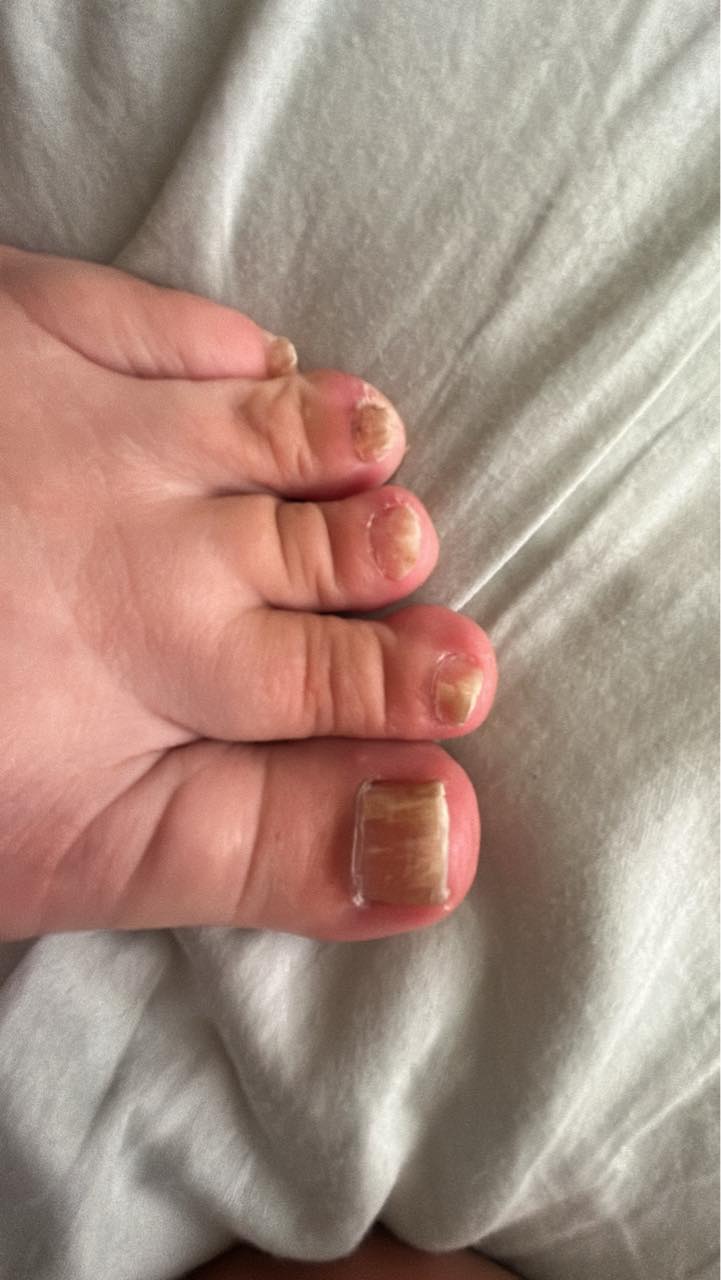
My podiatrist said if I didn't start Terbinafine, she'd document it in my chart as "patient non-compliant with recommended treatment." I had eleven minutes with her. She'd never met me before. Dr. Warren's retirement letter came on a Tuesday. Standard form letter. "After 28 years of practice, I'm stepping away effective October 1st. Your care will be transferred to Dr. Sarah Mitchell." I sat at the kitchen table staring at it. Twelve years. I'd been seeing Dr. Warren for twelve years. He knew my history. My mother's destroyed nails by 55. My fear of ending up like her. He'd always worked with me. "Let's keep you on the lacquer protocol, Karen. Ciclopirox every night. File once a week. We'll stay ahead of it. You're doing the right things." Now he was gone. My first appointment with Dr. Mitchell was October 17th. Routine check. Transfer of records. Meet the new podiatrist. I sat in the exam room. Same room I'd been in for over a decade. Same posters about foot health and nail care. Different doctor. Dr. Mitchell walked in. Young. Maybe 38. Laptop in hand. "Mrs. Holloway." Firm handshake. All business. "I've been going through your file." She sat down. Pulled up my records. Scrolled. Her expression changed. "Your infection history." She turned the screen toward me. "2019: one nail infected, right big toe. 2020: spread to second toe. 2021: three nails. 2022: five nails. 2023: seven nails. Today: seven nails with severe thickening, crumbling, and nail bed lifting on both big toes." She looked at me. "Five years of progressively worsening onychomycosis. Significant nail plate destruction on the X-rays. Ciclopirox lacquer for fourteen months. Then Jublia for eight months. Then tea tree oil. Then filing and soaking protocols. And the infection spread from one nail to seven." "Dr. Warren and I had a plan. Lacquer every night. Filing once a week. He was monitoring—" "Monitoring what? The spread?" Her voice was sharp. "Mrs. Holloway, you've been applying topical treatments for five years and your infection has progressed to seven nails. Your previous podiatrist kept prescribing the same approach that wasn't working. I need to get you on an aggressive protocol immediately." My stomach dropped. "What does that mean?" "Terbinafine. 250 milligrams daily for twelve weeks. Monthly blood draws to monitor liver function. If the infection doesn't respond after the first course, we do a second round. If the nails are too damaged, we discuss surgical removal." She was already typing. "If you decline the recommended treatment, I'm required to document it as non-compliance." "I've been applying lacquer for five years and it hasn't—" "That's exactly why we need systemic medication. The topicals clearly aren't penetrating. This isn't the same plan Dr. Warren had you on. This is the protocol that should have been started years ago." "But my mother took Terbinafine. Two full rounds. And her nails—" "If you skip or refuse the protocol, it goes in your chart." The printer hummed. She handed me the treatment plan. Terbinafine 250mg daily x 12 weeks: $180. Monthly hepatic panels (3): $225. Follow-up appointments (3): $450. If recurrence after first course: second round + monitoring: $855. If surgical removal needed: $800-1,200 per nail. $855 minimum. Potentially $3,000+ if the first course fails. Plus twelve weeks of a liver-toxic drug. She stood. Left the room. The whole appointment took eleven minutes. I sat there holding the treatment plan. Hands shaking. Non-compliance. In the parking lot, I called my husband. "How was the new podiatrist?" "She says Dr. Warren wasn't treating aggressively enough. Wants me on Terbinafine. Twelve weeks of pills that can damage my liver. Monthly blood tests. $855 minimum. Could be $3,000 if it fails and they remove nails surgically." Silence. "Terbinafine?" "She said if I refuse, it goes in my chart as non-compliant." "But... you've been applying lacquer every night for five years. You've spent—" "Over $4,200. On lacquers, creams, oils, soaking supplies, filing kits. I know. And my nails got worse every single year." "So her solution is... pills that could damage your liver?" I didn't have an answer. That night I couldn't sleep. Lay in bed staring at the ceiling. My husband's breathing steady next to me. Dr. Warren had prescribed exactly what every podiatrist prescribes. Lacquer. Filing. Topical protocols. "Be patient." The standard approach. Five years. Over $4,200. The infection spread from one nail to seven. And Dr. Mitchell's plan was Terbinafine — the "nuclear option" that comes with liver monitoring, nausea, metallic taste, and a 25-50% recurrence rate within twelve months of stopping. Was a liver-toxic drug going to permanently fix what five years of topicals couldn't? Or was I about to poison my liver for twelve weeks and watch the fungus come right back — like it did for my mother? At 3 AM I went downstairs. Sat at the kitchen table with my laptop. why don't topical treatments work on nail fungus does terbinafine actually cure nail fungus permanently why does nail fungus come back after oral medication Every article from the medical establishment said the same thing. Topicals are the first line. Terbinafine is the gold standard. Must be monitored for liver toxicity. But then I found the forums. The patient forums. Women like me. "I've been painting lacquer on my nails every night for 4 years. The infection spread from 2 toes to 7 during that time. My podiatrist keeps saying 'be patient.' At what point do we admit the lacquer can't reach the fungus?" "$275 per bottle of Jublia. Applied it for 48 weeks. FORTY-EIGHT WEEKS. My nails look exactly the same. My podiatrist said 'topical penetration in mature infections is very low.' Then why did you prescribe it for a year?" "Took Terbinafine for 3 months. Nausea every day. Food tasted like metal. Liver enzymes spiked at month 2. Nails looked slightly better by month 4. Then by month 8, the yellow was creeping back. Did the whole thing again. Same side effects. Same results. Same recurrence." "Spent $8,000 on treatments over six years. Lacquers, creams, Terbinafine, laser. Podiatrist finally said 'we need to discuss nail removal.' If the treatments were going to work, wouldn't they have worked by now?" My heart hammered. These women sounded exactly like me. Maybe Dr. Mitchell is right that topicals aren't enough. But what if Terbinafine wasn't the answer either? Then I searched: why does nail fungus come back after terbinafine And my mother's face flashed in my mind. She'd been on the treatment treadmill for nine years. Lacquers first. Then Terbinafine — two full rounds. Monthly blood draws. Nausea. Fatigue. Metallic taste for months. The fungus came back both times. Within a year of stopping. Then the filing ritual. Every evening. Forty-five minutes. Filing, painting, soaking, wrapping. Her bathroom counter looked like a chemistry lab. Yellow nail debris on the tile. Cotton balls soaked in tea tree oil. Bandaids. Vinegar in a basin by the tub. The treatment became her whole life. She'd cancel dinner plans because she hadn't done her nightly routine yet. Schedule vacations around podiatrist appointments. Organized her entire evening around sitting on the bathroom floor filing her nails while the family watched TV without her. Nine years. Over $11,000. And her nails never cleared. Then the nail removal. Two big toenails. Surgical avulsion. Three months of open wounds. Gauze changes twice a day. Couldn't wear shoes. Limped around the house in a surgical boot. The nails grew back. Yellow. Infected from the root. The fungus had been in the nail bed the entire time. Removing the nail removed the symptom. The infection underneath was untouched. I remember her sitting at the kitchen table one evening. Staring at her feet. Nine toes still infected. Two big toenails deformed from surgery and reinfected. "Twelve years," she whispered. "Lacquers. Pills. Surgery. And they look worse now than when I started." She stopped wearing sandals permanently after that. Stopped going to the pool. Stopped getting pedicures with my sister and me. Wore socks every moment of every day — even in our own house, even in August, even to bed. She died at 68. Not from her nails. But she was never the same after the surgery failed. Stopped going out. Stopped caring about her appearance. Something broke inside her when the new nails grew back yellow. I closed the laptop. Rubbed my face with both hands. $4,200 on topical treatments over five years. The infection spread every single year. And Dr. Mitchell's answer was Terbinafine. Twelve weeks of liver-toxic medication with a 25-50% recurrence rate. The same drug that failed my mother. Twice. What do I do? The treatment plan sat on the counter. Five feet away. Mocking me. Terbinafine 250mg. Twelve weeks. Monthly blood draws. Potential surgery if it fails. I didn't schedule it. One week passed. Then two. Dr. Mitchell's office called. "Mrs. Holloway, you haven't started your Terbinafine. Dr. Mitchell wants to confirm you're proceeding with the treatment plan." "I need more time to think about it." "Ma'am, your infection is at seven nails with significant nail plate destruction. Delaying treatment allows the fungus to spread further. Dr. Mitchell was very clear—" "I said I need more time." I hung up. My husband found me in the living room one evening. "Karen. What are you doing?" "Thinking." "About?" "Why five years of topical treatments didn't work." "The new podiatrist said you need Terbinafine—" "A pill that poisons my liver for twelve weeks. That's her answer. And when the fungus comes back — because it comes back 25-50% of the time — she'll do it again. Or remove my nails surgically." His chin trembled. "But what if she's right? What if it spreads to all ten? What if your fingernails start? What if you end up like—" "What if I poison my liver for three months and the fungus comes right back? What if I do two rounds like Mom and it still comes back? What if I end up exactly where she was — $11,000 in treatments that failed, then surgery that also failed, then nails worse than when she started?" He had no answer. That weekend I searched everything. Research papers. Clinical journals. Published studies. And I found the answer to the question that had been gnawing at me since Dr. Mitchell's appointment. Why don't topical treatments work — and why doesn't Terbinafine hold? The fungus living under your nail isn't just sitting there exposed. It's built a fortress around itself. It's called a biofilm — a slimy, waterproof biological shield made of extracellular polymeric substance. This matrix is hydrophobic. It physically repels everything you throw at it from the outside. And your nail itself is made of keratin — dense, cross-linked protein that is waterproof by design. Its entire biological purpose is to keep external substances OUT. Two barriers. Waterproof nail on top. Biofilm shield underneath. When you paint lacquer on your toenail, less than 3% penetrates the keratin barrier. The 97% that can't get through sits on the surface, dries, and rubs off on your socks. And the 3% that might seep through? It meets the biofilm — and bounces off. The oily shield makes the fungus up to 1,000 times more resistant. That's why the lacquer never worked. That's why the tea tree oil evaporated on the surface. That's why the vinegar soaks did nothing. That's why the filing "so the treatment can penetrate" was useless — thinning the roof of the fortress from twelve inches to ten doesn't dissolve the fortress underneath. Five years of painting the outside of a sealed vault. And Terbinafine? It enters the bloodstream — which is the correct delivery route. It bypasses the waterproof nail. But it can only PARTIALLY disrupt the biofilm. It weakens the shield temporarily. When the twelve-week course ends — because your liver forces you to stop — the biofilm rebuilds. The fungal colony recolonizes. The yellow comes right back. That's why my mother's fungus returned both times. Not because Terbinafine didn't reach the infection. Because it couldn't FULLY dissolve the fortress before liver toxicity ended the treatment. 25-50% recurrence within twelve months. Published data. Known to every podiatrist who prescribes it. Dr. Warren wasn't negligent. Dr. Mitchell wasn't wrong about the urgency. They were both doing exactly what they were trained to do. But the training was incomplete. You can't clear biofilm-protected fungus with topicals that bounce off a waterproof nail. You can't fully dissolve the biofilm with a liver-toxic drug you can only take for twelve weeks. You can't file your way through a waterproof barrier. The biofilm fortress needs to be dissolved. Not partially disrupted. Not temporarily weakened. Dissolved. Then I found the second piece. Peer-reviewed mycology research. Carvacrol from oregano oil — demonstrated direct biofilm matrix degradation activity. Dissolves the oily shield. Thymoquinone from black seed oil — reactivates the dormant immune response at the infection site. Both lipid-soluble. Both delivered systemically through the bloodstream. Bypassing the waterproof nail entirely. Reaching the nail bed from the inside. No liver toxicity. No twelve-week limit. So I started trying oregano supplements. First: the highest-rated oregano oil capsule on Amazon. Five stars. Thousands of reviews. Took it for six weeks. Didn't miss a day. Checked my nails every evening. Same bathroom. Same light. Same angle. Still yellow. Still thick. Still crumbling. Next: the oregano oil from the health food store. The one the naturopath recommended. Eight weeks straight. Still yellow. Maybe slightly less inflamed around the cuticles. Could be wishful thinking. I wasn't trusting it yet. My follow-up with Dr. Mitchell was four weeks away. I tried a "clinical strength" oregano supplement from a specialty vitamin site. Most expensive one they had. Nothing. No clear growth at the cuticle. No change. Yellow as ever. Three weeks until my appointment. I was going to have to start the Terbinafine. Twelve weeks of nausea and liver monitoring. And a coin flip on whether the fungus comes back. Two weeks before the appointment, I was picking up groceries. Found myself standing in the supplement aisle. Staring at the oregano products. Nice labels. Health claims. All useless. A woman was reading labels next to me. Late 60s. Sharp eyes. Reading glasses pushed up on her head. "Save your money," she said without looking up. I turned. "What?" "Generic oregano supplements." She gestured at the shelf. "Most of these don't work for nail fungus." "I've tried three brands. None of them produced any clear nail growth." She looked at me. "Chronic?" "Seven nails. Five years of lacquers, creams, and oils that never penetrated. New podiatrist wants me on Terbinafine. Liver-toxic pills for twelve weeks." She nodded slowly. "My sister. Same exact story. Years of topicals that sat on the surface. Then spent over a year trying every oregano supplement on the shelf. None of them touched her nails." "Did she end up on Terbinafine?" "Almost. Then I started digging into why the supplements weren't working." She picked up a bottle from the shelf. Flipped it around. "Read the carvacrol percentage." I looked. It didn't list one. Just "oregano oil extract." "That's what you're actually paying for," she said. "Generic oregano extract. Could be 20% carvacrol. Could be 10%. The clinical studies that show biofilm disruption use minimum 70% carvacrol. These supplements are giving you a fraction of what you need and charging you $30 for the privilege." "So all of these—" "Most of them. You need pharmaceutical-grade oregano oil — minimum 70% carvacrol — combined with black seed oil for thymoquinone. Both lipid-soluble. Both proven to dissolve fungal biofilm. And you need systemic delivery through the bloodstream — not topical application that bounces off a waterproof nail." She pulled out her phone. "There's one brand my sister found that actually does it right. Orgatics. Pharmaceutical-grade Wild Oregano Oil — minimum 70% carvacrol — combined with Cold-Pressed Black Seed Oil with standardized thymoquinone. Two capsules with breakfast. Systemic delivery through the bloodstream to reach the nail bed from the inside." She showed me the site. The ingredient list matched exactly what the mycology studies described. And a 90-day money-back guarantee. "My sister's been taking it five months. Clear nail growing in on six toes. The first clear growth in four years. No Terbinafine. No liver damage. No surgery." "Her podiatrist accepted this?" "Her new podiatrist, yes. The first one wanted Terbinafine — just like yours. She got a second opinion from a podiatrist who reads current research. Said if the clear growth continues, just quarterly monitoring. No liver-toxic pills." "And it's held?" "Five months. Clear nail still growing in. No recurrence. No yellow creeping back from the cuticle. First time in years she's not dreading taking her socks off." I ordered it on my phone standing in that aisle. The pouch arrived four days later. I took the first capsules with breakfast. Didn't expect much — I'd been burned three times already. And five years of lacquers before that. Checked my nails that evening. Yellow. Same as always. Too early to tell. Week one — I checked every evening. Still yellow. Maybe the cuticle inflammation was slightly calmer. Small change. Could be noise. I wasn't trusting it yet. Week two — I came out of the shower and looked at my big toenail. At the very base, right at the cuticle, there was a thin line that was a different color than the rest of the nail. Not yellow. Not thick. Slightly pink. Smooth. Translucent. I grabbed my phone. Flashlight on. Zoomed in. Took a photo. Compared it to Day 1. Consistent. Something I'd never seen in five years of topical treatments. Not once. Now I'm paying attention. My husband noticed I was looking at my feet differently. Not with dread. With curiosity. "Something's different," he said one night. "You don't seem as... defeated." Week three — The clear crescent was wider. Approximately 2 millimeters. Visible without the phone flashlight. Three toes showing the same pattern. New growth. Pushing the yellow forward. Five years of lacquers never produced a millimeter of clear growth. Not once. The best I ever got was "maybe slightly less yellow" for a few days before it looked the same again. I sat on the edge of the bathtub and put my head in my hands. Not from despair. From relief. Week four — the day before my appointment with Dr. Mitchell. Clear crescents on five toes. My big toenail had nearly 3 millimeters of pink, smooth nail growing in from the cuticle. The inflammation around every nail bed was dramatically reduced. The crumbling at the edges was slowing. At the appointment, Dr. Mitchell examined my nails. Paused. Examined them again under magnification. "The proximal nail growth at the cuticle — this is clear. Normal thickness. Healthy color. No fungal involvement in the new growth." "Yes." She pulled up my previous visit. Seven nails. Severe thickening. Crumbling. Lifting. Then today. Clear crescents at the cuticle on five toes. "You started the Terbinafine?" "No." Her head came up. "No?" "I found something else. A capsule. Pharmaceutical-grade oregano oil — 70% standardized carvacrol — combined with black seed oil. Lipid-soluble compounds that dissolve the fungal biofilm from the inside through systemic bloodstream delivery. The biofilm that five years of lacquers couldn't reach and that Terbinafine can only partially disrupt before liver toxicity forces you to stop." Her jaw tightened. "Mrs. Holloway, supplements aren't the same as—" "I have clear nail growth at the cuticle on five toes. In four weeks. Five years of topical treatments never produced a single millimeter of clear growth. Not once. That's under your magnifying glass right now." She stared at me. Then at my nails. Then back at me. Long silence. "What's it called?" "Orgatics." She typed it in. Read the site. Looked at the formulation. Pharmaceutical-grade carvacrol. Standardized thymoquinone. Systemic delivery. Another silence. "Continue what you're doing. I want to see you back in eight weeks. If the growth continues, we'll defer the Terbinafine." Defer the Terbinafine. No twelve weeks of nausea and liver monitoring. No monthly blood draws. No metallic taste. No fatigue. No $855 minimum that could spiral to $3,000+. I walked out of that office. Sat in my car. Called my husband. "Clear nail growing in on five toes. She deferred the Terbinafine." I heard him exhale. Then a sob. "Thank God. Karen, I was so scared you'd—" "I know. Me too." That was four months ago. My nails at my quarterly check this morning? Clear growth continuing. Over 7 millimeters of healthy nail on my big toe. The yellow being pushed to the tip. Six toes showing significant replacement. Crumbling stopped on all but one nail. Healthy. Growing in clear. No Terbinafine. No liver damage. No surgery. No nightly filing-painting-soaking ritual. I'm not following my mother's path. Last Saturday I wore sandals. To the farmers market. Not a big event. Not the beach. Just the farmers market. But it was the first time in six years I walked through a public place with my toes visible. And nobody looked. Nobody noticed. Nobody glanced down. Because there's nothing monstrous to see anymore. My granddaughter Emma was holding my hand. She looked down at my feet and said, "Grandma, your toes look pretty!" My eyes burned. Because the answer was yes. My toes looked like normal toes again. If you're reading this, you see yourself in my story. Your nails are getting thicker. Yellower. Spreading to more toes. You've been painting lacquer or applying cream every single night for months or years — filing, soaking, wrapping — and the infection gets worse despite perfect compliance. Your podiatrist wants to escalate to Terbinafine. Liver-toxic pills. Monthly blood draws. Twelve weeks minimum. Your mother or grandmother was on the same path — years of topicals that didn't work, then pills that poisoned her liver and didn't hold, then surgery, then worse nails than when she started. You've done the math at 3 AM. $275 per bottle of lacquer. Tea tree oil. Filing kits. Soaking supplies. Five years. Ten years. $4,000. $8,000. For nails that keep getting worse. You've tried other supplements. Generic oregano capsules from Amazon. Nothing worked long-term. Because none of them had the concentration needed to dissolve the biofilm fortress. Here's what I want you to know: If I hadn't overheard that conversation in the supplement aisle, I'd be on Dr. Mitchell's Terbinafine protocol right now. Twelve weeks of nausea. Monthly liver monitoring. Watching my nails maybe improve slightly. Then watching the yellow creep back within a year. Scheduled for a second round. Then possibly surgery. Following the same path my mother took for nine years before the pills failed and the surgery failed and her nails ended up worse than when she started. All while the biofilm fortress under my nails — the actual barrier that every lacquer bounced off and every Terbinafine course could only partially disrupt — rebuilt itself every single time. But I had a choice I didn't know existed. I chose to try one more thing. To find something that actually dissolved the biofilm — not just sat on the nail surface, and not just partially disrupted the shield for twelve weeks before liver toxicity forced me to stop. That choice changed everything. If you're where I was four months ago — exhausted from years of topicals that never penetrated, terrified of Terbinafine, watching the infection spread to another nail — try Orgatics. Two capsules with breakfast. Watch your cuticles. Give it an honest trial. Your future self will thank you. I tried three generic oregano supplements before Orgatics. And five years of lacquers before that. None of them worked because none of them dissolved the biofilm fortress. Here's why Orgatics is different: 1. Pharmaceutical-Grade Carvacrol (Not Diluted Extract) Most oregano supplements use generic oregano extract. Could be 20% carvacrol. Could be 10%. The label just says "oregano oil." You're barely getting any of the compound that actually dissolves biofilm. Orgatics uses pharmaceutical-grade Wild Oregano Oil — minimum 70% carvacrol. That's the concentration documented in peer-reviewed mycology research for biofilm matrix degradation. Lacquers bounce off the waterproof nail. This dissolves the fortress from inside. 2. Dual Lipid-Soluble System (What Lacquers and Generic Supplements Can't Do) Orgatics combines carvacrol with Cold-Pressed Black Seed Oil — standardized thymoquinone. Two lipid-soluble compounds working together. Carvacrol degrades the biofilm matrix. Thymoquinone reactivates your dormant immune response at the nail bed. Lacquers sit on the surface. This dissolves from within and wakes up your body's own antifungal defense. 3. Systemic Delivery Through the Bloodstream (Not Topicals That Bounce Off) Here's why lacquers don't work: your nail is waterproof. 97% of every topical sits on the surface. The 3% that might seep through meets the biofilm and bounces off. That's why you can paint every night for five years and see zero clear growth. Orgatics delivers carvacrol and thymoquinone through your bloodstream — reaching the nail bed from the inside. Past the waterproof nail. Past the biofilm. Directly to the infection. Every day. Continuously. Two capsules with breakfast. The compounds circulate to your nail bed through the blood. Where no lacquer, cream, or oil can go. 4. 90-Day Money-Back Guarantee (You Risk Nothing) Try Orgatics for up to 90 days. Watch your cuticles every week. Track the clear growth. Look for the pink crescent at the base. If you don't see improvement — if there's no clear nail emerging, no reduced inflammation — full refund. No questions asked. You risk nothing. You've already risked $4,200 on lacquers that couldn't penetrate. Over 12,847 people have tried it. 89% report visible clear nail growth within 6-8 weeks. Return rate: 0.7%. You're being pressured. Your podiatrist wants you on Terbinafine. Twelve weeks of liver-toxic pills. Monthly blood draws. Maybe $855. Maybe $3,000 if it fails and they remove nails. Maybe with threats about documenting your refusal. Maybe making you feel like wanting alternatives is the same as wanting to lose your toenails. You have two choices: One path: Start Terbinafine. Twelve weeks of nausea, fatigue, metallic taste. Monthly liver monitoring. Watch your nails maybe improve slightly. Then watch the yellow come back within a year. Schedule a second round. Same side effects. Same coin flip. Follow your mother's path. Another path: Do what I did. Try a capsule that actually dissolves the biofilm fortress that every lacquer bounced off and every Terbinafine course could only partially disrupt. Watch your cuticles. Give it an honest 90-day trial with zero financial risk. I chose the second path. It saved me from Terbinafine. From liver monitoring. From the nausea and the metallic taste. From following my mother's path of pills that didn't hold and surgery that made it worse. It gave me my feet back. Four months ago, I was paralyzed. Seven nails infected. Five years of topicals that never penetrated. My podiatrist wanted Terbinafine with liver monitoring or surgical removal. I was three years younger than my mother was when her treatment treadmill failed completely and they moved to surgery. Then her nails grew back infected. Then she stopped living. I sat at my kitchen table at 3 AM reading forum posts from women who'd spent $5,000, $10,000, $15,000 on topicals, pills, and procedures over the years. Nails still yellow. Still spreading. Still being told "be patient" or "try another round." I felt trapped. Like there was no good choice. Just two different ways to lose my toenails. But I was wrong. There was a third option I didn't know existed. If you're where I was — exhausted from years of lacquers that bounce off a waterproof nail, terrified of liver-toxic pills, watching the yellow spread to the next toe — try Orgatics. Watch your cuticles. Give it an honest 90-day trial. Your future self will thank you. 👉 https://tryorgatics.com/pages/5-reasons-fungus — Karen Holloway, 58 P.S. — I saw reduced cuticle inflammation by week one. A clear crescent at the base of my big toenail by week two. Brought my results to Dr. Mitchell at week four. She deferred the Terbinafine immediately. Five years of lacquers never produced a millimeter of clear growth. Not once. Your podiatrist might defer too — if you have results to show them. P.P.S. — Every lacquer you paint on is another night of treatment bouncing off a waterproof nail while the biofilm underneath grows thicker. The fortress doesn't care how consistently you apply. Your nail is waterproof. The lacquer can't get through. Don't spend another year on the topical treadmill. Order now. P.P.P.S. — I wore sandals to the farmers market last Saturday. My granddaughter said, "Grandma, your toes look pretty!" Five years of lacquers and $4,200 never let me hear that. Two capsules with breakfast did.
Like this ad? Make it yours.
Crush rebuilds this exact creative around your product — your brand, your colors, your offer — in about a minute.