
Inactive· since Aug 17, 2026
- 23
- days it ran
- 0
- relaunches
Ad copy
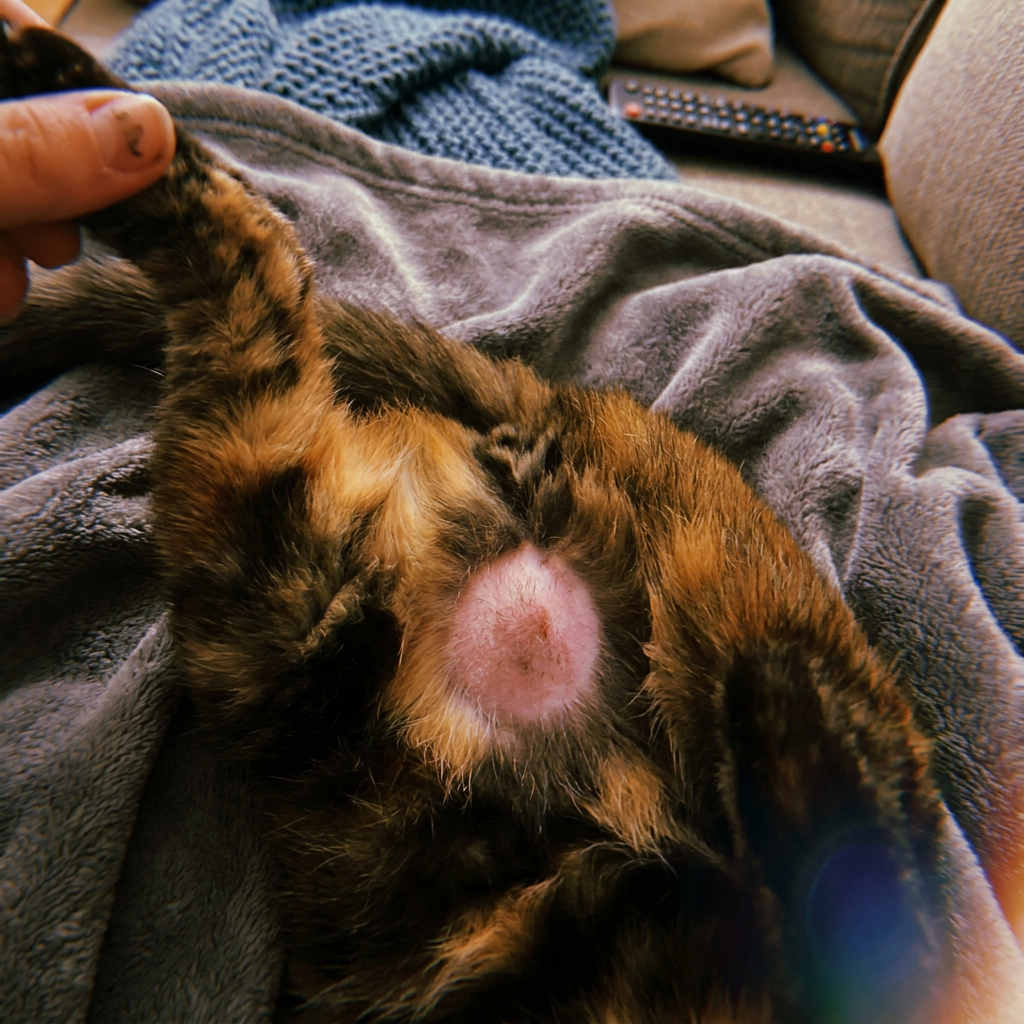
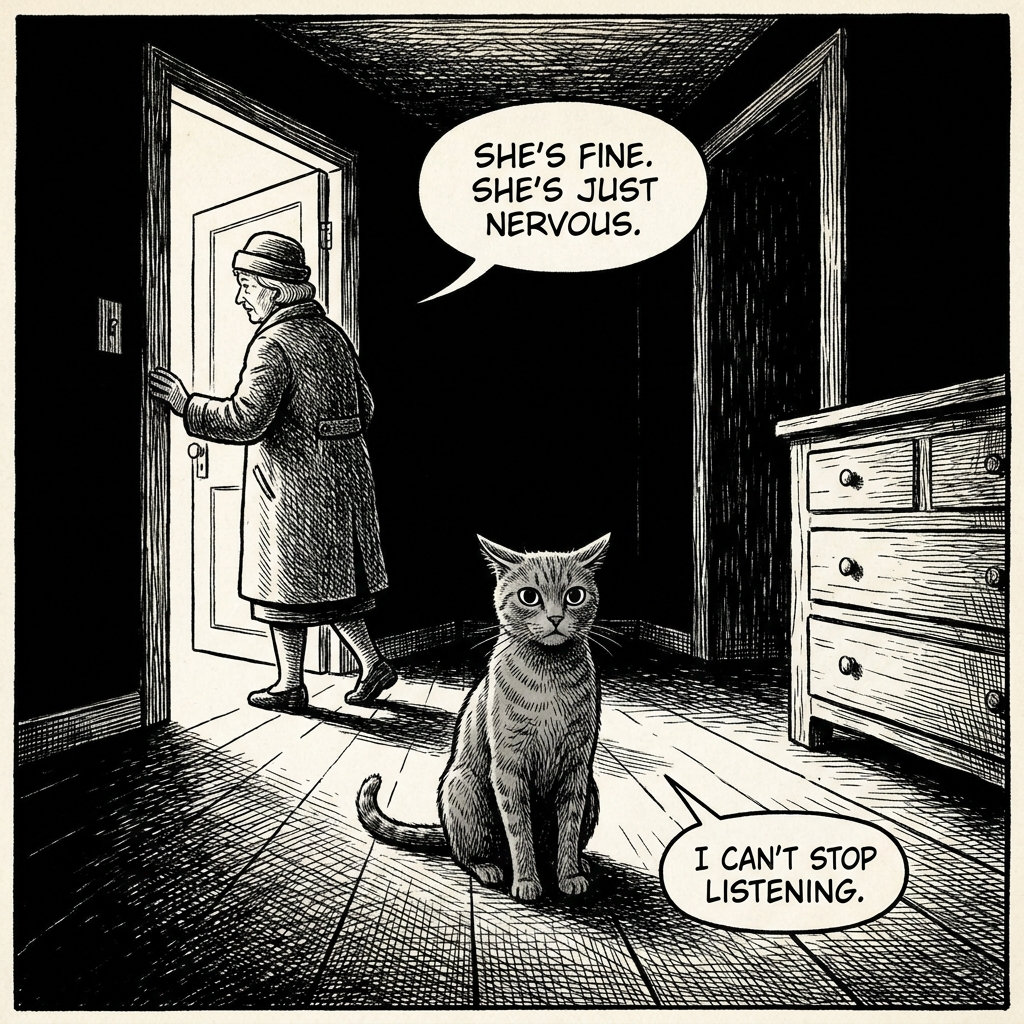
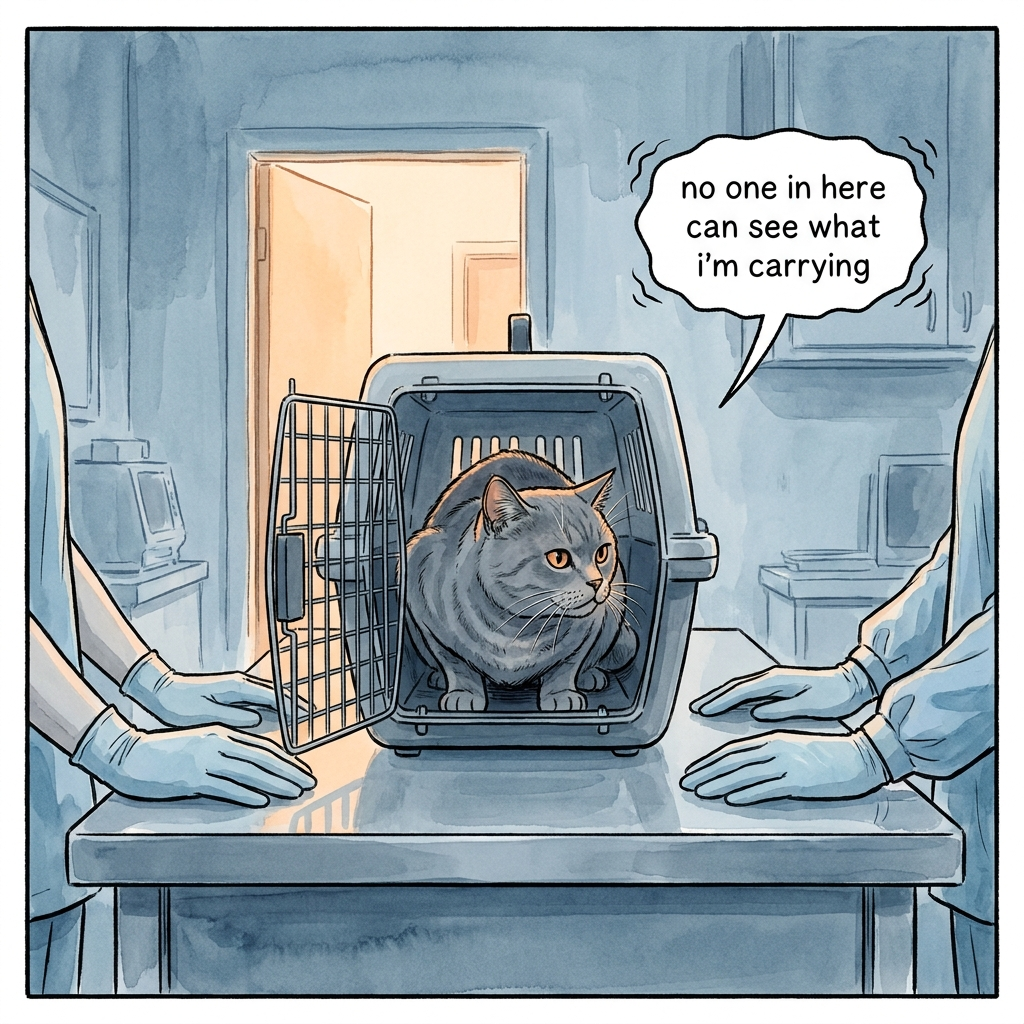
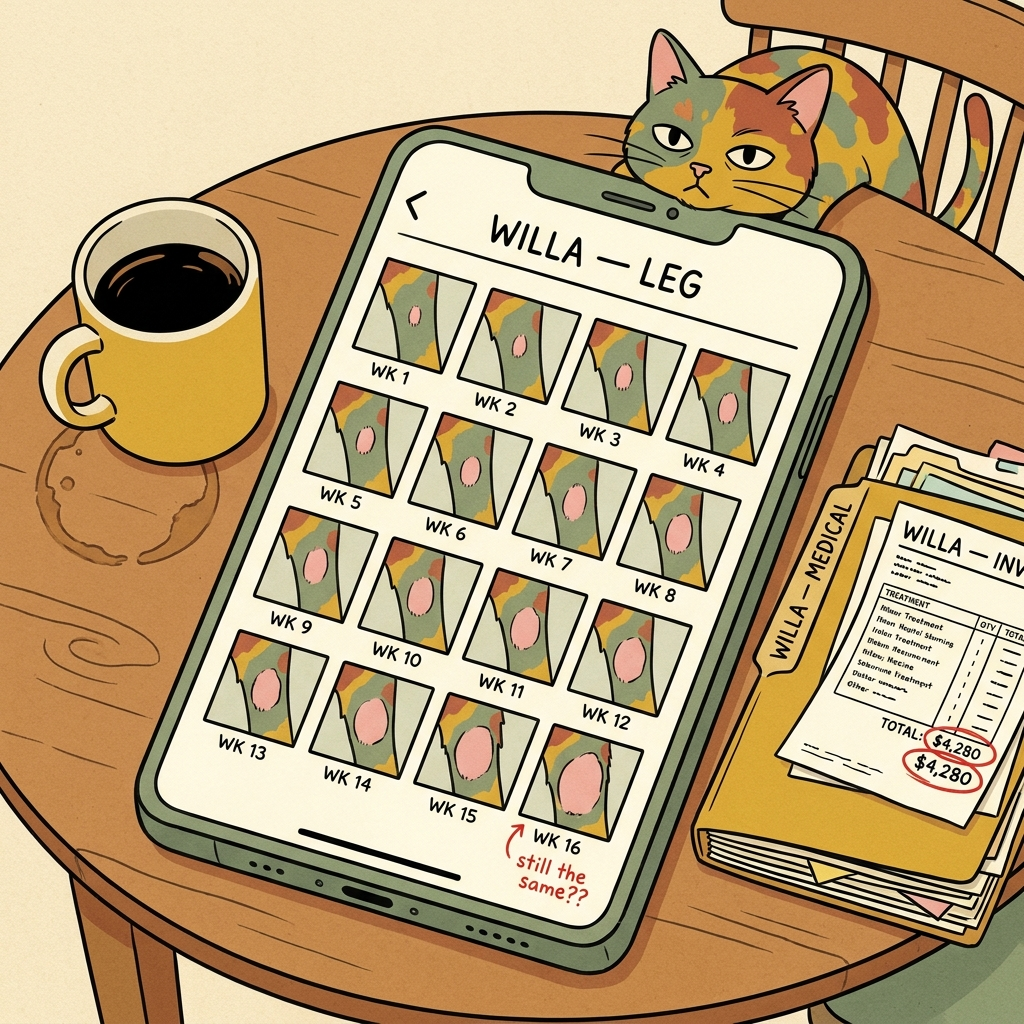
Please STOP putting the cone on your cat. I know that sounds insane coming from a veterinarian. But after 22 years in practice, I finally understand something that made me feel sick about my own advice. The cone doesn't stop the licking. It removes the only thing she has, and leaves everything that made her need it. Let me explain. And if there's a bare patch on your cat's belly right now — the pink one, the one that hasn't changed in months — please stop what you're doing and read this. Willa changed how I practise. Tuesday afternoon. Routine appointment. A woman came in with a five-year-old tortoiseshell and a phone full of photographs. She'd been documenting the patch weekly for eleven months. Same spot, inside the back leg, and in the photos you could watch it widen a millimetre at a time. Her file was thicker than most of my oncology patients'. Flea comb, twice. Skin scrape. Fungal culture. Cytology. A twelve-week hydrolyzed food trial that she had done properly, which almost nobody manages. Two courses of steroids. Three medicated shampoos. Two cones. Everything negative. Everything clean. Four figures spent establishing that nothing was wrong. She sat down and said the thing I've now heard more times than I can count. "I do everything right. I've done every test. I've done the food trial. I put the cone on and she heals up, and I take it off and she's back at it within an hour. Please tell me what I'm missing." She was crying by the end of it. And I gave her the answer I'd been trained to give. Some cats are just like this. It's behavioural. Manage it. Keep her in the cone when it's flaring. But standing there watching her go through those photos, something didn't add up. Because I'd seen two other cases that same month with almost identical files. Different cats. Different households. Different diets. All three owners said the same sentence, nearly word for word: "The second the cone comes off, she goes straight back." That's not three unrelated skin problems. That's a pattern. And patterns mean something is being missed. So I became obsessed with figuring out what. I went back through my own records and pulled every behavioural overgrooming case I'd seen where the medical workup came back clean. Every single one, over a decade. Not a study. I want to be precise about that. It's a file review, done by one vet, on his own patients. But there was something in it I couldn't unsee. Almost none of those cats were only licking. Overgrooming, yes. But also: night vocalising. Hiding. Spraying. Litter box avoidance. A second cat they'd stopped tolerating. Different presentations, same file, over and over — and I had written every one of those other things down in my own notes and never once put them together. So I started phoning owners and asking a question I had never once asked in an exam room. Not what does she lick. When does she lick? Not what. Not how often. When. Almost every one of them answered immediately. Nobody had to think about it. "After we've had people over." "When the other cat comes into the room." "In the evening. Once the house has gone quiet." "When I'm packing a bag." "About three in the morning." Not one of them said randomly. Not one said all the time. Every single one described a trigger, and then a delay — something happened, and twenty minutes later she was working at the same spot. That is not what skin does. Skin itches on its own schedule. An allergen doesn't wait for the guests to leave. That's what a coping mechanism does. And I had been putting cones on it for the better part of two decades. Once I understood what grooming actually is, I realised we've been fighting the wrong thing entirely. Grooming isn't only hygiene. It's self-soothing, and it's chemical. Here's the sequence, and it takes about ninety seconds. Something raises her arousal. The doorbell, the other cat, a bag on the floor, or nothing you can identify at all. She's left with an unpleasant internal state and no way to explain it or escape it. So she grooms. And grooming releases endorphins — that's not marketing language, it's why cats groom each other, and it's why a stressed cat grooms herself. It works. That's the part nobody says out loud. For about a minute or two, she genuinely feels better. Then it fades. And she's back where she started, except now her nervous system has been handed a very clear lesson. When I feel bad, licking helps. Do that a few hundred times over a few months and it stops being a response and becomes a route. The gap between the discomfort and the licking gets shorter and shorter, until eventually there's barely a trigger left at all. She just does it, because it's the path her brain has worn in. That's a compulsive loop. And here's the part that made me want to phone every client I'd ever seen. Once it's a loop, the skin is no longer the point. The fur can be completely healthy and she'll keep going, because the licking was never about the fur. By the time you're looking at a bare patch, you're looking at the evidence of the problem. And every single thing sold for overgrooming is aimed squarely at the evidence. Now — the cone. I recommended it for twenty years and I would take almost all of it back. The logic is perfect. She can't reach it, so it heals. Except a compulsion doesn't stop because you block it. You have removed the one self-soothing behaviour a stressed cat has access to, and given her nothing in return. She is now stressed, and prevented from doing the only thing that helps, and wearing a plastic collar that stops her navigating her own house — she can't groom the rest of herself, can't eat comfortably, can't judge distances, can't get into her own hiding places. You haven't reduced the arousal. You've added to it, and removed the outlet at the same time. I have watched cats come out of a cone after three weeks with beautifully healed skin and go straight back to the same spot within the hour. I used to find that mystifying. It isn't mystifying. The skin healed. The reason never got touched. The bitter sprays are a version of the same error. They work by being unpleasant — and adding a small unpleasant experience to a cat who is licking because she's already overwhelmed is not a neutral intervention. I did both of those things, for years, in good faith, because that's what an eight-minute appointment allows for. A worried owner and a visible bare patch. You treat what you can see. And here's the part that breaks my heart. She's been telling you where it comes from, and it isn't the skin. If your cat licks after guests leave, or when the other cat crosses the room, or in the evening once the house goes quiet — she has been showing you the trigger every single time, for months. Most owners see this and think their cat has itchy skin and bad timing. So they change the shampoo. Or add an omega supplement. Or try one more elimination diet. Meanwhile the loop tightens, the trigger gets less necessary, and the patch widens by a millimetre a week. By the time you're photographing it, it isn't a skin problem anymore. It hasn't been for a long time. But before I go any further, I have to be firm about something, because this is where posts like this do damage. Overgrooming is medical far more often than the internet believes. Fleas — genuinely, and more often than owners will accept, because a good groomer removes the evidence. Demodex gatoi. Ringworm. Food allergy. Atopy. Pain, referred to the skin over a sore hip or bladder. Every one of those is treatable, and every one of them is a much better outcome than this. If your cat has a bare patch and you have not had a flea comb, a skin scrape, a fungal culture, and a proper elimination diet trial — that is where you start. Not here. And if the skin is broken, raw, or infected, that's a vet visit today, not a supplement. A secondary infection is its own problem with its own treatment. If anyone tells you to skip the workup — including me — stop listening to them. Everything below is for the cats who have already done all of it and come back clean. After Willa, I spent two years on the question. Because if the loop is held up by arousal rather than by skin, then what you have to move is the arousal — and I looked at everything on the shelf first. Diffusers. Chews. Capsules. One at a time, the way we're taught. Week two: nothing. Week four: nothing. Week eight: maybe slightly less. Same story every time, and it isn't because those products are frauds. It's arithmetic. A cat who has been running hot this long isn't out in one place. She's out in four, and they hold each other up: She's scanning a room where nothing is happening. Her day-night rhythm has been flattened by years of indoor light with no real dusk. Her stress load has been climbing since whatever your start date was. And she physically can't settle — can't lie down and stay down. Pull one lever and she responds to a quarter of it. Which is exactly why single-ingredient calming products produce a fraction of a result and a lot of disappointment. And read the back of anything in that aisle. It tells you when to give it. Before travel. Before the storm. Before the vet. Fireworks. Moving house. Every one of those has a start and a finish. She doesn't have an event. She has a level. You can't fix a level with something formulated for a moment. So: four ingredients, one for each. Ashwagandha — KSM-66 extract, the form with the most published research behind it. Works on the underlying load. Slow on purpose; it took a year to build. L-theanine — the green tea molecule. Takes the edge off hypervigilance without sedating. The doorbell, the other cat, a bag on the floor — they stop registering as something she has to answer, which means fewer sessions get started at all. Valerian root — supports the transition from alert into actual rest. Melatonin — low, daily, restoring the light-dark rhythm indoor living quietly flattens. Those two are the sleep half, and a cat who doesn't sleep arrives at tomorrow with today's arousal still loaded. That's how a loop tightens by a notch every night. Gentle doses, daily rather than before a trigger. You are not putting out a fire. You are bringing a level down. I'll be straight about what I can't tell you. Most of the mechanistic work on cortisol, endorphin-mediated grooming and these compounds comes from human and rodent research. It's solid science, but the feline-specific literature is thinner than I'd like and thinnest of all for ashwagandha. That's why the doses sit well below any threshold associated with reported adverse effects in companion animals, and why the full dosing rationale ships in the booklet. Email us and we'll send the formulation document to your vet's office directly. And it's drops, not a chew. My own cat wouldn't eat a chew — wouldn't approach one — and a great many won't. A formula she refuses is a formula at zero dose no matter what's in it. These go into the food she already eats, suspended in MCT oil that's nearly odourless to a cat. She tastes her dinner. Not the drops. I started recommending it to the clean-workup cases. And I asked those owners to do one thing that costs nothing. Stop watching the patch. Start counting sessions. Because here's what nobody warns you about, and it is the single reason people quit: The licking stops long before the fur comes back. And you will not notice the licking stopping, because you'll be looking at the patch. The patch will look identical at week two. And week three. And probably week five. Fur grows on its own schedule and does not care what her nervous system is doing. The responses started coming in anyway. One owner wrote to me: "She stopped mid-lick and looked up and wandered off. She has never done that. She always finishes." That's the one. That's the loop loosening, and it's the single most important sign there is. Another had a nine-year-old who'd been in and out of a cone for two years. Week three, the guests came and went and the cat stayed on the sofa. Then the timelines started arriving. Sleep first, usually week one. Then sessions shortening — two minutes instead of ten. Then the trigger stops working. Then she comes back into the room. And the fur last. Stubble first, and you feel it before you see it — rough under your thumb where it was smooth. Six to twelve weeks out, sometimes longer. Full effect on the underlying load lands around week four. That's how long the ashwagandha needs. Anyone promising faster doesn't understand what's being moved. In a survey of 1,283 verified customers after 30 days of daily use: 89% showed less stress behaviour by week four. 82% reported their cat sleeping through the night by week three. 94% stopped considering a prescription. Willa's owner came back at four months. The patch had stubble on it. Not fur — stubble, the kind you find with a thumb before you can see it. But that wasn't what she wanted to tell me. She said her husband's family had come for the weekend, six people in the house for three days, and Willa had slept on the arm of the sofa through most of it. Eleven months of photographs, and the thing she wanted to report was that her cat sat in a room with people in it. I know how this sounds. I know it sounds like I'm selling something. I am. I formulated it, and I'm not going to arrange the story so it sounds otherwise. If that makes you take all of this with a grain of salt, that's fair, and I'd rather you knew. What I'd point at instead is the guarantee. Ninety days, no returning the bottle, no form, nothing to prove. If I'm wrong about your cat, it costs you one email. And ninety is deliberate, because thirty is long enough to know whether the behaviour is changing and nowhere near long enough to see the coat. I'm not going to sell you a guarantee that expires before the thing you're actually watching for arrives. $34.95. One dropper into the food she already eats, once or twice a day. So — if your cat has been licking the same spot for months and every test has come back clean. If you've done the flea treatment, the scrape, the culture, the twelve-week diet trial. If she heals perfectly in the cone and is back at it within the hour of it coming off. That is not stubbornness and it is not a skin condition that keeps returning. She is not hurting herself. She is calming herself, with the only tool she has. And every week the cone is on is a week the thing underneath it goes untouched. — Dr. Demitro, DVM P.S. If there is a bare patch on your cat right now, please stop measuring it. I know why you're doing it. I've seen the photo albums, week by week, on a hundred phones. It feels like the responsible thing and it is the cruellest possible metric, because fur is the slowest thing to change and it will tell you nothing is working for two months while quite a lot is working. Count sessions instead. How many times a day, and how long each one lasts. And when she stops mid-session, looks up, and wanders off — that's it. That's the day it turned. Write it down, because you will otherwise miss it entirely while staring at a patch of skin that looks exactly the same as yesterday. P.P.S. One question, ten seconds, free, tonight. Not what is she licking. When does she lick? After the guests. When the other cat comes in. Once the house goes quiet. When the suitcase comes out. At three in the morning. If you can answer that — and almost every owner can, immediately — you already have your answer and you have had it the whole time. Skin doesn't wait for the guests to leave. Allergies don't check who's in the room. A trigger and a delay is not a dermatological finding.
Like this ad? Make it yours.
Crush rebuilds this exact creative around your product — your brand, your colors, your offer — in about a minute.