
Inactive· since Mar 11, 2026
- 14
- days it ran
- 2
- relaunches
Ad copy
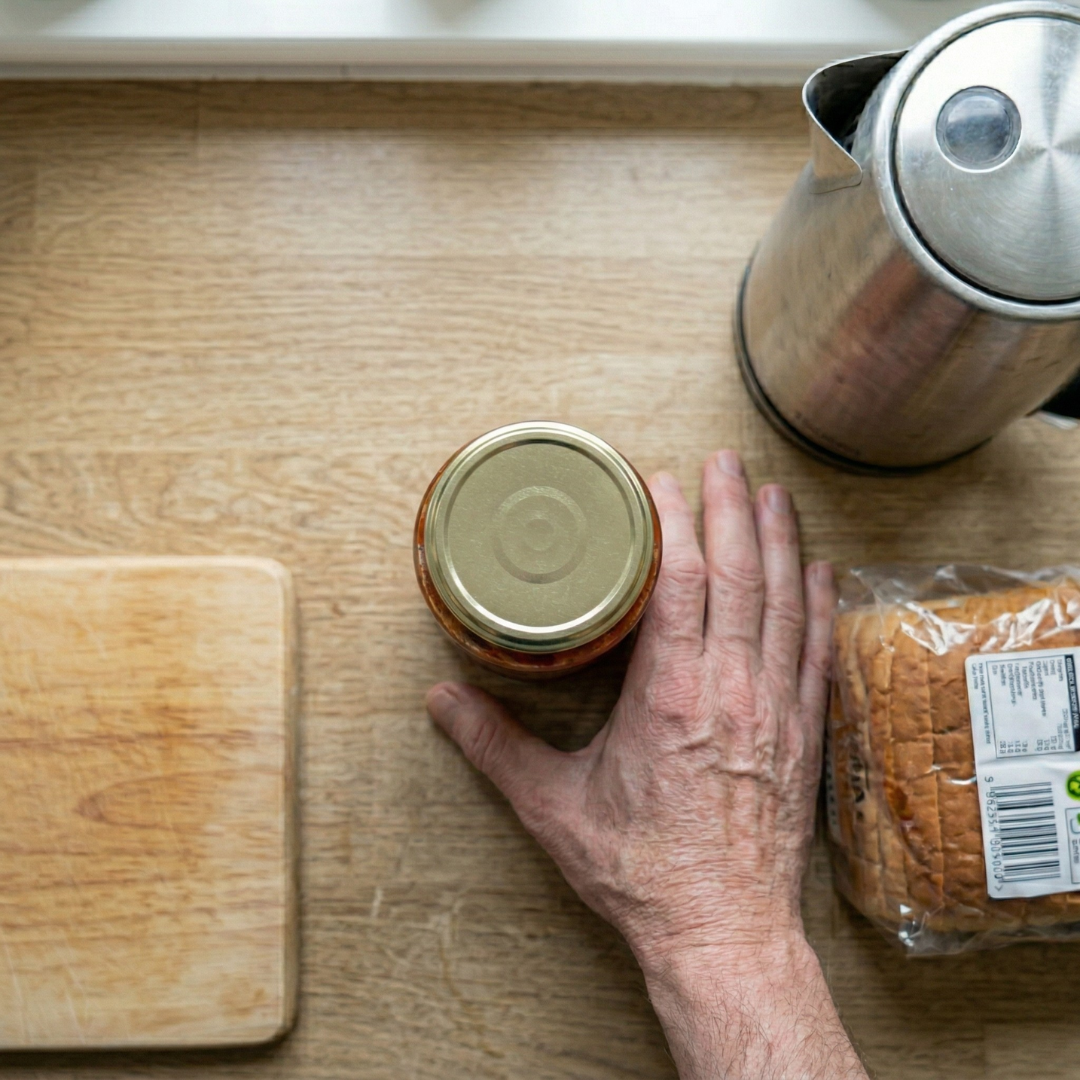
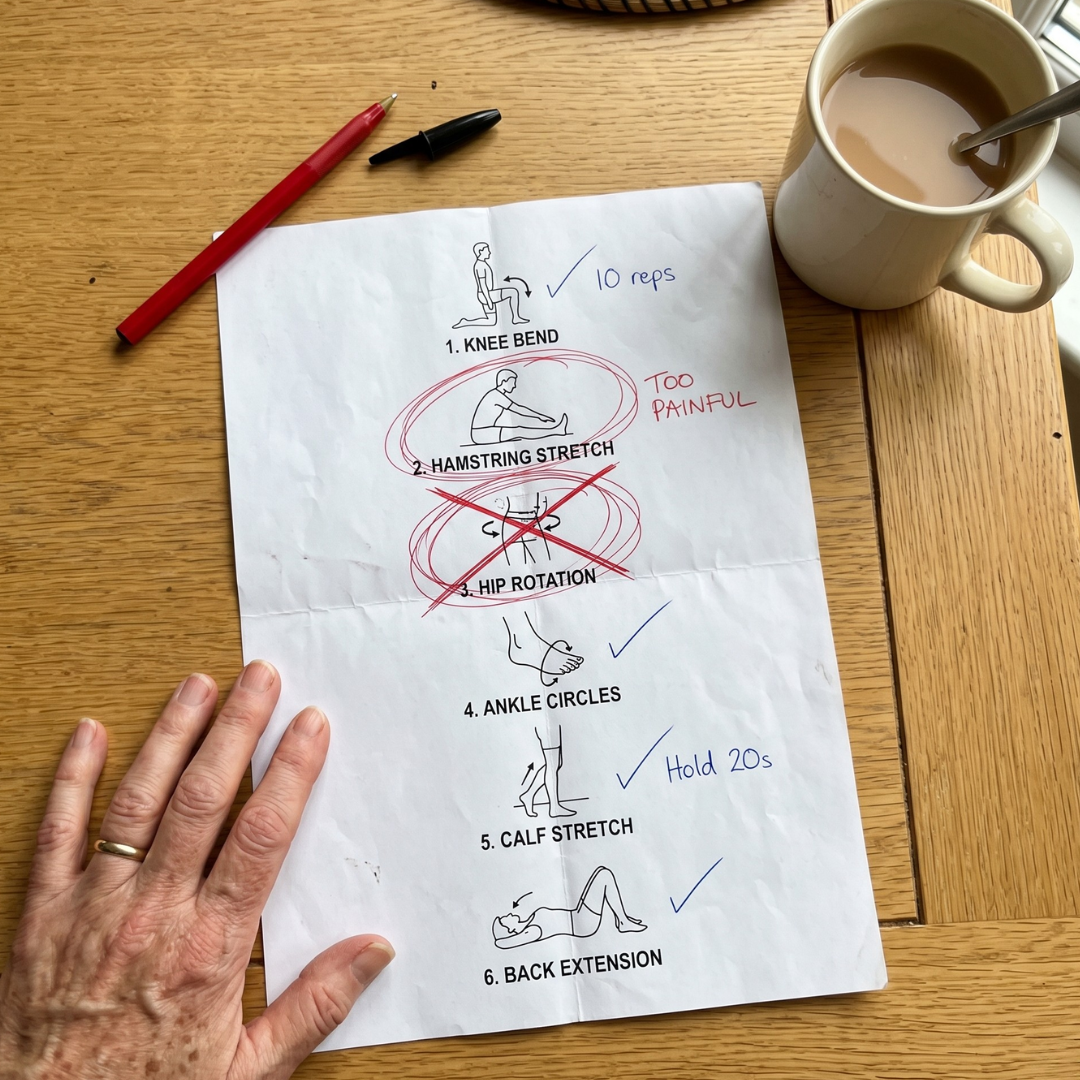
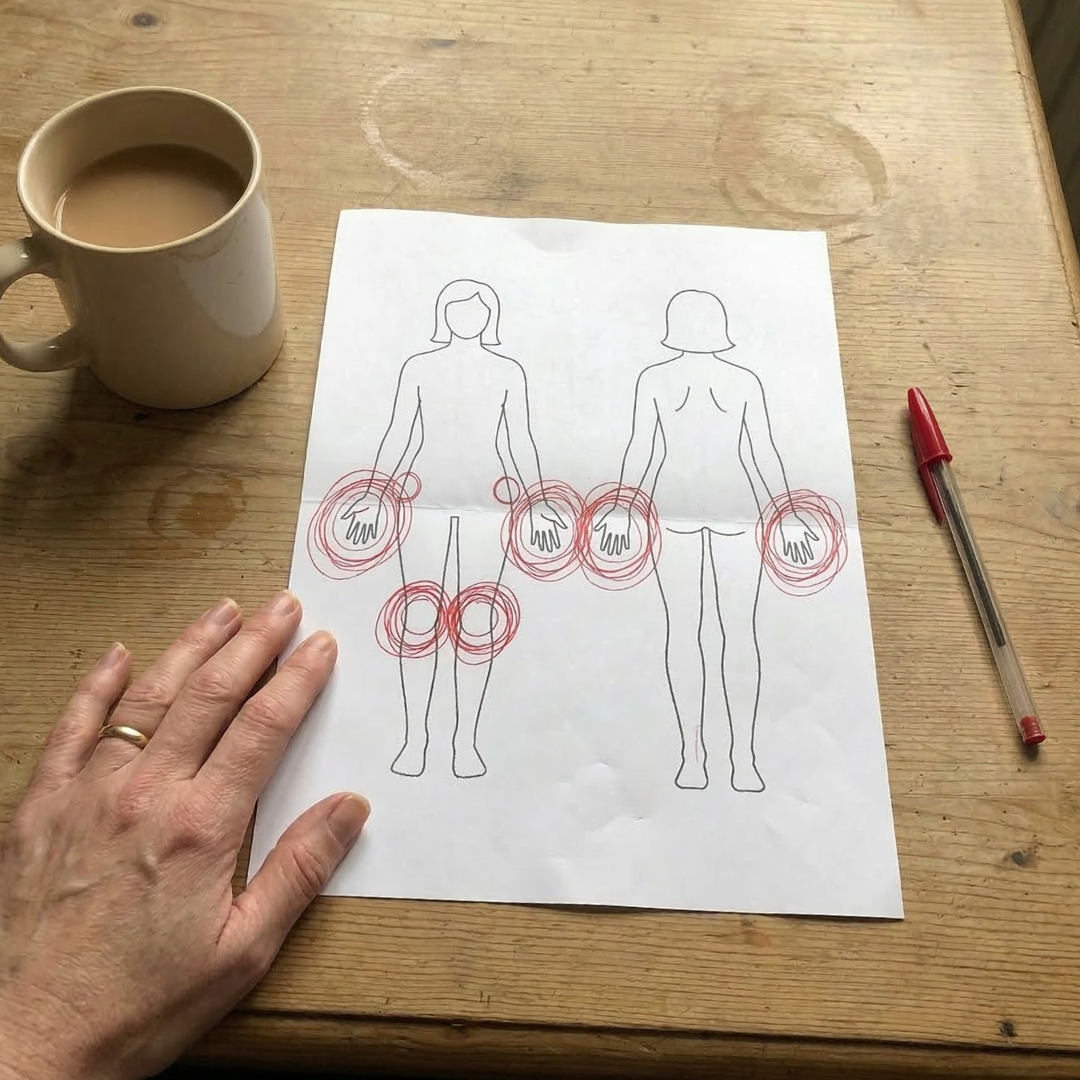
I used to wake up feeling like I was literally welded to my bed. I'd set my alarm 30 minutes early — not to exercise, not to meditate — just to lie in bed wiggling my fingers and peeling myself from the mattress until my hands could finally grip a cup of tea. My name is Sarah. I'm 52. And eighteen months ago I did something that embarrassed me deeply. I plotted my pain on a piece of paper. Not because a doctor asked me to. Because I'd read somewhere that if you came to an appointment with a detailed pain map — specific locations, specific times, specific severity — they were less likely to dismiss you. Less likely to do what the last one had done, which was glance at my bloods, tell me everything looked "broadly normal," and suggest I consider whether stress might be a factor. I sat at my kitchen table with a printout of a body outline and a red pen, and I marked the spots. Both hands. Both knees. Lower back. Right hip on a bad day. I was 52 years old, marking myself like a crime scene, hoping it would make someone take me seriously. I want to tell you about the morning that broke me. Not dramatically. Quietly, which is almost worse. It was a Wednesday. Ordinary Wednesday. I had an 8:30 meeting — the kind where you need to be sharp, where you need to be the person you actually are inside your head rather than the person your body was insisting on being. I woke at 5:45 to my early alarm. Lay still. Wiggled the fingers on my right hand. Waited for the knuckles to loosen enough to make a fist. Moved to my left. Flexed my knees slowly under the duvet before attempting to rotate my legs to the edge of the bed — because I'd learned that going too fast caused a deep ache in my hips that could last an hour. I got to the bathroom at 6:15. Couldn't get the toothpaste cap off for two full minutes. By the time I made it downstairs, gripping the banister with both hands, I had forty minutes before I needed to leave. I stood in the kitchen waiting for the kettle and thought — quite calmly, quite clearly — I cannot keep doing this. Not the pain, specifically. The performance of being fine. The thing about being a woman in your fifties who moves stiffly and tires easily is that everyone has a theory. My sister thought it was my mattress. She sent me a link to one that cost £1,200 and had a sixteen-week trial period. My friend Carol — who means well, always means well — suggested hot yoga. Said it had transformed her hips. I smiled and thanked her and did not say that the idea of getting up off a floor mat in a room full of people was something I'd mentally filed under "not yet." My GP, the third one I'd seen, suggested we try a low-dose anti-inflammatory long-term. When I asked about my stomach — I'd had issues before — she said we'd keep an eye on it. When I mentioned I'd read about methotrexate potentially being the next step if things progressed, she paused in a way that told me I wasn't wrong to be thinking about it. I went home and sat in the car for a few minutes before going inside. I wasn't frightened of the drug, exactly. I was frightened of what it meant. That this was the trajectory. That I was someone who was now on a path that led, in stages, to more intervention, more management, more monitoring. That "broadly normal" labs and a worsening body were just going to be my normal now. I found the answer — or the beginning of it — not online. Not at 2 AM in a Reddit thread. I found it in a conversation with my brother-in-law, David, who is a biochemist and who I'd always found slightly exhausting at dinner parties because he talks about cellular biology the way other people talk about football. I'd mentioned, not seriously, that I'd been thinking about trying one of those hydrogen water things I'd seen advertised. Half joking. Expecting him to tell me it was nonsense. He put his fork down. He said: do you know what oxidative stress actually is? I said I had a vague idea. Free radicals. Antioxidants. The usual. He said: your joints aren't inflamed because there's something wrong with your joints. They're inflamed because the cellular environment around them is hostile. Because you're producing more damaging compounds than your body can currently neutralise. And the reason it's worst in the morning is because at rest, the clearance of these compounds slows down. You accumulate overnight. I said: so I'm waking up in the damage. He said: essentially, yes. I sat with that for a long moment. Because it reframed everything. Every failed attempt, every supplement that hadn't worked, every morning that hadn't improved despite the mattress and the magnesium and the careful yoga — none of it had addressed that. None of it had been small enough, specific enough, targeted enough to get into the cellular environment where the actual problem lived. He explained the hydrogen piece properly. Not as wellness marketing. As chemistry. Molecular hydrogen — H2 — is the smallest molecule in existence. Small enough to cross cell membranes. Small enough to penetrate the mitochondria, the structures inside cells that produce energy and take the most oxidative damage. And unlike conventional antioxidants, which he described as blunt instruments — suppressing free radicals indiscriminately, including ones the body actually needs — molecular hydrogen acts selectively. It bonds specifically with hydroxyl radicals. The most destructive ones. The ones driving the most inflammation. It converts them to water. He said: the research is early, and I wouldn't make promises. But the mechanism is real. The chemistry is sound. He said: what matters is the concentration, and how you get it. That last part is what most people don't know. And it's where most people who try this go wrong. I had looked at the cheap bottles on Amazon. The £20-£30 ones. The ones with thousands of reviews and before-and-after pictures of people who looked inexplicably radiant for holding a water bottle. David told me not to touch them. Standard electrolysis — the process those cheap devices use — splits water molecules but doesn't properly separate what it produces. If your water contains chloride ions, which tap water does, you get chlorine gas and ozone as byproducts. You're not putting therapeutic hydrogen into your water. You're putting toxins in alongside it. One woman in a forum I found later described the taste as "swimming pool water." She'd been drinking it for a month. The technology that matters is called a Proton Exchange Membrane — PEM. Originally developed for industrial hydrogen fuel cells. It physically separates the hydrogen from the waste gases. The hydrogen goes into the water. The chlorine and ozone get vented out through a valve at the base of the device. You can smell them leaving. That's the point. That's how you know they're not going into you. The concentration matters too. Most cheap devices achieve around 800 to 1000 parts per billion. The research suggesting meaningful anti-inflammatory effects points to concentrations above 1600 parts per billion — the natural saturation limit of hydrogen in water at standard pressure. To exceed that, the device has to build pressure internally during the cycle, forcing more hydrogen into the solution. I bought a device that produces 3000 parts per billion. Using PEM technology. With a gas release valve I could verify was working. I told David. He said that sounded sensible. I still felt slightly foolish. The first two weeks I noticed nothing except that the water tasted slightly smoother. Lighter, somehow. I know that sounds like the kind of thing people say because they've paid for something and need it to be true. I kept a note on my phone. Time of first alarm. Time I got downstairs. Stiffness level out of ten. Week three: downstairs in twenty-two minutes instead of thirty-five. Stiffness a six rather than an eight. Week four: I opened a jar. Without asking my husband. Without that preliminary pause where I assess whether my hands are ready. I stood in the kitchen holding the jar and felt something I hadn't felt in a long time. Ordinary. Just ordinary. Just a woman opening a jar at 7 AM without it being an event. By two months, I had stopped setting the early alarm. Not because the stiffness was gone. I want to be honest — there are still mornings. Still bad days. But the baseline had shifted. The daily reckoning, the performance of getting from lying down to functional — it had shortened from an hour to twenty minutes. And on the good mornings, sometimes ten. The thing that stays with me — the thing I think about when I try to explain this to people — is something David said that night at dinner, almost as an aside. He said: most of what you've tried couldn't reach the problem. It's not that the turmeric or the magnesium was wrong. It's that the molecule was too big for the space it needed to enter. Too big for the space it needed to enter. I'd spent three years trying to put out a fire from the outside of a locked room. The hydrogen was small enough to get through the door. I think about the woman who wrote what I read one night — one of hundreds of posts I'd trawled through in that desperate research phase. She said: "My morning stiffness got so severe I couldn't make it into work and lost my job after a change in administration who was no longer sympathetic." I think about how close I felt to that. How many mornings I sat in the car before work, adding up whether I could keep managing it. Whether the performance of being fine was sustainable. I think about the pain map I drew with the red pen. If you're drawing your own map right now — in whatever way that looks for you — I just want you to know that what I found wasn't a better supplement or a smarter mattress. It was understanding what was actually happening. At the level where the problem actually lived. And finding something finally small enough to reach it.
Read This If You Wake Up Stiff Every Single Morning ☝️
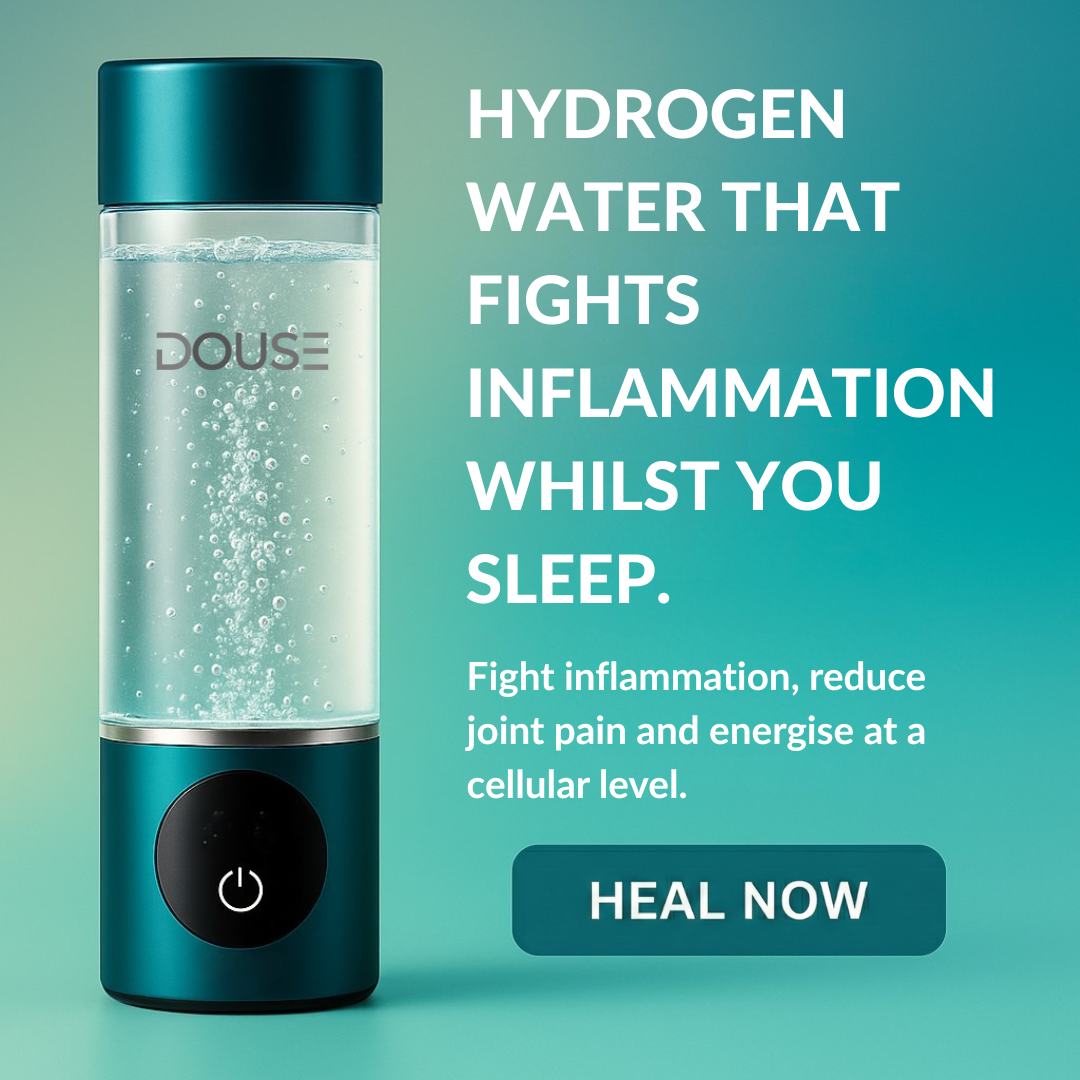
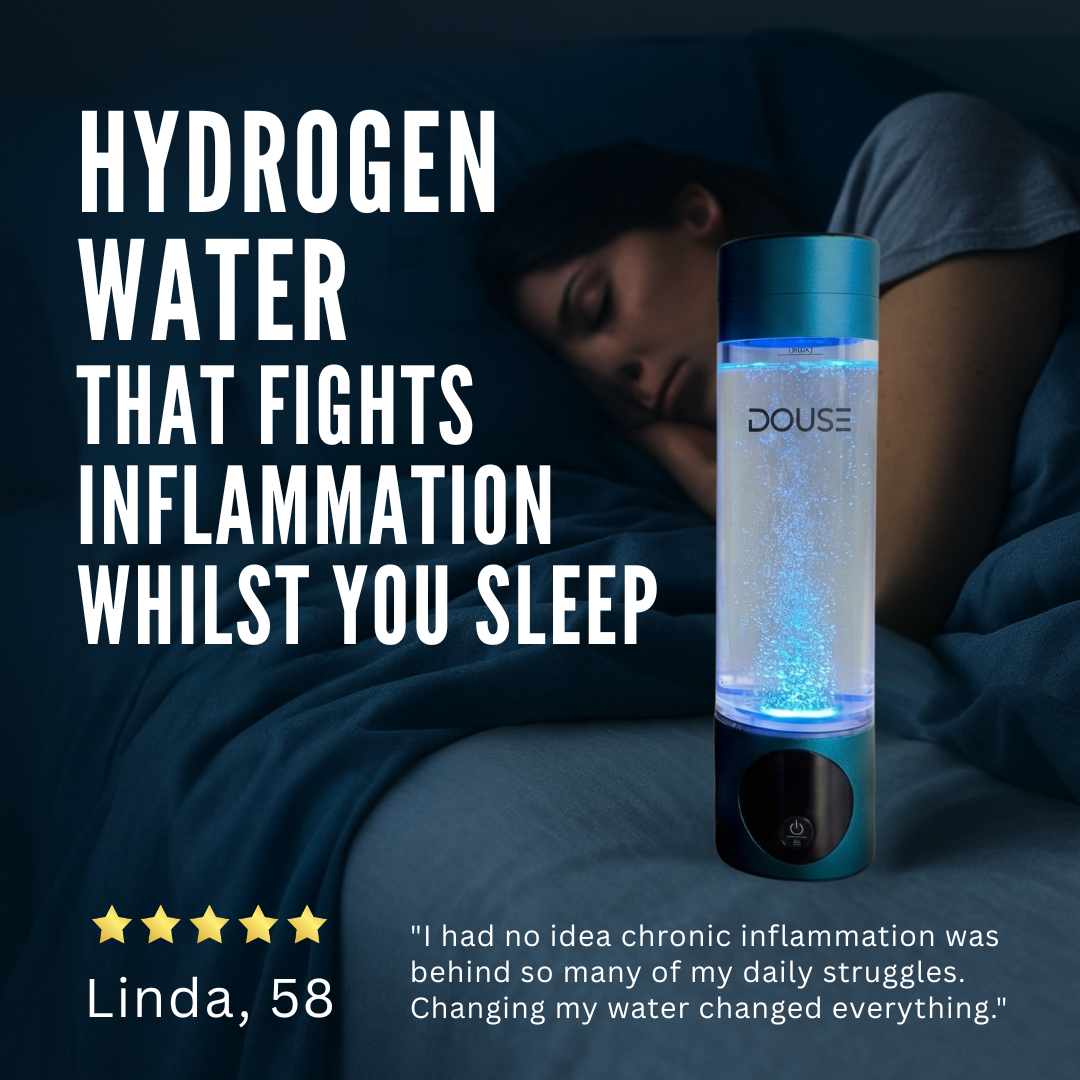
A premium portable water bottle designed to infuse drinking water with dissolved molecular hydrogen using advanced PEM electrolysis technology. Designed for daily hydration routines at home or on the go.
SHOP NOWLike this ad? Make it yours.
Crush rebuilds this exact creative around your product — your brand, your colors, your offer — in about a minute.