
Inactive· since Mar 25, 2026
- 8
- days it ran
- 8
- relaunches
Ad copy
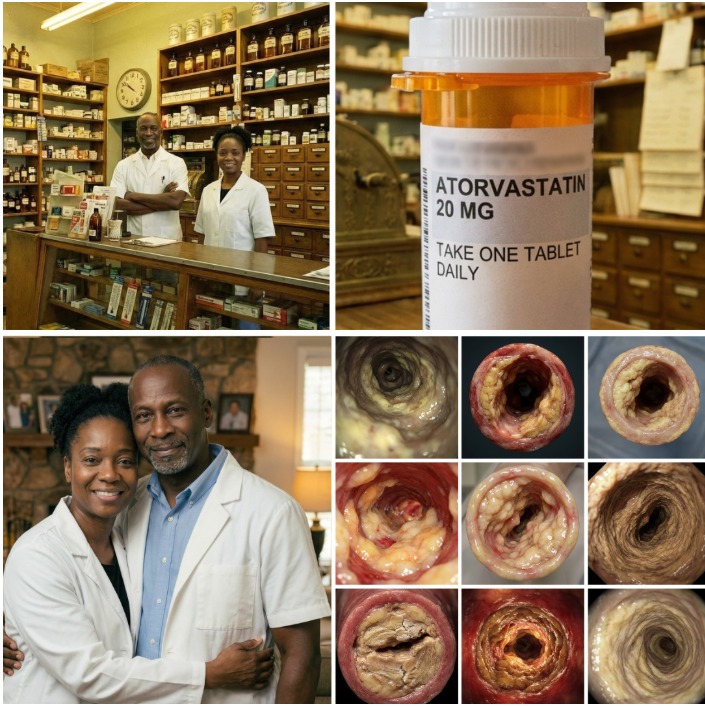
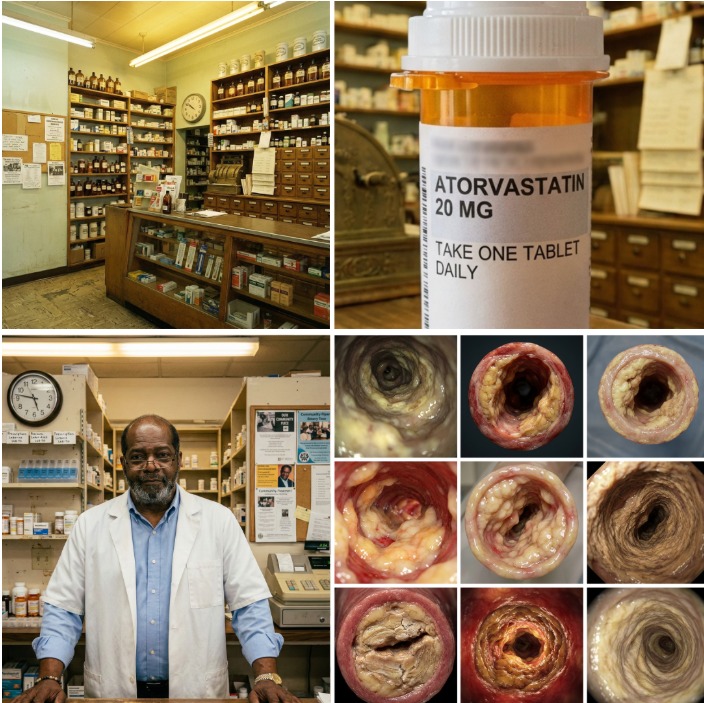
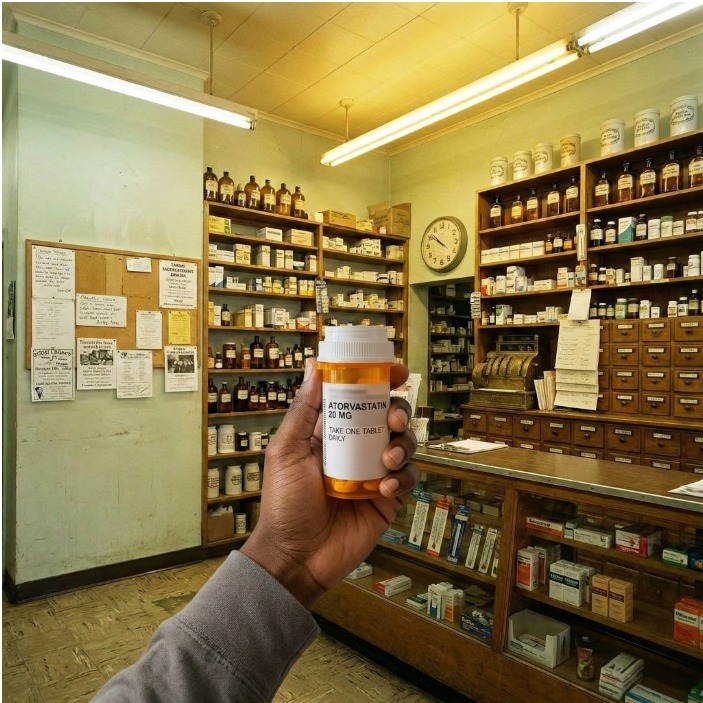
I've been a pharmacy technician for 22 years. A wife for 25. A mother for 20. I've counted over 200,000 prescriptions with my own hands. I carry every regular's name, their medications, their allergies, their family situations — not in the system. In my head. The woman behind the counter who remembers everything. Who catches what the computer misses. Who built a pharmacy with the sharpest man she's ever known. He's been on Atorvastatin for nine years. It gave him perfect cholesterol. Then it took his mind. I watched it happen. Slowly. From six feet away. Behind the same counter where we built everything together. He stopped the drug four months ago. And what happened to his cholesterol — and to the man I married — after he stopped is the reason I'm writing this instead of standing beside him filling prescriptions right now. If your husband is on a statin — or if YOU'RE on one — and you've noticed something slipping that nobody else sees yet… you need to read every word of this. Because I almost waited too long. My name is Denise. I'm 52 years old. My husband Marcus and I have owned a pharmacy together since I was 30. Not a chain. No drive-through. No corporate. A neighborhood pharmacy in a community that doesn't hand out trust easily — and gave us theirs anyway. Marcus is the pharmacist. The license. The man whose name is on the wall. I'm the licensed technician. The one who runs the operation. Manages inventory. Handles insurance nightmares. Fills prescriptions alongside him eight hours a day, five days a week, for 22 years. But if you walked into our pharmacy, you wouldn't see titles. You'd see two people finishing each other's sentences behind a counter. I'd pull the stock. He'd verify the script. I'd ring the patient out and ask about their grandkids by name while Marcus answered a clinical question from the next person in line. Seamless. Twenty-two years of seamless. He carries 400 patients in his head. Names, dosages, allergies, interactions. No sticky notes. No cheat sheet. Pure recall. I used to joke that I married a man whose brain was a pharmacy database with better bedside manner. That's not a joke I make anymore. Marcus's doctor flagged his cholesterol at 258 when he was 45. LDL at 171. Prescribed Atorvastatin, 40 milligrams. Marcus didn't argue — he understood the mechanism better than the doctor writing the script. He'd dispensed thousands of statin prescriptions. He filled his own, peeled the label, dropped it in his bag. Same routine he'd done for everyone else. Ninety days later: LDL 118. Total cholesterol 204. Textbook response. I remember him showing me the labs with a satisfied nod. "Drug's doing exactly what it's supposed to do." I smiled and said, "Good." For three years, that was the end of the conversation. Good numbers. Good drug. Move on. Then I started noticing things he didn't notice about himself. Small things. A half-second delay before a customer's name came out. He'd never hesitated. Not once in 20 years. Now there was this flicker — barely visible, gone before anyone else would catch it — where his eyes would go somewhere else. Searching. I caught it because I'd spent two decades standing beside him. I knew his rhythm the way a drummer knows a song. And something was off by a beat. He started covering. "Hey, sweetheart" instead of a name. "Hey, brother" instead of the easy, instant recall that had been his superpower since the day I met him. I didn't say anything. You don't tell a man whose entire identity is his precision that his precision is slipping. Not yet. Not when you're not sure. Then I became sure. By year four, the fog had a schedule. Mornings were okay. By 2 PM it was like someone slowly dimmed the lights behind his eyes. He'd look at a prescription he'd verified ten thousand times and I'd see him pause. Not long. Two seconds. Three. But I'd NEVER seen him pause on a verification. That pause meant the interaction profile wasn't loading the way it used to. He started writing things down. Sticky notes behind the counter. Drug interactions he'd had memorized since pharmacy school. Customer names he'd known for a decade. Twenty-two years beside this man. He had never written a sticky note. Not once. I found three of them one night when I was closing up. Tucked behind the monitor where customers couldn't see. One said "Mrs. Henderson — Warfarin + new abx — CHECK." He'd known that interaction cold since graduate school. I stood there holding that sticky note and felt something crack inside my chest. Not because of what it said. Because of what it meant. The sharpest man I'd ever known was building himself a safety net — and hiding it from me. I tried talking to him. Gently, the way you approach something you're terrified of. "Baby, you seem tired lately. You okay?" "I'm fine, Denise. It's been a long week." It was always a long week. Every week was a long week now. His hands were next. Twenty-two years I'd watched those hands pop childproof caps like they were nothing. Fifty bottles a day. Effortless. Then one morning I heard him struggling with the first bottle of the day. Running his hands under warm water. Flexing his fingers like they belonged to someone else. A pharmacist who can't open a pill bottle. His wife standing ten feet away pretending she didn't hear it. That was our life now. I told him to mention it to his doctor. He did. His doctor looked at the bloodwork and said: "Cholesterol is 198. LDL is 112. These are excellent numbers, Marcus." Marcus said: "I'm not here about my cholesterol. I'm here about my memory. And my hands." The doctor said the cardiovascular benefit significantly outweighed any potential cognitive concern. Marcus came home and told me that, and I watched him say those words — the same words we'd both recited to hundreds of worried customers over the counter for two decades. "The benefits outweigh the risks." He said it with this look on his face. Not angry. Resigned. Like a man who'd just heard his own script read back to him and realized for the first time what it actually means. It means: we've decided your side effects are an acceptable price. I asked him: "Acceptable to who?" He didn't answer. He went to bed at 7:45 on a Tuesday. The Marcus I married stayed up until midnight. Read journals. Argued with me about politics. Made me laugh when I was too tired to laugh. That man went to bed at 7:45 because the drug his doctor was celebrating had drained him of everything except a number on a chart. And the whole time — the whole time — I was watching the same pattern behind our own counter. A patient starts a statin. Cholesterol drops. Doctor's happy. Ninety days later, a new prescription comes through: CoQ10 for the muscle pain. Six months later, Tramadol or ibuprofen. A year later, Ambien for the cramps. Two years in — sometimes an antidepressant. Sometimes a sleep aid. Sometimes both. One prescription becomes six. Every new drug treating a side effect of the one before it. A pharmaceutical cascade. I watched it happen hundreds of times. I processed the insurance claims. I put the labels on the bottles. I handed them across the counter with a smile. And then I'd go home and watch the same cascade happening to my husband. Except his name wasn't on the other side of the counter. It was on the wall. The day that broke me was a Tuesday in September. Curtis Williams walked in. Been coming to our pharmacy for 19 years. I'd filled prescriptions for Curtis, his wife Gloria, his mother Annie Mae before she passed, his daughter Keisha. I knew his birthday. I knew Gloria's hip replacement was in November. I knew Keisha got into Howard. Curtis walked up to the counter and Marcus was standing right there. And I saw it. The flicker. The search. Except this time it wasn't a half-second. It was five seconds. Then ten. Marcus standing in his white coat with a smile that I knew — that ONLY I would know — was pure panic. "Hey, brother. How you doing today?" Curtis slid his prescription across the counter. Marcus looked at the name on the paper. I was six feet away and I saw his shoulders drop. Just barely. Just enough. Curtis Williams. The name of a man we'd served for 19 years. Gone. Not fuzzy. Not on the tip of his tongue. GONE. Curtis said "Thanks, Marcus" on his way out. He knew my husband's name. My husband didn't know his. Marcus didn't say a word about it. He moved to the next prescription. Business as usual. That's what men do. They push through. They don't stop. They don't say "something is wrong with me" because that means something IS wrong and they're not ready. But I saw it. I saw all of it. I locked up that night. Marcus went home. I stayed in the back room for an hour. Sitting on a crate, staring at the shelf of Atorvastatin bottles. The same drug in my husband's body for nine years. The same drug we'd dispensed to hundreds of people who trusted us. And for the first time in 22 years, I didn't trust what was on my own shelf. He wouldn't research it. I knew he wouldn't. Questioning the drug meant questioning the system. And questioning the system meant questioning every prescription he'd verified for 28 years. His identity couldn't absorb that. Not yet. So I did it. I didn't search "Atorvastatin side effects." I already knew those — I'd processed enough prescriptions to recite them in my sleep. What I searched was different: "Why do compliant statin patients still have cardiac events." Because I'd seen that from behind the counter too. Patients on statins for a decade. Compliant. Consistent. Then they'd disappear for a month. Then the wife would come in with a new stack of prescriptions. Post-cardiac event. Blood thinners. Beta blockers. The statin still on the list, plus four new drugs. Perfect compliance. Excellent numbers. ICU anyway. What I found in the next two weeks destroyed everything I thought I understood about the drugs we'd been dispensing for over two decades. Here's what the system taught both of us: High LDL is dangerous. Statins block it. LDL drops. Risk drops. Simple. Clean. Fits on a pamphlet. Here's what the system never mentioned: regular LDL cholesterol is not inherently pathogenic. Your body makes LDL on purpose. It carries essential lipids to cells. Your brain is roughly 25% cholesterol by dry weight. LDL is a delivery truck. Not a bomb. The problem — the thing that actually initiates arterial plaque — is what happens when LDL gets OXIDIZED. Free radicals attack LDL particles and warp their structure. Your immune system stops recognizing oxidized LDL as your own cholesterol. Treats it like a foreign invader. White blood cells swallow it, become foam cells, embed in arterial walls. That's plaque. That's the blockage. That's the heart attack. Not LDL. OXIDIZED LDL. And Atorvastatin — the drug my husband had put in his body for nine years, the drug we'd dispensed to hundreds of patients — does absolutely nothing to prevent LDL oxidation. It carpet bombs the total amount. But the oxidation continues. Unchecked. Untested. Unmentioned. In 22 years behind that counter — between the two of us, over half a century of pharmacy experience — nobody had ever explained the distinction between LDL and oxidized LDL to either of us. Not a drug rep. Not a continuing education course. Not a single prescribing physician. And nobody was testing for it. Not on our patients. Not on Marcus. Not on anybody. Then the CoQ10 research made everything click. Statins block the mevalonate pathway. Every pharmacist knows that. What neither of us had fully internalized was that the SAME pathway produces Coenzyme Q10 — the molecule your mitochondria need to produce cellular energy. Your heart runs on it. Your brain runs on it. Your muscles run on it. Statins slash CoQ10 production by up to 40%. Forty percent. Marcus's fog. His hands. Curtis's fog — he'd mentioned it to me once at pickup. Mrs. Patterson's daughter saying her mother "wasn't as sharp." Mr. Hendricks telling me his legs hurt so bad he needed us to deliver. All on statins. All the same symptoms. All their doctors charting it as "age-related decline." Age-related. The most convenient diagnosis in medicine. The one that explains everything and investigates nothing. And I'd been accepting it. For my customers. For my HUSBAND. Watching him deteriorate and letting "age" take the blame because a doctor said his numbers looked excellent. I sat at our kitchen table at one in the morning reading research papers while Marcus slept. The man who used to stay up until midnight couldn't make it past eight o'clock. And I was reading about the vicious cycle that was draining him. When cells are under oxidative stress, the body produces MORE cholesterol as an emergency defense. More cholesterol under those conditions means more gets oxidized. More oxidation means more damage. A vicious cycle. The statin was suppressing one part while the root cause kept spinning underneath. Every supplement we'd tried — that our customers had tried — was doing the same thing. Fish oil working in the bloodstream. Oatmeal working in the gut. Plant sterols in the intestine. All downstream. None reaching inside the cells where the oxidative damage was actually happening. None crossing the blood-brain barrier to touch the stress eating my husband's memory alive. The research that changed everything — that changed US — was on molecular hydrogen. I found it in Nature Medicine. One of the most prestigious medical journals in existence. Japanese researchers had been studying it for decades. Over 2,000 peer-reviewed publications. More than 80 clinical trials. More published research than most drugs on our shelf. And in a combined 50 years of pharmacy experience between us, nobody had ever mentioned it. Molecular hydrogen is a selective antioxidant. That word — selective — is the reason everything else failed. Traditional antioxidants are carpet bombs. They wipe out ALL free radicals, including ones your body needs for signaling and immune function. Hydrogen targets ONLY the most destructive ones — hydroxyl radicals and peroxynitrite — the exact ones that oxidize LDL cholesterol. Neutralizes them and converts them to water. Leaves the beneficial free radicals intact. Smart missile. Not carpet bomb. And hydrogen is the smallest molecule in existence. It penetrates every cell, every tissue, every organ. It crosses the blood-brain barrier — something almost no other antioxidant can do. Into the brain cells where nine years of CoQ10 depletion had been slowly, quietly erasing the sharpest man I'd ever known. Into the mitochondria where no statin, no fish oil, no supplement on our shelf could reach. When oxidative stress drops, the body stops overproducing cholesterol. The vicious cycle breaks. Without blocking enzymes. Without depleting CoQ10. Without the cascade. I read that at 2:17 AM and put my head down on the kitchen table and cried. Not because I was sad. Because I was furious. Nine years. Nine years of watching him dim, and the answer had been published in one of the most respected journals in the world, and nobody in the system that employed us had ever said a word. A 24-week randomized controlled trial — gold standard research — showed hydrogen tablets reduced total cholesterol by 18.5 mg/dL and improved the cholesterol-to-HDL ratio by 7.2%. The second piece: every hydrogen tablet is produced through a reaction with elemental magnesium. Every dose delivers hydrogen AND bioavailable magnesium simultaneously. 75% of Americans are magnesium deficient. Magnesium is required for over 300 enzymatic processes — including the ones regulating cholesterol metabolism AND muscle function AND nerve signaling. In our pharmacy — serving a community where cardiovascular disease is the number one killer — I had never ONCE seen a doctor order a magnesium level alongside a lipid panel. Never. In 22 years. The product that matched the research was PrimeCell. Made by Amala Health. 12 parts per million of molecular hydrogen — up to eight times most products. Plus 80mg of bioavailable magnesium per tablet. One tablet. One glass of water. Both fronts addressed simultaneously. I brought the research to Marcus on a Saturday morning. Printed everything. Highlighted the key studies. Laid it on the kitchen table like a case file. He resisted. Of course he did. He's a pharmacist. He evaluates drugs for a living. And what I was showing him meant that the drug he'd taken for nine years — the drug he'd dispensed to 400 people who trusted him — had been treating a number while ignoring the disease. He didn't want to believe it. But he couldn't argue with the mechanism. He couldn't argue with the RCT data. And he couldn't argue with his own hands that couldn't open a pill bottle at 54 years old. He tapered the Atorvastatin with monthly bloodwork. I ordered PrimeCell that night. Day four — I noticed before he did. He came downstairs and made a joke. A real one. Not the tired, going-through-the-motions humor he'd been running on. An actual sharp, quick, MARCUS joke. The kind that made me fall in love with him 25 years ago. I laughed. And then I went into the bathroom and cried again. Because I'd forgotten what his real laugh sounded like. And I didn't even realize I'd forgotten until it came back. At the pharmacy that day, he didn't arrive an hour early to prepare his sticky notes. The drug names were there. The files were opening. Week three — the hands. I was stocking a shelf near the counter and heard him pop a childproof cap. Clean. No warm water. No struggling. No flexing. The sound I'd heard fifty times a day for 20 years and had stopped hearing because it had been replaced by silence and running water. I didn't say anything. I just kept stocking the shelf and let the tears run into the box of amoxicillin. Week six — Curtis Williams walked in. I was at the register. Marcus was at the counter. I watched his face — the way I'd been watching it for months. Searching for the flicker. The panic. The stall. It wasn't there. "Curtis. How you doing, brother." Not a hesitation. Not a search. His name was right there. And not just his name. Gloria. Annie Mae. Keisha at Howard. All of it. Restored. Back where it belonged in the mind of the man I married. Curtis grinned. "Same old, same old, Marcus. You know how it is." I turned away from the register and pretended to organize a display. Because I was crying. In 22 years behind that counter, I had never cried at work. I cried twice in the same month for the same reason: the man I built this life with was coming back. Bloodwork at twelve weeks. Completely off Atorvastatin for the last four. Total cholesterol: 201. On Atorvastatin it had been 204. LOWER without the drug. LDL: 118. Within optimal range. Without a single pharmaceutical molecule suppressing it. HDL: 56. On Atorvastatin it had been 39. A seventeen-point increase. The protective cholesterol the statin never moved in nine years. Seventeen points in twelve weeks. Triglycerides: 128. Down from 198. Better than any statin result he'd ever had. He brought the results to his doctor. The doctor looked at the numbers. Looked at Marcus. Looked back at the numbers. "Your numbers are better than they've been in nine years. And you look like a different man than the one who sat here six months ago telling me he couldn't remember things." First time in nine years the doctor didn't tell him to stay on Atorvastatin. Marcus came home and put the lab printout on the kitchen table. Same table where I'd laid out the research at 2 AM. He looked at me and said, "You were right." Three words. Twenty-five years of marriage. Those were the best three. I'm writing this for every woman who's watching it happen. Watching your husband get slower. Watching him struggle with things that used to be effortless. Watching him go to bed earlier and earlier. Watching the sharpness leave his eyes and telling yourself it's just age. It's just stress. It's just a long week. Maybe it's not age. Maybe it's the drug. And maybe the number his doctor keeps celebrating has nothing to do with whether he's actually protected. And if YOU'RE the one on a statin — if you're the one feeling the fog and the fatigue and the aching and being told it's perimenopause or anxiety or "just getting older" — hear me: I watched it from the outside. I know what it looks like. And I know it's not you. It might be the drug. PrimeCell addressed the problem where it actually lives. One tablet. One glass of water. The hydrogen targets the oxidative stress the statin ignores. The magnesium restores the foundation the statin depletes. No CoQ10 robbery. No cascade. No fog. No stiff hands. No forgetting the name of a man you've served for 19 years. His numbers are better off the drug than on it. His HDL moved for the first time in nine years. His memory is back. His hands work. He stays up until midnight again. And Curtis Williams' name is right where it belongs. shop.getamalahealth.com/pch/ch/mm/ps P.S. — We started carrying PrimeCell in the pharmacy. Not because anyone asked us to. Because I couldn't keep watching the cascade and handing bottles across the counter without offering something else. The first person I told was Mrs. Patterson. Been on Crestor for twelve years. She started PrimeCell alongside it three weeks ago. Came in last Tuesday, leaned across the counter, and whispered to me: "Denise, the morning stiffness is gone." Whispered it. Like she was afraid to believe it. Three more customers started after she told them. I didn't push. I just put the information on the counter the way I put the research on my kitchen table. Quietly. With the data. That's what a good pharmacist does. Marcus and I were the wrong kind of good for 22 years — accurate, careful, trusted, but inside a system neither of us questioned. Now we're the right kind. P.P.S. — Here's what I tell every person who asks. Drop one tablet in water. Wait 90 seconds. Drink it. Set a timer for 20 minutes. If you don't feel something shift — a clarity, a sharpness, like somebody cleaned a lens you didn't know was dirty — then maybe this isn't for you. But if you feel it — and almost everyone I've given it to feels it — that's not wishful thinking. That's the smallest molecule in existence crossing your blood-brain barrier for the first time. Something no statin has ever done. Something every supplement on our shelf can't do because they never reach where the damage actually lives. My husband is a pharmacist. I've worked beside him for 22 years. Neither of us says something works unless we've seen the mechanism and the data. Both are real. The 20-minute clarity is something he felt on day one and has felt every morning since. I felt it too. I'm not on a statin. I took it because I wanted to understand what was happening inside my own body. What I felt was a sharpness I didn't know I'd lost. You don't miss the fog until it lifts. P.P.P.S. — PrimeCell has a 90-day money-back guarantee. If his numbers don't improve — or yours don't — every penny back. No questions. In 22 years of pharmacy, I have never seen a pharmaceutical company offer to refund your money if their drug doesn't work. Your Atorvastatin comes with a lifetime commitment, guaranteed CoQ10 depletion, and a doctor who reads one number on a chart. PrimeCell comes with a guarantee. Think about which one is more confident in its results. P.P.P.P.S. — PrimeCell is a small company. They sell out. I'm telling you this as someone who manages inventory for a living — I had to wait 9 days for a restock and had customers asking every morning. If your next blood draw is in 30 to 60 days and you want real numbers instead of statin-managed results your doctor has been rubber-stamping — check if they have stock now. Not next week. Now. Every day you wait is another day the vicious cycle keeps spinning and another day the statin keeps draining CoQ10 from the brain and muscles that need it most. My husband waited nine years. I watched nine years happen. Don't let that be your story. P.P.P.P.P.S. — Do not forget about their 90-day money-back guarantee. shop.getamalahealth.com/pch/ch/mm/ps
Fix Yourself at the Cellular Level
“Three months on PrimeCell. Doctor looked at my numbers and said something he's never said in six years: 'let's talk about coming off the statin.' Best appointment of my life."
LEARN MORELike this ad? Make it yours.
Crush rebuilds this exact creative around your product — your brand, your colors, your offer — in about a minute.