Deborah Williams
 Facebook ad: “7 years of vet visits failed to explain this”
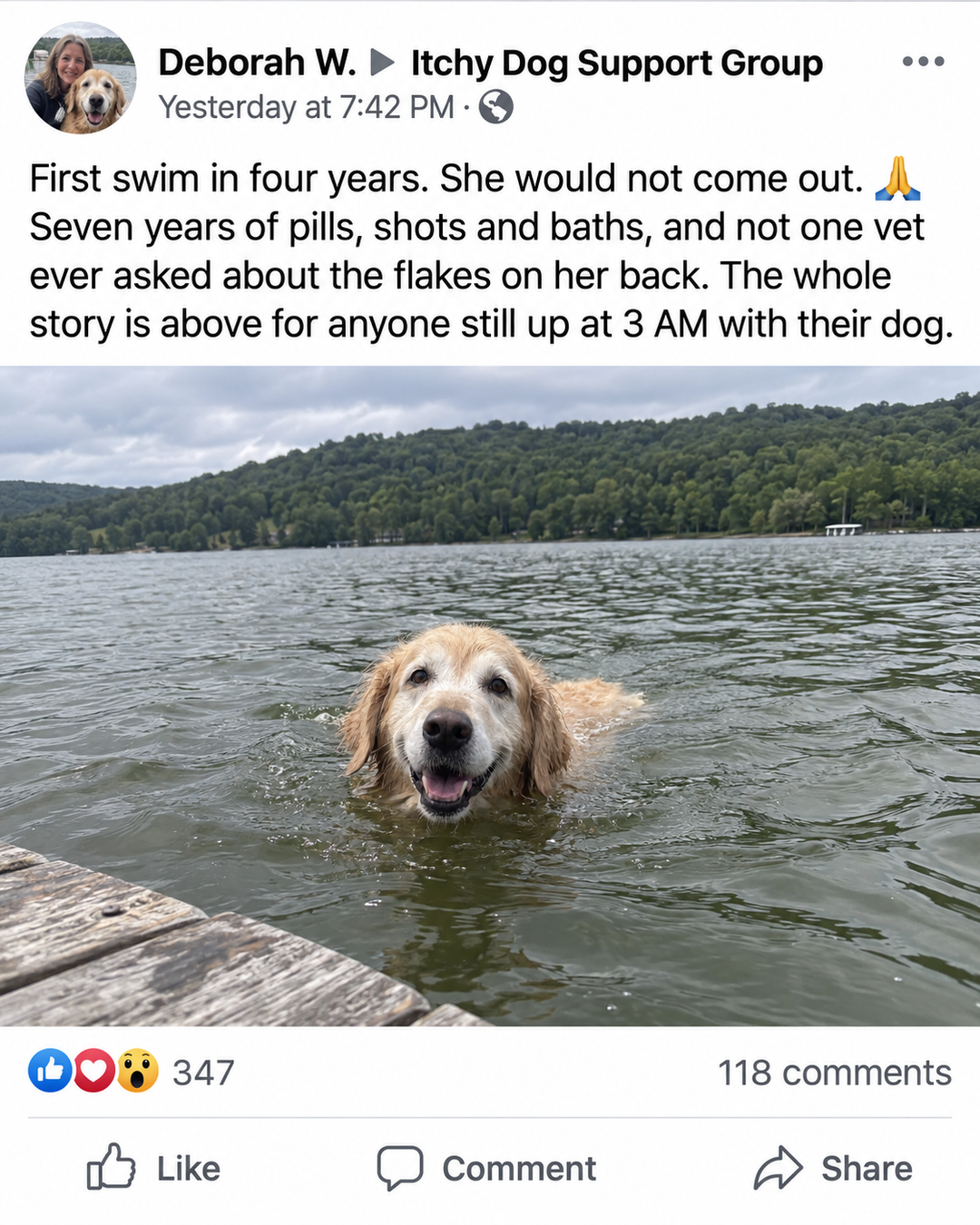
Ran for 51 days, from September 30 to November 20, 2026, the last day Crush saw it.
Run by Deborah Williams on Facebook. Crush is not the advertiser and does not verify its claims. See this ad in Meta's Ad Library(opens in a new tab)
Make your own version of this ad
Crush makes it, launches it in your own Meta ad account, scales the winners and pauses the losers.
About this ad
- Meta Ad Library ID
- 1724662071932274
- Platforms
- Facebook, Instagram, WhatsApp and Threads
- Relaunches
- 0
Ad text
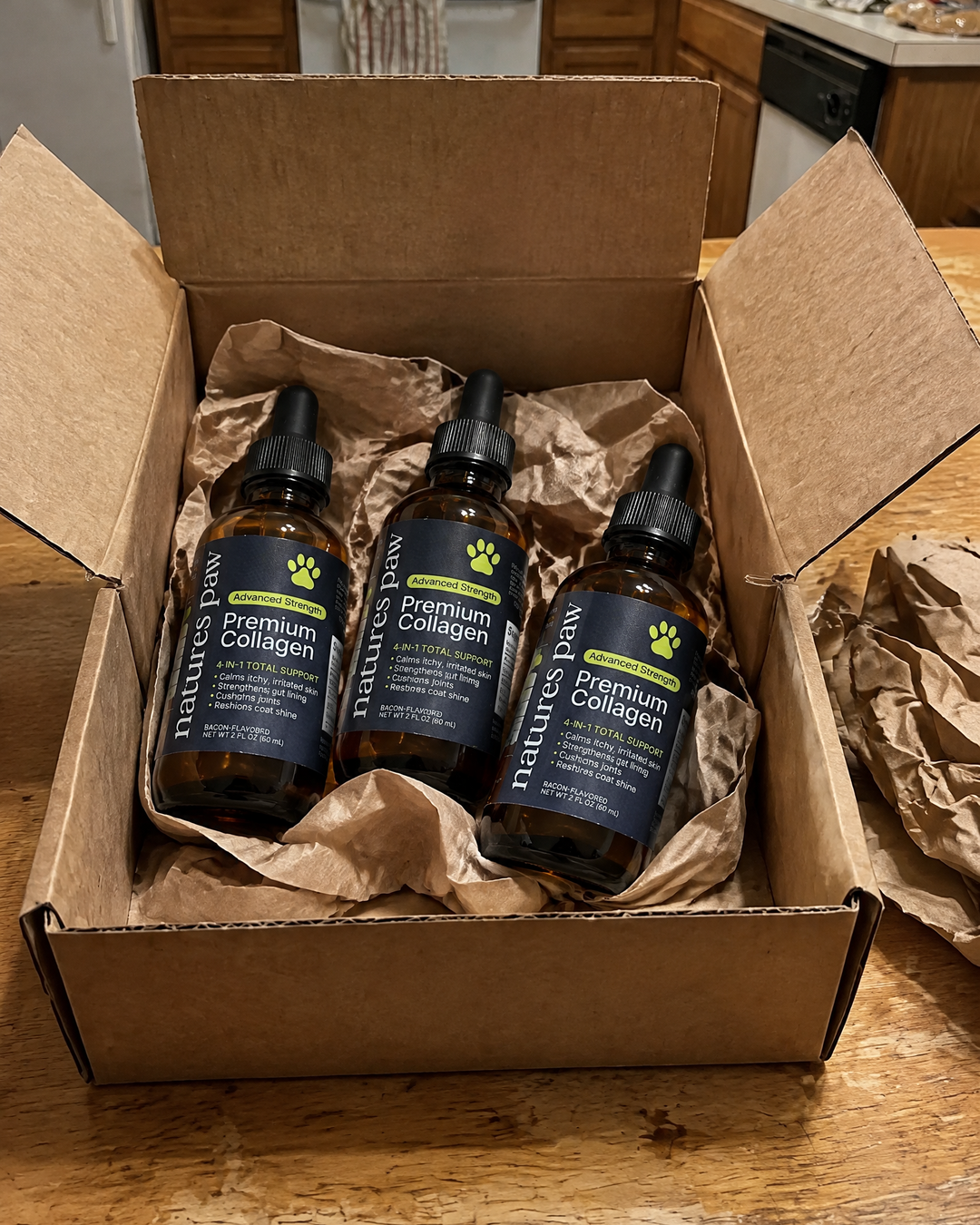
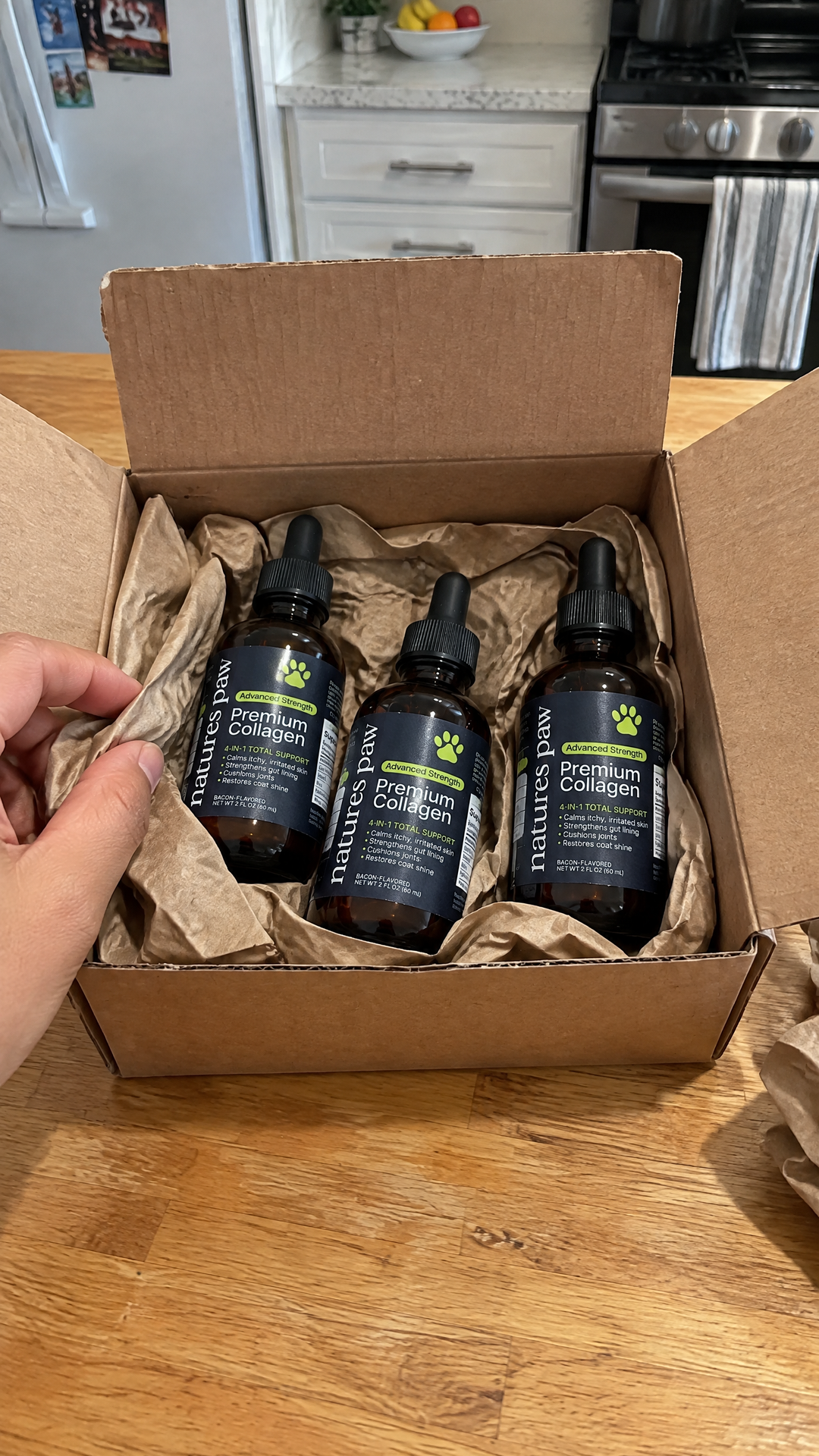
My Golden Retriever was put on Apoquel for life at two. She's nine now. Turns out she never had allergies at all. She had something nobody ever tested her for, hiding in plain sight in the white flakes I brushed off her back every morning. For seven years, I "managed" a condition Sadie didn't actually have. Seven years of pills and shots. Benadryl first. Then Apoquel, which felt like a miracle for about a month. Then a higher dose when it stopped holding, then Cytopoint shots on top when the higher dose wasn't enough, then prednisone when the vet ran out of other options. Seven years of treating whatever came with it. Antibiotics for the staph. Antifungal pills for the yeast. Ear drops every time her ears swelled shut. Allergy shots proposed. Every new one handed to me with the same sentence: "Allergy dogs are managed, not cured." Seven years of food. Grain-free first, then salmon when grain-free didn't help, then kangaroo when salmon didn't either, then the $120 prescription bag, then a twelve-week elimination diet where she got nothing else. Not a treat. Not a lick of peanut butter off a spoon. Seven years of being handed the next thing to try. Fish oil, probiotics, coconut oil, apple cider vinegar spray, and every collagen chew on Amazon with good reviews. And told to "just give it time." I did everything they asked. I bathed her every Sunday for seven years. Chlorhexidine, ten minutes of contact time, rinse, towel, blow dryer on cool. I wiped all four paws every time she came in from the yard. I washed her bedding in hot water twice a week. I switched our laundry soap to the free and clear. When she wouldn't leave her belly alone, I put her in a baby onesie from Walmart. I bought every supplement anyone recommended. I tried every protocol the Facebook groups swore by. When she was four, I drove her three hours to a veterinary dermatologist in Nashville who charged $350 just to walk in the door. Skin scrapings. Cytology. A full blood panel. Her thyroid. Everything came back "unremarkable." Not abnormal. Not a cause. Unremarkable. It's what they write down when they can't find what they're looking for and don't know what else to tell you. The dermatologist went through the allergy test our regular vet had run when Sadie was two. Dust mites. Two kinds of grass. Ragweed. Oak. Mold. Even human dander. My own dog was allergic to me. She diagnosed her with atopic dermatitis with secondary yeast and bacterial infections. She said Apoquel and Cytopoint were the standard of care, and I should also consider allergy shots. A serum made from Sadie's thirteen things, a needle every week, maybe for life. I said I'd think about it. I thought about it for two years. I couldn't do it. By year five I had been to three vets, one dermatologist, an emergency clinic at 2 AM when she scratched her ear open, and a holistic vet two towns over who put her on a $90-a-month raw diet and an herbal powder that turned her water brown. Nothing held. I felt like I was losing my mind. The tests were unremarkable. The vets were calm. But every single night, I woke up to the same sound. By 3 AM the jingle would start. Her tags against the hardwood. Scratch, scratch, scratch. Jingle, jingle, jingle. I'd lie there in the dark and try to guess which spot it was just by the sound. By 7 AM I'd find it. A new pink patch on her belly. A hot spot under her ear, wet and angry. Fresh rust-colored stain between her toes from licking all night. By dinner she'd be working on her paws again. That wet slurp, slurp, slurp. I could hear it from the kitchen over the TV. And the math never stopped. If I want to visit my sister for a weekend, I need someone who will give the Apoquel at seven and seven, wipe all four paws every time she comes in, keep her off the grass, and check her ears before bed. If Rick and I go out to dinner, I need to be home before she starts on her feet, or I come home to blood on the bedspread. If her shot is due on the fourteenth, I need to book it for the tenth, because by the tenth she's already chewing. Rick started sleeping in the guest room. He said it was his back. We both knew it was the jingle. I resented him for that. Then felt awful about it. Then resented myself for being resentful. Then got up at 3 AM and sat on the floor next to her, rubbing her ears so she'd stop. I stopped saying yes to anything. Trips. Weekends. My sister's 60th birthday in Asheville, because I couldn't find anyone I trusted with the pills, the wipes, and the ears. We stopped taking her to the lake. Every swim meant a hot spot two days later. So she'd sit at the end of the dock and watch the other dogs go in. I'd sit on the couch and reach down to pet her, and she'd pull away. Being touched made the itch worse. My own dog, pulling away from my hand. Strangers at the park would look at her bald patches, then look at me. I wanted to tell them she has a dermatologist. She eats kangaroo. I bathe her every Sunday. We are not bad dog parents. I stopped taking her to the park in 2021. I got tired of explaining. She also had what I called her "winter skin." White flakes all down her back, like somebody had shaken salt on her. It was worse after a bath and worse in the dry months. Her coat felt like straw in some spots and greasy in others. I'd brush her in the morning and the brush would come out white. Nobody ever asked me about the flakes in seven years. I never thought to mention them. We were treating allergies. The dandruff felt like a separate thing. Dry air. Goldens shed. Just a coat thing. On the outside, I looked like a woman with an itchy dog. On the inside, I was counting days between shots, and I never knew which night would be the bad one. And every vet just nodded. "That's atopic dermatitis. Bump up the Apoquel. Add the shot. Try another food." I tried every single thing. Nothing worked. I started to believe this was just her life now. That I'd spend the rest of it managing the itch, watching the calendar, and slowly losing the dog she was supposed to be. Then my next-door neighbor asked me something no vet ever had. Joanne is retired. She spent twenty-six years as a veterinary technician, the last eleven at a dermatology referral practice in Atlanta. She's seen more itchy dogs than I could count. We were talking over the fence one Saturday morning, and I was telling her I'd cancelled on my sister again. Thanksgiving, this time. She listened. Then she asked a question I've thought about a hundred times since. "Deborah. After you bathe her on Sunday, is she better or worse by Tuesday?" I almost laughed. "Worse. Every time. I figured the pollen was just building back up on her." She leaned on the fence. "And the flakes on her back. Are they worse on the bad itch days?" I thought about it. "Always. But I figured the scratching was just knocking the dandruff loose." She set her coffee down on the fence post. "Deborah. That's not a coincidence. The flakes and the itch are the same problem. And the seven years you've spent treating her allergies? The allergies are just what's getting in. The problem is her skin." I stood there with my hand on top of the fence. "What?" "How old was she when it started?" "Right after her second birthday." She nodded like she already knew. "Of course she was." Thirty minutes later she was drawing it for me on the back of an envelope at her kitchen table. A dog's skin is built like a brick wall. The skin cells are the bricks. Collagen is the glue that holds them together. When the glue is thick, the wall is sealed. Pollen and dust land on the outside and brush right off. Moisture stays on the inside where it belongs. But starting at about age two, a dog's body makes seven to ten percent less collagen every year. By nine, Sadie was running on about half of what she had as a puppy. And food puts almost none of it back. Dogs used to get it from bones, skin, and cartilage. A bowl of kibble has almost none. So the glue runs thin. And tiny gaps open up between the bricks. Those gaps leak both ways. Pollen, dust mites, and grass slip in through the gaps. Her immune system sees them getting in and sounds the alarm. That alarm is the itch. And moisture leaks out. The skin dries out and cracks. Those are the flakes. And every crack is one more gap. That's the scratching. That's the flakes. That's the hot spot that opens in the same place every time, because that's where the wall is thinnest. That's the paw licking that starts the second she lies down, even on a day when the pollen count is zero, because the gaps are open every single day, no matter what's in the air. I sat there with my mouth open. She kept going. "Her bloodwork and her thyroid came back unremarkable because they were testing things that were fine. Her allergy test found thirteen things because thirteen things were getting in. Nobody asked why they could get in. A dog with a sealed wall can roll in ragweed all afternoon. A dog with gaps reacts to everything that walks through." "Dermatologists have a name for it. Skin barrier breakdown. There's a study in Veterinary Dermatology that measured it. Allergic dogs leak more water out through their skin than healthy dogs, even on the patches that look perfectly normal. That's your flakes." "And the bath. The bath does its job. It rinses off what's sitting on top. That's why Monday is her good day. But it can't close a single gap. So by Tuesday the moisture's leaking out again, the skin's cracking again, and everything's walking right back in." "She's not allergic to thirteen things, Deborah. She has a wall with gaps in it, and thirteen things walking through." She told me why the Apoquel kept needing more. I told her the first month on it was the best month of my life. She nodded. "It works. It does exactly what it says. It turns the itch signal down. But it never touches the gaps. So every year the glue gets a little thinner, the gaps get a little wider, more gets in, and there's a bigger reaction underneath for the same pill to hold down. So the dose goes up. It works for a while. The wall keeps thinning. It stops holding again. You add the shot. The shot's supposed to last eight weeks, and it lasts four. Then three." "At some point it feels like there's nothing left to try. But you're not running out of medicine. She's running out of wall." But there was one more thing she said that I hadn't found in seven years of reading every allergy forum there is. "This isn't just about the itch. The same gaps that let pollen in let germs in. That's why she keeps getting the staph and the yeast. And every infection means another round of antibiotics." "And the research on that is frightening. Dogs who've been through round after round of antibiotics for their skin are four times more likely to end up with a staph infection the usual antibiotics can't kill. Nearly half the staph vets find in dogs' skin and ear infections is already resistant. And it turns up most in dogs on pills that turn the immune system down. Dogs like Sadie." "The itch is just the first thing to show the problem. The dermatologist is tracking the itch. Nobody is tracking what an open wall is letting in." I went home in silence. I sat on the kitchen floor with Sadie's head in my lap for fifteen minutes. Seven years. Three vets. One dermatologist. More than $18,000 in shots and food and tests. I added it up that night. And nobody had ever asked me whether the flakes all over her bed had anything to do with the itch I'd been describing at every single appointment. I texted Joanne the next morning. "Okay. If you're right. What do I actually do?" She called me that afternoon. "You close the gaps. Stop chasing the itch and the thirteen things. Fix the wall itself." She told me why none of it had held. The Apoquel and the Cytopoint turned the alarm down. They never touched the wall. The baths and the wipes cleaned the outside of the wall while the gaps stayed open. The food trials took one thing off the list of what was walking through, but there were thirteen, so something always got through. The fish oil and the coconut oil soothed the surface for a day. And the collagen chews. Every chew I'd tried couldn't do the one thing I bought them to do. "Collagen was the right idea," she said. "You were one step away. But look at what a chew actually is." To press collagen powder into a chew, you need starch and binders to hold the shape. Corn, potato, pea. Then it goes through a heat press that can run past 300 degrees, and that heat destroys most of the collagen before your dog ever eats it. What's left is a sliver of collagen inside a brick of starch. The brick has to break down in her stomach first, which takes hours. By the time it does, maybe 20 to 30 percent of what the label promised ever reaches her skin. And the starch it's built on is the exact kind of thing an itchy dog reacts to. "You bought it to calm the fire," she said. "And it was built out of kindling." "And look at the back of the bag. Almost none of them have vitamin C. Her body can't turn collagen into new skin without vitamin C. Collagen on its own is half the job." "You've been treating the itch," she said. "That's the last step. The gaps come first. The gaps are why the pollen gets in. Why the moisture gets out. Why the flakes, why the staph, why the dose keeps going up. Close the gaps, and you stop it where it starts." Then she told me about the only thing documented in peer-reviewed research to actually rebuild the wall itself. Not calm the itch on top. Not block one of the thirteen things. Put back the glue the gaps are opening in. Collagen. Specifically, hydrolyzed liquid collagen. Already broken down small enough to absorb, and never pressed into anything or baked. "There's a study in Experimental Dermatology," she said. "They fed dogs collagen every day for nine weeks, then measured how much water was leaking out through their skin. It dropped. The wall was sealing back up." Because here's what nobody had told me in seven years of chews. A liquid has nothing to press and nothing to bake. The collagen gets broken into tiny pieces by natural enzymes and dissolved into water. The vitamins go in cold. There's no brick for her stomach to break down, so it starts absorbing in about twenty to thirty minutes, instead of passing through as waste. And it's the glue itself, the same stuff her body used to make on its own. No dog has ever been documented building up a tolerance to it. That's why it never needs a bigger dose every year. But the glue is only the first step. Once the collagen gets in, her body has to actually turn it into new skin, and it can't do that without vitamin C. So the vitamin C has to come with it, in the same pour, every day. Then the skin has to hold on to its moisture while the gaps close. Hyaluronic acid holds water in the skin. That's the part that goes after the flakes. And the coat on top needs feeding while the skin underneath rebuilds. Biotin, vitamin B7. For healthy skin and a coat that grows back thick and glossy. The one Joanne told me about was Nature's Paw Premium Liquid Collagen. They call the formula Bio-Active 4. Grass-fed collagen peptides, 400 mg in every serving. Hydrolyzed, types I and III, the same two types her skin is built from. The kind of collagen peptides that have been through double-blind, placebo-controlled trials in dogs. Broken down by natural enzymes instead of heat. Never pressed. You pour it. That's how you know. If you can chew it, it's been through the heat and it's built on starch. Vitamin C, 20 mg in every serving, matched to the collagen. The piece every chew in my cabinet was missing. What her body needs to turn that collagen into new skin. Hyaluronic acid, to help her skin hold on to its moisture while the wall closes. That's the flakes. Biotin, 1.5 mg. High-potency vitamin B7, for healthy skin and a strong, glossy coat. That's it. Four things. No chicken. No grains. No brewer's yeast. No pea starch. Third-party lab tested. Bacon flavored, which Sadie considers the most important part. One pour over her dinner. Once a day. I sat with that for two days. Then I ordered it. Week one: she licked the bowl clean. I noticed that. I didn't let myself notice anything else. Week two: I brushed her on Tuesday morning and the brush came out clean. No white. I stood there in the kitchen holding it up to the window. Week three: I woke up and the clock said 6:10. Not 3. I lay there waiting for the jingle. It didn't come. Sadie was asleep on her side at the foot of the bed, snoring. Week four: I went to my granddaughter's birthday party. Four hours. I didn't call Rick once to ask if she was chewing. I came home and there was nothing on the bedspread. I sat in the car in the driveway for a few minutes. Not because I was relieved. Because I had just been to a birthday party, and it had just been a birthday party. Week six: we went back to the lake. It had been four years. Rick carried the cooler. Sadie stood at the end of the dock and looked back at me like she was asking permission. I said go. She went in. She swam for an hour. She would not come out. Two days later, I checked every inch of her. Nothing. Week eight: she climbed up on the couch and put her head in my lap and let me scratch behind her ears. She leaned into it. She stayed. I hadn't been able to pet my own dog like that in years. It was my dog again. The one from before all of it. Week twelve: we went back to our vet for her recheck. She looked at Sadie's belly, her ears, between her toes. She asked what I'd changed. I told her about my neighbor. The skin barrier. The glue running thin after age two. The gaps letting pollen in and moisture out. Why the Apoquel kept needing more. The heat press and the starch in every chew I'd tried. The four things that finally reached the wall. She listened. She wrote things down. She was quiet for a while. Then she said, "I'm going to start asking my allergy owners about dry skin. I should have been asking all along." We've been bringing the Apoquel down slowly, her way. The dog who was supposed to be on it for life is on half now. Six months in: my sister turned sixty-two. Rick and I drove to Asheville for the whole weekend. The list I left the teenager across the street fit on a sticky note. My sister hugged me on her front porch for a long time. She said, "Deb. You're here. You're actually here." I had to sit in her driveway for a few minutes before I could go inside. Sadie is not allergic to thirteen things. She never was. She had seven years of a wall running out of glue, letting pollen in and moisture out, while everyone, including me, treated whatever walked through the gaps. And not one person in a white coat ever asked me about the flakes. If your dog has been diagnosed with atopic dermatitis, or environmental allergies, or any label that comes with Apoquel, a Cytopoint shot, and "allergy dogs are managed, not cured." If the allergy test came back with a list, and the dermatologist wants you to consider allergy shots. If you've stopped taking them to the lake. If you've stopped going away for the weekend. If you know exactly what 3 AM sounds like in your house. If they also have dry, flaky skin or a coat like straw, and you have never once connected it to the itch. I'm not saying this is definitely your dog. I'm not your vet. I'm saying I spent seven years treating my dog for the things getting through her skin, while the real problem was the skin itself, and not one vet ever asked me about the flakes all over her bed. Nature's Paw is built for the wall itself. One pour over dinner. Four ingredients. Everything I tried for seven years worked on what got through the wall. This one works on the wall. Sixty-day money-back guarantee. Two full months, risk free. If you're not happy with the results, they make it right. After seven years of vets and shots, what are two more months? https://trynaturespaw.com/pages/listicle-v1-skin-barrier You don't have to keep managing allergies your dog might not actually have. P.S. I brought Joanne a bottle of wine last month. She wouldn't take it. She said she just wanted me to tell other people. So I'm telling you. If your dog has been itching for years and nothing has held, please look at the wall that's letting it all in. The flakes and the itch are the same gaps, leaking both ways. P.P.S. There are collagen chews everywhere that look like they should fix this. They're pressed with starch and heated past 300 degrees, and maybe a quarter of the collagen on the label ever reaches her skin. Most of them don't even have the vitamin C her body needs to use it. Nothing reaches the wall. Nature's Paw is a liquid. Nothing pressed, nothing baked, nothing to break down first. If you can chew it, it's been through the heat. It's only sold at trynaturespaw.com. The bottles on Amazon aren't the real thing. P.P.P.S. Rick moved back into our room last month. Last week I woke up at 3 AM out of habit. The house was quiet. Rick was awake too. He whispered, "Listen." I listened. Nothing. No jingle. Just Sadie snoring at the foot of the bed. He said, "I forgot what this sounded like." Neither of us said anything else. We just lay there and listened to it.
Where the ad sends people
trynaturespaw.com
7 years of vet visits failed to explain this
Rated 4.8/5 by 25,000+ dog owners. The bacon-flavored liquid collagen that rebuilds your dog's skin barrier instead of just quieting the itch. 60-day money-back guarantee.
Learn more: trynaturespaw.com(opens in a new tab)