Dennis Callahan
Dennis Callahan Facebook ad: “I Spent $1100 on Prostate Supplements Over 4 Years. Here's…”
Ran for 7 days, from June 12 to June 18, 2026, the last day Crush saw it.
Run by Dennis Callahan on Facebook. Crush is not the advertiser and does not verify its claims. See this ad in Meta's Ad Library(opens in a new tab)
Want an ad like this for your product?
Crush makes new ad images for your product from this ad: your logo, your product photo, your offer.
Trials from $19.95 USD, then $79.95 USD a month. Cancel anytime.
About this ad
- Meta Ad Library ID
- 1751394499557093
- Platforms
- Facebook, Instagram, Audience Network, Messenger and Threads
- Relaunches
- 1
Ad text
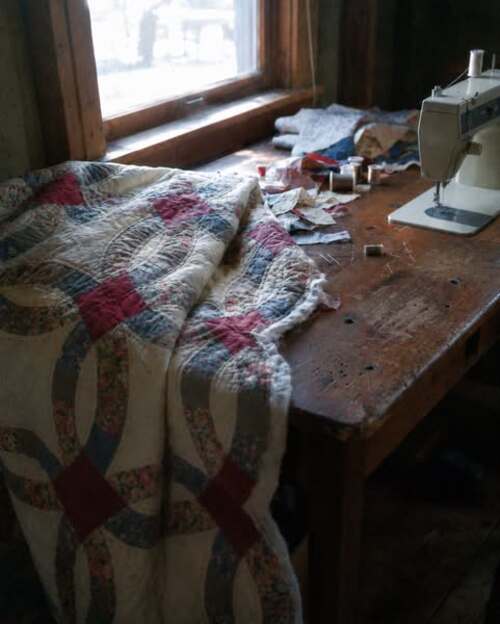
I spent 4 years on every prostate supplement you can name. Then an Amish farmer said something at a flea market that I haven't been able to stop thinking about. I want to tell you about a man named Eli. He was somewhere around eighty years old. White beard. Suspenders. A straw hat with a sweat stain around the band that told you he'd been wearing it since early morning. He was running a produce stand at the Mount Hope auction grounds in Lancaster County — late September, the kind of Saturday morning where the air still has some cool in it before the sun burns it off by ten. My wife Ruth had dragged me there to look at quilts. I had no interest in quilts. I'd been to the bathroom twice since we parked the truck. Eli noticed. I didn't realize he'd noticed until I came back the second time and he looked at me — not unkindly, the way an older man looks at a younger one who is carrying something he recognizes — and said, quietly, "You been dealing with that a while?" I was a little caught off guard. I said yes. A few years. He nodded once. He handed me a small paper bag of dried pomegranate arils — the seeds, dark red, about the size of a pencil eraser — and said: "My family has been growing these since before I was born. The men in our community eat them every day. You might find it worth looking into." Then he went back to arranging his squash. I didn't know what to do with that. I thanked him. I put the bag in my jacket pocket. I told myself it was probably nothing. But I kept thinking about Eli. Specifically, I kept thinking about the way he walked. The way he'd been on his feet since sunrise, loading and unloading produce, moving at the pace of a man twenty years younger. He was eighty years old and he hadn't sat down once in the two hours we were there. I was sixty-three and I'd made two trips to the bathroom before noon. Here is what the previous four years had looked like. Saw palmetto first. My doctor mentioned it almost in passing — "some men find it helpful." I took it for six months. The night I finished the last bottle I was still getting up twice before three in the morning. I threw the empty bottle away and didn't say anything to Ruth about it. Beta-sitosterol next, on the recommendation of a men's health forum I'd found at two in the morning after the third bathroom trip of the night. Eight weeks. I remember the exact moment I knew it wasn't working — we were driving back from my son's house in Harrisburg, four hours, and I made Ruth stop twice before we hit the turnpike. She didn't say anything. She just pulled off. That was worse than if she'd said something. Then the blends. The ones with twelve ingredients and a picture of a mountain range on the label. The "Advanced Prostate Formula." The German one a colleague at my old firm swore by — $58 a bottle, "clinically studied" in a font size you need reading glasses to find. The one from Costco with a man hiking on the packaging, because apparently that's what a healthy prostate looks like. I took that one for three months and missed the back nine at Riverside twice because I couldn't trust myself to stay out for eighteen holes. Four years. Eleven products. Somewhere north of nine hundred dollars. My urologist, Dr. Finch — a man I trust, who has been treating me for six years — told me at every visit that my numbers looked normal. BPH was common in men my age. We'd monitor it. I was sixty-three years old, monitoring a prostate that had turned every car ride into a negotiation and every round of golf into a logistics problem, and I was running out of things to try. I drove home from Mount Hope with the paper bag of pomegranate arils in my jacket pocket. That night, after Ruth went to bed, I sat at the kitchen table and started reading. I want to tell you what I found, because it explained four years of failure in about forty minutes. Your prostate is surrounded by sensitive tissue. When chronic, low-grade inflammation takes hold — from years of oxidative stress, from diet, from the slow accumulation of damage that aging does to every part of a body — that tissue swells. Not dramatically. Quietly. Persistently. Just enough to squeeze the urethra that runs through the center of the gland. Just enough to send irritation signals to your bladder that tell it the tank is full when it isn't. Just enough to make every bathroom trip feel incomplete, every night feel interrupted, every car ride feel like a negotiation. The inflammation is the leak. Everything I'd been taking for four years was mopping the floor. Saw palmetto works on DHT — a hormone connected to prostate growth. It doesn't touch the inflammation. Beta-sitosterol helps urine flow mechanics a little. Doesn't touch the inflammation. The twelve-ingredient blend hits every mechanism except the one that actually matters. The inflammation is still sitting there the next morning. And the morning after that. That's why nothing moved in four years. I wasn't treating the wrong gland. I was treating the wrong thing inside it. The research I found that night connected directly to what Eli had handed me across a produce table in Lancaster County. Researchers at the University of California published a controlled clinical trial on men scheduled for prostate surgery. One group took pomegranate extract capsules — concentrated, standardized, not the juice — for four weeks before the operation. When they analyzed the prostate tissue afterward, the pomegranate compounds were physically measurable inside the gland itself. The researchers noted it was the first time any supplement compound had been shown to reach prostate tissue directly at measurable concentrations. Not circulating in the bloodstream at a distance. Not working on hormones somewhere upstream. Inside the tissue. Where the inflammation actually lives. Saw palmetto never does that. Beta-sitosterol never does that. Everything I'd spent four years rotating through was working somewhere other than where the problem lives. The active compounds are called punicalagins and ellagic acid. Once they reach the prostate tissue, they work on the inflammation directly. The swelling that's been squeezing the urethra eases. The false signals to the bladder quiet down. The flow stops fighting itself. That's not managing the problem. That's addressing the cause of it. I sat at that kitchen table and I thought about the Amish men in Eli's community. Eating pomegranate arils every day. Not knowing the clinical language for any of it — punicalagins, ellagic acid, eNOS activation, prostate tissue absorption. Just knowing, the way a community knows things that have been passed down for generations, that the red fruit with the bitter seeds was worth the trouble of growing it. They had been right for a hundred years before the research caught up. I want to be careful here about one thing, because I made the mistake of almost getting it wrong. I bought a pomegranate extract supplement off Amazon the next morning. It did nothing. Three weeks, nothing. I went back to the research and found out why. Most pomegranate supplements on the market are cheap dried fruit powder with no standardization — no specification of punicalagin content, no third-party testing, often processed at high heat that destroys the active compounds before the capsule is ever sealed. You can take the wrong version for months and feel nothing and conclude that pomegranate doesn't work. Pomegranate works. The wrong version doesn't. What matters: the extract has to be standardized specifically for punicalagin content — not just labeled "pomegranate extract" with no specification. It has to be third-party tested. It has to be processed at low temperature to preserve what makes it effective. No fillers cutting the active dose. Eli's community had been drying their pomegranate arils slowly, in cool storage, for generations. Not because anyone explained heat sensitivity to them. Because the slow way was the way that worked. The way that kept the red. The red is everything. The red is the punicalagins. I spent two evenings going through brands. Most failed immediately — no potency standardization, fillers on the label, no certificate of analysis. The only one that checked every box was Avoria. Organic. Standardized for punicalagin content. Third-party tested. Low-temperature extraction. No fillers. Made in the USA. I ordered it that night. The first week I kept my expectations flat. The urgency was still there. The interrupted sleep was still there. But by the end of week two, the pressure — that dull, low weight in the lower belly that I'd been carrying so long I'd stopped registering it as a symptom — had eased. Not gone. Eased. Enough to notice it was different. Week three I got through my morning coffee without the hard urgency that usually hit around the forty-minute mark. Once. Then twice. Then most mornings. Week four the flow had changed. The stop-and-start that I'd quietly accepted as permanent had smoothed out. I stood at the sink one morning and thought: that was different. I didn't say anything to Ruth yet. I didn't want to make something of it before I was sure. By week six I was sure. The urgency was manageable. The kind where you notice it, respond to it, and it listens. Not the kind that runs your morning. The flow was consistent. Not fighting itself. I told Ruth. She said she'd noticed two weeks earlier and hadn't said anything because she didn't want to jinx it. At ten weeks I saw Dr. Finch for my regular appointment. He looked at his notes from the last two visits. He looked at me. He said: "Whatever you changed, keep doing it." I told him what I'd found. He wrote it down. That was eight weeks ago. I'm at eighteen weeks on Avoria now. I don't clock the bathrooms at the hardware store anymore. I don't think about the drive to my son's house in terms of how many exits I'll need. I went back to the Mount Hope auction last month. Eli was there. Same stand. Same straw hat. He didn't ask me anything. He just looked at me the way he'd looked at me that first Saturday — that same quiet reading — and he nodded once. He handed me another small bag of dried arils. I told him I didn't need them anymore. That I'd found something that worked. He smiled. A small, unhurried smile. "Good," he said. And went back to his squash. If you've been through saw palmetto, beta-sitosterol, the Costco blend, the twelve-ingredient Advanced Prostate Formula — you are not crazy and you are not failing. That entire category was built around mechanisms that sit downstream of the actual problem. The inflammation was always there. The tissue was always swollen. Nothing you took ever reached it. Pomegranate extract reaches it. That's been confirmed in a controlled clinical study on human prostate tissue. No other prostate supplement has shown the same thing. But only the right extract. Standardized for punicalagins. Third-party tested. No fillers. Low-temperature processing. Avoria is the brand that checks every box. Two capsules every morning with water. I'm not the only one who found it this way. A man named Richard — 67, retired, had been on the same carousel I was on for three years — told me he noticed the pressure easing at the end of week two. "I stopped thinking about it," he said. "That's the thing. You stop thinking about it." His urologist told him at his next visit to keep doing whatever he was doing. They offer a 30-day money-back guarantee. If you take Avoria for 30 days and don't notice any change in urgency, flow, or sleep — send back every bottle, even empty ones, and they'll refund every cent. After four years and nine hundred dollars on things that never reached the tissue, that guarantee is the first time the risk has been on their side and not mine. Take it for 30 days. Give the inflammation somewhere to go. 👉 https://getavoria.com/products/pomegranate-1 P.S. What Eli's community figured out over generations — and what the clinical research confirmed — is that the active compounds in pomegranate have to reach the prostate tissue directly. Saw palmetto and beta-sitosterol work on hormones and flow mechanics that are downstream of the inflammation. The tissue is still swollen. Until something addresses that directly, you're renting a temporary improvement, not fixing the problem. P.P.S. Most pomegranate supplements on Amazon will not do what Avoria does. Cheap powder with no punicalagin standardization is not the same compound the researchers studied. If it doesn't specify punicalagin content on the label, put it back. The Amish dried their pomegranate slowly, in cool storage, for a reason. The processing is the difference. P.P.P.S. I went back to the Mount Hope auction last month. Eli was there. Same stand. Same straw hat. He didn't ask me anything. He just looked at me the way he'd looked at me that first Saturday — that same quiet reading — and he nodded once. He handed me another small bag of dried arils. I told him I didn't need them anymore. That I'd found something that worked. He smiled. A small, unhurried smile. "Good," he said. And went back to his squash. 👉 https://getavoria.com/products/pomegranate-1
Where the ad sends people
getavoria.com
I Spent $1100 on Prostate Supplements Over 4 Years. Here's the Only Thing That Actually Worked.
Avoria
Learn more: getavoria.com(opens in a new tab)