
Stopped· since May 23, 2026
- 128
- days it ran
- 0
- relaunches
Ad copy
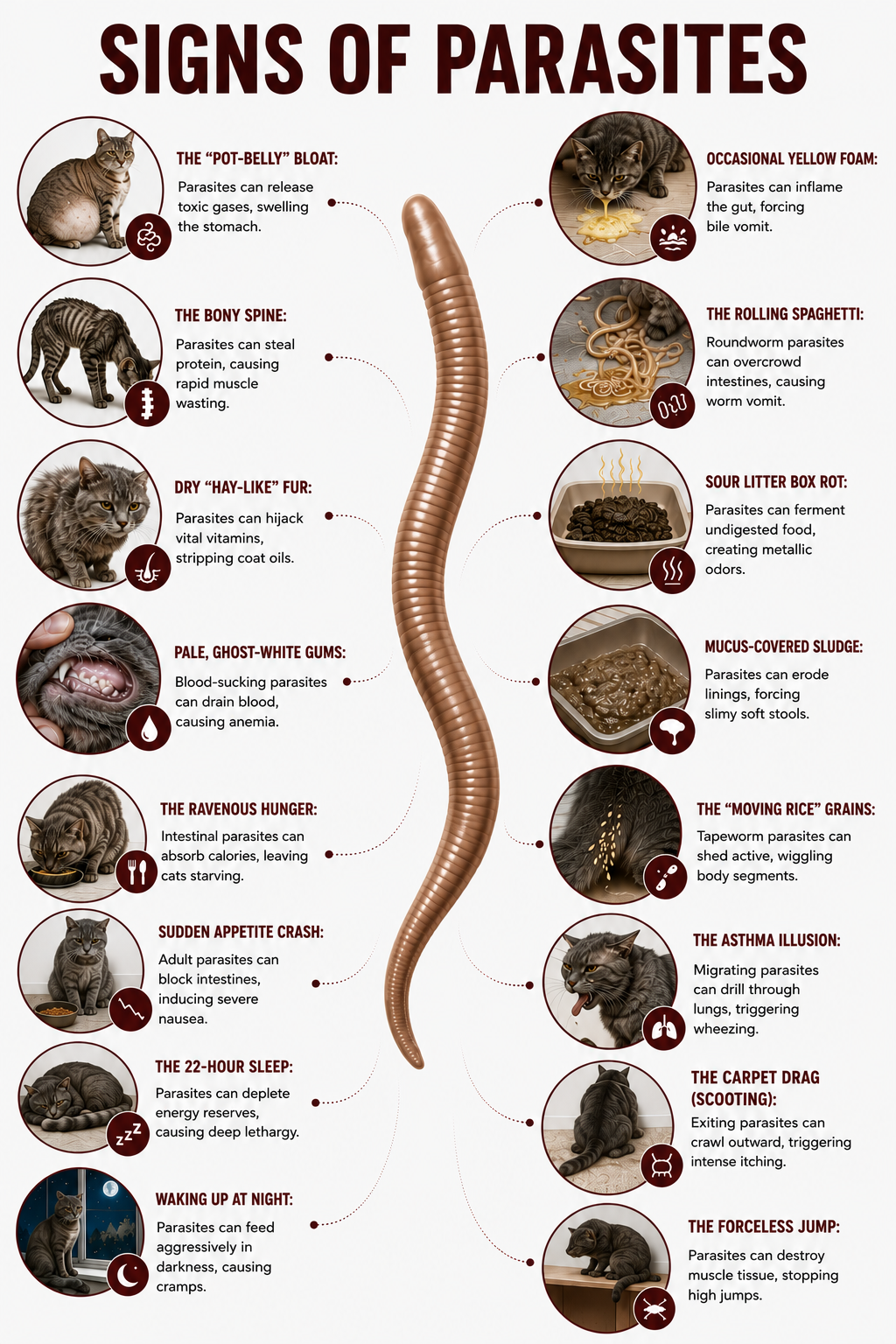
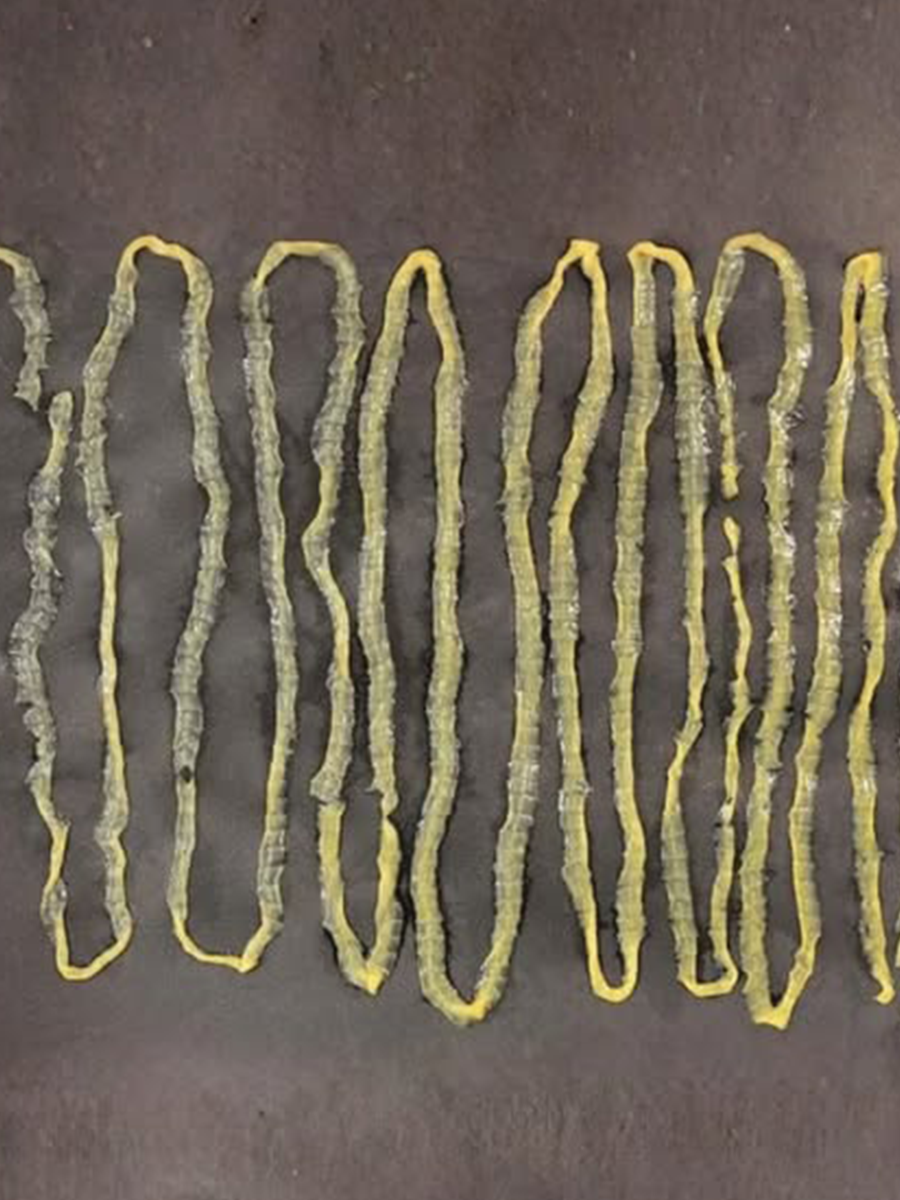
Duck didn't work. Rabbit didn't work. Venison didn't work. The $90 hydrolyzed formula your vet swore would finally stop the scratching didn't work. You've been through three proteins. Maybe four. Maybe five. Each time the vet says "give it 8-12 weeks" and each time your cat is still clawing their ears raw at week six. I'm a veterinarian. I did the exact same thing to my own cat. Spent $355 cycling through proteins and creams and supplements. Then twelve more cats in my shelter started scratching the same way. And I realized the problem was never the protein. It was something living inside their gut that no food change was ever going to fix. My name is Dr. Rachel Morrison. I'm 41. I've run the Westfield City Animal Shelter for nine years. Before this, I did four years of small animal practice and two years of shelter medicine residency. I'm telling you this because what I'm about to describe is going to sound like I didn't do my job. That's fair. For the first three weeks, I didn't. It started with Luna. She's a five-year-old domestic shorthair. Grey tabby. Been a permanent resident at our shelter for six months — one of the cats we keep because she's too feral for most households. But sweet with staff once she trusts you. In January, I noticed her scratching near her left ear. Not obsessively. Just more than usual. I checked inside the ear. No mites. No redness. No discharge. I parted the fur around her chin and found it. Black specks. Tiny. Scattered. Like flecks of pepper ground directly onto her skin. Chin acne, I thought. Textbook. I did what every vet does when they see chin acne: switched her to stainless steel bowls, added a daily wipe with antimicrobial cloth. Week one: Still scratching. The specks spread. Not just the chin anymore — behind her ears, along her jawline. I switched her food. Pulled her off the standard shelter mix and put her on single-protein duck formula. Limited ingredient. No fillers. $47 for a week's supply. Week two: The scratching got worse. She started shaking her head. The motion you see when a cat has something in their ear they can't reach. Except there was nothing in her ear. I added omega-3 fatty acids. I applied antimicrobial balm to her chin twice a day. I ran a full blood panel. Everything came back normal. No elevated eosinophils. No immune markers screaming "allergy." Week three: Luna's scratching so hard she's opening the skin above her ears. I'm cleaning small amounts of dried blood from her fur every morning. My technician Jamie asked me what I thought it was. "Food allergy," I said. Because that's what I was trained to say. Over the next four weeks, I tried everything I knew. Novel protein number two: venison. $52 a week. Hydrolyzed protein diet: Royal Canin HP. $38 per case. Steroid cream, topical. Applied twice daily. A second antimicrobial wipe, different formula. Oral antihistamine, to rule out hypersensitivity. By the time I added it all up, I had spent $355 on Luna alone. She was still scratching. Not less. More. The black specks had multiplied across her face. There were small raw patches where the fur had started to thin. She'd stopped eating her full portions because the chin acne made contact with the bowl uncomfortable. She looked miserable. I told myself I'd give it another two weeks. That maybe the hydrolyzed diet needed more time to clear whatever protein was driving the reaction. I had no idea food was never the problem. Six weeks after Luna first started scratching, I walked into the main cat room on a Tuesday morning and stopped. Three other cats were scratching. Not the way cats scratch when something itches occasionally. The way Luna scratched. Head-shaking. Ear-focused. Obsessive. Can't-stop. I checked all three. Black specks. Same location. Same pattern. By Thursday, there were seven cats showing symptoms. By the following Monday, twelve. Twelve out of thirty-one resident cats. All of them scratching near their ears and chin. Several with black specks. Two already developing the raw patches Luna had. Something was spreading through the shelter. My first thought: fleas. Flea allergy dermatitis presents exactly like this — intense scratching, concentrated near the head and neck, black specks that look like flea dirt. And fleas spread fast in a shelter environment. I pulled every cat. I ran flea combs through all thirty-one. Zero flea dirt. Zero adult fleas. Zero eggs. I examined the bedding. The floors. The cat trees. Nothing. I treated the entire facility with diatomaceous earth as a precaution. Nothing changed. A week later, fourteen cats were symptomatic. I was standing in the middle of the cat room at 7 PM on a Friday, looking at a facility full of scratching cats, having spent over a thousand dollars on supplements and food changes and getting absolutely nowhere. I called Frances. Frances Nguyen has been running shelter medicine in this region for thirty-five years. She was working in this field before I graduated. She trained half the shelter vets I know. She's seen things in thirty-five years that most vets never encounter in a standard practice. I told her everything. Luna. The twelve other cats. The flea combs. The food changes. The supplements. The fact that it was spreading and I couldn't figure out what was spreading it. She was quiet for a moment. Then she said: "Have you considered internal parasites?" I stopped. "There are no fleas. I ran every cat with a flea comb." "I'm not talking about fleas." She explained it to me. There are parasites that don't live on the surface of a cat. They live inside — in the gut. Microscopic organisms that colonize the intestinal lining. They don't show up on a flea comb because they're not on the skin. But their presence drives the immune system into overdrive. Systemically. The inflammation expresses through the skin — the ears, the chin, the neck. "It looks like a skin allergy," Frances said. "It acts like a skin allergy. But it's being driven by an internal infestation that the immune system can't control." "How do you confirm it?" I asked. "You don't confirm it easily. But I can tell you how to test the theory." She told me about ivermectin. Ivermectin is an antiparasitic drug. In the right dose, for the right species, it kills internal parasites by disrupting their nervous system. Frances had used it in shelter settings for thirty-five years to manage exactly this kind of outbreak — internal infestations that present as skin disease with no obvious external cause. "Take one of your worst cases," she said. "Supervised. Correct dosage for weight. Watch them for twenty-four hours." I selected Bruno. A six-year-old male. The worst presentation in the shelter — scratching so severely he'd opened multiple sites along his neck and behind both ears. I calculated the dose. I administered it under full supervision, with Jamie monitoring every hour. I half-expected nothing to happen. By hour fourteen, Bruno had stopped scratching. Not reduced. Stopped. He was sitting in the corner of his kennel. Calm. Grooming normally. Not touching his ears. I stood there looking at him for a long time. It was parasites. All of it. Luna. Bruno. All fourteen cats. Internal parasites that no flea comb could find, no blood panel could flag, and no protein switch could address. The scratching wasn't an allergy. It was a body trying to manage an infestation it couldn't fight on its own. I went home that night thinking I had my answer. And then the problem got complicated. Bruno's results were confirmed. And Bruno was also sick. By the next morning, he had developed gastrointestinal side effects — vomiting, loose stool, lethargy. Not severe enough for emergency intervention, but significant. He was uncomfortable for another forty-eight hours before stabilizing. Frances had warned me this was possible. Ivermectin is not a gentle drug. At the wrong dose — or in a young cat with an underdeveloped blood-brain barrier — it doesn't stay where it's supposed to. It crosses into the central nervous system. It binds to neurological receptors it was never meant to reach. The results are devastating. Tremors. Inability to stand. Seizures. Blindness. Coma. And there is no antidote. If a cat goes into ivermectin toxicity, the vet can only provide supportive care and wait while the drug slowly clears the system. Some cats survive. Some don't. I couldn't treat thirty cats with a drug that had a real toxicity risk and no antidote. I couldn't treat thirty cats with something that had already made my most carefully managed case sick. And I couldn't do nothing. Fourteen cats were scratching themselves raw. More were showing early symptoms every day. I spent the next three evenings doing something I hadn't done since vet school: going back through the primary research. I wasn't looking for another drug. I was looking for why my cats couldn't fight this on their own. I started where you'd expect: parasitology. Gut pathogen suppression. Intestinal immune defense. Then I found a cluster of studies on bile acids, intestinal immunity, and parasite colonization. What I read changed everything I thought I understood about why my cats were infested in the first place. Let me explain it the way Frances later explained it to me, because it matters. In a healthy cat, the liver produces bile. Specifically, it produces bile acids that are chemically bound to an amino acid called taurine — creating what's called taurocholic acid. These taurine-rich bile acids don't just digest fat. Inside the intestinal tract, they act like a chemical detergent. When parasites, harmful bacteria, or fungal organisms try to anchor into the intestinal wall, the bile acids destroy their cell membranes on contact. They literally cannot survive the environment. A healthy cat with adequate taurine has a gut that is genuinely hostile to parasites. Now here's what happens when taurine is deficient. The liver stops producing enough of those conjugated bile acids. The detergent dries up. The intestinal wall — without the constant chemical defense of taurine-rich bile — becomes unprotected. The microbiome destabilizes. The gut's immune barrier weakens. And the intestinal tract becomes exactly what parasites need: warm, undefended, and open. I sat back from my screen at midnight thinking about thirty-one cats. All of them on commercial food. All of them in an environment where taurine deficiency is endemic. Every single one of them exposed to an internal threat their guts were no longer equipped to stop. And that's when I called Frances back. "I know what's happening," I told her. "But I don't understand why. These cats are eating food that says 'taurine added' on every bag." Frances sighed. "That's the question they don't want you to ask." She explained what I should have learned in vet school but didn't. The commercial pet food manufacturing process uses temperatures between 180 and 200 degrees Celsius. Taurine is heat-sensitive. At those temperatures, 60 to 80 percent of the taurine added to the food is destroyed before the bag is sealed. The label says "taurine added." What it means is: we added taurine before we cooked it at a temperature that destroys most of it. What actually reaches the cat's intestinal tract is a fraction of what the label implies. And the grain-free formulas — the ones I'd been recommending to adopters for years as the "cleaner" option? Worse. Grain-free food replaces grains with legumes — peas, lentils, chickpeas. Cheap. Filling. Lets the company charge a premium for a grain-free label. Legumes contain compounds called phytates. Phytates bind to taurine in the digestive tract and block absorption. So even the small amount of taurine that survived the cooking process gets chemically neutralized before it reaches the bloodstream. "Complete and balanced" is a legal standard. It is not a biological guarantee. I thought about nine years of shelter placements. Nine years of telling adopters to buy premium grain-free food. Nine years of cats developing skin problems that nobody could explain. I thought about Luna. I thought about the $355 I'd spent treating something that was never a food allergy. "The food was creating the deficiency," I said. "The food was creating the deficiency," Frances confirmed. "And the deficiency created the opening." She paused. "The vets who recommend those prescription diets every day know this. The pet food companies certainly know this. But there's nothing in it for them to change their messaging. Sick cats keep clients coming back. Prescription food pays well." I sat there for a long time after she said that. I've dealt with the veterinary industry long enough to know she wasn't wrong. The theory was straightforward: restore adequate taurine, the liver produces bile again, the gut's chemical defense rebuilds, the parasite environment becomes hostile. The problem was sourcing. I ordered eight taurine supplements — different brands, different price points, everything available through standard channels. I sent them all to a lab. Six out of eight were underdosed. One that claimed 500mg per serving contained 187mg. Another had contamination — unlisted fillers that actively interfere with absorption. Two had bioavailability so poor that even the taurine present wouldn't reach therapeutic levels. One brand stood out. KittySupps. 503mg of pure taurine per scoop. The label says 500mg — they over-deliver. 95 to 98 percent bioavailability. Pharmaceutical-grade. Zero contamination. Zero fillers. I started all thirty-one cats on KittySupps the following Monday. One scoop per day, mixed into their regular food. No protein changes. No diet overhaul. Just the taurine. By day five, Bruno had reduced his scratching by more than half. Luna, who'd been symptomatic for eight weeks and had been scratching eight to twelve times a day, scratched twice. By week two, eleven of the fourteen symptomatic cats had visibly reduced their scratching. By week three, eight had stopped completely. By week four, all fourteen symptomatic cats had stopped. Luna's black specks began to clear. The raw patches above Bruno's ears healed. His fur started growing back in patches over the following two weeks. The cats who hadn't yet become symptomatic stayed healthy. No new cases developed after we started the taurine protocol. I brought three of the most severely affected cats in for bloodwork at six weeks. All three showed improvement in gut markers. All three had new fur growing in where they'd lost it. Coats that had looked greasy and dull were coming back soft. Frances had been saying for thirty-five years that taurine is the foundation of shelter cat health. I understood now why. I'm not writing this because someone asked me to. I'm writing this because I see the same conversation happening in every cat forum, every Facebook group, every Reddit thread I've read since this happened. You have a cat that scratches. You've switched proteins. Duck. Rabbit. Venison. The $90 hydrolyzed formula the vet prescribed. You've changed the bowls. Switched from plastic to stainless to ceramic. You've changed the litter. Bought the air purifier. Used the antimicrobial wipes. Maybe you've done steroid shots. Maybe your cat is on Atopica right now and you're scared about what long-term immunosuppression is doing to their kidneys. And the scratching is still happening. Because the scratching is not a food allergy. It is not a bowl material allergy. It is the result of a gut that cannot mount a chemical defense against the organisms present in every cat's environment. It is the result of taurine deficiency that has been building since the day your cat started eating commercial food. Every bag that said "taurine added" was incomplete information. The taurine was destroyed in manufacturing. What wasn't destroyed was blocked by the peas and lentils the industry added to justify a grain-free label. Your cat's gut defense has been degrading for months. Maybe years. And no protein switch is going to rebuild it. Here's the other thing Frances told me that I want you to hear: You cannot oversupplement taurine. It's water-soluble. Whatever the body doesn't use, the kidneys filter out. There's no toxicity threshold. No side effects. No danger. So even if you're not certain your cat has this problem — even if the scratching is mild, even if they seem mostly okay — there is no harm in giving them pharmaceutical-grade taurine. None. But if they are deficient — and Frances says 99 percent of indoor cats on commercial food are — you could be stopping the cycle before it costs you three years of steroid shots and a thousand dollars in vet bills with no real answer. Start pharmaceutical-grade taurine today. Not the brands on Amazon. I tested eight supplements. Six were underdosed. Two were contaminated. The best absorption rate I found was 28 percent — meaning your cat absorbs roughly 50mg out of a claimed 500mg dose. That is not enough to restore bile production. That is not enough to rebuild the gut's chemical defense. The only brand that passed every test: KittySupps. 503mg per scoop. 95 to 98 percent bioavailability. Pharmaceutical-grade. No fillers. No contamination. One scoop per day, mixed into food. Within four to six weeks, bile production improves. The gut's detergent defense rebuilds. The immune system stops being overwhelmed by what it can no longer fight on its own. The scratching stops. Not because you found the right protein. Because you restored the system that was broken long before the scratching started. Get it here: https://kittysupps.com/products/taurine Luna's fur has grown back completely. Bruno's neck has healed. My entire shelter — thirty-one cats — has been on KittySupps for six months. Not one new skin outbreak. Not one. Your cat doesn't need another vet appointment. They don't need another steroid shot. They don't need a prescription diet that addresses the symptom while the root cause keeps building. They need taurine that actually works. Don't let what happened to my shelter happen in your home. https://kittysupps.com/products/taurine EDIT: Several people have messaged asking where to buy KittySupps — and a few said they found it on Amazon or Chewy. Please do not buy it there. KittySupps only sells through their direct website and has warnings about counterfeit products. The counterfeit versions I've seen tested contain a fraction of the labeled dose. They will not do what I've described. Buy only from: https://kittysupps.com/products/taurine P.S. The Amazon taurine I tested before finding KittySupps was labeled at 500mg and contained 187mg of actual taurine. Bioavailability was below 30 percent. Your cat would absorb roughly 50mg per day — nowhere near enough to restore bile production and rebuild gut defense. Don't waste four weeks on something that isn't working while the scratching continues. https://kittysupps.com/products/taurine P.P.S. Luna scratched for eight weeks while I spent $355 on proteins, creams, and supplements that treated the wrong problem. Every week I spent chasing a food allergy was another week her gut defense stayed broken and the infestation stayed active. If your cat has been scratching for months — or even weeks — the gut is already compromised. Start pharmaceutical-grade taurine today: https://kittysupps.com/products/taurine
Veterinarian Speaks The Truth..
$355 on proteins treating 'food allergy.' Wasn't allergies. Internal parasites the gut couldn't fight. Bile acids are chemical detergent against parasites. Without adequate bile, the gut becomes undefended. Parasites colonize. Scratching starts. Here's what vets miss.
SHOP NOWLike this ad? Make it yours.
Crush rebuilds this exact creative around your product — your brand, your colors, your offer — in about a minute.