
Inactive· since Jul 20, 2026
- 28
- days it ran
- 2
- relaunches
Ad copy
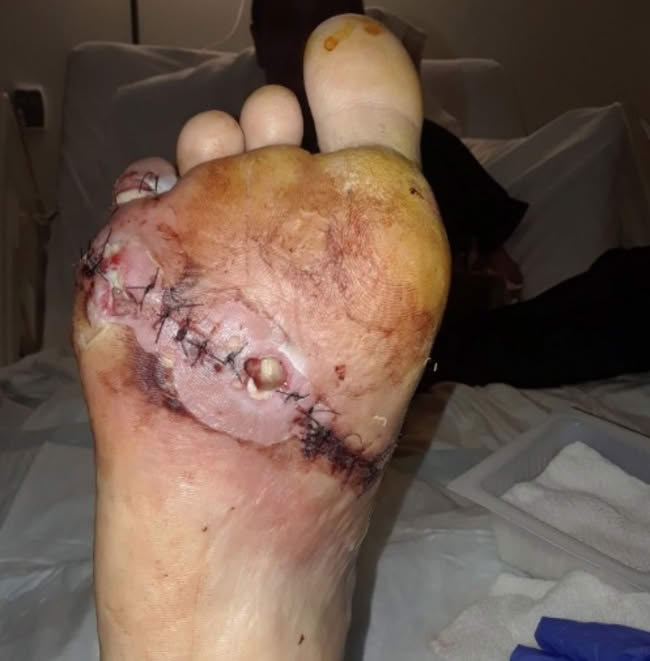
My husband was one of the top endocrinologists in this country. The disease he spent 28 years treating is the one that took him apart, piece by piece, while he followed his own protocol to the letter. His name was Dr. Richard Cahill. He ran the endocrinology department at his hospital for 16 years. He trained the fellows who ended up treating patients on the same floor where he died. I have changed the names in what I'm about to tell you. Richard's colleagues are still practicing. This could put their careers at risk, and I will not do that to people who are only guilty of reading the same textbook they were handed. He caught his own elevated A1C on a Friday in March and started the textbook protocol the same morning — the one he had written for thousands of patients. He followed every step of it for 214 days. He died of sepsis on October 28th. The infection started in a wound on his left foot that he never felt form because by then the nerves in his feet were already dead. He was 61 years old. Richard was 61 years old and felt fine. Better than fine. He still played tennis three mornings a week at the club before clinic. He still walked the dog after dinner every night. He still drove out to the lake house on weekends and spent the afternoon on the dock reading journals. He had spent 28 years watching what elevated blood sugar does to other people's bodies and he was certain — clinically, professionally, personally certain — that he would catch it in himself the moment anything started to go wrong. That is what makes what happened next so hard to write. Richard ran his own labs every quarter. He had done it since the year he lost a patient he thought he had caught in time. A 52-year-old electrician whose A1C he had reviewed six weeks before the man lost his right foot. On Friday March 14th he ran his usual panel. A1C of 7.2. Fasting glucose of 148. He came downstairs and sat at the kitchen table with the printout in his hand. Read it three times. Then he looked at me and said, very calmly: "Karen. We have a problem." I had been married to this man for 34 years. I had never heard him use that tone before. He said: "It means I have what my patients have. And I need to do exactly what I tell them to do." He went into his study and came out an hour later with a binder. CAHILL, R. — CASE FILE in his neat block letters on the front. He treated himself like a patient from that morning forward. He called Paul at the Joslin Diabetes Center, the man he had trained with in 1993. Paul said: "Richard, start the Metformin and follow the protocol. You helped write half of it." Richard took that as a compliment and a sentence at the same time. That night he drove to CVS and picked up the 500 mg Metformin. Twice daily. Came home and emptied the pantry. Three bottles of the craft root beer he drank on the dock on Saturday afternoons — his one indulgence for eleven years — bagged up and driven to the food bank the next morning. "Karen," he said. "I'm going to be the most compliant patient I've ever had." And he was. For 214 days, Richard ran the textbook protocol on himself. He took his Metformin twice daily. Never missed a dose. He wore a continuous glucose monitor on his arm and checked it forty times a day. He ate the same breakfast every morning — two scrambled eggs with spinach and a quarter avocado. I cannot eat eggs anymore. He walked four miles every morning before sunrise. He did it on the days it rained and the days it snowed. He took cinnamon capsules. He took berberine. He took chromium, alpha-lipoic acid, bitter melon extract, and a blood sugar support formula from the pharmacy shelf. Seven bottles lined up on the shelf above the coffee maker. He did everything right. He did more than right. He did what the world's foremost endocrinologist would do if the patient was the man he loved most. The patient was himself. The follow-up labs came back on August 22nd. A1C: 6.9. Fasting glucose: 139. Richard had run the textbook protocol on himself for over five months and the A1C had moved three-tenths of a point. But here is the part that made him sit at the kitchen table and not speak for a long time. The number had nudged. The symptoms had not. The heavy crash after lunch that hit him like someone had unplugged him. The mornings his hands trembled before breakfast. The feeling of never knowing which direction his body would go — foggy and dragging by three o'clock, then wide awake at two in the morning with his heart racing and his shirt damp. And the one he had not told me about. His feet had started to tingle. Not pain. A low hum, like static, that sat in his soles and the tips of his toes. He had noticed it three months in. He had not written it in the binder. He had not told Paul. He had not told me. Because he knew what it meant. He had told a thousand patients what it meant. Then he said: "Karen. I do not understand." He said: "I have seen patients fail this protocol before. But honestly, Karen, patients lie. Not on purpose." "They eat the birthday cake at the office party. They take the Metformin four days out of seven. Nobody follows a protocol 100%." He looked at the binder on the table. 312 pages by then. "Karen. I am doing what I told me to do. I am the one patient I have ever had who is following this protocol exactly. And the numbers are barely moving. And my feet are tingling." He picked up his coffee. His hand was shaking a little. "I do not understand." I did what any wife would do. I told him Paul was right. I told him the numbers would come down if they adjusted the protocol. I told him to trust it. He nodded. He increased to 1000 mg twice daily, and Paul added a second pill on top of it — Januvia, the one that pushes more insulin after meals. He kept doing everything right. Five weeks later, on a Thursday evening in early October, I heard him say my name from the study. Not loud. Not panicked. Just my name. "Karen." I walked in. He was looking down at his left foot. His sock was off. He was holding his foot in both hands the way you'd hold something fragile, turning it slowly. There was a sore on the bottom of his foot. About the size of a quarter. The skin around it was dark. The center was open. "How long has that been there?" I asked. He looked at me. And the expression on his face is something I will carry with me for the rest of my life. "I don't know," he said. "I can't feel it." The nerves in his feet were already dead. The tingling he had noticed three months earlier — that was the nerves dying. By the time the sore formed, there was nothing left to send the signal. No pain. No pressure. No warning. He put his sock back on. Slowly. The way you'd wrap something you were not ready to look at again. Neither of us said anything. His tennis shoes were by the front door — the ones he had been walking four miles in every morning. On a foot that was rotting underneath him. He drove himself to the hospital. He walked in on a foot that was infected and he did not limp because he could not feel it. The ER attending was a woman named Rachel. She had done her fellowship under Richard six years earlier. I watched her face change when she examined the wound. "Dr. Cahill. This wound is deep. The infection has been spreading for at least two weeks." "Your A1C is 6.9, which looks controlled on paper, but the small vessels feeding these nerves have narrowed down to almost nothing. Nothing is reaching this tissue. We need to admit you." Richard said: "Rachel. Culture it. Let me see the imaging." She let him see everything. Every answer confirmed what she had told him. Then he said, very quietly: "I have been running the protocol on myself for 214 days, Rachel. I have followed every single step. This is not supposed to happen." She put her hand on his shoulder. "I know, Dr. Cahill. I know you have." She had seen this before. Other patients had followed the protocol exactly. And ended up in the same chair. Richard spent 19 days in the hospital. The first seven were about the wound. Debridement. IV antibiotics. Hyperbaric oxygen. The tissue would not regenerate. The blood vessels feeding the wound were too narrowed to deliver what the tissue needed to heal. On day 8, the surgeon came in. He was a man Richard had taught ten years earlier. He sat on the edge of the bed and looked at the floor. "Dr. Cahill. The infection has not responded. The vascular damage is too extensive. We need to discuss amputation." I was standing by the window. I did not make a sound. They took his left foot on day 9. When they brought him back to the room, he was sedated. His left leg ended below the ankle in a white bandage. I looked at the bandage and I thought about the man who had played tennis three mornings a week. Who had walked four miles before sunrise. Who had spent 214 days doing everything right. The endocrinologist who had spent 28 years telling patients how to manage their blood sugar had lost his own foot to the disease he had built his career around managing. And the number on the chart had said he was almost controlled. It was after the amputation that the ICU nurse told me what nobody else would. Her name was Grace. She had been a wound care and ICU nurse for 22 years. She walked me through it on the second night after the surgery while Richard was sleeping. She told me they were running two things into his IV. She did not give me the pharmacology. Twenty-two years at the bedside had taught her to explain things by what they are for. The first one, she said, was to force his blood vessels open. I asked her why they had to be forced. She said because his own body had stopped doing it. And then she told me the thing no one in 28 years of medicine had ever put in front of my husband. She said high blood sugar is not the disease. It is the smoke. The disease is underneath it, and the meter never once looks at the disease. It only ever counts the smoke. Here is what she meant. Sugar is supposed to leave your blood. After every meal it moves out of the bloodstream and into the muscle to be burned, and it does that by passing through the walls of your blood vessels. Those vessels are the doors the sugar leaves through. And those doors have to be held open — they don't stay open on their own. They wait for an instruction to relax, and the instruction is a signal your body makes itself, a molecule it produces from what you eat. As long as that signal is strong, the doors stay open, and the sugar clears after every meal. But the body makes less of that signal every year. And in a body like Richard's, it had been draining away for a long time. Less signal, and the doors narrow. They stiffen. They begin to close. And when the doors close, two things happen at once, and together they are the whole disease. The sugar can't get out. It backs up in the blood with nowhere to go, and that backup — that is the high number. That is the 7.2 he found in March. It was never sugar he ate. It was sugar that could no longer leave. And the blood can't get in. The same narrowed doors that trap the sugar also shut the blood out of the smallest, most delicate places you own — the feet, the eyes, the kidneys, the nerves. They starve behind a door that won't open. That is why Richard never felt the wound forming on his own foot. The nerves in that foot had been starving for years, shut off from their own blood supply, dying quietly behind vessels that had closed. By the time the sore opened, there was nothing left in there to send a signal. No pain. No warning. The sugar trapped in, the blood shut out. Same closed door, both ways. That is what had been eating Richard alive for years while the number on the chart sat there looking clean. "The Metformin lowered how much sugar was in his blood," she said. "It leaned on his liver to pour less in, so the backup didn't rise as high and the meter read better. That is all it ever did. It never opened a single door. It could not." "The sugar still couldn't leave the way it was built to, and the blood still couldn't reach his foot." So the first line in his IV was a medication forcing his vessels open from the outside — doing by brute chemistry what his own lost signal was supposed to ask for. The second line was pushing blood and oxygen into tissue his body could no longer send it to on its own. I asked her why nobody had been giving him any of this for the last seven months. She said this is what the hospital does when it is already this bad. Through a line, around the clock, after the amputation. The unit had used both for years. It was not experimental. It was just not outpatient medicine. By the time it reaches a patient, the doors have been closing for years. "Metformin does not open the door," she said. "Januvia does not. Cinnamon does not. Berberine does not. Every one of them pushes on the number from one side or another while the door stays shut underneath." "You have to open the door. You have to give the body back what it needs to make that signal again, so the vessels relax, the sugar can finally leave, and the blood can finally get through." "Nothing on that shelf above your coffee maker is even trying to do that." I asked her why Richard's protocol did not include any of this. Why the man who wrote the protocol had never once mentioned a door. "Mrs. Cahill, the outpatient protocol is what the textbook says. The textbook does not say this." She paused. "It is just that the textbook does not have this in it." That sentence is still in my head. After the amputation, the infection should have cleared. It didn't. Day 12, the bacteria entered his bloodstream. Sepsis. They moved him to the ICU. Our daughter Megan flew back from Chicago. Day 14, Richard asked me if I had remembered to feed the dog. We had not had a dog in three years. The oxygen was not reaching his brain. Day 19 — October 28th — a doctor I did not know walked into the family room at 3:12 AM. "Mrs. Cahill. I am so sorry. We did everything we could." I did not cry. I sat very still and looked at my own hands. I noticed the wedding ring he had put on my finger in 1990, and that the skin underneath it had been hidden from the sun for 34 years, and that I had no idea what that skin looked like anymore. Our daughter put her head on my shoulder and made a sound I had never heard her make in all my years of being her mother. That was when I cried. It came up out of me in a way I cannot describe. I was crying because my child was making that sound and I could not fix it, and there was a man down the hall who could have fixed anything she ever brought to him, and he was not going to be there to fix this one. She looked at me with her father's eyes and said, very quietly: "Mom. They were treating Dad with what Dad taught them." I drove home. His white coat was on the back of the bedroom door. Dr. Richard Cahill, MD embroidered on the breast pocket. His supplements were still lined up on the shelf above the coffee maker. Seven bottles in a row. It is still there now. I cannot move it. If I move it, he is really gone. 34 years. And the only sound in the room was the clock on his desk. The funeral was three weeks later. Our five-year-old grandson asked me at the reception: "Grammy, when is Grandpa coming back from the hospital?" I told him Grandpa was in heaven now. He said: "Did the hospital not have what he needed?" I had to walk out of the room. After the funeral I started scrolling Facebook because there was nothing else to do with my hands. That is when I started seeing them. Dozens. Then hundreds. "My husband's A1C came back at 6.5, doctor wants to start Metformin, any advice?" "Husband's been on Metformin for three years and the numbness in his feet is getting worse." Every answer was a version of the same advice. Cut the carbs. Take cinnamon. Trust the Metformin. The number will come down. The same advice my husband gave himself. And it killed him. Some of those husbands are already dead. They just don't know it yet. I am the only widow in this country who knows this from where I am sitting. Because I am the only widow whose husband was the man writing the protocol. And if I do not tell somebody what I know now, then the system gets to keep doing it. To other people's husbands. The way it did it to mine. I read for six weeks. Medical journals. PubMed at three in the morning. I found a pharmacist at the Walgreens on Fifth Street who was patient enough to explain things to a woman who kept coming back with more questions. He became my translator between the medical journals and plain English. And everything the ICU nurse had told me checked out. The pharmacist told me to think of it like a house where every window and door has been painted shut, a little more every year, until the people inside can't get out and the air can't get in. That's what had been happening to Richard's blood vessels. The sugar couldn't leave and the blood couldn't reach his feet. The doors were closing, and the medication was watching a number while it happened. He said it plainly: "The medication kept the score. But every door in the house was nailed shut." The vessels feeding Richard's nerves — the ones the ER doctor had seen narrowed to almost nothing the moment she looked — had been closing for years, as the signal that holds them open drained away. The sugar couldn't get out through them, and the blood couldn't get in. The smallest ones went first. The feet. Then the eyes. Then whatever is next. The medication never touched any of it. Everyone was trying to push the number down. The Metformin. The Januvia they added on top. The weekly shots in every commercial — Ozempic, Mounjaro. Every one of them pushes on the backed-up sugar from one side or another. Not one of them opens a single door. Not one of them brings back the signal that was supposed to hold the doors open in the first place. He gave up everything he loved for 214 days to lower a number that was never the thing taking him apart. I went to CVS. Bought four products any doctor would recommend — cinnamon capsules, berberine, chromium, and a blood sugar support complex that said "glucose management" on the label. Took all four every morning for three weeks. Drove to a walk-in lab. Fasting glucose: 117. Almost exactly where it had been. Three weeks. Four bottles. Nothing moved. I called Richard's senior partner, Linda Nakamura. Mayo-trained. She had been at Richard's bedside on day 14. She came to the house that Saturday. I showed her the four bottles and the lab printout. She looked at them for a long moment. "Karen. The cinnamon does nothing for the doors. The berberine manages the number — the same job as the pill, in a different bottle." "The chromium research is mixed at best. And the blood sugar support complex — the alpha-lipoic acid, the bitter melon — those all chase the number too." "Every bottle on this counter is trying to lower the sugar in the blood. Not one of them is trying to open the door the sugar is supposed to leave through." "They are all working on the flood. Not one is working on the gate." "Somebody tried to aim at the real problem with that bottle. But nothing in it opens a door. And nothing in it even tries to bring back the signal that holds them open." Then she said: "The whole country is fighting a number, Karen. The number was never the enemy. The number is a shadow on the wall — it is the backup you can see. The thing casting the shadow, the closed door underneath it, is what takes your feet." She paused. "Everyone is trying to force the number down. Nobody is opening the door it's backing up behind." "Open the door, Karen. Give the vessels back the signal and let them open on their own — so the sugar leaves and the blood comes back." "That is what Richard needed. That is what the textbook never gave him." I asked her why she had not told Richard. "Karen. Richard and I had this conversation in 2019. I brought it up at our partners' meeting." "He was the one who said the evidence was not strong enough to change practice. He was right by the standard the textbook uses. He was wrong by the standard his own body needed." "I did not push it. I should have." She started crying. Then she said: "Karen." "If you can find something that actually opens the doors — that gives the body back the signal it stopped making, so the vessels relax and the sugar can finally leave and the blood can finally reach the feet again — in a form the body can really use, you would have something real." "If you find it, you tell me." A week later I was on a medical research forum at 3 AM. Richard's password was still saved in his browser. A retired endocrinologist in Tucson — 26 years running his department, same as Richard — had posted about his own blood sugar. He had run the textbook protocol on himself. His A1C came down to 6.2. Beautiful number. Then the numbness started in his feet eight months in. Sound familiar? He had gone back and read the research he had spent his career filing away as not strong enough to change practice. Decades of published studies on the one thing his own body had stopped making — and the one root that carries the raw material for it in more concentration than any food on earth. He wrote: "What closes a diabetic's doors has a documented answer, and it is not another drug to push the number down." "Your blood vessels are held open by nitric oxide — the signal your body makes to tell them to relax. Lose it, and the doors narrow and close." "And there is one food that carries the raw material to make it in more concentration than anything else you can eat: dietary nitrate." "Give the body the nitrate, and it makes the signal again. The vessels relax. The doors come open." "The sugar that had nowhere to go finally clears out of the blood — the number comes down because the sugar is leaving now, not because something forced it down. And the blood starts reaching the feet and the eyes again." "One closed door, and one root that opens it. But not the beetroot you are picturing." "The beet in your grocery store has been bred for over a century for one trait: sugar. Sweeter every season, until the nitrate that made it medicine was bred down to almost nothing." "If you are diabetic, sit with that for a moment. They turned the one plant that could have opened your doors into candy." "The old heirloom strains still carry close to ten times the nitrate — but the label just says 'beet,' so nobody knows to ask." "And even the right beet dies in processing. Heat destroys the nitrate. Spray-drying — the fast, cheap way every commodity supplement is made — cooks it to nothing before the bottle is ever sealed." "What is left is brown dust. The studies used cold-processed heirloom beetroot at 1,300 milligrams, and it comes out of the capsule deep crimson." "If the powder is brown, the nitrate is gone, and so is everything you were hoping it would do." Then he pointed at a population. Penn State has been studying the Amish of Lancaster County, Pennsylvania for years — farm families still growing and eating the old crops nobody ever bred for sugar. Their cardiovascular death rate is 74 percent lower than the rest of Pennsylvania. Cardiovascular disease. The thing that kills more diabetics than anything else on earth. And then the line I read four times: "The numbness in my feet has retreated. Not completely. But for the first time in two years, I can feel the cold tile on my bathroom floor in the morning. I did not realize how much I had lost until some of it came back." I made myself a checklist. Four things the right formula had to do. One — actually open the doors. Not push the number from the side like everything else does. Give the body back the nitrate it turns into the signal, so the vessels relax, the sugar leaves, and the blood comes back. The one thing nothing on that shelf even attempted. Two — the heirloom strain. Not the sugar-bred grocery beet. The old line carries close to ten times the nitrate. If they cannot tell you the strain, it is the candy beet. Three — cold-processed and alive. Never spray-dried, never high heat. Crimson, not brown. And at the dose from the studies — 1,300 milligrams per capsule, not a pinch buried in a "proprietary blend." Four — proof. Third-party tested, with a Certificate of Analysis published for anyone to read. Trust the lab, not the reviews. Anyone can buy five stars. Nobody can fake a number on a lab sheet. One product met all four. Rosabella. Heirloom Blutwurzel beetroot — the old seed line, the name means "blood root" — grown by Amish families in Lancaster County for six generations. The same county from the Penn State study. Hand-harvested after the first frost. Shade-dried at low temperature so the nitrate arrives crimson and alive. 1,300 milligrams per capsule. Third-party tested, Certificate of Analysis published. 90-day money-back guarantee. I almost did not order it. After Richard's seven-bottle stack. After the four bottles from CVS. After 34 years of watching my husband trust the system that took his foot and then his life. I made a list. My brother in Pittsburgh, A1C of 6.6. Paul at Joslin. My daughter Megan in Chicago, fasting glucose "a little high." Myself. I ordered six bottles. Buy three, get three free. The box arrived on a Thursday. I opened it at the kitchen table. Same table. Before I swallowed anything, I did what the checklist had taught me. I twisted one capsule open over a white saucer. The powder was deep crimson — almost violet — and when a drop of water touched it, it bled red across the dish like a fresh cut. Not brown. Not dust. Alive. I took two capsules with a glass of water. Then I sat in Richard's chair and waited. Seventeen minutes. I know because the clock on his desk was the only sound in the room. Something shifted. The low-grade fog I had been living inside since October — the heaviness I had mistaken for grief — did not lift gradually. It went quiet. Like someone turned down a dial I had not known was there. I had taken four products from CVS every morning for three weeks and had not felt this. Not once. Not close. The three o'clock wall I had been hitting every afternoon — the same wall I had watched Richard hit for two years and neither of us had named — was gone by week two. Four weeks later I went back to the walk-in lab. Fasting glucose: 102. Down from 119. The numbers had moved more in four weeks than Richard's had in 214 days — and I had not taken a single thing that forces sugar down. Nothing pushed that number. The doors were opening, and the sugar was finally leaving. I sent the other five bottles out the next morning. Paul called first. He had been taking two capsules with a glass of water every morning before rounds at Joslin. "Karen. My own A1C had been flagged for three years. I did not tell Richard. I had been on low-dose Metformin and the numbness in my feet had started creeping in six months ago." "Karen. I can feel the cold tile on my bathroom floor in the morning again." "I was examining a patient last week — checking pedal pulses, something I have done ten thousand times — and my fingers reported back clearly for the first time in two years." "I had stopped trusting my own hands and I had not even admitted it to myself." Then he said the part I need you to hear the way an endocrinologist hears it. "Karen. I have spent thirty years telling patients there is exactly one way to move an A1C. You force the sugar down. A drug. A crash diet. Something pushing on the number from the outside." "That is the only mechanism there is, as far as the textbook is concerned. I did not add a drug. I did not change my diet." "I changed one thing — those capsules — and this morning I ran my own panel." "My A1C has dropped a full point. My fasting glucose is in normal range for the first time since I started tracking it." "I ran the panel twice, Karen. I did not believe my own lab the first time — because by everything I have ever taught, that number had no business moving. Nothing was forcing it down." Then he was quiet for a moment. "Nerves that have gone quiet do not come back — that is what we teach, and this morning I stood on a bathroom floor I could feel. But even that, Karen, I can tell myself a story about. Blood returning, circulation improving." "The number is the part I cannot argue away. An A1C does not fall because you hoped. It falls because sugar is leaving the blood." "And I did nothing to force it out. Something opened the door." "Fourteen weeks. I did not change one other thing. I am not saying it was the capsules alone. I am saying they were the only thing I changed." "And my own lab is telling me something I cannot explain any other way." Then Paul started crying. "Karen. I was on the phone with Richard the night he found his A1C. I told him to follow the protocol." "And he followed it, and it took his foot, and then it took him. He died because we all read the same book and none of us questioned it." My daughter Megan in Chicago had been feeling the afternoon crash for two years. Her doctor called it stress. She started taking two capsules every morning in early May. By mid-June the crash was gone. Not reduced. Gone. The first morning she noticed the difference, she was in court for a deposition. Three hours on her feet, total concentration. She walked out and realized she was not searching for the nearest coffee. She was just done. And fine. And clear. Her fasting glucose came back in normal range for the first time in three years. My brother in Pittsburgh — the machinist with the A1C of 6.6 — noticed his hands first. He had been fumbling small parts for a year. Three weeks on Rosabella, he reached into a parts tray and his fingers found what they were looking for by feel, in the dark, the way they used to. He stood at his station for a long time that afternoon just looking at his hands. Every one of these people is going to live with their feet and their hands and their minds intact. What I am feeling is that I spent 34 years in a house with one of the top endocrinologists in this country and neither of us thought to look outside the book he was handed. Any Sunday afternoon in the last ten years I could have asked him one question about the vessels — about what actually holds them open. I did not. He did not. And he died. And that is why I am writing this to you. Because you still have time. Your husband is still alive. Your brother is still alive. Your father is still alive. The question I did not ask until it was too late — you can ask it tonight. I am not a doctor. I am not a scientist. I am a 59-year-old widow sitting in my husband's chair at 2 in the morning because I cannot stop thinking about how many people are living with that afternoon crash and those numb feet and that fog and being told it is stress or age or just how it is. One thing I want to be clear about. Rosabella is not a replacement for anything your doctor has prescribed. If you are on Metformin, stay on it. What Rosabella does is the one thing the protocol never did — it opens the doors. It gives your vessels back the signal they stopped making, so the sugar can finally leave and the blood can finally get through to the feet and the eyes that have been shut off from it. It works alongside what you are already doing. Not instead of it. One closed door, doing two kinds of harm. One beet that opens it. That is the whole answer. Richard used to say something at the end of every consultation. He said it to thousands of patients over 28 years. "The best time to have caught this was ten years ago. The second best time is right now." I wish somebody had told us before March 14th. Before the 214 days of eggs and spinach and avocado. Before the seven bottles on the shelf. Before October 28th. I cannot go back. Richard cannot come back. His white coat is still on the back of the bedroom door and it is going to stay there. But you can still go forward. Everything I have told you about Rosabella — the heirloom Blutwurzel strain, the ten-times concentration of nitrate, the cold processing, the 1,300 milligrams, the published Certificate of Analysis — you can see for yourself right now. Rosabella sells directly from their own website. It is the only place the real heirloom crop is sold. This is the product Paul keeps on his desk at Joslin. This is the product my daughter takes every morning. Buy three, get three free. That was the offer. It is still there. I want you to look at it. Not for me. For whoever you would leave behind. Right now is what you have. — Karen Cahill, age 59, Ann Arbor MI P.S. The white coat is still on the back of the bedroom door. I still cannot move it. Every morning I walk past it and for one second I forget. $112,000 in hospital bills. $14,600 for the funeral. A prosthetic fitting we never got to. Because he did not survive the sepsis. 214 days of him giving up everything for a protocol that watched a number while his own doors closed and the blood stopped reaching his foot. And two small capsules you take with your coffee every morning — ten seconds, done — that cost less than what Richard used to spend on lunch at the hospital cafeteria in a week. If someone had told us about this in March, he would be alive right now. Walking on both feet. Please. Do not end up here. Do not let someone you love end up here. Right now, Rosabella is running a buy 3 get 3 free offer. Six bottles. That is six months of the one thing that opens the doors — the nitrate your body turns into the signal that reopens your vessels, so the sugar leaves and the blood comes back. If you do not notice a difference, send the bottles back — empty or full — within 90 days. Every penny comes back. One more thing. Rosabella is not on Amazon. It is not in stores. One heirloom strain, a handful of Amish families, one harvest a year after the first frost — that cannot be mass-produced, and they do not try. It is why the cheap bottles are cheap: sugar-bred grocery beets, spray-dried at high heat, dead before they reach the warehouse. If you see beetroot capsules on Amazon for $15, twist one open over a white saucer. The powder will be brown. The concentration is the whole point. The only place the actual crop is sold is directly from Rosabella. P.P.S. You do not need to finish reading this to start. Two capsules with a tall glass of water first thing tomorrow morning. Then set a timer for twenty minutes. The first thing most people notice is not their blood sugar. It is how they feel. Not a jolt. Not a caffeine rush. A quiet shift. Like tuning a radio from static to signal. That is the signal coming back — blood beginning to move where it has not moved properly in years, through doors that are starting to open. Something your Metformin has never done for you and never will. The blood sugar benefit takes weeks to show up on bloodwork. But that first morning tells you whether the compounds are alive and reaching the problem. I took four products from CVS every morning for three weeks and felt nothing. This was not that. If you have taken supplements before and felt nothing, this is different. You will know. Paul noticed the tile on his bathroom floor first — feeling returning to feet he had written off. My daughter noticed the three o'clock crash disappeared. My brother noticed his fingers found parts by feel again. Your body will tell you something is different before your next panel does. But you have to start. P.P.P.S. I sent a bottle to a woman at my church whose husband has been on Metformin for nine years. His feet went numb three years ago. His doctor said it was neuropathy. "Common with the diabetes." That was the word he used. Common. Manageable. The same words they used with Richard. She called me six weeks later. Her husband had been standing in the kitchen that morning and looked down at his feet and said: "Something is different." She asked him what he meant. He said: "I can feel the cold." He had not felt the kitchen floor in two years. She started crying on the phone. I started crying with her. Not because of the floor. Because of what it meant. His nerves were not dead. They were waking back up. The blood was reaching them again, through doors that had finally come open. I do not know if he will get all the way back. I do not know if the damage reverses completely. But I know he is feeling things again. And I know his doctor never made that happen. P.P.P.P.S. I need to say this directly to the women reading this. If your husband is the one with the numbers and the doctor pushing Metformin and you are watching him lose feeling in his feet the way I watched Richard — do not wait. He will not find this on his own. He will follow the textbook the way Richard followed it. Put the capsules next to his coffee. Tell him. "Just take them. For me." That is the sentence that would have saved Richard's foot and his life. But if it is YOUR numbers climbing, if it is YOUR feet going numb, if it is YOUR afternoons vanishing into fog — this is not a men's product. The closed doors do not check. The trapped sugar does not check. The nerve damage does not check. I am writing this at 2 AM because nobody wrote it for me. Do not wait for someone to write it for you. P.P.P.P.P.S. Rosabella is a small company and they sell out. One harvest a year — when a season's crop is gone, it is gone until the next frost. I tried to reorder after my second month and had to wait. Paul keeps three bottles at his place now. The buy 3 get 3 free deal brings it down to about the cost of a coffee a day. If your bloodwork is coming up in 30 to 60 days, check availability now. Every week you wait is another week those doors stay closed that did not need to. Do not forget their 90-day money-back guarantee.
Support stamina and heart health every day
LEARN MORELike this ad? Make it yours.
Crush rebuilds this exact creative around your product — your brand, your colors, your offer — in about a minute.