
Inactive· since May 12, 2026
- 64
- days it ran
- 0
- relaunches
Ad copy
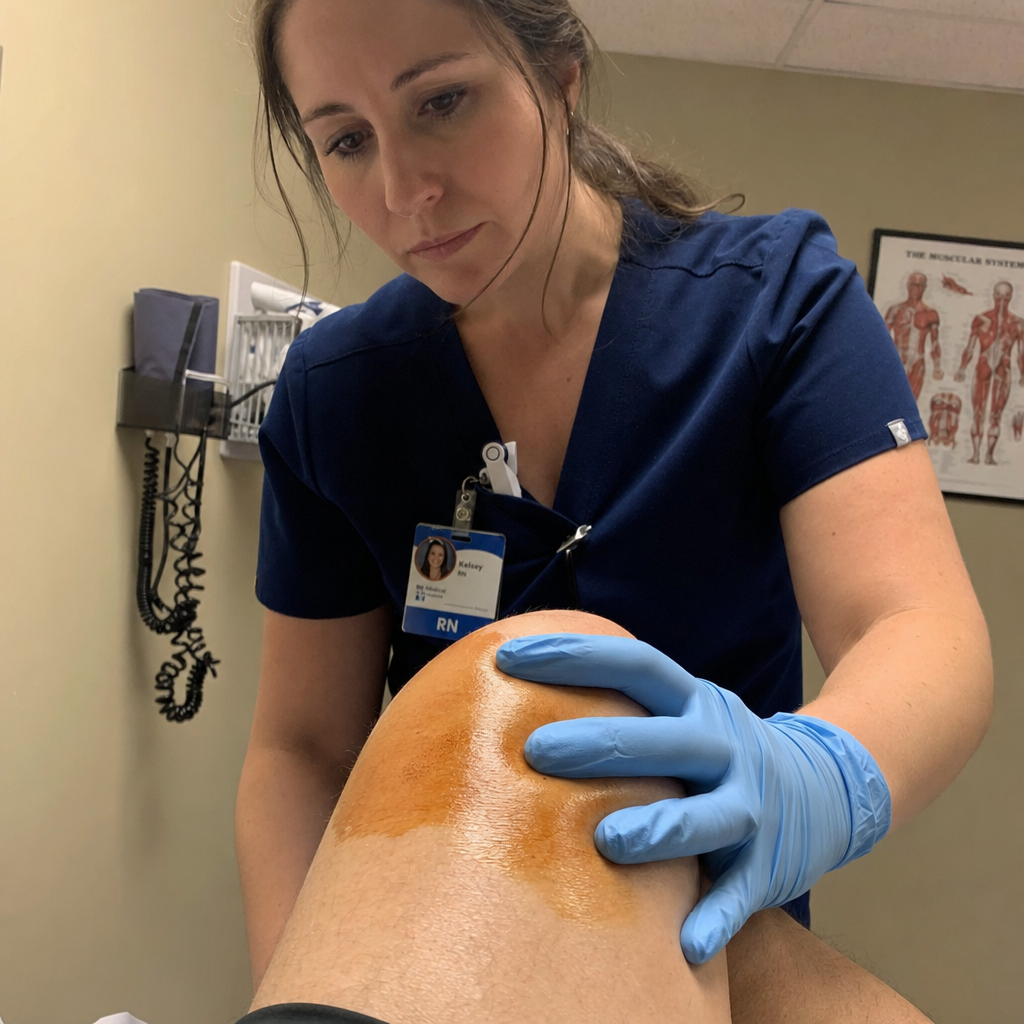
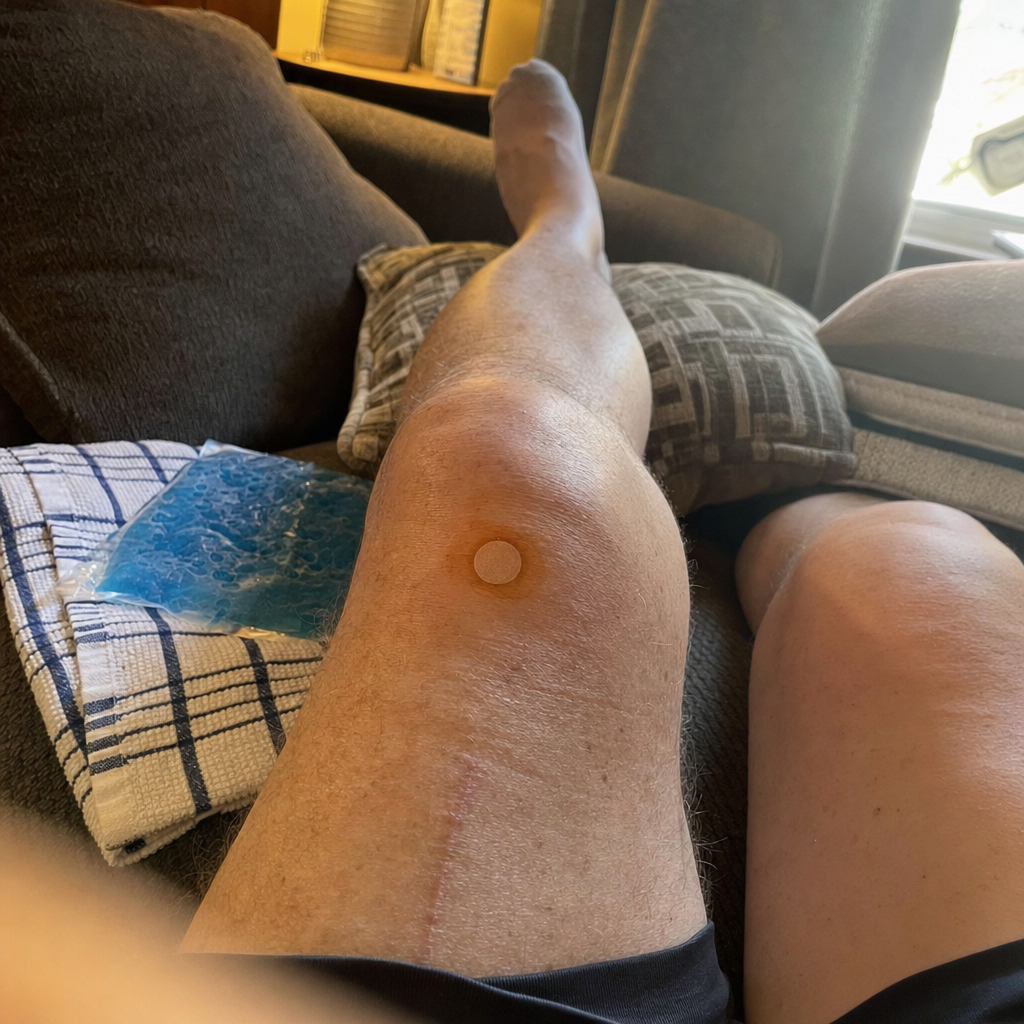
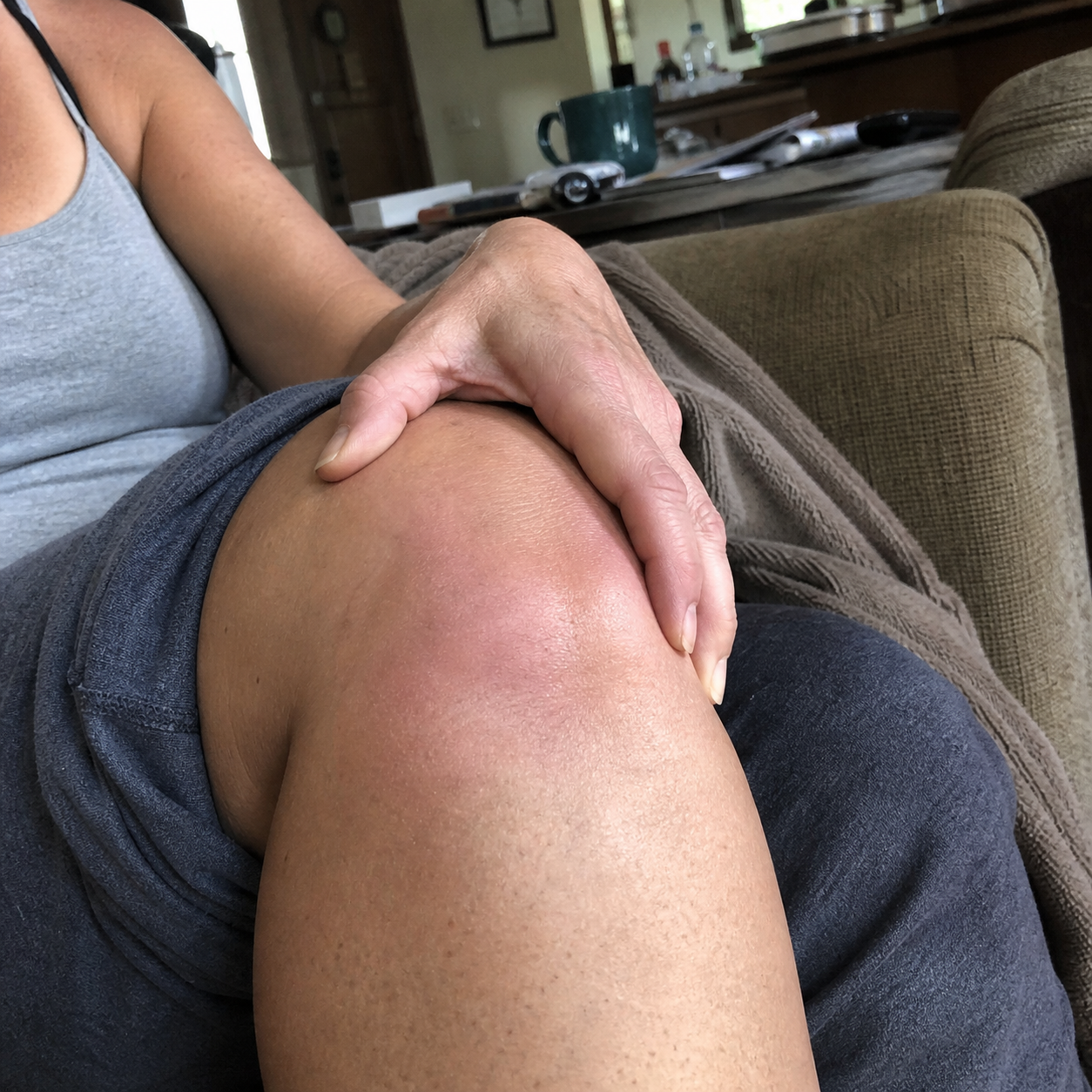
I let my doctor inject my knees with eight cortisone shots in 3 years. Then he told me my next step was a knee replacement. And by the end of this, you're gonna be pissed. Because there are three things happening right now: One — Your knees are giving you a countdown to procedures you don't want. Two — The medical system is pushing you toward shots and surgery instead of fixing the root cause. And three — There's a multi-billion-dollar orthopedic industry that profits every single day you stay trapped in the cycle. So let me tell you what happened with my knees. Because my story is gonna open your eyes to how messed up this really is. For three years — and I mean three full years — I was on the cortisone treadmill. My orthopedist said the shots were "the standard treatment" for chronic knee pain at my age. Said I'd likely need them every three to four months but that they were "well-tolerated and effective for most patients." The pain didn't stop. That's the part nobody tells you. I'd get the shots, get a few weeks of decent relief on a good cycle, and the pain would creep right back. First it was a dull ache when I climbed stairs. Then a grab in the joint when I stood up from sitting too long. Then a hitch in my walk by the time I reached the end of the parking lot. And every round, the bottom dropped a little further. Shot two: Both knees ballooned up by the second day. The on-call nurse called it a "cortisone flare." Use ice, wait it out. The flare calmed down. The base pain didn't. Shot four: Right knee buckled walking down the steps in my own house. I went down hard. My wife had to help me up. The orthopedic PA looked at my chart and brought up the word "scope" for the first time. Shot six: I'd lost most of the muscle in both legs because I'd been too sore to walk for the better part of a year. The PA said "partial knee replacement" out loud and the room went quiet. Shot eight: The bad one. I'd had cortisone go in rough before, but this one was different. They injected both knees at the same appointment — outer side, above the kneecap, the entry point they always used. I felt the painful pressure during the injection. Doctor said it was normal. I got to my car. Made it home. Sat down on the couch. An hour later, when I tried to stand up to use the bathroom, my right knee gave out under me completely. I went down on the living room floor. The pain was unlike anything I'd had before — sharp, deep, electrical. I couldn't bear any weight on it. I had to drag myself across the carpet. By the next morning, both knees had ballooned to the point I couldn't straighten either leg. My wife dug crutches out of the garage. I couldn't make it to the kitchen. I called the doctor's office. The on-call nurse told me it sounded like a flare. "Sometimes happens. Should clear up in a couple of days." It didn't clear up in a couple of days. Or four. Or six. It took twelve days before I could put weight on either knee without a crutch. The shot that was supposed to fix me left me unable to walk for nearly two weeks. And every year, the imaging — the X-rays, the MRIs — told a darker story. Year one: cartilage thinning on both sides. PA said monitor it. Year two: muscle loss accelerating. Joints tracking wrong on every step. Couldn't kneel. Couldn't squat to pull weeds in the garden. Year three: bone-on-bone changes starting to show up on the imaging. Doctor said partial knee replacement was likely within the next 18 months. Started talking about microfracture procedures, scopes, and the possibility of a full TKR before I turned 60. My wife said it was like watching me slowly disappear into a body that didn't move right anymore. And here's the part that made me sick to my stomach when I finally connected the dots. They had me on that treadmill for THREE YEARS. Three years of shots that didn't address what was actually wrong. Three years of watching my mobility go in the wrong direction on every follow-up. Three years of appointments where they'd schedule the next injection, write the next PT referral, tell me to ice and rest — but not once, not ONE TIME, did anyone say "Hey, maybe we should look at WHAT'S CAUSING the inflammation in your joints instead of just numbing it every four months forever." Fast forward to eight months ago. I'm sitting in the follow-up after that twelfth-day-on-crutches shot. My orthopedist pulled up my chart, looked at the imaging, and said the words I'd been dreading every appointment since this started. "I think it's time we start planning for the partial replacement." I felt the blood drain out of my face. He kept talking. Something about cartilage loss and joint stability and how the longer we wait, the harder the recovery. I heard maybe half of it. Because I kept seeing my own legs in the surgical-recovery videos I'd already watched at 2 a.m. The brace. The walker. The months of rehab. The forum posts from people who never got back to normal. I drove home in silence. Sat in the driveway for twenty minutes. I did not schedule the surgery. I did everything else they told me to do. Started physical therapy three times a week. Cut out the foods my PT said triggered inflammation — fried stuff, alcohol, refined sugar. Started swimming on the days I couldn't walk. Lost twelve pounds. Did the leg-strengthening protocol every single morning. Went back three months later. The imaging? Same. The doctor pulled up the films. Didn't look surprised. "Diet and exercise help, but with cartilage loss like yours, we really do need to plan the procedure. Every year you wait, you lose more bone." He pulled out his calendar. I looked at it and felt something rise in my chest. Not just fear. Rage. Because I'd done everything right. Everything they told me. And the only answer they had was the exact same trajectory that had taken three years of my mobility — and now wanted to take my actual knee. So I started asking questions nobody wanted me to ask. Why does cortisone get prescribed as routine treatment if it doesn't fix the underlying inflammation for most people? Why does the medical system treat joint pain like something you patch with shots until you need a new joint — instead of something you address at the source? Why does nobody talk about WHY some people's joints chronically inflame — and what you can actually do about the underlying mechanism? I told my doctor I wanted more time. He was not happy about it. Gave me a speech about cartilage loss and joint stability and how every year I delayed made surgical outcomes worse. But I stood my ground. More time. And I went down a rabbit hole. A deep one. I started reading everything. Clinical studies. Research papers. Inflammation journals. Forums full of people who'd avoided knee replacement, sometimes for years, without — or in spite of — what their doctors recommended. Every mainstream medical site gave me the same answers: rest, ice, PT, cortisone, lose weight, surgery if those don't work. But then I found something buried in a research summary that I'd never seen discussed anywhere. Anthocyanins. Not the word you hear in your orthopedist's office. Not what they taught us in health class. But here's what stopped me cold: Anthocyanins — specific compounds found in tart cherries — had been studied in peer-reviewed research at Oregon Health & Science University, Baylor Research Institute, and Michigan State. And the results showed significant, measurable reductions in joint pain, inflammation markers, and the inflammatory cytokines that drive cartilage breakdown. Not small effects. Not statistical noise. Real, meaningful reductions in the studies that used the right concentration of these compounds. And here's the mechanism that changed everything for me. Your joints swell and hurt when your body produces too many inflammation chemicals — more than it can handle. Most treatments — including cortisone — shut the whole process down at once. Powerfully. Bluntly. With side effects that build up every time you take another dose. But anthocyanins work differently. They calm the same inflammation cortisone targets — but slowly, at a level your body can handle instead of being shocked into it. Working with your body instead of overriding it. That distinction matters. Because when you support a natural process instead of chemically suppressing it, your body isn't fighting against the intervention. It's working with it. No flares. No rebound inflammation. No muscle loss from being too sore to move. Now here's where my blood started to boil. The research existed. Real universities. Real clinical data. Real results. But you will never hear your orthopedic surgeon mention it. Why? You can't patent a tart cherry. There's no money in telling patients their body might respond to the right concentration of a natural compound. There IS money in a $40,000 partial knee replacement. There IS money in a quarterly cortisone shot for life. There IS money in keeping you on the treadmill that ends at surgery. See how that works? So I started looking for tart cherry supplements. And here's where I hit a wall. Most tart cherry supplements are garbage. The anthocyanin content is never verified — you're basically paying for cherry-flavored powder with no idea if the compounds that matter are even in there. You're taking it and hoping it works, but you have no idea what you're actually getting. I picked the two highest-rated ones and ordered both. Took them every single day. Never missed a dose. Six weeks later: joints still aching every morning. Stairs still a problem. Eight weeks: same. I was furious. And scared. Because my next ortho appointment was coming. And I knew what was waiting for me there. I almost gave up. Almost called the surgical scheduler. But then I found a forum thread where someone mentioned they'd gotten their knee pain under control using a specific tart cherry supplement — one that was cold-extracted instead of heat-processed. Said it was the only brand where they could actually verify the anthocyanin content. The brand was GoodGrove. The product was GoodGrove Tart Cherry. So I went to their website, ready to be disappointed the way I had been with everything else I'd tried. I wasn't. They laid out exactly what made them different from everything else I'd tried: Cold-extracted. Not heat-processed. The method that preserves anthocyanins instead of destroying them before the product reaches you. Verified at 5% anthocyanins — every batch tested. Most tart cherry supplements never measure their anthocyanin content at all. They don't put a number on the label because they don't know what's actually in there. Theirs could be 4%, 1%, or basically zero. You'd never find out. GoodGrove tests every batch and publishes the exact number. Third-party tested. Certificate of Analysis published. Not hidden behind a customer service email. Not vague claims about "quality." Actual lab results, available, verifiable. Exact anthocyanin content. Heavy metal screening. Microbial testing. And here's what really got me: they offer a 90-day money back guarantee. If you don't notice a difference within 90 days, just reach out and they'll refund you. No questions asked. That's how confident they are in what they're selling. So I ordered it. I'm not going to pretend I wasn't skeptical. Week one: Joints still aching when I got out of bed. I told myself to give it time. Week two: Something shifted. The morning stiffness — that grinding tightness I'd learned to ignore while putting on socks — felt different. Lighter. The first few steps out of bed didn't make me wince. I didn't want to get excited. Could have been placebo. But I noticed. Week three: Range of motion better. I bent down to tie my shoe without leaning on the dresser. First time in months I'd done that without thinking about it. Week four: Stood at the kitchen counter making dinner for forty minutes. No hot, swollen feeling at the back of either knee. I called my brother, who'd been following my situation since the bad shot. Told him I'd been on my feet for forty minutes. Silence on the other end of the phone for a long moment. "Are you serious?" I was serious. Week six: The pain on stairs had dropped enough that I started allowing myself to believe this was real. My wife noticed I'd stopped unconsciously bracing the railing on the way down. She didn't say anything. Just watched me move around the house like she was looking for something to confirm. Week eight: I walked the dog for an hour on uneven trail terrain. No flare. No swelling. Joints felt like they belonged to a younger version of me. I went back to my orthopedist. He ran the exam. Looked at the new imaging. The inflammation markers were down. The joints were stable. The cartilage loss hadn't progressed. He pulled up my history. Looked at the progression. Looked at me. "Whatever you've been doing — keep doing it. We're going to hold off on the replacement." Hold off on the replacement. I sat in my car in the parking lot and called my wife. She cried. I'm not ashamed to say I did too. That was seven months ago. My knees this morning? Still moving. Still no surgery. Still no cortisone. I'm not who I was eight months ago. Last month I hiked with my son. Four hours. Rocky terrain, steep elevation changes, the kind of trail I'd written off as something my knees would never tolerate again. Finished strong. No swelling. No aftermath. He looked at me at the top and said, "Dad — we doing this every month?" And I said yes. If you're reading this, you know why it's hitting you the way it is. You've already had at least one cortisone shot that didn't help — or worse, left you in a flare you couldn't walk through. Your orthopedist has said the words "scope" or "replacement" or "next round of shots." You've Googled the recovery timelines at 2 AM — the months of brace, the percentage of people who never get back to normal, the forum posts that made your chest tighten. You've tried other tart cherry supplements. Glucosamine. Turmeric. MSM. Nothing moved the needle. And you're running out of time before your surgeon's office calls. Here's what I want you to know. I was two supplements deep, on a cane, with a surgery date being pushed at every appointment and a doctor losing patience with me. The difference wasn't tart cherry. I'd been taking tart cherry. The difference was concentration. Extraction method. The actual anthocyanin content your body needs to do what the clinical studies showed. The supplements that failed me weren't lying, exactly. They had tart cherry in them. But the heat processing had gutted the compounds that actually matter before the product ever reached me. GoodGrove is different. Cold-extracted. Verified at 5% anthocyanins on every batch. Third-party tested with published results. Try it for 90 days. Pay attention to your morning stiffness, your stairs, your ability to stand without bracing yourself. If you don't see the inflammation shift — if you don't feel the joints move better — contact them for a full refund. You risk nothing. Because the medical system isn't going to offer you this. There's no profit in it for them. They'll keep that surgical calendar ready and tell you the procedure is safe while your mobility quietly slips away. You have to find this yourself. I did. Just barely in time. Go get it. And use the healthy joints you get back to finally stop hurting and start moving again. https://trygoodgrove.com/cherry
Like this ad? Make it yours.
Crush rebuilds this exact creative around your product — your brand, your colors, your offer — in about a minute.