
Inactive· since Aug 15, 2026
- 5
- days it ran
- 0
- relaunches
Ad copy
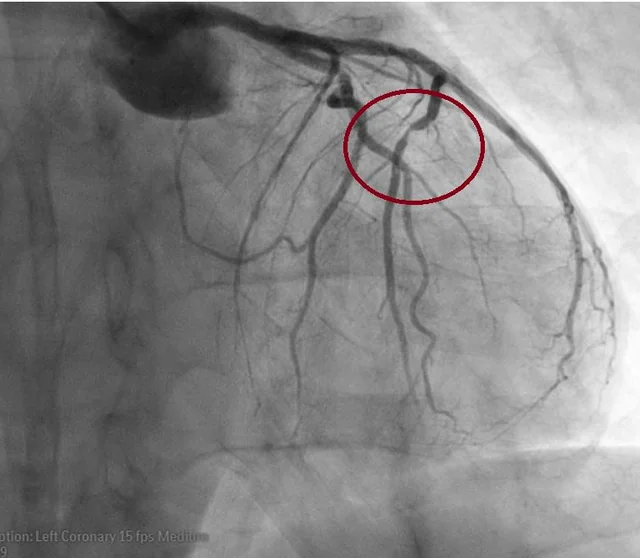
I've done over 2,400 coronary bypass operations to not share this with you. If you are on two or more blood pressure medications right now, I need to tell you something your primary care doctor has never told you. I've operated on 2,400+ chests in 18 years as a cardiothoracic surgeon. And when a man walks into his PCP's office already on lisinopril plus amlodipine, or on losartan plus hydrochlorothiazide, or on a triple stack with metoprolol added, I already know what his coronary anatomy looks like six to ten years before he ever gets crushing chest pain or needs my scalpel. Diffuse multi-vessel disease. Left anterior descending narrowing. Circumflex plaque. The same arterial disease driving his stubborn blood pressure is quietly building the exact anatomy that will put him on my table. I'm Dr. James Whitmore. I'm a board-certified cardiothoracic surgeon. And when my own blood pressure started climbing at 52 despite a clean diet and thirty minutes on the bike five days a week, I knew something PCPs never tell their patients. Your resistant hypertension isn't a medication problem. It's a vascular emergency happening system-wide. I have been operating on chests for 18 years. I have opened thousands of them. Thousands where the bypass was necessary, where the coronaries were so diseased that stents wouldn't hold and the only remaining option was harvesting arteries from the chest wall and the leg and rerouting the entire cardiac blood supply around the blockages. And I have read the outpatient charts of every one of those men before I met them. The pattern is not subtle. It is not occasional. It is 87 percent of my bypass patients over the last decade. They were on two or more antihypertensives at the time they arrived at my hospital. Their PCP had been adjusting their medications for eight to twelve years. The stack had grown. Lisinopril at 40, add amlodipine 5, then 10, then add hydrochlorothiazide, then swap lisinopril for losartan, then add metoprolol when the heart rate climbed. Every appointment note read the same. "BP managed. Continue current regimen. Follow up in six months." The 58-year-old who was on lisinopril 40mg plus amlodipine 10mg for nine years. His cuff readings in his PCP's office looked acceptable. 138 over 88 most visits. Some visits 132 over 82. "Managed." He came into my ER with crushing chest pain on a Tuesday afternoon. Emergency angiogram showed 90 percent LAD occlusion, 75 percent circumflex, and diffuse right coronary disease. Triple bypass on Thursday. He survived. He is on eight medications now for the rest of his life. The 62-year-old on losartan plus HCTZ plus atenolol for eleven years. His PCP had been adjusting the doses every six months. His cuff readings had drifted from 135 over 85 in year one to 148 over 92 by year ten despite the medication increases. His PCP called it "managed resistant hypertension." He came in with a myocardial infarction eight months later. Quadruple bypass. He lives with his daughter now because he cannot climb the stairs to his own bedroom. The 65-year-old on amlodipine 10mg plus lisinopril 40mg plus HCTZ 25mg for fourteen years. His cuff had never gone below 140 over 90 on the triple stack. His PCP had been trying to "get compliance up." I did his bypass three years ago. His coronaries were the worst I had seen that year. Every major vessel had significant disease. I read the outpatient notes on all of these men before I met them. Nobody had told any of them that the medications were not treating their disease. Nobody had told them that a cuff reading of 138 over 88 on two medications is not the same thing as a cuff reading of 138 over 88 in an untreated patient. The first is a diseased artery with chemical compensation. The second is an artery that still has some function. My own blood pressure started drifting at 52. Clean diet. Thirty minutes on the stationary bike five days a week. Normal weight. Normal fasting glucose. Cuff readings crept up from 122 over 78 in my mid-forties to 138 over 86 by 52. My PCP wanted to start me on lisinopril. I told him I needed to think about it. I have operated on thousands of men who were on lisinopril for a decade and whose coronaries looked like the inside of a rusted pipe by the time they got to me. Lisinopril did not stop the disease. It moved the cuff number. The cuff number is what my PCP was measuring. It is not what I was going to be operating on ten years from now. I went back to my office that night and started reading peer-reviewed literature I had not read since fellowship. November 3rd. 10:47 PM. I found a paper on capsaicin and TRPV1 receptor activation in vascular endothelium. The receptor was in the lining of every artery I had ever operated on. Every coronary. Every internal mammary I had harvested. Every saphenous vein I had reversed for a bypass conduit. It sat in the endothelium, and when activated by capsaicin, it triggered sustained nitric oxide release, restored endothelial function, and reduced the chronic vascular inflammation that drove resistant hypertension in the first place. David Julius at UCSF had won the Nobel Prize in Physiology or Medicine in 2021 for the discovery. The mechanism sat outside the pathways every antihypertensive I had watched fail was targeting. It was upstream of them. I ordered a properly formulated capsaicin supplement that night. The clinical dose in the peer-reviewed research was 3 milligrams of standardized capsaicin daily delivered in oil for absorption. What I learned during that search is that most cayenne pepper products on the market are dry powder capsules and functionally useless because capsaicin is destroyed in stomach acid unless it is dissolved in oil first. The product I settled on was Aurivita Capsaicin Power. 3mg of pharmaceutical-grade capsaicin per softgel dissolved in cold-pressed avocado oil, with BioPerine for absorption enhancement, plus eleven additional cardiovascular ingredients including hawthorn, beetroot, K2 for arterial calcium redirection, D3, berberine, cinnamon, curcumin, Korean Red Ginseng, and stinging nettle. I started November 4th. Three softgels every morning with breakfast. Warmth in my chest within twenty minutes of the first dose — that is TRPV1 activating. November 18th. Two weeks in. Home cuff readings dropped from 138 over 86 to 128 over 80. No medication started. December 15th. Six weeks in. Home readings 122 over 76. I never started the lisinopril. January 27th. Twelve weeks in. Repeat labs. Fasting glucose down. LDL down 24 points. Inflammatory markers down substantially. My PCP looked at the numbers. "Jim, what did you do? These moved without a medication." I explained TRPV1. I explained the peer-reviewed mechanism. I explained the reason cardiac surgeons see what internists do not — that a moved cuff number and a reversed vascular disease are two completely different things. He was quiet for a long time. "How many of my resistant hypertension patients do you think would respond?" "Most of them. The mechanism is upstream of what you are prescribing." He started recommending Aurivita to his patients on two and three medication stacks. I am not writing this letter because I think antihypertensive medications are useless. They save lives. They prevent acute hypertensive emergencies. They prevent strokes in patients who could not otherwise get their cuff readings down. But they do not treat the underlying disease that will eventually put a man on my operating table. The disease is endothelial dysfunction and vascular inflammation. It responds to TRPV1 activation and nitric oxide restoration. It does not respond to ACE inhibitor blockade or calcium channel blockade or beta blockade in any way that reverses the underlying arterial deterioration. If you are a man on two or more antihypertensive medications right now and your cuff reading is still creeping upward, or drifting into 140s over 90s despite the stack, or requiring your PCP to add another medication every 18 months, your body is telling you what the medications are not treating. You have two choices. Continue the stack while the disease progresses under it. Or add the upstream vascular repair intervention alongside your existing medications and give your body 90 to 120 days to demonstrate whether the underlying disease can respond. Do not stop your lisinopril. Do not stop your amlodipine. Do not stop your losartan. Do not stop your metoprolol. Any medication reduction should happen through your PCP or your cardiologist, gradually, based on measurable improvement in your home BP readings. Aurivita Capsaicin Power costs $54 for a 30-day bag. 120-day money-back guarantee, full bag or empty. Take home BP readings every morning and every evening with the same cuff. Add Aurivita alongside your existing medications. Watch the trajectory over the first 90 days. I am the person on the other end of what happens when the trajectory does not change. I would rather never meet you in my operating room. aurivita.co/products/cayenne-pepper-softgels — Dr. James Whitmore, MD, FACS Board-Certified Cardiothoracic Surgeon, 18 years P.S. — If your PCP has never explained the difference between a moved cuff reading and a reversed vascular disease, that is the gap I am writing to close. Your medications move the number. They do not reverse what will eventually put you on a table.
What A Cardiac Surgeon Sees That Your Primary Care Doctor Never Will
Support circulation today with our powerful cayenne pepper and beetroot extract formula. Capsaicin improves long term cardiovascular health through helping blood flow whereas beetroot promotes nitric oxide levels, supporting short term energy and cardiovascular health.
LEARN MORELike this ad? Make it yours.
Crush rebuilds this exact creative around your product — your brand, your colors, your offer — in about a minute.