Leslie Hosmer
 Facebook ad: “Support stamina and heart health every day”
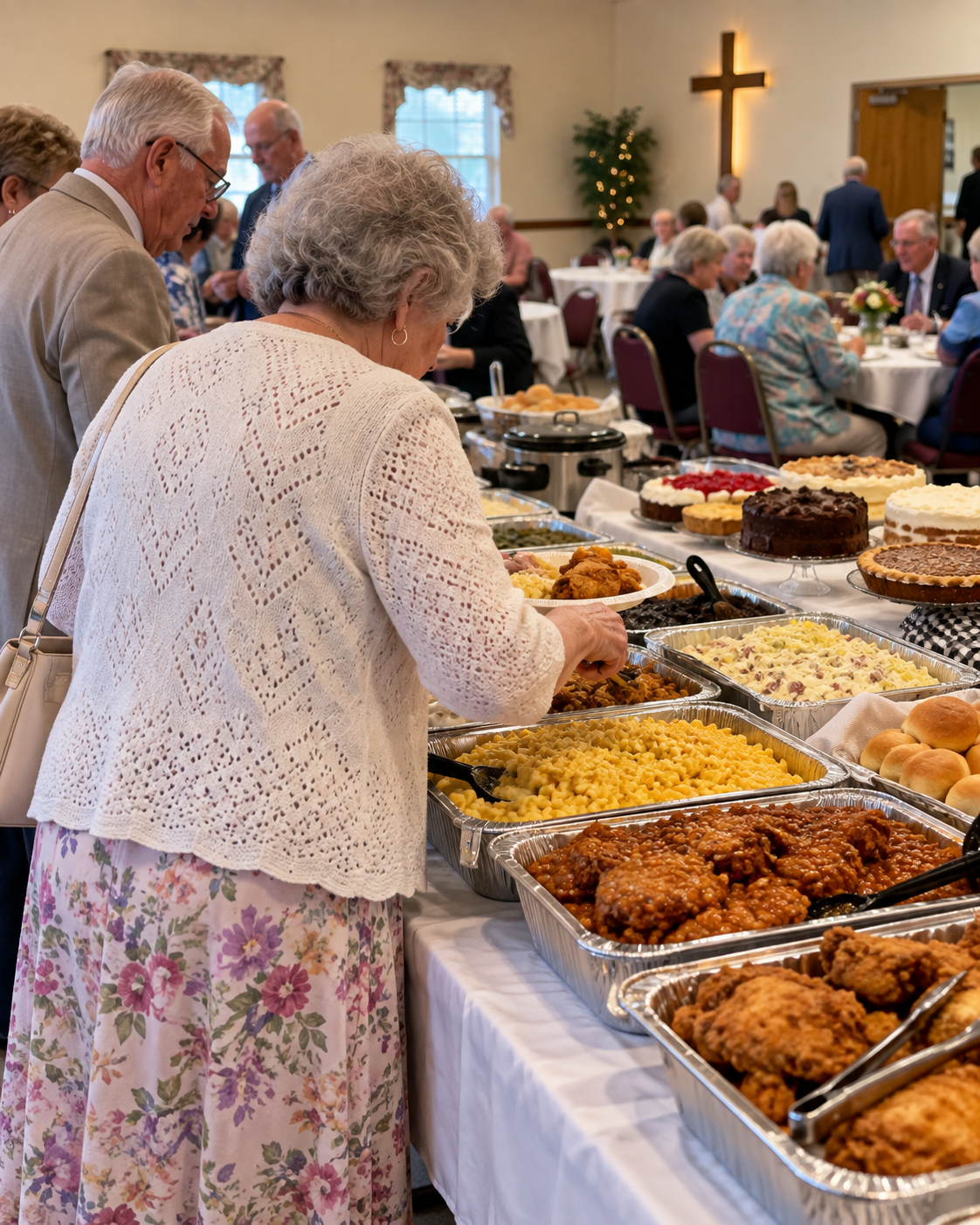
Ran for 8 days, from October 16 to October 24, 2026, the last day Crush saw it.
Run by Leslie Hosmer on Facebook. Crush is not the advertiser and does not verify its claims. See this ad in Meta's Ad Library(opens in a new tab)
Make your own version of this ad
Crush makes it, launches it in your own Meta ad account, scales the winners and pauses the losers.
About this ad
- Meta Ad Library ID
- 1801146910923541
- Platforms
- Facebook, Instagram, Audience Network, WhatsApp and Threads
- Relaunches
- 1
Ad text
In Isaiah 38, God tells a dying king, "Set thine house in order: for thou shalt die, and not live." The king had a sore that would not heal. He turned his face to the wall and prayed, and God gave him 15 more years. Most people stop reading there. But near the end of that chapter, the prophet tells the king's servants exactly what to put on the sore. My husband is a diabetic. He had a sore on his foot that would not close for 11 weeks, and his doctor was talking about amputation, the night I finally read that verse. I've taught Sunday school for 34 years. My faith isn't something I practice. It's who I am. Which is why I can't believe it took me this long to see it. It was sitting in plain sight the whole time. In my own Bible. On my own kitchen table. But I have to start with my husband. His name is Harlan. He's 68. He has been an usher at our church since before our children were born. He's the man at the door with the bulletin and the handshake. He walks the offering plate down the center aisle, and he stays after to stack the folding chairs. A man who has been on his feet for other people his whole life. 9 years ago, the spring he turned 59, his doctor told him he had Type 2 diabetes. Harlan took it the way he takes everything. He asked what he was supposed to do, and then he did it. Eggs for breakfast. Grilled chicken and a vegetable for lunch. Fish or more chicken for supper, with a salad. No bread. No potatoes. No sweets. He has not had a slice of his own birthday cake in 9 years. I quit baking them, because I couldn't stand to watch him pass the plate. He walks 2 miles every evening after supper. Rain or cold, it doesn't matter. He takes every pill, at the same time every day, out of a plastic box with the days of the week on the lid. His doctor told me once that Harlan was the most compliant patient he had. And every 3 months they'd check his number, and every 3 months the doctor would say the same 2 words. Under control. So I want you to understand that everything I'm about to tell you happened to a man who did everything right. About 4 years in, I started watching my husband slip. It started with his feet. He'd get into bed and tell me they were buzzing. Then burning. Some nights he'd kick the covers off, hunting for a cool place on the sheet. Then one winter the burning stopped, and I was glad, until I understood why. He couldn't feel them anymore. And they were cold. Cold like something left out on the porch overnight. So I started doing a thing I've never told anybody. Every night, after the lamp was off, I'd slide down to the foot of the bed, take his feet in my hands, and hold them until they felt like they belonged to a living man. I did that every night for 2 years. Then it was the afternoons. He'd eat his chicken and his green beans, and by 1:30 he was asleep in his chair with his glasses still on. This was a man who used to mow 2 yards every Saturday, ours and the widow's next door. Then the nights. Up to the bathroom once, then twice, then 3 times. I don't believe either of us slept 4 hours straight that whole last year. Then the fog. He'd stop in the middle of telling me something and stand there, hunting for the end of his own sentence. And then last spring, it came back around to his feet. I'd bought him new shoes for Easter. Black lace-ups, stiff as a board, the way new church shoes are. He ushered both services in them. Stood at the door, walked the aisle, stacked the chairs. When we got home, he sat on the edge of the bed to take them off, and his left sock was stuck to his foot. It was soaked through with blood. A blister the size of a quarter had opened up on the ball of his foot, right below the big toe, and he had walked on it for 4 hours. "Harlan," I said. "Didn't that hurt?" He looked down at it like it was somebody else's foot. "I didn't feel a thing," he said. I cleaned it and dressed it and told myself it was a blister. Blisters heal. This one didn't. A week went by. Then 2. Then 3. I changed that dressing every morning and every night, and every time I peeled it back, the sore looked the same as the day before. Raw, and wet, and open. His doctor looked at it and said something I didn't understand yet. He said the blood just wasn't getting down to Harlan's feet the way it should, and a sore can't heal without blood. Then he said Harlan's number was still under control. I remember looking at him. I wanted to ask how both of those things could be true in the same man. I didn't. You can't put a feeling on a chart. So I did what I could. I drove to the pharmacy and bought everything on the shelf with the words "blood sugar" on the label. Cinnamon capsules. Berberine. Chromium. I lined them up next to his pill box. Harlan took every one of them, every morning, because I asked him to. 5 weeks. His number barely moved. His feet stayed cold. And every morning I peeled back that dressing, and the sore was still there, looking back at me. At week 8, his doctor used a new word. He said if it didn't turn soon, we'd be looking at the toe. That word went through me like cold water, because I had heard it before. My father was a diabetic. He took his pills faithfully for years, and at every checkup they told him his number was controlled. And the whole time, his feet went the way Harlan's were going. First the burning. Then the numbness. Then a sore that wouldn't close. They took the toe. Then they took the foot. He died 2 winters after that. His number was good the week they took his foot. I have thought about that more times than I can count. I'd carried that question for years. How a man does everything right and loses anyway. I'd stopped expecting an answer. So I did the only other thing I knew to do. I prayed. Every night for 2 years, with his cold feet in my hands, I had asked God for my husband. I won't pretend I always prayed with faith. Some nights it was just the same worn-out sentence, said into the dark. At week 11, we sat in that office again. The doctor unwrapped the foot. He looked at it for a long time. And this time he didn't say toe. He said if it wasn't closing by the next visit, he wanted us to talk to a surgeon about the foot. Then he looked at the chart, and I knew what was coming before he opened his mouth. "The good news is his sugar's still under control." Harlan thanked him. That's my husband. He thanked the man. I drove us home and did not say 1 word, because I didn't trust what would come out. That night, after Harlan was asleep, I couldn't lie there. I got up, put the kettle on, and sat down at the kitchen table with my Bible. I was in Isaiah in my reading. I opened to my ribbon, and it was chapter 38. I have taught that chapter to children more times than I can count. You'll know it if you ever sat in a Sunday school room. It's the one where the shadow goes backward on the sundial. The children love that part. But I wasn't reading it like a teacher that night. I was reading it like a wife. "In those days was Hezekiah sick unto death." The king had a sore. A boil, the King James calls it. And it was killing him. The prophet Isaiah came to his bedside and didn't soften it. "Set thine house in order: for thou shalt die, and not live." I read that line twice. I knew how it felt to sit in a room and be told to get ready. And Hezekiah did what I'd been doing for 2 years. He turned his face to the wall, and he prayed, and he wept. And God heard him. Before the prophet had even left the palace, God sent him back with the answer. He had heard the prayer. He had seen the tears. He would add 15 years to the king's life. That's where I've always stopped with the children. The prayer, the answer, the sundial. But the chapter doesn't stop there. There's a verse near the very end that I had read 100 times and never once slowed down for. "For Isaiah had said, Let them take a lump of figs, and lay it for a plaister upon the boil, and he shall recover." Isaiah 38:21. I sat there with my finger on it. God had already answered. The 15 years were already promised. He could have closed that sore with a word. And the prophet still sent for a plant. Prayer, and a plant. Together, in the same chapter. In 34 years of teaching that story, I had never once noticed how the king was actually healed. And then 1 word wouldn't let me go. Plaister. It's an old word, and most people read right past it. But I knew exactly what it was, because my grandmother made them. A warm poultice, tied over a sore with a clean rag. She said the same thing every time she tied one on. "It draws." It pulls the blood up to the sore, so the sore can mend. That's what the figs were for. They brought the blood to the king's sore. And Harlan's gauze and tape were sitting on the counter not 4 feet from my Bible. The blood isn't getting down to his feet. A sore can't heal without blood. The doctor had said it 8 weeks earlier, and I had let it go right past me. My husband had the king's sore. And no poultice on this earth was going to help him, because you can't draw blood from the outside to a place it can't reach from the inside. Whatever he needed had to work in the blood itself. It felt like a nudge I wasn't supposed to ignore. So I kept reading. Not scripture now. History. I wanted to know what believing people had always understood about plants and healing, because Isaiah plainly understood something I didn't. And somewhere past midnight, I found something I'd never heard in 60 years of church. For centuries there were doctors, devout men, who believed God had marked His pharmacy. They believed the Creator signed His remedies. That He shaped and colored the cure to match the condition, so that people who couldn't read a word could still find what they needed. They pointed to the walnut, shaped like the brain it feeds. To eyebright, marked like the eye it treats. They believed God gave us everything we need to heal, and left His fingerprints on it so we could find it. I looked over at the gauze on the counter. And a question rose up in me so simple it almost felt like somebody else asked it. If God colored the cure to match the condition, what did He make for the blood? I didn't need a book for that one. Every woman who has ever stood at a cutting board knows the answer. There is exactly 1 food on this earth that bleeds. Cut a beet open and you'll see it. It stains your hands like you've been butchering. It runs across the cutting board, and the stain doesn't want to scrub off. I sat there at my kitchen table with my heart going. Now, I want to be honest with you, because I know you can check. I went looking for beets in my Bible that same night. They're not there. Not 1 verse. The figs were the plant for Hezekiah's sore. Scripture says so. It doesn't say a word about the plant for my husband's. But that chapter had shown me how God works. He answers the prayer, and then He points to something He already grew. So I went looking for what He grew for this. The first thing I checked was whether anybody else in history had seen what I was seeing. They had. All of them. Babylon grew it. It's in their garden records, 800 years before Christ. Hippocrates, the father of medicine, gave it to his patients. The Romans took the root for 1 thing above all: the blood. And the old rabbis wrote about beets as a food for long life. Civilizations thousands of miles and thousands of years apart, with no way to speak to each other. All drawn to the same root. All for the blood. I went to bed that night and lay awake next to my husband, with my hand on his cold foot. The next morning I did something I almost never do. I sat down at the computer and looked up the science. I'm not good at it. My grandson set the thing up, and I type with 2 fingers. I expected a few blog posts. Health-food talk. The kind of thing you read with 1 eyebrow up. That is not what I found. I found real research. A trial in a diabetes journal from 20 years ago. A review published in 2024 that pulled together dozens of trials. Papers on what happens to the lining of a blood vessel when the damage is cleared and the blood starts moving again. All of them pointing at the same root. I sat there with my coffee going cold, and 1 thought kept circling. If all of this is real, and it is, you can look it up the way I did, then why had nobody ever told us? Why hadn't my father's doctor heard of it? Why hadn't Harlan's? It took me 2 more evenings of reading to understand why. And I'll warn you, this part made me angry in a way I'm still praying about. A drug company can patent a pill. They have patented a whole shelf of them for diabetics, and those patents are worth billions of dollars a year. But you cannot patent a root. You can't own something God made. Anybody can grow it. Which means no company on earth will ever spend a fortune telling your doctor about it. There's nothing in it for them. So the research sits in journals nobody reads to us. And the root that Babylon grew, that Hippocrates gave his patients, that the Romans took for the blood, ended up next to the potatoes at 3 for a dollar, while the pills get a folder in every doctor's office in America. Nobody banned it. Nobody had to. They just stopped mentioning it. And my father lost his foot in a country that had forgotten. I didn't tell Harlan yet. I wanted to understand 1 more thing first. I wanted to understand what was actually happening inside my husband. Here is what I found, over 4 nights at my kitchen table. I'm going to tell it to you the way I finally understood it, because nobody had ever explained it to me either. Sugar is not poison. Your body runs on it. Every cell you have burns it for energy. After you eat, sugar floods into the blood, and that's normal. Everybody's does. Then a healthy body clears it. It moves the sugar out of the blood and into the cells. The trouble starts when it doesn't clear. When sugar sits in the blood after a meal, year after year, it throws off something called free radicals. Think of them as sparks. Those sparks land on the lining of your blood vessels, and they burn it. Meal after meal. 9 years of meals in Harlan's case, every one of them chicken and green beans. It's a slow fire, and you can't feel it. But the lining gets scorched. The vessels stiffen up. They lose the give they need to open. And the fire burns up 1 more thing. Your blood vessels open on a signal. Your body makes it. The doctors call it nitric oxide, which is just their name for the message that tells a vessel to relax and let the blood through. The fire destroys that signal too. So now you have vessels scorched stiff, and nothing left to tell them to open. And the smallest vessels go first. The ones farthest from the heart. The feet. I put my pen down when I read that. Because I finally saw that I had been watching 1 thing for years and calling it 5. His feet burned at night because the nerves down there were starving for blood. Then they went numb, because a starved nerve quits. They were cold in my hands for 2 years because the blood could barely reach them. The chair at 1:30, the fog, the 3 trips down the hall every night were different rooms in the same house, and the same fire was burning in all of them. And the sore. A sore heals with blood. That's all healing is. Blood carrying what the body needs to the place that's hurt. No blood, no healing. A blister a healthy man would forget in a week had stayed open for 11, because the road to it was burned shut. That's what the doctor meant. He just never told me why. And here's the part that stopped me cold, because it answered the question I'd carried since my father. The number on the chart, the one they check every 3 months, counts how much sugar is in the blood. That's all it does. It cannot see the fire. You can have a number your doctor is proud of and burned-out vessels in the same body. A controlled chart, and a foot that's dying. My father did. They praised that number right up to the week they took his foot. And I finally understood that both of those things were true at once. Then I read about the pills. Every pill in Harlan's box does the same kind of job. It turns the sugar down. That is all any of them do. Not 1 of them puts out the fire the sugar already set. And not 1 of them brings back the signal. The bottles I'd lined up next to his pill box were no better. Cinnamon, berberine, chromium. Every one of them chases the same number the pills chase, and none of them goes anywhere near the fire. That's how a man eats grilled chicken for 9 years, takes every pill, walks every evening, and still ends up in an office hearing the word foot. Everybody was working on the sugar. Nobody was working on the damage. So somewhere past midnight on the fourth night, I wrote 2 lines on the back of an envelope. What my husband actually needed. Put out the fire. Bring back the signal. Nothing in his pill box does either. And nothing on that pharmacy shelf does both. Then I turned back to the root. Because I still hadn't answered the question I'd carried in from my Bible. What exactly is that deep red? It has a name. Betalains. The bleed itself, the stain that won't scrub off the cutting board, is the pigment God colored that root with. And that pigment goes after the fire. Most of what people call antioxidants work like a carpet bomb. They flood the body and knock out everything they touch, even the things your body needs for healing and for fighting off infection. Betalains are a smart missile. They go after only the burning, and they leave everything your body needs alone. And they get in. They're carried into the bloodstream and folded into the vessel wall itself, right where the fire is. Nothing in Harlan's pill box reaches there. Nothing. That was the first line on my envelope. The second line was in the same root. A beet carries nitrates. Your body turns those into the exact signal the fire burned out. The message that tells the vessels to open. Put out the fire. Bring back the signal. The vessels open, and the blood gets where it's going. And the sugar it's carrying finally moves out of the blood and into the cells, the way it's supposed to. Not forcing the number lower. Fixing why it stays high. I pushed back from the table and sat very still. Because the prophet laid a plant on the king's sore to bring the blood to it. And my husband's sore was starving because the blood couldn't get there at all. And God had grown a root that opens the way from the inside. The 1 root on this earth that bleeds. Now, if you're anything like me, you've already got the next question ready. If the answer is a beet, why isn't every diabetic who eats beets healed? I asked it too. And the answer broke my heart a little, because it's the same story as everything else. The beet in your grocery store is not the root Babylon grew. For the last 100 years, they've been breeding it for 1 thing. Sugar. Sweeter, bigger, easier to ship, season after season. And every time you breed a beet for sugar, you breed the betalains down. The beet that used to be medicine became candy. A diabetic could eat them all week and never touch the fire. So I went looking for the old beet. The real one. And then I found the Amish. There's a handful of farm families in Lancaster County, Pennsylvania, plain-faith people, German stock, who never bred their beet for sugar. They've been saving 1 heirloom seed line by hand for more than 150 years, passing it down through every generation. Never crossed with the sugar beet. Hand-harvested every fall, after the first frost, when the plant pulls everything back down into the root. A community of believers, keeping the old seed alive by hand, while the rest of the world bred the medicine out of theirs. And then I read the name of the seed. The Amish are German, and their old seed lines carry German names. This one has been called the same thing since before the Civil War. Blutwurzel. I didn't know what it meant. I had to look it up. Blood root. I sat there at my kitchen table with my hand over my mouth. I had gone looking for the plant that brings the blood. And for 150 years, a community of believers had been saving it by hand under that very name. I'm a levelheaded woman. I've taught children for 34 years, and I have heard every kind of coincidence people bring to church and call a sign. This did not feel like a coincidence. But that pharmacy shelf had taught me something. A label will say anything. So before I spent another dollar, I went back through everything I'd read and wrote down what the studies actually used. If you ever go looking for this yourself, there are 4 things you need to look for. If a bottle misses even 1 of them, leave it where it is. Number 1 is the right beet. It has to be the old heirloom line, the Blutwurzel, never crossed with the sugar beet, because that's the root that still carries the betalains. Almost every bottle on the shelf just says "beet root powder." That's the grocery beet. The candy beet. You'd be buying the one that had the medicine bred out of it. Number 2 is that it was never heated. Betalains are fragile, and heat destroys them. The real thing is dried slow, in the shade, at low temperature, and that takes weeks. Most powders are spray-dried at high heat because that takes hours. What reaches the capsule is brown dust. It's enough to turn your water pink, and not enough to put out anything. Number 3 is a real dose. The studies used 1,300 milligrams. Most brands tuck a fraction of that inside something they call a "proprietary blend" and hope you never ask how much beet is in it. A blend is where the truth goes to hide. Number 4 is proof from an outside lab. It's called a certificate of analysis. An independent lab tests the actual batch and publishes what's in it. Anybody can buy 5 stars. Nobody can fake a number on a lab sheet. If a company won't show you what's inside, it's because of what isn't. I checked every beetroot bottle I could find against those 4. They failed on the beet, or the heat, or the dose, or they had no lab sheet at all. Exactly 1 passed all 4. It's a small company that works with those Lancaster County families and brings their root to the rest of us. It's called Rosabella. Now, you can't ship fresh beets year-round from 1 harvest a year. Any farm wife knows that. What you can do is what farm wives have always done with a fall harvest. You put it up. They dry the roots slow in the shade and mill them down, and the whole harvest goes into capsules. 1,300 milligrams in every one. And the lab report for every batch is posted right on their site, where anybody can read it. I read it. Then I ordered, straight from them. It isn't on Amazon, and it isn't in any store. The box came 3 days later, on a Thursday. I didn't wait for the right moment. 44 years of marriage teaches you there's no such thing. I set the bottle on the kitchen table between us that evening, and I told him everything. The king and his sore. The figs. My grandmother's poultice. The fire, and the signal, and the root that bleeds. The seed a community of believers had been saving by hand for 150 years, under a name that meant blood root the whole time. I could hear myself talking too fast, the way you do when you need somebody to believe you. Harlan let me finish. Then he looked at the bottle for a long moment. "Opal," he said. "I've heard Isaiah read from that pulpit for 60 years. Nobody ever mentioned a beet." That's my husband. Gentle, and dry, and tired down to his bones. I'd known he'd say something like that. So I didn't argue the science, and I didn't argue the scripture. I put my hand over his on the table. "I'm not asking you to believe it," I said. "I'm asking you to take it. For me. If nothing happens, you can tell the whole men's class about your foolish wife, and I'll sit right there and let you." He was quiet a moment. Then he turned his hand over under mine and held it. "All right," he said. "For you." He took 2 capsules right there, with a tall glass of water. We went up to bed. I wasn't expecting anything. Everything I'd read said the real work was weeks away, and it would show up on paper, not under a quilt. I turned off the lamp. And I slid down to the foot of the bed, the way I had every night for 2 years, and took his feet in my hands. They were warm. I thought I was imagining it. I held on. "Harlan." "I know," he said, in the dark. "I've been lying here feeling it. I didn't want to say anything in case it quit." It hadn't been 20 minutes since he swallowed those capsules. I laid my forehead down on the quilt so he wouldn't hear what that did to me. Now, I want to be honest with you about that first night, the same way I've been honest about everything else. That wasn't the sugar. The sugar takes weeks, and it shows up on paper. What he felt that fast was something simpler. The signal coming back. Vessels that had been shut for years starting to open, and blood moving down to where it hadn't been in a long time. But holding my husband's warm feet in the dark, it felt like the first word of an answer. And the answer kept coming. The first week, it was the nights. His feet were warm when he got into bed and warm when he got out. And one morning I woke up at 6 and realized neither of us had been up once. We had slept clean through. The second week, it was the afternoons. He ate his lunch and went out to the garage, and I stood in the kitchen at 1:30 looking at an empty chair. The fog went with it. He finished his sentences. All of them. The third week, he walked into the kitchen in his bare feet one morning and stopped dead on the linoleum. "This floor is cold," he said. I started to say I was sorry, and then I saw his face. He was grinning like a boy. He hadn't felt a floor in 2 years. That was the same week I peeled back the dressing and saw something new. All around the edge of that sore, there was a thin rim of pink. I didn't say a word. I was afraid that saying it out loud would stop it from being true. That week, he stopped his diabetes pills. I didn't tell him to. I wouldn't have known to tell him to. He just decided, the way he decides things. Quietly, once, without a committee. "9 years on those pills," he said. "Years of my feet going dead while they told me I was under control. 3 weeks on your beet, and I can feel the kitchen floor. A man doesn't need a medical degree to read that." I'll tell you the truth. Watching him close the lid on that pill box frightened me more than I let on. It was the 1 thing every doctor had been certain about. But I couldn't argue with him either. I had watched the same 9 years he had. And I had just watched him come back. The fourth week, he came out of the bathroom and told me the scale said he was down 6 pounds. He hadn't changed a thing. He'd been eating that same chicken and green beans for 9 years, and the scale had never moved for him once. By the sixth week, it had gone from the size of a quarter to the size of a dime. And in the ninth week, I unwrapped his foot on a Tuesday morning and there was nothing to dress. Just new skin, smooth and pink, where that sore had sat open for the better part of 5 months. I held his foot in both my hands and cried like a child. 2 years of the same worn-out sentence, said into the dark. And the answer came back as a warm foot with new skin on it. He had blood work on the calendar at 12 weeks. I drove him. The doctor looked at the foot first. He turned it in his hands. He pressed around where the sore had been, and Harlan said, "I can feel that," and the doctor looked up at him. Then he pulled up the new numbers next to the old ones. Harlan's fasting sugar had been running 155. It was 96. His A1C, the 3-month number, the one they had called under control at 6.9, was 5.5. The doctor scrolled back to the old page, then forward again, like the road between the 2 would explain itself. "What changed?" he said. "My wife has me taking a beet," Harlan said. "And I quit the pills 9 weeks ago." The doctor looked at him for a long moment. He said he wished Harlan had told him first. Then he looked back at the screen. "9 years on the medication," he said, half to himself. "I never once got you a number like that." He looked at my husband. Really looked, maybe for the first time. The color in his face. A man sitting up in the chair instead of folding down into it. Both feet flat on the floor, with nothing wrapped around either one. "I'd never normally tell a patient to take a beet," he said. "But whatever you're doing, keep doing it." He didn't reach for the pad. 9 years of appointments, and that was the first one that ended with nothing to pick up at the pharmacy. And he did not say the word foot. He hasn't said it since. I started taking it too, the morning after that appointment. Because at my own last checkup, my fasting sugar had come back at 109. Worth watching, my doctor said. Because my father was a diabetic. Because I'm 66. And because I had spent 2 years holding my husband's cold feet in my hands, and I know now what "worth watching" turns into. A month later I went back and had my blood drawn again. 95. My doctor asked what I'd changed. I told her I'd started taking what my husband takes. And I had to put a pin in the waistband of my church skirt that Sunday. I hadn't changed 1 thing on my plate. Now, before you go looking for this yourself, I have to tell you what happened with my sister. Because Jeanette is the reason I know how easily this whole thing can go wrong. I'd called Jeanette halfway through all this and told her everything. Her husband Gil is a diabetic too, with the same pills and the same number his doctor is pleased with. But Gil did what most people do. He went online and bought the first beetroot bottle he saw. 3 weeks. Nothing. Not 1 thing. And I felt awful, because I knew he was 1 bad experiment away from calling the whole thing foolishness. So I drove over with our bottle, and Jeanette and I did something I'd read about. We twisted one of Gil's capsules open over a white saucer. A dull, brick-brown powder came out. Dust. Then we opened one of ours. Deep crimson, almost violet. Jeanette tipped a drop of water onto it, and it bled red across the china like a fresh cut. Crimson is alive. Brown is dead. Gil's bottle had missed the first 2 things on my list. It was the candy beet, and it had been cooked. He'd been swallowing brown dust for 3 weeks. I left our bottle on her counter and ordered Gil his own that night. 11 days later, Jeanette called me. She didn't even say hello. "He slept through," she said. "4 nights running. And Opal, his feet are warm." I knew exactly what she meant. It's fall now. Last month was the church picnic, out on the lawn behind the fellowship hall. Harlan carried the folding tables out, the way he always has. And somewhere in the middle of the afternoon, I looked across the lawn and saw my husband sit down in the grass, unlace his shoes, and pull off his socks. He stood up barefoot. And he just stood there, working his toes down into the cool grass, with his eyes closed. This was the man who couldn't feel his own blood soaking through a sock. He was feeling the grass. I think sometimes about how close it came to going the other way. If I'd stayed in bed that night. If my ribbon had been in any chapter but that one. If I'd stopped at the sundial, the way I had for 34 years. If a handful of farm families had let 1 old seed line go, any winter in 150 years. I've stopped pretending any of it was luck. His doctor watched the number. I watched the man. And God had been watching both of us the whole time. So let me turn to you, because I don't think you read this far by accident either. Maybe there's somebody at your table who's slipping behind a number everybody calls controlled. The feet you warm with your own hands. The chair after lunch. The trips down the hall at night. A cut or a blister that's taking too long. You're not imagining it. You never were. And maybe you've been praying about it, the way I prayed for 2 years. I can't tell you what your answer is. I can only tell you mine was in a verse I'd read 100 times, growing in Pennsylvania dirt under a German name. Isaiah 38. God heard the prayer. And then the prophet sent for the plant. It's called Rosabella. It's the real seed, the Blutwurzel, shade-dried alive, 1,300 milligrams, with the lab report posted where you can read it. I did. https://track.tryrosabella.com/cdc16426-3e48-40a7-9fad-21098084f6cf P.S. If part of you has been wondering whether you're making too much of it, the cold feet, the chair after lunch, the sore that's taking too long behind a number everyone calls controlled, you're not. I sat in that office for 9 years and kept quiet because the chart said he was fine. I was right the whole time. So are you. P.P.S. About the pills. Harlan made his own decision, his own way, and I've told it to you honestly. But I need to say this part plainly. Coming off a diabetes medication on your own can be dangerous. The right way to do what my husband did is with your doctor watching your blood work the whole way. Take this alongside whatever you take, carry your numbers in, ask for a recheck in 12 weeks, and make the call together. P.P.P.S. The morning your bottle comes, do what Jeanette and I did. Twist 1 capsule open over a white saucer. It should be deep crimson, and it should bleed red the moment water touches it. Crimson is alive. Brown is dust, and if yours is brown, send it back. P.P.P.P.S. Then take 2 capsules with a tall glass of water and pay attention around the 20-minute mark. For Harlan it was his feet going warm under the quilt. That warmth isn't the sugar. The sugar takes weeks and shows up on paper. It's the sign the signal is coming back and the blood is moving. Then give it the full 12 weeks before your blood work. The fire took years to set. P.P.P.P.P.S. Rosabella comes with a 90-day money-back guarantee. Take it the full 90 days, get your blood drawn, and if nothing moves, send the bottles back, the empty ones too, for every dollar. 9 years of pills, and nobody ever offered my husband a penny back. Nobody offered my father one either. P.P.P.P.P.P.S. It's 1 seed line, a handful of Amish farms, and 1 harvest a year after the first frost. When a batch is gone, it's gone until the next fall. They run a buy 3, get 3 free offer, and that's what I'd do: 3 months for you and 3 for whoever you've been thinking about since the first line. Order only from their own site. It isn't on Amazon, and what's sold there under the same words is the brown dust from Gil's saucer. P.P.P.P.P.P.P.S. I take my 2 capsules every morning now too, right beside his. My fasting sugar was 109. Last month it was 95. The fire doesn't ask whose blood it is. And I teach Isaiah 38 differently now. I still tell the children about the sundial. But I don't stop there anymore. I read them the part about the figs. https://track.tryrosabella.com/cdc16426-3e48-40a7-9fad-21098084f6cf
Where the ad sends people
get.tryrosabella.com
Support stamina and heart health every day
Learn more: track.tryrosabella.com(opens in a new tab)