
Inactive· since Aug 6, 2026
- 8
- days it ran
- 0
- relaunches
- 716
- EU reach
Ad copy
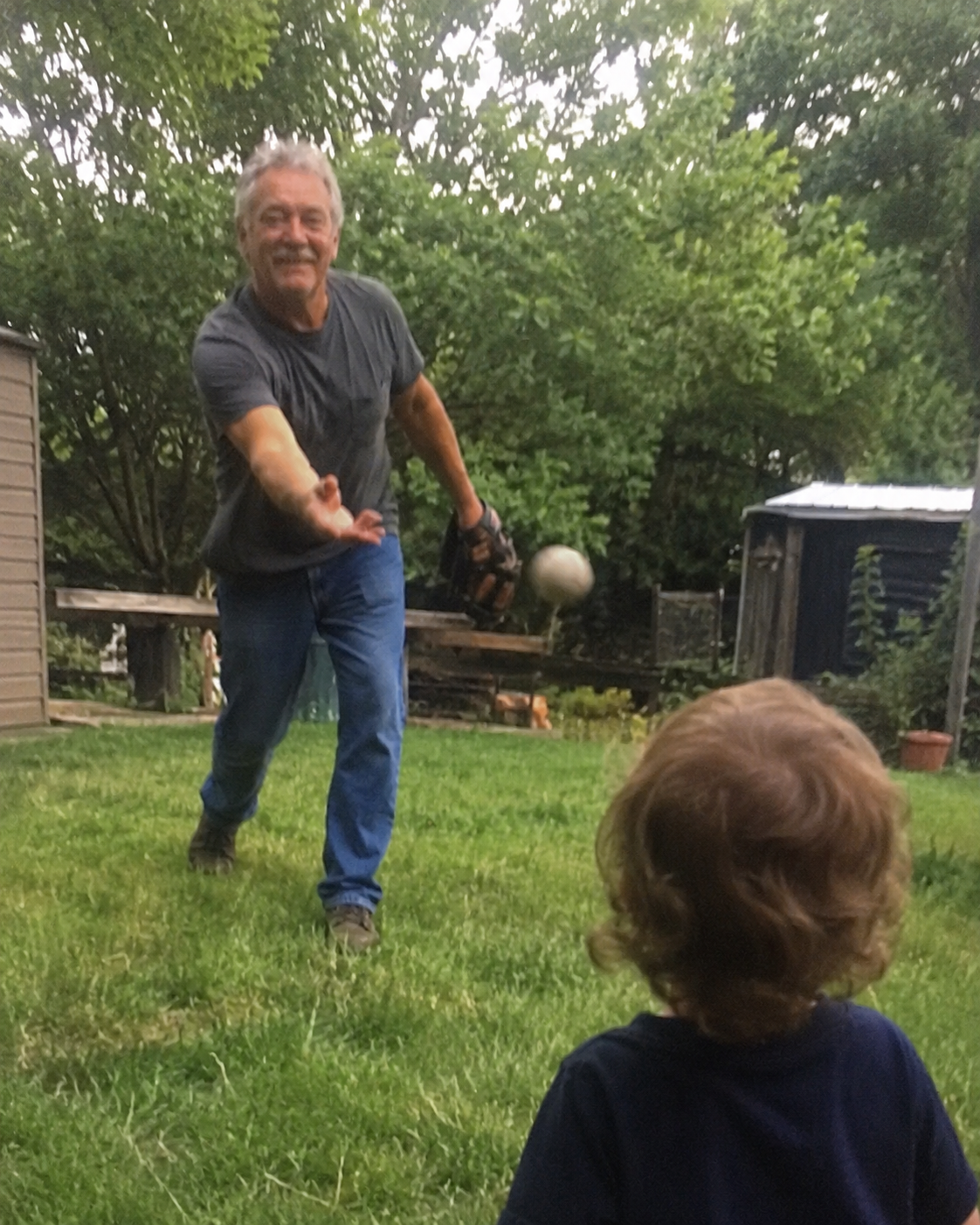
I fell asleep at my own kitchen table at seven-thirty. i hadn't done a single thing all day. That was the night it stopped being something I could explain away. A grown man. Sixty-one years old. Asleep sitting up at his own table over a plate he hadn't finished, at seven-thirty in the evening, on a day he'd spent mostly sitting. I jolted awake with my neck cricked and the house dark and I thought: what is happening to me. I want to tell you what I did about it. No miracle. No magic. Just one thing I tried, what I noticed, and — this part matters — what I honestly can't prove. I'll tell it to you straight, the way I'd want it told to me. I'm sixty-one. And for most of my life, I was a man with energy to burn. I worked construction into my forties, then ran the office side of it after my knees told me to. Either way I was a person who got up early and went hard and still had something left at the end of the day. I coached my kids' teams after full days on a job site. I'd come home, change my boots, and go hit grounders until dark. I built a deck on the back of our house over three weekends and loved every minute of it. That was me. The one with the engine. Tired in the good way at night — the way you earn — not the way I'm about to describe. Somewhere in my late fifties, the engine started running down. It came on so slowly I keep trying to find the month it began and I can't. First it was just needing the weekend to recover from the week. Fair enough, I thought. I'm not thirty. Then it was the afternoon slump — a wall around two or three o'clock where I'd have given anything to put my head down. I started drinking more coffee. Then the coffee stopped working. Then the evenings went. I'd get home and the couch had a kind of gravity to it. By eight I was out. My wife would wake me to come to bed and I'd say, "I don't know what's wrong with me lately. I'm just wiped." Lately. I said "lately" for about two years. The part that really got to me was the math of it. I wasn't doing anything to be this tired. That's what made no sense. When I was forty I'd put in ten-hour days swinging a hammer and still have gas in the tank. At sixty I'd have a quiet day — a few errands, some desk work, nothing — and feel like I'd been hit by a truck. The output kept dropping and the input kept dropping to match it, and the two chased each other down. I did less because I was tired, and being tired made me do less, and the circle got smaller and smaller. The deck-building guy was gone. The hit-grounders-till-dark guy was gone. I'd become a man whose big plan for a Saturday was a nap. So I went to the doctor. More than once — my wife made sure of it. Dr. Okafor is sharp and thorough and doesn't brush you off. I came in with my vague complaint — I'm tired all the time and I don't know why — and he took it seriously and ran the works. Bloodwork. Thyroid. Iron. B12. Vitamin D. Blood sugar. Tested my heart. Checked for sleep apnea. The whole hunt. And it all came back clean. "For sixty-one, this is a good set of numbers," he said. "I'm not finding anything that explains the fatigue. No anemia, thyroid's fine, heart looks good. Some of this is just the years catching up. Get your steps in, watch the sleep, keep doing what you're doing." Here's how that landed, and if you've heard it you'll know. It should've been a relief. Nothing's wrong with you. But when you feel like you're running on a quarter tank and every test says the tank is full, "nothing's wrong" doesn't feel like good news. It feels like a dead end. It feels like: this is just it now. This dragged-out, asleep-by-eight, nap-for-a-hobby version of you — this is the rest of it, and there's nothing even to fix, because officially you're fine. I drove home from that appointment and I was quiet the whole way. The chart said I was healthy. I felt like a guy watching his own life from the slow lane. And there's no line on a chart for the man you used to be. I'd about made my peace with the word. Age. I'm in my sixties. This is what it looks like. Everybody winds down. I'd nearly talked myself all the way into it. And then one night, after I'd done my by-now-usual faceplant on the couch and woken up at some ridiculous hour, I got stubborn instead of sad. I made coffee I didn't intend to sleep off, sat down at the same kitchen table I'd fallen asleep at, and I started reading. Not the wild stuff. I've got no patience for the cure-everything corners of the internet, the testosterone-miracle, buy-now nonsense. I can smell a sales pitch a mile off; I ran a business. But underneath the noise there was something steadier, and one thing kept surfacing the more I dug. Beetroot. I laughed out loud the first time, alone in my kitchen at 3 a.m. Beets. The thing my mother used to make me eat. That was the great secret? But I kept reading, because it wasn't what I expected. Beetroot turns out to be one of the most researched ingredients in the whole cardiovascular and wellness category. Decades of real study behind it. Not a fad somebody cooked up to sell on the internet last year. The reason it gets studied is a group of compounds called betalains. That deep red pigment — the stuff that stains the cutting board and turns your hands pink when you handle one. That's the active part. One of the more potent antioxidants in the food supply. The more I read, the more I stopped smirking. Here's the part I made very sure I understood, because I wasn't about to fool myself. These compounds support things. That was the honest word in the honest sources, and it's the only one I'll use with you. They support healthy energy. They support the body's natural antioxidant balance. They support healthy circulation. They support the cellular energy that quietly winds down as we get older — the engine-room stuff, underneath everything. Support. Not treat. Not cure. There was nothing to treat — I was healthy, the man said so himself. Not a replacement for anything. It's support for the layer underneath the numbers. The exact layer that seemed to be running low on me while every test came back fine. The layer nobody at the appointment was even looking at, because it doesn't show up on the panel. For the first time in two years, I'd found something that described what I'd been feeling instead of telling me I shouldn't be feeling it. I learned one practical thing too, the kind of detail that made me trust the rest. How the beets get processed matters, because betalains are heat-sensitive. The cheap, fast way runs them through high heat, and heat is hard on the active part. The cooked-out stuff goes brown. The slower, cooler way keeps more of it. You can almost see the difference — the real thing is a deep, dark crimson, not brown. So I went looking for the kind that's cold-pressed at low temperatures. And then, before I ordered a thing or swallowed a single capsule, I did the one thing I'd tell any man my age to do first. I called Dr. Okafor's office. I told the nurse exactly what it was — organic beetroot, the dose, cold-pressed — and asked her straight whether it was alright to add to everything I was already doing. She put me on hold. She came back a few minutes later and said it was a sensible thing to add, that she saw no concern, and to mention it at my next visit so it could go in the chart. I wasn't going to start guessing with my own body at sixty-one. I asked the people whose job it is to know, and they said go ahead. Then I started. Two capsules of cold-pressed beetroot, a tall glass of water, every morning with my coffee. Added on top of everything else. Nothing taken away. Now — here's where I have to be straighter with you than the internet usually is. I can't prove a thing I'm about to tell you. I changed one thing in my life and then I paid attention, and I genuinely cannot swear to you that what I noticed was the beetroot and not the spring coming on, or me walking a little more because I felt like it, or plain old hope doing what hope does. I'm a retired builder, not a scientist. So I'm not going to dress it up. I'll just tell you what I noticed, in order, and you can make of it what you want. The first thing was the afternoon wall. About two and a half weeks in, I got to three o'clock one day and realized I hadn't hit it. The wall just... wasn't there that afternoon. I worked right through it. It wasn't every day at first. But it started being some days. And "some days" with no wall was more than I'd had in two years. I didn't say anything to my wife. Didn't want to jinx it. The second thing was the evening. A few weeks later I looked up and it was past nine and I was still awake. Still in the room. Watching the end of a ballgame instead of sleeping through it with my mouth open. My wife noticed before I admitted it. "You're still up," she said one night, like it was a small miracle. And it sort of was. The couch lost some of its gravity. I can't explain it better than that. The third thing is the one I'll keep. It was a Saturday, a few weeks further on. My grandson asked me — the way kids do, not really expecting yes — if I'd come out and throw the ball with him. And I said yes. And I meant it. And I went. We were out there twenty, thirty minutes. My arm was rusty and I overthrew half of them and he laughed at me. But I was out there. Throwing a ball with my grandson on a Saturday afternoon, the way I used to throw grounders till dark for his mother. I came in afterward and had to stand at the kitchen sink a minute with my back to the room, because I hadn't expected to get that back, and there it was. The small returns kept coming after that. Not all at once. One at a time, across the weeks. I started taking the dog out myself again instead of leaving it to my wife. I cleared out the garage I'd been "getting to" for three years. I started talking about projects again — a pergola off the deck, maybe — and not in the wistful way, the someday way. In the way of a man who might actually pick up a saw. I'm not telling you I'm forty. I'm not. There's no magic here and I promised you I wouldn't pretend there was. I'm sixty-one. I still nap sometimes. I still have flat days where the tank reads low for no reason I can find. The couch still wins some evenings. But the man with the engine — the one who goes, who builds, who throws the ball till the kid gets tired first — he's been coming back in pieces. And my Saturdays have something in them again besides a nap. I had a follow-up with Dr. Okafor a few months in. He ran the usual. Everything was fine, the way it had been — that was never the issue. But he looked at me, at me and not the screen, and said, "You seem like you've got more pep than last time. Whatever you're doing's agreeing with you. Keep it up." I told him about the beetroot. Told him I hadn't changed anything else worth mentioning — just added the one thing in the morning, with the office's okay. He nodded and made a note. "Sensible thing to add," he said. "There's good research on antioxidant support. No concerns with it. Keep doing what's working." I didn't ask him to tell me it was the beetroot. He couldn't have, and he'd have been wrong to. But I walked out of there lighter than I walked in, and at sixty-one I'll take lighter. I'm telling you all of this because there's a fair chance you're a guy — or you love a guy — somewhere near where I was. Used to have an engine. Used to go hard and still have something left. And somewhere in the back half of your fifties or your sixties the tank started reading low all the time, for no reason you can point to. Doing less because you're tired. Tired because you're doing less. The circle getting smaller every year. And going to the doctor and getting the loneliest good news there is — you're fine, it's just age, keep doing what you're doing — while you sit there knowing the guy you used to be is somewhere on the other side of all that fatigue and nobody can tell you how to reach him. If that's you, I'd just tell you what I found. Not as a promise. As a "here's what one stubborn sixty-one-year-old tried." You're not imagining it. A clean chart and a low tank can live in the same man at the same time. I know, because I'm him. I went looking for one thing to add. Not a cure — there was nothing to cure. Not a replacement for anything. One thing, with real research behind it, that might support the layer the clean chart wasn't measuring — healthy energy, the body's natural antioxidant balance, healthy circulation, the cellular energy that quietly runs low as we age. What I found was beetroot. The brand I added to my mornings is Rosabella. 1,300 milligrams of organic beetroot per serving, cold-pressed at low temperatures so the betalains stay intact — that deep dark crimson, not the cooked-out brown. Two capsules with a glass of water in the morning. Added to everything I was already doing, in place of none of it. Talk to your doctor or pharmacist before you add any new supplement — especially if you take any medication. That one phone call is what let me do this with a clear conscience. It's the first thing I'd tell anyone to do. That's the whole story. A guy fell asleep at his own kitchen table at seven-thirty, got stubborn instead of sad, asked his doctor's office if it was okay, and a few months later threw a ball with his grandson on a Saturday afternoon. P.S. If you've been dragging through the back half of your life with a clean bill of health and an empty tank, and everyone keeps telling you it's just your age — you're not imagining it, and you're not being dramatic. A perfect chart and a low engine can be the same man. I needed to faceplant at my own kitchen table to stop accepting "that's just sixty." I'm telling you now, plainly, so you don't have to wait for your own kitchen table. What you're feeling is real, even when the bloodwork calls you fine. P.P.S. Here's the honesty I owe you. I can't prove the beetroot did it. I changed one thing and felt better over a few months and the two might be connected or might not. What I can tell you: it's genuinely well-researched, my doctor had no concerns, and the downside of trying it was small. That's the math I ran, with clear eyes — and I ran businesses on worse odds than that. I'm laying it out so you can run your own. P.P.P.S. Here's exactly what I'd tell you to do, in order. First: check with your doctor or pharmacist — this matters most if you take any other medication, so don't skip it. Second: once they've said it's a sensible addition, two capsules with a tall glass of water in the morning. Third: don't change anything else you're doing. Just add this on top. Fourth: give it a couple of weeks, at minimum, before you decide anything. Some men notice something shift early — an afternoon without the wall, an evening they stay awake through, a little more in the tank. Others take much longer. Some don't notice much. Bodies are genuinely different, and anyone who promises you a timeline is selling you something. Be patient with yours. P.P.P.P.S. Rosabella has a 90-day money-back guarantee. If you're not satisfied for any reason at all, every penny comes back, no questions asked. It's a sensible policy for a supplement — it means the only thing you're really risking is a few weeks and a little patience. You get plenty of time to see for yourself before you've committed. P.P.P.P.P.S. Rosabella is a small operation. They harvest and bottle on their own schedule, so I keep an extra bottle in the cupboard just in case. I take mine every morning with my coffee — it's just part of the routine now, like reading the paper. The thing I keep coming back to, sitting at that same kitchen table where I once fell asleep over my dinner, is that the time to support what's still working is while it's still working. Not after the tank's run all the way dry. It's Saturday morning as I write this. The pergola lumber's stacked in the driveway. My grandson's coming over at noon to "help," which means to get in the way and have a wonderful time doing it. I'll be out there with a saw and a cup of coffee. Awake. That's where it starts again, sometimes. A stack of lumber in the driveway. A ball thrown on a Saturday. Two capsules and a glass of water beside the morning coffee. Individual experiences vary. These statements have not been evaluated by the FDA. This product is not intended to diagnose, treat, cure, or prevent any disease.
Support stamina and heart health every day
LEARN MORELike this ad? Make it yours.
Crush rebuilds this exact creative around your product — your brand, your colors, your offer — in about a minute.