
Inactive· since Jun 1, 2026
- 82
- days it ran
- 2
- relaunches
- 35,475
- EU reach
Ad copy
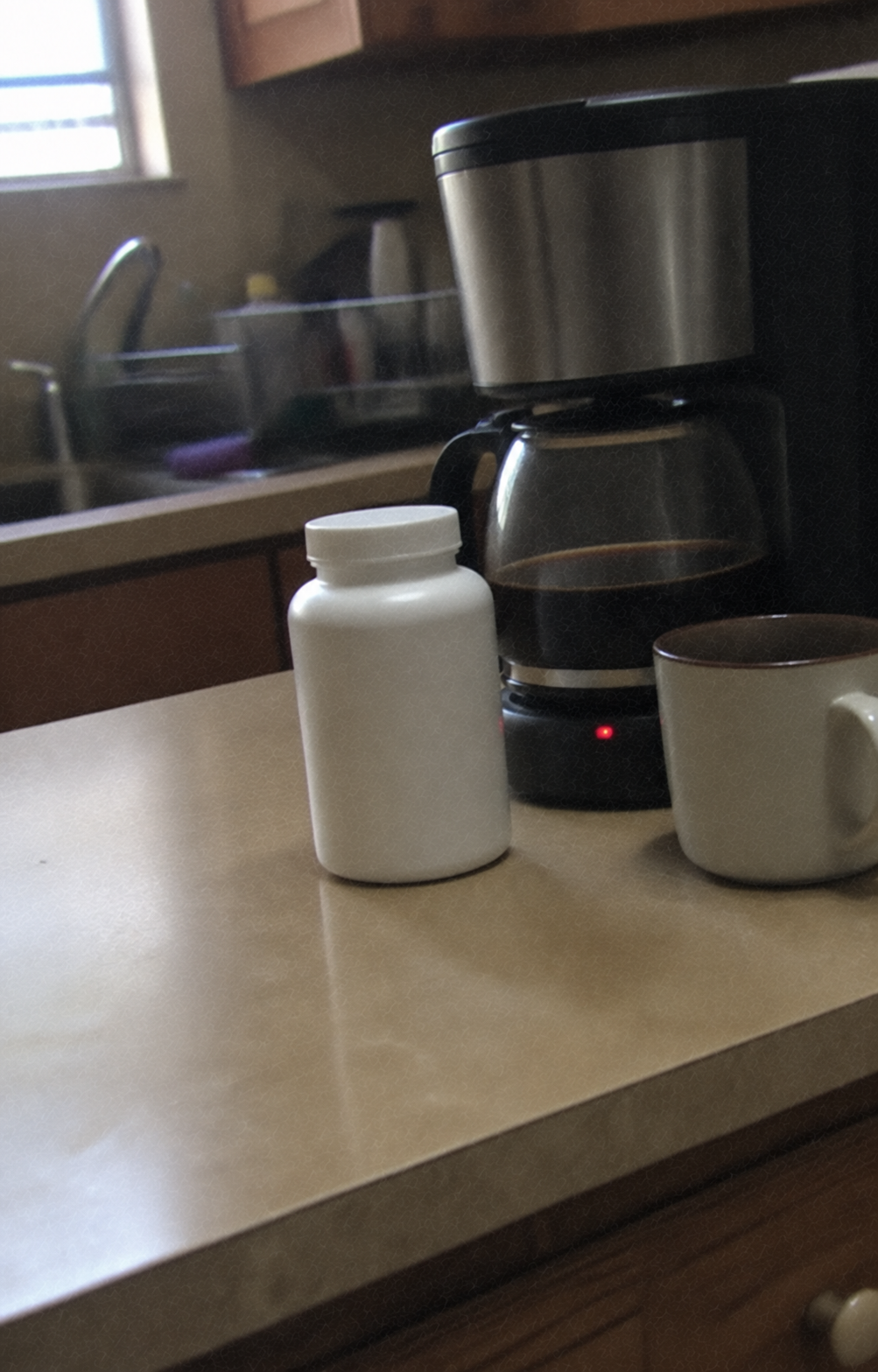
The Woman Across From Me at Jury Duty Brought Her Own Thermos. She Was the Most Alive Person in the Room. I want to tell you about a Tuesday in October. I had jury duty. I am 57 years old. I work as a bookkeeper at a small architecture firm. I am married to a kind man named David. I have a grown son who lives in Atlanta and a grown daughter who lives twenty minutes away with our two grandchildren. My life is, by any reasonable measure, a good one. I had no business feeling the way I'd been feeling. But I'd been feeling it anyway. For about two years. I'll come back to that. The jury summons had come in the mail four weeks earlier. I'd opened it at the kitchen table. I'd sighed. I'd put it on the corkboard. The morning of, I drove downtown to the county courthouse and parked in the lot they tell you to park in. I went through the metal detector at 7:48. I walked into the jury assembly room at 7:52. I found a seat in the third row from the back. I took off my coat and folded it on my lap. I looked around. There were about forty of us in the room. Most people were doing what jury duty makes you do. Slumping. Scrolling phones. Pretending to read the sign on the wall about cell phone policy. Glancing at the clock every two minutes. The fluorescent lights buzzed. The room smelled like industrial carpet cleaner and burnt coffee from the cart outside the door. I had brought a paperback I wasn't really reading. I had brought my phone, which I wasn't really looking at. I had brought my own coffee in a paper cup from the place on the corner. I sat there. I waited. At 8:14, a woman walked in and sat in the row directly across from me. She was in her late seventies. She had short white hair, cut neatly. She wore a navy cardigan over a blouse. Reading glasses on a chain. She carried a canvas tote bag with a bookstore logo on it. She sat down. She put the tote on the floor next to her feet. Then she did something I noticed because nobody does it anymore. She pulled a thermos out of her tote. Not the kind of thermos people use now. Not the stainless-steel insulated kind with the soft mouthpiece. The old kind. Plaid pattern. Glass lining. The cap that screws off and doubles as a cup. She poured a small amount of coffee into the cap. She sipped it. She screwed the lid back on. She put the thermos back into the tote. Then she pulled out a hardback book. She opened it to a bookmarked page. She started reading. I watched her without meaning to. It was 8:16. We had been sitting in the assembly room for twenty-four minutes. Everyone else in the room was diminished by the room. She wasn't. She was just there. Awake. Whole. Reading her book. I felt something settle in my chest that I hadn't felt in a long time. Curiosity. I want to step out of the room for a minute and tell you about the two years before the courthouse. For two years, I had been dim. That was the word I'd finally settled on. I'd tried other words first. I'd tried "tired." Tired wasn't quite right. Tired implies you can rest your way out of it. I'd been sleeping eight hours a night. I'd tried "depressed." Depressed wasn't quite right either. I'd asked my doctor about that. We'd walked through the questionnaire. We'd both agreed I wasn't clinically depressed. I'd tried "burned out." That was closer. But burned out implies overwork, and I wasn't overworked. I worked thirty-two hours a week at a small firm with reasonable people. I came home at five. I didn't take work home. The word that finally fit was dim. I had been dim for two years. Colors had been less vivid. Music had been less moving. I'd lost the small spark that used to make me curious about things. I used to read three books a month. I'd dropped to one. I used to call my daughter twice a week. I'd dropped to once. I used to dance in the kitchen with David when a song came on we both liked. I couldn't remember the last time I'd done that. I hadn't stopped being me. I'd just been a quieter, lower-watt version of me. A version of me that nobody else in my life had really noticed. Because the dimming was so gradual. Because I still showed up. I still cooked dinner. I still did the books for the firm. I still went to my granddaughter's school play. I just did all of it through a kind of soft fog. My bloodwork in February had come back fine. My blood pressure was good. My A1C was fine. My thyroid was fine. I'd asked my doctor if there was anything going on. She'd said: "You look healthy. Sometimes the years just feel heavier for a while. It often passes." She wasn't wrong. She wasn't being dismissive. She was being honest. But I had walked out of that appointment feeling like a person whose body had not been seen. I had told nobody about the dimming. Not even David. Especially not David, who would have wanted to do something about it, and there was nothing for him to do. That was the state I walked into the courthouse in that Tuesday morning. Dim. And resigned to it. And then there was the woman with the plaid thermos. At 9:23, a court officer came in and read out a list of names. Mine was on the list. So was hers. She closed her hardback book, slid a leather bookmark into it, tucked it back into her tote, and stood up. She moved like a woman of 60. Not the way a 77-year-old moves. I noticed her gait as I followed the group out of the assembly room and down the hall to a courtroom. She walked ahead of me. Her shoulders were back. Her stride was even. She didn't hold the railing on the stairs. I held the railing on the stairs. She didn't. The voir dire took about an hour and a half. The lawyers asked questions. People answered them. The judge sat with her chin on her hand. I was excused at 11:12. The woman with the thermos was excused at 11:14. We didn't speak. We were sent back to the assembly room to wait to see if we'd be called for another case. I went back to my third-row seat. She went back to hers. She pulled out her hardback book. Resumed reading. She did not check her phone. She did not look at the clock. She read. At noon they let us out for lunch. I walked three blocks to a small deli I'd been to once before, years ago, when I'd been downtown for a business errand. I ordered a turkey sandwich and a cup of soup. When I turned to find a table, she was three people behind me in line. She caught my eye. She nodded. I nodded back. I sat at a small table near the window. A minute later she was at the counter being handed her own paper bag. She looked around. Most of the tables were full. She looked at my table, which had three empty chairs. She didn't ask. She just raised her eyebrows slightly. I gestured to the chair across from me. She came over. She set her bag down. She said: "Thank you, dear. I won't talk. I know nobody wants to talk at lunch." I smiled. I said: "It's fine. I don't mind talking." She said: "Then I'll talk. But only if you'd like." She unwrapped her sandwich. It was egg salad on whole wheat. She took a bite. She chewed slowly. After a few seconds she said: "Have you done jury duty before?" I told her yes, once, fifteen years ago. She said: "I've been called for it four times in my life. I've been picked once. It was a fraud case. Took three days. I learned more about lumber yards than I ever expected to learn." I laughed. She smiled and took another bite of her sandwich. We ate quietly for a few minutes. She didn't ask me anything else. She didn't pry. She just sat there, eating her egg salad on whole wheat, reading the front page of the local paper that someone had left on the table. When she finished her sandwich she folded the wax paper neatly and put it in her bag. She said: "I'm going to walk around the block before going back. Would you like to join me?" I said: "Yes. I would." We walked. The air was cold but the sun was out. She told me her name was Vera. I told her mine was Caroline. She asked me what I did. I told her about the architecture firm. She told me she'd retired from a long career in editing — books, mostly. She'd been retired for almost fifteen years. She still read for pleasure six hours a day, which was why she'd brought the hardback to the courthouse. I asked her what she was reading. She said: "A history of the Erie Canal. Drier than it sounds. But fascinating once you give it a chapter." We walked the block. We came back to the courthouse. We went through the metal detector again. We sat back down in our same seats. Third row from the back. Across from each other. She picked up her book. I picked up my paperback. I tried to read. I couldn't focus. I kept looking at her. There was something about her I couldn't put a word on yet. At 2:47, the court officer came in and said no other cases would need a jury that day. He thanked us for our service. He said we were free to go and were not obligated to return. The room exhaled. People stood up. Coats were grabbed. Bags were shouldered. Phones came out. Vera closed her book. She put it carefully in her tote bag. She took her thermos out one more time, poured the last inch of coffee into the cap, drank it standing up, screwed the cap back on, and put the thermos away. She slung her tote over her shoulder. She was about to walk past me toward the door. I don't know what made me do it. I said: "Vera." She stopped. I said: "Can I ask you something?" She said: "Of course." I said: "How old are you, if you don't mind." She said: "Seventy-seven last March." I said: "You don't look like other seventy-seven-year-olds I know." She tilted her head a little. She said: "What do you mean by that?" I said — and I don't know why I said it, except that I'd been carrying it for two years and a kind stranger in a courthouse was the closest thing to a safe place I'd been near in a long time — I said: "I've been feeling dim for two years. You look like a person who isn't dim. I don't know how to ask this any other way. What did you do, if anything? Or were you always like this?" She looked at me for a long time. She didn't seem startled by the question. She didn't seem amused. She just looked at me. Then she said: "Caroline. Sit down. We have time. Let me tell you something." We sat back down. Almost everyone else in the room had cleared out. The fluorescent lights buzzed over our heads. Vera turned in her chair so she could face me. She said: "I want to tell you something, and I want to be clear about what I am and what I'm not. I'm not a doctor. I'm not pretending to be one. I'm a retired editor with reading glasses and a thermos. Nothing I'm about to say is medical advice." I nodded. She said: "About twenty years ago, I was where you are." She said it casually. Like it was a fact. She said: "I was 57. Married. I worked. I had everything a woman is supposed to have. And I felt the way you just described. Dim. That's a good word for it. I used to call it 'wearing wool over my eyes.' Everything I looked at, I was looking at through a layer of something." She said: "I went to my doctor about it. My bloodwork was fine. She told me what your doctor probably told you. Sometimes the years feel heavier. It often passes." She said: "It didn't pass." She said: "I sat with it for another year, hoping it would. It didn't get worse. But it didn't get better. It just stayed." She said: "And one day at the kitchen table, my husband — bless him, he's been gone six years now and I miss him every day — my husband said something to me. He said: 'Vera. You're not unhappy. You're not sick. You're just dim. And I want my wife back.' " She paused for a second. She smiled a small smile at the memory. She said: "I sat with that for a few days. I'd never heard him say it that way before. He didn't say I was wrong. He didn't say I was making it up. He said I was dim. And he was right." She said: "I started doing some reading. Not in a frantic way. Not the way people read when they're trying to diagnose themselves. Just slowly. A few articles a night, after dinner. I read for several months." She said: "What I came away with was this. The body, as the years pile up, gets less efficient at doing the small housekeeping work it used to do without anyone noticing. The cellular-level work. The energy work. The antioxidant balance the body needs to keep things running smoothly." She said: "It's not a disease. It's not a deficiency you can measure on a standard panel. It's just — the body needs more help with what it used to do for free." She said: "And the reframe that helped me — that I want you to take with you, even if you don't take anything else I say — is this. It isn't always a thing to fix. Sometimes it's a thing to feed." I sat very still in my chair. She said it again, more quietly. "It isn't always a thing to fix. Sometimes it's a thing to feed." I pulled my paperback out of my bag. I pulled the pen I kept in the side pocket. I wrote it on the inside back cover of the paperback so I wouldn't forget it. She watched me write it. She said: "Good. Write it down. I wrote it down on a yellow legal pad twenty years ago. I still have the page." She kept going. She said: "I started reading specifically about things people add for cellular energy and vitality support. Compounds the body uses for its own housekeeping. Things from food, mostly. Deep-pigmented foods. Things that support the body's natural antioxidant balance." She said: "I read for a while about beetroot. The kind you eat, but more importantly, concentrated, in a capsule. The compounds in beetroot — they're called betalains — support the body's natural antioxidant balance. They're the same compounds that give beets their deep red color. They've been studied for cardiovascular wellness, circulation, and cellular energy for a long time." She said: "I'd thought of beets as a side dish my mother used to roast. I'd never considered them seriously. But the more I read, the more it made sense." She said: "The other thing I came away understanding was that not all beetroot supplements are the same. The active compounds are sensitive to processing. Heat-processing is faster and cheaper. Slower methods preserve more of the active compound." She said: "There was one brand I kept coming back to. Rosabella. Small company. 1,300 milligrams a serving. Cold-pressed at low temperatures. They get their beets from a small farming community in Lancaster County." She said: "Before I tried it, I called my doctor's office. I told the nurse what I wanted to add. I wasn't replacing anything. I wasn't on much — just a small dose of thyroid medication I'd been on for years. I just wanted to ask if there was any reason not to add it." She said: "The doctor said it was a sensible thing to add. No interactions. Let her know how I felt at the next appointment." She said: "I ordered the bottle. It arrived. I started taking it. Two capsules every morning with my coffee. That was it." I asked her what happened. She was quiet for a second. Then she said: "I'm going to be careful about how I answer that. Because I know how it sounds when older women tell stories about supplements." She said: "Nothing dramatic happened. I didn't feel a thing the first morning. I didn't feel a thing the first week." She said: "Somewhere around the third week, I was washing dishes after dinner one night, and I caught myself humming. I hadn't been humming around the house in a long time. I'd been doing dishes silently for a couple of years." She said: "I noticed because I didn't notice. That's the only way I can describe it. I'd just been humming, and then a part of my brain registered it, and I stopped and stood there with my hands in the sink and thought: huh." She said: "Around week five, I picked up a book I'd been meaning to read for two years and I read the whole thing in three nights. I hadn't been able to focus on a book for that long in a while." She said: "Around week eight, my husband sat down at the kitchen table one morning and said: 'There you are.' " She smiled when she said that part. I smiled too. She said: "I'm not telling you it was the beetroot. I changed a few other things at the same time. I'd started going to bed twenty minutes earlier. I'd started taking my afternoon coffee out to the back porch instead of drinking it standing at the counter. I'd started calling my sister on Sundays instead of every few weeks." She said: "I can't separate one variable from another. I just know that something shifted, and the shift held." She said: "I've been on it for twenty years. Two capsules every morning. It's the first thing I do after I pour my coffee. The bottle is by the coffee maker. It's part of the routine. I don't think about it anymore." She said: "I'm 77. I drive myself to jury duty. I bring my own thermos because I prefer my own coffee. I read six hours a day because I like to. I'm not trying to be a model for anything. I'm just trying to be the woman who walks into a courthouse on a Tuesday and walks back out the same person." She looked at her watch. She said: "I have to go. My granddaughter is picking me up at 3:30 and she gets cross when I'm late." I said: "Vera. Thank you." She said: "You haven't done anything yet." I said: "I will." She said: "I believe you. Call your doctor's office first. That part matters." She stood up. She picked up her tote. She held out her hand. I shook it. Her grip was strong. Her hand was warm. She said: "Caroline. There's nothing wrong with you. You're just dim. And dim isn't a diagnosis. It's an invitation to pay attention to the body that's been carrying you all these years." She let go of my hand. She walked to the door of the assembly room. She stopped at the door and turned around one more time. She said: "And tell your husband. He'd want to know." Then she walked out. I sat in the assembly room for another five minutes by myself. The fluorescent lights buzzed. I sat there with the paperback in my lap, the inside back cover open, the sentence written in my own handwriting: It isn't always a thing to fix. Sometimes it's a thing to feed. I drove home through the late afternoon traffic. The light over the river bridge was gold. I noticed. I hadn't noticed light like that in a while. When I got home, David was in the kitchen heating up leftovers. He looked up when I walked in. He said: "How was jury duty?" I said: "David. Sit down. I want to tell you about a woman I met." He set down the spatula. He sat at the table. I told him. All of it. The thermos. The book. The voir dire. The walk around the block. The conversation at the end of the day. I told him I'd been dim for two years. I told him I hadn't said anything because I hadn't wanted to make him worry, and because there hadn't seemed to be anything to do. He listened. When I finished he didn't say anything for a few seconds. Then he said: "Caroline. I noticed. I just didn't know how to ask." I didn't know what to say to that. He said: "I'm glad you told me. And I'm glad you met her." I said: "I'm going to call my doctor's office tomorrow." He said: "Good." He got up and finished heating the leftovers. We ate at the kitchen table. I asked him how his day had been. He told me. I listened. I'd been a little bit absent at our dinner table for a long time. That night, I was there. I called the doctor's office the next morning. I told the nurse what I wanted to add. I told her, in more detail than I'd told anyone, what I'd been feeling for two years. The dim. The wool over my eyes. The flatness of the days. I told her I wasn't trying to replace anything. I told her my bloodwork had been fine. I told her I just wanted to add a beetroot supplement and ask if there was any reason not to. She listened carefully. She said she'd talk to the doctor and call me back. She called me back the next morning. The doctor said it was a sensible thing to add. She said there were no interactions with anything I was on. She also said she wanted to see me at a longer appointment in the next few weeks, so we could talk more carefully about what I'd been feeling. She said: "I think you tried to tell me about this in February and I didn't catch it. I want to do better. Come in." I went in the following Thursday. She listened to me for forty minutes. She didn't dismiss any of it. She ran some additional tests that hadn't been on the February panel. She told me she didn't think anything was acutely wrong. But she told me she agreed with the framing I'd been working with — that what I was experiencing was real, and that adding things to support cellular energy and antioxidant balance was reasonable, and that she'd be checking in on me regularly going forward. I ordered the bottle that night. The bottle arrived about a week later. I noticed the color when I opened it. Deep, dark red. Almost purple. Vera had told me about the color. That it was the visible marker of the active compound being intact. I set the bottle next to the coffee maker. The next morning I took two capsules with a glass of water and drank my coffee. I didn't feel anything that morning. I wasn't expecting to. These things don't work like a switch. The body needs more than one morning to respond to anything. I just kept going. Two capsules. Water. Coffee. Day after day after day. I'm going to tell you about the next few weeks the way Vera told me about hers. Carefully. In small moments. About two weeks in, I called my daughter on a Tuesday afternoon. I didn't usually call her on Tuesdays. I called because I'd been thinking about her and I wanted to hear her voice. We talked for half an hour. After we hung up I thought: I haven't done that in a long time. About three weeks in, I caught myself humming while I was folding laundry. I stopped. I stood there with a folded towel in my hand. I thought about Vera at her sink. I smiled. About four weeks in, I picked up a book I'd had on my nightstand for nine months. I'd been "going to read it" the whole time. I started reading it that night. I finished it in five days. About six weeks in, I came downstairs on a Saturday morning and David had music on in the kitchen. A song came on that we used to dance to. I held out my hand. He looked at me for a second like he wasn't sure he'd seen what he'd seen. Then he took my hand. We danced in the kitchen for about two minutes. I hadn't danced in our kitchen in two years. When the song ended he held me there for a moment longer. He didn't say anything. He didn't have to. Over the next several months, more of those small things piled up. Colors came back. Music came back. Curiosity came back. I started saying yes to things again. A book club my neighbor had been inviting me to for a year. A weekend trip with my sister. An art class on Saturday mornings — watercolors, very beginner — that I'd been telling myself I'd take when I had time. I had time. I'd had time the whole time. I'd just been too dim to use it. I started reading three books a month again. I started calling my daughter twice a week again. I started cooking new recipes instead of the seven things I'd been rotating for a year. I'd be lying if I told you the supplement did all of this. I changed a lot of things at the same time. I'd told my husband the truth. I'd told my doctor the truth. I'd started going to bed earlier. I'd started taking my afternoon coffee out to the back porch instead of standing at the counter with it. I'd started saying yes when I felt like saying yes, instead of saying no out of habit. I can't separate one variable from another. What I can tell you is that something shifted, and the shift held. The bottle is still by my coffee maker. I take two capsules every morning with my coffee. It's the first thing I do after I pour it. It's part of the routine now. I don't think about it anymore. I went back to my doctor four months in for the follow-up. She ran the bloodwork again. She looked at the numbers. She looked at me. She said: "You look like yourself." I said: "I feel like myself." She said: "Whatever you've been doing, keep doing it. Come back in six months." I walked out of that appointment in a way I hadn't walked out of one in years. I noticed the sky on the way to the car. It was the kind of late winter sky where the clouds are thin and the light comes through in a way that makes you want to stand there. I stood there for a few seconds before I unlocked the car. A little gust of wind blew through the parking lot. I closed my eyes. The wind smelled like coming rain. I drove home. I've never seen Vera again. I've thought about her a lot. I don't know her last name. I don't know where she lives. I don't know what books she's been reading. I went back to that deli twice over the next year, on different Tuesdays around lunchtime, half-hoping she'd walk in. She didn't. I drove past the courthouse a few times. She wasn't there either. I don't know if she's still alive. I hope she is. If she is, I hope she's reading something dry but fascinating, with her plaid thermos at her elbow. I hope she's the same Vera she was the day I met her. There's a sticky note next to my bathroom mirror now. I wrote it on the same paperback at jury duty, but I copied it onto a yellow Post-It when I got home that night. It says: It isn't always a thing to fix. Sometimes it's a thing to feed. I look at it most mornings while I'm brushing my teeth. I haven't taken it down. I don't think I will. Here's what I'd say to any woman — or any man, but I think mostly women, because I think women are more likely to put up with feeling dim for years without saying so — who's been feeling the way I felt. You're not imagining it. The dimming is real. It might not show up on bloodwork. The standard panels measure a handful of things. Your body is doing a hundred things they're not measuring. If you've been doing the work and you're still dim, there might be something to be added — not something to be fixed. That's the reframe that changed everything for me. Not "what's wrong with me." But "what does my body need a little more help doing." If you want to try adding a beetroot supplement to what you're doing, call your doctor's office first. That phone call is the most important step in the whole thing. It's not optional. Especially if you're on any medication — for blood pressure, for thyroid, for cardiovascular concerns, for anything — talk to your doctor before adding anything new. I cannot stress that enough. The brand I used is Rosabella. 1,300 milligrams per serving. Cold-pressed at low temperatures. Grown in Lancaster County. Two capsules with water in the morning. That's the whole protocol. I'm not a doctor. I'm not in healthcare. I'm a 58-year-old bookkeeper who got lucky enough to be sitting across from a woman with a plaid thermos and a hardback book on a Tuesday in October. Take it for what it's worth. P.S. A few practical notes for anyone thinking about this. Rosabella has a 90-day money-back guarantee. If you're not satisfied for any reason, every penny back. No questions asked. That's a sensible policy for a supplement. It gives you time to actually see whether it does anything for you. I'd give it a few weeks at minimum before deciding anything. Bodies are different. Some people notice something within the first week or two. Others take longer. I was around the third week. Vera was around the third week. Be patient with yours. P.P.S. I keep an extra bottle in the cabinet now. They're a small operation and the harvest is seasonal. I learned to stock up after a slightly nervous month when I was running low and not sure when the next shipment would arrive. I don't want to have a gap. P.P.P.S. A note about the doctor's office call. I'm going to come back to this because I think it's the part people are most tempted to skip. The temptation is to think: it's a supplement, it's not a drug, I don't need permission for a supplement. That's not why you call. You call because supplements can interact with medications. You call because your doctor knows things about your body that you don't. You call because if anything ever comes up later, you want your doctor in the loop on what you've been taking. Vera called. I called. We're glad we both did. I'd ask the same of you. P.P.P.P.S. David started taking it about six months after I did. He'd watched me come back. He'd called his own doctor's office first. He's on it now too. The bottle next to mine, next to the coffee maker. He hasn't said anything dramatic about it. He's just steadier. A little more rested. A little more here. I think he'd been a little dim himself. He just hadn't had a word for it either. P.P.P.P.P.S. One last thing. If you're reading this and you've been telling yourself that this is just what 50-something feels like, or this is just what 60-something feels like, or this is just what older feels like — I want you to consider, just for a second, that it might not be. Vera was 77 the day I met her. She drove herself to jury duty. She read six hours a day. She walked around the block on her lunch break. She held a stranger's hand in a courthouse and said the thing that the stranger needed to hear. There are 77-year-olds like that. There are also 57-year-olds who are dimmer than they need to be. You don't have to know which one you are, or which one you're going to be. You just have to be willing to ask the question. Sometimes it's a thing to feed. That's the whole thing. That's all I have. https://track.tryrosabella.com/81f3db28-381a-4946-88ac-8b56b69962d2 Individual experiences vary. These statements have not been evaluated by the FDA. This product is not intended to diagnose, treat, cure, or prevent any disease.
Support stamina and heart health every day
LEARN MORELike this ad? Make it yours.
Crush rebuilds this exact creative around your product — your brand, your colors, your offer — in about a minute.