
Inactive· since Jul 3, 2026
- 29
- days it ran
- 0
- relaunches
Ad copy
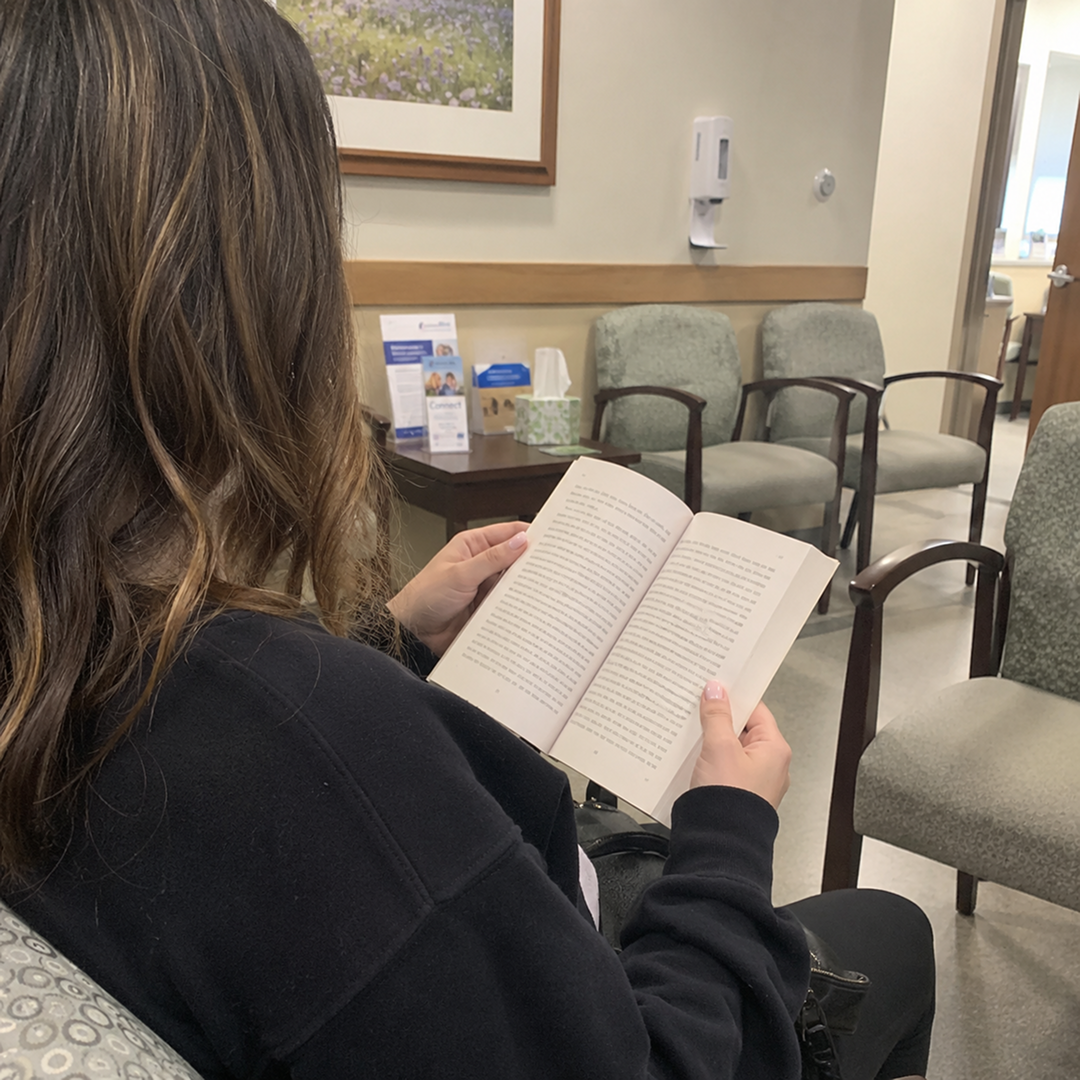
She was somewhere between 55 and 62, but she moved differently. Not the slow careful shuffle of a woman who has been on a milk thistle and monitor protocol for years. She walked. Upright. Her eyes were clear. Her stomach was flat at 3 PM in a way mine had not been since I was 40. And when she sat down two chairs from me and pulled a book out of her bag, I could not stop staring at her. Because she looked like what I used to feel like before the diagnosis. The woman across from me kept pressing her thumb into the soft pouch above her belt. I do that. Every afternoon. I didn't even realize it was a habit until I watched somebody else do it. The woman by the window had that glazed, cotton behind the eyes look I see in my own bathroom mirror every morning. Not sleepy exactly. Just muted. Like someone turned the brightness down on her and never turned it back up. The one filling out the intake form yawned three times in two minutes. Deep, jaw-cracking yawns. The kind where your whole body is begging for energy it cannot find. We were all there for the same reason. Same supplement. Same side effects. Same quarterly checkup that never changes anything. And then this other woman walked in. The one who looked like she owned her body. I couldn't stop staring at her. Let me back up. My name doesn't matter. What matters is that I'm 54 years old, and I've been coming to that waiting room every three months for three years. Same chairs. Same outdated magazines I never read. Same form to fill out. "Any changes to your supplement protocol?" No. "Same dose?" Yes. "Any concerns?" Where do I start. I'm on milk thistle. Two capsules every morning. I've been on it since I was 51. Before that, I was on a different brand. My hepatologist put me on it when my ALT first came back at 84 with a fibroscan showing early steatosis. He said it was the standard first-line approach. "You'll barely notice you're taking it. Diet, monitoring, and milk thistle. Most patients hold steady for years." I noticed it within a month. Not the supplement itself. The not-getting-better. The bloat at 4 PM that pushed against my waistband no matter what I ate. The right-rib ache that became background noise. The 2 PM crash that hit so hard I'd sit in my car in the parking lot for ten minutes before walking back into the office. The 2 AM thirst that woke me up every single night. I told my hepatologist. He said those were common with fatty liver. Stay the course. He swapped my brand to a "premium" milk thistle. Twice the price. Same outcome. The bloat stayed. The ache stayed. The fog got thicker. My face puffed up in the morning. My rings were tight by lunch. My ankles started swelling by 6 PM. None of these were "officially" liver symptoms by the protocol's standards. But they all started together and none of them ever fully went away. And the fatigue. The fatigue I cannot describe to anyone who has not felt it. Not tired. Drained. Like somebody pulled the plug on me at 1 PM and I had to run on whatever charge was left until I could lie down. I mentioned the fog at my last appointment. My hepatologist looked at his chart, then at me, and said "Some patients are more sensitive to the metabolic load. We could discuss adding a second supplement." I said "You said that last time." He looked at his chart again. He had not even read his own note from the previous visit. I've heard "let's keep monitoring" so many times in that office I could mouth the words before he says them. Three years. Two brands of milk thistle. The same conversation every three months. My ALT looks better. 78 on the last reading. Down from where I started, technically. Stable. But I don't feel better. I feel like I traded one set of symptoms for three new ones and a fibroscan that nobody will commit to. And I'd accepted it. That is the thing. I had made peace with it. You get older, your liver gets cranky, you take the milk thistle, you deal with the fog and the bloat and the puffy face. At least the number is in a range the doctor likes. At least nobody is saying the word transplant yet. That is the deal, right? That is what you tell yourself when you are pressing your thumb into the soft pouch over your right rib at 3 PM in a meeting. I'd bet every woman in that waiting room had made the same deal. ALT in the 70s and 80s. Stable. Protocol working. We'd all leave with our next appointment card and our "see you in three months" and drive home feeling exactly the same as when we arrived. The number was the whole conversation. Nobody ever asked how we felt inside our own bodies. So there I was. Sitting in my usual chair. Surrounded by women who looked exactly like me. And two chairs over, this woman with clear eyes and a flat stomach was reading a book. I don't usually talk to strangers in waiting rooms. But I couldn't help it. She turned a page and caught me looking. She smiled. I said something stupid like "Good book?" She laughed and said "Better than the magazines." We started talking. Small talk first. The wait. How the receptionist always says ten minutes and it's always thirty. Then I asked her if she was there for a fibroscan checkup. She smiled again, differently this time. Like she knew exactly why I was asking. She said no. Annual. She used to come every three months. Same routine. Same waiting room. Same milk thistle protocol. I asked her what she'd been on. She told me. Same milk thistle. Two years. Same dose as me. I looked at her stomach. Flat. I looked at her face. No puffiness around the eyes. Clear. She caught me looking and said: "I know. I used to be you." Something about the way she said it made my chest tighten. Not in a medical way. In an emotional way. Like somebody had put words to a thing I had been feeling for three years and could not name. She said she'd had the same bloat. Same fog. Same ache. Same "let's keep monitoring" from her hepatologist. Same quarterly ritual of nothing actually changing on the fibroscan. Then she said something that made me put my phone in my purse and turn to face her completely. She said she'd had a scare. She said she was sitting at her desk one afternoon, normal day, nothing stressful, and a knife of pain went through her right side so hard she dropped her phone. She doubled over. Couldn't catch her breath. Her assistant called 911 because she thought it was a heart attack. It was not. It was her liver. She spent six hours in the ER. They ran labs. Her ALT had jumped to 167. Her bilirubin had drifted up. Her fibroscan, repeated at the hospital that night, came back F3. She had been on the standard protocol for two years. Every appointment had said stable. Her last fibroscan, six months earlier, had been read as F2 borderline. And in six months, with no change to her bloodwork, she had gone to F3 and a pain attack that put her in an ER. I felt the blood drain from my face. Because that is my fear. That is the thing I push down every single day. The thing I do not let myself think about. I am taking the milk thistle. The number looks stable. I am supposed to be holding steady. What if I am not? She told me that night in the ER changed everything. She did not go back to her regular hepatologist. She made an appointment with a clinical hepatologist at a teaching hospital. Somebody who actually read journals. Somebody who did not just look at the number on the chart. I asked her what that hepatologist said. She leaned back in her chair and said: "She told me I had been a ticking time bomb." I stared at her. She said the specialist told her the standard milk thistle protocol had been controlling one number on a chart while the actual damage inside her liver had been progressing for two years underneath. Her supplement was managing what showed on the bloodwork. Meanwhile, two things were silently destroying her hepatocytes from the inside. And nobody was checking for either of them. I asked her what two things. She said: "The hepatologist explained it in a way that made it so simple I couldn't believe nobody had told me before." She told me about hepatocyte membranes. She said ALT is one number. One enzyme. The enzyme lives inside the liver cell. When it shows up in your blood, it means the cell wall has been breached. Which means the cell has either died or ruptured. But ALT only counts the cells that have already broken. It tells you nothing about the cells that are still standing and quietly losing their structural integrity from the inside. And inside those cells, the engine of damage runs on something the standard test never measures. It runs on the membrane. She said the hepatocyte membrane is what keeps the cell intact. It is what protects the cell from the toxins, the fat infiltration, the oxidative stress that hits the liver every single day. When the membrane stays strong, the cell survives. When the membrane weakens, the cell ruptures. The enzyme leaks. ALT rises. The membrane weakens because of two things working at the same time. First, the fat that builds up inside the cell physically stresses the membrane wall from the inside. It pushes outward. Over years, the membrane thins and frays. Second, the cell loses its glutathione. Glutathione is the master antioxidant your liver uses to neutralize the oxidative byproducts of every drink, every meal, every breath of polluted air, every medication, every toxin you encounter. After 40, your body produces about 10% less glutathione every year. By the time most women are in their 50s, the tank is half empty. By 60, it is closer to empty. When the glutathione runs out, the oxidative load that hits the cell every day has nothing standing between it and the membrane. The wall takes hit after hit with no protection behind it. It weakens faster. It ruptures sooner. She said: "That's what happened to both of us. The membrane has been failing for years. The glutathione defense behind it has been collapsing. And the milk thistle on our bathroom counters has been doing almost nothing to address either." I said: "But milk thistle is supposed to protect the liver." She looked at me and said: "The hepatologist told me that's the marketing claim. Real silymarin, the active extract from milk thistle, does stabilize the hepatocyte membrane. That is its documented mechanism. But the version on the American shelf is mostly degraded. The active compound oxidizes after harvest. It sits in warehouses, distributors, store shelves. By the time you swallow it, the molecule that was supposed to reinforce your cell walls is mostly inactive plant material. The European pharmaceutical grade extract, fresh-harvested and standardized, is a different molecule entirely. That is the one the journals reference. That is not what is in either of our bottles." Then she told me the second piece. She said the standard protocol has nothing for the glutathione side at all. The milk thistle, even good milk thistle, only addresses the membrane. It does not restore the antioxidant defense behind the membrane. She said: "The hepatologist drew it for me on a napkin. Two halves of the same protection. Stabilize the membrane in front. Restore the glutathione defense behind. Without both, neither one works. Stabilize the wall but leave the defense empty and the wall still takes too many hits. Restore the defense but leave the wall weak and the cells still rupture under load. You need both. At the same time." I leaned in closer. "So what did you do?" She told me. She said her hepatologist explained that there is one compound the ICU pushes through an IV line when somebody is in acute liver failure. The same compound emergency medicine reaches for when a liver is shutting down. It is called NAC. N-acetyl cysteine. NAC does not act like an antioxidant directly. It forces the liver to rebuild its own glutathione supply from the inside out. Inside the cell. Where it actually needs to be. When you pair that with real silymarin, fresh-harvested European pharmaceutical grade, standardized to the active compound, the membrane gets reinforced while the defense behind it gets rebuilt at the same time. Both halves of the protection. Both at once. A healthy liver repairs itself automatically. The reason hers had not, and the reason mine had not, was that one half of the protection had been missing entirely and the other half had been delivered in a form that did almost nothing. There was a third compound her hepatologist had added. Choline. Choline is the raw material the liver uses to package the fat trapped inside the hepatocyte and export it back out into the bloodstream. Without enough choline, the fat stays in the cell. The trapped fat keeps stressing the membrane from the inside. The cycle keeps spinning. With clinical choline, the export pump runs, the fat clears, and the membrane stops getting pushed outward. She said: "Three compounds. Working on the same problem from three different angles. Silymarin stabilizes the membrane. NAC restores the glutathione defense behind the membrane. Choline removes the fat that was straining the membrane in the first place. The hepatologist told me she had never once seen a patient on all three at clinical doses progress to F4. Ever." I sat there trying to process what she had just told me. Then I asked her why no one talks about this. Why didn't my hepatologist mention it. Why is this not the first thing they tell you when you get the fatty liver diagnosis. She shook her head. She had asked the same question. "The standard approach is milk thistle and monitoring. If that doesn't move the numbers, they tell you to lose more weight. If that doesn't work, they add a second supplement. That is the protocol. And the protocol does what it does. It keeps you in the system." "But no standard milk thistle restores glutathione. And no diet plan rebuilds your antioxidant defense from inside the hepatocyte. It is not what they are built for. And most hepatologists do not look past the enzyme number." She said she did not blame her old doctor. He was doing what he was trained to do. But what he was trained to do was watch a number. Not address what was happening underneath it. Then she held up a finger. "But here is what nobody tells you." She said when she first started looking, she grabbed three different milk thistle and NAC combination bottles off the shelf at her health food store. Took them for two months. Numbers didn't move. She almost gave up. Figured the whole thing was a fad that sounded good on paper. Then she went back to her specialist and told her it wasn't working. The specialist wasn't surprised. She explained three problems with most combination bottles on the market. First. The silymarin is American-sourced and oxidized. The active compound has degraded long before it reached the bottle. Real silymarin requires fresh-harvested European pharmaceutical grade extract, standardized to the active compound percentage that the clinical trials actually use. Second. The NAC dose is a sprinkle. Almost every "liver complex" lists NAC on the label and then buries a sub-clinical dose inside. A fraction of what the research uses for actual glutathione restoration. Just enough to print the word on the front. Third. The choline is either missing entirely or at trace amounts. Choline is the cheap part of the formula but most bottles do not bother to include it at any meaningful dose. Without it the trapped fat keeps stressing the membrane and the rupture cycle keeps spinning even if you fix the other two. She said: "I wasted two months on bottles that could not have worked even if the mechanism was a miracle drug. Because they weren't delivering real silymarin. They weren't delivering real NAC. They weren't delivering meaningful choline. Three labels with the right ingredient names and the wrong everything else." Then she told me the one her specialist had pointed her to. European pharmaceutical grade silymarin. Fresh-harvested. Standardized. NAC at the clinical dose, the same strength used in the research that gets published. Not the sprinkle. Choline at a real daily dose. She said: "It is called Happy Liver. From a brand called Ritual Labs." She said it is not at CVS. Not at the health food store. You order it online. But it is the one her specialist pointed her to. The one she has taken every morning since. And the one that changed everything. I asked her what happened when she started. She said the first week, nothing dramatic. The mechanism needs time to build. The membrane needs the silymarin to stabilize. The glutathione tank takes a few weeks to refill. She was prepared to be patient. Second week, the fog started lifting. That thick, heavy, muted feeling she had carried for two years was clearing. She felt sharper. More present. She could follow a conversation without losing the thread. By the end of the first month, her bloodwork was different in a way her hepatologist could not explain. ALT had moved further in four weeks than it had in two years on the old protocol. Two months in, her repeat fibroscan came back at F2 borderline. Down from F3. The hepatologist asked her three times if she was sure she had not switched anything else. She said: "I have been at F1 stable for over a year now. No old protocol. No fog. No bloat. No 2 AM thirst. No quarterly ritual of nothing changing. Annual checkup. That is it." She gestured at herself. "This is what addressing both halves looks like." I looked at her. Clear eyes. Flat stomach. A book in her lap and energy in her posture. She was the proof. Sitting right next to me. I sat there for a long time after she went in for her appointment. My name was called ten minutes later. Same routine. Same fibroscan room. Same "looking stable, see you in three months." But this time, when I walked out of that office, I didn't go home and put my milk thistle bottle back on the bathroom counter and settle into the routine. I sat in my car and ordered Happy Liver on my phone. They were running a buy two get one free promotion. 60-day money-back guarantee tied to your actual lab numbers. If the bloodwork doesn't move, every dollar back, no questions. After three years of "let's monitor," that guarantee was the first promise anyone had made me about my liver. It arrived three days later. I started that evening. Alongside my regular hepatology schedule. Not instead of. The woman in the waiting room was clear about that. Her specialist told her to add the formula first, let the numbers guide the conversation. Keep your monitoring appointments. Keep your fibroscans. Let the protocol catch up to the science instead of replacing it. Here is what happened. Week 1. 2 capsules every morning with my coffee. Nothing dramatic that first week. I was committed. The woman had told me to give it time. So I took it every morning and reminded myself the membrane needs reinforcement and the glutathione tank needs refilling. Week 2. The fog started lifting. That thick, heavy feeling behind my forehead, the one I had blamed on getting older for three years, was thinning. I felt sharper. The 2 PM crash softened. I came home from work one Wednesday and realized I had not pressed my thumb into the soft spot under my right rib in two days. The bloat at 4 PM was less. I looked at my reflection at 6 PM and my face was not as puffy as it had been at 6 AM. Week 3. The fatigue lifted in a way I had not felt in three years. I was sleeping through the night for the first time. The 2 AM thirst stopped. I walked the dog before dinner and after. I stayed up watching a movie past 10 and did not fall asleep halfway through. I woke up not feeling drained. Week 4. I went in for my checkup. Not the quarterly ritual. I called and asked for an early appointment. They ran labs. ALT: 42. Down from 78. The nurse ran it twice. Looked at her screen, looked at my chart, then looked at me and said "That is significantly lower than your last three years." My hepatologist came in. Pulled up my history. Three years on the standard protocol. ALT moving between 76 and 92. Always in the "stable" range. Never actually improving. Now: 42. He asked what I had changed. I told him about Happy Liver. European pharmaceutical grade silymarin. Clinical NAC. Choline. The membrane and the glutathione defense, addressed at the same time. He paused. He was not dismissive. He looked at the numbers. He said "Keep doing whatever you are doing. Bring me the bottle next time so I can look at the label. If this holds at the next visit we can move you off the quarterly cycle." Off the quarterly cycle. After three years of bloat and fog and the 2 AM thirst and the soft-spot press habit. Three years of "let's monitor." Not because I rebelled. Not because I threw away my supplement. Because I addressed the half the standard protocol could not touch. While my hepatologist watched the numbers move in a way he could not explain on the old approach. The rupture is slowing. The defense is back. And my liver is doing what it was designed to do without being held in place by a supplement that only protects the wall and leaves the rest of the cell exposed. I am becoming the woman who walks in different. I'm sharing this because I keep thinking about that waiting room. About all those women sitting in those chairs. Pressing into their right ribs without realizing they are doing it. Fighting through the fog. Yawning through the wait. Holding their next appointment cards. Every single one of them doing exactly what her hepatologist told her to do. And every single one of them living with the consequences of a protocol that only addresses a fraction of what is actually happening inside their liver. The number on the chart looks stable. The rupture cycle underneath keeps running. The glutathione defense keeps draining. I know because I was one of them. For three years, I was one of them. And I would still be one of them if a stranger with a book had not sat down two chairs away from me and told me what her specialist told her. So if you are reading this and you are on a milk thistle and monitor protocol for fatty liver. Dealing with the bloat, the right-rib press habit, the fog, the 2 PM crash, the puffy face, the quarterly ritual of nothing changing. I need you to hear what I heard in that waiting room. Your protocol is doing what it was designed to do. It is holding a number in a range that looks acceptable on a chart. But the membrane rupture quietly destroying your hepatocytes from the inside, your standard milk thistle was never going to stabilize. Not the degraded American supply. The glutathione collapse leaving your liver cells defenseless against everything you encounter every day, your standard protocol was never designed to restore. You might think you are holding steady because the number looks stable. I thought so too. Until a woman who used to be exactly where I am showed me there is another side. Happy Liver. 2 capsules every morning. European pharmaceutical grade silymarin that actually reinforces the hepatocyte membrane. Clinical NAC that restores glutathione from inside the cell. Choline that clears the trapped fat driving the rupture cycle. Alongside your hepatologist appointments and your monitoring. Not instead of them. This is the piece your standard protocol has been missing. If you want to check it out: https://rituallabs.shop/products/happy-liver There is a 60-day money-back guarantee tied to your actual bloodwork. Buy two get one free is running right now. The woman in the waiting room had her labs move in four weeks. Mine moved in four weeks. Yours might too. There is a woman in a hepatology waiting room right now who looks exactly like you. Tired. Bloated at 4 PM. Foggy. Pressing into her right rib without realizing it. Holding a fibroscan referral. Wondering if this is just how it is now. I was that woman four weeks ago. I am not anymore. And you don't have to be either. 👉 https://rituallabs.shop/products/happy-liver P.S. If you have been on the standard "milk thistle and monitor" protocol for a year, three years, ten years, and the bloat and the fog have become your new normal, please understand what stable actually means in that system. Stable means the number has not crossed the threshold that requires action. It does not mean the damage has stopped. It does not mean the membrane is intact. It does not mean the glutathione defense is rebuilding. Stable on the standard protocol can mean F1 progressing quietly to F2 progressing quietly to F3 over a decade. By the time the protocol catches up, the damage has already been done. I am not telling you to stop monitoring. I am telling you to ask what the monitoring is missing. P.P.S. Happy Liver has the 60-day guarantee tied to your actual labs. If the bloodwork does not move after 60 days, every dollar back. Buy two get one free is running. Ritual Labs is a small operation. They have been selling out. I keep two bottles in the house now. One open, one sealed. Because I am not interested in being the woman in the waiting room anymore. 👉 https://rituallabs.shop/products/happy-liver
Like this ad? Make it yours.
Crush rebuilds this exact creative around your product — your brand, your colors, your offer — in about a minute.