
Inactive· since May 12, 2026
- 85
- days it ran
- 0
- relaunches
- 49,226
- EU reach
Ad copy
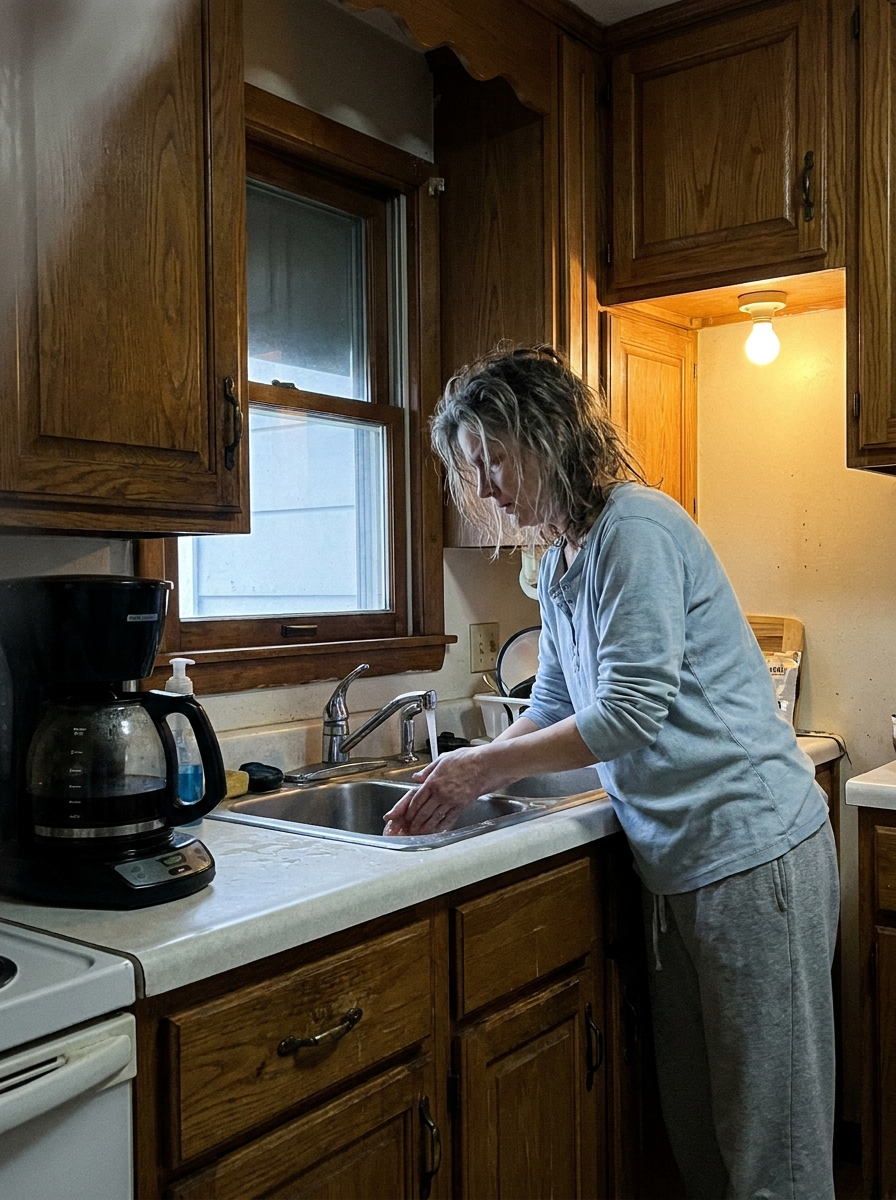
My Joints Had Been Talking to Me for Two Years. I Finally Decided to Listen. I want to share something that happened over the last several months, because a neighbor asked me about it last week and I realized I'd never written it down properly. For about two years, my body had been sending me signals I kept explaining away. The stiffness in the morning. Not dramatic stiffness — nothing that stopped me in my tracks or made me gasp. Just the slow kind. The kind where you swing your legs over the side of the bed and there's a moment before everything warms up where you're aware of every joint in your body in a way you weren't at forty. I'm sixty-one. My mother always said her fifties were when the quiet discomforts started arriving and her sixties were when they started staying. I assumed I was just on schedule. I'd wake up, sit on the edge of the bed, and flex my hands open and closed a few times before standing. It took a few minutes of moving around the kitchen — making coffee, running warm water over my hands — before things settled into something that felt like normal. My husband, who wakes up like a machine that never needs warming, would come downstairs to find me standing at the sink with my hands under the tap and he'd say "bad morning?" and I'd say "the usual." The usual. That's the phrase I'd normalized it into. By afternoon everything was fine. By the time I was making dinner I wasn't thinking about it at all. It was only mornings, and mornings eventually ended, and so I let it be. Until the weekend we went to see my sister. She lives about four hours away, and I'd been sitting in the passenger seat for the whole drive, which I don't usually do — usually we trade off. But I'd been dealing with a cold and I was tired, so I let my husband drive the whole way. When we pulled into her driveway and I got out of the car, it took me almost a full minute to straighten up properly. My lower back was stiff in a way that I felt in my hips, my knees, both sides. I stood in her driveway stretching and my husband looked at me with an expression I recognized as the expression he'd been trying not to make for several months. Concern, carefully packaged as normal. My sister noticed too. She didn't say anything, but she had that look sisters have — the one that says "I filed that away and we're going to talk about it later." Later came at Sunday breakfast, when my husband had gone out with her husband to look at something in the garden. She poured coffee and sat across from me at the kitchen table and asked, in the mild way she asks things, how I'd been sleeping. I told her about the mornings. The hands under the tap. The slow warming up. The way things settled by afternoon and I convinced myself it wasn't anything. She nodded. Not the nod of someone who doesn't know what you're talking about. The nod of someone who recognizes the story. She told me she'd been through something similar starting about three years ago. Morning stiffness, a kind of heaviness in her joints that wasn't pain exactly — she kept struggling to find the right word — more like resistance. Like her body had developed friction overnight that it had to work through before it could run smoothly. She'd mentioned it at her annual physical and her doctor had done some bloodwork and said her inflammatory markers were in a normal range but on the high side of normal, and that this was common at her age, and that staying active and eating well were the best things she could do, and that they'd keep an eye on it. She'd gone home and done what most of us do — looked it up, read some things that worried her, read some things that didn't, and then got on with her life. But she hadn't stopped looking. I asked her what she'd eventually done. She told me she'd had a conversation with her doctor about whether there was anything she could add to what she was already doing — not to replace the advice she'd been given, just to support her body at a level that diet and exercise alone might not be reaching. Her doctor had mentioned that there was decent research on certain plant compounds for supporting a healthy inflammatory response, and that if she wanted to try a supplement she should look for something with real ingredients rather than a proprietary blend, and come back and tell her how she got on. She'd spent a few weeks looking into beetroot. Specifically into the compound in beetroot called betalains — the pigment that makes it that deep, almost-black red — and what the research said about it. She'd read enough to feel that it was worth trying. She'd found a small brand called Rosabella that cold-pressed their beetroot at low temperatures rather than using a heat process, specifically because betalains are sensitive to heat and she wanted as much of the compound intact as possible. She'd been taking two capsules with a glass of water each morning for about four months when we had that conversation. I asked her how the mornings were. She said: "Better. Noticeably." She didn't offer me more than that. She didn't say it had fixed anything or reversed anything or that her markers were now perfect. She said the mornings were noticeably better, and that her last checkup had gone well, and that her doctor had said things looked good and to keep doing whatever she was doing. That was the whole conversation. We heard our husbands coming back and we moved on to other things. But I held onto it. I drove home thinking about the phrase she'd used: a level that diet and exercise alone might not be reaching. I'd been eating well for years. I walked four days a week. I took my fish oil every morning without fail. I'd been doing the right things. And still, every morning, the slow warming up. The hands under the tap. I don't have a dramatic turning point to tell you about. No single moment where I made a decision. I got home, spent a few evenings reading about betalains and dietary nitrates and what the research said about beetroot supporting the body's natural inflammatory response. I'm not a scientist and I don't have the background to evaluate research papers at a technical level, but I can read well enough to distinguish between the kind of research that goes back decades across many institutions and the kind that's one small study someone is leaning on hard. The research on beetroot for this kind of support went back a long way. I called my doctor's office. I talked to the nurse, explained what I was thinking about adding, and asked if there was any reason I shouldn't. She said beetroot supplements were generally well-tolerated and that unless I was on blood thinners or had a specific condition she wasn't aware of, it was a reasonable thing to try. She said to let them know at my next appointment how I was getting on. That was the conversation I needed to have before I started. I had it. Then I ordered a bottle of Rosabella. 1,300 milligrams of organic beetroot per capsule, cold-pressed at low temperatures to preserve the betalains. Two capsules with a glass of water in the morning. I want to be careful about how I describe what happened next, because I'm aware that the honest version doesn't lend itself to drama. The first week, I wasn't sure if I was noticing anything or wanting to notice something. Somewhere in the second week, the warming-up time in the mornings felt shorter. I wasn't keeping a log and I couldn't have given you a number — it was the kind of thing you notice the way you notice when background noise you've gotten used to stops. You realize it's quieter before you realize what the sound was. My husband noticed before he mentioned it. He told me later that he'd been watching the routine at the sink — the hands under the water, the standing there waiting — and that it had been happening less. I hadn't said anything to him. He'd been watching on his own. By the end of the first month, the mornings were different. Not fixed. Not transformed. Different. The stiffness that used to feel like something to manage had softened into something more like the ordinary creaking of a person who is sixty-one years old — present, but quiet. Background, not foreground. I want to be clear about what I mean and what I don't mean. I'm not telling you my doctor said anything dramatic at my last appointment. She looked at my labs, said things were in good shape, and we talked about my vitamin D and whether I wanted to revisit my dose. Nothing in the conversation pointed to a problem being solved. It was an ordinary appointment with ordinary results, which is what you want a doctor's appointment to be. I'm not telling you the Rosabella is responsible for that. I'm one person with one experience. I didn't run a controlled trial on my own body. I changed one thing and noticed a shift. That's all I can honestly say. What I can say is that I'm still taking it. Two capsules every morning. Added to what I was already doing — not replacing any of it. I still walk four days a week. I still take my fish oil. I still have my annual labs. The Rosabella sits next to the fish oil on the kitchen counter and that's where it belongs — as one part of a larger picture, not as a solution to anything. My sister has been on it for almost eight months now. She told me last month that her doctor said her most recent bloodwork looked the best it had in several years. She didn't tell me which markers she meant. I didn't ask. That wasn't the point. If you've been in a similar place — mornings that take longer than they used to, a heaviness in your joints that isn't dramatic but is persistent, the feeling that your body is working harder than it should to do things it used to do quietly — beetroot might be worth a conversation with your doctor or pharmacist. Not as a replacement for whatever care you're already under. Just as a "what do you think about this?" question, the way I asked. Talk to your doctor or pharmacist before adding any new supplement to your routine, especially if you're on any medication for cardiovascular health or inflammatory conditions. That conversation is what made me comfortable starting. It's what I'd tell anyone to do first. The brand I use is Rosabella. 1,300 milligrams of organic beetroot per capsule, cold-pressed at low temperatures to preserve the betalains. Two capsules with a glass of water in the morning. That's the whole thing. P.S. A few things I wish I'd known before I started. Rosabella has a 90-day money-back guarantee. If you're not satisfied for any reason, every penny back. I think that's the right policy for a supplement — it gives you long enough to actually assess whether it's doing anything for you. Bodies are different. Some people notice something within the first week or two. Others take longer. I'd give it at least a few weeks before you decide what to make of it. P.P.S. The cold-pressing matters, from what I read. Betalains — the compound that makes beetroot that deep red — are heat-sensitive. A lot of processing methods use heat, which is faster and cheaper. Rosabella chose to cold-press at low temperatures specifically to preserve more of the compound intact. I can't tell you what the difference is in a lab. I can tell you it was why I chose this one over others I looked at. P.P.P.S. They're a small operation. The beetroot is harvested on its own schedule, and they bottle on their own timeline. I keep an extra bottle in the house because I've seen the stock run low between harvests. I'd rather have it on the shelf than realize I've run out mid-month and have to wait. P.P.P.P.S. My neighbor — the one I mentioned at the start — started asking me about it after she noticed something in how I was moving at the block party last summer. She asked what I'd changed. I told her everything I just told you. She talked to her doctor first, then ordered a bottle. She's been on it about six weeks now. She called me last week to say the mornings are easier. I told her I know. P.P.P.P.P.S. I am not a doctor and I'm not in healthcare. Nothing in this post is medical advice. I'm one person who tried one thing and is sharing what happened, the way I'd tell a friend about something that worked for me. Please talk to your own doctor before adding anything new to your care. That's not a disclaimer I'm stapling to the end. It's the actual first step. https://track.tryrosabella.com/cdc16426-3e48-40a7-9fad-21098084f6cf Individual experiences vary. These statements have not been evaluated by the FDA. This product is not intended to diagnose, treat, cure, or prevent any disease.
Support stamina and heart health every day
"Best customer support ever. My issue was resolved quickly and professionally. I so love how the beetroot capsules are helping manage my blood pressure."
SEE DETAILSLike this ad? Make it yours.
Crush rebuilds this exact creative around your product — your brand, your colors, your offer — in about a minute.