Eat Smart with Dr. Amanda Johnson
Eat Smart with Dr. Amanda Johnson Facebook ad: “Unlock Your Body’s Full Potential”
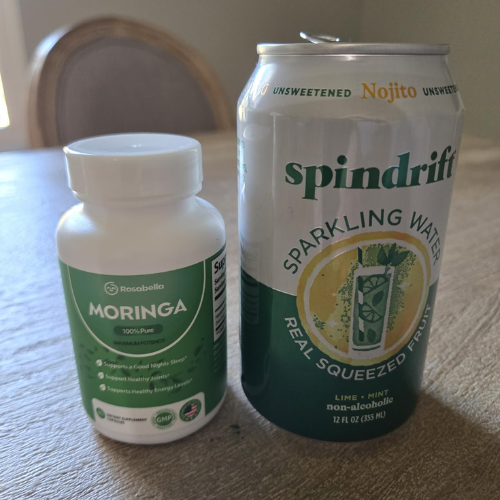
Ran for 2 days, from February 12 to February 14, 2026, the last day Crush saw it.
Run by Eat Smart with Dr. Amanda Johnson on Facebook. Crush is not the advertiser and does not verify its claims. See this ad in Meta's Ad Library(opens in a new tab)
Want an ad like this for your product?
Crush makes new ad images for your product from this ad: your logo, your product photo, your offer.
Trials from $19.95 USD, then $79.95 USD a month. Cancel anytime.
About this ad
- Meta Ad Library ID
- 1908517520540609
- Platforms
- Facebook, Instagram, Audience Network, Messenger and Threads
- Relaunches
- 0
Ad text
For 12 Years, I Exploited Vulnerable Women At Their Lowest. I Was Ruthless. Calculated. I Preyed On Their Symptoms Until They Gave Up. 8,347 Women. One Name Still Haunts Me. Jennifer Wallace. March 22nd, 2021. 2:14 PM. I can still see her file on my screen. Patient: Jennifer Wallace Age: 42 Occupation: ER nurse Dependents: Two children (ages 8 and 11) Requested Coverage: Comprehensive hormone panel + endocrinologist consultation + cortisol regulation treatment program Claim Amount: $2,340 Her doctor's notes were detailed: "Patient reports progressive cognitive decline over 14 months." "Forgetting critical procedures mid-shift. Brain fog severe enough to compromise patient safety." "Waking at 3 AM with panic attacks. Every night for 6 months." "Weight gain of 18 pounds despite calorie restriction and regular exercise." "Cortisol: 29 μg/dL (significantly elevated)." "Strong family history: mother experienced identical symptoms at age 44, never recovered." "Patient works night shifts in ER. States she's making dangerous mistakes." "Recommend immediate endocrine intervention before hippocampal damage becomes permanent." Every single symptom checked the "deny" boxes in our system. Brain fog? Too subjective. Panic attacks? Mental health issue, not endocrine. Weight gain? Lifestyle problem. Forgetting procedures? Performance issue, not medical. Family history? Not grounds for preventive coverage. Elevated cortisol? Not acute enough for specialist intervention. I scrolled down. A handwritten note was attached. Scanned into the file. "Please. My mother lost her mind at 44. She was a litigation attorney in Chicago—brilliant, sharp, called 'the machine' by her partners because nothing rattled her. Six months after she turned 44, she stood up in a deposition and couldn't remember the witness's name for two full minutes. Everyone watched her stand there silent. The name was written on every page in front of her but her brain couldn't connect the letters to meaning. By 46, she couldn't work anymore. She's spent the last twenty years at home. Can't remember what she ate for breakfast. Too anxious to drive to unfamiliar places. Cries when she can't find her car keys for the third time in a week. Every doctor told her it was 'just stress' or 'early dementia.' She thought her brain was broken forever. I just turned 42. My cortisol is 29. Higher than hers ever was. I work night shifts in the ER. Last week I almost gave a patient the wrong medication dosage. Caught it at the last second. My hands were shaking so badly I had to sit down. I'm forgetting critical things. Waking at 3 AM in a panic every single night. Gaining weight around my belly no matter how clean I eat. The exact same symptoms she had at my age. I'm terrified I'm going to disappear the same way she did. I have two small children. If I lose my mind like my mother did, they'll watch me become someone they don't recognize, just like I watched her. I can't afford $2,340 out of pocket. I'm barely making rent and keeping our insurance. Please help me before I cross the threshold she crossed at 46. Please." I read it twice. Then I deleted it from the official record. Notes weren't part of the approval criteria. I typed: DENIED - Requested services do not meet criteria for medical necessity. Symptoms insufficient to warrant specialist consultation and comprehensive treatment program. Patient may resubmit if condition worsens to acute level. Translation: Come back after you've lost your career and your mind. Then we'll cover it. I clicked SUBMIT. Claim 8,348. Moved to the next claim. Most names I forgot within minutes. Sometimes seconds. 200+ claims per day for 12 years. You don't remember names when you process that many denials. You can't. The system doesn't work if you remember them. But Jennifer Wallace's name didn't leave. That night I couldn't stop thinking about her note. Her mother—brilliant litigation attorney—standing silent in a deposition for two full minutes because her brain couldn't process the name written right in front of her. Twenty years at home after that. Identity shattered. Mind gone. And now Jennifer at 42 with cortisol at 29, making medication errors in the ER, watching herself disappear the same way. I'd deleted her plea. Like her terror wasn't real. Like her mother's twenty years of being lost didn't matter. Like the fact that she was literally endangering patients because her brain was dissolving wasn't an emergency. The next morning I pulled up her file again. Claim 8,348. Status: DENIED. No appeal filed. She'd given up. Just like they always do. Weeks passed. Her name kept surfacing. At dinner with my wife. Driving to work. Lying awake at 2 AM. I'd imagine what had happened after I denied her: She couldn't afford the $2,340 out of pocket. So she'd keep working night shifts in the ER despite the brain fog getting worse. Despite forgetting critical procedures. Despite almost killing someone because her brain couldn't process medication orders correctly. Because she had two kids to feed, rent to pay, insurance premiums to cover, and no choice but to keep going. Her cortisol was 29. Higher than her mother's had ever been. Destroying her hippocampus a little more every single shift. Eventually, maybe she'd make a fatal mistake at work. Maybe she'd give someone the wrong medication and they'd die. Maybe she'd get fired, lose her license, lose everything. Maybe she'd have a complete breakdown like her mother did. Maybe she'd spend the next twenty years at home—identity shattered, mind gone, terrified she had dementia—while her kids watched her disappear just like she'd watched her mother disappear. And I'd be the reason. Not the cortisol itself. But the reason she couldn't get help before it destroyed her. I told myself she was probably fine. That she figured it out on her own. That my denial didn't destroy her. But I didn't believe it. Six months later, another claim crossed my desk. Different woman. Same symptoms. Same story: healthcare worker in her 40s, brain fog compromising patient safety, 3 AM panic wake-ups, weight gain despite clean eating, elevated cortisol, terrified she was following her mother's path. I typed DENIED. And realized: I'm going to be thinking about her name in six months too. That's when I understood what I'd become. Not just a claims adjuster. A serial destroyer of women's identities. 8,347 women over 12 years. Most I forgot. But the ones I remembered? They haunted me. Because I knew exactly what would happen to them after I clicked DENY. And I did it anyway. I quit three weeks later. My wife asked what happened. I said: "Nothing. That's the problem. Nothing happens. They just disappear into themselves. And their daughters watch. And then it happens to them too." Three years passed. I moved to Wilmington, North Carolina. Started consulting for patient advocacy groups. Trying to make up for what I'd done. But Jennifer Wallace's name never left me. Claim 8,348. I'd see it in my mind at random moments. Her handwritten note. Her mother standing silent in that deposition for two full minutes. Twenty years at home after that. Mind gone. And Jennifer at 42, making medication errors in the ER, cortisol at 29, terrified she was next. The note I deleted. The claim I denied. For $2,340. I carried her name like a gravestone. For three years, I imagined her destroyed. Career lost after a fatal medication error. Medical license revoked. Complete breakdown like her mother. Twenty years at home, identity fractured, kids watching her disappear. All because I clicked DENY. Then one Saturday morning—April 13th, 2024—I was standing in line at a coffee shop in Wilmington. 10:23 AM. I saw her. At a table near the window. Two kids with her. And an older woman. My stomach dropped. Jennifer Wallace. I knew her face instantly. I'd pulled up her file hundreds of times over three years. Her photo from the submission. The one attached to Claim 8,348. She looked older now. 45, maybe 46. But it was her. And she looked... sharp. Alert. Present. The two kids. Older now. Eleven and fourteen. Laughing. Talking over each other. And the older woman next to her. Late 60s. Silver hair. But she was engaged. Following the conversation. Smiling at something one of the kids said. Not confused. Not lost. Sharp. Normal Saturday morning. Jennifer had no idea who I was. I could've walked out. I should have walked out. But I couldn't. I walked over. My hands were shaking. "Jennifer Wallace?" She looked up. Confused. "Yes?" "My name is James Chen." Silence. "I worked for your insurance company three years ago." Her face changed. Not recognition. Something colder. "I'm the one who denied your claim." She went completely still. The older woman looked at me. Then at Jennifer. "Claim 8,348. Hormone panel and endocrinologist consultation. $2,340. I'm the one who clicked DENIED." For about five seconds, no one said anything. Then Jennifer: "Why are you telling me this?" "Because I've thought about you every day for three years." I couldn't look at her. "Your note said your mother lost her mind at 44. That she spent twenty years at home, identity shattered, while doctors said it was 'just stress.' That you were 42 with the same symptoms starting. That you were terrified you'd disappear the same way. I deleted that note from your file. I denied your claim anyway. I quit three weeks later because I couldn't stop imagining what happened to you after I clicked DENY." Silence. Jennifer looked at the older woman. Then back at me. "You thought I'd lost my mind." "Yes." "You thought I'd ended up like my mother." "Yes." "You've been carrying that for three years." "Yes." She reached into her purse. Pulled out a piece of paper. Unfolded it. It was my denial letter. Folded. Worn at the creases. Like she'd carried it every day since. My name at the bottom. My signature. Claim number: 8,348. "I know exactly who you are." She looked at the letter. Then at the older woman. Then back at me. "Emma." The older girl looked up. "Watch your brother for a few minutes. Grandma and I need to talk to this man." "Mom—" "Just ten minutes. Stay at the table." Jennifer stood up. The older woman stood up too. Jennifer looked at me. "Walk with us." We walked outside. The morning air was cool. No one said anything for half a block. Then Jennifer: "This is my mother." The older woman looked at me. Sharp. Present. Clear. Not the woman I'd imagined. Not lost. Not gone. "After you denied me," Jennifer said quietly, "I couldn't afford the $2,340." Her voice was steady. We kept walking. "I kept working. Night shifts in the ER. Despite the brain fog getting worse." "I'd stand at a patient's bedside and realize I hadn't heard a word the doctor said for the past two minutes." "I'd pull up medication orders and have to read them three times to understand what they meant." "One night I almost gave a patient ten times the correct dosage of insulin. Caught it at the last second. My hands were shaking so badly I had to leave the floor." "That's when I knew I couldn't keep working." "But I had two kids. Rent. Insurance premiums. I had no choice." She paused. Stopped walking. Looked at me. "The 3 AM wake-ups got worse. Every single night. 3:17 AM. Heart pounding. Drenched in sweat. Couldn't breathe. Thought I was dying." "The rage would explode over nothing. I'd snap at my kids and then hate myself for it." "I was gaining weight around my belly despite eating 1,400 calories a day, walking 10,000 steps, doing yoga three mornings a week." "I was terrified. Exhausted. Making dangerous mistakes at work. And I knew—I knew—I was about eighteen months away from crossing the threshold." Her mother touched her arm. "The threshold my mother crossed at 46," Jennifer said. "Where your brain fog becomes so debilitating you can't do your job. Where you can't trust yourself to handle basic tasks. Where your identity as a competent person shatters and you start grieving the loss of who you used to be." We started walking again. "So I went back to my doctor. Showed him your denial letter. Asked him what I could do without insurance coverage." "He said: 'Try stress management. Maybe some ashwagandha for anxiety.'" "I tried the ashwagandha." "It helped a little. My anxiety dropped slightly. I felt calmer during the day." "But I was still waking at 3 AM in a panic. Still forgetting things. Still gaining weight." "My cortisol came down from 29 to 26. Better, but not fixed. Still dangerously high. Still destroying my hippocampus." "I knew what was coming next because I'd watched it happen to my mother." She gestured to the older woman walking beside us. "I'd watched her disappear. Not die. Disappear." "The sharp, fierce, brilliant woman who'd built a career on having the sharpest mind in the room became someone who couldn't remember what she'd eaten for breakfast. Who stayed home because social situations felt overwhelming. Who cried when she couldn't find her car keys for the third time in a week." Her mother nodded slowly. "I had maybe eighteen months before I became her," Jennifer said. “What the doctors didn't tell her—what they didn't know—was that elevated cortisol during your 40s isn't about stress. It's about estrogen and progesterone decline leaving cortisol completely unregulated.” “Like removing the brakes on a car that's been driving downhill for years. And when cortisol stays elevated for months, it doesn't just make you tired or anxious.” “It destroys the hippocampus—the part of your brain responsible for forming new memories and accessing existing ones. It keeps you locked in fight-or-flight mode 24/7, making sleep impossible even when you're exhausted.” “It signals your body to store every available calorie as belly fat because high cortisol makes your body think you're starving.” “And it creates a closed feedback loop: high cortisol → terrible sleep → more cortisol → worse sleep → even higher cortisol. “The problem wasn't stress. The problem was her hormones had left her cortisol system completely unregulated, and nothing she was doing addressed that. We reached a bench. All three of us sat down. "So I started researching. Not stress management. Not adaptogens that mask symptoms. Actual cortisol regulation." "The kind that addresses why cortisol stays elevated when estrogen and progesterone can no longer control it." She pulled out her phone. "That's when I found something that changed everything." "There's a specific nutrient profile that replenishes exactly what chronic cortisol elevation depletes." "Not a single nutrient. Not 'more magnesium' or 'better B vitamins.'" "A complete mineral and antioxidant matrix that provides the cofactors cortisol production exhausts, supplies adaptogenic compounds that help regulate the HPA axis, delivers anti-inflammatory polyphenols that protect the hippocampus from cortisol damage, and contains all nine essential amino acids needed to rebuild what cortisol breakdown destroys." "And it exists in one single plant: Moringa oleifera." "Not the cheap moringa powder on Amazon." "Not the 'superfood smoothie blend' at Whole Foods." "Therapeutic-grade moringa, harvested and processed in a way that preserves the exact nutrient profile needed for cortisol regulation." "I found study after study showing moringa's effect on cortisol:" "Reduced elevated cortisol by 23-38% in women with hormonal dysregulation." "Improved hippocampal function and memory formation in subjects with cortisol-induced cognitive decline." "Modulated HPA axis hyperactivity without causing adaptation or tolerance." "Provided measurable improvements in sleep quality within 7-14 days." "This wasn't about 'supporting adrenal health' or 'promoting relaxation.'" "This was about giving the body the exact raw materials it needs to regulate cortisol when hormones no longer can." She looked at me. "But here's what made me furious." "Most moringa supplements are made from mature leaves, grown at low elevations, heat-processed in ways that destroy vitamin C and heat-sensitive enzymes, mixed with fillers that block absorption, not tested for heavy metals or pesticides." "I tried three different brands. Took them faithfully for weeks. Nothing changed." "I'd spent months taking supplements that never had a chance of working." "But I also felt something I hadn't felt in months." "Hope." "Because if the problem wasn't moringa—if the problem was how it was processed and dosed—then maybe there was a version that actually worked." "I started researching which brands used therapeutic-grade standards:" "Young leaf harvest only." "Grown above 1,000 meters elevation." "Shade-dried or freeze-dried to preserve heat-sensitive nutrients." "100% pure with zero additives." "Third-party tested for purity and heavy metal contamination." "One name kept appearing." "Rosabella." "I ordered it." "The bottle arrived two days later." "I took the first dose that morning. Expected nothing. I'd been disappointed too many times." "But about three days later, I noticed something." She paused. "I slept until 4:30 AM instead of waking at 3:17." "On day seven, I got my cortisol retested." "It dropped from 26 to 22." "Not huge. Not life-changing yet. But the first time in eighteen months my cortisol had moved in the right direction." "I kept taking it. Two capsules every morning. Two in the afternoon." "By day fourteen, I slept through the night. Seven hours. Straight through." "By week six, my brain fog started clearing." "Not all at once. Gradually. Like a thick fog lifting slowly off a lake." "I could focus at work again. Could follow medication protocols without reading them three times. Could remember critical procedures." "By month three, my cortisol was down to 18." "By month six, it was 14." "Normal range. For the first time in two years." "The weight around my belly started coming off. Not from dieting—I didn't change anything. My body just stopped storing every calorie as fat." "I'm down twenty pounds now without trying." She looked at me. "But the weight wasn't the important part." "The important part was getting my identity back." "I could think clearly again. I could work without terror that I'd kill someone. I could be present with my kids." "I felt like myself again." She looked at her mother. "And then I took it to her." Her mother spoke for the first time. Her voice was clear. Steady. "I'd been lost for twenty years." She looked at me. "After the deposition where I couldn't remember the witness's name, everything got worse. By 46, I couldn't practice law anymore. I spent twenty years at home. Terrified I had early-onset dementia. Too anxious to drive to unfamiliar places. Too exhausted to do anything except exist." "My cortisol was stuck at 26 to 28 for years. Every doctor told me it was 'just stress' or 'part of menopause' or 'something I'd have to learn to live with.'" "I thought my brain was broken forever." "When Jennifer brought me the moringa, I didn't believe it would work. She'd brought me so many things over the years. Ashwagandha, rhodiola, magnesium, B-complex, omega-3s. Some helped a little. Most did nothing." "But I took it because she asked me to." "Two capsules that morning with water." "For the first three days, nothing dramatic changed." "Maybe I had slightly more energy in the afternoon. Maybe my mind felt a little less foggy." "On day four, I slept until 4:30 AM instead of waking at 3:17." "On day seven, I got my cortisol retested." "It dropped from 26 to 22." "The first time in seven years my cortisol had moved in the right direction." "I kept taking it. Two capsules every morning, two more in the afternoon." "By day fourteen, I slept through the night for the first time in years." "I called Jennifer the next morning crying." "I'd forgotten what it felt like to wake up rested." "By week six, my brain fog started clearing." "I could focus on reading again. Not just skim—actually read and retain what I'd read. I could follow conversations without having to ask people to repeat themselves. I could remember where I'd put my keys." "By month three, my cortisol was down to 17." "By month six, it was 13." "Normal range. For the first time in seven years." "The weight around my belly started coming off. I'm down twenty-two pounds now without trying." She paused. "But the weight wasn't the important part." "The important part was getting myself back." "I started gardening again. Joined a book club. Drove to unfamiliar places without anxiety. Had conversations where I was present, engaged, sharp." "I became myself again." "Not a different version. Not 'accepting my limitations.' Myself. The person I'd been before my cortisol hijacked my brain." "After twenty years." Jennifer pulled out the denial letter again. "If insurance had approved my claim, I would've spent $2,340 on hormone panels and endocrinologist consultations." "They would've told me what I already knew: my cortisol was elevated." "Then they would've recommended 'lifestyle changes.' Maybe hormone replacement therapy. Maybe antidepressants." "Nothing that would've actually fixed the cortisol dysregulation." "And I'd be drowning in medical debt." "I never would've found Rosabella." "My mother would still be lost." "Instead, I found something that actually worked." "For $40 a month." "This letter—" She held it up. "—forced me to find the real solution." "The one insurance would never cover." "Because they don't profit from $40 supplements that prevent brain deterioration." "They profit from catastrophic breakdowns that require years of expensive treatment." I stared at the letter. My name on it. My signature. Claim 8,348. "You've been taking it for three years?" "Every single day," Jennifer said. "Never missed." Her mother nodded. "Me too. For three years now." "My cortisol is still 14," Jennifer said. "Hers is still 13. Our brains work. No fog. No panic. No weight gain. No rage episodes." She looked at me. "I saved myself. And I brought my mother back from twenty years of being lost." "Because you denied me." We sat there in silence. Then her mother said: "I kept that letter because I needed Jennifer to remember something." She looked at her daughter. "That the system isn't designed to help women like us." "It's designed to bill us until we break." "And when we can't afford to break, we have to figure it out ourselves." Jennifer stood up. Her mother stood up too. "We need to get back to the kids," Jennifer said. "But I'm glad I saw you." "Because now you know." "You didn't destroy me." Her mother looked at me. "And you didn't condemn me to stay lost." Jennifer: "You freed us both." They walked back toward the coffee shop. I sat there. Staring at nothing. Realizing everything. I went home that afternoon. Pulled up my old files. The ones I'd kept before I quit. Claims for hormone regulation and cortisol treatment: 96% denial rate. Claims for psychiatric hospitalization, disability, long-term care: 97% approval rate. We paid millions to manage women who'd completely broken down. We refused to prevent the breakdown. Here's what I learned in 12 years: Insurance doesn't profit from keeping women's minds sharp in their 40s. It profits from catastrophic mental health crises. A $40 supplement? Not billable. Not covered. A $50,000 psychiatric hospitalization after complete breakdown? Fully covered. After your $8,000 deductible. Or twenty years of disability payments? Fully covered. The math is simple: They'd rather pay for decades of disability than $40/month for prevention. Why? Because most women don't completely break down. So they collect premiums. Deny preventive treatment. And gamble that you'll stay functional without it. It's not a healthcare system. It's a gambling system. And the house always wins. Why hormone and cortisol treatment gets denied every time: "Brain fog" isn't an emergency. "Panic attacks" are mental health, not endocrine. "Weight gain" is a lifestyle issue. "Making mistakes at work" is a performance problem. "Family history" isn't grounds for prevention. "Elevated cortisol" isn't acute enough. Until you have a complete breakdown. Then suddenly, it's covered. Then suddenly, it's medically necessary. Then suddenly, we approve everything. But by then your hippocampus is damaged. By then your career is destroyed. By then your identity has fractured. By then you've spent twenty years lost. By then it's too late. That night I couldn't stop thinking about what Jennifer said. "I saved myself. And I brought my mother back from twenty years of being lost." "Because you denied me." Not despite my denial. Because of it. Because insurance approval would've trapped her in a system designed to bill, not heal. Would've cost her $2,340 for tests that wouldn't fix the cortisol dysregulation. She never would've found Rosabella. Her mother would still be lost. Instead, she was forced to find the real solution. The one that actually worked. For three years, I'd carried Jennifer's name like I'd destroyed her. But she was sharp. Successful. Thriving. And her mother—lost for twenty years—was back. Sharp. Clear. Present. Because they'd both escaped the system I represented. For three years I'd been carrying Jennifer's name. Carrying the guilt of 8,347 denials. Carrying the weight of knowing exactly what happened to women after I clicked DENY. And slowly, that weight was lifting. Not because the guilt was gone. But because I finally understood: Jennifer didn't need me to approve her claim. She needed me to stop blocking her path. That's what I'm doing now. I'm getting out of your way. If you recognize the symptoms Jennifer had— - Brain fog that makes you question your competency. - Forgetting things you just learned or conversations you just had. - Waking at 3 AM with heart racing and panic for no reason. - Weight gain around your belly despite eating clean and exercising. - Rage or anxiety that feels disproportionate to what triggered it. - Fatigue that doesn't improve no matter how much you sleep. - Terror that you're losing your mind like your mother did. Don't wait for insurance to approve coverage. They won't. Don't wait for your doctor to prescribe something that actually fixes cortisol dysregulation. Don't wait until you cross the threshold where your brain fog becomes debilitating and your identity fractures. Jennifer found Rosabella three years ago after I denied her claim. Her mother had been lost for twenty years. Jennifer saved herself. And brought her mother back. I was the person who said no. I'm not doing that anymore. Most moringa supplements don't work. Here's why Rosabella does: - Young Leaf Harvest Only (Not Mature Leaves) Standard manufacturing uses mature leaves with much lower nutrient density. Cheaper to harvest. Weaker effects. Rosabella uses only young leaves picked at peak nutrient density before they mature. Maximum mineral and antioxidant concentration. They work. - Grown Above 1,000 Meters Elevation (Not Low-Altitude Farms) Low-elevation moringa has weaker mineral and antioxidant concentration. Rosabella sources exclusively from high-altitude organic farms in the Himalayas. Environmental stress produces higher nutrient density. The clinical dose that regulates cortisol. - Shade-Dried or Freeze-Dried (Not Heat-Processed) Heat processing destroys vitamin C and heat-sensitive enzymes that regulate the HPA axis. Rosabella uses traditional shade-drying methods that preserve the full nutrient profile. Cofactors intact. They reach your system. They work. - 100% Pure With Zero Additives (No Fillers or Flow Agents) Most brands add fillers and flow agents that block absorption. Rosabella is 100% pure moringa. Nothing added. Nothing blocking the nutrients your body needs to regulate cortisol. - Third-Party NSF Certified (With Published Lab Results) Most companies hide test results. Or don't test at all. Rosabella provides NSF certification for every batch and publishes independent lab results showing: - Exact nutrient content - Heavy metal testing - Pesticide screening - Certificate of Analysis You can see exactly what you're getting. Try Rosabella for up to 90 days. Track your symptoms weekly. If your cortisol doesn't come down— If you don't feel the brain fog lifting— If you don't sleep through the night— If you don't believe this works— Contact customer service for a full refund. No questions asked. You risk absolutely nothing. You're at a crossroads right now. Path 1: Wait for insurance to approve treatment they'll never approve. Wait for your doctor to recommend something that actually fixes cortisol dysregulation. Wait until symptoms force a catastrophic breakdown. Then insurance covers everything. After your career is destroyed. After your identity has fractured. After you've spent years or decades lost. After the damage is permanent. Path 2: Do what Jennifer did. Try a supplement that's actually formulated to therapeutic-grade standards. Track your cortisol. Give it an honest 90-day trial with zero financial risk. Jennifer chose the second path. It saved her mind. And brought her mother back after twenty years. Get it here: https://get.tryrosabella.com/rosabella/ny1/sp — James Chen Former Insurance Claims Adjuster (12 years) --- P.S. — Jennifer's cortisol dropped from 26 to 22 within seven days. From 26 to 18 within three months. From 26 to 14 within six months. Her mother's cortisol dropped from 26 to 22 within seven days. From 26 to 13 within six months. After being lost for twenty years, she got herself back. Your timeline might be different. But you won't know unless you try. P.P.S. — Every day you wait is another day your hippocampus deteriorates while insurance profits from denying prevention and approving catastrophic treatment. Don't wait for them to approve what they're designed to deny. Check if Rosabella is in stock here: https://get.tryrosabella.com/rosabella/ny1/sp
Where the ad sends people
shop.tryrosabella.com
Unlock Your Body’s Full Potential
“I’ve been feeling lighter, more energized, and more focused since starting Rosabella Moringa. I love how it’s helping me feel more balanced overall.”
Learn more: get.tryrosabella.com(opens in a new tab)