Migraine Research Institute
Migraine Research Institute Facebook ad: “The Real Reason Your Migraines Got Worse In Your 40s (It's…”
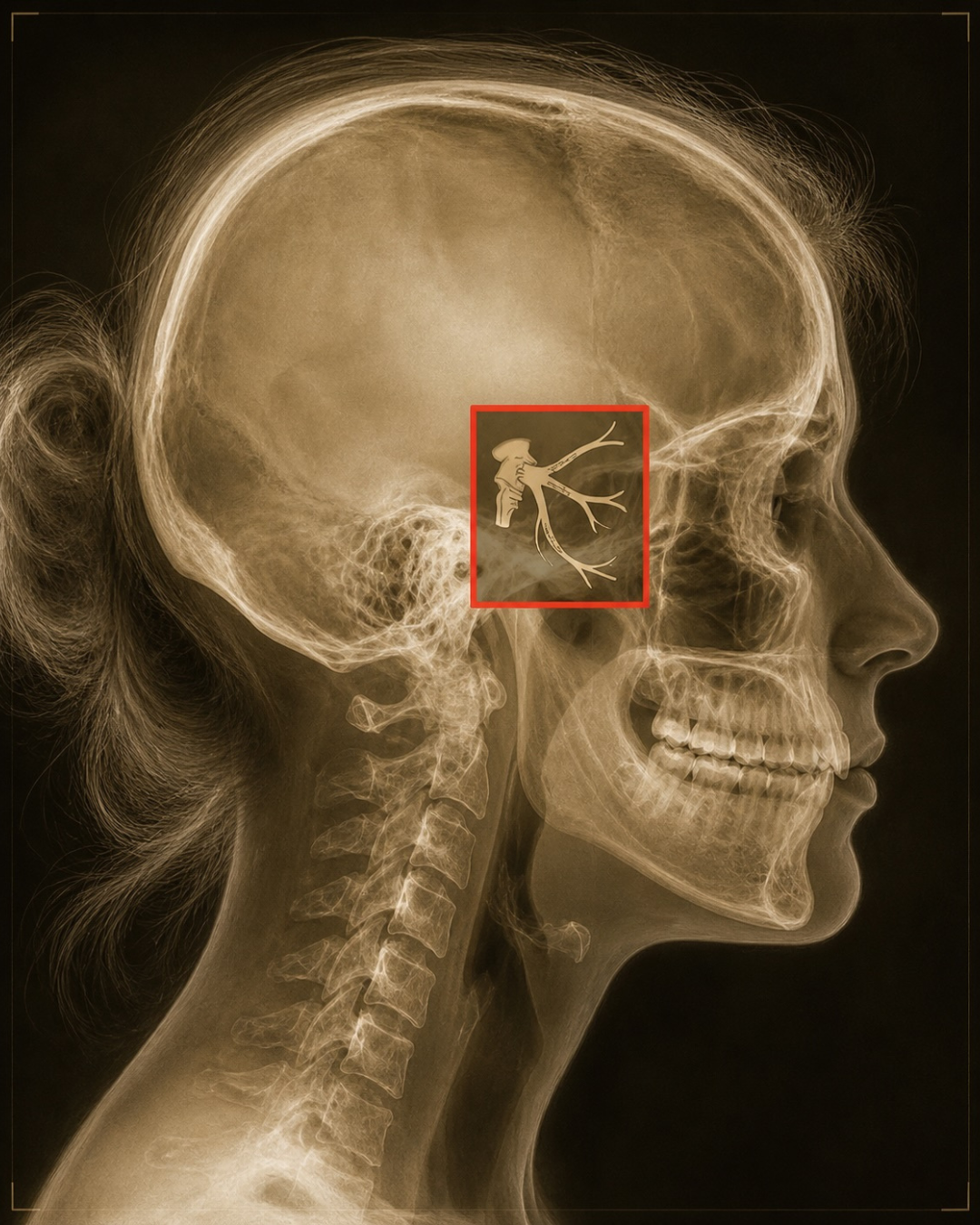
Ran for 32 days, from May 4 to June 5, 2026, the last day Crush saw it.
Run by Migraine Research Institute on Facebook. Crush is not the advertiser and does not verify its claims. See this ad in Meta's Ad Library(opens in a new tab)
Want an ad like this for your product?
Crush makes new ad images for your product from this ad: your logo, your product photo, your offer.
Trials from $19.95 USD, then $79.95 USD a month. Cancel anytime.
About this ad
- Meta Ad Library ID
- 1931428127498291
- Platforms
- Facebook, Instagram, Audience Network, Messenger and Threads
- Relaunches
- 0
Ad text
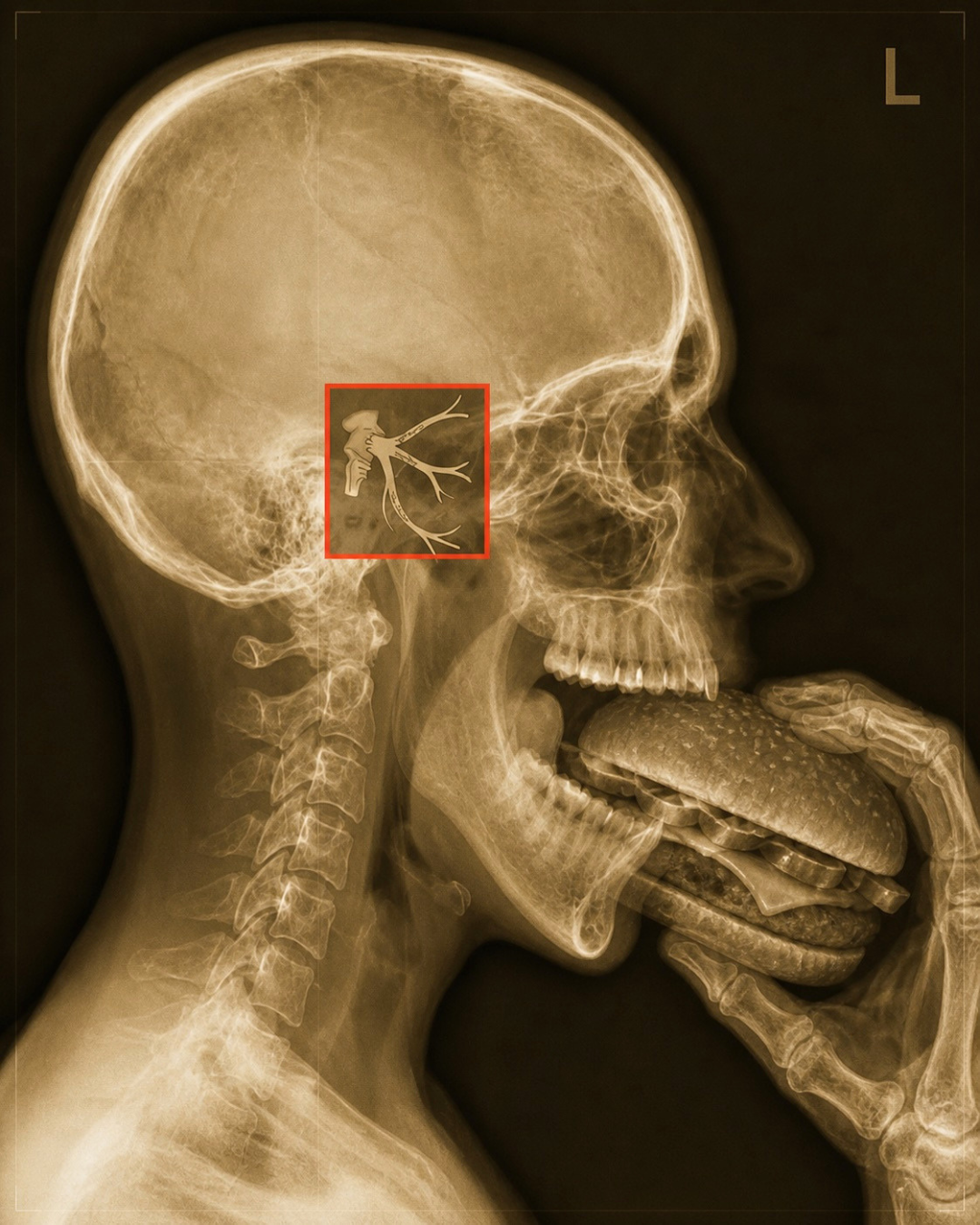
Migraines have NOTHING to do with Hormones, Perimenopause, or "your time of life." Let me explain. I have been a Neurologist for over 15 years, and I suffer from migraines myself. Let me tell you about my patient Diane. She's 48, mother of three, and for the past five years every single day has started the exact same way. She opens her eyes, and before she even sits up, she checks. Is it there? The pressure behind her left eye. The tightness wrapping around her temple. The dull, heavy throb at the base of her skull. It's always there. Some mornings it's a 5 and she can push through. Most mornings it's a 7 or 8 and she's already calculating which parts of her day she'll have to cancel. She'd been told by multiple doctors that her migraines were hormonal. Her gynecologist called it perimenopause. Her primary care said it was her cycle. Her endocrinologist tested her thyroid four times. She was on her third version of birth control trying to find the formulation that wouldn't trigger attacks. Her husband stopped asking how she feels. Her kids stopped asking if Mom is coming to their events. She stopped telling the truth years ago anyway. "I'm fine." After five years of this cycle, she'd tried everything to address what doctors called her "hormonal migraine"... First, her gynecologist switched her birth control three times. Combined pill, then progestin-only, then a hormonal IUD. Each switch came with weeks of waiting to see if the migraines would change. They didn't. Next, her endocrinologist tested her estradiol at multiple points in her cycle. Everything came back "normal for her age." She was told to wait until menopause — the migraines would probably resolve themselves. Then she tried hormone replacement therapy. Estrogen patches. Bioidentical hormones. Progesterone cream. She'd been told by countless practitioners that "stabilizing her hormones" was the answer. Then she tracked her cycle religiously for two years. Every migraine, every period, every ovulation logged. The pattern was supposed to reveal hormonal triggers. It didn't. Her migraines hit on day 4, day 14, day 17, and day 22. They weren't tied to her cycle. They were just there. Magnesium for "menstrual migraines." Vitamin B2. Coenzyme Q10. The supplements every hormonal-headache article online recommended. Some helped slightly. None of them stopped the attacks. By year four, she was on three medications: a triptan for acute attacks, low-dose Topamax for prevention, and an SSRI her psychiatrist prescribed because "perimenopause causes anxiety and the anxiety is probably making your migraines worse." She still had migraines. So she finally came to see me. I spend my days treating migraine cases that most doctors never get clear answers for. Chronic migraine, migraine with aura, vestibular migraine, hemiplegic migraine, I've seen it all. When I examined Diane and reviewed her history, I could tell right away what was happening. And this is the part almost no one explains to patients... Her trigeminal nerve was chronically sensitized. Firing pain signals before the headache ever started. I explained that a migraine doesn't begin with pain. Pain is the last stage. The migraine actually starts 20 to 40 minutes earlier, when the trigeminal nerve — the largest nerve in your head, running from the base of your skull through your temples and behind your eyes — becomes activated and starts sending cascading pain signals. By the time you feel the throbbing, that nerve has been firing for almost an hour. And then I told her something her gynecologist would never have told her, because it wasn't in her gynecologist's specialty to know. Hormones don't cause migraines. They lower the firing threshold of an already-sensitized trigeminal nerve. Estrogen withdrawal — the drop right before your period, the fluctuation in perimenopause — is one of dozens of inputs that determines whether the nerve fires on a given day. But it isn't the cause. The cause is a hyper-reactive trigeminal nerve that fires on inputs a normal nervous system would absorb without noticing. This is why HRT didn't fix her. Why birth control changes didn't fix her. Why "waiting until menopause" wouldn't have fixed her either. Every hormonal intervention was modulating one input on a nerve that fires on twenty. Lower one input and the nerve still fires on the others. And you can't fix a nerve problem with pills that take 30 to 45 minutes to reach your bloodstream. By the time the Excedrin dissolves, gets absorbed, enters the bloodstream, crosses the blood-brain barrier, and reaches the pain receptors — the migraine is fully established. You're an hour behind. And you can't fix a nerve that fires at the surface of your skin with medications that work systemically through your blood. The delivery method is wrong. You're sending relief to the wrong place, arriving at the wrong time. The problem was that Diane needed to calm that nerve at the source. Directly. Immediately. The moment it starts firing, not 45 minutes later. I could see the frustration on her face. She'd spent thousands of dollars and five years of her life chasing a hormonal answer that didn't exist. She asked me if there was anything that actually worked. And that's when I told her about something I'd been developing. See, I'd been seeing the same pattern over and over again in my practice. Smart, desperate women in their 40s and 50s who'd been told the same thing — "it's hormonal, just wait it out." Years of HRT, birth control changes, supplements, and tracking apps. Every treatment trying to stop a migraine that was already fully activated. Nobody addressing the nerve at the moment it starts firing. So I focused on something most treatments ignore entirely: calming the trigeminal nerve topically, right where it surfaces closest to the skin — at the temples, behind the ears, and at the base of the skull. That's when I developed a topical roll-on formula using specific compounds studied for their neurological calming properties. Magnesium Glycinate — applied topically, it stabilizes nerve excitability and reduces the firing that triggers the pain cascade. Critically, it does this regardless of what's happening with your estrogen, progesterone, or thyroid levels. The nerve doesn't care about your hormones. The nerve responds to magnesium at the contact point. Wild Peppermint and Menthol Crystals create an immediate cooling sensation that interrupts the pain signal at the nerve surface — not by numbing it, but by activating competing sensory pathways that quiet the pain transmission. Chamomile calms the peripheral tension that feeds into migraine episodes. And Feverfew Extract, studied for decades for migraine frequency reduction, helps reduce nerve reactivity over time. All five working together, applied directly to where the trigeminal nerve lives, at the moment the migraine begins. Not 45 minutes later through your bloodstream. Seconds later, at the source. I opened my drawer and showed Diane the roll-on. It's called Florus Relief. She was skeptical. After three birth control changes, HRT, supplements, and Topamax, she was supposed to believe a roll-on would help? I told her I understood. And I told her this was one of the rare times I was comfortable saying: if it doesn't help, you get your money back. That's why I back it with a full 90-day guarantee. Feel relief or it's free. So she decided to give it a shot. First time, she felt the familiar pressure starting behind her left eye on a Tuesday afternoon. Instead of reaching for the Excedrin, she rolled Florus across her temples and behind her ears. The cooling hit within seconds. The pressure didn't escalate. It peaked at a 3 and faded by dinner. Second week, she caught three migraines at the first sign. All three stayed below a 4. By week four, she'd gone five consecutive days without a migraine. Hadn't happened in five years. She called my office and the receptionist said she was crying. Now, Diane isn't the only patient I've recommended Florus Relief to. Over 7,405 migraine sufferers have tried it. Women and men who'd been told for years that their migraines were hormonal, genetic, stress-related, or "just bad luck." The majority who use it consistently — applied at the first sign, directly to the trigeminal nerve pathway — report significant improvement within the first few weeks. So if you've been told your migraines are hormonal, perimenopausal, or "your time of life" — and you've changed birth control three times, tried HRT, taken every supplement Google recommended, and you're tired of waiting for menopause to maybe save you — you deserve to try something that targets the nerve itself. In seconds. Without entering your bloodstream. Without modulating one more hormone on a nerve that fires regardless of them. Florus Relief is topical, non-invasive, takes 10 seconds to apply, and is backed by a full 90-day guarantee. If this sounds like what you've been dealing with, you can learn more at the link below. → Read The Full Breakdown on Why Hormonal Treatments Don't Reach The Nerve, And What Does (There are cheap imitation roll-ons popping up on Amazon. The real Florus is only at the official site.) P.S. If your gynecologist has told you to "wait until menopause" — please understand that the trigeminal nerve does not become less sensitized after menopause. The frequency of attacks may shift, but the underlying mechanism continues. The hormonal answer was never going to be the answer.
Where the ad sends people
florus.com
The Real Reason Your Migraines Got Worse In Your 40s (It's Not What Your Gynecologist Told You)
If you've been told your Migraines are "hormonal," you've been treating one input on a nerve that fires on twenty inputs. Here's what's actually happening.
Learn more: florus.com(opens in a new tab)