Linda Miller
Linda Miller Facebook ad: “Think You're Just Getting Old?”
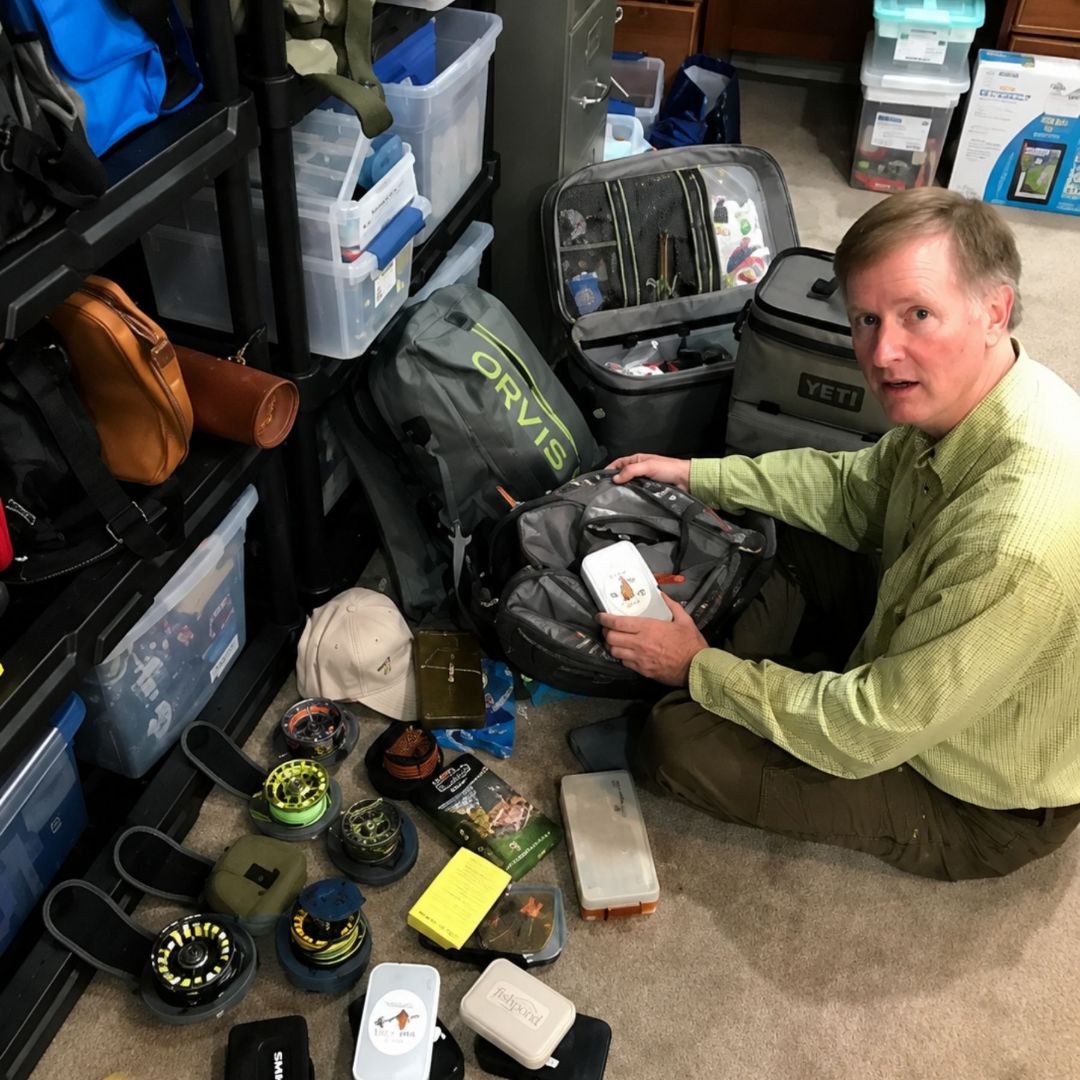
Ran for 16 days, from June 13 to June 29, 2026, the last day Crush saw it.
Run by Linda Miller on Facebook. Crush is not the advertiser and does not verify its claims. See this ad in Meta's Ad Library(opens in a new tab)
Want an ad like this for your product?
Crush makes new ad images for your product from this ad: your logo, your product photo, your offer.
Trials from $19.95 USD, then $79.95 USD a month. Cancel anytime.
About this ad
- Meta Ad Library ID
- 1934825371239196
- Platforms
- Facebook, Instagram, Audience Network, Messenger and Threads
- Relaunches
- 0
Ad text
Somebody told me once that you don't lose a man like my husband all at once. You lose him a Saturday at a time. I didn't understand what she meant. I do now. My name is Linda. I've been married to Gary for 34 years. He's a machinist - was a machinist, thirty-one years at the same plant - but that's not what he'd tell you he is. Ask Gary what he is and he'll say one word: fisherman. His father put a fly rod in his hands when he was nine. Fifty-three years later he was still on the water every Saturday God gave him. Not lake fishing with a cooler. Fly fishing - waders in the current, rod in his hand, flies he tied himself at the bench in our garage the night before. His hands were the steadiest hands I ever saw on a person. He tied flies the way some men play chess - patient, quiet, every thread placed with a precision that made you hold your breath watching. Three hundred flies in the boxes in our garage. Every one tied by hand. Every one caught a fish. And our grandson Ethan - Kyle's boy, nine years old, the spitting image of Gary at that age - Gary had started taking him to the river at six. The first time Ethan caught a trout on a fly Gary had tied, Gary called me from the bank. He never calls from the river. In thirty-four years the river was his quiet place and the phone stayed in the truck. But that morning he called, and all he said was, "Lindy, he got one. On the elk hair caddis. You should see his face." Gary hasn't been to the river in fourteen months. It started in his hands. Of course it did - his hands were his whole identity. They started cramping in the mornings. He'd sit on the edge of the bed opening and closing his fists, trying to remind them what they were for. Five minutes. Then ten. Then I'd hear the bathroom faucet running - hot water over his knuckles, coaxing the stiffness out before he could grip a coffee mug. He stopped tying flies on Friday nights. He didn't announce it. He just stopped going to the garage after dinner. The bench lamp stayed off. The vise stayed empty. I asked him once. He looked at his hands, opened them, closed them, and said, "My fingers won't do what I tell them anymore, Lindy. I tried last week when you were at the store. Sat there twenty minutes and couldn't finish a single fly." He said it flat. Already grieved. Then the rest of him went the same way. His legs couldn't hold him in the current - he started fishing from the bank, then the dock, then not at all. He couldn't haul the boat off the trailer. Couldn't carry his own gear down to the water in one trip. One Saturday I looked out the kitchen window and he'd gone down to the dock just to sit near the water, and he'd fallen asleep in the chair with the rod leaning against the railing where it had leaned for months, untouched. I took him to his doctor. Good man, seen Gary for years. He pulled up the chart, scrolled, nodded. "Gary, your bloodwork looks excellent. You're in good shape for your age." I asked about the hands. "Common at this age. Some stretches, maybe a CoQ10." I asked about the exhaustion. He looked at me over his glasses, not unkindly, the way a doctor looks at a wife asking too many questions. "He's sixty-three, Linda. Stay the course." I drove home gripping the wheel thinking: his numbers are excellent, and the man I married is disappearing. The thing nobody tells you is that it happens in the spaces between normal life. You're loading the dishwasher and you hear the pickle jar hit the counter twice because his grip gave out, and you hear him slide it to the edge to press it against his stomach with both hands. A man who built our dock with hand tools, opening a jar with his stomach. You don't turn around. You both pretend it didn't happen. Kyle noticed too. He stopped bringing Ethan over on Saturdays. Didn't announce it - just stopped offering. He told me on the phone one night that he'd dropped Ethan at the dock and come back to find the boy sitting there alone; Gary had fallen asleep in the chair after twenty minutes and Ethan hadn't wanted to wake him. "He sat out there alone for two hours, Mom. He's nine. He just waited." My son's voice cracked. "What's happening to him?" And I said what I always said. "The doctor says he's fine. He's just getting older." The Saturdays went quiet. No truck in the driveway. No small voice yelling "Grandpa!" through the screen door. Just Gary in his chair, the TV on, his eyes half-closed, and the rod leaning against the dock railing. Then one Thursday I came home and Gary was in the garage - not at the bench, but standing over his fly boxes, all of them laid out, putting them into a cardboard box from the liquor store. "What are you doing?" He didn't look up. "Giving these to Kyle. For Ethan. When he's old enough. I can't tie them anymore and I can't fish them anymore. They shouldn't sit here going to waste." His voice was steady. He'd already decided. He wrote ETHAN on the top with a Sharpie, then laid his fly rod across the top of the box - ran his thumb along the cork grip the way you touch something you're saying goodbye to. I stood in that garage doorway - the same doorway where I used to sit with my coffee on Friday nights and watch him tie under the lamp - and watched my husband pack fifty-three years of Saturday mornings into a box. His doctor said he was the healthiest he'd been in a decade. I almost didn't go to the church potluck that month. I'm glad I did. A woman I didn't know sat down next to me - Ruth, new to town, widowed eight months. We talked the way women do at these things, and when she asked about Gary, it came out of me before I could stop it: the hands, the river, the box with our grandson's name on it. "He's sixty-three and he's acting like he's done living." Ruth set down her fork. It wasn't pity on her face. It was recognition. "My husband watched the same thing happen to himself," she said. "Did everything his doctors told him. More protein. Physical therapy. The shakes. Got weaker every year while every chart said he was fine. And nobody once told him why- until a younger fellow, some kind of researcher, explained it to him plain. After that he got it back. I watched it happen." "Got what back?" "His strength. The thing they kept calling age." She folded her napkin. "It's got a name, Linda. Mitochondrial dysfunction." And she explained it the way her husband had explained it to her - slowly, like she'd said it at her own kitchen table many times. "Inside every muscle cell are tiny power generators. Thousands of them. Mitochondria, they're called, and their whole job is to make the energy the cell burns to do everything - including rebuilding muscle out of the protein you eat. When you're younger, those generators are plentiful and they run hot. Protein goes in, the body sends the signal to build, and the cell's got the power to act on it. The muscle grows. "After 60, those generators start dying off. Fewer of them, and the ones left run weak. The protein still goes in. The body still sends the signal. But the muscle cell hasn't got the power to do anything with it anymore. The order arrives, and there's nobody with the energy left to carry it out." I thought about Gary on the edge of the bed every morning, flexing his fingers. "So Gary's been eating his eggs and doing his exercises," Ruth said, "and the order to build goes out every morning - and his muscle cells have got no power to answer it. His body keeps breaking muscle down the way it always has. Breaking down, never building back up. That's the hands that won't tie the fly. That's the legs that won't hold the current. He's not failing, Linda. The advice is. None of it brings the dead generators back to life." "Think of it like loading a car full of groceries and turning the key to nothing," she went on. "The engine's dead. Doesn't matter how full the tank is - no engine, the car goes nowhere. That's been Gary's muscle. Plenty of protein going in, no engine to run on it." "And it's not some fringe notion," she added. "They've measured it in older men and women for twenty years. Counted the generators in their muscle cells at every age - the older the person, the fewer they've got, the less energy those cells make. The young cells are full of working engines. The old ones are running on fumes. Nobody just says it to the people it's happening to." "So what brought it back for your husband?" "Two things have to happen," she said. "You have to restart the engines. And you have to open the fuel line so the energy actually gets where it's needed. There's an amino acid called leucine that restarts the engines - in the research, a concentrated dose switched the cell's own machinery for building new mitochondria back on. The generators multiplied, the energy climbed back up. Regular protein's only got a little leucine, not enough to do it in an older man, but a concentrated dose gets the engines turning over again. And there's a compound called Velositol that opens the fuel line - older muscle cells have got a sluggish, half-closed line that won't let energy through, and it restores it. In a study, the same small amount of protein built twice as much muscle when they added it. Doubled it." "One restarts the engine," she said. "The other opens the fuel line." She wrote a name on a napkin and slid it across the table. "This is what had both, at the real doses. One scoop in a glass of water in the morning. I'm not telling you to take him off anything his doctor gives him. I'm telling you what got my husband back on his feet when every chart said he was fine." I looked down at the napkin. Muscle Defense. I ordered it that night at the kitchen table while Gary slept. I didn't explain the science. I just set a glass of water with a scoop mixed in next to his coffee on Friday morning and said, "Take this. It's for circulation and strength. For me." Thirty-four years - if I ask, he does it. The first few days, nothing. I didn't tell him I was watching. Then, somewhere in the second week, I came home from the store and the chair was empty and the TV was off. I looked out the kitchen window and Gary was on the dock - not asleep. Head up. Watching the water. Hands loose and open on his knees. He hadn't walked down there on his own in months. Week three, I heard the garage door, and then the bench lamp clicked on. I went to the doorway. Gary was standing at the vise, a hook clamped in it, a spool of thread in his left hand. Not tying yet. Just holding it. His hand was steady. He saw me. "Don't get excited," he said. "I'm just seeing if I can still do it." "I'm not excited. I'm folding laundry." Twenty minutes later he came inside, poured a glass of water, and said, "I finished one. An elk hair caddis. Not my best. But I finished it." The same fly Ethan caught his first trout on. I nodded and said, "That's good, Gary." And then I went into the bedroom and pressed my hand over my mouth so he wouldn't hear me. By week four he was at the bench three nights that week. I brought my coffee back to the garage doorway and sat in my old spot for the first time in over a year and watched my husband tie flies under the lamp, his fingers knowing where everything was without looking. Week five, he called Kyle. "Bring Ethan over Saturday morning. I want to take him to the pond. I tied some new flies and I want to see if they work." Saturday at 7:15 the truck pulled up and a small voice came through the screen door - "Grandpa!" - and Ethan hit Gary at the waist and Gary caught him and lifted him. Not all the way. But enough. His hands held. They walked down to the dock. Two figures, one tall, one barely reaching his grandfather's hip, a rod over each shoulder and a fly box under Gary's arm - a new box, new flies, tied that week under the lamp. Kyle stood next to me at the kitchen window. After a while he said, "Mom. What happened?" And I said, "I met a woman at church." It was enough for now. Ethan caught a bluegill on the elk hair caddis twenty minutes later and screamed the same scream he'd screamed three years ago. Gary didn't call me from the bank this time. He didn't need to. I was thirty yards away at the window, crying into a dish towel. That cardboard box with ETHAN on it is back in the garage now. Gary carried it home from Kyle's three weeks ago, didn't say a word, just set it on the bench, opened it, and put the fly boxes back where they'd always been. The rod's on the dock - leaning against the railing, but not forgotten. Waiting to be picked up Saturday morning by a man whose hands work again. I'm telling you this because you might be where I was. Watching someone you love disappear a Saturday at a time. Watching his hands fail him in the morning, watching him give up the one thing that made him who he is, while a doctor looks at a chart and says everything's fine. If the man you love is sliding like that - the grip going, the legs going, the thing he loves gathering dust in the garage - and everyone keeps telling you it's just age, maybe it isn't. Maybe nobody's told him about the dying generators. A stranger at a church potluck told me, because somebody had once told her. I'm telling you now so you don't have to wait for your own Ruth. Muscle Defense. One scoop in a glass of water in the morning. The leucine restarts the engines the senior protein never could. The Velositol opens the fuel line his muscles need to run on. No more doing everything right and getting weaker anyway. Gary's on the water every Saturday again. He ties flies on Friday nights under the lamp. Ethan caught four fish last weekend on flies his grandfather tied the night before. None of that was possible fourteen months ago. All of it is possible now. 👉 https://alphanutritionboost.com/special-offer-fra6/ P.S. If you're the wife reading this and something in your husband has been dimming for years - you're not imagining it and you're not being dramatic. The doctor's been watching the chart. You've been watching the man. You're closer to the truth than the chart is. P.P.S. One scoop in a glass of water in the morning. That's the whole thing. Give it the first couple of weeks and watch his hands in the morning, watch the stairs, watch what he does on a Saturday. Gary felt the mornings get easier first. P.P.P.S. Muscle Defense has a 60-day money-back guarantee. If his strength doesn't come back, every penny back, no questions asked. The system that spent years telling Gary he was "fine for his age" never offered to give back a single one of those Saturdays. This one at least puts its money where its mouth is. P.P.P.P.S. It's a small operation and they sell out - Ruth told me she's had to wait for a restock twice, so I keep an extra tub in the house now. If you've watched someone you love lean a rod against a wall and stop picking it up, don't wait for the next empty Saturday to go by.
Where the ad sends people
alphanutritionboost.com
Think You're Just Getting Old?
Learn more: alphanutritionboost.com(opens in a new tab)