
Inactive· since Jul 4, 2026
- 13
- days it ran
- 0
- relaunches
Ad copy
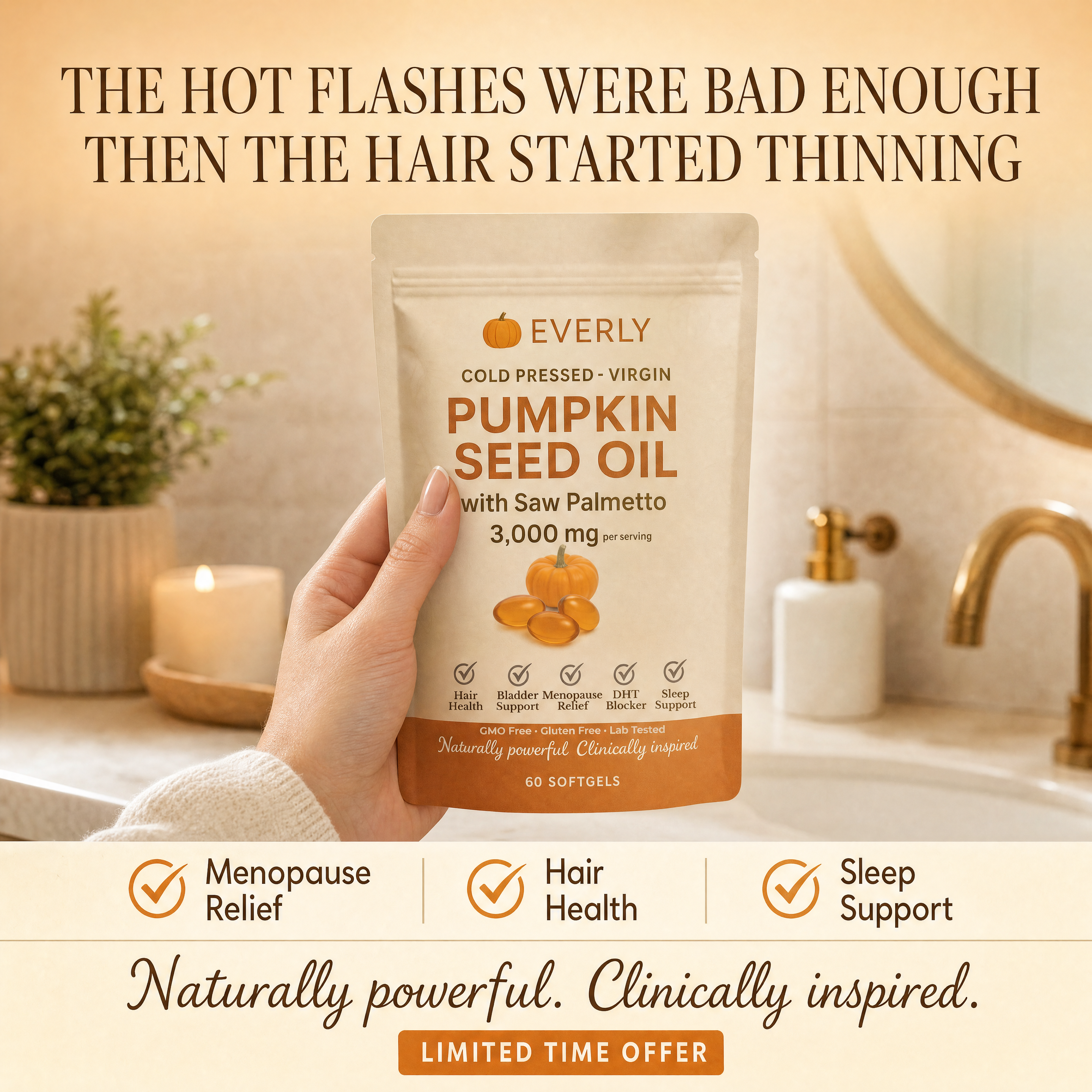
Retired firefighters at the Cleveland Clinic's urology program were supposed to have the worst prostates in the building. Decades of disrupted sleep. Shift work destroying their circadian rhythms. Sitting in rigs for hours with compressed pelvic floors. Chronic dehydration from working structure fires. Stress hormones flooding their systems around the clock. The kind of hormonal damage that swells a prostate to twice its size by age 55. No recovery between shifts. No hormone regulation. No relief from the constant inflammation building inside their bodies year after year. When the Cleveland Clinic's Men's Aging Initiative launched its prostate screening program in 2007, the urology team assumed they'd find an epidemic of enlarged prostates among retired first responders. So Dr. James Whitfield's team started tracking 634 retired firefighters between ages 55 and 75. They expected to find prostates swollen beyond normal. Bladders strained from years of compression. Men getting up four, five, six times a night to urinate. Instead, they found something that broke every model they had. 89 Retired Firefighters With Prostates the Size of a 30-Year-Old's The data didn't make any sense. Digital rectal exams. Transrectal ultrasounds. PSA panels. Urinary flow-rate testing. Out of 634 aging retired firefighters, 89 showed zero prostate enlargement over a 30-month observation window. No swelling. No urinary obstruction. No nighttime frequency. Their PSA levels -- the blood markers that spike when a prostate is under stress -- were lower than sedentary men fifteen years younger who'd never worked a shift in their lives. Dr. Whitfield ran the bloodwork twice, convinced the lab had mixed up the samples. "These numbers are impossible," he told his team during a Tuesday morning review. "These men should be textbook BPH cases." But they weren't. Some of these retired firefighters were in their early 70s. Still sleeping through the night without a single bathroom trip. Still reporting strong urinary flow, no urgency, no dribbling. Meanwhile, their fellow retirees -- same age, same career, same stress exposure -- were on Flomax, scheduling TURP surgeries, or wearing pads because they couldn't make it from the couch to the toilet in time. Something was protecting that group of 89. And Dr. Whitfield needed to figure out what. Their Medical Files Looked Exactly the Same The team spent eleven months turning over every variable. They compared service records -- identical exposure profiles. They studied medication histories -- nothing unusual. They tested genetics -- a completely normal population spread across all ethnic backgrounds. They pulled diet logs, exercise surveys, alcohol intake questionnaires. Nothing explained it. The 89 men with young-looking prostates had no common prescription. No shared surgical history. No genetic marker that separated them from the group whose prostates were the size of lemons. Dr. Whitfield was ready to mark it as an unexplained variance and submit the study as-is. That's when a dietetics resident noticed something the urology team had completely ignored. The "Old Wives' Tale" Supplement Nobody Thought Twice About Marcus Torres was a nutrition researcher completing his residency rotation in the urology department. Not a surgeon. Not a urologist. While the doctors were hunting for pharmaceutical explanations, Marcus was cataloging what these men were eating and supplementing on their own. And he noticed a pattern that stopped him cold. Those 89 firefighters with pristine prostates? Every single one had been taking the same kind of supplement for years. A dark, bitter oil in softgel form. Nothing expensive. No flashy label. Just cold-pressed pumpkin seed oil -- a traditional remedy their European and Midwestern grandmothers had sworn by for "men's plumbing." "What if it's not their prostates that are different?" Marcus asked during the next case review. "What if something in this oil is preventing the swelling from happening in the first place?" The lead urologist scoffed. "You think a pumpkin seed pill is outperforming finasteride?" But Marcus wasn't talking about prostate supplements. He was talking about what that oil does to the hormone that destroys the prostate. The Hormone Analysis That Changed Everything Marcus convinced Dr. Whitfield to run one final round of bloodwork. This time, they didn't just measure PSA. They measured DHT -- dihydrotestosterone -- the hormone that directly causes prostate tissue to swell. Here's what most men are never told: Your body produces testosterone. Normal. Healthy. But there's an enzyme called 5-alpha reductase that converts that testosterone into DHT. DHT is the hormone that binds to prostate receptors and forces the tissue to grow. It's the same hormone that miniaturizes hair follicles and thins the hair on your head. The same hormone that irritates the bladder wall and triggers that desperate urgency to urinate. It's not your prostate that's broken. It's DHT building up because nothing is blocking the enzyme that creates it. Marcus pulled DHT levels and 5-alpha reductase activity markers for all 634 firefighters. Then he divided them into two groups: the 89 with zero prostate enlargement, and everyone else. The difference was staggering. The 89 firefighters taking cold-pressed pumpkin seed oil showed DHT levels 54% lower than the rest of the group. Their 5-alpha reductase enzyme activity was dramatically suppressed. The testosterone was still there -- healthy, normal levels. But the conversion to DHT had been blocked at the enzyme level. "Their bodies are still producing testosterone," Marcus said, staring at the comparison charts. "But the enzyme that turns it into prostate poison is barely functioning." Then he showed Dr. Whitfield something even more disturbing. When Firefighters Stopped Taking the Oil, Their Prostates Swelled Within Months Marcus had found 14 cases buried in the follow-up records. Firefighters who'd been part of that protected group of 89 -- zero prostate swelling, pristine urinary function. Then they'd stopped taking the pumpkin seed oil. Moved. Changed pharmacies. Ran out and forgot to reorder. One man's wife passed away and he stopped taking care of himself altogether. Within 4 to 8 months of stopping, every single one showed measurable prostate growth on their follow-up ultrasounds. PSA climbing. Nighttime bathroom trips returning. Urinary flow weakening. One man went from sleeping through the night to getting up five times. In six months. The protection disappeared the moment the DHT blocker left their system. Dr. Whitfield sat in his office for twenty minutes without speaking. "We need to get this in front of the department," he finally said. That's when his division chief scheduled a closed-door meeting. The Study That Was Quietly Shelved Dr. Whitfield was told the findings were "promising but premature." That the sample size needed "expansion" before any clinical guidance could be issued. That recommending a pumpkin seed supplement could "create liability for the institution" and "undermine established treatment protocols." The Cleveland Clinic's pharmaceutical advisory committee -- whose members consult for the same companies manufacturing prostate drugs -- reviewed the data. Their verdict? "Interesting preliminary findings. Further research warranted. No changes to clinical recommendations at this time." The study was archived. No journal submission. No press conference. No update to the BPH treatment guidelines that funnel millions of men toward pharmaceutical interventions every year. Dr. Whitfield was rotated to a different research track within four months. But Marcus kept copies of everything. The bloodwork. The ultrasound comparisons. The DHT panels showing 54% suppression in the pumpkin-seed group. Because he understood exactly why the study had been killed. The $14 Billion Industry That Needed Your Prostate to Keep Swelling Flomax. Finasteride. Dutasteride. Tamsulosin. Prostate medications that cost $200 to $400 a month -- for the rest of your life. Specialist office visits every six months. Ultrasounds billed at $800 each. PSA panels every quarter. And the real profit center: TURP surgery. Laser ablation. UroLift procedures. Rezum water vapor therapy. $15,000 to $30,000 per procedure. Often repeated. The entire BPH treatment industry is built on one assumption: That prostate enlargement is inevitable. That it's just "what happens when men age." That your only options are to medicate, manage, and eventually cut. But those 89 firefighters proved that's a lie. Prostate swelling isn't inevitable. It's what happens when DHT builds up unchecked because nothing is blocking the enzyme that creates it. And you can block it with a softgel that costs less than a dollar a day. Pharmaceutical companies couldn't let that study see daylight. Not when their entire revenue model depends on your prostate getting bigger every year. The Problem Is That 97% of Pumpkin Seed Oil Supplements Are Completely Worthless Here's what Dr. Whitfield's team discovered when they analyzed what those 89 firefighters had actually been taking. It wasn't just "pumpkin seed oil." It was cold-pressed, virgin pumpkin seed oil -- extracted without heat. This matters more than anything else in this entire story. Here's why. Most pumpkin seed oil on the market is produced by roasting the seeds at high temperatures, then pressing them. That roasting process is cheaper. Faster. Produces more oil per batch. But it destroys beta-sitosterol -- the plant compound inside pumpkin seeds that actually blocks 5-alpha reductase and stops DHT production. Heat-processed pumpkin seed oil retains the flavor. Retains the color. Even retains enough trace compounds to put "pumpkin seed oil" on the label. But the active DHT-blocking molecule is cooked out of it. That's why millions of men buy pumpkin seed oil capsules from Amazon or their local pharmacy, take them for months, and feel absolutely nothing. It's not that pumpkin seed oil doesn't work. It's that roasted pumpkin seed oil has had the working ingredient destroyed before it ever reached the capsule. You can tell the difference immediately. Cold-pressed virgin pumpkin seed oil is deep, dark reddish-green. Almost black. Thick and rich. Roasted pumpkin seed oil is pale yellow. Thin. Light. The color tells you everything. If your pumpkin seed oil is light-colored, the beta-sitosterol is gone. You're swallowing dead oil. One Small Company Finally Got It Right Marcus Torres eventually left clinical research. He took the data with him. And he spent three years trying to find a supplement manufacturer willing to do what the data demanded: Cold-press virgin pumpkin seed oil at the exact potency levels from the study, then pair it with saw palmetto -- the second compound that prevents DHT from rebinding to prostate and bladder tissue even after it's been blocked. The breakthrough came from working with a small direct-to-consumer brand that wasn't beholden to retail margins or pharmacy shelf-space deals. They figured out how to match the exact specifications: True cold-pressed virgin extraction -- no heat, no roasting, no beta-sitosterol destruction. 3,000mg clinical dosing per serving -- the same concentration levels that blocked DHT in the study. Saw palmetto added to prevent rebound -- so DHT doesn't just find an alternate pathway back to the tissue. Made in the USA. Third-party lab tested for potency and purity. Deep red softgels. The color of oil that still has its active compounds intact. Not pale yellow capsules full of dead, roasted oil that can't block a thing. After two years of sourcing and testing, they perfected it. That's how Everly Cold Pressed Virgin Pumpkin Seed Oil with Saw Palmetto was born. The same kind of formulation that accidentally protected 89 retired firefighters from prostate enlargement while their peers were scheduling surgeries. Now available to anyone who's tired of getting up three, four, five times a night. Here's What Happens When You Block DHT Every Day Robert, 63, hadn't slept through the night in seven years. Three, sometimes four trips to the bathroom. Every single night. He'd stand at the toilet for two minutes waiting for a weak, stuttering stream. Then he'd crawl back to bed knowing he'd be up again in ninety minutes. His doctor put him on Flomax. It helped for a few months, then the side effects started. Dizziness every time he stood up. A stuffy nose that never cleared. And a problem in the bedroom that his wife noticed before he did. His son sent him a link to Everly after reading about the buried Cleveland study. Robert was skeptical. He'd tried saw palmetto alone. He'd tried cheap pumpkin seed oil from Walgreens. Nothing. But he noticed the Everly softgels were different -- cold-pressed, dark red, 3,000mg. The first week, he noticed his stream was slightly stronger. By week two, he was only getting up twice a night instead of four times. By month two, he slept from 11 PM to 5:30 AM without waking up once. He stood in the bathroom the next morning and cried. Six months later, his PSA had dropped to levels his urologist hadn't seen on his chart in a decade. "I don't understand what you're doing differently," his doctor said. Robert just smiled. He knew exactly what was different. Lisa, 52, was told her bladder urgency was "just perimenopause." Three different doctors. Three times she heard the same thing: "It's hormonal. It'll pass." But it didn't pass. It got worse. She couldn't sit through a movie. Couldn't drive forty minutes without mapping out gas stations along the route. Couldn't laugh or sneeze without that split-second panic. And her hair was thinning at the temples -- slowly, steadily, month after month. Her ponytail was half the thickness it was two years ago. Nobody told her that DHT doesn't just attack prostates. In women, DHT thins the bladder wall, weakens pelvic tissue, and miniaturizes hair follicles the same way it does in men. Her sister -- a nurse -- told her about cold-pressed pumpkin seed oil and the DHT connection. Lisa started taking Everly. Within ten days, the urgency eased. She sat through an entire two-hour church service without once thinking about the bathroom. Within a month, she noticed fewer hairs on her pillowcase in the morning. Within three months, her hairdresser asked what she'd changed. "Your temples are filling back in." Lisa still takes two Everly softgels every morning. She says she'll never stop. David, 58, had been watching foam build up in his toilet bowl for two years. Every time he urinated -- thick, frothy foam that sat on the surface of the water and didn't pop. He Googled it. Kidney damage. Protein leaking through the kidneys. Possible kidney disease. His doctor ran bloodwork and told him his GFR was "borderline" and to "drink more water and come back in six months." That was the entire plan. Drink water and wait. Meanwhile, David was exhausted by 2 PM every day. Brain fog so thick he couldn't remember his daughter's phone number. His face was puffy every morning -- around the eyes, along the jawline. He looked ten years older than he was. A buddy from his bowling league had been taking Everly for his prostate. Mentioned offhand that his foamy urine had cleared up after about a month. David ordered a three-pack. The first thing he noticed -- within a week -- was his energy in the afternoon. The fog started lifting. By week three, the puffiness around his eyes was noticeably reduced. By month two, he looked down into the toilet and saw clear, foam-free urine for the first time in over two years. His doctor ran follow-up bloodwork at his next visit. GFR had improved. Kidney markers stabilized. His doctor actually wrote "improved renal function" in his chart for the first time. David's been on Everly for fourteen months now. He bought a bag for his father. And his brother. The Science Was Always There That 2007 Cleveland Clinic screening measured prostate volume, PSA, DHT, urinary flow, and 5-alpha reductase enzyme activity in 634 retired firefighters over 30 months. The 89 men taking cold-pressed pumpkin seed oil showed: Zero prostate enlargement over the 30-month observation period 54% lower DHT levels compared to non-users Maintained normal urinary flow while other men showed progressive obstruction No nighttime urination increase while the rest of the group averaged 3.4 bathroom trips per night This wasn't a coincidence. This was the exact biochemical mechanism that prevents the prostate from destroying a man's sleep, dignity, and quality of life. But the data was shelved to protect a multi-billion-dollar treatment industry that profits from your prostate getting bigger. Here's What You Need to Know Before You Buy Any Pumpkin Seed Oil The supplement aisle is drowning in worthless pumpkin seed oil capsules. Pale yellow pills made from heat-roasted seeds. Beta-sitosterol cooked out before the oil ever touched a capsule. Low doses -- 500mg, 1,000mg -- nowhere near the clinical threshold that actually suppresses 5-alpha reductase. No saw palmetto. Nothing to prevent DHT from rebinding even if a trace of blocking occurs. These products exist to collect your money, not to block the hormone that's swelling your prostate and waking you up every ninety minutes. That's What Makes Everly Different Everly uses true cold-pressed virgin extraction -- no heat, no roasting. The beta-sitosterol stays intact. 3,000mg per serving -- the clinical-level dosing that actually blocks 5-alpha reductase. Saw Palmetto included -- to prevent DHT from rebinding to tissue receptors after it's been displaced. Deep red softgels. The color of oil that hasn't been cooked into uselessness. GMO-free. Gluten-free. Third-party lab tested. Made in the USA. This isn't a watered-down imitation. This is the kind of formulation that protected 89 retired firefighters from prostate enlargement while their peers lined up for surgery. That's why over 800 people have left five-star reviews. That's why I take it every single morning. That's why I give it to every man in my family over 45 -- and every woman dealing with bladder urgency or thinning hair. Here's the Deal Right now, Everly is running a limited-time bundle offer: Buy One -- $39.99 (Save 33%) Buy 2, Get 1 Free -- $79.99 (Most Popular -- Save 56%) Buy 3, Get 2 Free -- $119.99 + Free Shipping (Save 60%) Every order is backed by a 30-day money-back guarantee. Use it for a full month. If you're not sleeping longer, peeing stronger, and feeling the difference in your energy and your hair... send it back. Full refund. No questions. But fair warning: Everly is a small company. They cold-press every batch from raw, unroasted pumpkin seeds. That process is slower and more expensive than what the big supplement brands do with their heat-roasted garbage. Their last restock sold out in days. If you click and they're already gone, I'm sorry. I can't hold one aside. 89 Retired Firefighters Kept Their Prostates the Size of a Young Man's for One Reason The study was shelved because it threatened a $14 billion prostate-drug industry. But now you know the truth. Your prostate isn't broken. Your bladder isn't weak. Your hair isn't "just thinning with age." It's DHT. And you can block it today -- with the same kind of cold-pressed pumpkin seed oil those firefighters were taking. Click below before they restock and sell out again. https://try.shopeverly.shop/esl
🎃 Natural Support for Your Daily Routine
“I’ve been feeling stronger and more balanced since taking Everly Pumpkin Seed Oil. My bladder feels so much calmer, I’m sleeping through the night again, and my hair feels thicker than it has in years. I love how natural it feels — just pure support for my body.”
LEARN MORELike this ad? Make it yours.
Crush rebuilds this exact creative around your product — your brand, your colors, your offer — in about a minute.