Daily Bread
Daily Bread Facebook ad: “DAILY BREAD | INDUCTIVE BIBLE STUDY”
Ran for 5 days, from August 26 to August 31, 2026, the last day Crush saw it.
Run by Daily Bread on Facebook. Crush is not the advertiser and does not verify its claims. See this ad in Meta's Ad Library(opens in a new tab)
Want an ad like this for your product?
Crush makes new ad images for your product from this ad: your logo, your product photo, your offer.
Trials from $19.95 USD, then $79.95 USD a month. Cancel anytime.
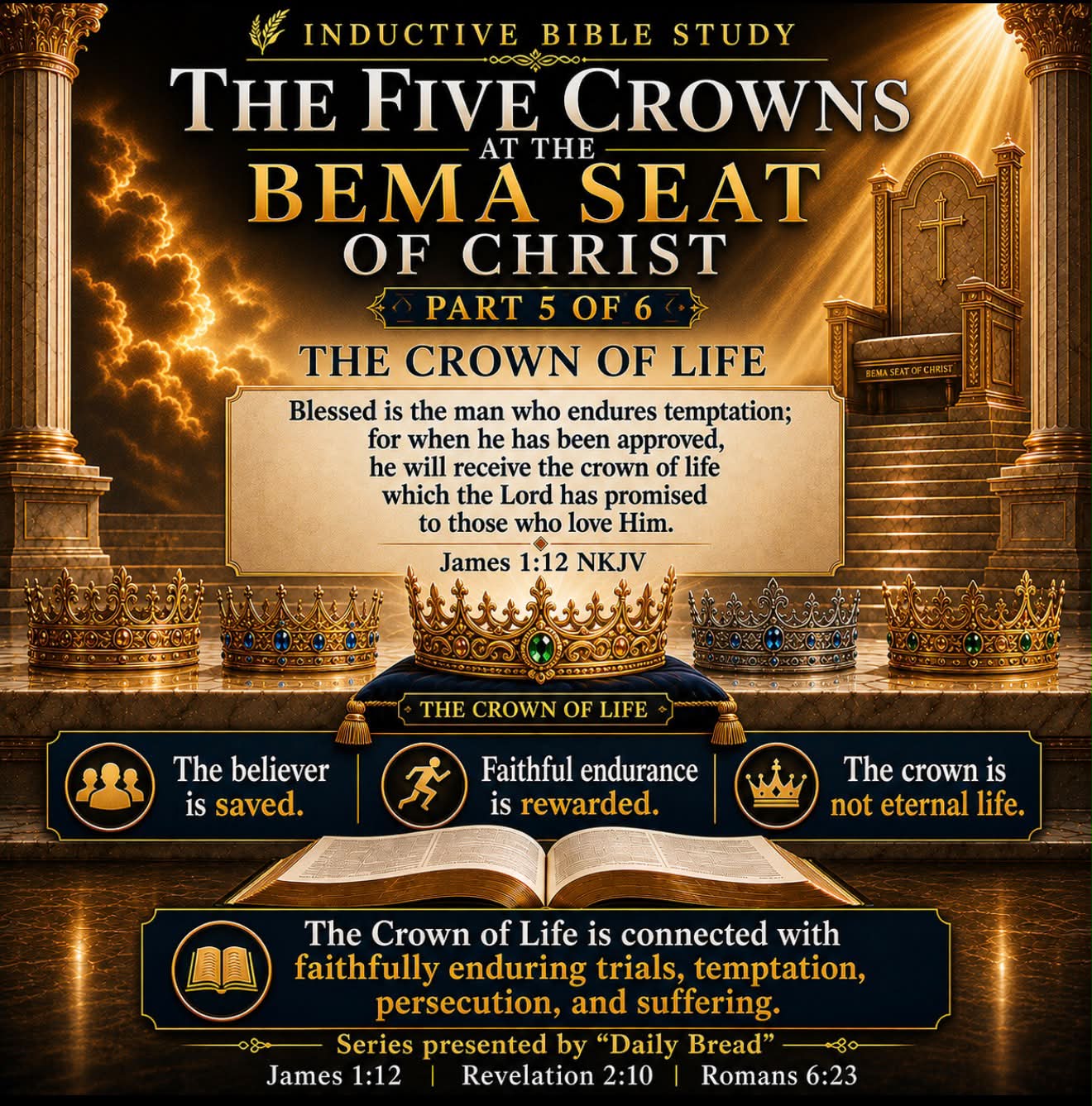
About this ad
- Meta Ad Library ID
- 1965403184102320
- Platforms
- Facebook, Instagram, Audience Network and Messenger
- Relaunches
- 0
Ad text
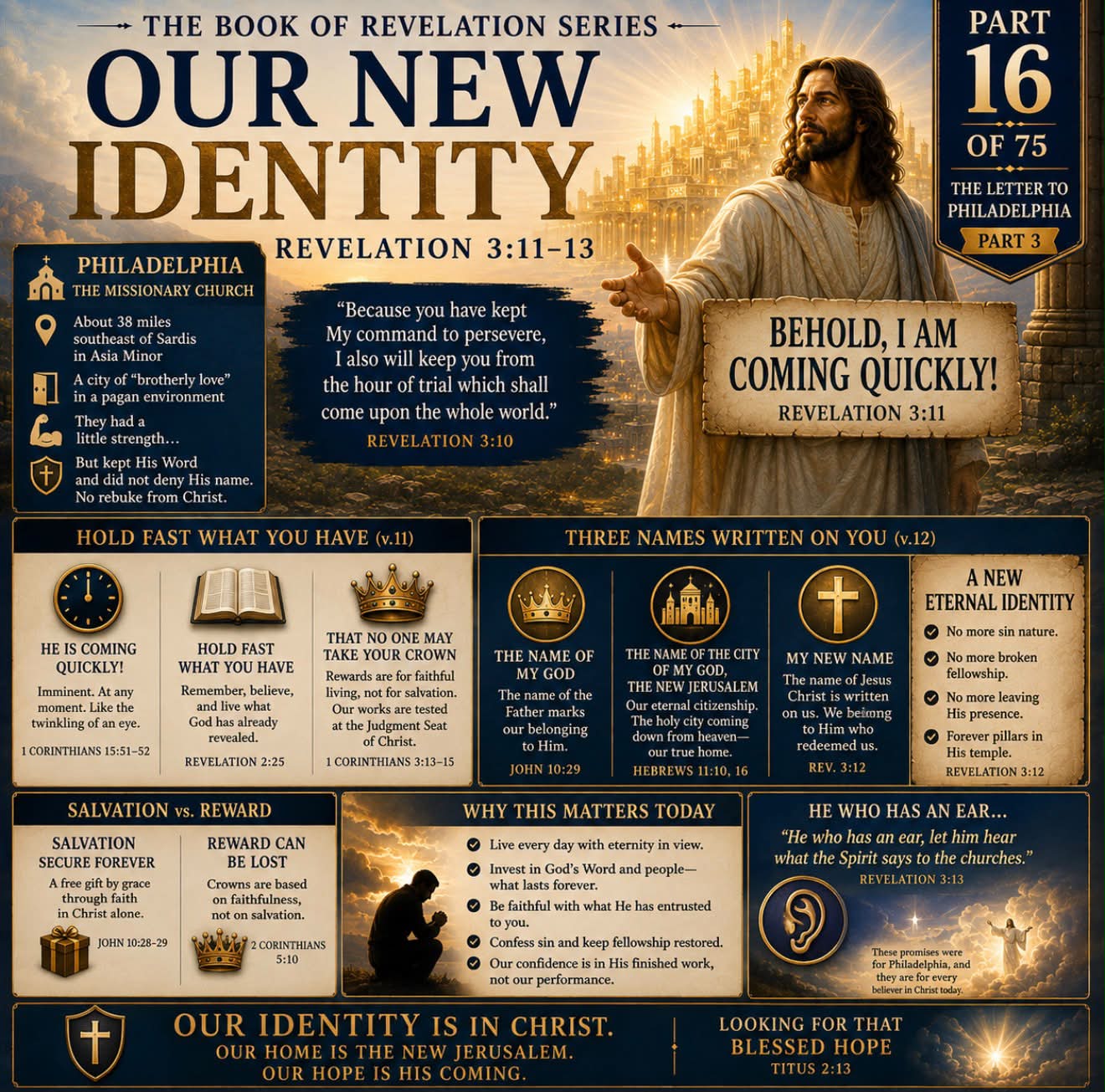
🌾 DAILY BREAD | INDUCTIVE BIBLE STUDY August 26, 2026 THE BOOK OF REVELATION SERIES | PART 16 OF 75 OUR NEW IDENTITY THE LETTER TO PHILADELPHIA | PART 3 📖 PRIMARY TEXT: REVELATION 3:11–13 We now finish Christ’s letter to Philadelphia. This little church had “a little strength,” yet they had kept Christ’s Word, refused to deny His name, walked through the door He opened, and endured persecution without receiving a single rebuke from Him. Christ had just promised to keep His Church “from the hour of trial which shall come upon the whole world” (Revelation 3:10). Now He turns their eyes toward His coming, their future reward, and their eternal identity. His message is both urgent and deeply encouraging: “Behold, I am coming quickly! Hold fast what you have, that no one may take your crown.” Revelation 3:11 NKJV. 🔎 OBSERVATION 1. “BEHOLD, I AM COMING QUICKLY!” Revelation 3:11 begins with Christ’s promise: “Behold, I am coming quickly!” The word translated “quickly” carries the idea that when the event occurs, it happens suddenly and swiftly. First Corinthians 15:51–52 describes the transformation of believers occurring “in a moment, in the twinkling of an eye.” The word translated “moment” is atomos, something indivisible. The Rapture will not slowly unfold over a long period. It will happen instantaneously. But Christ’s coming is also presented throughout the New Testament as imminent. No prophetic event must first occur before Christ can come for His Church. Every generation of believers is therefore called to live with the expectation that He could come at any moment. 2. IMMINENCY MAKES PROPHECY PRACTICAL Biblical prophecy is not merely information about future events. Scripture repeatedly connects Christ’s coming with the way believers live now. Second Peter 3:11 asks, in light of the coming destruction of the present heavens and earth, “what manner of persons ought you to be in holy conduct and godliness?” Knowing Christ could come at any moment changes priorities. It affects what we invest in, what we tolerate, how we use our time, how we speak, and what matters most to us. The prophetic Word repeatedly turns our attention toward the only things that possess eternal significance: God’s Word and people. Isaiah 40:8 says, “The grass withers, the flower fades, but the word of our God stands forever.” Jesus likewise said, “Heaven and earth will pass away, but My words will by no means pass away” (Matthew 24:35). Everything earthly is temporary. God’s Word endures, and people will exist eternally. That should shape where we invest our lives. 3. “HOLD FAST WHAT YOU HAVE” Christ does not tell Philadelphia to discover some new spiritual secret. He says: “Hold fast what you have.” This echoes what He told the faithful believers in Thyatira: “Hold fast what you have till I come” (Revelation 2:25). Second Peter repeatedly emphasizes remembrance. The Christian life is often less about discovering something new and more about becoming firmly established in what God has already revealed. Jeremiah 6:16 says: “Stand in the ways and see, And ask for the old paths, where the good way is, And walk in it; Then you will find rest for your souls.” The world constantly promises something newer, deeper, more exciting, or more spiritual. Scripture repeatedly points us back to truth already revealed. We do not need Christianity reinvented. We need God’s Word accurately understood, faithfully believed, and consistently applied. 4. FAITHFULNESS BEGINS WITH WHAT WE ALREADY KNOW It is easy to focus upon everything in Scripture we have not yet learned. But Christ’s exhortation raises a more immediate question: Are we faithful to what we already understand? Perhaps we do not know everything about prophecy, theology, doctrine, or every difficult passage. None of us does. But there are truths God has already made clear. Do we believe them? Do we live according to them? James 1:22 says, “But be doers of the word, and not hearers only, deceiving yourselves.” Knowledge is meant to become wisdom through application. 📖 INTERPRETATION 5. “THAT NO ONE MAY TAKE YOUR CROWN” Christ continues: “…that no one may take your crown.” Revelation 3:11 NKJV Notice what Christ does not say. He does not say, “Hold fast so no one takes your salvation.” He does not say, “Hold fast so your name remains in the Book of Life.” He does not say, “Hold fast so you qualify for the Rapture.” The issue is reward. A crown is something awarded for faithfulness. Eternal life is a free gift received through faith in Christ. Rewards concern how believers live after receiving that gift. Once again Revelation keeps salvation and discipleship distinct. Salvation is secure. Reward can be lost. 6. THE JUDGMENT SEAT OF CHRIST After the Rapture, believers will appear before the Judgment Seat of Christ. This is not a judgment determining heaven or hell. That question was settled the moment we believed in Jesus Christ. Paul writes: “For we must all appear before the judgment seat of Christ, that each one may receive the things done in the body…” 2 Corinthians 5:10 NKJV First Corinthians 3:13–15 explains that the believer’s works will be tested. Some endure and receive reward. Others are burned. Yet concerning the believer whose works are burned, Scripture says: “he himself will be saved, yet so as through fire.” The believer remains saved. But reward can be forfeited. This is exactly why Christ tells Philadelphia to hold fast. 7. SCRIPTURE DESCRIBES DIFFERENT CROWNS The New Testament describes several crowns connected with faithful Christian living. These include the imperishable crown associated with disciplined Christian living (1 Corinthians 9:25), the crown of rejoicing connected with fruitful ministry to others (1 Thessalonians 2:19), the crown of life associated with faithfully enduring trials (James 1:12; Revelation 2:10), the crown of glory connected with faithfully shepherding God’s people (1 Peter 5:2–4), and the crown of righteousness associated with loving Christ’s appearing (2 Timothy 4:8). These rewards are not trophies for human pride. Revelation 4:10 pictures the twenty-four elders casting their crowns before the throne. Ultimately, reward becomes another opportunity for worship. 8. A BELIEVER CAN SUFFER LOSS OF REWARD Second John 8 gives a direct warning: “Look to yourselves, that we do not lose those things we worked for, but that we may receive a full reward.” Paul himself took this seriously: “But I discipline my body and bring it into subjection, lest, when I have preached to others, I myself should become disqualified.” 1 Corinthians 9:27 NKJV Paul was not afraid of losing eternal life. He was concerned about being disqualified from reward. That distinction matters enormously. If every warning to believers is interpreted as a threat of hell, passages about discipleship and reward become distorted. The Christian life has consequences, but eternal security remains intact. 9. OUR MOTIVES WILL ALSO BE EVALUATED The Judgment Seat of Christ concerns more than outward activity. First Corinthians 4:5 says Christ “will both bring to light the hidden things of darkness and reveal the counsels of the hearts.” Why we did something matters. A Christian can perform an outwardly good act from pride, recognition, competition, self-promotion, or a desire for applause. Another believer may perform a seemingly small act from genuine dependence upon Christ and love for others. Human beings see the activity. Christ sees the motive. This is another reason our relationship with Him must remain central. The goal is not simply doing more things. It is allowing Christ to produce what is eternally valuable through us. 10. OUR SALVATION RESTS IN THE “DOUBLE GRIP” OF GRACE The possibility of losing reward must never be confused with losing eternal life. Jesus said: “And I give them eternal life, and they shall never perish; neither shall anyone snatch them out of My hand.” John 10:28 NKJV Then He adds: “My Father, who has given them to Me, is greater than all; and no one is able to snatch them out of My Father’s hand.” John 10:29 NKJV The believer is held by the Son and by the Father. Our security does not depend upon our ability to keep ourselves saved. God saves us. God keeps us. Our faithfulness affects fellowship, growth, usefulness, discipline, and reward. It does not undo the eternal life Christ gave us. 11. WHO IS THE OVERCOMER? Christ now says: “He who overcomes…” Revelation 3:12 NKJV As we have repeatedly established, Scripture defines the overcomer: “Who is he who overcomes the world, but he who believes that Jesus is the Son of God?” 1 John 5:5 NKJV The overcomer is every believer in Jesus Christ. Our identity is positional. Our behavior may not always reflect that identity. The purpose of spiritual growth is that our practice increasingly become consistent with who we already are in Christ. Christ now encourages Philadelphia by showing these believers what their eternal future will be. 12. “I WILL MAKE HIM A PILLAR IN THE TEMPLE OF MY GOD” Jesus promises: “He who overcomes, I will make him a pillar in the temple of My God, and he shall go out no more.” Revelation 3:12 NKJV A pillar communicates permanence, stability, and security. Philadelphia existed in an area familiar with instability, but Christ promises something that can never be shaken. “He shall go out no more.” Today, a believer can temporarily move out of fellowship with God through sin. Our relationship remains secure, but the enjoyment of fellowship can be interrupted. The difference can be compared with marriage. A husband and wife may remain legally married while experiencing broken intimacy because of unresolved conflict. The relationship remains, but fellowship needs restoration. So it is with the believer. 13. SIN AFFECTS FELLOWSHIP, NOT SONSHIP First John 1:9 says: “If we confess our sins, He is faithful and just to forgive us our sins and to cleanse us from all unrighteousness.” This is not about becoming saved repeatedly. A child cannot become “unborn” every time he disobeys his parents. The family relationship remains. Likewise, believers do not repeatedly lose and regain eternal life. Confession concerns restoration of fellowship. Our position remains secure while intimacy can be hindered by unconfessed sin. 14. ONE DAY EVEN THAT POSSIBILITY WILL BE GONE The eternal state will be radically different because the believer will no longer possess a sin nature. Today we still experience the conflict between the flesh and the new nature. Though we are not obligated to obey the flesh, we can choose to do so. But in eternity, that conflict will be gone. No sin nature. No broken fellowship. No wandering away. No interruption of intimacy with God. We will be like an immovable pillar in His presence: “and he shall go out no more.” What a promise!♥️ 15. CHRIST PROMISES THREE NAMES Jesus continues: “I will write on him the name of My God and the name of the city of My God, the New Jerusalem… And I will write on him My new name.” Revelation 3:12 NKJV Three names are associated with the believer: The name of God. The name of the New Jerusalem. Christ’s new name. Throughout Scripture, names carry great significance. Names often speak of identity, character, ownership, calling, or destiny. Christ is therefore emphasizing the believer’s new eternal identity. 16. GOD OFTEN GIVES NAMES CONNECTED WITH DESTINY Abram became Abraham, “father of many nations.” Simon was given the name Peter, or Petros, meaning a stone. Peter did not initially behave like something particularly stable. He spoke impulsively, sank after stepping onto the water, resisted Christ’s prediction of the cross, and later denied Jesus three times. Yet Christ named him according to what grace would eventually make of him. That is an encouraging picture of sanctification. Christ knows what we are today, but He also knows what He is making us into. Second Corinthians 5:17 says: “If anyone is in Christ, he is a new creation.” New creation. New destiny. New identity. And Revelation points us toward the day when that identity will be completely realized. 17. THE NAME OF GOD WILL BE WRITTEN ON US Christ says: “I will write on him the name of My God.” The Father’s name marks belonging. The believer belongs to God. We do not ultimately belong to the world, to ourselves, to our occupation, denomination, nation, possessions, or earthly identity. We belong to Him. That is the identity that will remain when every temporary earthly label is gone. 18. THE NAME OF THE NEW JERUSALEM WILL BE WRITTEN ON US Christ also promises: “…the name of the city of My God, the New Jerusalem, which comes down out of heaven from My God.” Why would the name of that city be associated with believers? Because that is our eternal home. Hebrews 11 tells us Abraham looked for “the city which has foundations, whose builder and maker is God.” Philippians 3:20 says: “For our citizenship is in heaven…” We live here temporarily, but our ultimate citizenship is elsewhere. Revelation 21–22 will eventually show the New Jerusalem descending from heaven to the renewed earth. That is where the story of the redeemed is going. 19. THIS PRESENT EARTH IS NOT OUR FINAL HOME Romans 8:19–22 describes creation itself groaning under the bondage introduced by sin. The world we know is not the world as God originally designed it to remain. Second Peter 3 speaks of the present heavens and earth being destroyed by fire, followed by “new heavens and a new earth in which righteousness dwells.” Only then does Revelation show the New Jerusalem descending to its eternal setting. This perspective changes how tightly we cling to present things. Our ultimate home is not here. 20. CHRIST’S NEW NAME WILL BE WRITTEN ON US Jesus adds: “And I will write on him My new name.” The Father’s name identifies us with God. The city’s name identifies our eternal citizenship. Christ’s name identifies us with our Savior. Our eternal identity is completely bound up with Him. He purchased us. He redeemed us. He gave us eternal life. He will bring us safely into the future He has promised. Our identity is not self-created. It is Christ-given. 21. THE TRINITY IS INVOLVED IN OUR SALVATION First Peter 1:2 beautifully shows Father, Son, and Holy Spirit involved in God’s saving work. The Father foreknows, the Spirit sanctifies, and salvation rests upon the shed blood of Jesus Christ. Salvation is God’s work from beginning to end. This is another reason boasting is excluded. We did not create our new identity. God gave it to us by grace. 22. “HE WHO HAS AN EAR, LET HIM HEAR” The letter concludes: “He who has an ear, let him hear what the Spirit says to the churches.” Revelation 3:13 NKJV Again, notice the plural: churches. These promises were originally spoken to Philadelphia, but their truth reaches the whole Body of Christ. Listening is more difficult than we often realize. Our world constantly competes for our attention. Yet spiritual maturity requires deliberately placing ourselves beneath the teaching of God’s Word and allowing it to shape our thinking. Mary sat at Jesus’ feet and listened while Martha became distracted with much serving. Jesus said Mary had chosen “that good part” (Luke 10:42). There is a time to work. There is a time to serve. But everything must begin with listening to Christ. ❤️ APPLICATION LIVE AS THOUGH CHRIST COULD COME TODAY. Imminency should not produce panic. It should produce perspective. If Christ could come at any moment, many things we worry about become far less important. INVEST IN WHAT LASTS. God’s Word and people possess eternal significance. Much of what consumes our attention today will eventually disappear. Use your time accordingly. HOLD FAST WHAT YOU ALREADY HAVE. Do not become so fascinated with spiritual novelty that you neglect truth God has already made clear. Remember it. Believe it. Apply it. DO NOT CONFUSE SALVATION WITH REWARD. Eternal life cannot be lost. Crowns can. Christ’s warning concerns faithful discipleship, not maintaining salvation. LET YOUR IDENTITY SHAPE YOUR BEHAVIOR. We do not obey in order to become God’s children. We desire to obey because we already belong to Him. Let your practice increasingly reflect your position. KEEP SHORT ACCOUNTS WITH GOD. Sin does not remove a believer from God’s family, but it can damage fellowship. When Scripture exposes sin, confess it and return to the enjoyment of fellowship with Him. REMEMBER WHERE YOUR CITIZENSHIP REALLY IS. Nations rise and fall. Economies change. Governments change. Everything around us is temporary. Our ultimate citizenship is tied to the New Jerusalem. LISTEN TO WHAT GOD HAS SAID. Before seeking another voice, another experience, or another new teaching, remain rooted in the Word already given. ❤️ FINAL THOUGHT Philadelphia had little strength, but Christ gave them enormous promises. He had opened a door no one could shut. He promised to keep His Church from the coming hour of worldwide trial. And then He lifted their eyes even higher: “Behold, I am coming quickly!” So hold fast. Not to keep yourself saved. Not to qualify for the Rapture. Not because your eternal identity hangs by a thread. Hold fast because He is coming and faithfulness matters. Our salvation is secure, but our Christian lives are not meaningless. There is reward. There is accountability. There is an eternal future being prepared for us. And then Christ tells us who we will be forever. A pillar that never leaves His presence. Marked with the name of God. Marked with the name of the New Jerusalem. Marked with the name of Christ Himself. This world spends enormous energy telling people to find themselves and create their own identity. Revelation gives us something much better. Our identity is found in Christ. We belong to Him. Our home is with Him. Our future is with Him. And one day there will no longer be any struggle between our position and our practice. No sin nature. No broken fellowship. No wandering. We will finally experience perfectly and forever everything God has already declared us to be in Christ. “He who has an ear, let him hear what the Spirit says to the churches.” Revelation 3:13 NKJV In Part 17, we come to the final church, Laodicea, a congregation with no commendation from Christ. They believed they were rich and needed nothing, while Christ saw an entirely different spiritual condition. 📖
Where the ad sends people
fb.com
www.fb.com
Visit profile: fb.com(opens in a new tab)