Daily Bread
Daily Bread Facebook ad: “A FALSE GOSPEL DOES NOT HAVE TO DENY…”
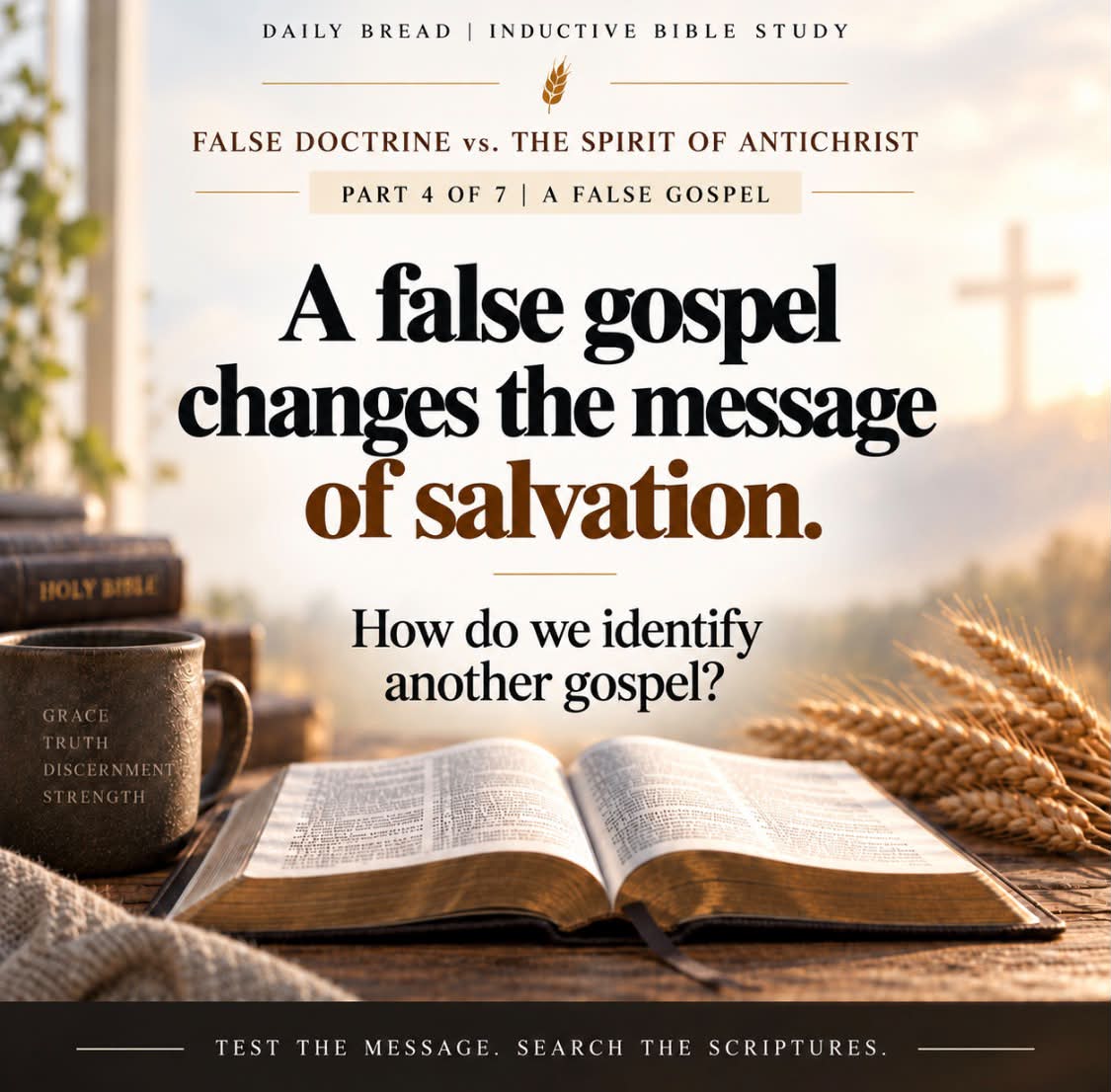
Ran for 3 days, from September 7 to September 10, 2026, the last day Crush saw it.
Run by Daily Bread on Facebook. Crush is not the advertiser and does not verify its claims. See this ad in Meta's Ad Library(opens in a new tab)
Want an ad like this for your product?
Crush makes new ad images for your product from this ad: your logo, your product photo, your offer.
Trials from $19.95 USD, then $79.95 USD a month. Cancel anytime.
About this ad
- Meta Ad Library ID
- 2159245991320761
- Platforms
- Facebook, Instagram, Audience Network and Messenger
- Relaunches
- 0
Ad text
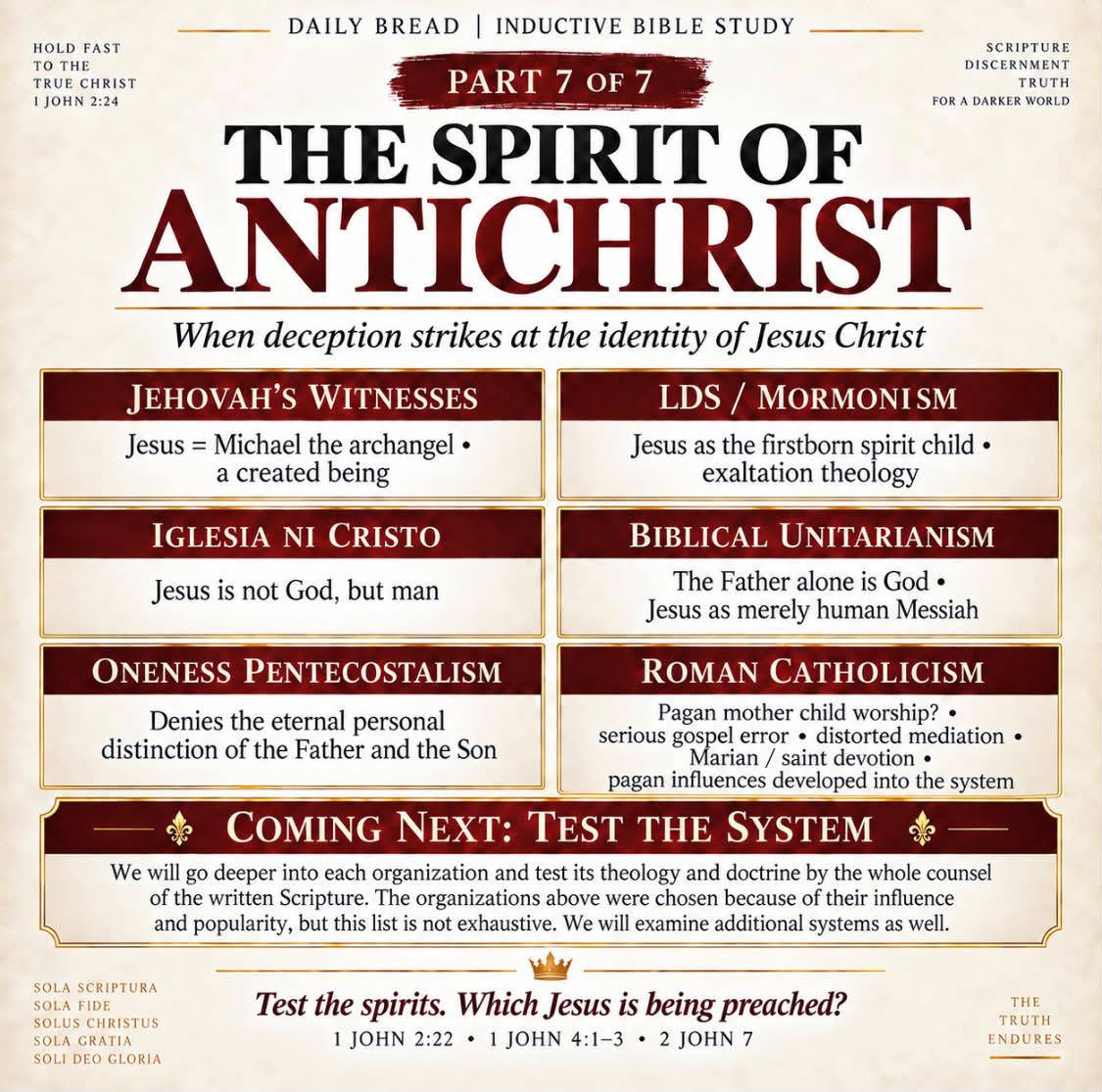
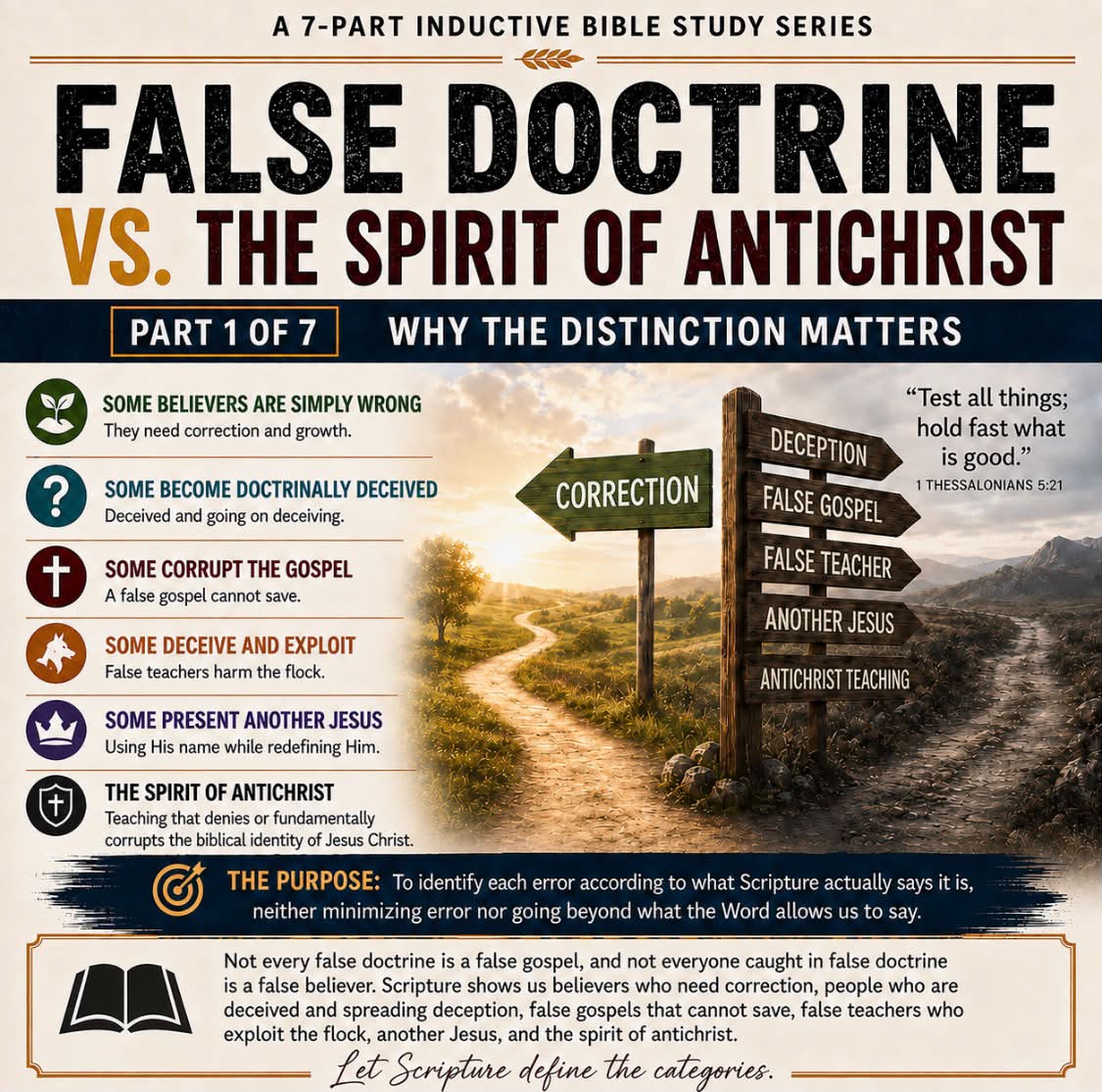
A FALSE GOSPEL DOES NOT HAVE TO DENY JESUS’ NAME. It can speak often about Jesus, the cross, grace, faith, repentance, obedience, and salvation, while quietly changing what a sinner must do to be justified before God. That is why this distinction matters. And before we go any further, this must be said clearly: God is sovereign. God is able to save anyone. No religious system is stronger than the grace of God. No false teaching can prevent God from bringing His truth to someone He is drawing to Himself. A person can hear the true gospel while surrounded by serious doctrinal error. They can encounter Christ through Scripture. They can hear the gospel from another believer. They can come to understand the truth despite what their religious system officially teaches. God can sovereignly use even years spent inside an erroneous religious system as part of His providential work in bringing someone to the truth. But God’s ability to save someone THROUGH or IN SPITE OF a false religious system does not make the system’s gospel true. We must distinguish between WHAT GOD CAN DO IN HIS PROVIDENCE and WHAT A RELIGIOUS SYSTEM ACTUALLY TEACHES. Daily Bread is not declaring the eternal condition of individual Roman Catholics, Latter-day Saints, Jehovah’s Witnesses, or anyone else. “The Lord knows those who are His.” 2 Timothy 2:19 NKJV Our responsibility is not to determine who is saved. Our responsibility is to identify what Scripture teaches about the gospel and compare every religious message to it. 🌾 DAILY BREAD | INDUCTIVE BIBLE STUDY | FALSE DOCTRINE vs. THE SPIRIT OF ANTICHRIST—SERIES PART 4 OF 7 | A FALSE GOSPEL WHEN ERROR REACHES THE MESSAGE OF SALVATION ITSELF In Part 1, we established: Not every false doctrine is a false gospel. Not everyone caught in false doctrine is a false believer. And not every person teaching something wrong should immediately be labeled a false teacher or antichrist. In Part 2, we identified FALSE DOCTRINE as teaching that does not faithfully agree with Scripture. In Part 3, we looked at DOCTRINAL DECEPTION, when someone accepts error as truth and may sincerely begin spreading it to others. Now we reach a more serious category: A FALSE GOSPEL. WHAT IS THE GOSPEL? Before we can identify another gospel, we must know the biblical gospel. Paul writes: “For I delivered to you first of all that which I also received: that Christ died for our sins according to the Scriptures, and that He was buried, and that He rose again the third day according to the Scriptures.” 1 Corinthians 15:3–4 NKJV Jesus Christ, the Son of God, died for our sins and rose again. And what must the sinner do to receive eternal life? Jesus said: “Most assuredly, I say to you, he who believes in Me has everlasting life.” John 6:47 NKJV John explains why his Gospel was written: “But these are written that you may BELIEVE that Jesus is the Christ, the Son of God, and that BELIEVING you may have life in His name.” John 20:31 NKJV Paul writes: “But to him who DOES NOT WORK but BELIEVES on Him who justifies the ungodly, his faith is accounted for righteousness.” Romans 4:5 NKJV And: “For by grace you have been saved through faith, and that not of yourselves; it is the gift of God, NOT OF WORKS, lest anyone should boast.” Ephesians 2:8–9 NKJV The biblical gospel is good news precisely because Christ accomplished what we could never accomplish. The sinner does not help Christ finish the work. The sinner receives what Christ accomplished by faith. Jesus said from the cross: “It is finished!” John 19:30 NKJV JUSTIFICATION IS BY FAITH A person is declared righteous before God through faith in Christ. Not faith plus baptism. Not faith plus sacraments. Not faith plus church membership. Not faith plus commandments. Not faith plus enduring faithfully enough. Not faith plus proving salvation through works. Not faith plus religious ceremonies. Not faith plus becoming morally worthy. Christ’s righteousness is credited to the believer. Paul writes: “Therefore, having been justified by faith, we have peace with God through our Lord Jesus Christ.” Romans 5:1 NKJV And: “Knowing that a man is not justified by the works of the law but by faith in Jesus Christ.” Galatians 2:16 NKJV That is why changing the terms of justification changes the gospel itself. OBSERVATION The strongest New Testament warning concerning another gospel appears in Galatians. Paul writes: “I marvel that you are turning away so soon from Him who called you in the grace of Christ, to a DIFFERENT GOSPEL, which is not another; but there are some who trouble you and want to PERVERT THE GOSPEL OF CHRIST.” Galatians 1:6–7 NKJV Notice something important. The false teachers in Galatia were not telling people to abandon God and become atheists. They were adding something to faith in Christ. Circumcision and obedience to the Mosaic Law were being introduced as necessary requirements. Paul did not call that a slightly different Christian perspective. He called it a perversion of the gospel. He continues: “But even if we, or an angel from heaven, preach ANY OTHER GOSPEL to you than what we have preached to you, let him be accursed.” Galatians 1:8 NKJV That language is extraordinarily serious. Why? Because once works become necessary for justification, grace has been changed. Paul later says: “You have become estranged from Christ, you who attempt to be justified by law; you have fallen from grace.” Galatians 5:4 NKJV The issue was not whether obedience matters in the Christian life. It does. The issue was whether obedience contributes to JUSTIFICATION. It does not. THE DIFFERENCE BETWEEN SALVATION AND DISCIPLESHIP This distinction is essential. Salvation is a FREE GIFT. Discipleship is costly. Salvation concerns receiving eternal life. Discipleship concerns how the believer lives after receiving eternal life. Salvation is through faith. Christian growth involves obedience. Good works matter tremendously. They affect fellowship, growth, testimony, usefulness, discipline, and reward. But they are the RESULT and RESPONSIBILITY of the Christian life. They are not the PRICE of eternal life. Paul could say immediately after declaring salvation “not of works”: “For we are His workmanship, created in Christ Jesus FOR GOOD WORKS, which God prepared beforehand that we should walk in them.” Ephesians 2:10 NKJV Notice the order: Saved by grace through faith. Not of works. Then created for good works. Good works FOLLOW salvation. They do not purchase it. FRONT-LOADING WORKS INTO THE GOSPEL Works can be added to the gospel BEFORE a person is allowed to believe they have eternal life. This is what we might call FRONT-LOADING works. Examples sound like: “You must first turn from every sin before Christ will save you.” “You must surrender every area of your life before you can be justified.” “You must promise lifelong obedience.” “You must make Jesus Lord of every area before eternal life can be yours.” “You must be baptized in order to become justified.” “You must join the true church.” “You must receive particular sacraments.” “You must prove sufficient repentance through behavioral change before you can know you are saved.” These statements may contain concepts that belong somewhere in Christian teaching. Christians should obey. Christians should grow. Sin is serious. Discipleship involves surrender. Baptism matters. But when those things become CONDITIONS that a sinner must fulfill in addition to believing in Christ in order to receive eternal life, works have been front-loaded into the gospel. Paul’s statement remains: “But to him who DOES NOT WORK but BELIEVES on Him who justifies the ungodly, his faith is accounted for righteousness.” Romans 4:5 NKJV BACK-LOADING WORKS INTO THE GOSPEL Works can also be added AFTER someone claims to believe. This can be more subtle. It sounds like: “You are saved by faith alone, BUT if your life does not produce enough works, that proves you never really believed.” “You have eternal life, BUT only if you persevere faithfully until the end.” “You are justified by faith, BUT continued serious failure proves your faith was never real.” “You may think you believed, BUT unless your works become sufficient evidence, you cannot know whether Christ actually saved you.” That begins with grace but places the believer’s assurance back onto personal performance. Works have been BACK-LOADED into the gospel. Instead of asking, “Did Christ keep His promise to the one who believed?” assurance gradually becomes, “Have I performed well enough to prove that my faith was genuine?” But Jesus did not say, “He who believes in Me and later produces enough evidence MIGHT have everlasting life.” He said: “He who believes in Me HAS everlasting life.” John 6:47 NKJV And: “He who hears My word and believes in Him who sent Me HAS everlasting life, and SHALL NOT come into judgment, but HAS PASSED from death into life.” John 5:24 NKJV The object of assurance is Christ and His promise, not an ongoing inspection of whether our Christian performance has become good enough to prove that He really saved us. THIS DOES NOT MAKE WORKS UNIMPORTANT Scripture strongly commands believers to obey. Believers can experience divine discipline. Believers can damage their testimony. Believers can lose reward. Believers can experience devastating consequences from sin. Believers should pursue holiness. But those truths belong to CHRISTIAN LIVING. They must not be turned into additional requirements for JUSTIFICATION. Otherwise grace and works are being mixed. Paul writes: “And if by grace, then it is no longer of works; otherwise grace is no longer grace.” Romans 11:6 NKJV Grace and works cannot both be the basis upon which God justifies the sinner. ANOTHER GOSPEL IN RELIGIOUS SYSTEMS Now we must apply the same biblical standard consistently. We are not asking, “Are there sincere people here?” Of course there are. We are not asking, “Can God save someone who has been part of this religion?” Absolutely. God is sovereign and His gospel is powerful. We are asking: WHAT DOES THE SYSTEM TEACH A PERSON MUST BELIEVE OR DO TO BE RIGHT WITH GOD? ROMAN CATHOLICISM Roman Catholic doctrine uses biblical language such as grace, faith, Christ, baptism, justification, and salvation. But its official sacramental system does not teach justification as the once-for-all imputation of Christ’s righteousness received through faith alone. Justification is connected with baptism, sacramental grace, inward transformation, and continued participation in the sacramental life of the church. Serious sin can result in the loss of sanctifying grace, which is restored through the sacrament of penance. That is not the same doctrine Paul states in Romans 4:5: “To him who does not work but believes on Him who justifies the ungodly, his faith is accounted for righteousness.” Again, that does NOT mean Daily Bread is declaring that every Roman Catholic is unsaved. A Roman Catholic can read John 3:16. A Roman Catholic can understand the finished work of Christ. A Roman Catholic can personally trust Christ alone despite confusion or inconsistency within the larger doctrinal system. God knows who has believed. We are examining the SYSTEM’S message of justification, not pronouncing judgment over every individual soul within it. THE CHURCH OF JESUS CHRIST OF LATTER-DAY SAINTS LDS doctrine presents an even more fundamental problem. It does not merely add requirements to justification. It also presents a fundamentally different understanding of God and Jesus Christ than historic biblical Christianity. The LDS system teaches a progression and exaltation theology in which human beings may become gods, and it presents the Father and Son within a theology that differs radically from the biblical doctrine of the eternal, uncreated God. Its salvation and exaltation framework also includes ordinances, covenants, obedience, temple participation, and continued faithfulness. That is not simply another denomination interpreting a secondary doctrine differently. It changes both the identity of God and Christ and the message of salvation. Later in this series, when we examine ANOTHER JESUS, we will return to this distinction more fully. JEHOVAH’S WITNESSES Jehovah’s Witness theology likewise changes the biblical identity of Jesus Christ. Jesus is not confessed as the eternal, uncreated Son who shares the divine nature with the Father. Within Jehovah’s Witness teaching, Jesus is identified with Michael the archangel and understood as a created being. Their salvation framework also includes organizational allegiance, obedience, and works rather than justification through faith alone in the biblical Christ. Once the identity of Christ has been changed, we are not merely discussing a secondary disagreement. Paul warns: “For if he who comes preaches ANOTHER JESUS whom we have not preached, or if you receive a DIFFERENT SPIRIT which you have not received, or a DIFFERENT GOSPEL which you have not accepted—you may well put up with it!” 2 Corinthians 11:4 NKJV That verse will become especially important in Parts 6 and 7. THE NAME “JESUS” IS NOT ENOUGH BY ITSELF This is one of the most important principles in this series. A religious system can use Jesus, Christ, grace, faith, salvation, Holy Spirit, Bible, cross, and resurrection and still redefine what those words mean. The question is not merely, “Do they talk about Jesus?” The questions are: WHICH JESUS? WHAT DID HE ACCOMPLISH? WHAT MUST THE SINNER DO TO RECEIVE ETERNAL LIFE? If the answers are different from Scripture, familiar Christian vocabulary does not make the message biblical. GOD CAN SAVE PEOPLE IN SPITE OF FALSE SYSTEMS This point deserves repeating because it keeps us from making judgments Scripture has not authorized us to make. Someone may spend years inside a religious system containing serious gospel error and still encounter the biblical gospel. Perhaps they read Scripture privately. Perhaps another believer clearly explained grace. Perhaps they heard John 3:16 and simply believed Christ. Perhaps they trusted Him before becoming involved with that religious organization. Perhaps their own understanding differs significantly from the official theology of the institution they attend. God knows. We do not. The sovereignty of God is not threatened by religious error. Paul writes: “For I am not ashamed of the gospel of Christ, for it is the power of God to salvation for everyone who believes.” Romans 1:16 NKJV God can reach anyone. Anywhere. But again, God’s ability to save someone in spite of false teaching does not turn false teaching into the gospel. That is why we must still identify it. ♥️ APPLICATION When evaluating any gospel presentation, ask very simple questions. WHO IS JESUS? Is He the eternal Son of God revealed in Scripture? WHAT DID JESUS DO? Did He fully accomplish the work necessary for our salvation through His death and resurrection? WHAT MUST I DO TO RECEIVE ETERNAL LIFE? Is the answer simply to believe in Him, or has something been added: sacraments, church membership, baptism, law keeping, moral reform, religious ordinances, perseverance, a promise of future obedience, or proof through enough subsequent works? Then ask: WHERE DOES MY ASSURANCE REST? In Christ’s promise? Or in my ability to examine my life and determine whether I have performed well enough to prove that my faith was real? Those questions expose both FRONT-LOADED and BACK-LOADED works. THE LINE WE MUST NOT MOVE The gospel is not CHRIST + MY WORKS. It is not CHRIST + RELIGIOUS ORDINANCES. It is not CHRIST + MY ABILITY TO PERSEVERE. It is not CHRIST + ENOUGH EVIDENCE AFTERWARD TO PROVE I WAS REALLY SAVED. The gospel announces what CHRIST accomplished. And eternal life is received through faith in Him. “For by grace you have been saved through faith… it is the gift of God, not of works.” Ephesians 2:8–9 NKJV That is why this category is more serious than ordinary false doctrine. A believer can be wrong about healing. A believer can misunderstand prophecy. A believer can misunderstand spiritual gifts. A believer can wrongly interpret a passage. Those errors matter and should be corrected. But when error changes WHO CHRIST IS or WHAT A PERSON MUST DO TO RECEIVE ETERNAL LIFE, it has reached the saving message itself. Scripture calls that ANOTHER GOSPEL. Daily Bread will continue to make this distinction carefully. We are not deciding who God has or has not saved. We are not saying His grace cannot reach people inside deeply erroneous systems. It can. And it does. But love does not require us to pretend contradictory messages are the same gospel. Truth spoken in love still requires truth. So our categories are becoming clearer: FALSE DOCTRINE is teaching that contradicts Scripture. DOCTRINAL DECEPTION occurs when error is believed as truth and spread. A FALSE GOSPEL changes the message by which sinners are told they receive eternal life. And increasingly serious categories still remain. Search the Scriptures. Test the message. Keep Christ’s finished work at the center. And never add to the free gift of eternal life what God Himself did not require. NEXT IN PART 5: THE FALSE TEACHER | WHEN ERROR BECOMES DECEPTION AND EXPLOITATION Not every mistaken teacher is a false teacher in the biblical sense. So what characteristics does Scripture actually give us for identifying one? #bible #biblestudy #gospel #salvation #InductiveBibleStudy #jesus
Where the ad sends people
fb.com
www.fb.com
Visit profile: fb.com(opens in a new tab)