
Active· since Aug 17, 2026
- 28
- days running
- 0
- relaunches
Ad copy
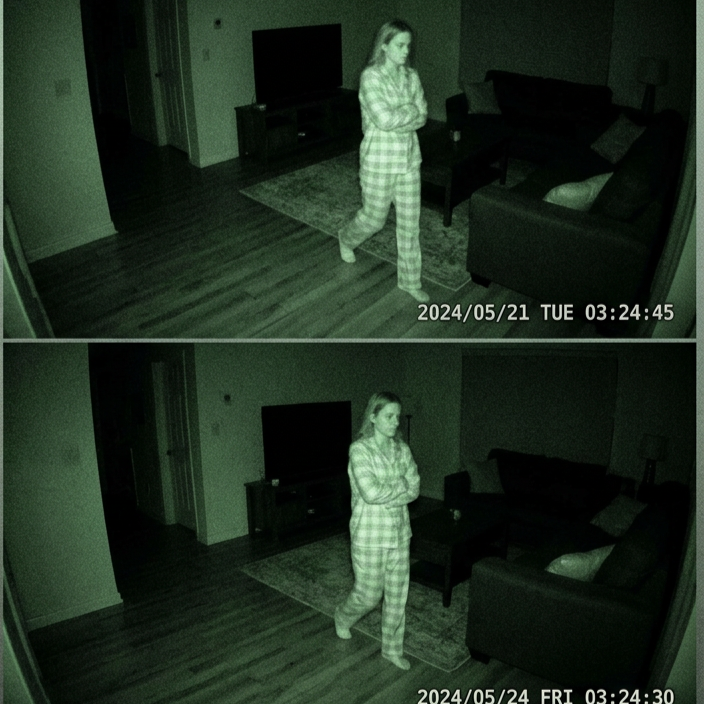
Six weeks ago, I woke up at 3am for the 847th time in three years, and I did something I had never done before. I sat on the edge of my bed in the dark, legs cramping, heart racing, and I whispered to myself: “I can’t do this anymore, i’m going to k*ll myself.” My husband was asleep beside me and didn’t hear what I said. But I meant it. I want to tell you what happened after that night. I want to tell you about the small, quiet thing I found that changed my sleep in a way I still don't fully understand. I want to tell you carefully, because I am not a doctor. I am not selling anything. I am a fifty-four-year-old woman in Michigan who had been running on empty for three years and finally stumbled onto something that worked. I am going to tell you exactly what it is. But first I need to tell you the whole story, because the whole story is the only honest version. My name is Susan. I live outside Grand Rapids with my husband of twenty-six years. We have two grown children, both within a few hours' drive. I work full-time as an office manager. Long days during the week, catch-up on weekends. I help look after my mother, who is eighty-three and lives at the assisted living facility twenty minutes from our house. I am a careful person about my own health. I'm fifty-four. I have learned to know what I don't know. I am also someone with a body that has been slowly falling apart in ways I couldn't explain for as long as I've been in my forties. My mother couldn't sleep through the night starting in her late forties. Neither could her mother. She is eighty-three now. The woman who answers the phone when I call the facility is most of the way to the woman she used to be. Only most of the way. When I was fifty-one, my own sleep came apart in a way it never had before. The kind where you lie awake at 3am staring at the ceiling, mind racing, calculating how few hours you have left before the alarm. The kind where your legs cramp so badly you have to walk it off in the hallway at 2am. The kind where you drag yourself through the day needing three cups of coffee just to function, then collapse into bed at night and cannot fall asleep. My doctor ran tests. Everything came back normal. My bloodwork, at every visit since, has been in the ranges she wants it in. I want to say that plainly, because the story I'm about to tell you is not a story about my doctor finding something wrong. My tests are normal. My doctor is doing her job. I'm doing mine. The story I'm about to tell you is about the quiet question I'd been carrying alongside all of that. Which is whether there was one small additional thing I could add to my evenings. Something that supported what my body was already doing, alongside what I was already trying. Something general. Modest. Additive. I want to be careful here, because I am aware of how this kind of question gets answered badly. I had read a great deal. I had not found anything I trusted yet. I am fifty-four and I have spent a lifetime being suspicious of things that sound too neat. I am hard to sell. But there was one thing that kept coming up at the careful end of the conversation that I trusted. A mineral. I'd heard about it for years. In articles my sister sends me in group texts. In the back of wellness blogs and health columns. I'd never really looked into it. This time, I read it carefully. There's a long, patient relationship the sleep research community has had with this mineral for decades. In the context of supporting healthy sleep and nervous system function, in people whose tests come back normal but who still can't rest. The language being used was the language I'd been looking for. Supports healthy sleep. Supports nervous system relaxation. Supports the body's own natural calm. That's what told me this might be the right shape. I read for almost a month. I am a careful person about my own health. The mineral is magnesium. But here's what I learned that changed everything: the form matters more than I ever realized. The form that matters for sleep is called magnesium bisglycinate. It's the kind that actually gets absorbed. It's bound to glycine, which helps shuttle it through your gut wall so your body can actually use it. When I finally felt ready to add it, I picked a brand I'd read about called SPNutrition. I picked it for one specific reason that I want to explain. The people at SPNutrition use pure bisglycinate in a gummy form. Because they wanted as much of the mineral as possible to make it from the bag into your system. That's a more expensive way to make a supplement. It costs them more. It takes them longer. At fifty-four, I have learned to pay close attention to the small decisions companies make when no one is watching. Those decisions tell you everything about whether you can trust them. The other thing I liked was the simplicity. Two gummies in the evening before bed. I have a job. A husband. An elderly mother I help look after. A household to run. I'm not interested in a protocol that requires its own shelf. Now I need to tell you the most important part of this letter. I cannot say this strongly enough. Before I added anything to what I was already doing, I mentioned it to my doctor. Her name is Dr. Patel. She's the internist at the medical group in our town. I've been seeing her for eleven years. I mentioned it for a specific reason that has everything to do with being careful. Magnesium supplements and certain medications can interact. The interaction isn't necessarily dangerous. It isn't necessarily anything. But it depends on which medications you're on. What dose. What your current health looks like. What else you're taking. What your prescribing physician would want for you. That's exactly the kind of small, specific, individualized question that a doctor or pharmacist can answer in two minutes. It is not a question I, as a careful patient, was going to answer on my own. I mentioned it to Dr. Patel. I told her what I was thinking about adding. I told her the brand, the dosage, the protocol. She pulled up my chart. Looked at my history. Looked at my medications. Looked at my bloodwork. She told me she had no concerns about adding it. She told me to take it in the evening the way the bag suggested. She told me to come back to her if anything in my situation changed. If she adjusted any prescriptions. If she added anything new. If I had any symptoms I was concerned about. She told me, as a closing courtesy: I wish more of my patients asked before adding things. I want to say something now, plainly, to every reader of this letter who is in any way like me. If you're on any medication. If you're on any prescription at all. If you're on any daily regimen that matters. Please mention it to your doctor first. The two minutes the conversation takes is the most important two minutes of your engagement with any supplement you might consider adding. I was adding the supplement to my existing routine. Everything else continued, exactly as it had been, throughout everything that follows in this letter. I started on a Monday. The first two weeks I felt nothing in particular. I want to tell you that honestly, because the temptation in any letter like this is to compress the timeline and pretend something dramatic happened on day three. Nothing dramatic happened on day three. I had read enough to know that bodies are different. Some people notice something within the first week or two. Some take much longer. Some don't notice much at all. I was prepared to land in any of those camps. And to be honest with myself about the result. What I noticed, I noticed slowly. The first thing I noticed, around week three, was the 3am wake-ups. My bedroom is at the back of the house. My side of the bed is closest to the window. The bathroom is down the hall. I'd been waking up at 3am almost every night for two years. For the last two years, I'd been lying there staring at the ceiling for an hour before falling back asleep. I'd been dreading bedtime because I already knew what was coming. Around week three, I caught myself waking up to my alarm instead of waking up in the dark. I went to bed that night and made a point of paying attention. I slept through the night. I was asleep, then awake at 6:30, in one continuous stretch. The way I had been ten years earlier. I didn't make a thing of it. I know better than to make a thing of one observation. I made a quiet note and kept paying attention. The second thing I noticed, in week four or five, was the leg cramps. I'd been getting them most nights for a year. Painful ones. The kind that wake you up gasping. For the last year or so, I'd been finishing those nights with the bone-tiredness I associate with someone much older than fifty-four. I'd been limping to the kitchen for water at 2am. By week four, the cramps were gone. By week five, I'd forgotten they used to happen. By week six, my husband mentioned he hadn't heard me get up in the middle of the night in weeks. These were small returns. The small returns of a night I had been losing without realizing I was losing it. The third thing I noticed was the mornings. My husband and I have been waking up to the same alarm for twenty-three years. 6:30am. Weekdays. One snooze button allowed. For about a year and a half, I'd been dragging myself out of bed feeling like I hadn't slept at all. My husband noticed. He didn't say anything about it. He's a decent husband and he knows when not to say things. But I noticed him noticing. Around week six, I got out of bed and felt awake. The next morning, I felt awake again. The morning after that, again. I went into my doctor's office for my regular checkup about four months after I started. She asked how I was sleeping, the way she always does. She ran the usual bloodwork. She looked at the results. She told me everything looked good, same as the year before. I told her about the magnesium. She nodded the way she nods. She told me she had no concerns about my continuing it. She told me to keep doing what I was doing. She told me to come back in a year. That's the whole clinical story. I want to be careful with what I'm telling you. I'm writing this to people I don't know. I don't want to overstate anything. I'm not telling you SPNutrition did any of those small things on its own. My sleep hygiene continued to matter the way it had for three years. I'd been limiting caffeine. I'd been eating the way someone trying to sleep should eat. I'd been keeping my bedroom cool and dark. I'd been protecting all the lifestyle inputs my doctor and I had agreed on three years earlier, when my sleep started falling apart. All I'm telling you is that I added one small thing to a long list of things I was already doing. I kept everything else exactly the same. And a quiet stretch of months followed that was qualitatively a little different from the year that had preceded it. That's the honest version. I wouldn't give you a cleaner one. If you're someone who has been struggling with sleep, and doing the careful prudent lifestyle things alongside it, and you've been quietly looking for one small additional thing to add to your evenings, the way I had been looking for two years, I want to say a few things to you carefully. I don't know you. I don't know your health, your history, your situation, what your doctor has said to you. Bodies are different. Some people notice something within the first week or two of adding something like this. Some people take much longer. Some people don't notice anything at all. That's the honest version. Anyone offering you a cleaner one is selling you harder than I am. Here is how I think about SPNutrition now, in the words I would actually use. It is something the body uses. The research community talks about it in the context of supporting healthy sleep, nervous system calm, and the body's own natural relaxation. In people whose tests come back normal but who still can't get the rest they need. It is one small thing you add to the long list of things you are already doing for yourself, alongside everything else. Please mention it to your doctor or pharmacist before you add it. If you're on any medication, or any daily prescription, this is non-negotiable. I mentioned it to Dr. Patel. I wouldn't have added anything to my routine without that conversation. Neither should you. The people who know your chart will tell you in two minutes whether the supplement is appropriate for you to add, given what you're already taking. That conversation is not optional for anyone on a prescription. I'm a fifty-four-year-old woman in Michigan. I am not the person to ask. Your doctor or pharmacist is. The company has a thirty-day satisfaction guarantee. If you're not satisfied, for any reason at all, including just changing your mind, they refund you. It's not tied to your sleep quality. It's not tied to any measurement. It's not tied to anything you have to prove to anybody. If you're not satisfied, you're not satisfied. That's the whole policy. The gummies are made in small batches in a GMP-certified facility. There are stretches when they're in stock and stretches when they're not. I mention that so that if you go to the site and they're out, you know why. That is all I have. Thank you for reading this far. I hope something here was useful. — Susan https://spnutrition-us.com/pages/magnesium-deficiency P.S. I want to come back to the form for a second. The bisglycinate form is bound to glycine, which helps it absorb. SPNutrition chose this form. Bisglycinate. Full dose. Gummy instead of a horse pill. It costs them money and time. They made the choice anyway. At fifty-four, I have come to pay close attention to the small decisions companies make when no one is watching. Those decisions tell you everything. P.P.S. Two gummies. In the evening. Before bed. That is the entire protocol. No powder to mix. No afternoon dose to remember. No schedule taped to the inside of the cupboard. I keep the bag on my nightstand next to my reading glasses. I take them at the same time every night, about an hour before I turn off the light. That has been the rhythm of my evening for eight months. It's a simple rhythm I appreciate at fifty-four. P.P.P.S. I am going to say it one more time, because I cannot say it enough. Please. Mention it to your doctor or pharmacist before you add anything new to what you are already taking. Especially if you are on any prescription medication at all. They have your whole picture in front of them. I have written you a letter. There is a difference. And the difference matters. The two minutes it takes to ask are the most important two minutes of your engagement with any supplement. P.P.P.P.S. The guarantee, again, in case you skimmed. Thirty days. Any reason at all. You don't have to prove a single thing. Not to them. Not about your sleep. Not about how you feel. If you tried it and you're not satisfied, you're not satisfied. They send the money back. That's the whole policy. A small-company policy. The kind of thing companies used to do when companies still answered the phone. P.P.P.P.P.S. The thing Dr. Patel said when I mentioned it, I wish more of my patients asked before adding things, has stayed with me for eight months. I think about it almost every day. I think about how easy it is, in this culture, to add something to your evening without thinking about the way it might interact with what's already there. The conversation I'm asking you to have is a five-minute conversation. You have it once. You get the answer. You make an informed decision. That is the entire ask of this letter. If the only thing you take away from reading this is that you mention it to your doctor next time you are thinking about adding anything to what you are already taking, even if you decide, after the conversation, that SPNutrition is not for you, I will count that as the letter having done its work. That is the whole reason I wrote this. — S. https://spnutrition-us.com/pages/magnesium-deficiency DISCLAIMER: Individual experiences vary. These statements have not been evaluated by the FDA. This product is not intended to diagnose, treat, cure, or prevent any disease
Like this ad? Make it yours.
Crush rebuilds this exact creative around your product — your brand, your colors, your offer — in about a minute.