Health Insider
Health Insider Facebook ad: “Read If Your Cat's Water Bowl Is Still Full”
Ran for 6 days, from August 9 to August 15, 2026, the last day Crush saw it.
Run by Health Insider on Facebook. Crush is not the advertiser and does not verify its claims. See this ad in Meta's Ad Library(opens in a new tab)
Want an ad like this for your product?
Crush makes new ad images for your product from this ad: your logo, your product photo, your offer.
Trials from $19.95 USD, then $79.95 USD a month. Cancel anytime.
About this ad
- Meta Ad Library ID
- 1984095599645884
- Platforms
- Facebook, Instagram, Audience Network, Messenger and Threads
- Relaunches
- 0
- Niche
- Pets
Ad text
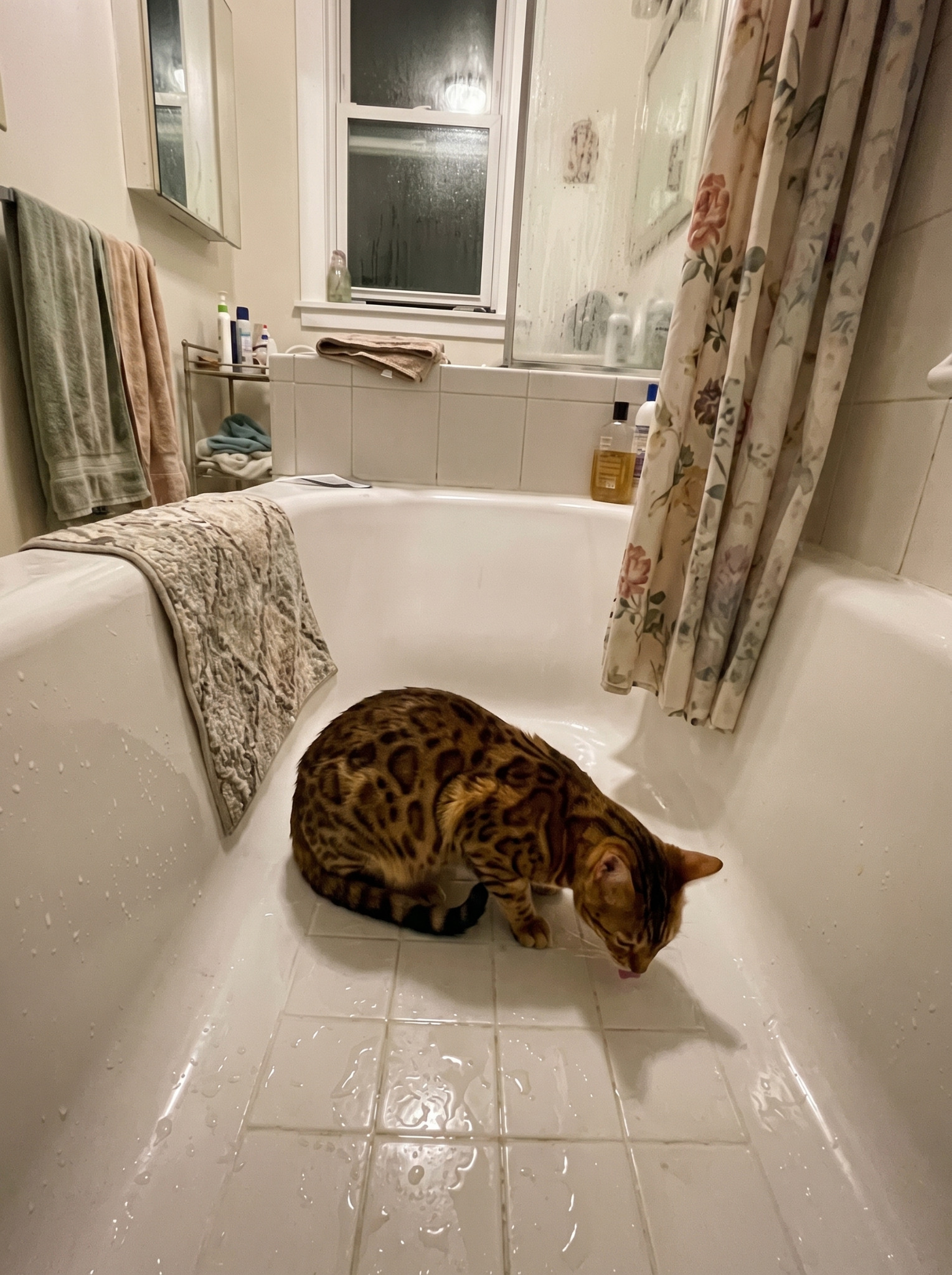
There is a desert animal living in your kitchen, and you have been treating it like a small dog for its entire life. I learned this at a Thanksgiving dinner, from my brother-in-law, eleven months after it was too late for my cat. He said one sentence, completely casually, passing the potatoes, and I had to leave the table. My name is Marcus Webb. I'm 47. I have watched every nature documentary ever made. I thought I understood animals. I am writing this because the most basic fact about the animal sleeping on my couch never reached me until it had already cost him his life. Loki was my Bengal. If you know Bengals, you know. Leopard-spotted, glittering coat, built like a small wild thing because he nearly was one, the breed is only a few generations removed from the Asian leopard cat. He climbed doorframes. He chirped at birds like a jungle animal. People who visited always said the same thing: he doesn't look like a pet, he looks like an exhibit. I fed him premium food. I kept his water bowl spotless, filtered, refreshed daily. I did everything the modern, educated cat owner does. He drank almost none of it. Ever. In nine years I rarely saw him at the bowl for more than a few seconds. I thought it was efficiency. He's basically a tiny leopard, I'd joke. Leopards don't lounge at the watering hole. That joke turns out to be the entire story, told backwards. At nine, Loki started losing weight. Slowly, then visibly. Drinking more suddenly, then a lot, camped at the bowl he'd ignored for a decade. I know now that a cat who suddenly drinks heavily is a cat whose kidneys have already lost the ability to conserve water. The drinking I finally noticed was not the warning. It was the ending. Chronic kidney disease, stage 4. The vet was kind and clear. We could buy months, not years. We bought what we could. They were not good months. He died in February with his spotted head in my hand. I did the grieving thing where you need it to be nobody's fault, and mostly I managed, until Thanksgiving. My brother-in-law Dev is a wildlife veterinarian. Zoos, sanctuaries, field work. Somebody at the table asked him a polite question about his job, and he mentioned, completely in passing, the way you'd mention the weather, that small desert cats almost never drink standing water in the wild, that they get nearly all their moisture from prey, and that the domestic cat inherited that exact physiology, which is why, he said, chronic dehydration and kidney failure are basically the default outcome for housecats fed dry food next to a bowl. The default outcome. I put my fork down and asked him to say that again. He looked at me, remembered Loki, and went a little pale. And then, because he is a good man and a real scientist, he did not soften it. He walked me through it right there while the potatoes went cold. The domestic cat is descended from a desert species. Its thirst drive is suppressed by design, because for a few million years, water came inside the prey. A cat does not feel thirst in proportion to its need. It never has. You can place a pristine bowl next to a cat that is measurably dehydrated and it will walk past it, not out of stubbornness, but because the signal to drink simply does not fire the way it does in us, or in dogs. Then we domesticated it, moved it indoors, and handed it the driest diet in its evolutionary history next to a bowl of still water. And still water is its own problem. A cat's nose detects the biofilm that grows in the microscopic pores of any bowl within hours. Its whiskers object to deep bowls. And its instincts, the same ones that kept its ancestors alive, read still water near the den as suspect and moving water as safe. That is why every cat on earth stares at faucets. That is why Loki used to sit in the bathtub after my showers licking the wet tile, which I photographed, and laughed at, and posted, for nine years, while it was the most important thing he ever told me. So the cat drinks a fraction of what it needs. The urine concentrates. The kidneys, the organ that pays for every drop of missing water, grind themselves down silently for years. By the time the first symptom appears, around 75 percent of function is typically gone. In a species that hides illness. With a thirst drive that never sounds the alarm. Dev said the part that finished me: "It's not that something went wrong with Loki. It's that nothing intervened. That's the part people can't hear. The bowl-and-kibble setup fails the desert physiology by default. The cats that avoid CKD are mostly the ones whose owners accidentally or deliberately got water into them some other way." I left the table for a while after that. My sister found me on the porch. When I came back, Dev had sent me an article. He said, "I send this to every cat owner who'll listen. She says it better than I just did, and she built the fix." It was by Dr. Helen Park, a feline medicine specialist, eleven years in a cats-only practice. It opened with a cat named Biscuit, an owner who did everything right, a crisis that arrived after years of invisible decline, and an ending I knew by heart because I had lived it in February. And then she laid out everything Dev had said, in order, with the fix at the end. The suppressed desert thirst. The bowl rejection, biofilm and whiskers and instinct. The silent kidney toll. And then the engineering answer: water that moves, because moving water is the one form the ancient instinct trusts. 316 surgical-grade stainless steel with an antibacterial coating through the entire fountain, tank included, because the common plastic-tank fountains grow the same biofilm the nose already rejected, which is why so many cats abandon them in a week. Built-in UV sterilization, because even on the best steel surface, bacteria still lives in the water itself, floating, circulating, settling, and a cat's nose detects what yours never will. The UV destroys it before colonies can form. Triple-stage hospital-grade filtration. A wide, open drinking basin that never touches whiskers. She designed a fountain around the actual animal, the desert one, instead of the imaginary one we've all been watering. She called it Selvela. 👉 https://selvela.com/products/selvela-cat-water-fountain It took me four months after Loki to be ready for another cat. Her name is Zuri. Bengal, of course. Spotted, glittering, currently asleep on the exact couch cushion Loki claimed for nine years, because the universe is not subtle. Her Selvela was running before she came home. It was the first thing I set up. Before the litter box. Before the food. She drinks from it constantly. Not desperately, the way Loki drank at the end. Casually, throughout the day, a desert animal that has finally been offered water in the one format its operating system approves. She chirps at it. She watches the moving surface like prey. And then she drinks, long and unhurried, and every single time she does, something in my chest unclenches a little. Her first panel: perfect. Urine dilute. Kidneys, in the vet's words, "exactly what we want to see." What we want to see. I wanted to frame it. Here is what I need to leave you with, and it is the sentence I would go back and say to myself nine years ago if I could. Your cat is not a small dog. It is not a furry roommate. It is a desert predator, two steps removed from the wild, with a thirst drive that has been broken by design for a few million years, living on the driest diet of its evolutionary history, next to a bowl of still water its nose, whiskers, and instincts all reject. It is not drinking enough. Statistically, almost none of them are. And the kidneys are keeping the invoice. You do not need to watch harder. You cannot out-observe a suppressed instinct in an animal built to hide weakness. You need to change the water into the one form the animal actually trusts, and let a few million years of evolution work for your cat instead of against it. Selvela. 316 surgical-grade stainless steel with antibacterial coating. Built-in UV sterilization. Triple-stage hospital-grade filtration. Whisper-quiet. Dishwasher-safe. Wide open basin. $89.99. Cleaning kit and starter filters included. 30-day money-back guarantee — cat doesn't drink more, full refund. 👉 https://selvela.com/products/selvela-cat-water-fountain P.S. Go look at your cat's water bowl right now. If it is nearly as full as when you filled it, you have just observed the desert physiology with your own eyes. That bowl is not evidence of a low-maintenance cat. It is the most important medical document in your house. P.P.S. Loki sat in the bathtub licking wet tile for nine years and I thought it was a personality. Zuri has never once sat in the bathtub, because there has never been a reason. The wild animal in your kitchen has been telling you what it needs since the day it arrived. 👉 https://selvela.com/products/selvela-cat-water-fountain
Where the ad sends people
selvela.com
Read If Your Cat's Water Bowl Is Still Full 👆
Selvela
Shop now: selvela.com(opens in a new tab)