Cardiovascular Support Group
Cardiovascular Support Group Facebook ad: “The Pressure That Beheaded a Queen”

Ran for 25 days, from May 14 to June 8, 2026, the last day Crush saw it.
Run by Cardiovascular Support Group on Facebook. Crush is not the advertiser and does not verify its claims. See this ad in Meta's Ad Library(opens in a new tab)
Want an ad like this for your product?
Crush makes new ad images for your product from this ad: your logo, your product photo, your offer.
Trials from $19.95 USD, then $79.95 USD a month. Cancel anytime.
About this ad
- Meta Ad Library ID
- 2000683990654809
- Platforms
- Facebook, Instagram, Audience Network, Messenger and Threads
- Relaunches
- 0
Ad text
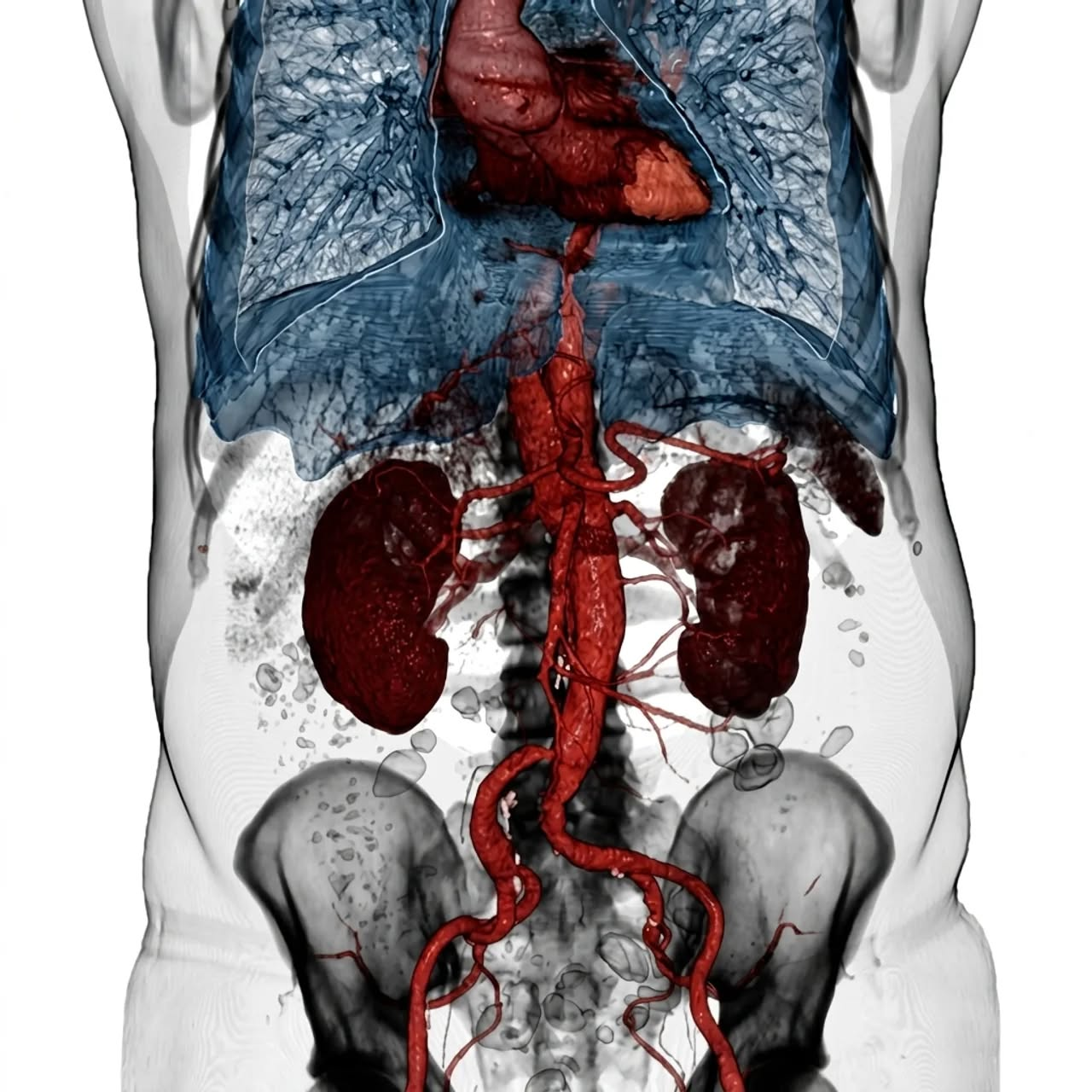
On the morning of October 16, 1793, Marie Antoinette was led from her cell in the Conciergerie prison, placed in an open cart, and driven through the streets of Paris to the Place de la Révolution. The journey took over an hour. She was 37 years old and had been queen of France for nineteen years and a prisoner for thirteen months. She had not seen sunlight in extended doses in over a year. Her husband had been beheaded nine months earlier. Her son had been taken from her in July and held in a separate cell. She had been tried over two days on charges that included incest with her own child. She climbed the steps to the scaffold knowing she had minutes to live. The blade was released seconds later. It severed both her carotid arteries simultaneously. According to eyewitness accounts from Revolutionary Paris, the resulting arterial spray reached the front row of spectators. I want you to focus on a number that almost no one who reads about that morning has ever thought about. Nobody measured Marie Antoinette's blood pressure that morning. Nobody at the time would have known to. Blood pressure as a clinical concept did not exist in 1793. The sphygmomanometer would not be invented until 1881, and routine clinical blood pressure measurement did not become standard medical practice until the 20th century. Marie Antoinette's physicians were operating inside a medical framework that had no concept of pressure as a thing one would measure. But modern forensic pathologists, working backward from documented arterial spray evidence at Revolutionary-era executions, can calculate what her cardiovascular system must have been producing at the moment the blade fell. The arterial spray distance recorded by eyewitnesses. The diameter of the human carotid artery, an anatomical constant. The fluid dynamics of arterial blood at the moment of complete severance. The known cardiovascular response to extreme acute and chronic psychological stress — thirteen months of imprisonment, the deaths of family members, an impending execution she knew was coming. The reconstructed pressure in Marie Antoinette's carotid arteries at the moment of decapitation was approximately 148 over 96. That is hypertensive territory. Stage 2 hypertension by modern American Heart Association criteria. The same pressure your morning cuff reads when your doctor stops calling it borderline and starts calling it a problem. If that is roughly the range your own reading sits in — if your morning cuff has been showing 140s and 150s over 90s, sustained, for months or years — this letter is for you. It is about what that pressure is actually doing to your body, why the medications your doctor has prescribed address one layer of a three-layer problem, and what the upstream mechanism is that the standard protocol leaves untouched. If your pressure is 120/80, this letter is not for you. 120/80 is genuinely healthy. Keep doing what you are doing. What follows is calibrated to the reader whose pressure has climbed into the range that drives the disease that takes 868,000 American lives annually. A pressure of 148/96 sustained over years is not a number. It is the force with which your heart is pushing fluid through your vascular system, against the resistance of vessel walls that are slowly losing their ability to regulate themselves. Marie Antoinette's body had been holding this pressure for thirteen months of imprisonment. Yours has been holding similar pressure for years or decades. The blade severed her vessels in two seconds. Your pressure is doing damage in 20,000 days, against intact vessels, in a process that has been accelerating since your reading first crossed 130 over 85. Your blood vessels are not passive pipes. They are dynamic, living tissue, lined on the inside with a single-cell-thick layer called the endothelium. By surface area, the endothelium is the largest organ in your body. Its job is to produce nitric oxide, the molecule that tells your vessel walls to relax and dilate when pressure rises. A healthy endothelium produces enough nitric oxide to keep the system regulating itself. A damaged endothelium does not. The vessels become more rigid. The pressure climbs because the regulatory system has failed. This is what hypertension actually is. Endothelial failure. The pressure climbing on your cuff is the symptom. The damaged endothelium is the disease. Every blood pressure medication in the standard protocol works by forcing the pressure down through one mechanism or another. ACE inhibitors block the renin-angiotensin signal. ARBs block the receptor that responds to it. Beta blockers reduce your heart's force of contraction. Calcium channel blockers prevent your vessel walls from constricting fully. Diuretics reduce the fluid volume in your system. Each medication, when working, lowers the number on your cuff. None of them repair the endothelium. The standard protocol manages the pressure your endothelium is failing to regulate. It does not address the failure itself. It is the equivalent of turning down the thermostat in a house with broken insulation. The number comes down. The underlying mechanism continues to deteriorate. And when the medication is increased — as it almost always is, over years, because the protocol is built on a treadmill of dose escalation — what is being increased is the chemical force overriding a vascular system that is no longer regulating itself. This is why patients on "well-controlled" blood pressure medication still have strokes. Still have heart attacks. Still develop the multi-vessel cardiovascular disease that takes 68 percent of cardiovascular patients according to the American Heart Association. The cuff reads 128 over 82. The vessels are quietly accumulating decades of damage. The medication is suppressing the visible symptom of a disease it does not address. Marie Antoinette had been hypertensive for at least thirteen months — the entire duration of her imprisonment. Her cardiovascular system had been operating under sustained stress in a way that was measurably damaging her arteries. Paleopathological analysis of similar 18th-century French aristocratic remains tells us that women of her social class and dietary profile accumulated significant atherosclerosis by middle age. The pressure was killing her slowly. The blade killed her quickly. The disease was the same. You are in the same position. Your pressure is doing measurable damage to your arteries every minute of every day, in a process that accelerates with every year. The number on your cuff is one downstream measurement of what is happening to your vessels. The medication you are taking addresses one layer of that downstream measurement. The endothelial failure underneath it continues regardless. This is the part of the cardiovascular system your cardiologist is not measuring. In October of 2021, Dr. David Julius at the University of California, San Francisco, was awarded the Nobel Prize in Physiology or Medicine for the discovery of a receptor system called TRPV1 — the transient receptor potential vanilloid 1 receptor. TRPV1 is densely expressed on endothelial cells throughout the vascular system. When TRPV1 is activated, it triggers the endothelium's own production of nitric oxide through the cell's natural pathway. The compound that activates TRPV1 most directly is capsaicin. The active molecule in cayenne pepper. In 2010, a research team led by Dr. Dachun Yang published a landmark paper in the journal Cell Metabolism demonstrating that chronic, low-dose dietary capsaicin activated TRPV1 receptors on endothelial cells, restored nitric oxide production, and improved endothelial function in animal models with documented hypertension. A 9,000-volunteer Chinese epidemiological study published in the BMJ in 2015 linked dietary capsaicin intake to lower cardiovascular mortality. Multiple smaller human studies have shown measurable improvements in endothelial function, blood pressure variability, and inflammatory markers in subjects taking standardized capsaicin preparations over 8 to 12 weeks. This is the mechanism your cardiologist almost certainly was never trained on. Medical schools update their curricula on a 20-to-30-year lag. The Nobel Prize was awarded in 2021. Most clinical cardiology in 2026 is operating from training that predates the discovery. I want to be careful about what I am claiming. The TRPV1 mechanism is real. The Nobel Prize is real. The mechanism research showing capsaicin activates endothelial nitric oxide production is published, peer-reviewed, and replicated. What is still maturing is the randomized controlled trial evidence in hypertensive patient populations specifically, and what is still being worked out is the optimal dose and delivery format for clinical effect. What I can tell you with confidence is that the mechanism your blood pressure medication addresses is the downstream chemistry of pressure regulation, and the mechanism TRPV1 activation supports is the upstream biology of the endothelial system that produces the regulation in the first place. These are not the same layer. They are not competing. They operate on different stages of the same disease. The formulation I want to tell you about is called Aurivita Capsaicin Power. Aurivita Capsaicin Power is built around 3 milligrams of standardized capsaicin per softgel, extracted from cayenne pepper and delivered in an enteric-coated softgel format. Three softgels with breakfast for a daily dose of 9 milligrams, sitting inside the clinical window the published vascular research uses. The enteric coating bypasses the stomach, where raw capsaicin would damage the gastric lining at therapeutic concentration, and releases the compound in the small intestine where TRPV1 receptors are most densely concentrated. Each bag is a 60-day supply. 180 softgels, three a day, sixty mornings. The bag size matches the clinical timeline. The studies showing measurable improvement in endothelial function and blood pressure variability run eight to twelve weeks. One bag gets you to the window where the vascular tissue actually starts answering. Aurivita is not a cure for hypertension. There is no such cure. It is not a replacement for the medications your doctor has prescribed. Do not stop taking your blood pressure medication without working closely with your doctor. If your numbers begin moving over the 60-day window, bring those numbers to your physician and have the conversation about whether your existing medications can be reduced. That is the path. Not unilateral changes. Not heroic self-experimentation. Aurivita comes with a 60-day money-back guarantee that matches the bag size and the clinical timeline. Take three softgels a day for sixty mornings. Check your home cuff every week. Get your inflammatory markers checked at 8 weeks if you want laboratory confirmation. If your numbers haven't moved, your symptoms haven't shifted, your hands haven't warmed, your afternoons haven't sharpened — every penny back. Empty bags accepted. No return shipping. No restocking fee. The reason that guarantee can exist is because the formulators ran the dose-response math against the published clinical literature and know what the eight-to-twelve-week window delivers in the patient population this protocol is built for. Marie Antoinette walked up the steps to the scaffold on October 16, 1793, with a cardiovascular system that had been under hypertensive stress for thirteen months. The cardiovascular medicine of her era could not have told her what her pressure was. Her physicians did not know what the endothelium was, or what nitric oxide was, or what TRPV1 was. They did not know the disease that was accumulating in her arteries even existed. You have an advantage Marie Antoinette did not have. Not just the cuff. The entire framework of cardiovascular medicine that her civilization did not possess. You can know your pressure. You can understand what pressure is. You can read about the endothelium. You can know about the Nobel Prize for the receptor system that activates the upstream mechanism. The question is what you do with the framework she did not have. You will not be executed by the State. The blade in your life is the same pressure Marie Antoinette had — the pressure that, sustained against vessel walls quietly losing their regulatory capacity, drives the disease that takes 868,000 American lives annually. You have two paths. One is the standard protocol. Take your medication. Manage the number. Add another when the first isn't enough. Cycle through the side effect profile of each one. Watch, helplessly, as the underlying vascular damage continues because the mechanism your medication addresses is not the mechanism driving the disease. The other is to add to your protocol the intervention the standard of care does not include. The upstream mechanism. The TRPV1 activation that supports the endothelial function determining whether your vessels can regulate themselves. The 60-day window the published research uses. Three softgels with breakfast. Sixty mornings. The mechanism the standard protocol leaves untouched. Marie Antoinette did not get to decide whether her pressure killed her. You do. https://aurivita.co/products/cayenne-pepper-softgels P.S. If you are on blood pressure medication right now, do not stop. Aurivita is designed to work alongside your existing protocol, not replace it. Start the 60-day window. Check your numbers weekly. If they begin moving, bring the data to your doctor and have the conversation about whether your medication can be reduced. A measurable, observable, defensible addition to your protocol with bloodwork to confirm what your body is telling you. P.P.S. If your parent, sibling, or close family member died of a stroke or heart attack, you are in the highest-risk subgroup of the population this letter is written for. Family history of premature cardiovascular death is one of the strongest predictors of personal cardiovascular risk in the entire cardiology literature. The standard protocol manages your numbers. The mechanism this letter describes addresses the biology underneath them. Both matter. Most patients are running only one. https://aurivita.co/products/cayenne-pepper-softgels
Where the ad sends people
aurivita.co
The Pressure That Beheaded a Queen
Support strong circulation today with our powerful cayenne pepper formula. 180 softgels and 60 servings per bag.
Learn more: aurivita.co(opens in a new tab)