Health Insider
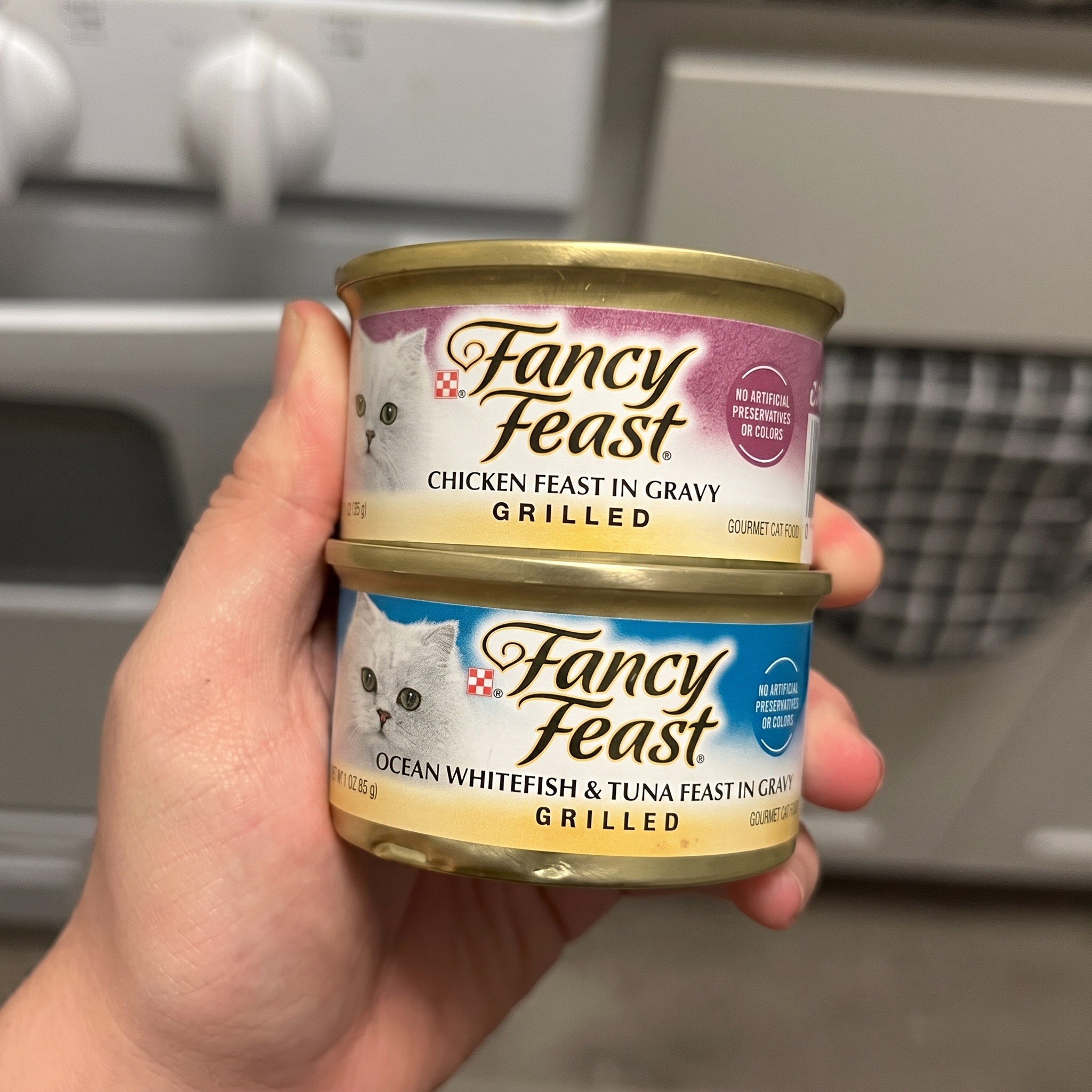
Health Insider Facebook ad: “I tried Pate for my cat. She Got Stage 3 Kidney Failure”
Ran for 3 days, from August 12 to August 15, 2026, the last day Crush saw it.
Run by Health Insider on Facebook. Crush is not the advertiser and does not verify its claims. See this ad in Meta's Ad Library(opens in a new tab)
Want an ad like this for your product?
Crush makes new ad images for your product from this ad: your logo, your product photo, your offer.
Trials from $19.95 USD, then $79.95 USD a month. Cancel anytime.
About this ad
- Meta Ad Library ID
- 2045715296306170
- Platforms
- Facebook, Instagram, Audience Network, Messenger and Threads
- Relaunches
- 0
- Niche
- Pets
Ad text
I spent $4 a can on premium wet food for my cat's kidneys for three years. Last month her vet told me she's in STAGE 3 kidney failure. More than half her kidney function is already gone. Three years of premium food. Every meal. $120 a month. And her kidneys were quietly failing the entire time I thought I was protecting them. My name is Susan. I live in Portland with my husband and our cat Olive. She's a 10-year-old calico who has slept at the foot of my bed every single night since I adopted her at 3. She sits on my laptop when I'm working. She yells at me if dinner is two minutes late. She follows me into every room and pretends she doesn't care that I'm there. She is the most stubborn, dramatic, perfect cat I've ever had and I would sell everything I own to keep her healthy. About three years ago I started reading about kidney disease being the number one killer of cats. The stat that stopped me was "1 in 3 cats will develop it." I looked at Olive and thought absolutely not. Not you. So I did what every article told me was the most important thing I could do. I switched her food. Every article said the same thing. Wet food is the number one thing you can do for your cat's kidneys. Hydration prevents kidney disease. Dry food is the worst thing for kidneys. Switch to wet and you're covered. I researched for weeks. Found a grain-free, high-protein, human-grade wet food. $4 a can. I calculated it out. $120 a month just on food. I didn't care. This was for Olive's kidneys. This was prevention. I bought a stainless steel water fountain too. $62. Because hydration plus premium wet food is the gold standard. That's what everyone said. I was spending $140 a month on food and a fountain while most cat owners just pour kibble and walk away. I was the responsible one. The one who researched. The one who went the extra mile. I genuinely believed I was doing more for Olive's kidneys than anyone I knew. For three years I had this quiet confidence that Olive was covered. When friends mentioned kidney disease in their cats I'd think well I switched to wet food years ago. I'm ahead of it. Then last month I took her in for routine bloodwork. Nothing was wrong. She was eating fine. Playing. Being Olive. I almost skipped the bloodwork because everything seemed normal and it's not cheap. But I figured why not, she's 10, let's just check. If I'd skipped it, I would have kept spending $120 a month on food that wasn't protecting her. For another year. Maybe two. Until the symptoms showed up and it was stage 4 instead of stage 3. Until most of her kidneys were scar tissue and there was almost nothing left to save. Three days later my vet called. Stage 3 CKD. Creatinine 3.4. I said the thing you would have said. "That's impossible. I've been feeding her premium wet food for three years. $4 a can. I have a stainless steel fountain. How is she in stage 3?" My vet paused. "The food you're feeding is excellent for nutrition. But kidney disease in cats is driven by chronic dehydration. And wet food alone doesn't close the hydration gap." I just sat there. Three years. $120 a month. Over $4,000 on premium food specifically to protect her kidneys. And it didn't protect her kidneys. At all. She said to switch to a prescription renal diet now. More bloodwork in 8 weeks. "We'll monitor the progression." Monitor the progression. Watch the numbers climb. Wait for it to get worse. I couldn't sleep that night. Or the next night. I kept looking at Olive on my bed thinking I spent $4,000 on food for your kidneys and your kidneys are failing anyway. How. Around 2am on the third night I started researching. Not the surface level stuff. Not the same articles that told me wet food would prevent this. I wanted to know WHY. Why do cats get kidney disease even on the best food money can buy. Why 1 in 3. Why is it basically guaranteed if they live long enough. And I found something that made me want to throw every can of premium food in the trash. Every article I'd ever read told me the same thing: wet food hydrates your cat. That's true. Wet food is roughly 70 to 80 percent water. It provides moisture IN the food. But here is what none of those articles mentioned. Wet food provides at best 60 percent of your cat's daily water needs through food moisture. The other 40 percent has to come from drinking. And cats are desert animals. Their thirst drive is suppressed by design. They evolved getting moisture from prey, not from a water source. They do not feel thirst the way you do. A cat can be measurably dehydrated and feel no urge to drink. So that 40 percent gap — the water your cat is supposed to drink on her own — depends entirely on whether she will actually drink from whatever water source you give her. And here is the part that nobody told me. She wasn't drinking. Not enough. Not even close. I had a $62 stainless steel fountain sitting on my kitchen floor. Olive used it for about a week when I first set it up. Then she started sniffing it and walking away. Then she stopped going near it entirely. I figured she was getting enough hydration from the wet food. That's what all the articles said. Wet food handles it. The fountain is a bonus. That was the lie that cost Olive her kidneys. Because wet food does NOT handle it. Not fully. Not by itself. And when the 40 percent that needs to come from drinking drops to 10 percent or 5 percent because your cat is rejecting every water source in the house — the kidneys pay the price. Every single day. For years. But I didn't know why Olive rejected the fountain. I didn't know why she barely touched the bowl. I thought she was just a light drinker. A cat being a cat. Then I found the research that changed everything. Within hours of filling any bowl or fountain, bacteria begins forming a layer called biofilm on every surface the water touches. It embeds into microscopic scratches in the material. Stainless steel has them. Ceramic has them. Plastic is the worst. You scrub it. You kill the surface layer. The colonies buried in those grooves survive. They repopulate within hours. Scrubbing actually makes it worse — it creates more scratches, more hiding places, more permanent homes for bacteria. Cats have roughly 200 million scent receptors. Fourteen times more sensitive than yours. Olive could smell that biofilm within days of every water change. Her nose was telling her the water was contaminated. So she rejected it. And here's the part that broke me. The $62 fountain I bought? I unscrewed the bottom after reading this. The bowl on top was stainless steel. The reservoir underneath — where the water actually sat all day before circulating up — was plastic. Coated in a layer of slime I had never seen because it was sealed inside the housing. For three years, Olive had a contaminated water source growing bacteria in hidden plastic while I congratulated myself for buying premium food. The wet food was like putting premium fuel in a car with no coolant. The engine runs hot. The fuel quality doesn't fix the cooling problem. The premium food does NOT fix the water problem. No food does. No food ever will. The bowl grows biofilm. The cheap fountain grows worse biofilm in hidden places. The cat rejects both. The 40 percent hydration gap stays open. The kidneys strain. Year after year. Silently. That's why 1 in 3 cats still get kidney disease regardless of diet. Regardless of food quality. Regardless of how much you spend. And nobody told me. Not the pet food company charging $4 a can. Not my vet. Not the articles that told me wet food was kidney prevention. Not the Facebook groups where everyone congratulates each other for switching to wet food like they just saved their cat's life. Three years. $4,000. And Olive's kidneys were failing the entire time because the actual problem was something food was never going to address. I spent the next few days reading everything I could find about what actually gets a cat to drink enough water consistently. Three things have to happen simultaneously. The material has to be non-porous at a molecular level — so bacteria physically cannot embed in the surface. 316 surgical-grade stainless steel with an antibacterial coating. Not the 304 that every pet store fountain uses. Not the cheap steel that pits and corrodes. The grade used in medical implants. The entire water path. Not just the top bowl. The filtration has to actually remove contaminants — not a thin carbon pad that saturates in a week. Triple-stage hospital-grade filtration that pulls chlorine, heavy metals, and pharmaceutical residue out of the water. The invisible chemical load that Olive's already-damaged kidneys had been filtering on top of the dehydration. And something has to kill the bacteria living in the water itself — because even on perfect steel, bacteria floats in the water, circulates, and settles. Built-in UV sterilization that destroys it continuously before colonies can form. Without it, the cat's nose still detects contamination — even when the surface is clean. Material. Filtration. Sterilization. All three. Simultaneously. That's when I found a fountain built specifically around all three. Selvela. I ordered it. Took it to my vet before I let Olive near it. Showed her the specs. Asked her if the science made sense. She looked at it for a minute and said "honestly, this is the first water source I've seen that actually addresses why cats reject fountains. Most of them just move contaminated water in a circle." I set it up that week. Put it where the old fountain had been. The UV sterilization glowed faint blue. The water moved quietly through the faucet-style spout. Whisper-quiet. Olive walked over within an hour. Sniffed the basin. Sniffed the water. Then she drank. Long, steady laps. Not the two reluctant sips I'd seen at the bowl. Not the brief interest she'd shown in the old fountain before abandoning it. Real drinking. After three years of watching her barely touch water while I spent $120 a month on premium food thinking hydration was handled — she just drank. I stood in my kitchen and cried. Week 2 she was drinking multiple times a day. Morning. Afternoon. Middle of the night. I could hear her from the bedroom. Week 3 her coat felt different. Softer. I noticed it petting her at night. It had gotten rougher over the last year and I'd blamed aging. It wasn't aging. It was dehydration. Week 5 she jumped on top of the bookshelf. She hadn't done that in over a year. My husband looked at me and said "what is going on with her" and he didn't know I'd changed anything. Week 8 I took her back for bloodwork. Creatinine stable. Hadn't climbed. BUN slightly improved. My vet looked at the results and looked at me. "This is not typical. Kidney values at stage 3 usually only go one direction. Whatever you're doing, keep doing it." I cried in the parking lot. Not because her kidneys are fixed. They're not. The damage that's done is done. I cried because for the first time since the diagnosis I wasn't just watching a countdown. I was actually doing something that addressed the real problem. Not the food problem I thought she had. The water problem she actually has. I'm writing this because I know exactly where you are right now. You switched to wet food. Probably the expensive kind. Maybe you bought a fountain. You feel like you've handled the kidney problem. I felt that way for three years. Spent over $4,000 feeling that way. Olive is in stage 3 anyway. Because wet food provides moisture in the food but it does not make your cat drink. And if your cat is rejecting every water source because of invisible biofilm contamination, that 40 percent hydration gap is grinding her kidneys down every single day. No amount of premium food closes that gap. Only water your cat will actually drink closes that gap. I didn't know those were two different problems until Olive was already in stage 3. You still have time to find out before that happens to your cat. $4,000 on food that didn't protect Olive's kidneys. $2,500 on vet visits and meds. The Selvela costs $89.99. Starter filters included. 30-day money-back guarantee — cat doesn't drink more, full refund. Less than one month of the premium food I was buying. For the one thing that actually addresses the real problem. I wish someone had told me that math three years ago. This is what I use for Olive now — the actual mechanism to get your cat drinking enough to protect her kidneys. 👉 https://selvela.com/products/selvela-cat-water-fountain 316 surgical-grade stainless steel with antibacterial coating. Built-in UV sterilization. Triple-stage hospital-grade filtration. Whisper-quiet. Dishwasher-safe. I was skeptical at first too. I'd already wasted money on a fountain that grew slime in places I couldn't see. But this one passed every test. No biofilm at week two. No rejection at day three. No contamination at day thirty. Olive has not sniffed and walked away from it once. This is the actual preventative maintenance your cat's kidneys need. 👉 https://selvela.com/products/selvela-cat-water-fountain The best part? Keep feeding the wet food. Keep doing everything you're doing. None of it hurts. But stop believing the food handles the water problem. It doesn't. It never did. The water source is the piece you're missing. It's the piece I was missing for three years while I spent $4,000 on food that was never going to be enough. P.S. I still feed Olive premium wet food. $4 a can. She eats it and she should. But I no longer believe that food is what's protecting her kidneys. What's protecting her kidneys is that she finally drinks water — real water, clean water, from a source her nose accepts — six to eight times a day. Every day. That $89.99 fountain did more for her kidney values in eight weeks than $4,000 in premium food did in three years. That's not an opinion. That's what the bloodwork says.
Where the ad sends people
selvela.com
I tried Pate for my cat.. She Got Stage 3 Kidney Failure
Wet food did NOT help my cat's kidneys.
Shop now: selvela.com(opens in a new tab)