Health After 50
Health After 50 Facebook ad: “French Maritime Pine Bark 400mg with 95% Proanthocyanidins”
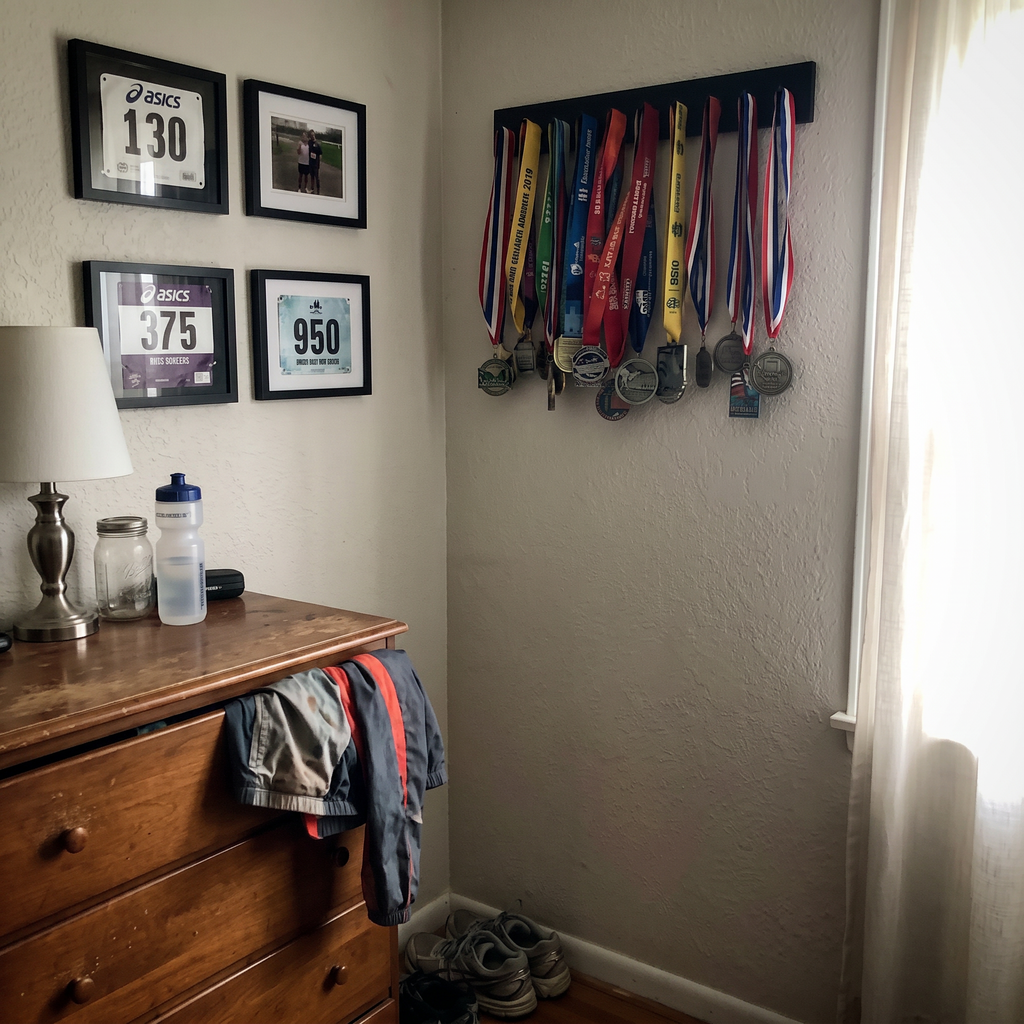
Ran for 3 days, from August 14 to August 17, 2026, the last day Crush saw it.
Run by Health After 50 on Facebook. Crush is not the advertiser and does not verify its claims. See this ad in Meta's Ad Library(opens in a new tab)
Want an ad like this for your product?
Crush makes new ad images for your product from this ad: your logo, your product photo, your offer.
Trials from $19.95 USD, then $79.95 USD a month. Cancel anytime.
About this ad
- Meta Ad Library ID
- 2050701378872079
- Platforms
- Facebook and Instagram
- Relaunches
- 0
Ad text
A blood pressure reading of 168 over 104 can floor a cardiologist without warning. Why assume the prescription is enough? I am Sandra Keller. I had written thousands of blood pressure prescriptions. Then I was the one being wheeled down a corridor in my own hospital. I have been a cardiologist for 28 years. Lisinopril, Amlodipine, Losartan, metoprolol. I wrote them the way other doctors write notes — without pausing to consider what they were not doing. For 28 years I believed that managing the reading was the same as addressing the problem. My husband is an oral surgeon. For years he watched me take my own blood pressure at the kitchen counter and accepted my explanation that it was a professional habit. It was not. My systolic had been climbing for three years. 137. Then 143. Then 149. I adjusted my own Lisinopril dose the way I adjusted it for patients. When my LDL drifted, I added a low-dose statin. When my fasting glucose moved from 98 to 107 to 114 across three annual panels, I noted it in my own chart and told myself I would watch it. Three numbers. Three prescriptions. Three separate management tracks running in parallel. I was doing to myself exactly what I spent every working day doing for other people, and I believed it was enough. My A1C was 5.9 the morning I went down at my workstation. I remember the sound of my chair rolling back. I remember trying to stand and not being able to. I remember Dr. Park appearing in the doorway. She was one of the residents I had trained — careful, methodical, exactly the kind of physician you want in the room at that moment. And before anything else registered, before the clinical picture came into focus, my first thought was that I did not want her to see me like this. She called the team herself. By the time I understood what was happening, I was on the gurney. Being wheeled down the same corridor I had walked ten thousand times. Past the nursing station where they knew my name. Past the rooms I rounded on every morning. The same hallway, from the other direction, looking up at ceiling tiles instead of patient charts. My blood pressure in the ambulance bay: 168 over 104. The cardiologist on call was a colleague I had worked alongside for over a decade. She reviewed my chart, adjusted my medications, and said what I already knew but had not been willing to apply to myself. My blood pressure, my LDL, and my fasting glucose had been drifting in parallel for years and were now compounding each other. She added a second antihypertensive. She referred me to endocrinology for the glucose. She was doing exactly what I would have done in her position. I spent two nights admitted. I lay in that bed and kept returning to a patient who had sat across from me two years earlier. He was 57, blood pressure climbing, A1C at 5.8, cholesterol managed but stubborn. He had asked me: are these three things connected? Is there something upstream of all of them? I had told him they were distinct conditions with distinct mechanisms and distinct treatment protocols. I had given him three separate prescriptions and told him to follow up in six weeks. In that hospital bed, I could not stop thinking about his question. When I was discharged, I went home and sat at the kitchen table. My husband made coffee and let me sit without asking anything, which was the most helpful thing he could have done. That evening, a colleague came by — a woman I had trained alongside during residency, now a general practitioner. She sat across from me with both hands around her mug and told me she had been watching my numbers for two years and had been waiting for me to ask the question I was finally ready to ask. So I asked it. She walked me through what she had been learning about the vessel lining. Not the downstream clinical picture I already knew. The mechanism at the cellular level that the prescriptions I had been writing for 28 years were treating from the outside while leaving the inside untouched. Every artery in the body is lined on the inside by a layer one cell thick called the endothelium. Its job is to manufacture nitric oxide using an enzyme called eNOS, release it into the vessel wall, and signal the muscle wrapped around that artery to relax. In a vascularly healthy body, this cycle runs cleanly. Vessels open on demand. Arterial walls stay flexible. Pressure stays normal. When endothelial dysfunction develops — which does not require a cardiac diagnosis to begin causing vascular damage — these cells slow their production. Oxidative stress gums up the eNOS enzyme, and nitric oxide falls below the level blood vessels were designed to run on indefinitely. The endothelial lining of the arteries, working without its own relax signal, becomes inflamed. Inflamed arterial walls stiffen. The heart works harder to move blood through them. Pressure climbs. And something else happens that almost nobody discusses openly. Chronic nitric oxide depletion combined with endothelial inflammation creates the conditions for microclot formation at the arterial wall. Not the acute clot of a cardiac event. Small, silent, sticky aggregation along the vessel lining, happening steadily between appointments. These do not show up on a standard panel. They are not captured by a blood pressure cuff. They are forming inside the arteries of people with managed readings, controlled prescriptions, and charts that look exactly the way mine looked. My blood pressure medication was handling the pressure reading. My statin was addressing LDL from one angle. My endocrinologist was about to address the glucose from a third angle. But nobody was addressing the lining that had stopped producing. Nobody was opening the drain. Three prescriptions. Three downstream interventions. One upstream mechanism left completely untouched. My colleague reached into her bag and put something on the table. French maritime pine bark. Concentrated extract. Standardized to 95 percent proanthocyanidins. Called Vasclear. I looked at it the way I look at anything a patient brings me from outside a clinical context. She said she knew what face I was making. She told me to read the mechanism before I said anything. I read it that night until 2 AM. True French maritime pine bark — Pinus pinaster, grown on the Atlantic coast of southwest France, not the generic ground bark that makes up most of what the supplement industry sells — contains a class of compounds called proanthocyanidins. Oligomeric proanthocyanidins. These compounds support the eNOS pathway directly. They do not force fluid volume down. They do not block calcium at the vessel wall. They bypass the pressure reading entirely and speak directly to the cellular machinery — clearing the oxidative load off the enzyme, restarting the production the lining was supposed to run and stopped running. A study published in the European Heart Journal found that pine bark extract improved flow-mediated dilation — the direct measurement of whether the lining is producing nitric oxide or not — by 32 percent against baseline and 49 percent against placebo, in patients who were already taking their full cardiac medication. A second study in International Angiology confirmed that pine bark extract improved endothelial function by 66 percent in patients carrying borderline pressure, borderline glucose and borderline lipids at the same time. Not one marker. The lining underneath all three. When the lining finally starts producing nitric oxide properly again, the sustained endothelial inflammation begins to ease. The arterial wall recovers compliance. The microclot environment changes. Blood pressure that was rising as a downstream consequence of that upstream inflammation begins to reflect something different. The cholesterol oxidizing at an inflamed arterial lining has less of the inflammatory environment that drives it. The fasting glucose that had been waiting on capillary beds that would not open begins to normalize. Three numbers. One upstream mechanism. One compound addressing it. This is what Lisinopril does not do. Lisinopril relaxes the vessel wall from the outside. That is real, it has a clinical place, and I am not telling you to stop your medication. But it does not touch the eNOS enzyme. It does not address the nitric oxide the lining stopped making between doses. It does not change what is happening at the arterial lining between every appointment. I had been treating the readings. No one had been opening the drain. I ordered Vasclear that night. Before I tell you what happened, I need to explain why the pine bark you may have already tried produced nothing. When I told Dr. Park what I was doing, she said she had tried pine bark the previous year and nothing had changed. She had concluded pine bark did not work. She was wrong about the conclusion. The mechanism is peer-reviewed and replicated. What fails, consistently, is the product. Most supplements use the wrong tree. The pine bark in most supplements on the market is generic ground bark, milled from whatever pine happens to be cheapest. Generic bark carries almost none of the proanthocyanidin concentration responsible for the eNOS effect. It is sawdust-grade material sold by weight instead of by active content. True French maritime pine bark, Pinus pinaster, from the coastal forests of southwest France, is the only source appearing in the human trials that moved endothelial function, blood pressure, and cholesterol markers in controlled studies. Most supplement labels do not specify which species is inside. Most are using the wrong tree. Most supplements are catastrophically underdosed. The clinical trials ran on standardized extract delivering 150 to 200 milligrams of actual proanthocyanidins daily. Most capsules on the market contain 25 to 75 milligrams of unstandardized ground bark. That is not a minor gap. It is the difference between a therapeutic dose and an amount too small to produce a measurable biological response in your blood vessels. Most supplements skip the one number that decides everything. A label can print 400 milligrams of pine bark extract and tell you nothing at all, because that extract can be standardized to 95 percent proanthocyanidins or to almost none. Standardization is the delivery system. It is the only thing that guarantees the active compounds arrive at the concentration the research actually used. Without it you are buying bark by the gram and hoping. Dr. Park was not wrong to try pine bark. She was swallowing a label with no active content behind it. Vasclear gets all three right. Pinus pinaster, sourced from the Atlantic coast of southwest France. Independently verified — an actual Certificate of Analysis confirming both purity and real proanthocyanidin content, not a label claim, because unstandardized ground bark sold as pine bark extract is not an exception in this industry. It is the standard. A concentrated extract standardized to 95 percent proanthocyanidins, delivering a full 400 milligrams per capsule — the clinical dose and past it, not a fraction of it. Nothing else in the capsule. No fillers, no blends, nothing padding out the bottle. Third-party tested every batch. Made in the USA. One capsule with your first meal of the day. That is the entire protocol. Here is what happened when I followed it. The first thing I noticed was not a number. By the end of week one, the afternoon drop in focus I had normalized for so long it had become invisible was gone. My husband noticed before I mentioned it. He said I seemed less depleted when I came home. Week two: fasting glucose 96. I had been running between 109 and 116. I checked it twice. Week three: systolic consistently between 131 and 136. I had been managing 148 to 153 with medication. Week six: I ran my own lipid panel. LDL down. Triglycerides down. The statin had not moved my triglycerides in two years. They moved in six weeks. Week ten: A1C 5.6. Blood pressure in the 127 to 133 range on the same medication. Cholesterol markers the best they had been in four years. Three numbers, moving together, in the same direction, for the first time. I showed Dr. Park the full panel without telling her what I had changed. She looked at every line. Then she looked at me. I told her. She went home and ordered Vasclear that evening. I have since recommended it to six patients. All six came back with the same pattern. Blood pressure easing within three to four weeks. Fasting glucose dropping within the first month. Lipid panels moving by the three-month mark. One woman, 61, on two antihypertensives for four years with triglycerides that had never responded to her statin, came back at her next appointment with triglycerides down 40 points. Her cardiologist — a colleague of mine — called me to ask what I had changed in her protocol. Another patient's fasting glucose dropped from 121 to 94 in seven weeks. No medication change. That is not coincidence. That is a mechanism working the way the research shows it should. Vasclear offers a 90-day money-back guarantee. Full refund, no questions asked, if your blood pressure does not ease, your fasting glucose does not drop, or your cholesterol markers do not move. You risk nothing. Vasclear comes in a bottle with one ingredient in it. Small company. Supply is limited to each verified harvest from their southwest France source. If it is in stock when you look, order now. If it shows out of stock, sign up for the notification. There is a promotion running currently. The multi-bottle option is the full three-month window — the window where blood pressure, cholesterol, and blood sugar all have time to reflect what is changing upstream. If you are managing blood pressure that climbs despite medication, cholesterol numbers that move on the statin but not the triglycerides, fasting glucose your doctor is watching without yet treating, energy that falls apart by mid-afternoon, or the quiet sense that three prescriptions are addressing three symptoms of something none of them are actually fixing — give this 90 days. Track your numbers weekly. Bring the results to your doctor. https://www.getvasclear.com/pages/french-bp-discovery I spent 28 years writing prescriptions that managed the reading. Then I became the patient who needed something that addressed what was underneath it. That is the only reason I am telling you this. Sandra Keller, MD, Cardiology Age 60 P.S. The morning Dr. Park read 168 over 104 and took it a second time without a word, she was doing exactly what I had trained her to do. What I had not trained her to ask — what I had not trained myself to ask for 28 years — was what was happening at the arterial wall in the time between those readings. The microclots forming. The endothelial lining stiffening. The nitric oxide falling just far enough, for just long enough, to keep the inflammation active between every appointment. That is what blood pressure medication does not answer. Vasclear addresses that question at the cellular level. One capsule. One bottle. 90 days, zero risk. https://www.getvasclear.com/pages/french-bp-discovery P.P.S. Do not substitute generic pine bark or ground bark capsules. If the supplement does not specify French maritime pine bark, Pinus pinaster, standardized to 95 percent proanthocyanidins at a full clinical dose, it will not produce what the research showed. Most do not. Vasclear is the one that does.
Where the ad sends people
getvasclear.com
French Maritime Pine Bark 400mg with 95% Proanthocyanidins
Vasclear
Learn more: getvasclear.com(opens in a new tab)