
Inactive· since May 1, 2026
- 7
- days it ran
- 0
- relaunches
Ad copy
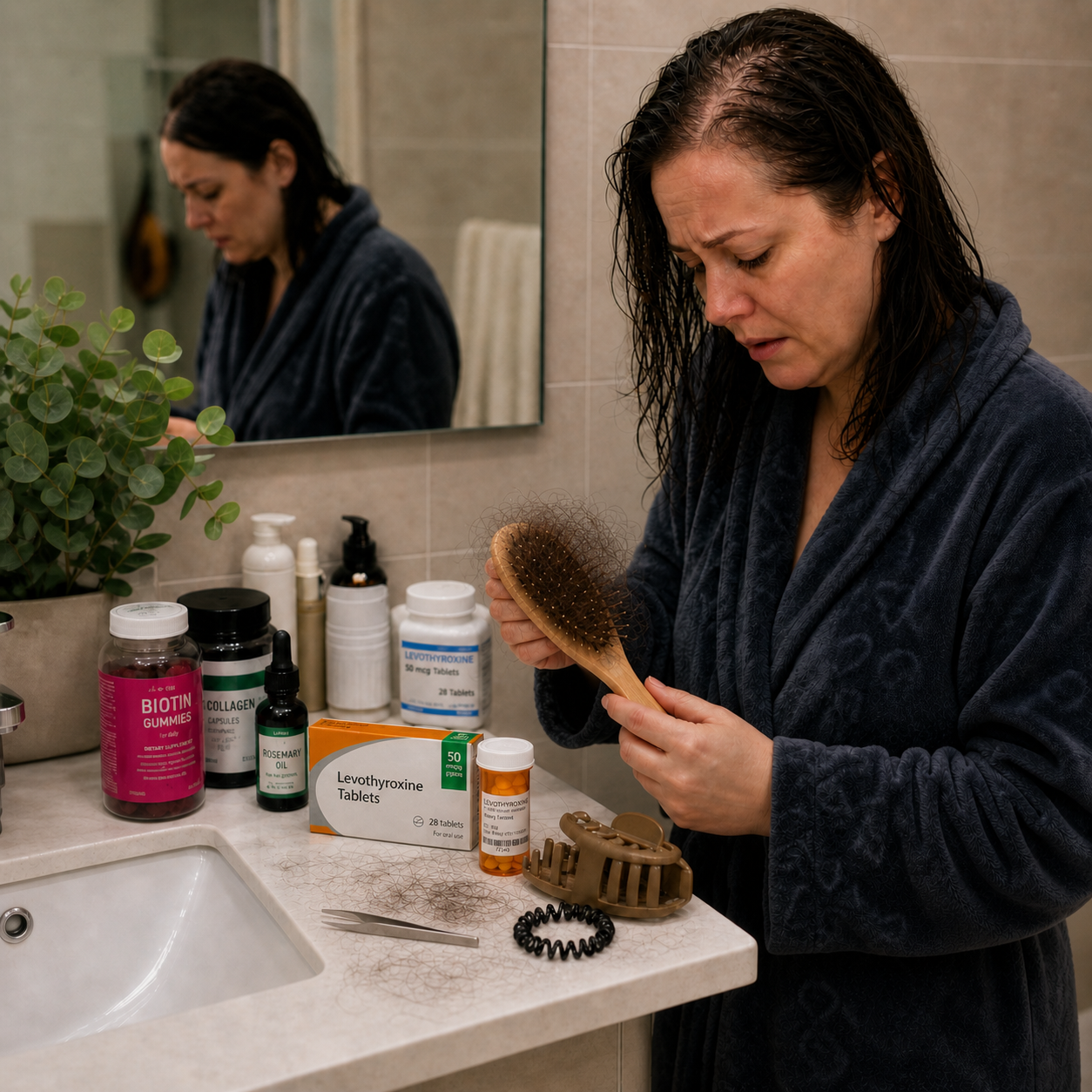
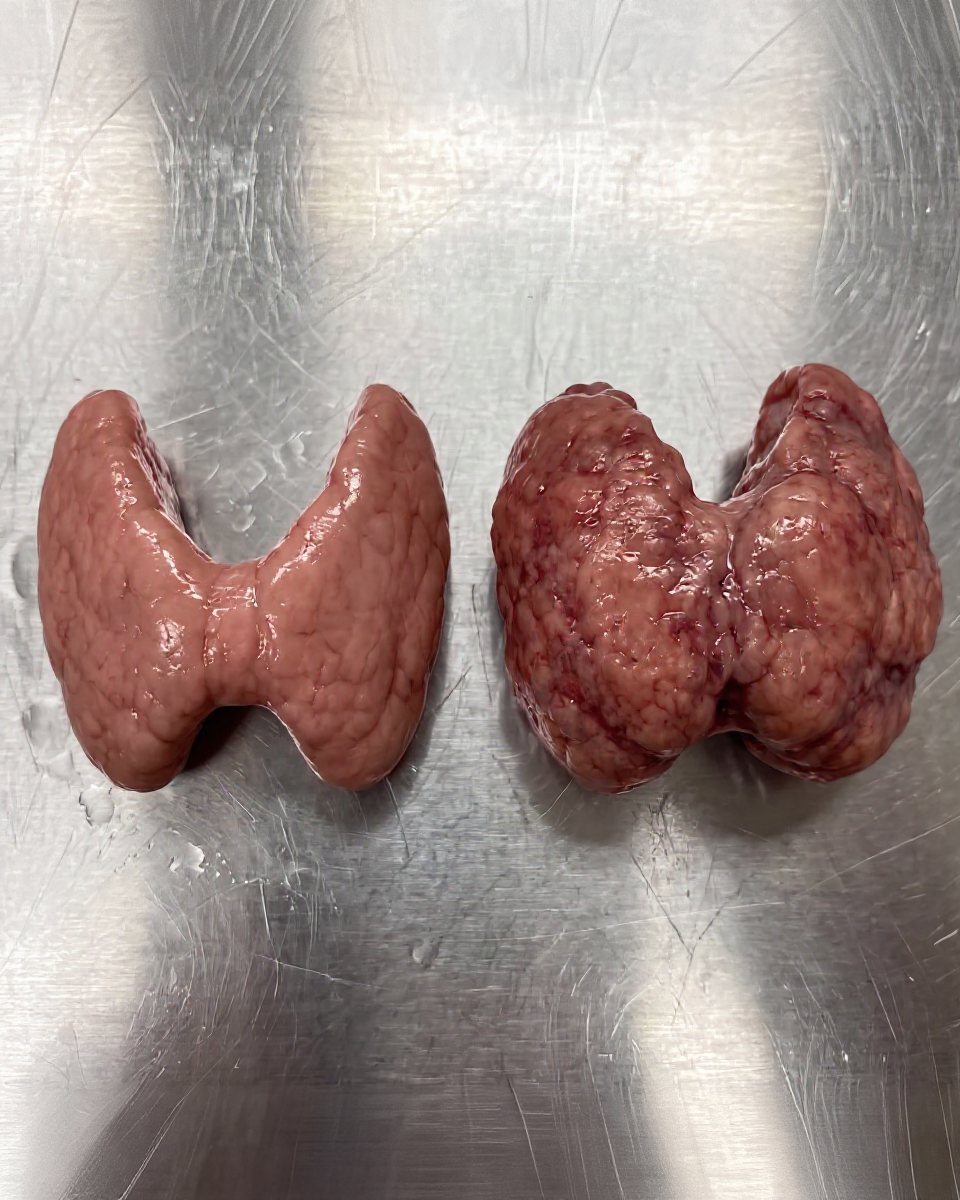
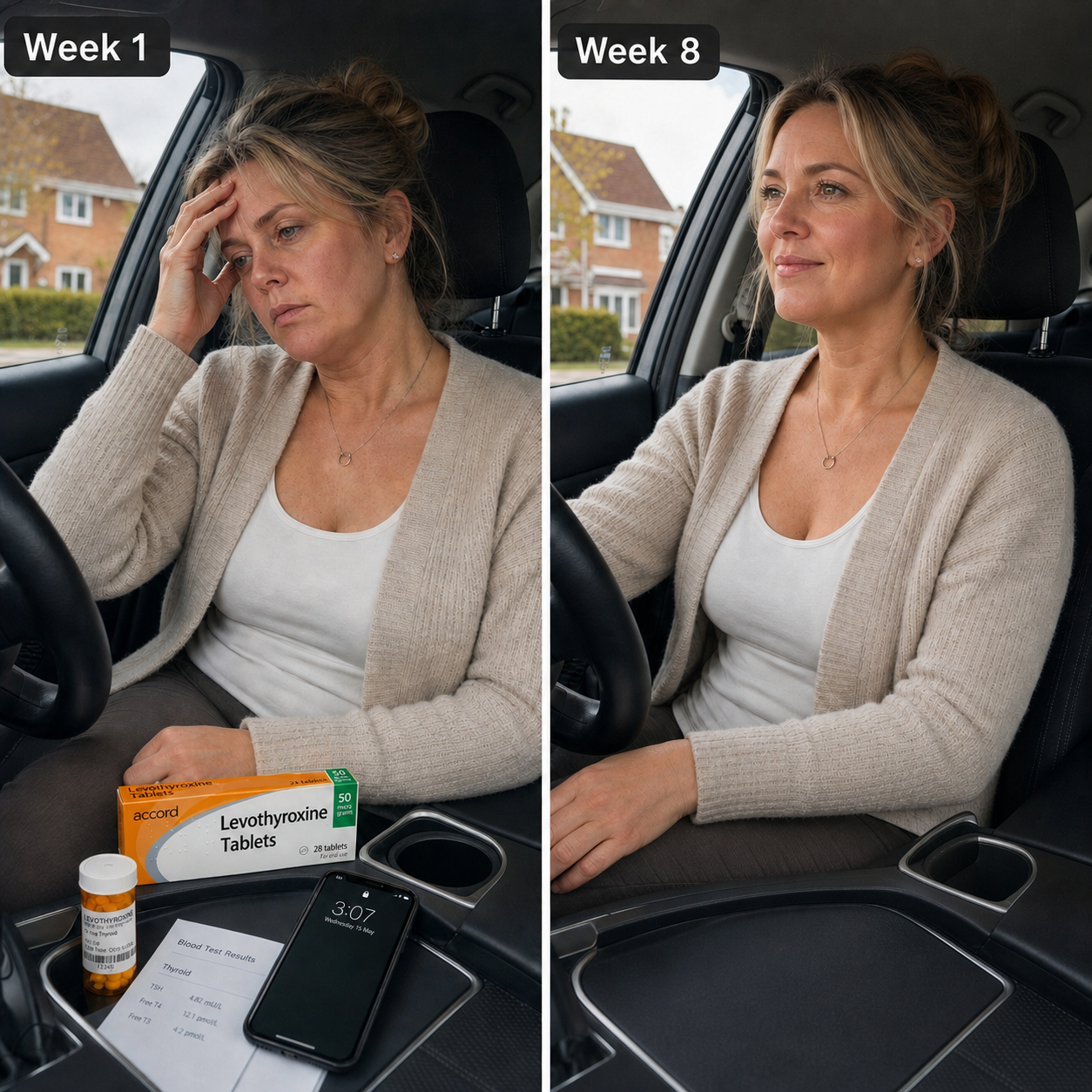
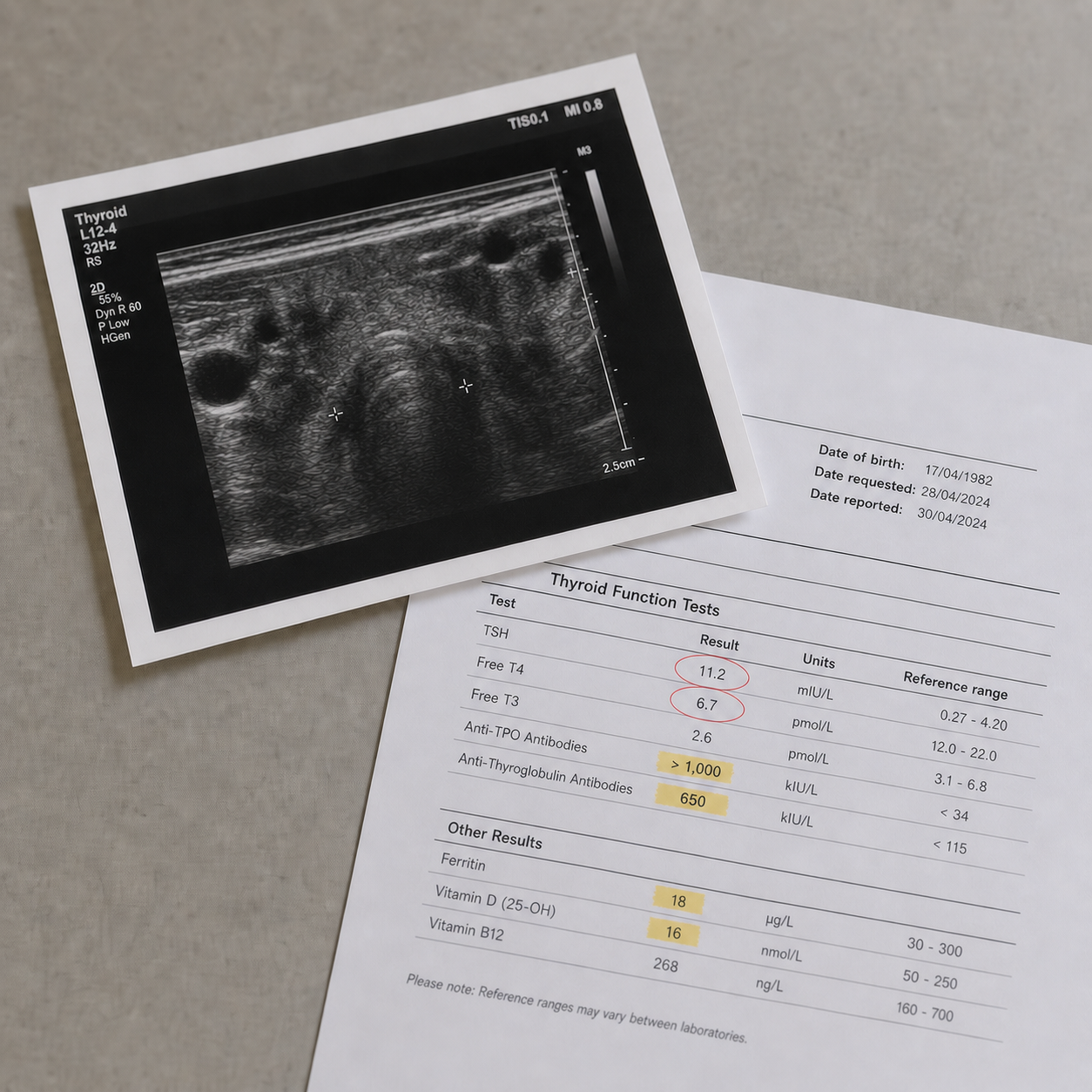
I stopped changing in front of my husband long before I admitted the truth: PCOS and hypothyroidism had stolen how feminine I felt. I didn't feel like the woman he married anymore. And the sad part? He never made me feel that way. He was still kind. Still patient. Still telling me I looked beautiful when I was standing there in the same oversized jumper I wore three nights in a row because it was the only thing that didn't cling to my stomach. He'd say, "You look lovely." And I'd smile. But inside I'd think: "You're only saying that because you love me." Because I didn't feel lovely. I felt swollen. Heavy. Cold. Tired. Foggy. Like I had aged 20 years in a body that used to feel like mine. I remember one evening so clearly. He came into the bedroom while I was getting changed. Nothing dramatic. Nothing strange. Just my husband walking into our room like he had a thousand times before. But I panicked. I grabbed my top and pulled it down over my stomach so fast it was embarrassing. He noticed. Of course he noticed. He didn't say anything. That made it worse. Because I could see the question on his face. Not judgement. Just confusion. Like, "Why are you hiding from me?" And I wanted to explain. I wanted to say: "I'm not hiding from you." "I'm hiding from this body." "I'm hiding from the stomach that looks bloated no matter what I eat." "I'm hiding from the hairbrush full of hair I cleaned out this morning." "I'm hiding from the chin hairs I plucked before you woke up." "I'm hiding from the face that looks tired even after I sleep." "I'm hiding from the woman I don't recognise anymore." But I didn't say any of that. I just said: "I'm tired." Because that was easier. And honestly, I was tired. But not normal tired. Not "long day at work" tired. This was the kind of tired that sits in your bones. The kind where your body feels like it has a low battery from the second you wake up. The kind where by 3pm you're already thinking about bed. The kind where your husband is telling you about his day and you want to listen — but your brain feels wrapped in cotton wool. I stopped wearing certain clothes. I stopped wearing my hair down. I stopped believing compliments. I stopped relaxing when he touched my waist. I stopped feeling like a woman and started feeling like a collection of symptoms. PCOS. Hypothyroidism. Puffy face. Stubborn weight. Hair shedding. Cold hands. Brain fog. Low energy. Normal labs. Normal labs. Normal labs. That phrase made me want to scream. Because my GP kept saying everything was "within range." But nothing about my body felt within range. Within range for who? It didn't feel normal to wake up exhausted after eight hours of sleep. It didn't feel normal to eat carefully and still feel swollen. It didn't feel normal to lose hair from my head while finding it where I didn't want it. It didn't feel normal to stand next to my husband and feel like a stranger in my own skin. So I started trying to fix it myself. Quietly. Obsessively. At night. Levothyroxine for my hypothyroidism. Inositol. Spearmint. Berberine. Vitamin D. Magnesium. B12. Evening primrose. Maca. Hormone support blends. Metabolism capsules. Anything that sounded like it might bring me back to myself. My bathroom cupboard was full. My bank card was tired. And I was tired of pretending I wasn't desperate. Every bottle felt hopeful when I bought it. Then three weeks later it became another reminder that I still didn't feel right. One night, after he fell asleep, I went into the bathroom and opened the cupboard. I just stared at it. All the bottles. All the money. All the hope. All the disappointment. And I started crying. Not loudly. Just that quiet kind of crying where you don't even have the energy to explain it to yourself. Because I wasn't just sad about my body. I was grieving the version of me I used to be. The woman who could get changed without thinking about it. The woman who could be touched without tensing. The woman who felt feminine without trying so hard. That night I stopped searching for "best PCOS supplement" and "best hypothyroidism support." I searched something different. PCOS and hypothyroidism together. And for the first time, something clicked. Because I realised I had been making one fundamental mistake the entire time. I had been treating two connected problems as if they had nothing to do with each other. One bottle for PCOS. Levothyroxine for my hypothyroidism. Each doing its job in isolation — while my body was experiencing both as one single, exhausting, relentless storm. PCOS was driving the insulin resistance. The cravings. The androgens. The stubborn weight that wouldn't move no matter what I did. Hypothyroidism was slowing everything else down. The metabolism. The energy. The hair. The temperature. The brain. And those two things weren't sitting in separate departments in my body. They were feeding each other. Making each other worse. And every supplement I had ever bought was designed for one or the other — never both, never together, never for the woman living in the middle of both at the same time. That was the missing piece. Not more willpower. Not another bottle. A formula that finally understood the overlap. That's when I found TryAxivelle Thyroid Balance Drops. I read the page. The formula. The explanation of why it was built the way it was. And for the first time, something matched the way my body actually felt. It starts with the thyroid essentials your body actually needs — selenium and zinc for thyroid hormone conversion, iodine at a dose that supports function without aggravating the autoimmune side, and ashwagandha for the cortisol and adrenal piece that quietly makes every other symptom worse when it's ignored. Not random ingredients. The specific co-factors the thyroid needs to actually do its job — and that most formulas either skip or underdose to the point of meaninglessness. And then it goes further. With targeted support for the metabolic, blood sugar, and hormonal side that hypothyroidism alone never addresses. The PCOS side. The side that had always been left out. And for the first time, I could actually imagine feeling like myself again. For the first time I wasn't ordering out of desperation. I was ordering because something finally made sense. The first week, nothing. Which made me trust it more — because anything that "works in three days" is lying. Week two, I noticed I wasn't counting down to 3pm the way I usually did. Week three, the cravings quietened. Not gone — but manageable. And one morning I got dressed and didn't immediately hate everything I tried on. Small. But I noticed. Then one afternoon around week five, I was in the kitchen making tea. He walked in. Sat down at the table. And just looked at me for a moment. Not in a strange way. Just the way he used to look at me. Before all of this. I asked him what he was doing. He said: "Nothing. You just seem more like you." I had to turn back to the kettle because I could feel my eyes filling up. More like me. That was all I wanted. Not to be thinner. Not to be perfect. Not to turn back the clock. Just to feel like the woman he married again. Week six, I washed my hair and looked at the brush after. Three strands. I stood there in the bathroom just staring at it. I used to lose handfuls. I used to stand in the shower bracing myself before I even reached for the shampoo. Three strands. I took a photo and sent it to my sister. She called me. Crying. Because she had been watching me disappear for two years. And then one evening, not long after — he came into the bedroom while I was getting changed. And I didn't grab my top. I didn't panic. I didn't pull anything down. I just kept getting changed. He didn't make a big deal of it. He probably didn't even realise what that moment meant. But I did. I stood there and I thought: there she is. I posted about this in my PCOS support group a few months ago — just a short message, nothing dramatic — and since then 60 women have messaged me asking what I found. Women who recognised themselves in that bedroom moment. Women who also cried in front of their bathroom cupboard at midnight. Women who had also smiled at a compliment they didn't believe. Women like us don't give our trust easily. We've been failed too many times — by doctors, by labs that said normal when nothing felt normal, by supplements that promised everything and changed nothing. When something finally works, we know. Go and read what TryAxivelle Thyroid Balance Drops actually does. Look at the formula. Read the explanation. See if it sounds like your body. I think women like us can tell the difference between another random supplement — and something that finally understands why we bought all the others. 👉 https://tryaxivelle.com/products/tryaxivelle-thyroid-balance-drops
Like this ad? Make it yours.
Crush rebuilds this exact creative around your product — your brand, your colors, your offer — in about a minute.