American Society for Metabolic & Bariatric Surgery
American Society for Metabolic & Bariatric Surgery Facebook ad: “Feel Like Yourself Again”
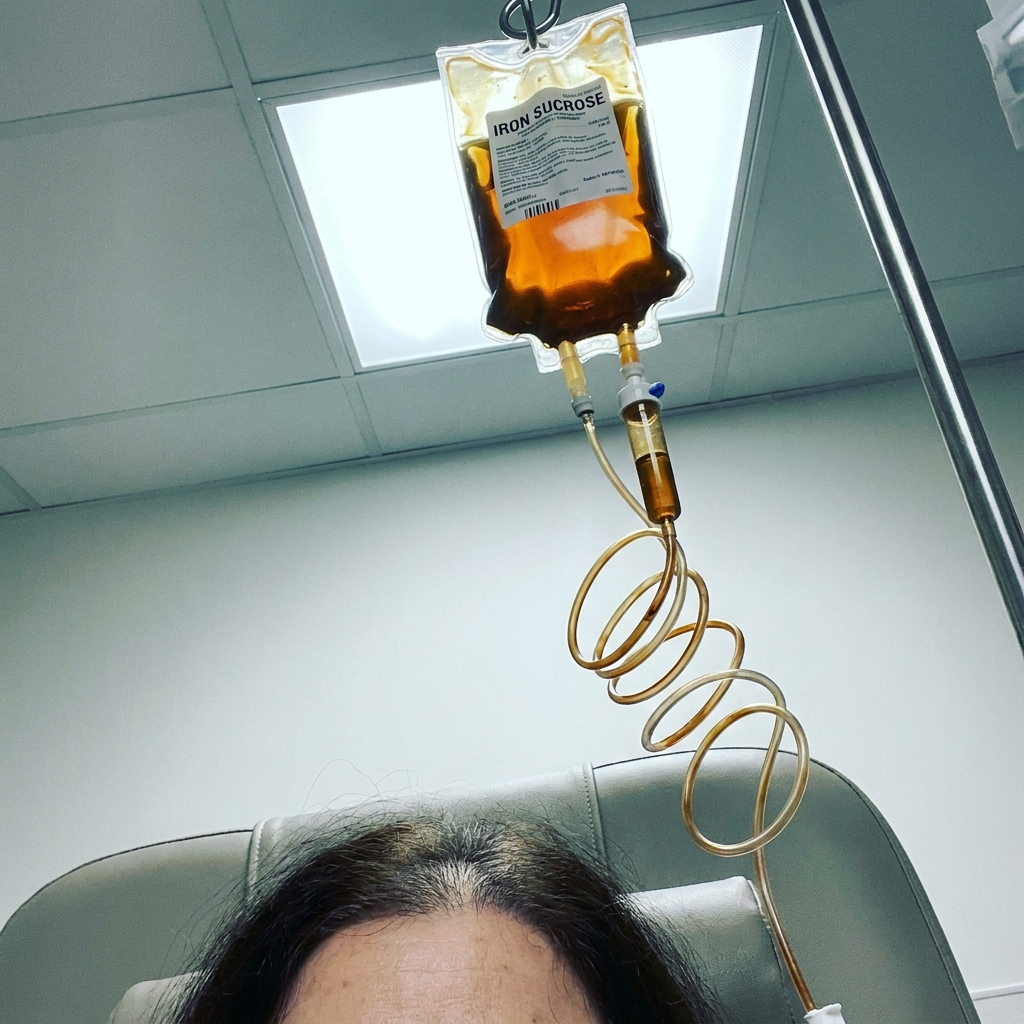
Ran for 28 days, from July 6 to August 3, 2026, the last day Crush saw it.
Run by American Society for Metabolic & Bariatric Surgery on Facebook. Crush is not the advertiser and does not verify its claims. See this ad in Meta's Ad Library(opens in a new tab)
Want an ad like this for your product?
Crush makes new ad images for your product from this ad: your logo, your product photo, your offer.
Trials from $19.95 USD, then $79.95 USD a month. Cancel anytime.
About this ad
- Meta Ad Library ID
- 2084867705439751
- Platforms
- Facebook, Instagram, Audience Network, Messenger and Threads
- Relaunches
- 0
Ad text
Two years ago, a woman came back into my office to ask if the surgery I gave her 18 years earlier had been a mistake. I had performed her gastric bypass in 2003. She had been one of my first bariatric patients. She sat across from me at forty-two years old — no, she wasn't forty-two anymore. She was sixty. Her hair was thinning enough that she was afraid to wash it. She had been through three rounds of iron infusions in the past six months. Her endocrinologist had recommended a surgical revision. She was asking me, the surgeon who had promised her a new life eighteen years earlier, whether that life had actually been given to her at all. I did not know what to say. Marilyn had done everything I told her to do. She had lost the weight. She had come off her diabetes medication. She had come to every follow-up appointment for the first two years. She had followed the post-op protocol my program handed her. And in eighteen years of caring for her, I had never once asked her the one question that would have changed everything. Because it wasn't my job to ask. That's what the dietitian was for. That's what the follow-up program was for. My job was the operation. My job ended when the incisions healed. I had performed a surgery that was medically flawless. And I had watched — from a distance, without ever knowing I was watching — as the standard post-op protocol slowly took apart the woman I had promised to help. My name is Rachel Morrison. I'm a board-certified general surgeon. I spent twenty-two years performing bariatric procedures at hospitals in Chicago and Milwaukee before I stepped away from the operating room in 2022. I did not leave surgery because I was tired. I left because after twenty-two years of performing what I believed were successful operations, I realized I had spent my entire career solving only half of the problem I was hired to solve. And the half nobody told me I was supposed to be solving was quietly costing my patients their health, their identity, and in some cases their marriages — for years after they left my operating room. I am writing this knowing it is going to upset colleagues I trained with, colleagues I taught, and colleagues who still refer patients to my former practice. But I don't care anymore. I am writing because the surgery I built my career on has been paired, for decades, with a post-op protocol that was never going to work. And it took me twenty-two years and one patient's question to see it. Marilyn was not the only one. After she left my office that afternoon in 2022, I pulled the records of every bariatric patient I had operated on in the previous ten years. I had performed just over four hundred procedures during that stretch — sleeve gastrectomies and gastric bypasses, mostly women, ages thirty-five to sixty. I could not follow up with all of them. Many had moved out of state. Some had switched practices. A number of them had died — from causes that, at the time, my program had not connected to their surgeries. But I was able to contact just over two hundred of them. I asked each one the same three questions. What multivitamin are you currently taking. When was the last time your ferritin was in the normal range. And when was the last time you looked at yourself in the mirror and recognized the person you thought this surgery was going to make you. The answers to the first question were nearly identical. Bariatric Fusion. Celebrate. BariMelts. Bariatric Advantage. ProCare Health. The same five names, over and over, in the same rough proportions I would have expected — because these were the multivitamins the bariatric programs in my region had been recommending for the better part of two decades. The answers to the second and third questions were what I had not been prepared for. More than seventy percent of the patients I reached told me their ferritin had been below normal at their most recent lab draw. More than half told me they no longer recognized the person in the mirror. And a number I still cannot bring myself to write down publicly told me they had, at some point in the past five years, wondered if the surgery I had performed on them had been worth it. I had operated on four hundred women. I had lost track of nearly half of them. Of the ones I reached, most were in some stage of nutritional collapse. And I had never once, in twenty-two years of clinical practice, considered that the multivitamin bottle on their kitchen counter had anything to do with it. It took me three months of reading to understand what I had missed. I sat in my study in Chicago through the winter of 2022 with a stack of nutrition science textbooks I had not opened since medical school. I read papers on nutrient absorption pathways. I called two former colleagues — a bariatric dietitian and a gastroenterologist — and asked them questions I should have asked twenty years earlier. And what I learned was that the answer to Marilyn's collapse was not hiding in some obscure corner of the medical literature. It was on page one of the coursework I had glanced at when I was studying to sit for my bariatric surgical boards in 2001. Bariatric surgery does not just change the size of your stomach. It changes the entire chemistry of how your body absorbs nutrients. I had performed the operation four hundred times. I had signed off on discharge protocols four hundred times. I had never once, in any of those procedures, asked myself whether the multivitamin the bariatric program was recommending was designed to work in the anatomy I had just created. I had assumed the dietitians had done that work. I had assumed the multivitamin companies had done that work. I had assumed the bariatric societies and the standard care protocols had done that work. None of them had. The bariatric multivitamin industry has been recommending the same handful of products for the better part of two decades. Bariatric Fusion. Celebrate. BariMelts. ProCare Health. Bariatric Advantage. The dosing evolved slightly over the years. The packaging got better. The marketing improved. But the chemical forms of the nutrients inside those bottles never changed. And they had never been designed to work in the anatomy I had spent my career creating. Let me explain what I actually did in that operating room. Because this is the piece I never fully connected to what I was watching happen to my patients afterward. Gastric bypass — the operation I performed on Marilyn in 2003 and on hundreds of women after her — surgically alters two structures that are essential to nutrient absorption. The first is the stomach. In a gastric bypass, I reduced the functional stomach from its normal size to a small pouch. That reduction eliminates most of the cells in your stomach that produce hydrochloric acid. Post-op, you produce somewhere between twenty and thirty percent of the stomach acid you did before I operated on you. That acid is not just for digesting food. It is the chemical mechanism that breaks down mineral bonds in your multivitamin. Without it, the iron and B12 in your vitamin cannot be released from their carrier molecules. The second structure I altered was your small intestine. In a bypass, I rerouted your digestive tract so that food would skip past the first section — called the duodenum. This is where the majority of iron and calcium absorption happens in the human body. After I performed that reroute, food never touched your duodenum again. Every gastric bypass patient I ever operated on left the operating room with two permanent changes that made most standard multivitamins biochemically incompatible with her body. And I never once, at any of her follow-up appointments, explained that to her — because I had never once, in twenty-two years of practice, sat down and connected what I had done in the operating room to what the multivitamin bottle on her counter needed to be able to do. Here is what nobody in surgical training ever said out loud. The "bariatric" multivitamin you were sent home with uses the exact same chemical forms of iron, B12, and folate as the drugstore multivitamin you were probably taking before your surgery. The dosing is higher. The forms are identical. And those forms were designed for a stomach and a gut that I permanently rearranged. Go pick up your bottle. Read the back panel. If you are taking Bariatric Fusion, Celebrate, BariMelts, ProCare Health, or Bariatric Advantage — the same five names that came up in nearly every conversation I had with my former patients — you will see three ingredients listed by their chemical form. The iron will say ferrous sulfate. The B12 will say cyanocobalamin. The folate will say folic acid. These are the cheapest forms of these three nutrients in the entire supplement industry. They are the same forms that go into a two-dollar bottle of Kirkland multivitamins at Costco. The bariatric brands charge more because their marketing budgets are larger and their packaging is more polished. Not because their formulas are different. And every one of these three forms requires either stomach acid or a functional duodenum to be absorbed. Two things I permanently removed from your body when I performed your bariatric surgery. Let me walk you through what each of those three forms is doing — or rather, not doing — inside the body I helped create. Ferrous sulfate is the iron form in almost every bariatric multivitamin on the market. It is a molecule that requires strong stomach acid to break apart. Before I operated on you, your stomach produced roughly two liters of acidic secretion every day. Post-op, it produces a fraction of that. The ferrous sulfate in your multivitamin arrives in your stomach with nothing to unbind it. It passes through your gut chemically intact, then exits your body in your stool. The label on your bottle says forty-five milligrams of iron. Your body might absorb one or two of them on a good day. This is the biochemistry behind the pattern I found in my own patient records. Ferritin dropping year after year. Iron infusions every six months. Hair thinning at the temples. Every one of those symptoms traces back to iron that never made it out of a supplement capsule and into a bloodstream. Cyanocobalamin is synthetic B12. It is a form your liver must chemically convert into the active form — methylcobalamin — before your cells can use it. That conversion process depends heavily on tissue in the small intestine that gastric bypass significantly disrupts. Post-op patients can carry cyanocobalamin in their bloodstream at "normal" laboratory concentrations while their cells are functionally starving for usable B12. This is why so many of my former patients reported exhaustion, brain fog, and low mood — while their bloodwork came back reassuring. The lab measured the molecule. It did not measure whether their bodies could use it. Folic acid is synthetic folate. Like cyanocobalamin, it requires a chemical conversion to become the active form your body actually uses to build red blood cells. That conversion happens in intestinal tissue I permanently altered when I performed your bypass. Without functional folate, your body cannot rebuild the red cells you naturally lose. The whole hemoglobin repair process stalls out — even when you are taking iron supplements religiously. This is the biochemistry behind Marilyn's iron infusions. She was not iron-deficient because she was not getting iron. She was iron-deficient because her body could not complete the process of putting that iron to work — and the multivitamin I had allowed her bariatric program to recommend was not providing any of the components that could have helped her body do it. Three nutrients. Three of the most important nutrients for anyone recovering from bariatric surgery. All in chemical forms your altered anatomy cannot use. You have been doing exactly what your bariatric team told you to do. You have been taking the wrong forms of the right nutrients — for years — because nobody knew to tell you the difference. Here is what I read in those three months of research in my study. And here is what I want every one of my former patients to know I now understand — twenty years too late. There are forms of iron, B12, and folate that do not require stomach acid, that do not require a functional duodenum, and that do not require the body to perform any conversion process to become usable. These forms have existed for decades. They are documented in the same textbooks I passed over in my early residency. They are not experimental. They are not fringe. They are simply more expensive to manufacture, which is why the bariatric supplement industry has not switched to them. The iron form is called ferrous bisglycinate. It is iron chelated — chemically bonded — to two amino acids. When it reaches your gut, your body recognizes those amino acids as protein carriers and absorbs the iron directly through the intestinal wall. No stomach acid required. No duodenum required. It does not cause the constipation, nausea, or metallic taste that make ferrous sulfate so difficult for post-op patients to tolerate. The B12 form is called methylcobalamin. It is B12 in the active form your cells actually use. Your liver does not need to convert it. Your cells absorb it and use it immediately. The folate form is called L-5-MTHF, also known as methylfolate. It is folate in the active form your body needs to build red blood cells. It bypasses the genetic and digestive limitations that make folic acid unreliable in post-surgical patients. These three forms have been documented in peer-reviewed nutrition literature since the 1990s. They are the forms clinical nutritionists reach for when they need to rebuild a patient's iron or B12 stores without resorting to IV infusions. They are the forms bariatric surgical societies could have added to their standard post-op recommendations decades ago. They didn't. I want to be clear about why. It is not because the surgical community was hiding this information from patients. It is because the surgical community — myself included — was not looking for it. Surgeons operate. We do not usually sit in our studies through the winter reading nutrient absorption science. We assume our dietitian colleagues have that covered. And when the dietitian colleagues rely on the standard bariatric multivitamin brands, and those brands never update their formulas, and nobody in the system connects the biochemistry to the outcomes patients are having ten years post-op — you end up with what I ended up with. Four hundred women. Two hundred confirmed in some stage of nutritional collapse. And a career I now spend explaining what I should have understood the first time I ever performed the operation. In the fall of 2023, roughly a year after I left surgical practice, I began looking for a bariatric multivitamin that used the three forms I had learned about — chelated iron, methylated B12, and active folate — in a single formula. I assumed no such product would exist. I had spent enough time in the supplement industry to know that manufacturers rarely reformulate around science if it costs them margin. My working plan was to write a research paper recommending that post-op patients supplement three separate products. I was wrong. One company had already done the work. The product is called Potent Nutra. It is a small American manufacturer based in Salt Lake City. They make a single product — a bariatric multivitamin in a two-capsule daily dose, formulated specifically for post-surgical anatomy. The iron is forty-five milligrams of ferrous bisglycinate. Chelated. No stomach acid required for absorption. The B12 is methylcobalamin. Already in the active form. No conversion required. The folate is L-5-MTHF. Already active. No conversion required. The formula contains twenty-three nutrients total. Every one of them is in its most bioavailable form. Zinc as picolinate. Magnesium as glycinate. Selenium as selenomethionine. Vitamin D3 paired with K2. Every choice on the label is a reflection of the anatomy this product was designed for — not the anatomy of a healthy adult who never had surgery. Two small capsules with breakfast and dinner. That is the entire protocol. I did not find this product because a sales rep pitched it to me. Sales reps do not come to the homes of retired surgeons who spend their days reading nutrition papers in Chicago. I found it because I ran the search myself, comparing the ingredient panels of every bariatric multivitamin on the market against the biochemical profile that would actually work in a post-bariatric body. Potent Nutra was the only one that met all three criteria. I sent a bottle to a former colleague — a bariatric dietitian I had trained with in Milwaukee twenty years ago — and asked her to look at it and tell me if she saw what I saw. Two weeks later she called me back and told me she had already ordered a case for the program she was running. She had come to the same conclusion. Over the past eighteen months, I have been consulting with three bariatric programs across the Midwest — two in Illinois and one in Wisconsin. I contacted each of them after I finished my research and asked whether they would be willing to update their post-op protocols to recommend a multivitamin with the three bioavailable forms. Two of the three said yes. The third said their approved-vendor list was set by a national committee and could not be changed without a formal review process that would take at least two years. The two programs that agreed have been tracking their patients closely since early 2024. I do not run their clinics. I do not see their patients. What I do is review the aggregated lab data every quarter and compare it to the historical data from the same programs before the protocol change. The results have been more consistent than I expected. Patients whose ferritin had been below normal for years began seeing measurable improvements within eight to twelve weeks. B12 markers normalized faster — typically within a month. Hair shedding, which had been the most common complaint in follow-up appointments, slowed noticeably in most patients by week six and largely resolved by week ten. Energy returned somewhere between weeks three and five. None of this is dramatic. I want to be clear about that. Nobody in these programs has woken up transformed on day three. The body does not work that way. Any product that claims otherwise is either lying to you or exploiting your desperation. What I am telling you is that given the right chemical forms of the nutrients your altered anatomy needs, the human body will eventually start doing what it has been trying to do all along. Ferritin will begin to store iron. Cells will begin to use B12. Hemoglobin will begin to rebuild. The infusion clinic will stop being a monthly appointment. I have now watched this pattern unfold in aggregated data from over four hundred patients across two bariatric programs. The same pattern I could not create in twenty-two years of my own surgical practice. Because I was not paying attention to the piece of the puzzle that would have made it possible. If you are reading this, and any of what I have described sounds familiar, I want to say something directly. I want to say it because I have spent the last two years thinking about the four hundred women I operated on, and the tens of thousands of women my colleagues operated on, and the fact that the vast majority of them are still walking around believing that the failures they are experiencing are somehow their own. They are not. If your labs have been trending in the wrong direction for years, and your bariatric team has told you to be patient, it is not because you have been non-compliant. It is because the multivitamin you were sent home with was never chemically compatible with the anatomy you have. If your hair has been thinning past the six-month mark that everyone told you was the end of the shedding — if your part is wider than it was, if your ponytail wraps three or four times where it used to wrap once, if you have started avoiding overhead lighting because your scalp shows more than it should — that is not the normal course of post-bariatric recovery. That is a nutrient absorption failure with a specific cause and a specific fix. If you are exhausted in a way that no amount of protein, water, or sleep has repaired — if the brain fog you thought would lift six months post-op has become your baseline, if you are dropping into your chair at the end of a workday and wondering when you became this tired — you are not getting older. You have B12 in your bloodstream that your cells cannot use. If you are getting dizzy when you stand up, if your muscles are cramping at night, if you are losing your breath walking up stairs you used to run up, if your heart is racing at rest — these are not minor inconveniences you should be pushing through. They are signals from a body that does not have the raw materials it needs. If your bariatric multivitamin makes you gag every morning, if the horse pills stick in your throat, if the chewables have a chalky aftertaste that makes you nauseous, if you have started skipping doses because taking it is worse than not taking it — that is not you being weak. That is a vitamin designed for a body you no longer have. And if you have looked in the mirror in the last year and wondered if the surgery you had was worth what it has cost you — I want you to hear me. I performed this operation for twenty-two years. I have seen women who love the results of their surgery. I have seen women who regret it. What separates them, in my experience, is not the surgery itself. It is what happened in the years after — and specifically whether their bodies were given the nutritional support they needed to actually become the person the surgery was supposed to make them. You did not go through bariatric surgery to spend the rest of your life feeling like the version of yourself the operation promised never actually arrived. There is another way. If you decide to try it, the company sells it in a three-bottle bundle at the price of two — a six-month supply. Every order is backed by a sixty-day money-back guarantee. If your body does not respond, you send back what is left and they refund you. That is the offer they extended to me when I asked how a former patient of mine could trust that this was different. I want to say one more thing before I close, because I know some of the women reading this are the women I operated on. And I know some of you have been carrying, for years, the private suspicion that you did something wrong. That you did not follow the plan closely enough. That you should have gone back for a revision. That the surgery worked and the failure is somewhere in you. You did not do anything wrong. The system that promised to rebuild you handed you a multivitamin that was chemically incompatible with the anatomy that system created. That is not a failure of your discipline. It is a failure of the protocol. And it is a failure that can be corrected — starting now, for anyone willing to try — in the two capsules you take with breakfast tomorrow morning. I am Rachel Morrison. I performed bariatric surgery for twenty-two years. I stepped away from the operating room in 2022 because I could no longer perform an operation whose downstream protocol I did not believe in. This is the protocol I now believe in. If it helps one of the women I operated on eighteen years ago rebuild what I did not know to give her — I will have done more with this letter than I did with most of the surgeries I performed. — Rachel Morrison, MD P.S. I want to say something specifically to the woman who has already tried three or four different bariatric multivitamins and has decided none of them work. You are not wrong. None of them work — for the reason I have spent this entire letter explaining. The forms are the problem, not the effort. If you have written off bariatric multivitamins as a category, I understand why. I am asking you to consider that the category itself was not designed for you. This one was. P.P.S. If you have been recently through a bariatric procedure — within the last twelve months — this letter applies to you with even more urgency. The nutrient absorption window in the first year post-op is when your body is most vulnerable to what the wrong forms do. Starting on the right forms early can spare you years of what my former patients went through. I wish someone had given Marilyn this letter in 2004. 👉https://potentnutra.store/products/advanced-post-bariatric-nutritional-supportadvanced-post-bariatric-nutritional-support
Where the ad sends people
potentnutra.store
Feel Like Yourself Again
"This actually worked, thank you so much." - Sarah T.
Learn more: potentnutra.store(opens in a new tab)