
Inactive· since Jul 1, 2026
- 73
- days it ran
- 0
- relaunches
Ad copy
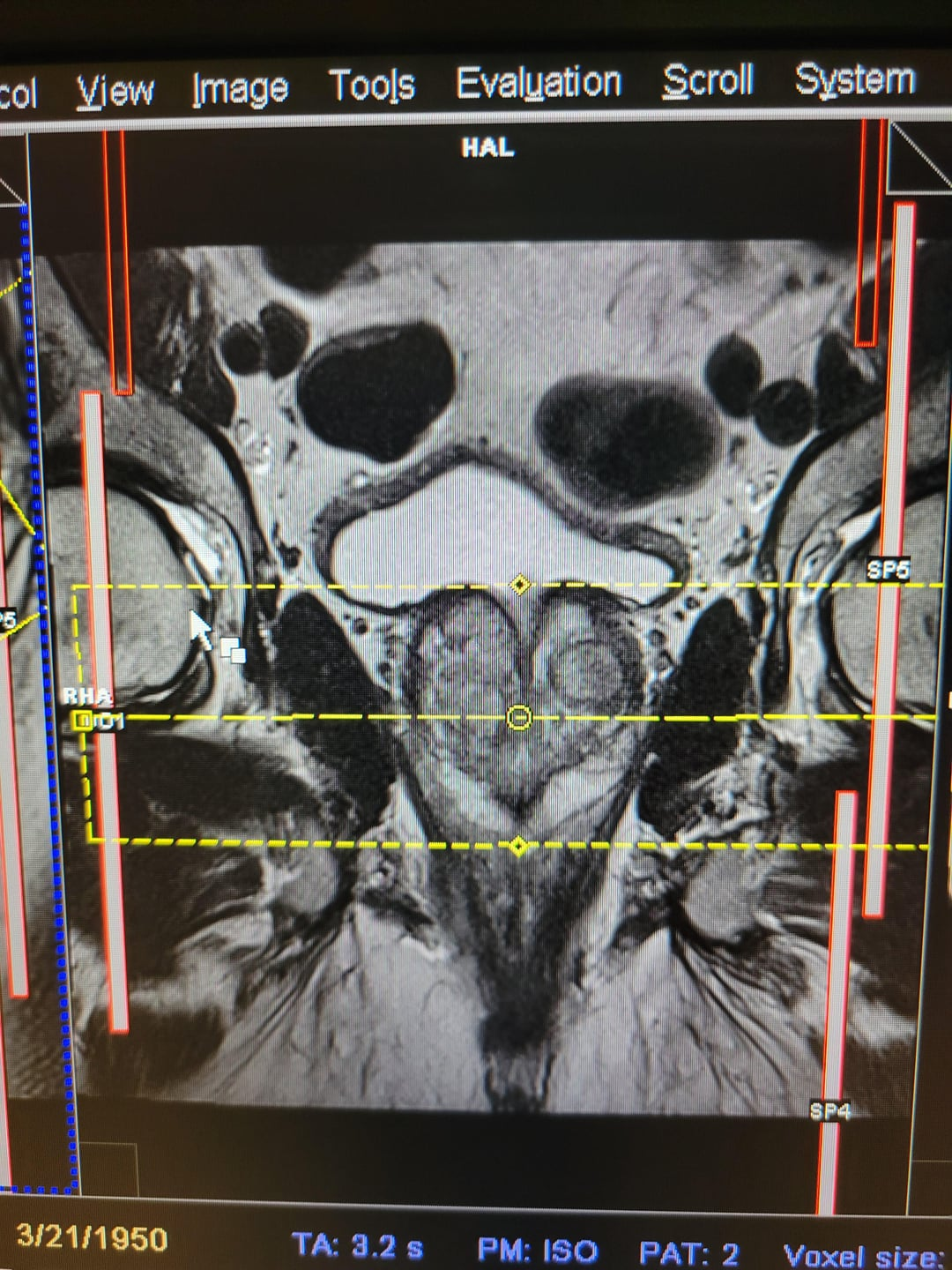
My husband wore a catheter bag strapped to his thigh for 19 days. He wore it under his Wranglers so the neighbors wouldn't see the tube running down his leg. He wore it to his own brother's retirement party, sitting in the corner chair the whole night because he was afraid if he stood up the bag would shift and someone would notice. He was 62 years old. He could deadlift the transmission out of a '78 Ford F-150 with a chain hoist and one hand on the fender. He'd carried a 190-pound ten-point buck a quarter mile through the timber on his back the November before. And now he couldn't piss on his own. That was March 14th, 2025. The ER bill was $11,400. The urologist's bill was $4,200. The surgery bill — the one they told us would "fix everything" — was $38,000. The adult incontinence pads I bought at the Walgreens on Route 7 at 6 AM because he was too ashamed to walk in there himself — $14.99. I need to tell you what happened to Gary. Because I'm seeing the same posts on Facebook that I was writing myself a year ago — "my husband gets up four times a night to pee, doctor says it's just his prostate, any natural remedies?" — and it makes me sick to my stomach. If your husband is over 50, or your father is, or your brother is, and he's getting up at night, please read this whole thing. I know it's long. I know you're scrolling. I know you've got things to do. Fourteen months ago I would have given everything — the house, the truck, the savings account — for someone to tell me what I'm about to tell you. Gary went in for his annual physical on January 8th, 2024. He felt fine. Better than fine. He'd just turned 61 in November. He'd tagged out opening morning of deer season — a ten-point whitetail his brother Ron still talks about. He was rebuilding the 351 Cleveland in the '78 Ford he'd bought when we were dating. He thought nothing could slow him down and honestly so did I. The doctor asked the standard questions. Any changes? Anything different? Gary almost didn't say anything. He told me later he almost kept his mouth shut. But he mentioned the bathroom trips. "I've been getting up a couple times a night. Maybe two, three times. Didn't used to." The doctor nodded. Like he'd heard it a thousand times. "How's your stream?" "Weaker. Takes a minute to get going. Sometimes I'm standing there for thirty seconds before anything happens." "Any dribbling after?" Gary looked at the floor. "Some." The doctor typed something into the computer without looking up. "That's perfectly normal for your age, Gary. Your prostate is probably enlarged — we call it BPH, benign prostatic hyperplasia. It happens to almost every man over 50. The prostate swells, presses on the urethra, and the bladder has to work harder. That's what's waking you up. I'm going to start you on tamsulosin — that's the generic Flomax. One capsule every night before bed. It relaxes the muscle around the prostate so the urine can flow easier. We'll check back in three months." Gary took the prescription. Filled it at the CVS on Maple Street that afternoon. Took the first capsule that night at 9 PM. For the first week, it seemed like it was working. He was only getting up twice instead of three or four times. He told me at breakfast on the fourth day, "I think this stuff might be doing something." I believed him. I wanted to believe him. By week two, the dizziness started. He stood up from his recliner during the fourth quarter of the Lions game and grabbed the arm of the chair like the floor had tilted underneath him. His face went white. I watched the color drain out of it in real time. "You okay?" "Just got up too fast." It wasn't too fast. It was the pill. The same pill that was supposed to relax his prostate was relaxing every blood vessel in his body. His blood pressure was dropping every time he stood up. The doctor's word for it was "orthostatic hypotension." My word for it was watching my husband grab furniture every time he got out of a chair. By month two, the nighttime trips were back to three. Then four. The pill had stopped making a difference. The dizziness hadn't. He fell in the hallway at 2:47 AM on a Tuesday in March. I heard the thud from the bedroom. By the time I got to him he was sitting on the floor with his back against the wall, holding the side of his head. He'd clipped the doorframe on the way down. There was a knot above his left ear the size of a golf ball by morning. He went back to the doctor. "The tamsulosin may not be enough on its own. I'm going to add finasteride — 5mg, once a day. It works differently. It actually shrinks the prostate over time by blocking the hormone that makes it grow." Gary started the finasteride on April 3rd. Within three weeks his sex drive was gone. I don't mean reduced. I don't mean "not in the mood." I mean gone. Like someone reached inside him and switched off a light. He wouldn't talk about it. I'd roll over in bed and put my hand on his chest and he'd pat my hand and say "not tonight, hon" in a voice that sounded like he was apologizing for something he couldn't name. By week six, the fatigue set in. Not tired. Fatigue. The kind where you watch a man who used to work on a truck engine for eleven hours straight sit down on the garage stool after forty-five minutes and stare at the wall. He stopped going to the cabin with Ron. He told him his back was bothering him. His back was fine. He couldn't sleep. He was getting up five times a night — the bathroom trips were WORSE, not better — and the exhaustion was eating him alive. He couldn't sit in a deer blind for six hours on three hours of broken sleep, and he'd rather lie to his brother than admit it. Ron called me. "What's going on with Gary? He won't come out to the cabin. He sounds different on the phone." "He's just tired, Ron. The doctor's working on it." Ron was quiet for a second. "He doesn't sound tired, Linda. He sounds like he gave up." I had to hang up before I started crying. The three-month follow-up was July 15th. The doctor did a digital exam and an ultrasound. He pulled up the numbers. "Gary, your prostate volume is 58 cubic centimeters. That's up from 52 in January. The medications aren't shrinking it the way we'd hoped." Gary sat on the exam table in the paper gown and didn't say anything for a long time. "I'm taking both pills. Every day. I haven't missed one." "I know. Some prostates are more resistant. We could increase the finasteride dose, but honestly, at this volume, I think we should start talking about a procedure. It's called a TURP — transurethral resection of the prostate. We go in through the urethra and remove the tissue that's blocking the flow. It's the gold standard. Very routine." "Routine" was the word he used. Like he was talking about an oil change. Gary came home and sat at the kitchen table. The same table his father built in 1974. He put his hands flat on the surface and stared at them. "He wants to cut into me, Linda." I told him to give the pills more time. I told him to trust the doctor. I told him three months wasn't long enough. I was wrong about all of it. On the night of March 12th, 2025, Gary woke up at 1:14 AM with an urge so bad it doubled him over. He swung his legs off the bed and walked to the bathroom the way he'd done five thousand times in the last fourteen months. Nothing came out. He stood there for four minutes. I could hear him through the wall. The silence where there should have been sound. He tried sitting down. He tried running the faucet. He tried leaning forward with his elbows on his knees the way the internet said to. Nothing. At 1:38 AM, the pain started. Low. Deep. A pressure building from the inside like something was being inflated behind his pelvis. By 1:50, he was bent over the bathroom sink with both hands gripping the edges and his forehead pressed against the mirror. I drove him to the ER doing 75 in a 45 with my hand on his knee because he couldn't sit still. He was rocking in the passenger seat. I'd never seen him rock before. Not when he broke his collarbone falling off the barn roof in 2009. Not when he sliced his palm open on the table saw. Never. They put us in a room at 2:22 AM. By the time the nurse came in, Gary's bladder held over a liter of urine that couldn't get past his prostate. The doctor called it acute urinary retention. They inserted a Foley catheter. I watched them do it. I stood in the corner of the room and watched them thread a rubber tube into my husband's body while he grips the side rails and stared at the ceiling with his jaw clenched so tight I could see the muscles in his neck. The relief was instant. Over a liter drained into the bag in under two minutes. Gary's whole body went slack. He closed his eyes and exhaled like he'd been holding his breath for a year. Then the ER doctor pulled up a chair. "Mr. Dalton, your prostate is severely enlarged. The ultrasound is showing approximately 74 cubic centimeters — that's almost twice normal size. We're also seeing some mild hydronephrosis on the left side." "What does that mean?" "It means the urine has been backing up into your left kidney. The blockage has been building for a while. You're going to need surgery, and soon. I'm referring you to urology tomorrow morning." Hydronephrosis. I looked it up on my phone in the waiting room at 3 AM while Gary slept in the hospital bed with a bag of his own urine hanging off the side rail. It means the kidney is swelling because the urine can't drain. If it goes on long enough, the kidney dies. My husband's prostate — the thing his doctor had been "managing" with two pills a day for fourteen months — had gotten so big it was killing his kidney. And nobody caught it. The TURP was March 19th. "Very routine." That's what both doctors said. The surgery took an hour and forty minutes. The urologist came out to the waiting room where I'd been sitting with Ron's wife Karen, who'd driven up from Indianapolis at 5 AM because she knew I couldn't sit there alone. "Everything went well. We removed a significant amount of tissue. He'll have the catheter for about five to seven days while things heal, and then we'll see how the flow improves." The catheter stayed in for nineteen days. Not five to seven. Nineteen. Because on day six, when they tried to remove it, Gary couldn't void on his own. The swelling from the surgery had closed things back up. They had to reinsert the catheter and wait for the swelling to go down. My husband spent 19 days with a rubber tube in his body and a bag strapped to his leg. He didn't leave the house for two and a half weeks except for doctor appointments. He sat in his recliner — the same recliner he'd sat in to watch the Lions, the same one where the dizziness first hit him — and stared at the television without watching it. On day 11, our seven-year-old granddaughter Emma came over after school. She climbed up on the arm of his recliner the way she always does and saw the tube running under the blanket. "Grandpa, what's that?" Gary looked at me. I took Emma to the kitchen and told her Grandpa had a special bandage from the doctor. Gary didn't say a word the rest of the night. When the catheter finally came out on day 19, the leaking started. Stress incontinence, the urologist called it. "Very common after a TURP. The sphincter was weakened during the procedure. It should improve with time and pelvic floor exercises." Should improve. With time. I bought incontinence pads at the Walgreens on Route 7 at 6:03 AM on a Thursday morning because Gary called me from the bathroom in tears — the first time I'd heard him cry in 38 years of marriage — and said he couldn't make it to the toilet in time. The man who carried a 190-pound buck out of the timber. The man who rebuilt a 351 Cleveland from a bare block. The man who coached our son's little league team for nine years. Wearing a pad. The total cost, as of today: $11,400 for the ER visit. $4,200 for the urologist consultations. $38,000 for the surgery. $2,800 for the follow-up procedures. $430 in co-pays. $229 in incontinence supplies over four months. $57,059. And his prostate is still there. They didn't remove all of it — they can't. They only take out the tissue that's blocking the channel. The rest of it is still growing. The doctor says we'll "monitor it." Monitor it the way they monitored it from January 2024 to March 2025? While it doubled in size and started drowning his kidney? After the surgery, I couldn't sleep. Not because of Gary. Because of what I'd started reading. I spent three weeks at the kitchen table after midnight with the laptop open, reading medical journals I barely understood. Urology forums. Studies out of Austria and South Korea and Japan. And one thing kept coming up over and over that nobody ever told us — not his GP, not his urologist, not anyone: Everyone watches the prostate SIZE. The doctor watches the cubic centimeters. The ultrasound measures it. The whole treatment plan is built around: is it getting bigger, is it getting smaller, is it blocking things. But the size was never the thing that was hurting him. Let me explain this the way I wish someone had explained it to me before January 2024. Your husband's body makes an enzyme called 5-alpha reductase. That enzyme takes his normal testosterone — the hormone that keeps him strong, keeps him sharp, keeps his drive alive — and converts it into something called DHT. Dihydrotestosterone. DHT is the wrecking ball. It doesn't just float around in the blood. It locks onto the prostate cells directly. Binds to the receptors like a key in a lock. And every time it locks on, it tells that cell to multiply. Grow. Divide. Over and over and over, year after year. That's what enlarged the prostate. Not age. Not genetics. Not "it happens to every man." The enzyme converting testosterone into DHT, and the DHT telling the prostate to keep growing. The Flomax Gary took for fourteen months didn't touch the DHT. It didn't even try. All it did was relax the smooth muscle around the prostate so the urine could squeeze past the blockage. The prostate kept growing the whole time. The Flomax was just propping the door open while the wall kept getting thicker. The finasteride was SUPPOSED to block the enzyme. And it does — aggressively. It shuts down 5-alpha reductase across the entire body. That's why Gary's sex drive disappeared. That's why his energy collapsed. That's why he stopped being himself. The finasteride didn't just block the DHT at the prostate — it blocked it everywhere. Testosterone is supposed to convert to DHT in the brain, in the muscles, in the skin. The drug carpet-bombed the whole system. And even then — even with the finasteride destroying everything in its path — his prostate volume went from 52 to 58 to 74 in fourteen months. The pill wasn't winning. It was losing, slowly, while burning his body to the ground. I read that three times. I sat at the kitchen table at 2 AM and read it three times. The pills Gary took every day for fourteen months lowered the number in one place by suppressing the hormone everywhere else. They did nothing about the DHT that was already locked onto his prostate cells. They couldn't reach it. The damage was going the whole time — right where nobody was looking. His prostate didn't grow because of his age. It grew because the DHT kept telling it to, and nothing he was taking could pry it off the receptor once it was locked on. Read that again. The growth wasn't caused by the SIZE of the prostate. It was caused by the enzyme that kept feeding it, and the DHT that kept binding to it, every single day, for decades. The medications either ignored the DHT entirely or carpet-bombed it so aggressively they took everything else with it. And then I read the part that broke me. There exists a compound that does what the finasteride was supposed to do — but WITHOUT shutting down the whole system. A plant sterol called beta-sitosterol. It inhibits the 5-alpha reductase enzyme directly. Blocks the conversion of testosterone to DHT at the source. But it's TARGETED. It doesn't wipe out DHT everywhere — it reduces the excess. The testosterone that your muscles need, that your brain needs, that your drive needs — it stays exactly where it is. The nighttime trips Gary was making. The weak stream. The urgency that would double him over. The prostate pressing on his bladder and his urethra and finally his kidney. That wasn't aging. That wasn't "it happens to every man." That was the enzyme converting his testosterone to DHT faster than his body could handle, and the DHT locking onto his prostate cells and telling them to grow, grow, grow — while the pills either did nothing about it or destroyed everything trying. He gave up his hunting trips. He gave up his energy. He gave up his drive. He gave up his dignity in a hospital gown while they threaded a tube into his body. He wore incontinence pads at his own brother's retirement party. For fourteen months of medications that never once addressed the enzyme that was actually destroying him. I went to the Walgreens the next morning. I stood in the supplement aisle for thirty-five minutes. Saw palmetto. Generic pumpkin seed oil. "Prostate support" blends. $12.99 bottles of something labeled "prostate health" with a picture of a pumpkin on the label and 500mg per capsule. I bought the saw palmetto and the generic pumpkin seed oil. Two bottles. $28. Gary took them for three weeks. Nothing changed. I started researching. And what I found made me throw both bottles in the trash. The pumpkin seed oil in those bottles isn't the pumpkin seed oil the research is about. The beta-sitosterol — the compound that actually blocks the 5-alpha reductase enzyme — survives only in oil that's been cold-pressed from raw seeds. No heat. No chemical solvents. First press only. The moment you roast the seeds first, which is how nearly every commercial pumpkin seed oil is made, the heat degrades the beta-sitosterol. The molecular structure breaks down. The compound that does the actual work is damaged before the oil ever reaches the capsule. You can tell by the color. Cold-pressed virgin pumpkin seed oil is a deep, dark red — almost the color of dark cherry wood. That color comes from the intact phytosterols and carotenoids that survive the cold extraction. The roasted stuff? Pale yellow. Sometimes almost clear. Because the heat burned out everything that mattered. Every bottle I'd bought at Walgreens was pale yellow. Every one. I'd been feeding Gary the empty version. The version that looked like pumpkin seed oil on the label and tested like cooking oil in the bloodstream. Red dust. Dead before the cap was sealed. And the saw palmetto? The saw palmetto I'd bought was fine in theory — it's supposed to prevent DHT from rebinding to the prostate receptor after the beta-sitosterol knocks it off. But without a beta-sitosterol source that actually works, the saw palmetto has nothing to work WITH. It's a bouncer standing at the door of an empty building. I was doing the right things in the wrong forms. Every single one. About a week later, I was scrolling a Facebook group for wives of men dealing with prostate problems — the 2 AM Facebook group, I call it, because that's the only time I'm in there. Full of women like me. "He's up six times a night." "The doctor wants to do surgery." "He won't talk about it." "I can hear him in there and I don't know how to help." A woman posted something that stopped me cold. She said her husband had been on Flomax for three years. The nighttime trips never stopped. His doctor wanted to add finasteride and he refused — he'd read about what it does to your drive and said he'd rather get up six times a night than lose that. She found a cold-pressed pumpkin seed oil that was the real thing — dark red, not the pale yellow grocery-store version — paired with saw palmetto in the same capsule. He took two softgels every morning with breakfast. By week two, he was getting up twice instead of six times. By week four, he was sleeping through to 5 AM for the first time in four years. By week eight, his urologist ordered a follow-up ultrasound and his prostate volume had dropped from 61 to 48 cubic centimeters. His UROLOGIST called it "a significant reduction" and asked what he'd changed. The wife posted the before and after lab printouts. I zoomed in on my phone until the numbers blurred. I read that post six times. I started looking into what she'd found. And I learned that for a prostate supplement to actually work — not "support" your prostate, not "promote prostate health," not any of the words they put on bottles to avoid saying what they mean — it has to do five things at the same time, or it's a waste of your money: It has to block the 5-alpha reductase enzyme — the one that converts testosterone into DHT. That's the source. If you don't shut down the factory, the wrecking ball keeps swinging. Beta-sitosterol does this. Not the synthetic pharmaceutical version that carpet-bombs your whole system. The plant sterol that targets the enzyme directly and leaves the rest of your testosterone alone. It has to be cold-pressed from raw seeds. Not roasted. Not heat-processed. Not solvent-extracted. The moment you apply heat, the beta-sitosterol degrades. The moment you use chemical solvents, the molecular structure changes. Cold-pressed means the oil was extracted by mechanical pressure alone, at low temperature, from raw seeds — the same way it's been done in Styria, Austria, for over 300 years, where pumpkin seed oil is called "green gold" and the farmers press it the week of harvest. It has to be virgin — first press only. Second and third pressings pull less beta-sitosterol with each pass. Most commercial oils are multi-press with solvent recovery. The first press is where the medicine is. Everything after that is cooking oil. It has to include saw palmetto in the same formula. Because blocking the enzyme is only half the job. DHT that's already bound to the prostate receptor needs to be knocked off and PREVENTED from rebinding. Saw palmetto does that — it competes with DHT for the receptor site. The beta-sitosterol stops the new DHT from being made. The saw palmetto clears the old DHT that's already locked on. One without the other is half a solution. And it has to deliver a real dose — not 500mg, not 1,000mg. A full 3,000mg per serving. Because the clinical research that showed measurable prostate volume reduction used doses the supplement aisle wouldn't recognize. You can't underdose beta-sitosterol and expect it to compete with an enzyme that's been running unchecked for thirty years. Five things. All five. At the same time. From one formula. I went through every bottle I'd looked at in Walgreens. Not one did all five. The saw palmetto was standalone with no cold-pressed source. The pumpkin seed oil was roasted. The "prostate blends" were 500mg of nine different things — a little of everything, not enough of anything. Not one of them was cold-pressed virgin. Not one delivered 3,000mg. Every single one was pale yellow. I went back to the Facebook post and messaged the woman. She sent me the name. That's when I found Everly. It was the only formula I could find that did all five. Cold-pressed virgin pumpkin seed oil from raw seeds, paired with saw palmetto in the same softgel. 3,000mg per serving. Two softgels in the morning with water. No heat processing. No chemical solvents. No filler ingredients. Made in the USA in a GMP-certified facility. Lab tested. And the softgels are deep red. Dark red, like black cherry. Not pale yellow. The color tells you everything. The color IS the test. If it's pale yellow, the beta-sitosterol is already gone. If it's deep red, it survived the press. I almost didn't order it. After the Walgreens aisle. After the pale yellow capsules. After the catheter bag and the surgery and the incontinence pads. After everything. But I had a brother-in-law in Indianapolis who was starting to get up three times a night. I had a neighbor down the street, Dennis, whose wife told me over the fence that he was "having trouble going." I had Gary — still leaking, still not sleeping, still sitting in that recliner like a man who'd had something taken from him. I ordered it. Gary. He started taking Everly on April 22nd, 2025. Two softgels every morning with his coffee. He didn't believe a word of what I told him. He took them because I stood in the kitchen and told him I could not watch another night of him walking to that bathroom, and he loved me enough to swallow two capsules. Week one — nothing. I didn't expect anything. He didn't either. Week two — he slept until 3 AM without getting up. I know the exact time because I was awake, listening. He'd been getting up by midnight for over a year. That night, midnight passed. Then 1 AM. Then 2. At 3:12 he got up, went to the bathroom, came back. Once. He didn't say anything about it in the morning. I didn't either. Week three — twice a night instead of five. His stream was stronger. He told me on a Saturday morning, standing at the kitchen counter — "Linda, I don't know if it's the pills or what, but I actually went this morning. Like, actually went. No standing there waiting." Week six — he slept through the night. Six straight hours. He woke up at 5:40 AM and walked to the bathroom and came back and lay in bed staring at the ceiling and said: "I just slept through the night." Like he was telling me something impossible. Like he'd forgotten what it felt like. He went back to the urologist at the 12-week mark. I made him go. Prostate volume: 54 cubic centimeters. Down from 74 at the time of the ER visit. Down from 58 when the medications were supposed to be working. The urologist looked at the chart twice. "What changed?" Gary told him. The urologist didn't say much. Wrote something in the chart. Then he said: "Well, whatever you're doing, keep doing it. These numbers are moving in the right direction." The leaking stopped at week nine. Not reduced. Stopped. Gary threw the last package of pads in the trash on a Wednesday afternoon and I found them in the garbage can when I was taking it to the curb and I sat on the back steps and cried. He went back to the cabin with Ron last November. First time in two years. They got a nine-point buck on the second morning. Ron sent me a photo from the blind — Gary grinning, orange vest, rifle across his lap — and texted: "He's back." He's back. Ron. Gary's brother. 59, Indianapolis. Started getting up twice a night last summer. His wife Karen told me at Thanksgiving. I didn't say anything at the table. I pulled her into the laundry room and told her the whole story. I sent a three-pack of Everly to their house the next day. Ron started taking it December 1st. He called Gary on January 14th — six weeks later. "I slept through the night. The whole night. First time since I don't know when." His follow-up at the urologist in February: prostate volume down from 44 to 37. He's off the Flomax. His doctor took him off it. Ron's doctor — who'd been prescribing Flomax for two years — took him off it after seeing the numbers. He didn't ask what Ron was taking. Ron told him anyway. Dennis, our neighbor. 64, same street, same doctor. His wife Janet told me in the driveway that he was getting up seven times a night and his doctor wanted to schedule a TURP. Seven times. I walked into my house, got a pouch of Everly out of the cabinet, and brought it to their door. Dennis took it for eight weeks. His nighttime trips went from seven to two. His doctor postponed the surgery. I told Gary's hunting buddy Mike, who'd told Gary "you're no fun anymore" two years ago and stopped calling. Mike is 57 and just started getting up at night. He ordered it without me having to say a word — Gary told him at deer camp and Mike had a pouch on his kitchen counter by the following Tuesday. I'm not a doctor. I'm not a scientist. I don't work for Everly. I don't get a penny from this. I don't get a free bottle or a commission or a discount code. I'm a 60-year-old woman sitting in my kitchen at 1:47 in the morning because my husband is asleep — actually asleep, for the first time in two years, in a bed without a catheter bag, without pads, without the sound of his feet on the hallway floor every ninety minutes — and I can't stop thinking about the women in that 2 AM Facebook group whose husbands are right where Gary was. Here's what I know because I lived it: The Flomax relaxed the muscle. It didn't touch the DHT. The prostate kept growing the whole time. The finasteride blocked the enzyme — but it blocked it everywhere. It took Gary's drive, his energy, and his sharpness, and the prostate STILL grew from 52 to 74 in fourteen months. The surgery removed tissue but left the prostate. It left him leaking. It left him in a catheter for 19 days. It cost us $57,059 and it didn't address the enzyme that caused the growth in the first place. The pumpkin seed oil at Walgreens was roasted and pale yellow. The beta-sitosterol was already dead. It was a label that looked like help and a capsule full of nothing. Gary gave up his hunting trips, his energy, his drive, his dignity, and his right kidney function for fourteen months of medications that never once addressed what was actually making his prostate grow. I wish someone had told us before January 8th, 2024. Before the first Flomax capsule. Before the finasteride. Before the dizziness and the falls and the dead bedroom and the 2 AM ER visit and the catheter and the surgery and the pads. I can't go back. Gary can't get those fourteen months back. He can't unfeel the catheter. He can't un-wear the pads to his brother's retirement party. But you can still go forward. Your husband can. Your father can. Your brother can. Here's where I got it — Everly Cold Pressed Virgin Pumpkin Seed Oil with Saw Palmetto. Two softgels every morning. 3,000mg. The deep red ones. Not the number. The enzyme. That's the line that finally made it click for me. Go order a pouch. Not for me. For whoever you'd miss at 5 AM if the phone rang. https://try.shopeverly.shop/esl Gary used to say: "You can't unbuild a wall, but you can stop laying bricks." You can stop laying bricks. — Linda Dalton, age 60 Muskegon, MI P.S. The catheter bag is gone. The incontinence pads are gone. The pill organizer on the kitchen windowsill that used to have Flomax and finasteride in it now has two dark red Everly softgels in the morning slot. That's it. Gary sleeps through the night. He went back to the cabin with Ron. He's working on the '78 Ford again — he's got the heads off the Cleveland and the garage smells like Brakleen and WD-40 again, and I'm so grateful for that smell I could cry. $57,059 in medical bills over fourteen months. A pouch of Everly costs less than what Gary used to pay for one trip to the urologist's office. Please. Don't end up here. Don't let someone you love end up here. https://try.shopeverly.shop/esl P.P.S. I don't work for Everly. I don't get anything from this. I'm writing this because I'm in that 2 AM Facebook group every night and I see women posting the same thing I posted two years ago — "how do I help him" — and I can't sit there and say nothing. If I can keep one man off that operating table, if I can keep one woman from buying incontinence pads at 6 AM while her husband sits in the car because he's too ashamed to walk in, then this was worth every minute I spent typing it. Share this with anyone you love who's getting up at night. Even once. Even if the doctor says it's "normal for his age." It wasn't normal. It was the enzyme. And it doesn't stop on its own. P.P.P.S. If your husband is already on Flomax or finasteride and his numbers look "stable" — please don't close this page. Gary's prostate was 52 cubic centimeters when they called it manageable. It was 74 when it blocked his kidney and put him in the ER. "Stable" meant the pills were losing slower than the doctor expected, not that they were winning. Everly works alongside the medications. Ron was on Flomax when he started — his doctor took him off it six weeks later because the Everly was doing what the Flomax couldn't. You don't have to choose. But you have to add the thing that's actually reaching the enzyme. Everly is that thing. P.P.P.P.S. If you're reading this and thinking "he'd never take a supplement" — I want you to hear me. Gary didn't believe a word of it on day one. He took the softgels because I stood in the kitchen and told him I couldn't watch another night. He didn't believe it at week two. He believed it at week six when he slept through the night for the first time in two years and stood in the bedroom doorway looking at me like he'd just woken up from something. You don't have to win the argument. You just have to get the pouch in the house. P.P.P.P.P.S. There's a 30-day money-back guarantee. If it doesn't work, you send it back and Everly refunds every penny. No questions. No fight. No fine print. Thirty days is two or three bathroom nights' worth of knowing. You'll know by week two if things are shifting — Gary knew at day 11 when he realized he'd made it to 3 AM. That's all I'm asking. One pouch. Two softgels a morning. And pay attention to how many times he gets up. Count it. Write it on the back of an envelope on the nightstand if you have to. The number will tell you everything. https://try.shopeverly.shop/esl P.P.P.P.P.P.S. It's not on Amazon. It's not at Walgreens. It's not at CVS. Every pumpkin seed oil bottle on those shelves is the roasted, pale yellow, empty version. You can check — pop one open and look at the color. If it's not dark red, it's not cold-pressed, and the beta-sitosterol that does the work is already gone. Everly ships direct. Order from the link below or you're back in the pale yellow aisle. https://try.shopeverly.shop/esl
🎃 Natural Support for Your Daily Routine
“I’ve been feeling stronger and more balanced since taking Everly Pumpkin Seed Oil. My bladder feels so much calmer, I’m sleeping through the night again, and my hair feels thicker than it has in years. I love how natural it feels — just pure support for my body.”
LEARN MORELike this ad? Make it yours.
Crush rebuilds this exact creative around your product — your brand, your colors, your offer — in about a minute.