 Arthritis Support Community
 Facebook ad: “Feel Like Yourself Again”
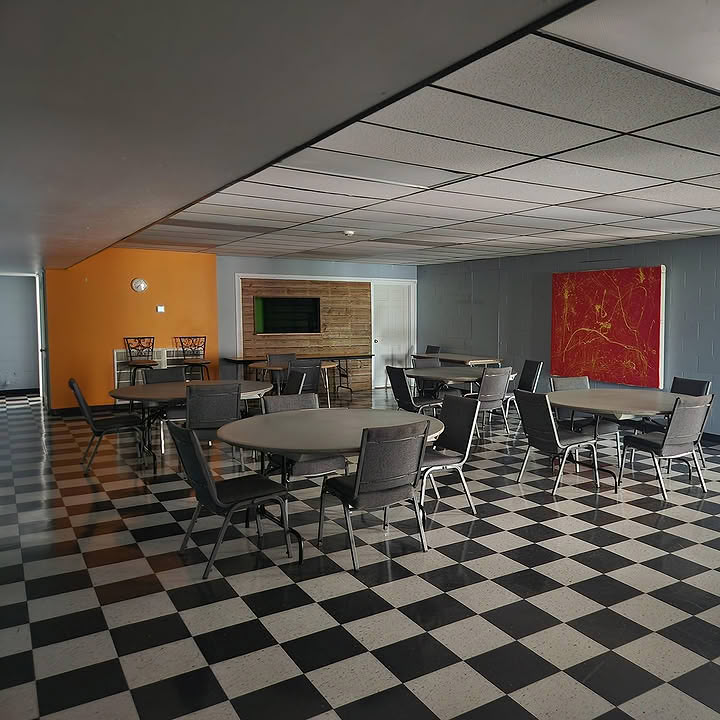
Ran for 10 days, from October 9 to October 19, 2026, the last day Crush saw it.
Run by Arthritis Support Community on Facebook. Crush is not the advertiser and does not verify its claims. See this ad in Meta's Ad Library(opens in a new tab)
Make your own version of this ad
Crush makes it, launches it in your own Meta ad account, scales the winners and pauses the losers.
About this ad
- Meta Ad Library ID
- 2125999438004709
- Platforms
- Facebook, Instagram, Audience Network and Threads
- Relaunches
- 0
- Niche
- Clinics & Medical
Ad text
The woman came through my line twice last Saturday morning. I almost didn't notice. We were busy at the pantry. First Saturday of the month is always the biggest rush, and by 9:30 we had a line stretching past the folding tables and out to the parking lot. I was working the dry goods end with my friend Darlene, handing out pasta and rice and canned beans, and it gets to a point where you're not really seeing faces anymore. You're handing things and saying good morning and handing things. But I noticed her the second time because of her shoes. They were nice shoes. Not pantry shoes, if you know what I mean. Good leather, well-kept, a small heel. And she was back in line with a different plastic bag, like she'd dropped her first one off somewhere and come around again for a second pass. That happens sometimes. People are embarrassed enough the first time. They don't want to be caught coming back around. I didn't say anything. I gave her the pasta and the rice like I'd given everyone else. And then our eyes met over the folding table and she held the look for just a second too long, and something about her face made me slow down. She had good cheekbones. Real posture. Silver hair she'd obviously taken care of. And eyes that were tired in a way that had nothing to do with a hard Saturday morning. I said, "You doing okay today?" She said, "I'm fine, thank you." And then I said, "You sure about that?" And she laughed. Short and surprised, like I'd caught her. And she said, "Not entirely, no." That was it. That was how it started. My name is Teresa Marchand. I'm 56 years old and I've lived in Pensacola my whole life except for 4 years at FSU, which I barely count because I drove home every other weekend anyway. I work part-time at a medical billing office on Cervantes Street, and I volunteer at Redeemer Baptist's food pantry every other Saturday because my mother used to, and when she passed 6 years ago it was the one piece of her I knew how to hold onto. The woman's name was Lorraine. Lorraine Beaumont. Seventy-one years old, though she told me that like she was daring me to argue with her, because she looked closer to 58 and she knew it. She'd been a dental hygienist for 34 years. Retired at 67, widowed at 69, and between the cost of her husband Earl's final 8 months of care and a pension that wasn't what it used to be, she'd hit a stretch where money was tight enough that she was making choices she hadn't planned on making. She said all of this matter-of-factly, the way people do when they've made peace with something hard. No self-pity. Just this is where I am, and I'm managing it. We'd gotten pushed away from the line by then. Darlene had it handled, and Lorraine and I had drifted to the side of the tables, still in that church fellowship hall with the linoleum floor and the windows up high on the wall that let in the light but not really a view, and we were just talking. I asked her how she was managing, health-wise. Because she'd mentioned that Earl's last stretch had been stress she wasn't sure she'd come back from, and something in her face when she said it made me think there was more to that. She was quiet for a second. Then she said, "You know what I miss most? My mornings." I said I didn't quite follow. She said, "I used to be a morning person. Alarm at 6. Coffee on the back porch before it got hot. I had all this energy in the first part of the day and it felt like the day was mine, you know? Like I'd claimed it before anything could take it from me." She looked down at her shoes. "Now I get up, and within an hour it feels like I'm already underwater. And it just gets heavier from there." I asked her when that started. She said probably 5 years ago. Maybe 6. It crept in so slowly she kept assuming it was grief. Then she assumed it was getting older. Then she assumed it was the heat. By the time she started wondering if it was something her body was doing, her husband had gotten sick and she'd had bigger things to worry about. She'd tried things. She listed them the way people do when they've gone through the motions enough times that the list comes out flat. Cut out sugar. Started walking. Took the B-vitamin complex her neighbor recommended. Tried the berry supplements from the TV commercial, which she said did nothing except give her $47 less in her account. She'd mentioned it to her doctor, who had run her thyroid numbers, which came back fine, and told her that some fatigue was normal after everything she'd been through. She said the word "normal" with the patience of someone who'd heard it too many times. "It doesn't feel normal," she said. "It feels like something I used to have is gone." I understood that. I understood it in a way I hadn't expected to when I walked into that fellowship hall that morning. Because Lorraine wasn't describing anything dramatic. She wasn't talking about collapsing. She wasn't talking about a diagnosis. She was talking about that specific, quiet dimming that happens when your body stops doing something it used to do automatically, and nobody can tell you quite what it is or how to get it back. I know that feeling. I turned 54 two years ago and I started noticing it around then. Not anything I could put my finger on. Just that I didn't quite clear like I used to. Afternoons especially. I'd eat lunch and by 2:30 I was working through something thick and heavy in my head, trying to push through to the end of the workday. I'd come home and sit on the couch for a few minutes and then it was 7:00 and I hadn't made dinner and hadn't done the laundry and hadn't done any of the things I used to do as a matter of course. I had a theory about it. I'd been doing a lot of reading. So I told Lorraine what I'd learned. I told her it wasn't just fatigue. It was something more specific than that. Your body has a process that controls how fast the food you eat turns into sugar. Food comes in. It gets broken down. Sugar enters your blood. When that process is working the way it's supposed to, the sugar comes in gradually, like water through a slow tap. Your body keeps up. Your energy stays level. You feel like yourself. But that process is fragile. Stress wears it down. Processed food wears it down. The kind of sustained, grinding stress that comes from watching someone you love go through 8 months of hard time, that wears it down too. A little at a time. Year after year. Until the pathway that used to control the speed can't quite manage it anymore. Now food turns into sugar faster than your body is built to handle. Your blood sugar spikes. Your body scrambles to respond. Then it overshoots. That's the crash. That's the underwater feeling at 2:30 in the afternoon. That's waking up and feeling like you've already spent energy you haven't earned yet. The thing that keeps most people stuck, I told her, is that they keep trying to solve this by changing what they eat. But the food isn't the real issue. The process that's supposed to manage the food has been slowly worn down. And no diet in the world replaces a worn-down process. Lorraine was quiet for a moment. She said, "That's exactly what it feels like. Like the relay broke somewhere and nothing's getting through properly." I nodded. Then I told her about pomegranate. I know how that sounds. I've had that conversation enough times now to know that "pomegranate" as an answer to something that feels this significant tends to land with a small thud. It sounds too small. Too ordinary. Like recommending a piece of fruit for a structural problem. But hear me out, because what I learned isn't about the fruit you buy at the grocery store and eat with a spoon over your kitchen sink. Pomegranate, the real concentrated kind, contains compounds called punicalagins. They're found mostly in the peel, which is why you can't get them just from eating the fruit the regular way. And what researchers have been studying is what these punicalagins do to that carbohydrate breakdown pathway. The one that controls how fast food becomes sugar in your blood. What the research suggests is that punicalagins can support that pathway. They interact with the enzymes that break carbohydrates down, helping slow the process so sugar comes into the blood more gradually. The way it's supposed to. The way it did when you were younger and the system was still running without all the accumulated wear. When that pathway gets better support, the spikes soften. The crashes ease. The afternoon fog starts to lift. Not because something forced your body into a different gear, but because your body finally has what it needs to do what it already knows how to do. There's also the oxidative stress piece, which matters more than most people realize. The same kind of ongoing oxidative stress that comes from years of hard living, a bad stretch, chronic worry, processed food, just time, that's part of what's been slowly wearing down that sugar-handling pathway in the first place. Pomegranate has one of the highest antioxidant profiles ever measured in any food. The punicalagins are among the most studied antioxidant compounds in nature. When they're in your system, they help push back against the ongoing oxidative load that's been doing that slow, steady damage. You're not just slowing the breakdown. You're also helping address some of what caused the breakdown. Lorraine listened to all of this without interrupting, which told me she was actually following it. When I finished she said, "How long have you been taking it?" I said going on 4 months now. She said, "And your mornings?" I had to think about how to answer that. Not because it was complicated, but because I wanted to say it right. I said: my mornings are mine again. I told her about the difference. Not in a dramatic way. Not some before-and-after transformation story. Just that the afternoons had gotten lighter somewhere around week 3. That by week 5 I'd started doing the thing I used to do where I walk around the block after dinner, which I'd stopped doing without even noticing I'd stopped. That I'd been to two Saturday pantry shifts in a row now and driven home afterward instead of needing to take a 20-minute rest in the church parking lot first. That last one I hadn't told anyone. The parking lot thing. Lorraine nodded slowly. "I spent 34 years telling patients that what they put in their bodies every day adds up," she said. "In both directions." We were quiet for a moment. Someone called my name from across the room. We were almost out of rice. I wrote down the website for her on the back of a receipt I had in my apron pocket. Auniva Pomegranate. The one I'd been taking. I explained that it was a standardized extract, which means the punicalagins are concentrated, not just a general fruit powder. I told her about the 90-day guarantee, that if she tried it and it wasn't for her, she could return the bottle and get her money back. She folded the receipt and put it in her purse with the kind of careful attention that told me she wasn't going to lose it. Before she left, she looked at me and said, "You know what I came in here for today? Pasta and a reason to get out of the house. And I'm leaving with a lot more than that." I didn't say anything. I just smiled. She went out through the side door with her bags, in her good leather shoes, and I went back to help Darlene with the rice. On my drive home I thought about mornings. About what it means to have your mornings back. About how you don't even notice when they start to go, because the going is so slow. And about how it doesn't have to stay that way. If any of this sounds familiar, even pieces of it, I want you to know what I told Lorraine. Auniva Pomegranate is a concentrated pomegranate extract standardized to punicalagins, the specific compounds the research keeps pointing back to. 2 capsules a day. They ship from the US. Try it for up to 90 days. If it's not the right fit for you, return the bottle and they'll give you your money back. No drama. But I think it'll be the right fit. I think your mornings are worth trying for. 👉 https://auniva.co/pom/5 P.S. Lorraine emailed me 6 weeks after that Saturday. She got my address from Darlene, who I think was not supposed to give it out but did anyway because Darlene is like that. The email was 3 sentences. "Teresa. My mornings are back. Thank you." That's all it said. I read it 4 times. P.P.S. The thing I want you to hear, if you're skeptical, is that I was too. I'm a woman who works in medical billing. I know enough about health claims to be suspicious of them. What moved me past skeptical was the research. Not testimonials. The actual mechanism. The carbohydrate pathway. The punicalagins. The way the oxidative stress piece fits together with everything else. When you understand what's actually happening and why, it stops feeling like a leap of faith. It starts feeling like a logical next step. Read what they have on the site. Draw your own conclusion. I think you'll land where I landed. P.P.P.S. The guarantee is real. 90 days. Return the bottle and get your money back. They're not asking you to guess right on the first try. They're asking you to try. 👉 https://auniva.co/pom/5
Where the ad sends people
auniva.co
Feel Like Yourself Again
"This actually worked, thank you so much." - Emily T.
Learn more: auniva.co(opens in a new tab)