
Inactive· since Sep 7, 2026
- 4
- days it ran
- 0
- relaunches
Ad copy
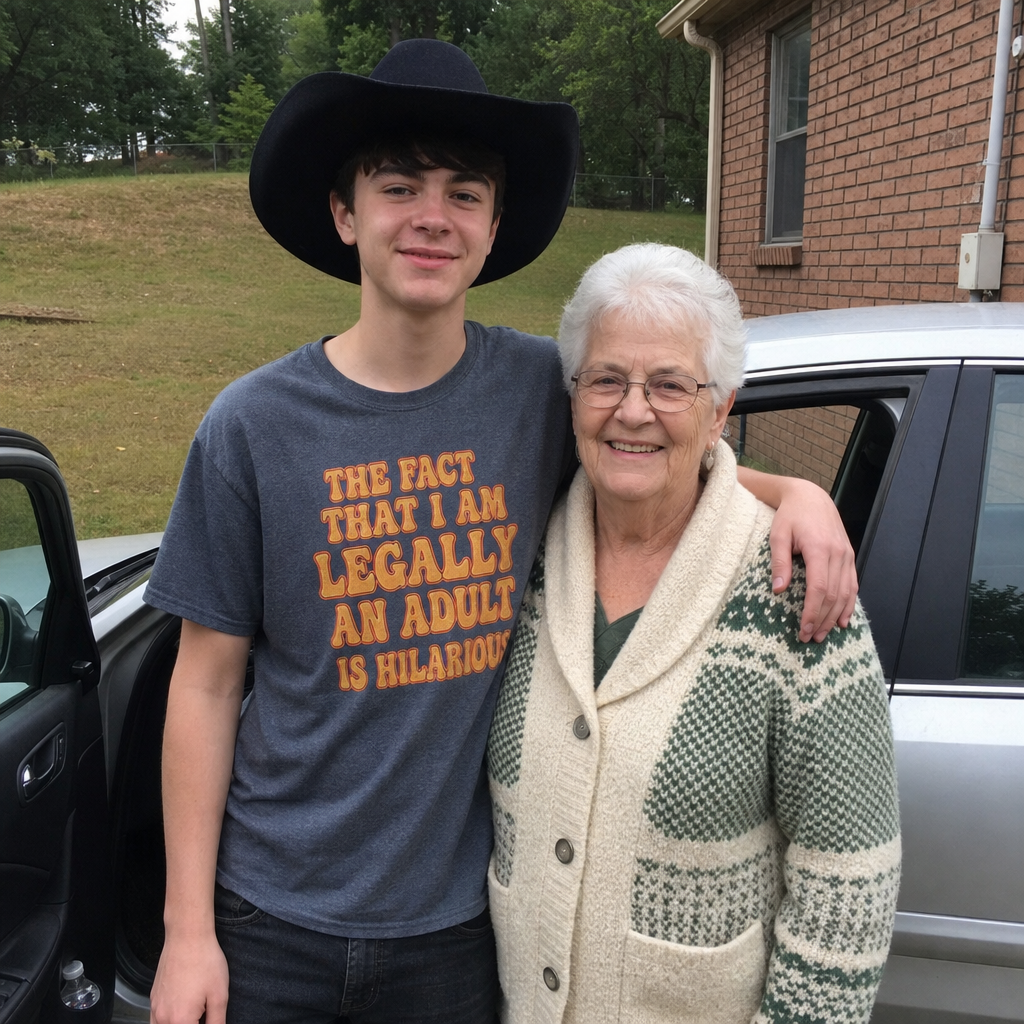
I took care of my 85-year-old neighbor for her inheritance, but she left me nothing — the next morning, her lawyer knocked and said, "Actually, she left you ONE THING." Her name was Dorothy Rhode. Everyone on the block called her Mrs. Rhode and nobody called her Dorothy except the mailman, and she didn't like the mailman. I was nineteen. Just aged out of foster care. No family. No one. I'd been renting the basement apartment in the duplex next to her house for two months when she knocked on my door on a Saturday morning and said: "You. The tall one. My rain gutters are full of leaves and I'm not climbing a ladder at my age. I'll pay you forty dollars." That was the beginning. She didn't need a caretaker. She needed someone to do the things her body wouldn't let her do anymore — gutters, storm windows, the heavy bags of salt for the water softener. She was sharp. Funny in a way that took you off guard because she'd say something devastating with a completely straight face and then go back to watering her tomatoes like nothing happened. One afternoon she watched me reset a sticking hinge on her back door and said: "You've got a craftsman's hands. Somebody should've put you in a trade." Nobody had ever said a thing like that to me. Nobody had ever looked at the one thing I was good at and given it a name. She insisted on cooking me dinner every Tuesday and Thursday. I told her she didn't have to do that. She told me she wasn't asking. "You eat like a boy who raised himself," she said once, watching me microwave a gas station burrito through her kitchen window. "Come over at six. Bring nothing. Don't be late." I came over at six. I brought nothing. I wasn't late. For four years. Every Tuesday and Thursday. Pot roast. Chicken and dumplings. A meatloaf she said was Harold's recipe but she'd changed so many things about it that Harold wouldn't recognize it anymore. She talked about Harold sometimes — her husband. Dead eleven years by the time I met her. A stroke took him at seventy-one. She kept his photo on the mantle and his work boots by the back door and his reading glasses on the side table next to his chair and she never moved any of them in the four years I knew her. I sorted her pills every Sunday night. The plastic Monday-through-Sunday organizer, the six prescriptions, the calcium supplement she took with dinner. I'd sit at her kitchen table on Sunday evenings and fill the little compartments while she told me stories about the neighborhood, about Harold, about the world. She watched me. I didn't know how carefully. I thought the arrangement was simple. She needed help. I needed something I couldn't name. She gave me forty dollars for the gutters and what she really gave me was a kitchen table to sit at and a person who expected me to show up. In four years in the foster system nobody ever expected me to show up. Mrs. Rhode expected it. And not showing up was not an option. "James. You're three minutes late." "I was —" "You were across the street. I watched you sit in your car for four minutes looking at your phone. Come in. The chicken is getting dry." It was on one of those Sunday evenings that I told her the one thing I knew about the family that gave me up. That the men in it had bad blood pressure — strokes, heart attacks — and it took them young. My father. His father before him. I didn't know much else about them — not a face, not a town, not a reason. But I knew that. She didn't say anything for a long moment. Just set down the pill she was holding and looked at me. "Harold's doctor told him his numbers were stable," she said. "Right up until the stroke." She picked the pill back up. Put it in the compartment. Didn't say another word about it that night. I didn't think anything of it. I didn't know she was already turning it over. She was the closest thing to a mother I'd ever had. I didn't say that to her. I think she knew. She got sick fast. The kind of fast that doesn't give you time to prepare. Three weeks from normal to gone. I drove her to the hospital. I sat in the waiting room. I went home and sorted her pills into the organizer even though she wasn't there to take them because I didn't know what else to do with my hands. She died on a Thursday. One of our dinner nights. I found out about the will from her lawyer. He called me and said there'd be a reading. That I was invited. He said it in a way that made me think being invited meant something. The lawyer's office was small. Wood paneling. A conference table that seated eight. I sat at the end. There were four of us. Me. A woman from the church — Mrs. Rhode had been a member for forty years. A representative from a children's charity. And a woman I'd never seen before, mid-forties, wearing a gray blazer and checking her phone. The lawyer opened the folder. The house — a three-bedroom colonial Mrs. Rhode and Harold had owned since 1971 — went to the children's charity. To be sold, proceeds to the organization. The savings account — I didn't know how much, the lawyer didn't say — went to the church. All of it. Building fund. The jewelry — Harold's mother's ring, a pearl necklace Mrs. Rhode wore to church every Sunday, two bracelets I'd seen in the velvet box on her dresser — went to the woman in the gray blazer. A great-niece. I learned later she'd visited twice in four years. Once at Christmas. Once when Mrs. Rhode was already in the hospital. That was it. The lawyer closed the folder. The church woman shook his hand. The great-niece signed something and left without looking at me. I sat there. Four years. Every gutter. Every storm window. Every bag of salt. Every Tuesday and Thursday. Every Sunday evening sorting pills at her kitchen table while she told me about Harold. Nothing. Not a sentence. Not a mention. Not my name anywhere in the document. I drove home with my hands tight on the wheel and my jaw clenched and I told myself I didn't do it for the money. I told myself it wasn't about that. And it wasn't about the money — it was about the fact that she didn't think of me at all. Four years of showing up and she walked out of this life without putting my name on a single piece of paper. I sat in my apartment that night and I was twenty-three years old and I had no one again. The knock came at 8:15 the next morning. Her lawyer. Standing on my doorstep in a coat and tie, holding something under his arm. A dented metal lunchbox. Green. The paint chipped at the corners. The kind of lunchbox a man would carry to a factory in 1965. "Mrs. Rhode left specific instructions," he said. "This was to be delivered to you separately. Not at the reading. The morning after." He held it out. "She was very clear about the timing." I took it. It was heavier than it looked. "There's a letter inside," he said. "And a key. She asked that I tell you the key opens a safe deposit box at First National on Carroll Street. Box 7414. She added your name to the access list six months ago." He paused. "She also asked me to tell you — and these are her words — 'He's going to be angry. Tell him to read the letter before he does anything stupid with the key.'" That sounded exactly like her. I closed the door. Set the lunchbox on my kitchen table. Sat down and stared at it. I didn't open it. I was too angry. Too raw. I'd spent the night convincing myself I meant nothing to her, and now here was this object — Harold's lunchbox, I recognized it from a photo on her mantle — with a letter inside that I didn't want to read because what if it made it worse? What if it was an apology? What if it was an explanation that didn't explain anything? I picked it up. Carried it to the closet in my hallway. Set it on the top shelf behind a box of winter clothes. Closed the door. I was twenty-three. I was grieving. I was angry at a dead woman for not loving me the way I thought she did. I didn't open that lunchbox for twenty-five years. I'm forty-eight now. Sitting in a paper gown on an exam table. The paper crinkles every time I shift my weight. Dr. Adler wraps the cuff around my arm. Pumps it tight. Watches the gauge. Lets the air out slowly. Then does it again, like the first reading offended him. He turns to his laptop and types something. Turns the screen toward me. "James, your blood pressure is 168 over 102. That's stage two hypertension. That's well into the range where we need to act." "What does that mean?" "It means we need to have a conversation about medication. I'd like to start you on Metoprolol. Fifty milligrams twice daily. It's a beta blocker — the gold standard for —" "No." The word came out before I'd thought about it. He looked at me. "James, this is a straightforward —" "I said no. Not yet. Give me time." He leaned back. Put his hands on his knees. "I can give you ninety days. But if these numbers don't improve, we're having this conversation again. And next time I'm going to be less flexible." I drove home. Sat on the edge of my bed. My hands were cold and I didn't know why. I knew the signs, even if I hadn't named them yet. The crushing fatigue that hit by mid-afternoon like someone had pulled the plug on me — I'd started closing my office door after lunch just so nobody would see me fade. The headaches that pressed behind my eyes like a vise, usually in the evenings, always worse when I bent down or stood up too fast. The feeling of heaviness in my chest climbing the stairs to my apartment — not pain exactly, more like my heart was working twice as hard as it should to do something that used to take no effort at all. My body was running hot and strained and I could feel it in places I'd been pretending not to notice. Something about the word — Metoprolol. Something about the way he'd said it. Gold standard. Take this. Trust me. And then it hit me. Harold. Harold Rhode. The photo on the mantle. The work boots by the back door. A stroke took him at seventy-one. Stable numbers every checkup, Mrs. Rhode had said. Never missed a dose. The pill bottles I'd seen on her kitchen counter. Harold's bottles. She'd kept some of them even after he died. I remembered now. A brown prescription bottle with Harold's name on it. I couldn't remember the drug name then. But sitting on the edge of my bed at forty-eight, with Metoprolol ringing in my ears, I could see the bottle. Metoprolol. Harold had been on Metoprolol. I got up. Walked to the hallway closet. Reached past the winter coats, past the boxes I'd never unpacked from my last move. Back behind everything. Top shelf. The lunchbox was still there. Dusty. The green paint still chipped. Twenty-five years in a closet. I carried it to the kitchen table. Sat down the same way I used to sit when I sorted her pills. The latch was stiff. I had to work it with my thumbnail. It opened with a click that echoed off the walls. Inside: a sealed envelope, yellowed at the edges. My name on the front in her handwriting — the same handwriting I'd seen on grocery lists and recipe cards for four years. Steady. Precise. The handwriting of a woman who'd learned penmanship when penmanship still mattered. And a key. Small. Brass. Taped to an index card that read: First National. Carroll Street. Box 7414. I picked up the envelope. Slid my finger under the seal. The paper was dry and it tore unevenly. A stack of pages. Her handwriting filling every line. James, If you're reading this, I'm gone. And if you're reading this the morning after the will reading, you're angry. I know you. You're sitting at your kitchen table with your jaw tight and you're thinking I forgot you. I didn't forget you. I could never forget you. You were the best thing that walked into my life after Harold died and I need you to understand that what I left you is worth more than the house or the savings or Margaret's ring. I left you Harold. Not his things. His story. The one his doctors never told him. The one I spent the last four months of my life figuring out because it was too late for Harold but it is NOT too late for you. Harold took a pill for his blood pressure for twelve years. Every morning. Never missed a dose. His doctor checked his numbers every six months and every six months the number was stable. The doctor would smile. Harold would smile. They'd shake hands. See you in six months. The stroke hit him at sixty-seven. His number was still stable the week it hit. Then a second one came eighteen months later. A smaller one, but it took the left side of his body and it never gave it back. Harold spent his last winters in a wheelchair with his speech half gone, and a few seasons later he was gone entirely. Seventy-one years old. Twelve years of medication. Twelve years of stable numbers. And they buried my husband in a chair he couldn't stand up from. But the stroke wasn't the only thing the pill did to him, James. I want you to understand that. The stroke was the ending. The medication wrote a different story first. Year three, Harold started getting tired. Not normal tired. Bone tired. The man who built our back deck with his own hands couldn't mow the lawn without sitting on the porch steps for twenty minutes afterward. I told his doctor. His doctor said it was a normal adjustment. A common side effect that would level out. Year five, his hands went cold. Not from the weather — from the inside. He'd come in from the yard in July and his fingers would be white at the tips. His feet were worse. He started wearing two pairs of socks to bed — the man who'd gone barefoot on our kitchen floor for thirty years of marriage. Then his interest in everything started leaving. He stopped going fishing on Saturdays. Stopped wanting to see the Millers next door. Stopped reaching for my hand when we walked to the mailbox. The doctor said it was age. "Some men slow down after sixty." That was the phrase he used. Slow down. Normal. Year eight, I noticed the fog. Harold would start a sentence and lose the end of it. He'd walk into a room and stand there. He forgot our neighbor's name — a man he'd known for thirty years. I thought it was dementia. I was terrified. His doctor said it was "age-related cognitive changes." Not the medication. Not the blood pressure. Never the drug. Always age. I watched my husband disappear in pieces, James. First his energy. Then his warmth. Then his personality. Then his mind. Then a stroke he never saw coming because everyone was watching a number instead of watching Harold. Then his body. Then his life. And the whole time, the number was stable. For years after he died, I accepted it. Bad luck. Genetics. These things happen. That's what the doctor said. That's what the church said. That's what the world says when a man dies of the thing the medication was supposed to manage. Then I got angry. And when I get angry, I don't yell. I read. I spent four months at the library. At the computer. Printing articles. Talking to a pharmacist at the Walgreens on Fifth Street who was patient enough to explain things to an old woman who wouldn't stop asking questions. Here's what I found, James. And I'm going to say it plain because I'm not a scientist and I'm not going to pretend to be: Harold's medication suppressed a number. That's what it does. It goes to the heart and tells it to slow down and pump with less force, so the reading drops and the chart looks clean. The doctor is happy. But the number wasn't the problem. The problem was what was HAPPENING to Harold while the number sat there looking stable. Something was choking him from the inside. Not the sugar in his blood. Not the cholesterol. His blood vessels — every artery, every capillary, every tiny vessel feeding his brain and his hands and his feet — were constricting. Getting stiffer and narrower and tighter every single year. The pharmacist had a word for it — endothelial dysfunction. The lining of Harold's blood vessels was falling apart because it had lost the one molecule that keeps vessels soft, wide, and relaxed. Nitric oxide. The pharmacist told me to think of it like a garden hose. When the hose is wide open and relaxed, water flows through easily. Barely any pressure. But pinch the hose — squeeze it tight — and the pump has to work ten times harder to push the same water through. That's high blood pressure. That's what was happening inside Harold. His vessels were pinched shut. And the medication? Instead of unpinching the hose, it just turned down the pump. The medication never opened the vessels. It was never designed to. It slowed Harold's heart and reduced the force of each beat and it stopped there. It did nothing — nothing — about the constriction that was affecting every organ in his body. And the constriction did something else nobody ever told Harold or me. When your heart pumps slower and weaker, less blood flows through your entire body. Less blood to your brain. Less oxygen to your muscles. Less circulation to your hands, your feet, your organs — everywhere. The beta blocker was supposed to protect Harold's heart. But it was starving his brain of the blood it needed to think. Starving his fingers of the circulation they needed to stay warm. Starving his personality of the oxygen it needed to stay alive. That's the fatigue. That's the cold hands. That's the fog. That's the man I loved disappearing into a ghost who shuffled through our house like he was moving through mud. The pharmacist said it plainly: "The medication turned down the pump. But the hose was still pinched." But it wasn't just the starvation of his organs. The pharmacist explained something else that nobody had ever mentioned in twelve years of Harold's appointments. The very act of reducing blood flow was making the vessel problem worse. Your blood vessels need blood flowing over them to produce nitric oxide. It's a feedback loop — the movement of blood across the vessel lining is the trigger that tells the cells to MAKE the molecule that keeps the vessels open. Slow the heart. Reduce the flow. And you reduce the signal that produces the very thing Harold was missing. A cycle. The medication reduces the flow. The reduced flow lowers nitric oxide production. Lower nitric oxide means tighter vessels. Tighter vessels mean higher pressure. Higher pressure means more medication. More medication means even less flow. And here's the part that made me sit down in the pharmacy aisle, James. After age forty, your body's ability to produce nitric oxide drops by roughly ten percent every single year. By fifty-five, you've lost nearly half of what you had at thirty. Harold's vessels were clamping shut because his body had run out of the raw material it needed to keep them open. Nitric oxide. Your body makes it from nitrates — compounds found naturally in certain vegetables. But Harold wasn't getting anywhere near enough from his diet. And nobody — not his doctor, not the pharmacist who filled the prescription, not one person in twelve years — ever checked whether Harold's body had what it needed to produce the molecule that would have kept his vessels relaxed on its own. Twelve years of medication. And nobody ever asked whether Harold's body had the nitrates it needed to do the job the pill was trying to do for it. The pharmacist told me there's a food — a specific root vegetable — that delivers higher concentrations of nitrates than anything else in the human diet. Your body takes those nitrates and converts them directly into nitric oxide. The vessels relax. The blood flows. The pressure comes down. Not by suppressing the heart. By opening the hose. Beetroot. He said the research is in the safe deposit box with everything else. I couldn't fit it all in a lunchbox, and I know you, James. If I handed you a folder full of medical studies at twenty-three, you'd throw it in the same closet you're about to throw this lunchbox in. I also put a checklist in the box. The pharmacist helped me write it. Five things to look for when you find the treatment. Five things that matter. Follow it exactly. Don't skip steps. Don't buy the cheap one. Promise me, James. You'll need all of this someday. I know because I watched you, James. When you weren't looking, I saw how red your face got carrying those salt bags up the stairs. I saw you grip the porch railing like you were dizzy and stand there for a minute hoping I didn't notice. I saw you eat like a man who doesn't know what salt does to him and doesn't think he needs to care. I noticed the things you didn't want me to notice because that's what I do. That's what I did with Harold for thirty-eight years and I wasn't fast enough. I won't make that mistake twice. When your doctor says the word "Metoprolol" — and he will, someday — open the box. Read what I found. And then decide for yourself. Harold trusted his doctor. I trusted his doctor. We were all trusting the wrong thing. Don't trust the number, James. Ask what's happening to your blood vessels while the number sits there looking stable. That's the question that would have saved Harold's life. I won't let it go unasked for yours. I love you like you were my own. Dorothy She signed it Dorothy. Four years of Tuesdays and Thursdays and I never once called her that. Nobody did. And here it was at the bottom of the page, in that steady hand, like she was giving me something she'd never given the mailman. I read it three times. Then I put my head on the kitchen table and I cried. Not the angry crying from the night before. A different kind. The kind that comes when you realize someone saw you — really saw you — and you didn't know it. The kind that comes twenty-five years too late. She hadn't forgotten me. She'd been watching me the entire time. The way she watched Harold. The way she watched everything — quiet, careful, noticing the things no one else noticed. She saw my face flush carrying the salt. She saw me grip the railing and go still. She saw a pattern she recognized because she'd watched it destroy her husband, and she spent her last months alive trying to make sure it didn't destroy me. And she was right. Twenty-five years later, sitting at my own kitchen table with a blood pressure reading of 168 over 102 and a doctor pushing the same kind of pill that failed Harold — she was right about all of it. I drove to First National the next morning. Hadn't been inside a bank in years. Showed my ID. They looked up the box. My name was there, just like the lawyer said. Added six months before she died. The safe deposit box was small. Inside it was a manila folder, thick, held shut with a rubber band that snapped when I tried to slide it off. Studies. Printed from medical journals. Some highlighted in yellow, some in pink. Margin notes in her handwriting — the same steady hand as the letter, but smaller, more cramped, as if she was running out of time and trying to fit more on each page. And paper-clipped to the inside of the folder, a single index card. Her handwriting. Block letters. Underlined twice at the top: JAMES — FOLLOW THIS. DO NOT SKIP STEPS. Must be COLD-PRESSED. Not heat-processed. The pharmacist said heat destroys the nitrates before they make it into the capsule. If it's been cooked, you're swallowing dead powder. Must be SINGLE INGREDIENT. Just organic beetroot. Nothing else in the bottle. No fillers. No rice flour. No magnesium stearate. No sugars — the pharmacist said added sugar actively destroys nitric oxide, which means the product would be making the problem WORSE. Must be at least 1,300mg per serving. (This is the dose. The studies that worked used 400-500mg of actual nitrates. Most products contain maybe 50mg. You'd need ten capsules to match what the research used. Don't settle for less.) Must be THIRD-PARTY LAB VERIFIED. (This means an independent lab tested it and published what's actually in the capsule. If they won't show you the lab results, don't buy it.) Don't trust the reviews. Trust the lab results. That was Mrs. Rhode. Even from the grave, she was handing me a grocery list and telling me not to come back with the wrong thing. I set the checklist on the passenger seat and started reading the studies. The first printout was from the Journal of Clinical Hypertension. She'd highlighted a section and written next to it: "THIS. This is what happened to Harold." I had to put the folder down before I finished the first page. The studies described what the letter only hinted at. Nitric oxide depletion — the silent collapse of the molecule that keeps every blood vessel in the human body relaxed and open — causing progressive endothelial dysfunction. Vessels stiffening. Constricting. Losing the flexibility they needed to let blood flow freely. The lining of arteries scarring and thickening while the heart strained harder and harder to push blood through passages that were narrowing year after year. Harold's cold hands at year five. His fatigue. The fog. The stroke he never saw coming because the number on the chart was stable. All of it — confirmed in black and white in a study his doctor never mentioned. And the medication — Metoprolol, Atenolol, Lisinopril, all of them — aimed at the number on the cuff. The reading. Not one of them designed to restore the molecule that was missing. Not one of them within a mile of the nitric oxide depletion doing the actual taking. Harold's Metoprolol never opened a single vessel. Twelve years. The number looked stable. The constriction never stopped. I sat in my car in the bank parking lot and stared at the page. Mrs. Rhode had written in the margin next to the study: "The number was the cover of the book. Nobody ever read what was inside." She'd read past the pills, too. There were pages on the things people reach for when they want to manage it naturally — garlic capsules, CoQ10, fish oil, magnesium tablets, the blood pressure support supplements off the pharmacy shelf. A line drawn through every one, with a note on why. Every single one was chasing the same thing the medication chased: the number. Trying to nudge the reading down through various back doors. Not one of them restored the nitric oxide that was actually missing. Not one of them opened the hose. I kept reading. My hands were cold. Not from the weather. From anger. From grief. From the realization that an old woman with a library card and a patient pharmacist had figured out what Harold's doctor missed for twelve years. The next section of the folder was about dietary nitrates and nitric oxide production. Mrs. Rhode had printed studies from research institutions in the UK, from Stanford, from major clinical trials across Europe. Decades of peer-reviewed research. She'd highlighted the key finding in three different studies with the same yellow marker: Concentrated dietary nitrates from beetroot are converted by the body directly into nitric oxide — the specific molecule that signals blood vessels to relax, dilate, and allow blood to flow freely. This lowers blood pressure by addressing the root cause — vessel constriction — rather than suppressing cardiac output. No side effects. No sedation. No organ starvation. That was the difference. Beta blockers, ACE inhibitors, calcium channel blockers — they all attack the pressure from the output side. Slow the heart. Dilate one pathway while neglecting thousands of others. Force the number down while the underlying vessel dysfunction continues unchecked. They manage the reading while the body starves for blood flow. Dietary nitrates don't do that. They provide the raw material your body needs to produce nitric oxide naturally. Your body takes the nitrates, converts them through a pathway in your saliva and gut, and the result is systemic vessel relaxation. Every artery. Every capillary. Every tiny vessel feeding your brain, your hands, your feet, your organs. All of them softening and opening because the molecule they were missing is finally back. Not forcing the pressure down by weakening the heart. Lowering it by relaxing the vessels that were causing it to rise in the first place. Harold's brain fog at year eight. The fog his doctor called age. Nitric oxide would have opened the vessels feeding his brain — the vessels the Metoprolol was actually constricting further by reducing cardiac output. Harold's brain was being starved of blood for twelve years while the number on the cuff looked stable. She'd written in the margin: "Nitric Oxide opens the vessels to the brain. The Metoprolol was closing them. Harold's mind needed this." But the next page was the one that tied everything together — and I had to read it twice because the first time I didn't believe what I was seeing. The studies showed that restoring nitric oxide doesn't just lower blood pressure. It reverses the cycle. When vessels relax and blood flows freely again, the movement of blood across the vessel lining stimulates MORE nitric oxide production. The feedback loop that Harold's medication had been shutting down for twelve years starts running again. Healthy flow triggers nitric oxide production. That production keeps the vessels open. Open vessels allow healthy flow. The system feeds itself. Not forcing the pressure down from the outside. Restarting the body's own mechanism for keeping it down from the inside. Mrs. Rhode had underlined a sentence in the study and written beside it: "Not about lowering the number. About fixing why it was high." One study showed participants taking concentrated beetroot extract experienced an average blood pressure drop from 162/98 to 142/86 in eight weeks. But more importantly — and Mrs. Rhode had underlined this twice — their vessel flexibility improved. The constriction that was choking their circulation was reversing. The vessels that had been stiff and narrow were softening and opening. And the blood that used to strain through pinched passages was flowing the way it was supposed to. I found one more margin note, near the back. She'd written "too late for Harold" and then crossed it out. Pressed so hard with the pen that the cross-out tore the paper slightly. Underneath it, the one she let stand: "In time for James." She'd assembled all of this in four months. Dying. Printing studies at the library. Asking a pharmacist to explain words she'd never heard before. For me. I closed the folder. Pressed it against my chest. And I sat in that bank parking lot and let twenty-five years of anger dissolve into something I didn't have a word for. She didn't leave me nothing. She left me everything. I went home and did what any man in my position would do. I ignored the checklist. Not completely. I read it. I understood it. I set it on my kitchen table next to the folder and I told myself I'd follow it. But I also found a bottle of beetroot capsules on Amazon for $22 with four and a half stars and two thousand reviews, and I ordered it because I'm the kind of person who buys the first thing he finds even when a dead woman specifically told him not to. Mrs. Rhode knew me better than I knew myself. The capsules arrived in three days. Small. Dark red. I took two with water the way the label said. Felt nothing. Took them the next morning. Nothing. Third morning. Nothing. No lift. No clarity. No change in energy. Nothing that felt different from swallowing two capsules of what could have been anything. I took those capsules for three weeks. Every morning. Waiting for the shift Mrs. Rhode's studies had described. It never came. On a Wednesday night I was sitting at the kitchen table staring at the bottle and Mrs. Rhode's checklist was right there. Right next to it. Where it had been the entire time. I picked it up. Step one: Must be COLD-PRESSED. Not heat-processed. I flipped the Amazon bottle around. Checked the label. Checked the product listing on my phone. Nowhere did it say cold-pressed. Nowhere did it say anything about how the beetroot was processed. For all I knew, those nitrates had been cooked out of existence before they ever made it into the capsule. Step three: Must be at least 1,300mg per serving. I looked at the supplement facts panel. 500mg per serving. I did the math the way the pharmacist had laid it out in Mrs. Rhode's folder — at that dose, I was getting maybe a quarter of the nitrates used in the clinical research. I would have needed five or six capsules per dose to come anywhere close to what actually worked in the studies. Step four: Must be THIRD-PARTY LAB VERIFIED. Nothing. No lab results. No third-party testing. No way to verify what was actually in the capsule. And then I looked at the ingredient list. Beetroot powder, rice flour, magnesium stearate, silicon dioxide, gelatin capsule. Four fillers for every active ingredient. Mrs. Rhode's checklist said single ingredient. Just organic beetroot. Nothing else. Four out of five criteria. Failed. Failed. Failed. Failed. I'd spent three weeks taking a product that Mrs. Rhode had already told me wouldn't work. She'd written the checklist. She'd underlined it twice. She'd said DON'T BUY THE CHEAP ONE. And I did it anyway because I was forty-eight years old and still the same kid who tries to fix a gutter with the wrong screws. I threw the Amazon bottle in the trash. And then I did what I should have done from the start. I sat down with Mrs. Rhode's checklist and I went through every beetroot product I could find online, one by one, checking each against her five criteria. Beetroot juice bottles — loaded with added sugars. Failed step two. The pharmacist had said sugar actively destroys nitric oxide. These products were making the problem worse. Beetroot powder mixes — heat-processed. Nitrates destroyed before they hit the scoop. Failed step one. Cheaper capsule brands — most didn't list whether they were cold-pressed. The few that had dosing information were 300-500mg. Failed step three. Some listed fillers — rice flour, maltodextrin, magnesium stearate — crammed into every capsule alongside whatever beetroot powder survived the processing. Failed step two. I was crossing off everything. Then I found one that passed all five. Rosabella. Cold-pressed at low temperatures to preserve the active nitrates — step one. Single ingredient — just organic beetroot from non-GMO farms, nothing else in the capsule — step two. Dosed at 1,300mg per serving, delivering the nitrate levels used in clinical research — step three. Third-party lab verified for purity and potency, results published — step four. No fillers, no binders, no sugars, no rice flour, no magnesium stearate — step five. Every line on her checklist. Check. Check. Check. Check. Check. And the dosing — 1,300mg of organic beetroot in every serving. The clinical threshold Mrs. Rhode's studies described. Not a token sprinkle of beet dust padded out with cheap fillers. The actual amount that moved the needle in published research. I could almost hear her: "See? Was that so hard?" I ordered it. More expensive than the Amazon brand. Mrs. Rhode didn't send me to a safe deposit box to save fourteen dollars. When it arrived, I could tell the difference before I took the first dose. The capsules were a deeper red — richer, denser. The label listed one ingredient. Organic beetroot. Period. No paragraph of fillers. No qualifications. No asterisks. A completely different product. I took two capsules with water and sat down at the kitchen table. The same table where I'd read her letter. Where I'd ignored her checklist. Where I'd wasted three weeks on a product she'd already told me wouldn't work. Day five. That's when I felt it. Not a dramatic shift. Not a lightning bolt. I woke up and realized I'd slept through the night. The whole night. No waking at 2am with my heart pounding and my pillow damp. No staring at the ceiling while my pulse thumped in my ears. I just... slept. Like a normal person. Like I used to. That could be a coincidence, I told myself. But I'd taken the Amazon capsules for three weeks and felt nothing. Not once. This was different. This was real. End of week one: I stayed up past 9pm without my body shutting down. I was watching a documentary — something I hadn't done in months because I'd been falling asleep before the first commercial break. I watched the whole thing. Then I went to bed because I chose to, not because my body forced me to. Week two: I noticed it in my hands. I was eating breakfast and I noticed that my hands were warm. Not room temperature. Warm. The cold that had been living in my fingers and toes for years, the chill that no amount of socks or gloves could touch, was fading. Blood was reaching places it hadn't reached in a long time. And my head cleared. That was the thing I didn't expect. The fog that had been sitting behind my eyes since I couldn't remember when — like trying to think through gauze — just lifted. I caught myself reading a full article without re-reading the same paragraph three times. My mind was actually tracking. Actually present. Week three: I was in my shop — I'd gone into furniture-building, the slow kind, hand-cut joinery, the craft Mrs. Rhode had told me to make a life out of when I was nineteen. I spent four hours on a dovetail joint and when I looked up, I wasn't exhausted. I wasn't reaching for the stool. I wasn't gripping the bench to stay upright. I just had... more in the tank. Like someone had turned the fuel line back on. I stood there for a long time. Because a month ago, I'd been quitting by two o'clock. Sitting on the shop stool with my head pounding and my chest tight, calling it a day with half the work undone. And I'd been calling it age, the same way Harold's doctor had called everything age. Week four: I walked to the pharmacy down the street — the one with the blood pressure machine in the back corner. Sat down. Slid my arm into the cuff. Watched the numbers climb and then settle. 152 over 91. Down from 168 over 102. I stared at the screen. Took a photo. Stared at it again. Week six: Went back to the pharmacy machine. Same chair. Same cuff. 144 over 86. Week eight: went back to Dr. Adler for a full workup. Asked him to check everything — not just the pressure, but the things Harold's doctor never checked. Vessel health. Circulation markers. Blood pressure in the office: 138 over 82. Down from 168 over 102. And then the thing you can't argue with. My hands were warm in the exam room. The nurse commented on it. "Good circulation," she said, wrapping the cuff. She had no idea what that sentence meant to me. Two years ago, I'd started losing the feeling in my feet. The cold. The heaviness. Mornings where I'd swing my legs out of bed and they felt like they belonged to someone else. The feeling was back. I sat in my car outside the clinic and I called no one. Because I had no one to call. Mrs. Rhode was dead. Harold was dead. I had no wife, no family, no one to read the numbers to. So I drove to the cemetery. But that's not where the story ends. The story ends in Dr. Adler's office. Dr. Adler pulled up my chart at the ninety-day appointment. Looked at the screen. Looked at me. Back at the screen. "James." A pause. "What did you do?" "Changed some things." He scrolled. Read the numbers again. His eyebrows pulled together. "Your blood pressure dropped from 168 over 102 to 134 over 80. Your resting heart rate is excellent. Your circulation markers are —" He shook his head. "These are excellent numbers." He closed the laptop halfway. Leaned forward. "Whatever you're doing, don't stop." "No Metoprolol?" "No Metoprolol. Not with these numbers. Not even close." He opened the laptop again. "I'm ordering another panel in six months. I want to see if this holds. But James — this is remarkable progress." He didn't ask what I was taking. Didn't endorse it. Didn't say the word "supplement." Just shook his head the way a mechanic shakes his head when you bring in a car he expected to be totaled and it runs clean. I'll be straight about one thing, because Mrs. Rhode would reach out of the ground and correct me if I wasn't. The beetroot wasn't the only thing that changed. Those ninety days, I ate like a man who'd read Harold's story. I cut back the salt. Stopped eating out of gas station wrappers. I walked in the mornings because sitting still made me think too much. Even the wasted Amazon weeks got me moving instead of sitting in my shop stool all afternoon. One thing feeds the next. But I'd been exhausted for three years and careful for none of them, and the careful alone had never touched the headaches behind my eyes or the heaviness in my chest climbing the stairs. Something else turned. I know which chair I was sitting in when it did. I drove to the cemetery that afternoon. Her headstone is small. Gray granite. Next to Harold's. Dorothy Mae Rhode. Beloved wife of Harold. I stood there with the folder in my hands. The one she'd assembled. The studies. The margin notes. The checklist on the index card. The sticky note that said "the number was the cover of the book." "You left me everything," I said. The wind moved through the trees. "I thought you forgot me. For twenty-five years I thought you forgot me. And you were the only person who ever really saw me." I set my hand on the stone. Cold granite. The October sun low behind me. "Harold would be proud of you. You figured out what his doctor couldn't. And you left it for a kid who wasn't smart enough to open it. Or follow the checklist." A long pause. "Thank you, Dorothy." First time I ever said it. Twenty-five years of Mrs. Rhode, and the one time it finally came out of me, she wasn't there to hear it. Or maybe she was. She always did notice the things I didn't want her to notice. I drove home. Set the folder on my kitchen table. Took two Rosabella capsules with a glass of water. And I sat in the same chair where I used to sort her pills and I swallowed them. That was seven months ago. My last check: blood pressure 128 over 78. Resting heart rate 68. No medication. No Metoprolol. No side effects. No seven-o'clock collapse into the recliner. No cold hands in the morning. No fog. No version of Harold's twelve years playing out in my body. Not forcing lower. Opening wider. That's the line Mrs. Rhode would have used if she'd lived long enough to see it work. There's a man named Pete who runs the sawmill where I buy my lumber. Been milling boards for thirty years. Around month four, I watched him load my order, and then I watched him sit down on the stack he'd just built and stay there. Not resting. Waiting. Waiting for his body to give him permission to stand up. I knew that sit. I'd done that sit on Mrs. Rhode's porch steps for years while she watched me through the kitchen window. I didn't say anything that day. I watched him for three more visits, the way she watched me. The mid-afternoon fade. His face flushed red pulling a measurement. The lunch he ate standing at the saw because he said sitting down after eating "put him under." Then I did what she did. I didn't hand him a folder — he'd have thrown it in a closet, same as me. I sat with him on the lumber stack and told him about Harold. About the number that stayed stable the whole time. And I gave him a bottle and the five things on an index card, in my handwriting this time. Pete's three months in now. His doctor moved his next appointment up because the last reading surprised him. He stopped going red in the face loading boards. He'll tell you he's got more in the tank at the end of a shift than he's had in years. He'll also tell you his feet still run cold some mornings. Thirty years of high blood pressure doesn't hand everything back in ninety days, and I'm not going to stand here and tell you it does. But last week he texted me a photo of a full cord of oak he'd stacked by himself, one word under it: "tank." Mrs. Rhode knocked on one door. Mine. I've knocked on one. Pete's. I'm forty-eight years old. I grew up with no one. But I had Mrs. Rhode. And Mrs. Rhode left me the one thing that mattered more than a house or a savings account or a ring. She left me the truth about what happened to her husband. And it saved my life. I'm writing this because Mrs. Rhode can't. She spent four months assembling research for one person — me. She didn't have Facebook. She didn't have a platform. She had a library card and a pharmacist and a lunchbox and not enough time. If she'd had more time, she would have told everyone. I know that because I knew her. She would have knocked on every door on the block. So I'm knocking for her. You're standing where I stood seven months ago. Where Harold stood for twelve years. Your doctor is saying the same words — the number, the medication, the gold standard. One path leads where Harold's led. Fill the prescription. Start the Metoprolol. Watch the number drop and trust that the number means you're safe. Hope the exhaustion is just aging. Hope the cold hands are just poor circulation. Hope the fog doesn't mean what you think it means. Hope the personality comes back. Hope he reaches for your hand again. And every six months, sit in that exam room and shake hands and hear "numbers look stable" while the vessels nobody is looking at constrict a little tighter and the blood flow nobody is measuring drops a little lower and the man you married disappears a little more into the chair he can't stay awake in. Harold walked that path for twelve years. Stable numbers. Perfect compliance. They buried him in a wheelchair. There's another path. The one Mrs. Rhode spent her last four months building. The one I was too angry and too young to walk for twenty-five years. Ask what's actually causing the pressure — not the number, the constriction underneath it. Find out whether your vessels are stiffening, whether your nitric oxide has collapsed, whether the medication is suppressing the symptom while the disease continues underneath. Restore the molecule that beta blockers were never designed to restore. Support the vessels that nobody is looking at. Track your numbers. Verify the results with your own blood pressure monitor. Walk into your next appointment with data your doctor can't argue with. That's what I did. That's what Mrs. Rhode wanted me to do. It's what she would have wanted for Harold if she'd found it in time. She ran out of time for Harold. She didn't run out of time for me. And you're reading this now. Which means she didn't run out of time for you, either. P.S. — The product Mrs. Rhode's research led me to is called Rosabella. You can check availability here: https://track.tryrosabella.com/cdc16426-3e48-40a7-9fad-21098084f6cf When I first ordered it, I didn't know they had a 90-day money-back guarantee. I wish I had — would have saved me the anxiety during those first few weeks of waiting for results. If Rosabella doesn't work for you, you get every penny back. No questions asked. In twelve years, nobody ever offered Harold a refund when the medication turned him into a ghost and then a stroke took what was left. The system doesn't do refunds. Rosabella does. Mrs. Rhode would have appreciated that. She hated wasting money almost as much as she hated being lied to. P.P.S. — Here's what I'd tell you to do, because it's what I did: take two capsules with your morning water. Give it five days. By the end of the first week, you're going to notice something — a night where you actually sleep through, or a morning where your hands aren't cold, or just the feeling of being awake at 9pm instead of slumped in a chair. That's not placebo — I took the Amazon capsules for three weeks and felt nothing. Day five on Rosabella I slept through the night for the first time in years. That's nitric oxide flooding back into vessels that have been clamped shut, opening them for the first time in decades. Something your Metoprolol was never designed to do. Something your garlic capsule and your CoQ10 and your fish oil couldn't do because they never addressed the nitric oxide depletion that's actually driving the constriction. Mrs. Rhode's checklist had a note at the bottom I didn't mention: "If he sleeps better by the end of the first week, it's working. If nothing changes in two weeks, the product is garbage and the nitrates were destroyed before they made it into the capsule." Even from a safe deposit box, she was still telling me what to do. P.P.P.S. — Pete asked me last month why I bothered. Why I sat with him on that lumber stack when I barely knew him. I told him the truth: because somebody once watched me grip her porch railing going dizzy and didn't say anything for four years, and then spent the last four months of her life making sure I'd have what I needed when my turn came. He's not all the way back — I told you that, and I won't pretend otherwise. But he's stacking his own oak again. If you know somebody doing the sit — the one where they're not resting, they're waiting for permission to stand — maybe you're their Mrs. Rhode. The buy-one-get-one-free deal means the extra bottle doesn't have to stay in your cabinet. P.P.P.P.S. — Rosabella is a small company. They sell out. When I tried to reorder my second bottle, it took over a week to come back in stock. I keep two bottles in my apartment now. If your next doctor's appointment is in 30 to 60 days, check availability now. They currently have a buy-one-get-one-free promotion with free shipping. Not next week. Now. Mrs. Rhode ran out of time. Harold ran out of time. You still have yours. P.P.P.P.P.S. — For the women reading this — the ones who found this post because you're up at midnight worrying about your husband's blood pressure the way Mrs. Rhode worried about Harold's, the way she worried about mine without me knowing: Rosabella works the same way in women as it does in men. Nitric oxide depletion doesn't care about gender. If YOUR blood pressure is high, if YOUR doctor is pushing medication, if YOUR energy has disappeared and your hands have gone cold and your mind feels like it's running through mud despite doing everything right — this is for you too. Mrs. Rhode didn't just research this for Harold. She researched it for me. She researched it for anyone she loved enough to leave a lunchbox for. You're reading this because someone — maybe you — loves someone enough to stay up at midnight looking for answers. Mrs. Rhode would have understood. She was you. P.P.P.P.P.P.S. — Do not forget about their 90-day money-back guarantee. https://track.tryrosabella.com/cdc16426-3e48-40a7-9fad-21098084f6cf
Support stamina and heart health every day
LEARN MORELike this ad? Make it yours.
Crush rebuilds this exact creative around your product — your brand, your colors, your offer — in about a minute.