
Inactive· since Jul 29, 2026
- 11
- days it ran
- 0
- relaunches
Ad copy
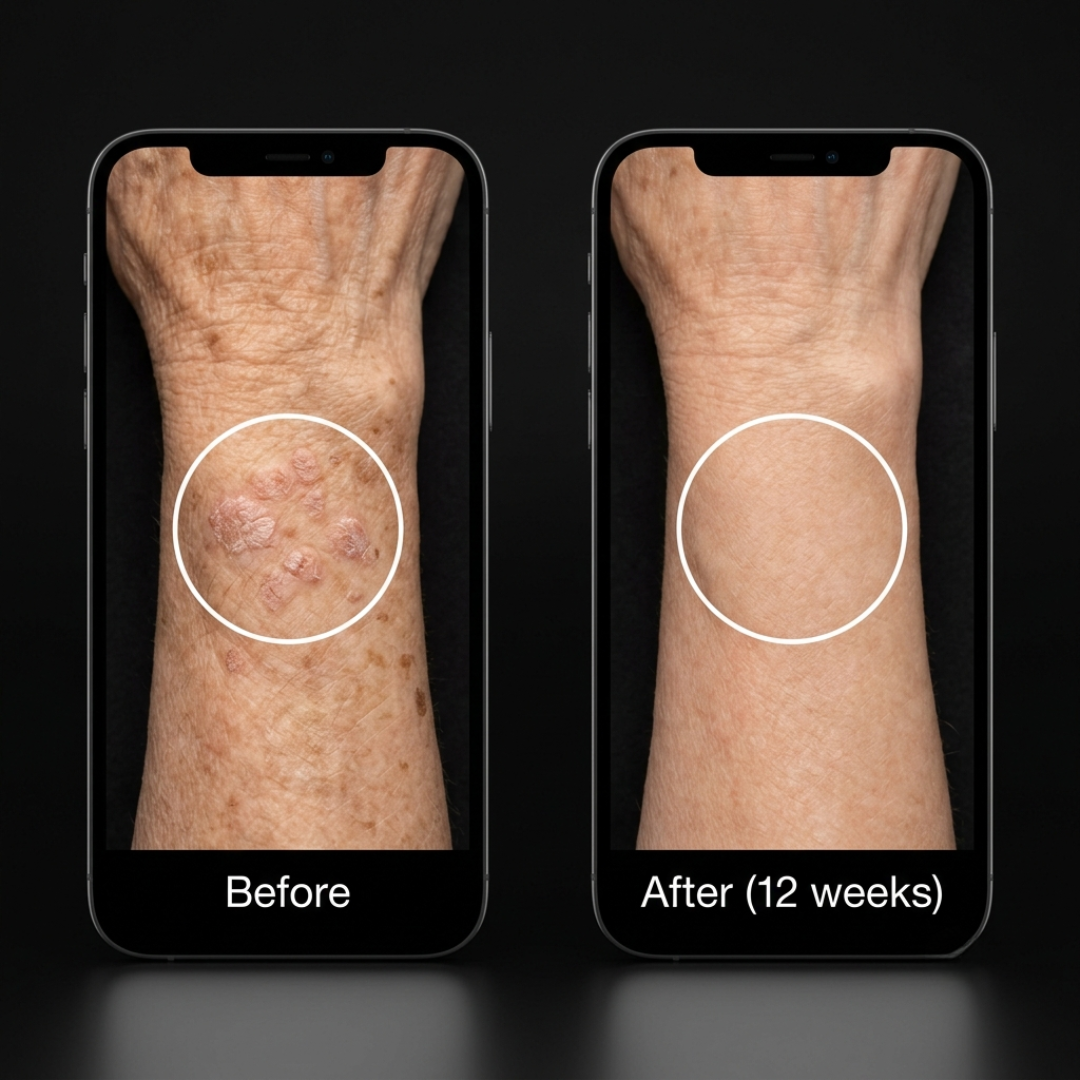
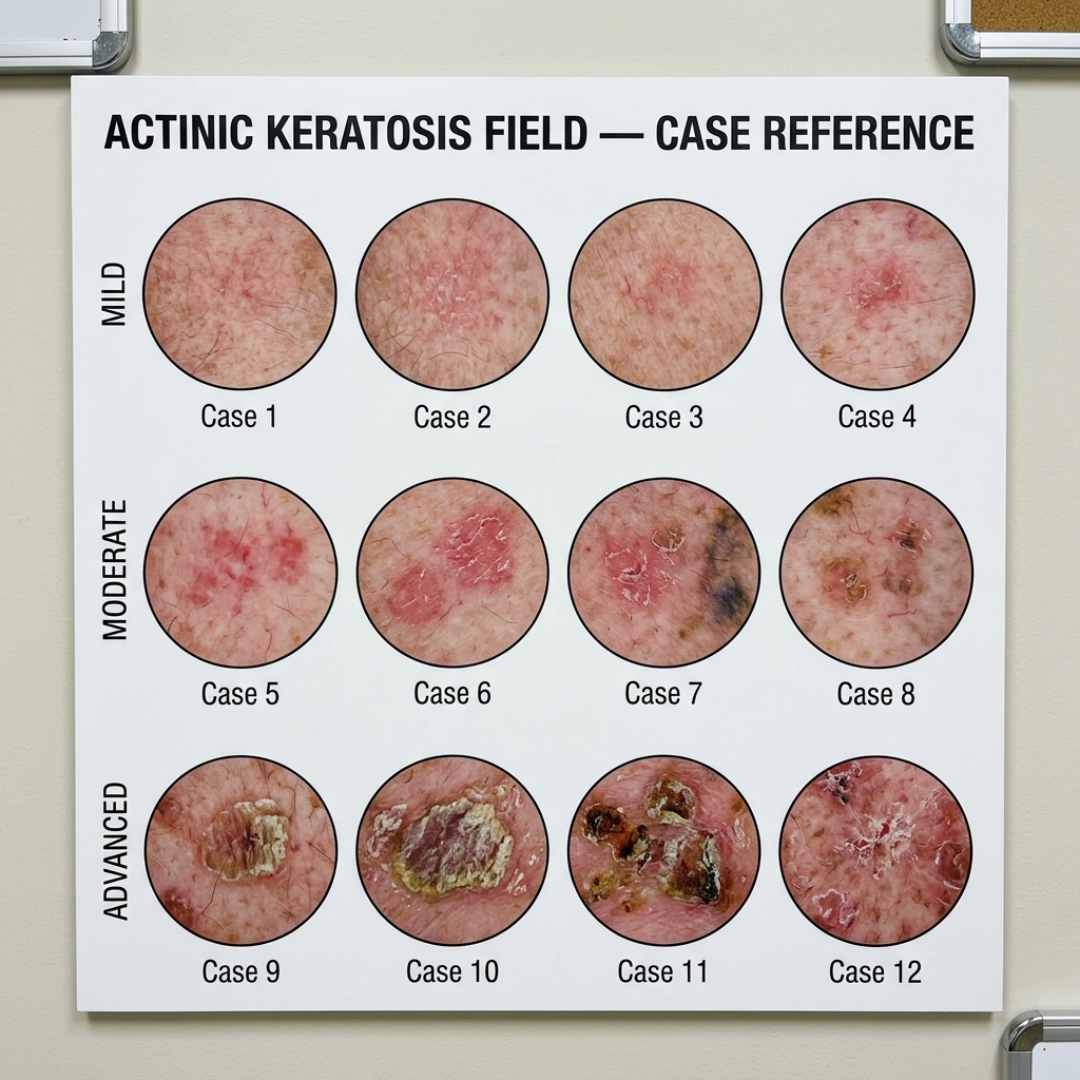
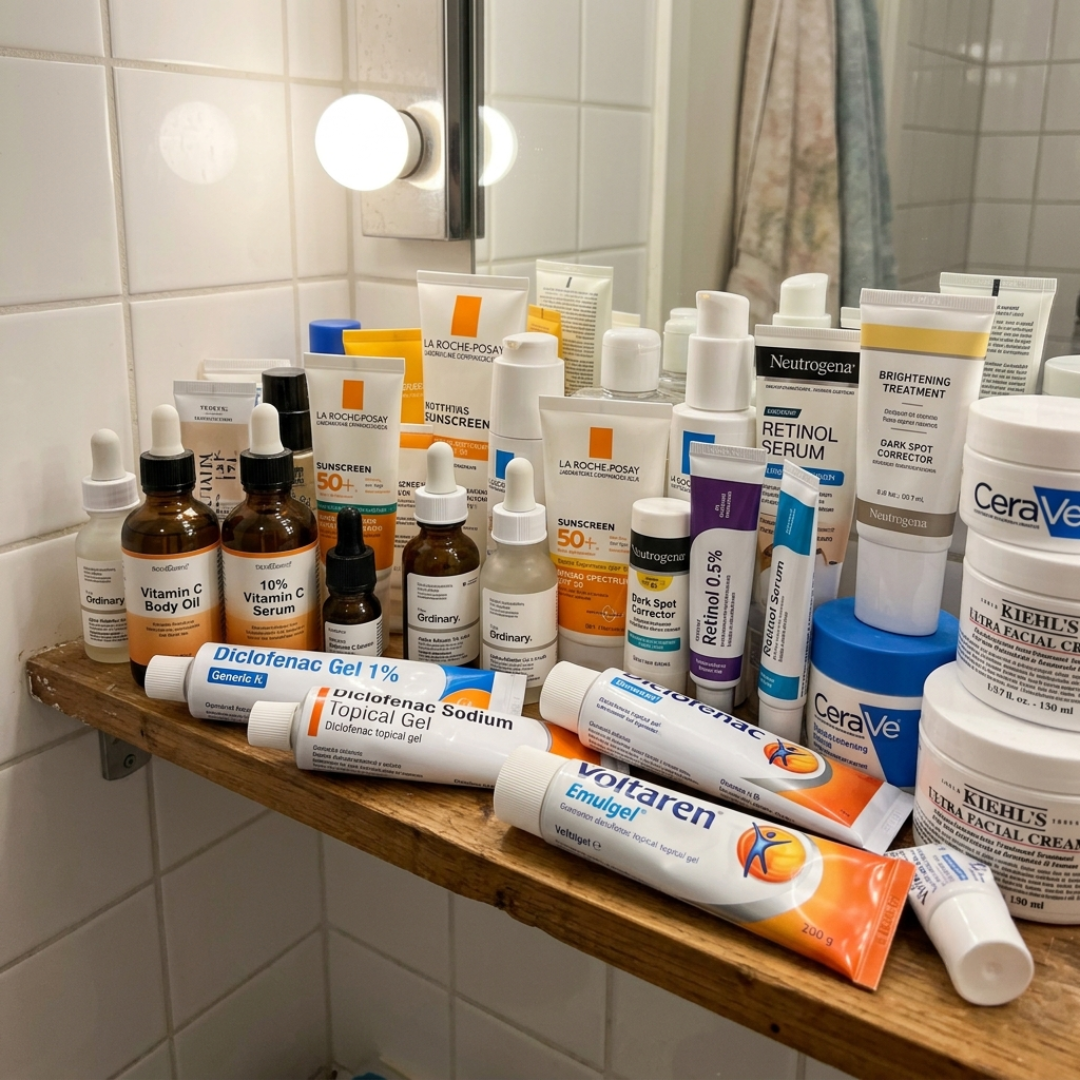
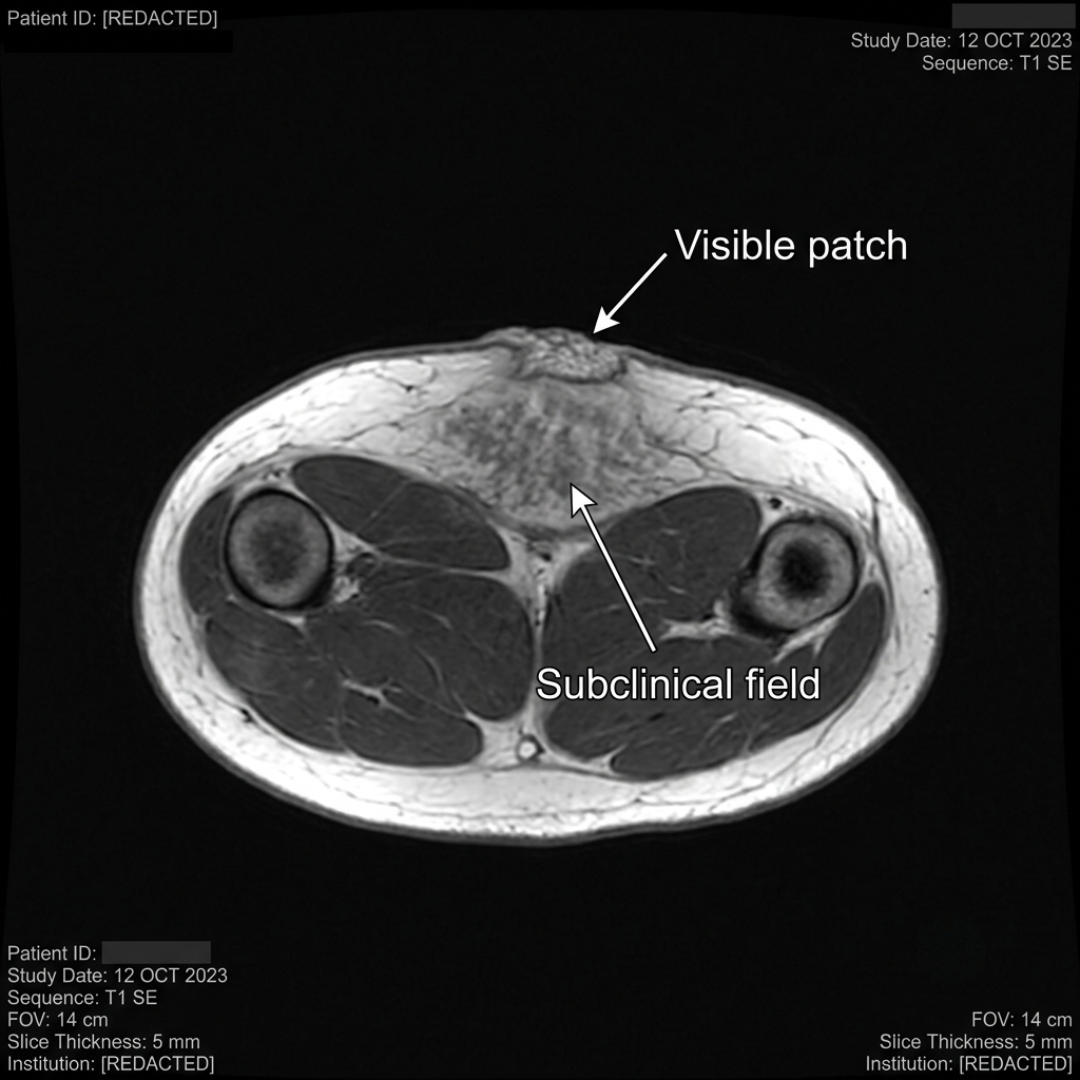
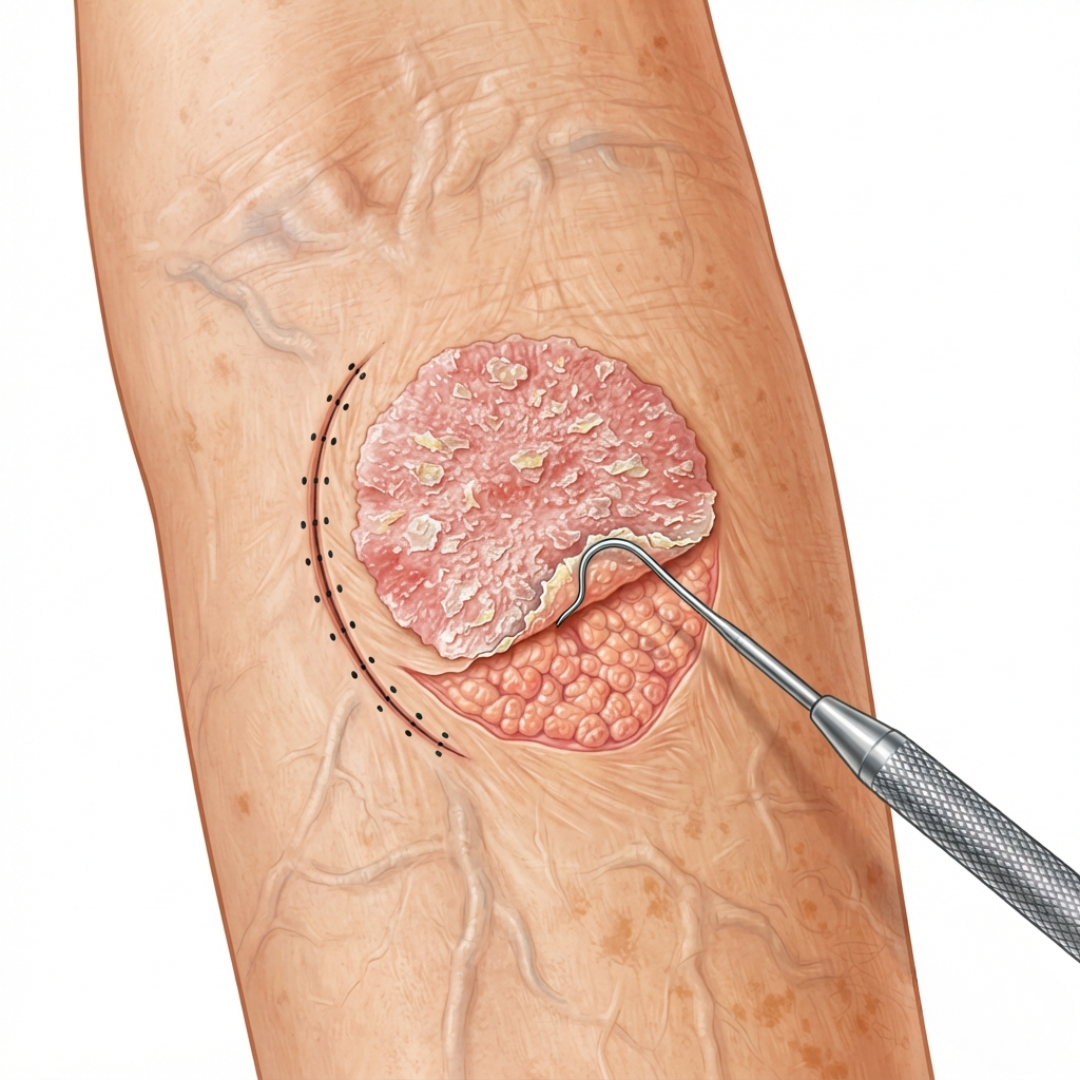
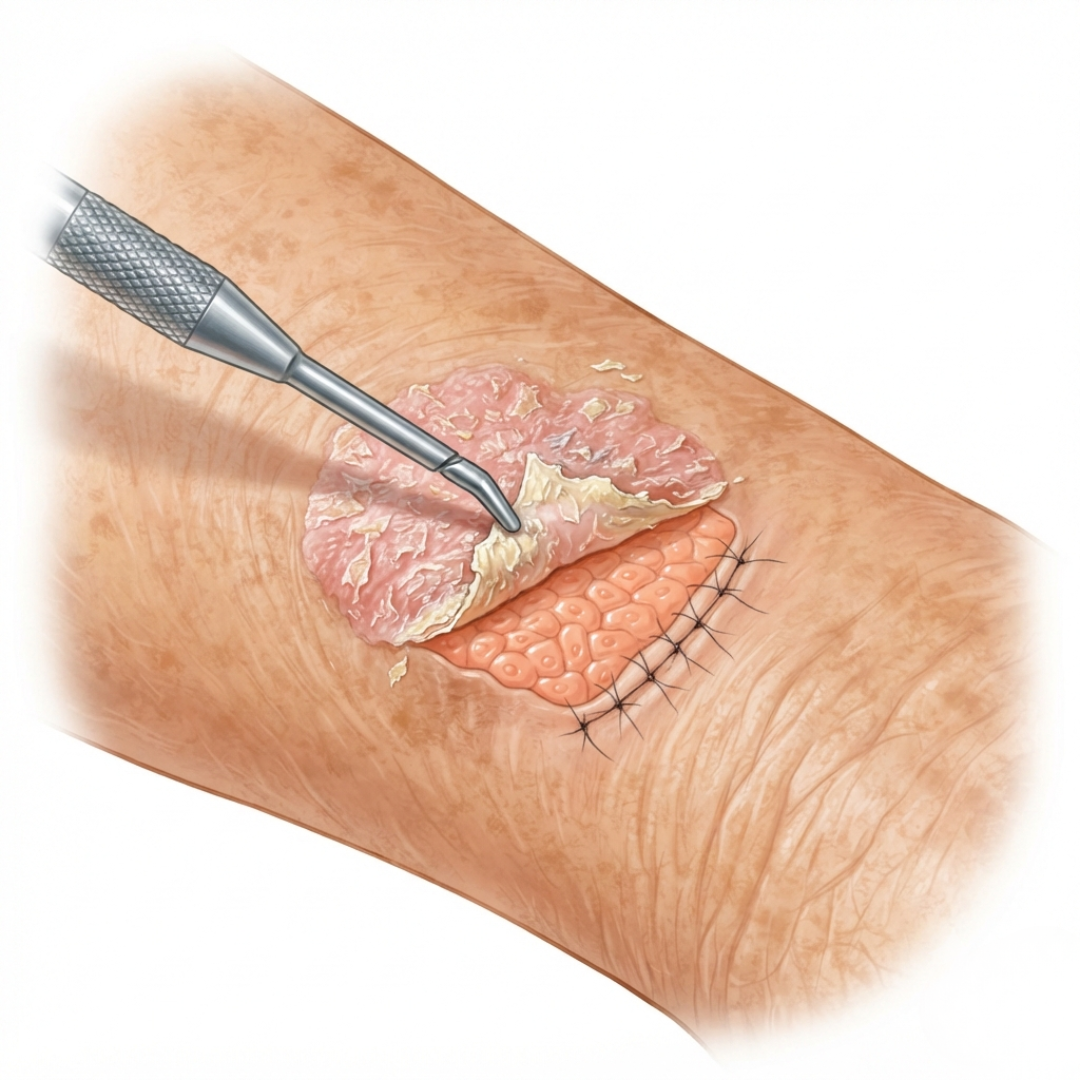
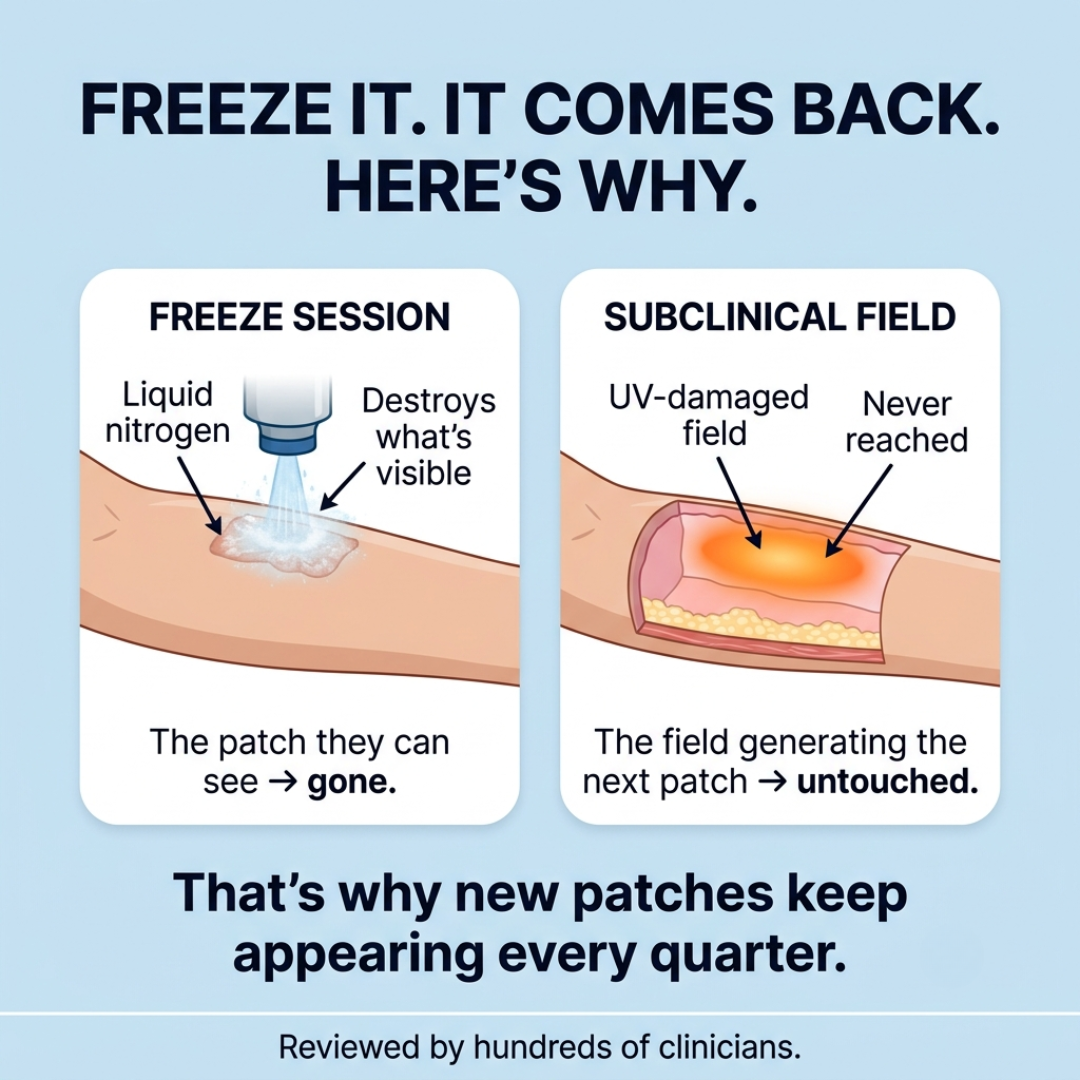
There is a fortress sitting under your skin. I had actinic keratosis for twelve years before I understood how it survived. It was a Wednesday in January. My daughter had a middle-school science project on the human skin and I was sitting at the kitchen table at 9 p.m. helping her find diagrams. I had spent the whole evening in the bathroom, examining a new rough patch on my forearm, running my fingers over it, wrestling with the dread for the 600th time, and now I was helping her label how skin cells renew themselves across seven layers. She pointed at the biggest diagram on the printout. "What's this one?" It was a drawing of the stratum corneum, a waterproof lipid shield that sits on top of all seven skin layers, with UV-damaged cells trapped underneath that had lost the ability to shed and renew normally. Frozen in place. Piling up. I read it off the legend. The three exact reasons my rough patches had kept multiplying for twelve years, printed on a middle school worksheet. I sat there with a printout in my hand and felt something turn over in my chest. I'm going to tell you the rest of the story. But first I have to say this: I am 68 years old. I have had actinic keratosis for twelve years. I have seen three dermatologists and a Mohs surgeon. I have been through cryotherapy at $300 per visit every three months for four years, fluorouracil cream that turned my arms raw and blistered for six weeks, diclofenac gel I applied twice a day for a year that did almost nothing, and a photodynamic therapy session my doctor charged five thousand dollars for that didn't stop new patches from forming. And not a single one of them ever once explained the words "field cancerization" to me in a way that included a solution beyond more freezing. I want you to sit with that for a moment. I sat with it for about three hours that Wednesday night after my daughter went to bed. I went down a research rabbit hole that lasted until 2 a.m. Here is what I learned. Your skin has a waterproof lipid shield on top called the stratum corneum, that is its whole job, to keep things out. The UV damage lives deep in the epidermis underneath it, where decades of sun exposure have created an entire field of damaged keratinocytes that can't shed and renew normally. They pile up, forming the rough scaly patches you feel on the surface. And because every cryotherapy session, every prescription cream, every surface treatment you have ever tried only addresses the patches you can see, the invisible field of damage underneath keeps sending new ones to the surface. A Minefield under a shield. When I read that at 1 a.m. with a new rough patch on my forearm that hadn't been there last month, I sat on my bathroom floor with tears running down my face, because I finally understood why every single thing I had tried for twelve years only treated what I could see while the damage underneath kept spreading. The cryotherapy freezes one spot at a time and three more appear by the next appointment. Fluorouracil cream turns your skin into a blistered war zone for six weeks and the patches start forming again within months. Diclofenac gel sits on the surface as a mild anti-inflammatory and barely touches the field damage underneath. PDT at $5,000 a session blasts the visible patches with light and the new ones form within a year because the field underneath never stopped. And retinoid creams, the only thing that addresses cell turnover, irritated my skin so badly it was like trading one kind of damage for another. I was choosing between freezing and burning individual patches on a surface while the field of damage underneath kept producing more, or destroying my skin barrier with prescription creams that turned my arms into open wounds. Trying to pull weeds one at a time while the root system underneath keeps spreading. And worse, and this is the part nobody told me, treating spots one by one the way I had been doing for twelve years does nothing to the field underneath, it just makes the surface look managed while the damage deepens. The routine I was doing to fight it was the reason I felt I would have it forever. I want you to understand what that feels like to read at 1 a.m. on a Wednesday in January, when you have just found another rough patch that wasn't there last month for the 600th time. I kept reading. I needed to find what actually reaches the field damage under the barrier. That's how I found Dr. Catherine Reeves. She is a dermatological researcher who had actinic keratosis herself. She had been writing for years about something almost no other dermatologist talks about: reaching the damaged keratinocytes from the OUTSIDE using oil-based penetration, the only vehicle that passes through a lipid barrier, instead of freezing and burning individual patches on a waterproof shield where nothing penetrates to the field underneath. She called the approach The Dual-Layer Deep Delivery. First, Lipid Barrier Passage: bakuchiol, a plant-based retinol, carried in a pure oil base passes directly through the stratum corneum because oil dissolves into a lipid barrier the way water never can, it walks through the locked door so the actives reach the deeper epidermal layers where the damaged cells are stuck. Second, Deep-Layer Turnover Reset: oil-soluble vitamin C, the only form that survives the journey through all seven layers, reaches the field of damaged keratinocytes and resets the cell turnover cycle so stuck, damaged cells finally shed and fresh healthy cells replace them. It doesn't sit on the surface. It doesn't burn and blister your skin. It doesn't freeze one spot while the field underneath keeps producing more. It penetrates through the lipid barrier, where surface treatments blocked by the shield can never reach. The Deep Delivery. She had built it into a simple botanical body oil around sixteen ingredients chosen specifically for this penetration. Bakuchiol at active concentration for cell turnover reset. Oil-soluble vitamin C that actually crosses the lipid barrier. Sea buckthorn oil for Omega-7 barrier repair. Camellia oil for deep-layer absorption without a greasy residue. Oil-based on purpose, because it penetrates the lipid stratum corneum that water-based products bounce off. It was called Dermiqua. I ordered a bottle at 1:47 a.m. that Wednesday night. I want to tell you what happened next without exaggerating. The bottle arrived two days later. That Saturday night I applied the oil after my shower, my nightly ritual from then on. Twelve years of muscle memory said check for new patches and schedule the next freezing session. I applied the Dermiqua oil instead. Sat down on my couch. I want to be honest, I was sure it wouldn't work, because everything else had lived in the graveyard of products under my bathroom sink. Week 1: nothing visible, but my skin felt different, smoother, calmer, like something had actually absorbed instead of sitting on top. Week 2: the patches stopped getting rougher, which after twelve years of only getting worse was itself something. Week 3: I noticed the sandpaper texture on my forearms had softened. Week 4: I stopped running my fingers over every patch obsessively for the first time in years. Week 8: the roughest patch on my left forearm had smoothed to the point I could barely feel it. Softening I had not experienced in over a decade. It has now been six months. The rough patches on my arms have softened more than halfway. My chest and shoulders are following. That had never happened to me in twelve years. I want to tell you one more thing. Last week I had a follow-up with my dermatologist. She looked at my skin. She looked at my file. She asked what changed. I told her. The stratum corneum barrier. The waterproof lipid shield. The oil-based deep delivery. The reason every cryotherapy session I paid $300 for only treated what was visible. The field damage underneath. The botanical body oil. She sat there for a long moment. Then she said: "Keep doing what you're doing. I don't want to change anything right now." She didn't argue. She didn't have a counter. She just nodded and closed my chart. If you are reading this and you have been fighting the patches for years. If your dermatologist has told you they'll just keep freezing them as they come. If you have been through fluorouracil cream that turned your skin into a war zone. If you have been offered PDT and watched new patches form anyway. If you have been wearing long sleeves in Arizona heat so no one sees your arms. I am not going to tell you to stop anything your doctor prescribed. I am not your doctor. I am going to tell you the stratum corneum barrier is real. The waterproof lipid shield is real. The field of UV damage that no surface treatment can reach is real. The article below walks through the mechanism in detail with the research and the reasons the scientist who built this recommends it for the exact pattern I had. 25,000+ happy customers. 90-day money-back guarantee. If it doesn't work for you, you send it back. You lose nothing except, hopefully, the $300 freezing appointments and the graveyard of products you have kept too long. A $14 billion skincare industry has been selling you surface treatments that can't get past the first layer. 👉 https://dermiqua.com/pages/actinic-keratosis P.S. My daughter's middle-school science project on human skin probably saved my arms. I cannot make that up. The whole answer was on a printout from a school worksheet. Twelve years and three dermatologists never explained the field damage and the barrier. A worksheet did. P.P.S. There are cheap body oils online that look almost identical to Dermiqua. They use mineral oil bases with petroleum derivatives and call them botanical. They don't contain bakuchiol at active concentration or real oil-soluble vitamin C that crosses the lipid barrier. They feel oily and do nothing to the damaged cells under the skin. The real Dermiqua is only on the official site.
I Refer Actinic Keratosis Patients for $500 Freezing and Efudex That Burns for Weeks. They Keep Asking About the Body Oil I Use at Night.
Reach the damage where it hides. Deep in the epidermis. Not burning uselessly at the surface.
LEARN MORELike this ad? Make it yours.
Crush rebuilds this exact creative around your product — your brand, your colors, your offer — in about a minute.