
Inactive· since Aug 18, 2026
- 15
- days it ran
- 0
- relaunches
Ad copy
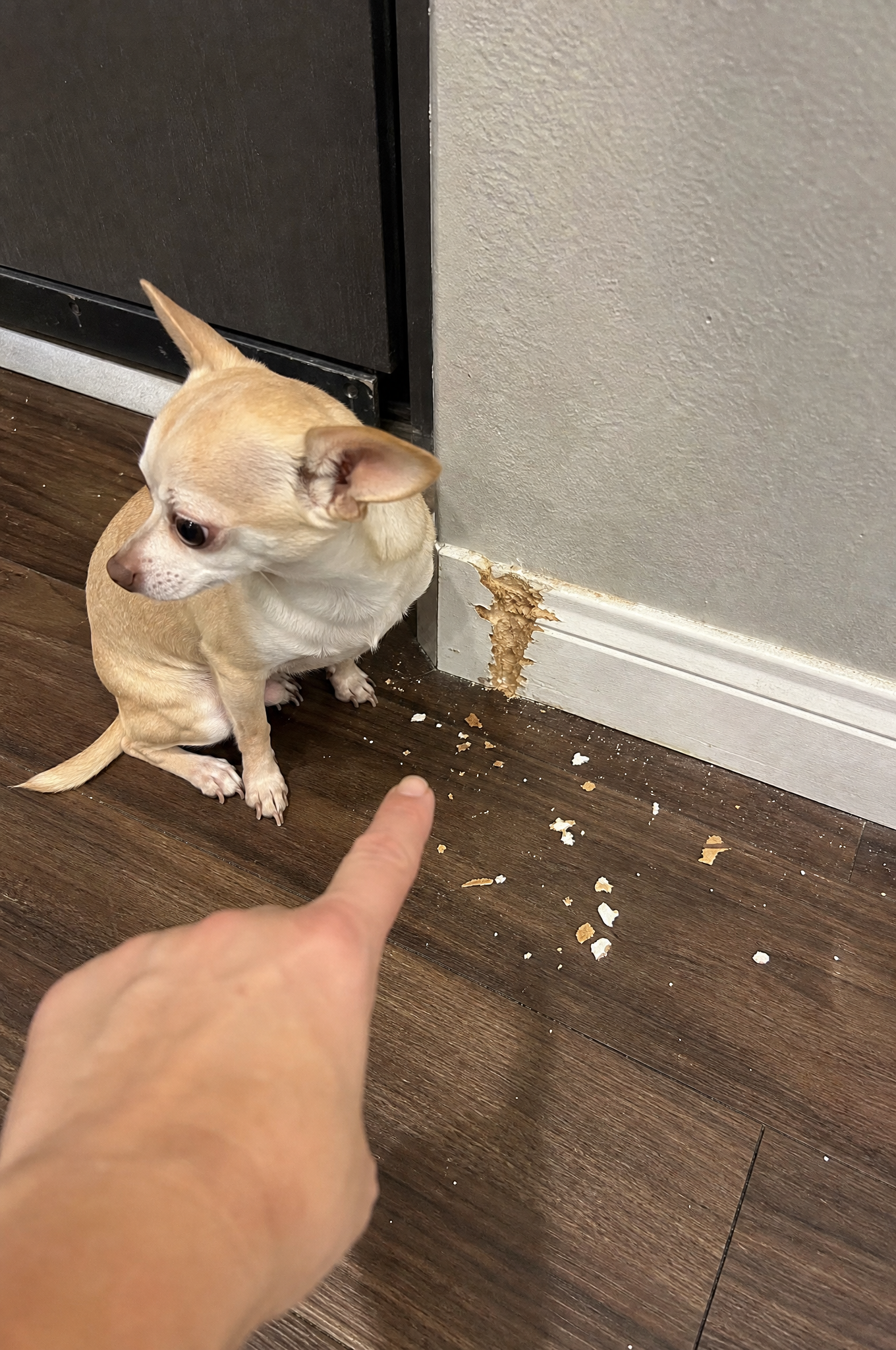
I've spent 15 years training Chihuahuas without e-collars, without medication, and without telling a single owner they need to walk their dog for 2 hours a day. When I see what generic trainers are telling Chihuahua owners, I cannot believe what I'm hearing. I've worked in canine behavior and breed-specific training for over 15 years. The first 8 years, I trained everything. Labs, Shepherds, Doodles, Bulldogs, Huskies. Standard obedience. Standard methods. Standard results. Then I started getting Chihuahuas. And everything I thought I knew fell apart. In my first year working with Chis, I saw something that kept me up at night. Chihuahua owners coming in with dogs that were physically healthy, genetically sound, deeply loved, and completely out of control. Constant barking at the front door. Snapping at anyone who reached for them. Biting the hand that tried to pick them up. Screaming the entire street down the moment the owner left the house. Separation anxiety that had left scratches down door frames, destroyed window sills, and in one case a dog that had chewed through an entire section of skirting board trying to get out. Dogs that followed their owners to the bathroom, couldn't settle on their own for five minutes, and launched into a full alarm bark every time a car door closed outside. Every single owner said the same thing. "My trainer said to ignore the biting. My vet put her on medication. I've tried everything. We just keep managing it." Managing it. That word. In 15 years of working with dogs, I have never heard a word that caused more damage than "managing." You don't manage a problem that has a solution. You solve it. And the reason nobody was solving it was that every trainer, every vet, every YouTube video, and every obedience class these owners had paid for was using methods designed for a completely different kind of brain. Generic dog training doesn't fix what is actually happening inside a Chihuahua. It only suppresses the symptoms. Here is what your trainer probably hasn't told you about why your Chi acts the way it does. There is a concept that most dog trainers have never been taught and most Chihuahua owners have never heard: the Chi Mind Overload. And the real cause behind every behavior problem your Chihuahua has is neurological, not behavioral. Your Chi isn't biting because they are aggressive. Not because they are mean. Not because you are not being firm enough or consistent enough or alpha enough. The reason your Chihuahua short-circuits every time someone reaches for them, a knock comes at the door, a stranger approaches on a walk, or you try to leave the house is in their brain. Chihuahuas were bred for one thing above everything else. To be bonded to a single human so completely that they function as that person's shadow, protector, and constant companion. That drive to attach, guard, alert, and stay glued to their person is not a personality quirk. It is a hardwired genetic instruction that has been bred into them for centuries. From their survival instincts as one of the smallest breeds ever domesticated, they inherit one of the most powerful threat-detection systems in any domestic dog. The need to assess every person, every sound, every movement for danger is not a preference. It is as hardwired as a Border Collie's need to herd. From the same genetics, they also inherit an emotional sensitivity that most owners never expect. Chihuahuas feel everything. Your mood. The tension in the room. The anxiety in your voice when a stranger approaches. They absorb it all and they respond to it, which is why punishment based training backfires so badly with them. When those drives have a job to do, a person to protect, a space to guard, a pattern to follow, the dog is alert but manageable. Because the brain knows what it is doing. When those drives have no clear structure, which is every minute of every day in a typical household where the dog is expected to just exist quietly on the couch, the brain doesn't idle. It revs. It scans every sound for threats. It monitors every movement at the front door. It panics when its person disappears from view. It bites the hand it cannot predict. It barks at the shadow moving past the window because nobody has ever told it that it is safe to stand down. That is the biting. That is the barking. That is the shaking that won't stop. That is the snapping at guests. That is the screaming when you leave. That is the dog who won't let anyone else in the house touch them without lunging. One neurological drive with no direction, showing up as different problems at different times across their entire life. And here is the part that made me furious on behalf of every owner who walked through my door. Every mainstream training method makes this worse. "Ignore the biting and it will stop." This is designed for breeds that accept social withdrawal as a consequence and adjust. When you pull away and ignore a Chihuahua mid-bite, their threat-detection brain doesn't read that as a correction. It reads that as confirmation that the interaction was dangerous and that biting was the right call. You haven't stopped the biting. You have reinforced the decision that made them bite. "Expose them to more people. Socialise them out of it." This works on breeds with a neutral baseline toward strangers. A Chihuahua's baseline is not neutral. It is vigilant. Forcing a five-pound dog to repeatedly face situations they find terrifying doesn't build confidence. It builds a dog who has learned that their person will not protect them, so they have no choice but to protect themselves. The biting gets worse. The reactivity gets worse. The trust in you gets worse. "Be firmer. Show them who is boss. Don't let them get away with it." This is the most damaging advice being given to Chihuahua owners right now. Chihuahuas are among the most physically fragile and emotionally sensitive breeds ever studied. When you apply pressure, punishment, or force to a Chihuahua's brain, you do not create obedience. You create a dog who has decided the entire world is out to hurt them. I have seen this happen so many times in my career it makes me physically sick. "Medicate. Anxiety medication. Calming supplements. Just take the edge off." This is where the system completely fails the dog. Because the medication doesn't calm the brain. It suppresses it. The dog stops barking at the door. Stops snapping when picked up. Stops doing the frantic lap around the couch when you get your keys out. Stops doing the full body shake when a stranger walks in. The house goes quiet and the owner thinks the problem is solved. But the dog isn't calm. They are sedated. There is a difference between a dog that has learned to feel safe and a dog whose entire vigilance system has been chemically dampened. One is training. The other is a dog sitting at the window with glazed eyes who used to sprint to the door to meet you and doesn't anymore. Calming chews. CBD oil. Adaptil diffusers. Thundershirts. None of it addresses why the behavior exists. A Chihuahua's brain isn't running hot because it is broken. It is running hot because it has never been shown that the world is safe, that its person is in control, and that its job is not to manage every threat alone. Putting a calming chew into a Chihuahua that has never learned the world is safe is like turning the volume down on a smoke alarm without checking if the house is on fire. You are not solving the problem. You are just making it quieter. So the behavior keeps getting worse. The methods keep failing. The owner keeps paying. And the dog keeps escalating. And here is what nobody tells you about where this goes if you don't fix the actual cause. It doesn't stay as "just biting when picked up" or "just barking at the door." It never plateaus. It always gets worse. First, the biting becomes more unpredictable. What was a warning snap becomes a full bite with no warning at all. The dog skips the growl because every time they growled before, something bad happened, so now they go straight to teeth. Guests stop visiting. Family members stop trying to touch the dog. You stop having people over because you cannot predict what your Chihuahua will do. Then the barking becomes a round-the-clock job. What was triggered by the doorbell starts being triggered by footsteps outside. Then by voices two doors down. Then by the sound of a car engine at the end of the street. You start dreading every delivery. You apologise to your neighbours constantly. You walk on eggshells in your own home, terrified to drop a spoon because you know it will set them off for ten minutes. Then the separation anxiety gets worse. Whining becomes screaming. Scratching at the door becomes gouging through the paintwork. A dog that panicked for five minutes starts panicking for the entire time you are gone, wearing a path in the floor, unable to eat, unable to settle, flooding with cortisol every time the sound of your keys means you are leaving again. Then the owner's life shrinks. They stop having people over because of the snapping. They stop going out because the dog cannot be left. They stop enjoying walks because the barking and lunging at every dog and person on the street is exhausting and embarrassing. They stop enjoying the dog because every interaction is management. The dog they chose because they wanted a loyal, loving companion becomes the thing the whole household is built around managing. I've watched this happen hundreds of times. And every single time, the owner had done everything they were told. They had been patient. They had been consistent. They had spent the money. And none of it worked. Because every method they had been given was designed for a brain their dog doesn't have. That is when I understood the problem wasn't the owners. It wasn't the dogs. It was the method. And that is when I built something different. I spent 3 years building a system from scratch. Not adapting generic obedience for Chihuahuas. Not repackaging small dog training with a cute Chi on the cover. Building a complete framework engineered specifically for how a Chihuahua's brain processes threat, forms trust, and learns that it is safe to stand down. I called the core principle the Chihuahua Brain Hack. And it is built on one insight that changes everything. A Chihuahua's chaos is not a dominance problem. It is a safety problem. And the solution is not punishment or medication or flooding them with the things they fear. The solution is predictability. A Chihuahua's threat-detection brain is running at full power because nothing in their world is predictable enough to feel safe. Every unexpected touch is a potential attack. Every stranger is an unassessed threat. Every departure is a potential abandonment. Generic training tries to suppress the reaction. Medication tries to mute the alarm. Both fail because the alarm isn't the problem. The missing safety signal is the problem. The Chihuahua Brain Hack doesn't fight the vigilance. It satisfies it. It shows the dog's brain, step by step, interaction by interaction, that the world is predictable, that their person is in control, and that they do not have to manage every threat alone. When a Chihuahua's brain finally receives that signal, the barking drops. The biting stops. The shaking settles. The separation panic fades. Not because we suppressed anything. Because the alarm finally has a reason to switch off. I want to tell you about one Chihuahua. Because what happened is what I see when owners finally fix the right problem with the right approach. Her name was Lola. Four year old female Chihuahua, four and a half pounds, smooth coat, apple head. Her owner, Sarah, had spent over $2,800 in 18 months trying to fix her. Sarah lives in a two bedroom apartment with her partner, Dan, and had adopted Lola at eight weeks old. Lola bit Dan every single week. Not a nip. A bite. Latching on, breaking skin, leaving marks on his forearm and hand. Dan had started wearing a long sleeve shirt in his own home because of his partner's four and a half pound dog. Lola also barked at every sound from the hallway outside their apartment. Every. Single. Sound. Neighbours walking past. Doors closing on other floors. Delivery drivers pressing buzzers for other apartments. From the moment Sarah left for work until the moment she returned, Lola screamed. Their downstairs neighbour had knocked twice. The building manager had sent one letter. Sarah had started leaving for work with a knot in her stomach every morning, not because of her job, because of what was happening in the apartment behind her. Every single trainer they hired said the same thing. Ignore the biting. Socialise her more. Be more consistent. Try this collar. Try this spray. Give it time. One trainer told Dan the problem was that Lola didn't respect him and that he needed to be more dominant. Dan, a grown man, was told he needed to assert dominance over a four and a half pound dog who had decided he was a threat to her person. Sarah came to me as a last resort. She was convinced Lola was aggressive. Possibly broken. That this was just who Lola was and they might have to rehome her. When I watched Lola with them for twenty minutes, I didn't see an aggressive dog. I saw a dog who had never once been shown that the world was safe. A dog who had been carrying the full weight of keeping her person protected for four years with no help, no structure, no signal that it was ever okay to stand down. A dog who bit Dan every week not because she hated him but because every time he reached for Sarah, her brain screamed threat and she had nothing else left to say. "Lola isn't aggressive," I told Sarah. "Lola is exhausted. She has been on guard duty for four years with no days off and nobody ever told her she could clock out." I explained the Chihuahua Brain Hack. The threat detection drive with no off switch. Why socialising her into more scary situations was teaching her that her fears were justified. Why ignoring the biting was teaching her that growling didn't work and she had to skip straight to teeth. Why every method Sarah had paid for was designed for a brain Lola doesn't have. Sarah agreed to start. Not with more socialisation. Not with another trainer telling Dan to be more dominant. With the protocol I had built specifically for how a Chihuahua's brain forms safety, trust, and the ability to stand down. Week 1: We stopped all "Swoop and Trap" handling immediately. No more reaching for Lola from above without warning. No more picking her up mid-sleep. No more Dan attempting to move her from the couch by grabbing her. Every time anyone was going to touch Lola, they said "1-2-3, Up!" first, waited for her to brace, and supported her chest and back legs properly when they lifted. By day 3, Lola had stopped flinching every time Dan walked into the room. Dan called me. "She looked at me this morning and she didn't move away. She just looked at me. That has never happened." Week 2: We introduced the Three-Second Pet game. Dan would sit on the floor. Not loom over her. Not reach for her. Sit on the floor, wait for Lola to approach, pet her for exactly three seconds on the chest, then pull his hands away completely and wait. If she walked away, the game was over. If she nudged his hand or stayed close, he petted her for three more seconds. By day 5, Lola was walking to Dan on her own and standing next to his leg. Sarah filmed it on her phone. She sent it to me with three question marks and a crying emoji. "Is this real? Has she ever done this before with him? Is this actually happening?" Week 3: We worked on the barking. Not with a spray collar. Not by telling Lola to be quiet and watching her ignore it completely. We changed what the sounds in the hallway meant to her brain. Every time there was a noise outside, before Lola could hit full alarm, Sarah walked calmly to the front door, looked at it, said "Thank you, that is enough" in a boring, flat voice, and dropped a piece of chicken on Lola's mat across the room. Lola's brain had a new job. Instead of managing the threat at the door, she had to get to her mat fast enough to get the chicken. The barking dropped by two thirds in nine days. Their downstairs neighbour knocked on the door at the end of week three. Sarah opened it ready to apologise again. The neighbour said, "I don't know what you've done but whatever it is, please keep doing it. It's been quiet all week." Week 4: We worked on Dan specifically. Not on dominance. On becoming predictable. Dan started feeding Lola her breakfast every single morning. Every morning, same time, same routine, Dan's hands, Dan's voice, Dan's presence attached to the best moment of Lola's day. By the end of week 4, Lola was following Dan from the kitchen to the living room. Not to guard Sarah from him. Just to follow him. Because her brain had finally filed him as safe. Week 6: Sunday morning. Sarah and Dan were on the couch watching television. Lola jumped up, walked across the cushions, and lay down across Dan's legs. Not Sarah's. Dan's. Dan didn't move for forty five minutes because he was terrified she would leave. He sat completely still with a four and a half pound Chihuahua asleep on his legs and tears running down his face. He texted me a photo. The caption said: "She chose me. I can't believe she chose me." Sarah sat down one evening and added up what they had spent on Lola over 18 months. Three private trainers, ignore the biting method, socialisation sessions: $1,100. Calming chews, two different brands: $180. CBD oil: $95. Anti-bark spray collar that made Lola shake for an hour after using it once and was never touched again: $65. Adaptil diffuser, three months: $140. Vet visit specifically about her behavior: $220. One board and train that Lola spent the entire time hiding under a blanket and came home exactly the same: $900. Replacement items Dan had bought to replace things his own arms had lost in Lola's bites. Thick gardening gloves he wore to pick her up for the first six months. Three long sleeve shirts. One jacket with a sleeve so shredded he had thrown it away. $2,800 and the sleeve of a jacket. On methods and products that either did nothing or made Lola more reactive, while the actual problem, a Chihuahua brain that had never once been shown it was safe to stand down, was never once mentioned by a single trainer, vet, or product label in 18 months. They told Sarah what to ignore. What to spray. What supplement to add. What collar to try. Nobody told her why it wouldn't work. The why is the brain. 6 weeks of the right system with the right approach: $37. Lola is calmer, safer, and more trusting on $37 and the Chihuahua Brain Hack than she ever was on $2,800 worth of advice that was never designed for how her brain actually works. Because the spray collar didn't make her feel safe. The socialisation didn't make her feel protected. The calming chews didn't give her an off switch. $37 gave Dan his legs back. And gave Lola permission to finally stop guarding. When I looked at how Chihuahuas were being handled across the country, I assumed somebody had already built what I could see needed to exist. They hadn't. Every training program I reviewed, and I reviewed 14 of them, was generic obedience with a small dog on the cover. Same treat lure methods designed for food driven Labs. Same correction protocols designed for physically robust working breeds. Same socialise more advice designed for dogs with a neutral baseline toward strangers. Same failure rate. Applied to a Chihuahua brain that treats every single one of those methods as further confirmation that the world is dangerous and they are on their own. So I built The Complete Chihuahua Guide. Every protocol inside it is built for how a Chihuahua's brain actually works. The Chihuahua Brain Hack that reframes every behavior your dog has ever shown you from aggression and stubbornness into the fear response it actually is, so you stop fighting the symptom and start fixing the cause. The 1-2-3, Up! Routine that completely changes how your dog feels about being handled, so you can pick them up, move them, and touch them without bracing for a bite, because they know exactly what is coming before it happens. The Hands-Free Relocation protocol for moving a dog off the couch, out from under a blanket, or away from a guarded space without using your hands at all, because the moment you reach in is the moment you get bitten. The Advocate Shield for walks, cafes, parks, and family visits, so when a stranger reaches for your dog or a toddler lunges for their head, you know exactly what to do in the next two seconds to prevent a bite and actually build your dog's trust in you at the same time. The Boring Exit protocol that eliminates separation panic by making your departure so unremarkable that your dog's brain stops treating it as an emergency, so you can leave the house without a knot in your stomach about what is happening behind the door. Barking and alarm control that teaches your dog they are not the only one managing the threats, so they can hand the job over to you and actually rest. Potty training that finally works, because it removes the reason Chis fail at it in the first place, which is never stubbornness, always a setup that was designed for a different kind of dog. The Fear and Shake Reset so you stop accidentally validating your dog's panic every time you say "it's okay baby" in a worried voice and accidentally tell them the threat is real. The Trust Building Games that rewire how your dog sees human hands, so handling goes from the most threatening part of their day to the most predictable and safe. Health and weight guidance built for a toy breed, including the dental care routine that makes tooth brushing something your Chi actually looks forward to, and the joint and weight monitoring protocol that catches the problems Chihuahuas are most prone to before they become expensive. Plus four specialist bonus guides included at no extra cost. The Bark Fix for chronic, intractable barking that has not responded to anything you have tried. The Bite Reset for dogs who have moved past warning growls into active skin-breaking biting. The Calm Protocol for dogs with severe, chronic anxiety who have never once in their life known how to switch off. And the Potty Blueprint for the full step by step house training system, from the Texture Transition that fixes the pee pad problem to the full outdoor migration protocol. All of it built for the brain that is actually inside your Chihuahua. Not a generic small dog. Not a miniature version of a Labrador. A Chihuahua. I share this because I have spent years watching the same pattern destroy the same owners with the same dogs. Chihuahua owners told their dog is "just aggressive" and to socialise them more, while the forced socialisation teaches a vigilant dog that their fears are completely justified. Owners told to use corrections, while the corrections remove the warning growl and teach the dog to go straight to biting with no signal. Owners who feel like they are failing. Like they chose the wrong breed. Like their dog is broken. Like they are living with a dog they are a little bit afraid of in their own home and they cannot tell anyone because they know what people say about Chihuahuas. They are not failing. The methods are failing them. The standard training industry treats every dog like it has a Labrador's emotional baseline. Correction means learning. Ignore it and it stops. Socialise them out of it. And for some breeds, that is true. But Chihuahuas have a threat-detection drive and a bonding intensity and a physical fragility that doesn't respond to any of those methods. It needs something built from the ground up for how it actually works. That is what The Complete Chihuahua Guide is. The only system I have found in 15 years that trains the dog that is actually in front of you instead of the dog the industry assumes you have. $37 with instant access so you can start tonight. I also added a 90 day money back guarantee so after implementing the simple strategies if your Chi isn't dramatically better, you pay nothing. You have spent long enough doing what you were told with nothing to show for it. It is time to train your Chihuahua the right way, before the behavior gets to the point where the owner gives up and the dog ends up in a rescue labeled "aggressive" for a problem that was never about the dog. Read more about it here 👉 https://pawpowa.com/pages/chihuahua-guide P.S. Sarah spent $2,800 over 18 months on trainers who told her to ignore the biting, a board and train where Lola hid under a blanket the entire time and came home exactly the same, and a spray collar that made her shake for an hour and was never used again. 6 weeks of a $37 guide fixed what none of it could, because for the first time something showed Lola's brain that it was safe to stand down. The socialisation was confirming her fears. The corrections were removing her warning growl. The calming chews were quieting an alarm that needed to be answered, not muted. Get the guide. Start the Brain Hack tonight. P.P.S. If your Chi is under 18 months and the biting just started, you are in the best position possible. The patterns aren't locked in. The medication hasn't started. The warning growl hasn't been trained out of them yet by methods that punish it until it disappears and they go straight to biting instead. Start now. Before the spray collar. Before the board and train that sends them somewhere unfamiliar and terrifying and brings them home worse. Before the vet visit where someone uses the word "aggressive" about a dog that isn't aggressive, they are a five-pound animal in a giant world who has never once been shown they are safe, and nobody ever gave them a reason to stand down. Lola is proof. One owner tried the generic methods for 18 months and spent $2,800 and ended up with a dog her partner was scared to be alone with in their own apartment. Then she tried $37 and got her dog back in 6 weeks. The difference isn't the money. The difference is the method. Start today. 👉 https://pawpowa.com/pages/chihuahua-guide
Like this ad? Make it yours.
Crush rebuilds this exact creative around your product — your brand, your colors, your offer — in about a minute.