The Nerve Health Community
The Nerve Health Community Facebook ad: “Sublingual Vitamin-B Complex - 5,000mcg B12”
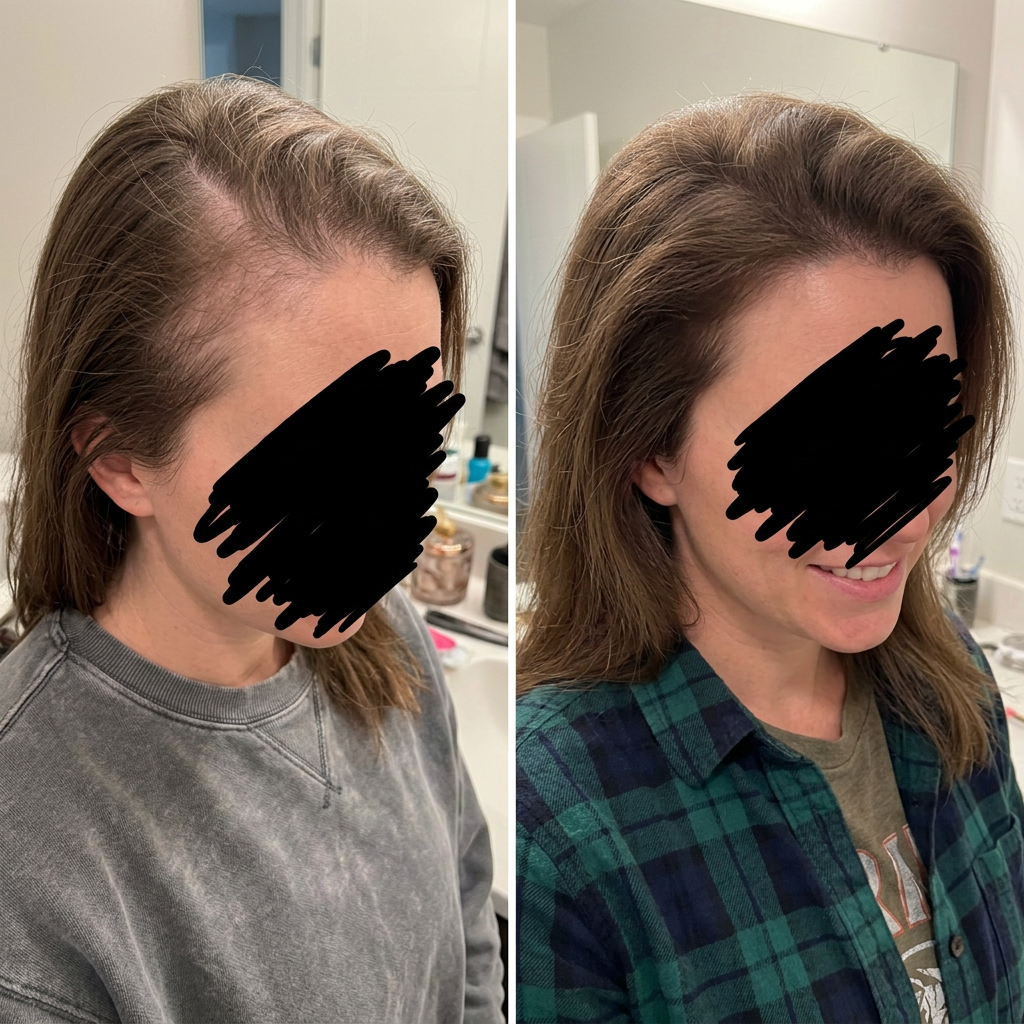
Ran for 6 days, from June 19 to June 25, 2026, the last day Crush saw it.
Run by The Nerve Health Community on Facebook. Crush is not the advertiser and does not verify its claims. See this ad in Meta's Ad Library(opens in a new tab)
Want an ad like this for your product?
Crush makes new ad images for your product from this ad: your logo, your product photo, your offer.
Trials from $19.95 USD, then $79.95 USD a month. Cancel anytime.
About this ad
- Meta Ad Library ID
- 2345829562574788
- Platforms
- Facebook, Instagram, Audience Network, Messenger and Threads
- Relaunches
- 0
Ad text
Nearly half of the women I know who have been prescribed Gabapentin in the last five years are no longer taking it. Not because they have decided the burning in their feet does not matter. Because the side effects their GP gently warned them about turned out to be anything but gentle. A fog that sits on the afternoon like a damp cloth, a dizziness that makes the stairs feel dangerous, a slow sense that something inside them is not quite running right anymore. That is not me exaggerating. The research backs it up. Roughly half of patients started on Gabapentin stop within the first year, and women report the side effects at noticeably higher rates than men do. It is one of the quietest failure rates in British nerve care, and almost nobody has the conversation about it until they are already on the tablets and struggling. I was 56, two weeks out from starting them myself. What I did instead, in the six months my GP gave me to try, is the reason I am writing this page. My name is Linda. I am 58. I live just outside Harrogate. I spent thirty-one years as a primary school teacher. I have one husband who still does not know how to load the dishwasher properly. Two grown daughters. One granddaughter who thinks I am a slightly rubbish baker but a good reader-of-stories. I am writing this because I want to tell you about my older sister Carol first. Because if I do not tell you about her, none of the rest of this is going to make sense. Carol is four years older than me. She used to grow roses in every corner of her back garden. She hosted Christmas for fifteen people without breaking a sweat. She was the one who taught me how to drive, how to argue with a plumber, how to push back on a doctor when something felt off. She is diabetic, like me. She was started on Gabapentin at 54, when the tingling in her feet turned to burning. Her GP told her it was routine. Six weeks in, the fog rolled in. She would lose the thread of a sentence halfway through it. Six months in, the burning was quieter but she could not finish a flight of stairs without holding the banister, dizzy halfway up. A year in, she gave up the garden. Twenty years of roses. She told me she just did not have it in her hands or her feet anymore, and could not feel the soil through her fingers the way she used to. Two years in, she stopped reading novels. She said the words slid off the page. She would read the same paragraph four times and still not have it. And here is the part that haunts me. Her feet still burned. After all of it, the tablets that took her sharpness and her balance, her feet still burned at night. Her chart, the whole time, looked tidy. On the medication, managed, GP pleased. Fifteen-minute review every twelve months, prescription renewed, see you next year. The last time I sat in her kitchen, about three months before my own check, she said, "Linda, I don't feel like myself. I haven't for a long time." She was 58. She looked 70. That was the conversation sitting in the back of my head when my GP turned her monitor around and said the word. I have been diabetic for nine years. On metformin the whole time. My blood sugar, for what it is worth, has always been reasonably controlled. Boring numbers. The kind you forget about on the way out of the surgery. But over the last two years the feeling in my feet had been going. A buzzing at night. Then a burning that woke me at 3am. A numb patch on my left sole that felt like a sock bunched up that was not there. At my NHS Health Check the nurse flagged the numbness, and my GP referred me for nerve conduction testing. An EMG. They run a small current along the nerve and measure how fast the signal travels, in metres per second. Healthy is around 45 to 50. Mine came back at 33 metres per second on the worse side. Severely slowed. The GP called it moderate diabetic peripheral neuropathy. Progressing. She reached for the prescription pad. Gabapentin. I asked for six months. I wanted to see what I could do first. I told my GP what I had watched happen to my sister. She softened. "Six months," she said. "Then we talk again. Keep taking your metformin in the meantime." Here is what I tried, because I am stubborn and I read too much. Alpha lipoic acid at the dose the studies use. Oily fish three times a week. Porridge every morning with ground flaxseed. A B12 supplement from the supermarket, every morning. I cut biscuits almost entirely, which nearly broke me. I walked five miles a day with my neighbour Pauline, even when my feet felt like gravel. Two Pilates classes a week at the village hall. Five months in, they repeated the nerve conduction test. 33 metres per second. The worse side had not moved at all. Exactly where I had started. Not a single point. I sat in the surgery car park afterwards and I cried. Not from sadness. From the quiet certainty that I had done every single thing they had told me to do, for five months, and the only thing waiting on the other side was the same prescription that had hollowed my sister out. There were other things bothering me by then too. My hands and feet were colder than they used to be, even in summer. The burning was waking me most nights now. Stairs felt heavier. Not harder. Heavier. Like something small was missing from the engine. I had assumed those were just signs of being in my late fifties. They were not. I would find out later what they actually were. The shift came from somewhere I did not see coming. A woman named Dr. Jane Bellingham gave a talk at a U3A meeting Pauline dragged me to in October. Retired neurologist, spent her career at one of the Leeds teaching hospitals. The talk was meant to be about "ageing well." What it turned into was forty minutes that made me feel like I had been lied to for thirty years. She said the thing my GP was reaching for, the Gabapentin, does not repair a single nerve. It quietens the pain signal. It turns down the alarm. It does nothing whatsoever about why the nerve is breaking down in the first place. And then she explained why the nerve breaks down. The protective coating around every nerve, the insulation around the wire, is rebuilt constantly by your body, and the single most important raw material it needs to do that is vitamin B12. And then she said the thing that made me sit up. "If you are diabetic and on metformin, you need to hear this. Metformin depletes B12. It is in the prescribing information. It has been for decades. The very tablet keeping your blood sugar down is draining the one nutrient your nerves need to maintain themselves." Bring the B12 back, she said, properly, and the coating can start to rebuild. The burning settles. The feeling can come back. The nerve starts behaving younger than its age instead of older. Gabapentin does none of that. It switches off your awareness of the pain, drags the symptom down for a while, and lets the underlying mechanism keep grinding away underneath. That is why my sister's chart looked managed for two years while she could not garden anymore. And why her feet still burned. I sat in that folding chair at the village hall and I felt something tighten in my chest. Not panic. Anger. Then Dr. Bellingham said the line that made me actually pull out my phone and start typing. "There is one approach with real research behind it that I genuinely recommend to my own family. And it is not a drug, and it is not what any of you are going to guess." She said active B12. Methylcobalamin. Taken under the tongue. Not the cheap supermarket tablet. Not the pungent capsules from the health food shop. The active form, she said, methylcobalamin, the kind the body can use without having to convert it first, taken sublingually, under the tongue, so it goes straight into the blood instead of through a gut that, past fifty, has largely stopped absorbing it. She talked about the trials in diabetic neuropathy that used methylcobalamin at real doses, not token ones. Measurable improvement in nerve conduction. Sensation returning. Pain coming down. She mentioned the work on B12 depletion and metformin specifically. I went home and spent three evenings on PubMed. Not glossy websites. Actual papers. She was right. The trial data is there, and it is specifically on the active form, properly absorbed, not the ordinary supermarket sort. And I will tell you what I figured out around midnight on the third evening. The reason I had never heard about this in any GP appointment, anywhere, in eighteen years of going to the surgery, is that you cannot patent a vitamin. There is no rep walking into a GP practice with a pen and a glossy folder on a B vitamin. No quarterly bonus structure attached to a nutrient that costs pennies. A thing with this much research behind it, sitting underneath a side effect the drug companies have known about for decades, should be in every neuropathy conversation a GP has with a woman over fifty who is on metformin. It is in almost none of them. I will be honest about what I did next, because I think most women would do the same thing. I walked into Holland & Barrett and bought the cheapest B12 on the shelf. 1,000mcg, plenty of "high strength," the label told me. Six weeks later nothing in my feet had changed. Basically nothing. Back to the research. The mistake was obvious once I saw it. The supermarket tablet was cyanocobalamin. The cheap, inactive form your body has to convert before a nerve can use it, and that conversion gets weaker with age and weaker still on metformin. And it was a tablet, swallowed into the very gut that, after fifty, has stopped absorbing B12 in the first place. Without the active form, and without getting it past the stomach, you are paying for an expensive wee. The dose matters too. The trials that showed real nerve effects used 5,000mcg of methylcobalamin daily, with the rest of the B vitamins the nerve relies on alongside it. Most high-street bottles contain a fraction of that, in the wrong form, and do not print what really matters anywhere on the label. You were not failing. You were taking the wrong product. So I went looking for the version that actually matched the research. The active form, the real dose, taken the way it would actually absorb. I found Olvexa the way I find most things I end up trusting. Not from an advert. From a woman in a diabetes forum I had been quietly reading for months. She was on metformin, like me. She had the burning, like me. She had posted her two EMG results side by side, 34 metres per second before, 41 four months later, with a photo of the printout from her clinic. The comment thread underneath was the thing that sold me. It was genuine. Other women on metformin posting their own before-and-afters, arguing about whether to take it morning or night, one of them a retired nurse explaining the absorption side of it better than my own GP ever had. I read the whole thread twice. Then I went and looked the brand up properly. What sold me was their sourcing page. The B12 is methylcobalamin, the active form, at a real 5,000mcg. The full B complex alongside it, B1, B6, B3, folate, each doing its own job in the repair, all in the forms the body can use immediately. Taken sublingually, under the tongue, so it bypasses the stomach entirely. Third-party tested. Full paperwork available. Every detail I would have checked, they had already addressed. I ordered a three-month supply. A dropper and a half under the tongue with breakfast. I did not tell my GP. I did not tell my husband. I did not even tell Carol. I wanted to see what the feeling in my feet did without anyone else's opinion in the room. The first thing I noticed was not my feet. It was my hands. About nine days in, I was washing up after Sunday lunch and realised my fingers were warm. Not "I've been in hot water" warm. Just warm, at rest. The low-level chill I had been carrying for two years had gone. Pauline noticed it on our walk the following week. I was keeping up on the hill that usually left me puffing. Then small things kept stacking up. I slept through the night for the first time in months at the end of week three. Not the broken, surfacing-every-two-hours sleep I had grown used to. No 3am burning. Proper sleep. I stopped reaching for the second cup of tea at three in the afternoon to make it through to dinner. Around week four I stood up out of the shower and felt the cold of the bathroom floor under my feet. Actually felt it. I had stopped feeling the floor so gradually I had forgotten it was gone. At the six-week mark I booked a private nerve test at a clinic in Leeds because I could not wait for my NHS retest in February. Nerve conduction on the worse side: 38 metres per second. Up from 33. The technician said diabetic neuropathy does not usually move in that direction. The numbers had shifted the way the research said they would. Three months in I went back to my GP for the scheduled review. She pulled up the repeat nerve conduction results. 41 metres per second on the side that had been 33. Vibration sense back at both ankles, where three months earlier I had felt almost nothing. She looked at the screen. Then at me. Then at the screen again. "Linda. What have you been doing?" I told her. All of it. The talk. The research. The product. The metformin connection. I watched her write "active B12, methylcobalamin, sublingual, metformin depletion" in her notes, which I did not expect. "Keep taking your metformin exactly as you are," she said. "But I am not starting the Gabapentin today. We will retest in three months. Keep doing whatever this is." I sat in the car park afterwards for ten minutes before I drove home. Not crying this time. Just sitting. I called Carol that night. I told her everything. The talk. The PubMed papers. The product. The numbers. The metformin. She was quiet for a long time. Then she said, "Linda. Why is none of this in any GP's office?" I did not have a good answer. She started on Olvexa the following week, alongside her metformin, with her GP's blessing, and kept her Gabapentin for now as well. She is six weeks in. The burning at night has eased for the first time in two years. She walked the length of her own road last Sunday without holding onto anything. Her next EMG is in six weeks and I will not pretend to know what it is going to say. But she sounded like my sister on the phone last night. Not like the version of her I had been talking to for two years. That is the bit I want you to take from this, if you take anything. If you are being offered Gabapentin and you want to try something else first, do not do what I did at Holland & Barrett. Do not buy a 1,000mcg cyanocobalamin tablet with "high strength" on the label and assume that is what was studied. It is not. That product and the one used in the trials are essentially different substances. You want the active form, methylcobalamin, with the full B complex, at a dose that matches the research, taken under the tongue so it actually gets in. Not a cheap tablet swallowed into a gut that stopped absorbing it years ago. Olvexa is the only brand I have found that meets all of that on the bottle. Methylcobalamin at 5,000mcg, the full complex, the active forms actually printed. Sublingual. Third-party tested, batch by batch. A dropper and a half with breakfast. No tablets. No swallowing. No fuss. They offer a ninety-day guarantee. I think that is fair, because ninety days is honestly how long you need to see what your feet are doing. My circulation shifted in the first fortnight. My sleep deepened in week three. The nerve conduction numbers moved on paper at six weeks and were more pronounced at twelve. If the feeling does not come back for you, you send it back. No argument. I am not telling anyone to refuse Gabapentin or stop it if they are on it. That is a conversation for you and your GP, and my GP and I had ours with all the cards on the table. And whatever you do, keep taking your metformin. Olvexa goes alongside it, not instead of it. The metformin is doing its job on your blood sugar. This just puts back what it has been quietly taking out. But if you are where I was, not yet on the Gabapentin, the feeling in your feet going the wrong way, your GP watching the calendar, your sister or your mother already on the tablets and not the same person she used to be, then ninety days is worth it. I wish I had known at 50 what I know at 58. I would have started earlier. I would have called Carol four years sooner. This is the one I take: 👉 https://tryolvexa.com/products/olvexa-vitamin-b-complex — Linda
Where the ad sends people
tryolvexa.com
Sublingual Vitamin-B Complex - 5,000mcg B12
90-Day Risk Free Trial
Learn more: tryolvexa.com(opens in a new tab)