
Inactive· since Apr 15, 2026
- 90
- days it ran
- 0
- relaunches
Ad copy
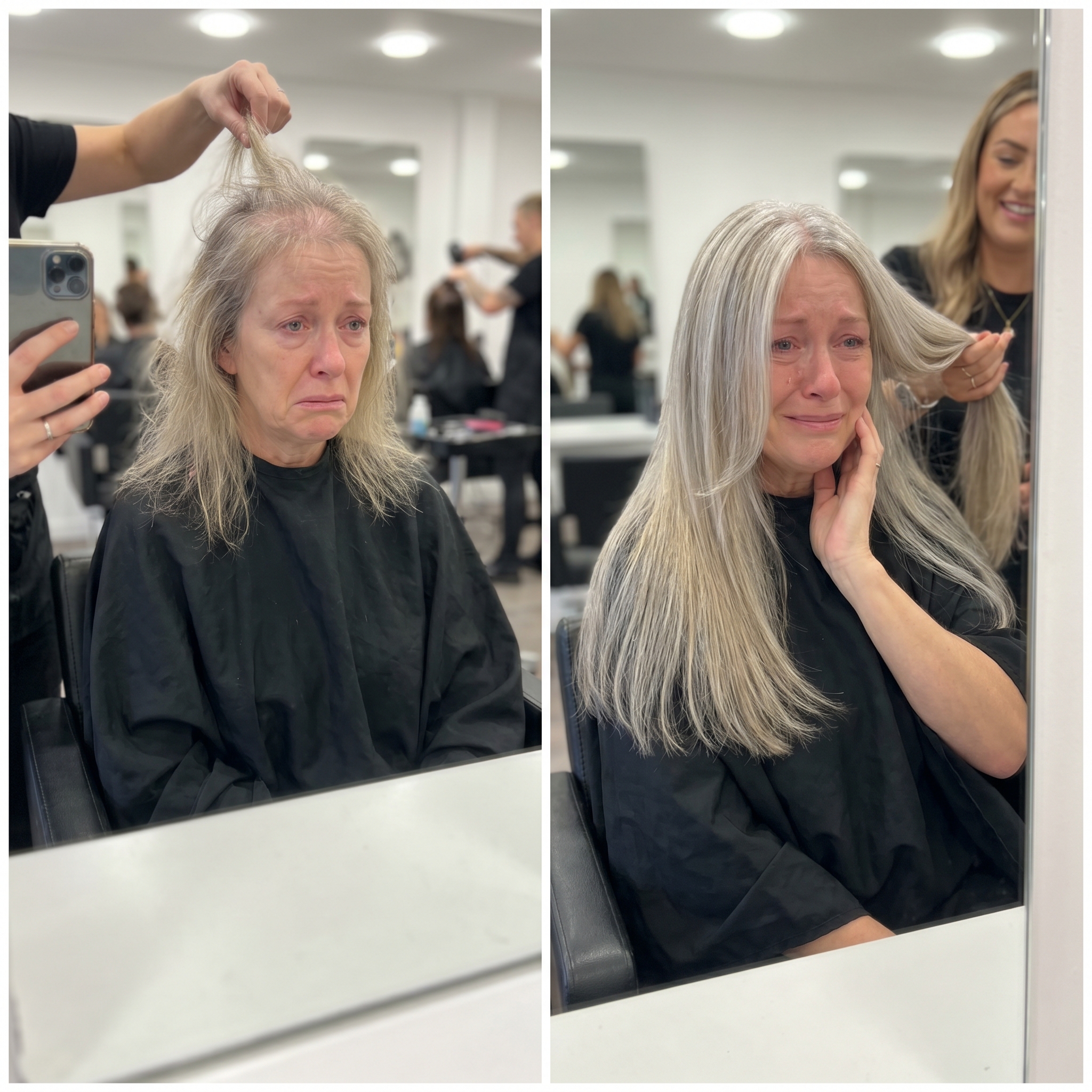
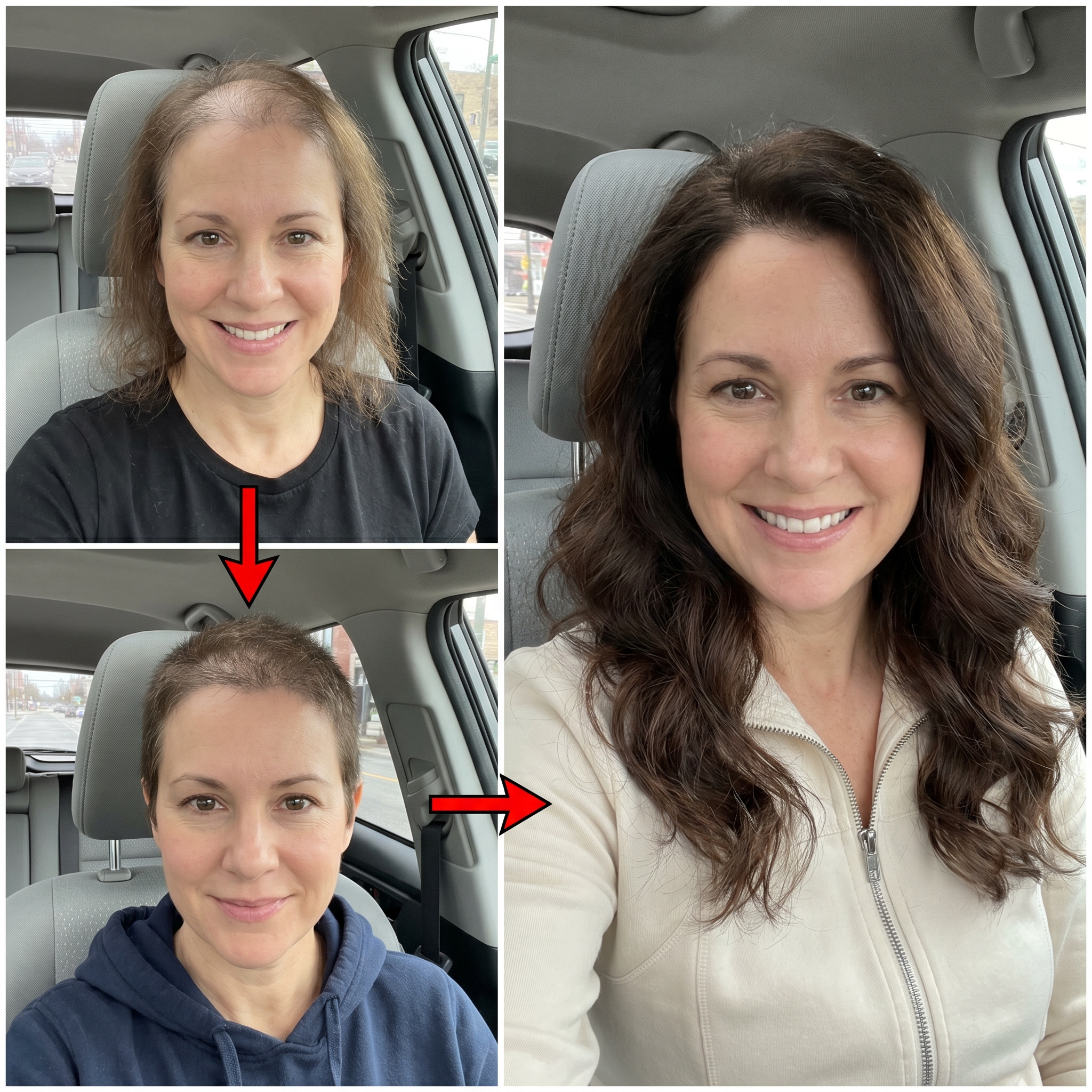
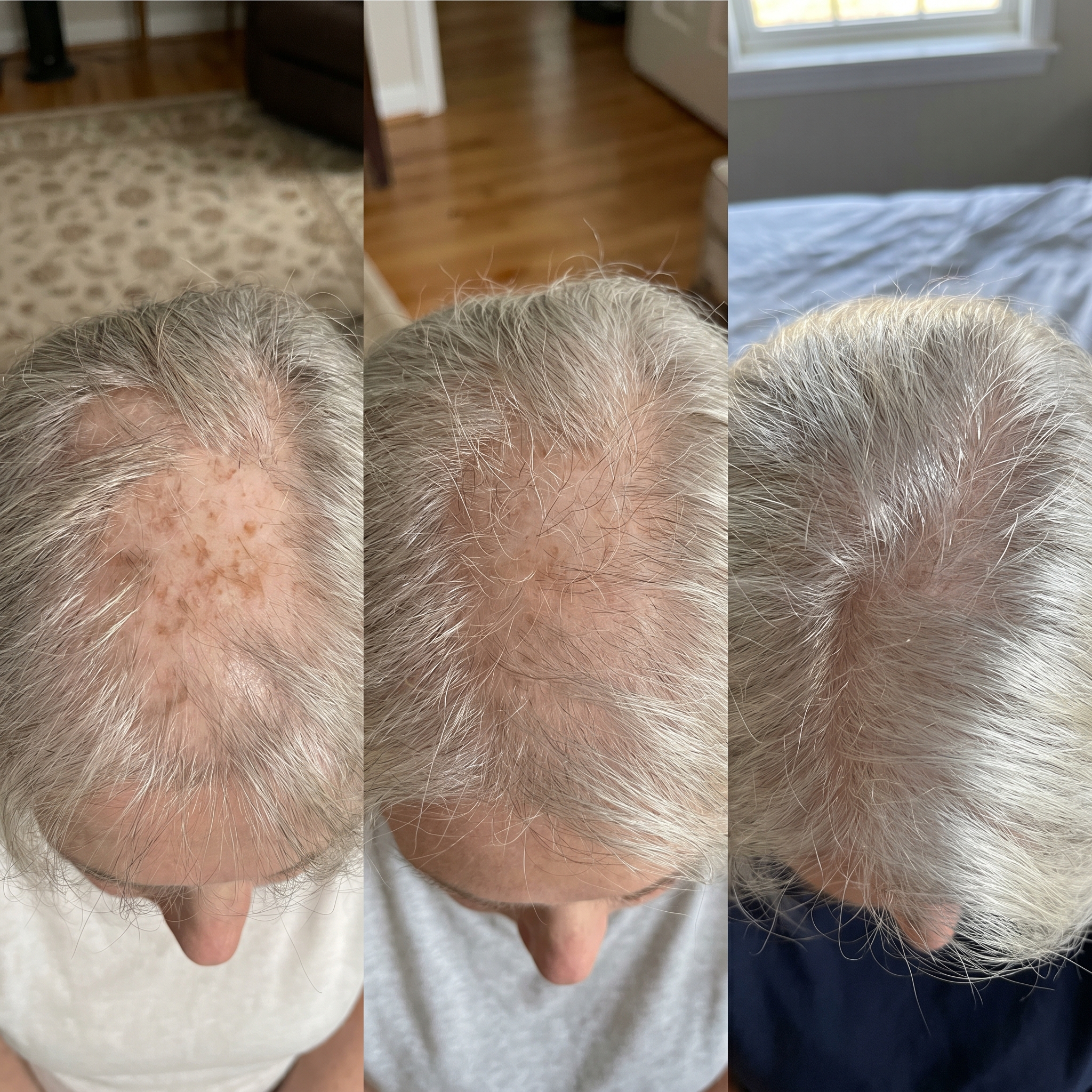
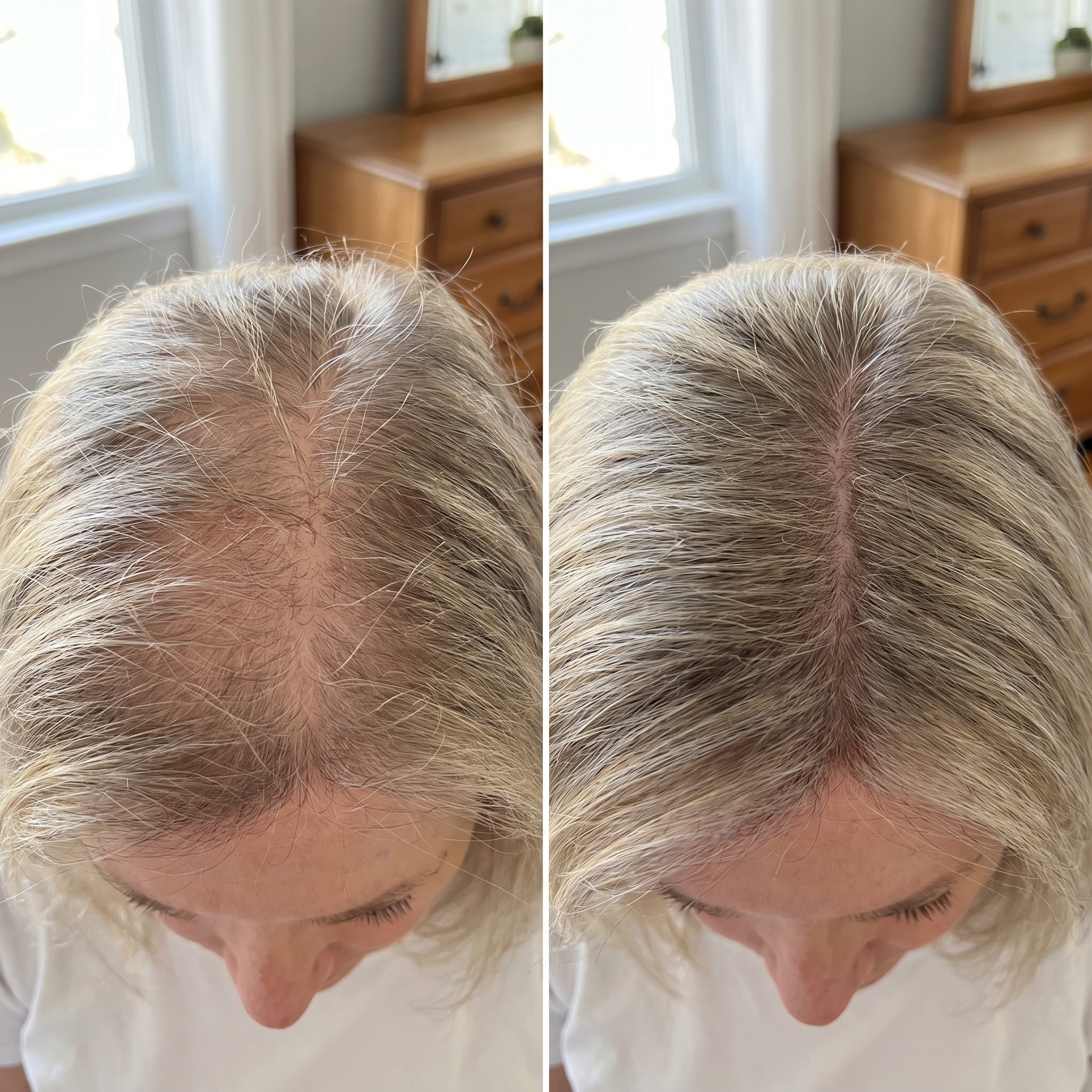
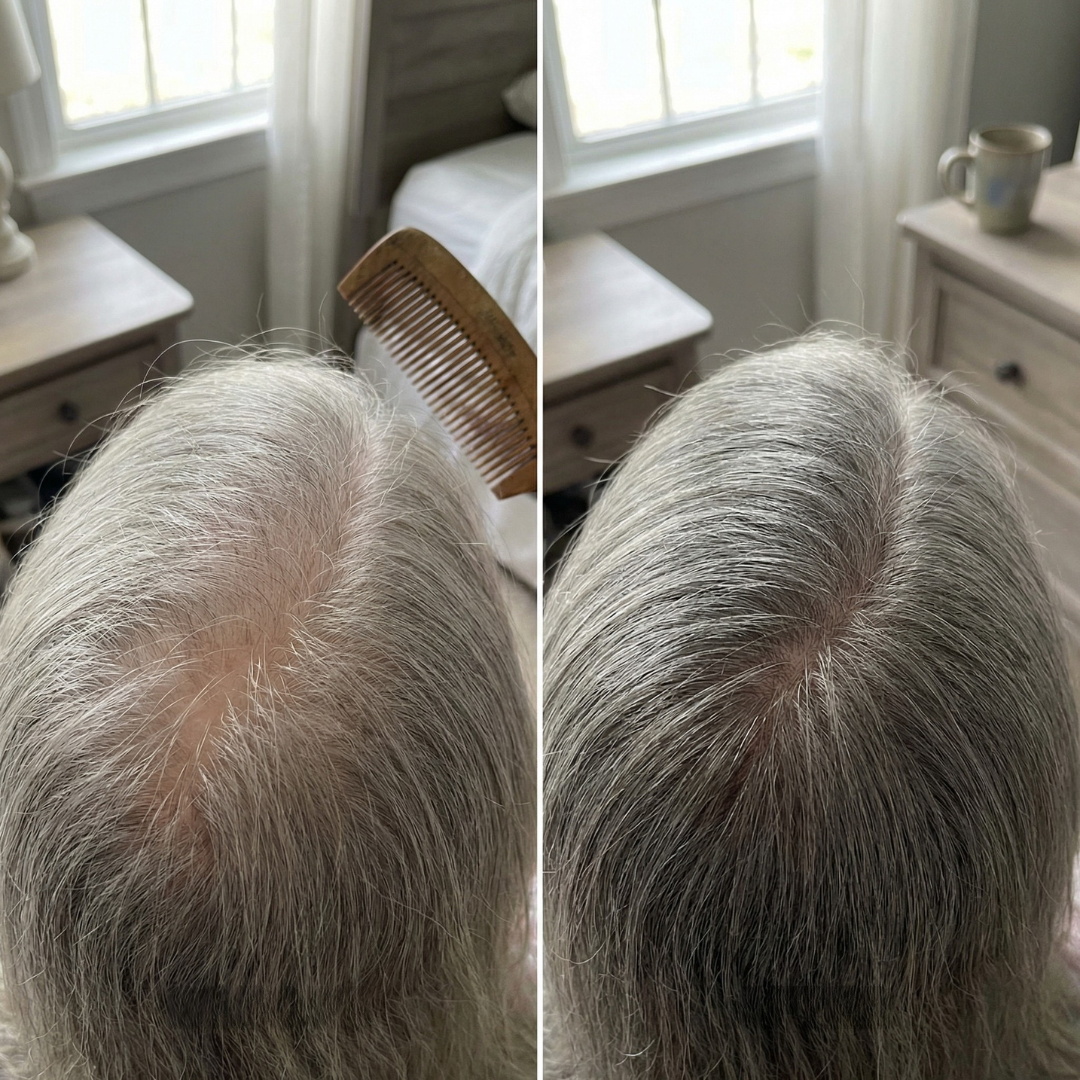
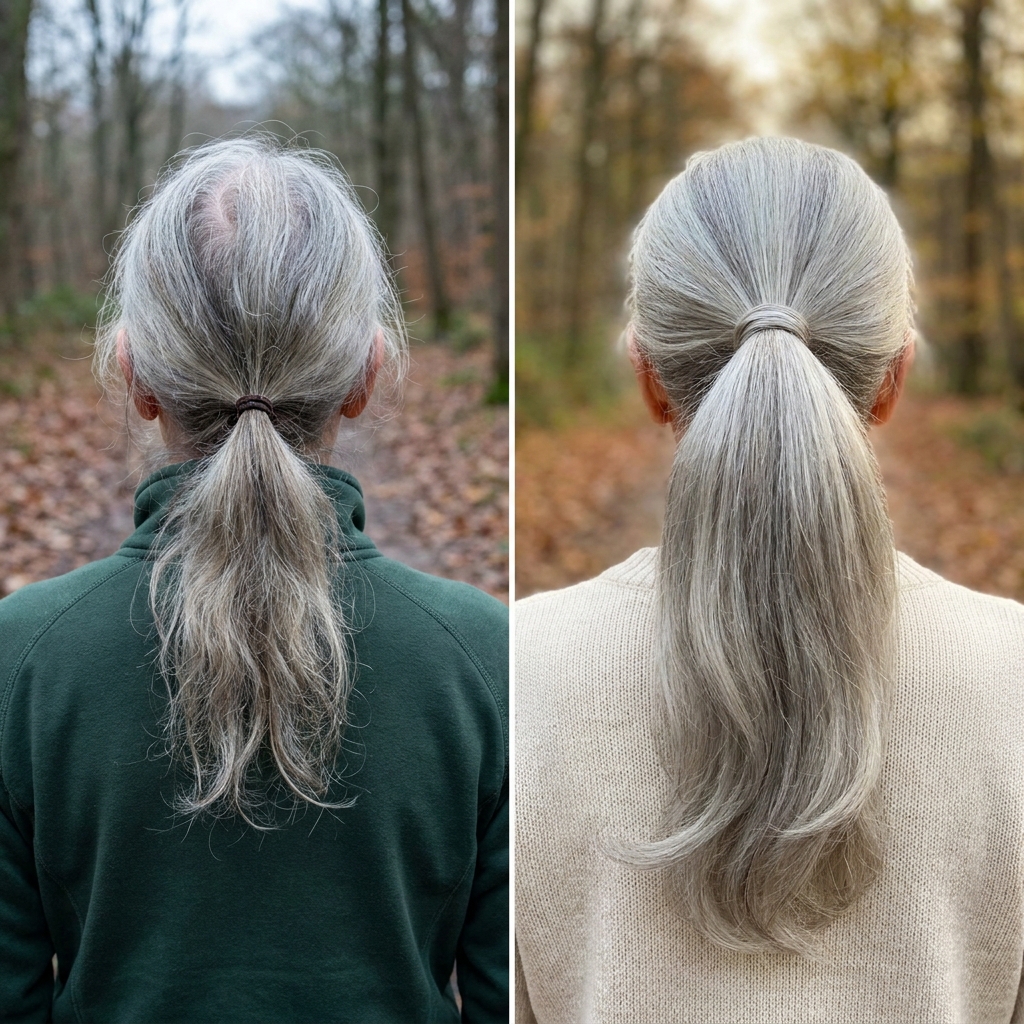
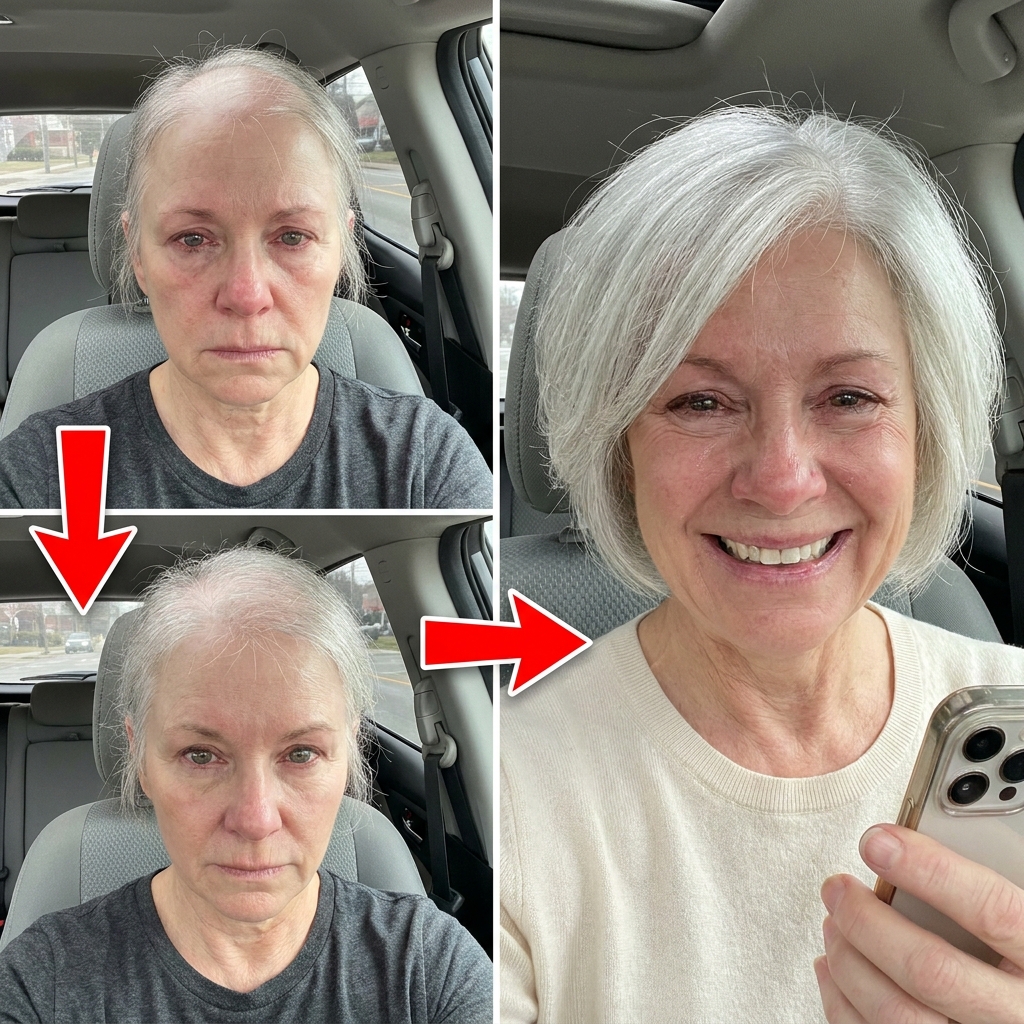
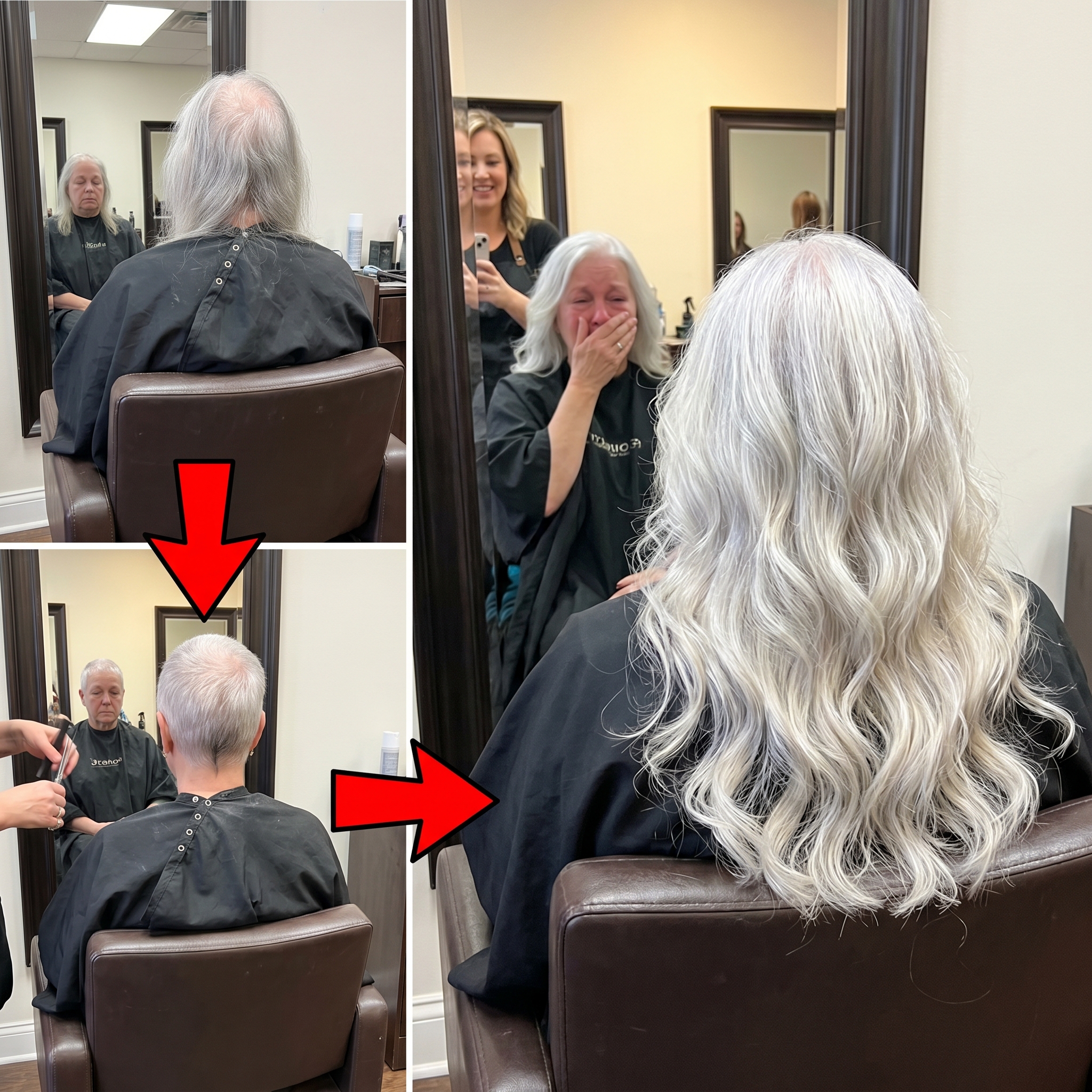
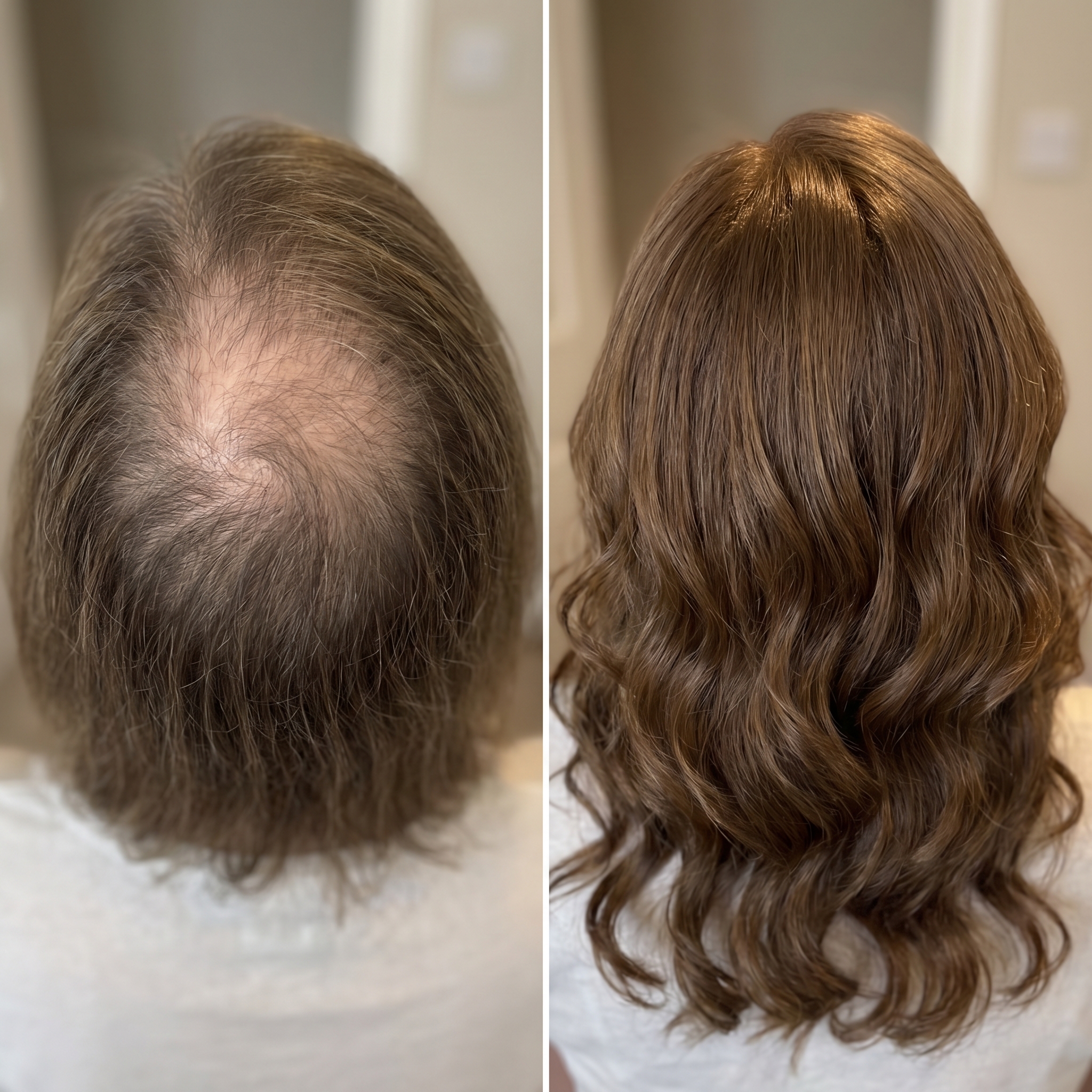
My husband filmed me blowing out the candles at my 55th. I watched it once on the sofa that night and then deleted it. There was a moment — just before the candles went out — where I leaned forward over the cake and the camera caught the top of my head from above. For one second of film, under the pendant lights in our kitchen, you could see a round patch of scalp on my crown the size of a digestive biscuit. I didn't recognise the woman in that frame. I had to put the remote down and go sit in the downstairs bathroom for twenty minutes before anyone noticed I'd gone. If you're a woman over 45 and you have had your version of that moment — the video, the wedding photo someone sent you, the reflection in a shop window behind you, the "mum can you hold still" from behind on a beach — I need to tell you what it took me another fourteen months to learn. You do not have a hair problem. You have a hormone problem that is showing up at your follicles, and almost every product on the market for women our age is aimed at the wrong layer — and the wrong level — of the problem. I am 56 now. I'm a primary school teacher. I have two daughters in their twenties and a husband who still hasn't noticed his own receding hairline. I did not tell him about the birthday video. I did not tell my daughters. I started parting my hair on the opposite side the following week, then on the diagonal three weeks after that, because the diagonal covered the most. I bought a pot of concealer fibre powder off Amazon and shook it onto my crown every morning like seasoning. I organised every family photograph around ceiling lighting. My sister's fiftieth was at a restaurant with recessed spots and I spent the meal with my head tilted permanently downward at a three-degree angle because I had worked out exactly which lighting hit the patch. And I spent money. A lot of money. Nutrafol for four months at £79 a bottle. Viviscal twice. A £240 peptide oil a woman in John Lewis talked me into. Minoxidil foam that made my shedding so much worse in the first eight weeks I panicked and stopped at week seven. Biotin capsules at 10,000mcg until tiny spots appeared along my jaw. Rosemary oil. Castor oil poured straight from the bottle that stained two pillowcases. Collagen powder. A £320 red-light laser cap that my husband christened "the spaceship" and that I used, in total, eleven times. A £150 scalp consultation at a clinic on Harley Street where a woman rubbed something into my hair and told me to book the £95 follow-up. None of it closed the patch. The thing that finally cracked it open wasn't a hair appointment. It was a mole check. I went to a private dermatologist in September because I had a freckle on my shoulder that had changed shape. She examined the mole — fine, lovely, nine minutes — and as I was standing up to leave she glanced at the top of my head and said, "Before you go, have you had the vertex thinning looked at?" I sat back down. She said, very matter-of-factly: "This is the classic androgenic pattern we see post-menopause. It's a DHT-sensitivity issue at the follicle level. Most women are sold oral supplements and shaft conditioners when the problem is happening at the scalp itself — which is where you actually need to treat it." I'll try to pass on what she told me, because I wish somebody had said it to me in year one instead of year three. Women produce DHT — the same hormone behind male pattern baldness in men. Your entire adult life, estrogen has been sitting on your hair follicles like a shield, keeping DHT from docking with them. When perimenopause drops your estrogen, the shield drops with it. DHT — which has not increased at all — suddenly has direct access to follicles that have never had to deal with it before. It doesn't kill them. It miniaturises them. Each growth cycle, they produce a thinner, shorter, wispier hair. The vertex goes first and hardest because those follicles carry the highest concentration of androgen receptors on the female head. And here is the part I had never heard. She said: "Oral biotin cannot reach the follicle in any meaningful concentration. Neither can most of what's in your cabinet. The most reliable lever for this specific pattern is a topical approach — something applied directly to the scalp, on the follicle, that does two things: blocks local DHT activity, and wakes the blood supply up again so the follicles start cycling properly." That is how I found Mellenza. Not through an ad. Through a Reddit thread I had no business being on at 1:14AM. It's a scalp serum. You massage it into the thinning area morning or night, not a pill you swallow with breakfast. The formula is, honestly, short — which is partly what made me trust it. Aqua, glycerin, polygonum multiflorum root extract (the traditional Chinese herb also called He Shou Wu, used for hair for centuries), hydrogenated castor oil, biotin, arginine, caffeine, 1,2-hexanediol, carbomer, and ginger root extract. Ten ingredients. The two that mattered most for my pattern, the dermatologist later confirmed when I emailed her the list: the caffeine and the arginine. Topical caffeine has a genuinely good body of evidence for interrupting DHT activity directly at the follicle and extending the anagen (growth) phase of hairs that have started to miniaturise. Arginine is a nitric oxide precursor — it opens the microcirculation around the follicle, which on a vertex that has been starved for years is the lever that matters. Polygonum multiflorum and ginger support the follicle environment. Biotin strengthens the new growth as it comes through. The castor oil, glycerin, and carbomer are the delivery system that actually keep the actives on the scalp long enough to do something. Weeks 1-3: nothing. I almost stopped. I didn't, because I had already binned so many products early and I wasn't going to be the woman who binned this one at week two as well. Week 5: the pile on the bathroom counter after brushing was visibly smaller. I counted strands. 19. In September I'd counted 56. Week 9: my hairdresser parted my hair for a colour and said, "What's happening at your crown? There's new growth all through this section." She's done my hair for fourteen years. She does not say things to be nice. Month 3: I leaned forward over my daughter's laptop to read something and she looked up and said, very quietly, "Mum, your hair's come back." She had clearly been watching and not saying anything. We sat at the kitchen table afterwards and I cried into a tea towel. Month 5: new baby hairs across the top of my head. 2cm wisps standing straight up refusing to lie flat. I took photos of them for myself the way I used to take photos of my daughters' first teeth. Month 7: I rewatched my birthday video. The one I had deleted, then un-deleted, then saved to a private album. I watched it all the way through. I watched the video my husband took at my 56th too — the one where I leaned over a different cake under the same pendant lights — and there was no patch. A quick note, because the comments always ask: if you're already on HRT and the vertex is still thin, HRT is not failing you. HRT replaces some estrogen systemically — that's why your hot flashes go — but it does not directly interrupt the DHT activity happening at the follicle. The follicle needs the lever pulled locally. That's what a topical like Mellenza is actually built to do, and it layers fine on top of HRT. You don't have male pattern baldness. You don't have a patch you have to hide with powder and diagonal partings for the rest of your life. You have a specific hormonal shift with a specific mechanism, and the follicles underneath are not gone — they're miniaturised, and miniaturisation is reversible when you treat the scalp itself. Mellenza is what closed mine. The link is in the comments. I'm sharing this because I know exactly how long I sat in that downstairs bathroom after the birthday video, and I would not wish that twenty minutes on anyone else.
The One Second of My Birthday Video I Couldn't Watch Twice
Women's Health · Updated April 2026 Menopause · Hair Loss 7 Reasons Nothing Has Fixed Your Menopausal Hair Loss — And the One Thing That Finally Does Dr. Sarah Mitchell — Women's Health Contributor, specialising in perimenopause & hormonal hair loss · If you've tried HRT, biotin, salon tr...
LEARN MORELike this ad? Make it yours.
Crush rebuilds this exact creative around your product — your brand, your colors, your offer — in about a minute.