
Inactive· since Aug 13, 2026
- 29
- days it ran
- 0
- relaunches
Ad copy
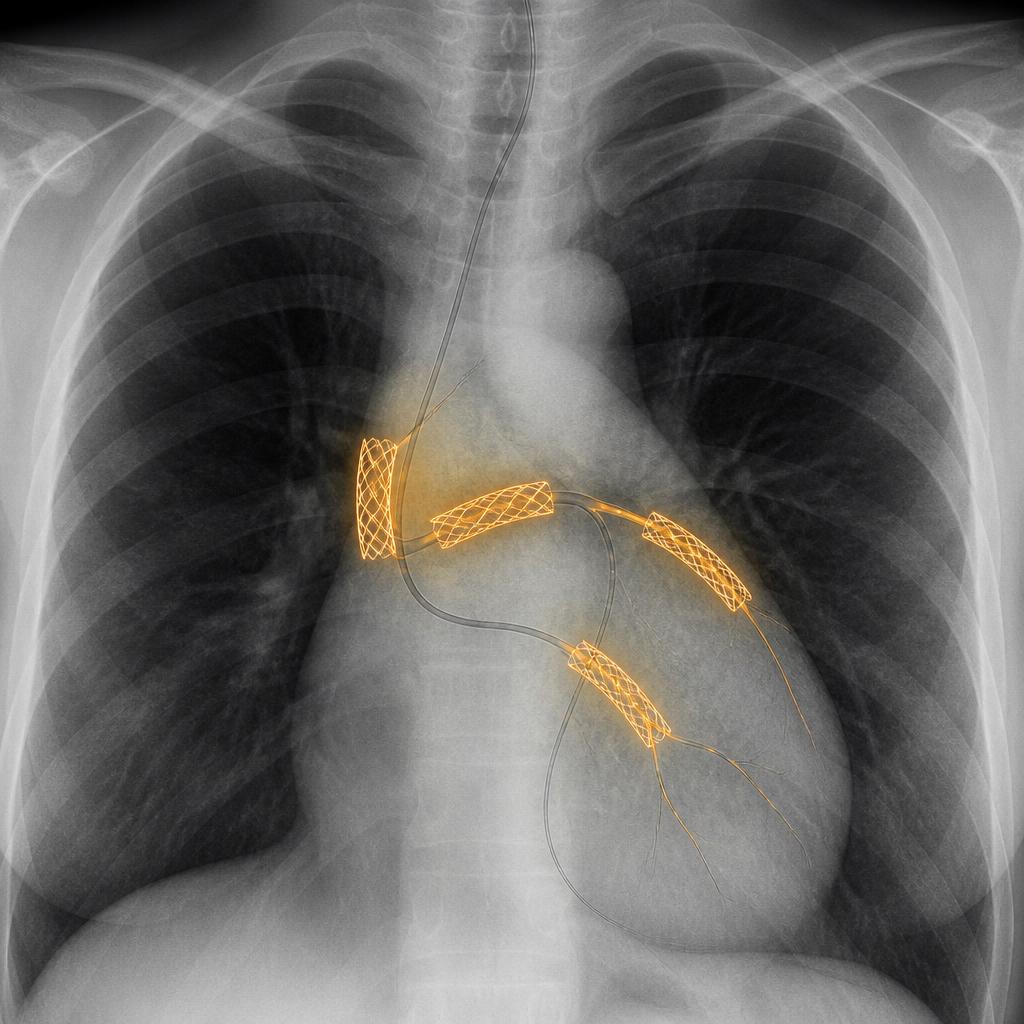
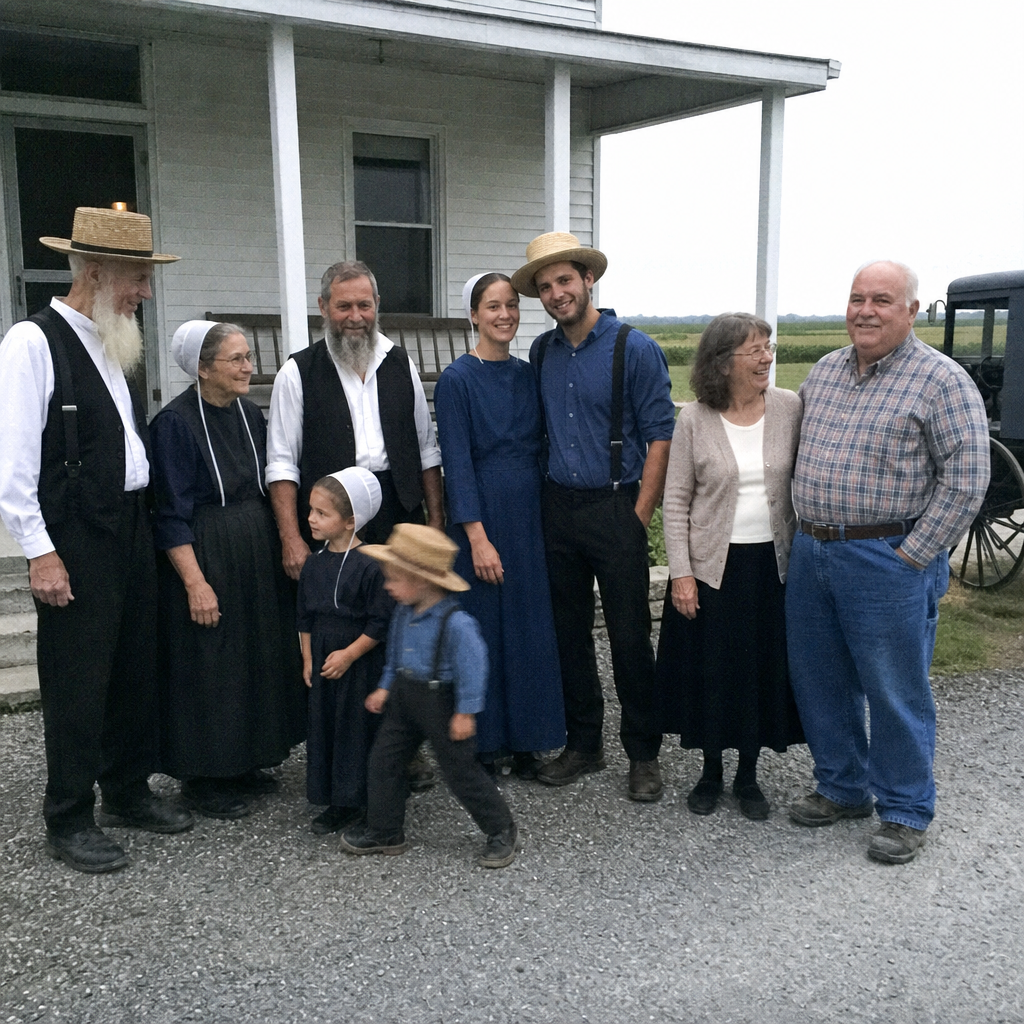
Amish people have no electricity, no internet, no pharmacies, and no health insurance. They also have almost no heart attacks. Almost no strokes. Almost no bypass surgeries. Almost no one on a statin. And they live healthier into their 80s and 90s than most Americans do in their 50s. I have been a pharmacist for over 30 years and that made no sense to me. Until my daughter married one of them and I found out why. The Amish eat sausage. They eat fatty beef. They eat eggs straight from the henhouse. They drink whole milk from the cow, cream and all. They fry everything in butter and lard. They finish supper with pie. They eat more cholesterol at one breakfast than your doctor lets you eat in a week. They do everything your doctor says clogs your arteries. And their hearts don't give out. Meanwhile, you eat egg whites and skinless chicken and dry toast, you order the fish at your own birthday dinner, and your last blood test STILL came back worse than the one before it. You take a statin every morning. You get your blood drawn twice a year. You have been lectured about your LDL and your triglycerides and your blood pressure and your doctor says it is your age. How? How does a community with no medical system and butter at every single meal have the healthiest hearts in America? And how does a country with the most advanced heart medicine on earth and the most statins ever prescribed and the skim milk and the egg whites and the low fat everything... lose more people to heart disease than to anything else? I am not the first person to ask. There is a university research clinic in Lancaster County whose entire job is studying Amish health. Researchers have been driving out there for more than 20 years. The headlines are easy to find. Amish hearts last longer, and nobody has fully explained it. That is the question I accidentally answered when my daughter fell in love with a man named Levi Yoder and moved to a farm in Lancaster County. And the answer was so simple it made me angry. Because it means I spent over 30 years handing statins across a pharmacy counter, and 13 years watching my own husband fade in his recliner, and the thing nobody in my profession ever told me was explained to me by an 81 year old Amish grandmother in 10 minutes while washing dishes. The Amish eat everything your doctor took away from you. Every day, for 80 years straight. You eat the careful version. And their hearts hold, and American hearts do not. Because every single morning, for as long as anyone on that farm can remember, they eat one thing alongside it. Something they grow themselves. Something no doctor has ever prescribed, and in over 30 years, something I have never once counted into a pill bottle. Same thing. Same way. Going back more than 150 years. Nobody on that property gets skipped. Not the men. Not the women. Not the 84 year old grandfather. Not the grandchildren. And you have never eaten it. Not once. In your entire life. You are sitting there with your egg whites, wondering why an 84 year old man who puts butter on everything has more energy at 3 in the afternoon than you do. That is the whole difference. That is why an 84 year old Amish man builds furniture and an American man the same age cannot get out of his recliner. That is why an 81 year old Amish woman carries a cast iron skillet with one hand and an American woman the same age cannot carry her own groceries. My name is Carol Bennett. This year I am 64 years old. I got my pharmacy license in 1988, and I have stood behind a counter almost every day since, counting pills into bottles. 30 at a time. 90 at a time. More statins than anything else. Let me tell you what I learned. My daughter Emily moved to Lancaster County 3 years ago to teach 3rd grade. In her second year there, when she needed new bookshelves for her classroom, everyone in town told her the same thing. Go see the Yoders. The man who delivered them was 28 years old and had built every shelf himself, in his grandfather's wood shop. His name was Levi. By Christmas she was seeing him. By Easter it was serious. By fall she was standing in a barn in a blue dress his mother had sewn by hand making promises to a man who has never turned on a light switch. My husband Bill said, "She could have married anybody." I know. But I watched her face when she talked about Levi and I recognized something in it that you cannot argue with. I need to tell you about Bill. Because at that wedding, my husband was 66 years old, and his LDL was 98. His doctor calls anything under 100 perfect. He started on atorvastatin in 2012. He was 53. It was 10 milligrams back then. In 2016 the 10mg stopped holding and they moved him to 20mg. In 2020 they moved him to 40. And I will tell you something I am not proud of. I filled every one of those prescriptions myself. 90 pills, every 90 days, 52 times. That is 4,680 pills I counted into bottles with my own 2 hands and brought home to my own husband. Somewhere in those 13 years, Bill got old. Not all at once. The way a fence goes gray. His legs started aching at night. A deep, tired ache that stretching never touched. He stopped taking the stairs 2 at a time, then he stopped taking them without the banister. The man who used to put 6 hours into the yard on a Saturday started needing his recliner by 3 in the afternoon. 45 minutes of mowing and his day was over. I watched it from the kitchen window. I started carrying the groceries in myself. We stopped taking our fall drives to the mountains, because the walks were not fun for him anymore. At night I lay beside him listening to him rub his legs under the covers, and I told myself it was nothing. His doctor ran the numbers every year, and every year the numbers were beautiful. He said the tiredness was normal for 60. He said the legs were probably from the walking. And I agreed. Me. A pharmacist. I looked at my own husband fading in his chair and I said what everybody says. Well, honey. We are getting older. The aching started in 2013. One year after the first pill. I can tell you that with certainty, because I have his entire refill history, and I have our vacation photos. In 2012 he carried both suitcases up 3 flights of stairs in Gatlinburg. In 2014 he asked the front desk for a ground floor room. When we visited the farm for the first time I expected to find the secret. Some special diet. Herbal teas. Something that explained why they live so much longer and healthier than the rest of us. That is not what I found. I found an 81 year old woman named Lydia frying scrapple in butter and carrying the cast iron skillet with one hand. I found her husband Amos, 84, planing oak boards in the wood shop before 7 in the morning. I found their son Daniel at 59 working 16 hour days through harvest. I found people eating sausage and potatoes and bread and pie and raw milk. And none of them had ever had a heart attack. None of them had ever seen a cardiologist. None of them were on a single medication. Not one pill in the whole house. No prescriptions. No specialists. Nothing from a pharmacy. On that farm, nobody was taking the pill that 40 million Americans swallow every single morning. Bill made it up the farmhouse steps with one hand on the rail and sat down on the porch. Amos, 18 years older, walked past him carrying one end of an oak bench. I asked Lydia about it the night before the wedding. She laughed. She said, "English people get heart trouble. We do not." English people problems. Meaning us. Meaning the disease that kills more Americans than anything else is something her family simply does not get. I could not stop thinking about that. Because if heart trouble is something they just do not get... then it is not age. And it is not bad luck. It is something we are doing. Or something we stopped doing. The rehearsal dinner was in the farmhouse kitchen. Long tables. Roast chicken and potatoes and bread and pie. After the meal, Bill did what he has done every night for 13 years. He reached into his shirt pocket for his statin. The bottle was in our room. I went to get it, and stepped into the kitchen for a glass of water. Lydia was at the sink. Washing dishes. At 81. On her feet since dawn. She had cooked that entire dinner in butter, and eaten every bite of it. She saw the bottle in my hand. "What is the pill for?" "My husband's cholesterol," I said. "It keeps the number down." She nodded slowly, the way you nod at something that only half makes sense. "Down?" she said. "And what is keeping it from rusting?" I did not understand the question. "Rusting?" I said. She studied me for a moment. And I realized she was not teaching me anything yet. She was checking something. The way you would check that a guest's coat is warm enough for the ride home. Her whole life, she had assumed English medicine had its own version of what her family does every morning. She thought the pill guarded the fat. She thought the pill was our blood root. "No," I said. "It lowers how much there is. That is all it does. That is all any of them do." She turned off the water. She looked at me the way you would look at somebody who just told you their town has no well. Not angry. Not superior. Almost frightened for me. "Nobody guards it?" she said. "Nothing?" "Nothing exists," I said. "There is no pill that does that." She picked up a slice of apple from the pie makings on the counter. Brown at the edges. "Cut an apple and leave it out, and it comes back brown," she said. "Nobody added anything to it. The air got at it. The fat in your blood is no different. Leave it unprotected, and it rusts. Same as a nail. Same as this apple." And she said it the way you would say milk goes sour. Like it was the most ordinary fact on earth. She set the apple down. Dried her hands on her apron. And she looked at me with the patience of a woman who has kept a farm fed for 60 years and knows exactly what she is looking at. "Every fat on this farm, somebody is keeping the air away from. The butter sits in the cold cellar. The lard is sealed in crocks. The milk never stands in the sun. That is half the work of a farm. Keeping the rust out of things." She looked at the bottle in my hand. "There is fat in your husband's blood right now. There is fat in yours. Somebody is counting his. Nobody is protecting it." "Amos wipes every saw blade in that shop with oil before dark. Every single evening. Because counting your tools never kept one of them from rusting." I stood there and something cracked open inside me. Because I am the professional. Pharmacy school. Over 30 years of continuing education. Drug reps buying lunch twice a month. New cholesterol drugs every few years, each one a new way to get the number lower. Not one of them, not once, ever said one word about the fat in your blood rusting. Lowering it, always. Protecting it, never. And I will tell you why I did not argue with her. Pharmacy school teaches you how medicines work. It does not teach you why a disease happens. That was never our lane. I was trained to count, to check for interactions, and to fill exactly what the doctor writes. The whole chain, from the drug maker to the doctor to me, is built to manage the number on the chart. Nobody in that chain gets paid to ask what starts the damage. And there was something else. Something I had been filing away for 30 years and calling nothing. The regulars. The men whose refills were never late. Whose wives picked up their statins on time, every time, and told me proudly that his numbers were good. I have handed one of those men his 90 day supply on a Tuesday and read his obituary that same weekend. It happened enough times over 30 years that I stopped being surprised. I filed it under things that were not my business to question. Besides. How exactly do you argue with a woman like that? She had 17 years on me and twice my energy. Her husband had 18 years on Bill and had just carried a bench past him. You can argue with an opinion. You cannot argue with a family. An 81 year old woman at a farm sink had just handed me the piece I was missing. She poured me coffee and she told me. Not like a doctor tells you. Like a grandmother tells you. Like a woman who has been keeping living things healthy for 60 years telling you something she thinks is so obvious she cannot believe you do not already know it. "Your body needs that fat," she said. "It makes it on purpose. It builds every cell you have out of it. The fat was never the poison." "But fat that nobody protects, rusts. You saw the apple. And do not tell me there is no air inside you. Living rusts a body. My grandmother knew it. Her grandmother knew it before her. We never had the why. We had what to do about it." There is a word for what she was describing, and it is not a folk word. Oxidation. Oxidized cholesterol. I have seen that term maybe a dozen times in my entire career. Always in research papers. Never on a lab panel. Never in a training. Never once from a drug rep. Nobody measures it, because no pill targets it. And nobody sells what nobody measures. The sparks that cause it have a name too. Free radicals. Your own body throws them off every single day. From stress. From sugar. From the years. And a few of them are the exact kind that get at the fat in your blood. She had the whole thing right. She just learned it from an apple instead of a slide. "We butcher our own hogs every November. I have done it for 60 years. I have held the pipes that carry the blood in my own 2 hands." "In a young animal they are soft as a garden hose. In an old one that was fed wrong, they are hard as clay pipe, packed thick, layer on layer, until there is barely a hole left for the blood to get through." "Rusted fat turns sticky. It catches in the pipes that carry your blood, and it packs in, layer over layer, year after year, until the pipe is nearly shut." "Then one day a piece of it tears loose, and the blood plugs the hole, because that is what blood does. If that happens in the pipe that feeds the heart, that is a heart attack. If it happens in the pipe that feeds the brain, that is a stroke." She said it the way you would explain why a barn roof leaks. No mystery in it. No fear either. "The rust does the killing. The clot just finishes the job." I sat there holding Bill's statin bottle, listening to the clearest explanation of heart disease I had ever heard in my life. From a woman who has never set foot in a pharmacy. "When I was a girl," she said, "nobody ate breakfast out of a cardboard box with a cartoon on it. We still do not." "But right around 1980, your people declared war on fat. The skim milk. The margarine. Take the fat out of everything." "And ask yourself who declared that war. Butter comes from a cow. Eggs come from a hen. Nobody ever got rich on either one." "But a box of breakfast flakes is a few pennies of corn selling for 4 dollars. A tub of margarine is a few pennies of seed oil. The people selling those things needed you afraid of butter and eggs." "So they kept you afraid. They put their cereal on television and called it heart healthy, and they have kept you afraid for 40 years." "And when the fear did not fix anybody's heart, the pills came, to push the number down instead." She tapped the bottle in my hand. "Your people have spent 40 years fighting how MUCH fat is in the blood. Nobody ever once protected the fat that was left." "And you should ask yourself why nobody sold you that. Because you cannot get rich protecting something. There is no war to sell. There is just a root in the garden, and anybody can grow a root." "And hear this part, because it matters most. Rust is not something you inherit, like brown eyes. It comes from living. From how you live. Which means it is not a sentence. What habits caused, habits can answer." "That number they check him for. It counts how much fat is in his blood. A headcount. It cannot see one speck of rust." "Your husband could have a beautiful number and rusted pipes on the same morning. And nobody would know until the bell rings." I asked her the question you are asking right now. "But the pill lowers his number. That has to count for something." "It counts for a little," she said. "Less fat in the blood is less fat sitting there to rust. I will be fair to the pill. It helps at the edges." "But it does not protect one drop of what is left. He could take it for 30 more years and it will never stop one speck of rust. That was never what it was built to do." And here is the terrible part. I knew she was right the second she said it. Because I know exactly how that pill works. Every pharmacist does. We learn it in our first year. A statin reaches into your liver and shuts down the assembly line that makes cholesterol. Less gets made. The number on the chart comes down. That is the whole job. It is very good at that one job. It bails water. It never finds the hole the water is coming in through. That is why the dose climbs. I have watched it from my side of the counter for 30 years. The 10 milligrams becomes 20. The 20 becomes 40. Then a second pill joins it. The rust keeps building, the number keeps drifting, and everyone keeps adjusting a drug that was never built to touch the thing doing the damage. Bill's chart says 10 in 2012. 20 in 2016. 40 in 2020. I never once asked why my healthy husband kept needing more. And then, sitting in that kitchen, something else clicked. Something from my own counter. For 30 years, when I handed a statin across the counter, I would say the thing pharmacists everywhere say. You might want to take CoQ10 with this. We say it because the training tells us to. I never once stopped and asked what it actually means. Here is what it means. That assembly line the statin shuts down does not only make cholesterol. It also makes CoQ10. The spark every muscle in your body fires on. Your legs. Your grip. Your heart most of all. Shut the line down to force the number lower, and you throttle the spark in the same motion. You cannot do one without the other. They come off the same switch. My whole profession knows. That is why we whisper about CoQ10 while we ring you up. We just never say the second half out loud. I sat there and thought about Bill's legs aching at night. The banister. The recliner at 3 in the afternoon. His doctor said it was age. The aching started in 2013. One year after the first pill. They call that a side effect. It is not a side effect. It is the pill doing exactly what it is built to do. And the muscle that runs on that spark more than any other muscle in your body is the heart. The exact thing the pill was supposed to be protecting. Through the doorway I could see Bill at the table, laughing at something Levi said. 13 years on that pill. A beautiful number every single year. And in all 13 years, nothing ever protected the fat, while the pill quietly drained the one spark his heart runs on. And I had not just filled those prescriptions. I had told Bill he was lucky they caught it early. I told him the pill was protecting him. He trusted me more than he trusted any doctor. That is the part I will be paying off for a while. She stood up. Took the lamp off its hook. And she walked me down the stairs into the root cellar. Shelves from the floor to the ceiling. Crocks of butter. Jars put up for winter. And along the whole back wall, wooden bins of roots, hundreds of them, packed in sand. She put one in my hand. It was heavier than it looked. And under the lamp it was not the color of anything I had ever seen in a store. Deep red. Almost purple. Almost black. "We call it blood root," she said. "Blutwurzel. My people brought the seed from Germany more than 150 years ago. We save it by hand, every fall, from the best plants. It has never once been crossed with anything else." "My grandmother called this keeping the blood sweet. Same as milk. Sweet, or turned. Those were her only words for it." I turned it over in my hand. And then I did laugh. I could not help it. "Lydia. This is a beet." "It is our beet," she said. "I sell beets 10 feet from my own register. Capsules. Powders. Those little juice shots. The women take them for blood pressure, and they are not wrong, it genuinely helps some of them." "THIS is the secret? A beet?" "They are not wrong," she said. "Beets move blood. Even a weak beet does that much. If the pressure is the trouble, fine, drink the shots." "But the pressure is the beet's job, and it is the fast job. The rust is the color's job. And the color is what your people bred away." "The beets your people sell were bred for the sugar factory. 100 years of breeding the sugar up. And when you breed the sugar up, you breed the color down." "That root in your hand was bred the other way. Dark as we could take it, for 150 years. Because the color is the protection. The darker the root, the stronger it protects." "Your beets are candy wearing a beet's skin." I am not a conspiracy person. I am a pharmacist. But sitting in that cellar, I understood something plain. Nobody breeds a crop for a compound nobody measures and nobody can patent. That is not a plot. It is just what does not pay. "I know what you are thinking," Lydia said. "You want the answer to be complicated. Your people always do." "Nobody believes the thing that stops the rust grows in a garden bed. It is too simple. So everyone walks right past it, back to the pill with the serious name that does not touch what is killing them." The next morning, the morning of the wedding, I watched that whole family eat breakfast. Eggs fried in butter. Sausage. And beside every single plate, slices of that dark root. Amos ate his first, before his coffee. The grandchildren ate theirs without being told. My own daughter ate hers in her wedding dress. One day married, and already better protected than her mother. Before we left for the ceremony, Lydia handed me a paper sack. 6 roots, heavy as stones. "Your daughter married my grandson," she said. "That makes you family. And I do not let family walk around with rusting blood." "Take these home. And come back at Christmas so I can look at the both of you." I told Bill everything on the drive home. The apple. The hogs. The saw blades. The root. He listened the way Bill listens, eyes on the road, saying nothing. When I finished he was quiet for 10 miles. Then he said, "So what has the pill been doing all this time?" And I did not have an answer I liked. At home, I did what over 30 years behind a counter trains you to do. I did not take Lydia's word for it. I looked it up. Not blogs. Not videos. Pharmacists have access to the real databases, the same ones the drug companies read. I sat at my kitchen table until 2 in the morning, 3 nights in a row. Here is what I found. The color has a name. Betalains. The pigment that makes that root so dark it is almost black. And it is not decoration. It is one of the most studied natural rust-fighters on earth. Lydia's grandmother called it keeping the blood sweet. The journals call it inhibiting LDL oxidation. It is the same sentence. One of them is just wearing a lab coat. And the papers said something I have never seen any product on my own shelves do. Betalains do not scatter through the body like ordinary antioxidants. They get carried into the bloodstream and work at the fat itself, right where the rusting starts. Where no statin has ever reached. And they do it without touching that assembly line in your liver. They never lay a finger on your CoQ10. They protect the fat the pill ignores, and they leave alone the spark the pill drains. All of the help. None of the cost. Then I found the trial that made me put my glasses down. A university in the Netherlands. Wageningen. A real school, a real published study, not a blog. 12 weeks of concentrated betalains, every day. LDL came down about 15 points on average. A real move, but not a dramatic one. If that were the whole story I would not be writing this. Because they did not just count the cholesterol. They measured the oxidized LDL. The rusted fat. The thing that actually does the damage. And the rust did not fall 15 points like the number did. The rust fell by more than 20 percent. The rust fell further and faster than the cholesterol itself. That is the only kind of result I trust anymore. Not the one that moves the number everybody watches. The one that moves the thing underneath it. More. And before you ask the question I asked. Yes. There is a blood test for oxidized LDL. Research labs run it every day. It has existed for years. It is simply not on the standard panel your doctor orders, because the standard panel was built to count the amount, not the damage. You can ask for it by name. I know, because I asked for it by name. For both of us. My LDL came back at 141. Borderline. The kind of number that gets you a gentle talk about starting a statin, and my doctor gave me exactly that talk. Then my oxidized LDL came back. 76, with a flag printed beside it. The lab flags anything over 60. My number was almost fine. My damage was not. And Bill. Bill's LDL was 98. Perfect, on paper. Thirteen years of medicated, beautiful, perfect numbers. His oxidized LDL came back at 94. Worse than his unmedicated wife. I sat at the kitchen table with our 2 lab sheets side by side and heard Lydia's voice like she was standing behind me. A beautiful number and rusted pipes on the same morning. And nobody would know until the bell rings. Not the number. The damage. I had 6 roots in my kitchen that would not last the month. And a full supplement aisle at my own pharmacy. You can guess what I did next. The 6 roots lasted us 19 days. And the Monday after they ran out, I walked to aisle 4 of my own pharmacy and took down the beetroot capsules we sell the most of. I ordered that inventory myself. Organic on the label. 4 and a half stars. $21.99. The label said organic, and I let that word do my thinking. Organic tells you how a plant was grown. It does not tell you WHICH plant. And it tells you nothing about what happened to it on the way into the capsule. I am a pharmacist. If anyone on earth should be able to buy the right bottle, it is me. Bill and I took them the way we ate the roots. 2 capsules, every morning, with a glass of water. I did not miss one single day for 5 weeks. I have the calendar where I checked it off. And I felt something. I want to be honest about that, because it matters later. A little more in my step. The 3 in the afternoon heaviness sitting lighter. I caught myself carrying the laundry basket up the stairs without stopping to think about it. I told Bill it was working. At the end of week 5 I went back for bloodwork. And I want to be precise about my state of mind. I was not checking IF it was working. I was expecting the numbers to confirm what my body was already telling me. LDL: 138. Down 3 points. I have seen rounding errors bigger than that. Then the second page. The oxidized LDL. The rust. The whole reason for any of this. Exactly where it had been in October. 76 then. 75 now. Not down 20 percent, like the trial. Not down 2. Unchanged. And Bill's sheet said the same thing. His LDL sat at 98, right where the statin holds it. His rust: 93, down from 94. Call it noise. 5 weeks of faithful capsules, checked off on a calendar, and neither of us had protected one single drop of fat. I sat in my car in the parking lot holding 2 facts that refused to match. I felt better. And the rust had not moved at all. We were due in Lancaster for Christmas. I put that bottle in my purse and carried it 200 miles. We got to the farm on Christmas Eve. Before I had even unpacked, I put that bottle on Lydia's kitchen table. "It did not work," I said. "My number barely moved. The rust did not move at all." She picked the bottle up and turned it over once, the way you would check an egg for a crack. Then she handed it back. "Open one." I twisted a capsule apart over a white saucer. A dull, brick brown powder spilled out. She went down to the cellar and came back with one of her roots, and she cut it clean through on the board. Crimson, almost violet, the juice bleeding into the wood. She set the saucer beside the cut root and let me look at the 2 of them for a long moment. She did not say a word. She did not need to. "You have seen a cooked beet," she said finally. "Cooked beets go dull. That powder was cooked before it ever went into the capsule. You bought a cooked beet, ground up fine. The color is the protection. And that color is dead." She was right, and I knew exactly how it happens, because I know how supplements get made. Nearly every beet powder in America is spray dried. Blasted with high heat, because heat is fast and fast is cheap. The color does not survive it. What is left looks like medicine and does nothing. Red dust. I had a shelf full of it. I had been SELLING it. "And I will tell you the second problem," Lydia said. "Even before they cooked it, that was the wrong beet. The sweet beet. The candy beet. There was hardly anything in it to begin with." "But I felt better," I said. "That part was real." "It was real," she said. "Even a candy beet moves the blood a little. That is the fastest thing a beet does, and it is how the cheap ones fool you." "You feel a little life, and you decide it is working. Meanwhile the rust never got touched." The feeling is not the proof. The lab sheet is the proof. I say that now like I always knew it. I learned it at that table, from a woman who has never read a lab sheet in her life. "So the juice, then," I said. "I stock 3 brands of it." "Wrong beet. You would be selling sugar water with a blush of the real thing in it. A quart a day would barely touch the rust." "The powders. The smoothie scoops." "You saw the color on that saucer. Brown is brown, in a capsule or a scoop." "Then I will just eat beets. I will roast a pan every Sunday." "With a store beet you would need more than you could hold down. And roasting is heat. You would be cooking the medicine out of a beet that barely had any to start." "Then give me seeds. I will grow it myself." She smiled at that. The first smile of the whole conversation. "Plant in May. Pull in October. Keep a cellar cold enough to hold them. You are asking your blood to wait a year. Roots run out, Carol. You saw." "Then tell me what I am looking for." "The old dark root, from a saved seed line. Not the candy line. Never once heated on its way into the jar. And enough of it to matter." "If it is pale, it is candy. If it is brown, it is cooked. And if they will not tell you how it was dried, they cooked it." I took a receipt out of my purse, one from my own register, and I wrote her rules on the back of it while she talked. Old habits. I still have that receipt. On the drive home, I translated them into pharmacist. Rule 1. The strain. The old dark line, from saved seed, never crossed with the sugar beet. If the label just says beet root powder, that is the grocery beet. Candy. Rule 2. The drying. Never heated. If a company will not say how they dry it, that silence is your answer. They cooked it. Rule 3. The dose. Enough to matter means what the research used. 1,300 milligrams of concentrated root a day. Not a pinch buried inside a proprietary blend, which is the label trick that lets a company never tell you how little is actually in there. Rule 4. Mine. The pharmacist's rule. A certificate of analysis from an outside lab, testing the actual batch, posted in public where anybody can read it. And do not talk to me about reviews. Anyone can buy 5 stars. Nobody can fake a number on a lab sheet. Trust the lab, not the reviews. After that saucer, I will never again swallow anything I cannot see the lab sheet on. Then Lydia looked over at Daniel, and Daniel nodded, and she turned back to me and said the thing I had driven 200 miles hoping somebody would say. "You do not have to go looking. The families that grow the dark root sell part of every harvest to one small English company. They dry it the old way. Slow. In the shade. Never hot. Our men have watched it done." "I haul their crates to the drop every October," Daniel said. "There is only the one company. They are called Rosabella." "You could have told me that in October," I said. Lydia shrugged, the way only an 81 year old woman can shrug. "In October you had roots. Family gets roots. But you live 200 miles from my cellar, and I cannot mail you a harvest." "Come back at Easter," Lydia said. "So I can look at the both of you." I want you to understand what I did with that name. I did not order it in the car. I am the woman who had just been fooled by her own shelf. So I went home and I audited Rosabella like a hostile inspector. The strain. Right there on their page was a word I had only ever heard in a root cellar by lamplight. Blutwurzel. The old dark line, grown by a small number of Amish farms in Lancaster County, Pennsylvania, from seed saved by hand for over 150 years. Never crossed with the sugar beet. Check. The drying. Shade dried, slow, never heated. They say it plainly, right on the page, because it is the whole point. Check. The dose. 1,300 milligrams per serving, 2 capsules. The same 1,300 milligrams the actual research used. Not a pinch hidden inside a proprietary blend. Check. The proof. A certificate of analysis from an outside lab, testing the actual batch, posted where anyone can read it. Made in an FDA registered facility in Ohio. Check. 4 for 4. Then I checked every other beetroot I could get my hands on, all 31 products, including the 4 on my own shelf. Not one of them passed more than 1 of the 4. Candy or dust, the whole aisle. Rosabella cost more than the bottle from my own pharmacy. I did not care. The bottle from my own pharmacy had already cost me $21.99 plus 5 weeks of rust I do not get back. That made it the most expensive bottle I bought all year. When the order arrived, I did the saucer test before I swallowed anything. Twisted 1 capsule open over a white saucer at my own kitchen table. Deep crimson. Almost violet. The color of the cut root on Lydia's cutting board. The real thing. 2 capsules, in the morning, with a glass of water. The same ritual as that farm breakfast table, in capsule form. Nothing else changed, and I mean that as a matter of record. Same meals. Same walks. I kept everything identical on purpose, because I wanted a clean answer, and after 2 wasted bottles I was done fooling myself. Bill kept taking his statin, exactly as prescribed, and added the capsules alongside it. His doctor knew. We do not skip days in this house, because the rust does not skip days. Every morning you leave the fat unguarded, the rusting gets the day back. Inside the first week, the little lift came back. Stronger than the dust ever managed, and quicker. And this time I knew exactly what it was worth. That is blood moving easier. It is real, and it is welcome, and it is not the proof. The work I was actually paying for happens where you cannot feel it, down at the fat itself, quietly, at the level of a lab sheet. There are no fireworks. I did not want fireworks. I wanted the retest. Booked for the last Monday in March. 12 weeks after that first crimson capsule, we both got tested. Full panels, plus the rust test, asked for by name. My LDL: 124. Down 17 points from 141. No statin. No new diet. Nothing else changed but 2 capsules a day. My oxidized LDL: 58. Down from 76. Down 24 percent, and under the lab's flag line for the first time in my adult life. The rust fell further and faster than the cholesterol itself. In my own blood. The exact shape of the Wageningen result, sitting in my own kitchen with my name on it. I will be careful with you here, because I am a pharmacist and you should be suspicious of stories that claim too much. My arteries did not reverse in 12 weeks. Arteries do not do that. 17 points is real and it is not a miracle number. What I am showing you is a direction. For the first time in my adult life, the damage number was moving DOWN instead of quietly climbing while everybody watched the wrong thing. And Bill. Still on his statin, still at 40 milligrams, exactly as prescribed. His LDL barely moved. It was already low. It was always low. That was never his problem. His oxidized LDL: 65. Down from 94. Nearly a third of his rust, gone in 12 weeks. Thirteen years of a beautiful number while the rust climbed. Twelve weeks of protection and the rust finally turned around. The first thing in 13 years that ever touched the actual threat. I took both sheets to my doctor. He looked at mine, looked at me, and asked what I had been doing. I told him. A supplement. He looked skeptical. Doctors always look skeptical when you say supplement. I could see him running through the other explanations. Diet? I had not changed it. Exercise? The same 2 walks a week I have taken for a decade. He scrolled down, and back up, and found nothing to credit. Then he read the oxidized number a second time, and he wrote something on his notepad, and he did not give me the statin talk. He said, "Whatever you are doing, keep doing it." He did not endorse anything. He did not ask for the name. But I watched a man look at a number he had never thought to order, and think. We drove to Lancaster for Easter, the way she told us to. Lydia met us at the door and looked at Bill first. Up and down, slow, the way she looks at a fence line after winter. Bill had carried our bag up the lane. He had taken the porch steps without the rail. She saw all of it. That woman sees everything. "Better," she said. "Better," I said. "My rust is down 24 percent. Bill's is down by almost a third. It is on paper." She took my hand. And she smiled like I had told her the cows came home on their own. "Of course it is on paper. It was always going to be on paper. You are the one who needed the paper." She looked at Bill again. "Same as anything on this farm. Protect a thing, and it stops wearing out." We sat on the porch after dinner. Two families. One Amish. One English. Amos, 84, was out in the yard showing my husband the right way to split kindling, and Bill, 67 next month, was out there swinging the thing. Part of that is blood moving easier. Part of it, I think, is a man who finally believes something is standing guard. I will take both. I sat there and thought about my pharmacy. My counter. The 40 million mornings just like Bill's old mornings, playing out in kitchens all over America. The beautiful numbers. The quiet rust. The obituaries I will always wonder about. They protect the fat. We count it. That was 4 months ago. Our June recheck came back 2 weeks before I sat down to write this. My LDL: 118. My rust: holding at 58, under the flag line. Bill's rust: 61 and still falling. Now you know the whole difference too. Let me be specific, because I think you will know which one you are. If you are on a statin right now, and your numbers are good, and your doctor is pleased, but you do not feel protected. You are more tired than you should be. Your legs have lost a step nobody can explain. Or you lose it some days and get it back others, and the good days keep letting you off the hook. Bill was you, for 13 years. If your number keeps creeping up year after year, and every visit ends with a bigger dose or a second pill, and nobody can tell you why it keeps happening. Now you know what the pill cannot touch. If your cabinet already has the fish oil and the CoQ10 and the cheap beetroot from the drugstore, and none of it has moved what matters. I sold you those. I am sorry. Fish oil is good for what fish oil does, and CoQ10 is smart if you are on a statin, and not one thing in that cabinet gets inside the fat where the rusting starts. The red yeast rice, by the way, is not even an alternative. It works the exact same way a statin works, on the same switch in your liver, with the same cost to your spark. It is a statin in a health store label, in a dose nobody measures. And if you are where I was in October. A number that finally scared you, a doctor talking about starting the pill, and a feeling in your gut that counting the fat is not the same as being safe. I was you 10 months ago. All 4 of you are looking at the same problem. Nobody is guarding the fat. And now there is a way to start. You should be suspicious of anyone who tells you a story like this on the internet. So let me put my cards flat on the table. I am not a salesperson. I am a pharmacist. I do not work for Rosabella. I do not get paid if you buy it, and I do not make one cent from anything you do after reading this. Understand what that means coming from me. The cheap beetroot, the fish oil, the CoQ10, the red yeast rice. I SELL those. Every bottle that leaves my aisle 4 pays me. If money were my motive, I would be telling you to come buy my red dust. I am telling you this because I stood behind a counter for over 30 years while the men with the perfect refill records showed up in the obituaries. And I filed it under things that were not my business to question. It was my business. It was always my business. I am not saying nothing anymore. Here is what Rosabella offers, and why I am comfortable pointing you to it. A 90 day money back guarantee, tied to the only thing that matters. Bloodwork. Take it for 3 months. Get your numbers checked, before and after, the way I did. If nothing changes, send back the bottles, even empty, and they refund every cent. Why 90 days and not 30? Because arteries keep their own time. Arterial tissue is some of the slowest healing tissue in the body. 3 months is one round of labs. You can know in one round of labs whether this is real. That is not marketing. That is just how blood chemistry works. And think about what that guarantee actually means. In over 30 years behind a counter, I have never once seen a drug company offer a statin patient their money back because the drug did not protect them. Bill took 4,680 pills. Nobody ever offered to refund one of them. A small company selling capsules of dried beet will stake its own money on your lab results. The multi billion dollar pill will not. I am not going to tell you what that means. I will just tell you that once you see it, you cannot stop seeing it. With the guarantee, you have nothing to lose except the thing that is actually building in your arteries. One honest warning about supply. This is not a factory product. It is one heirloom seed line, grown by a small number of Amish farms, pulled once a year after the first frost, and dried slow in the shade because that is the only way the color survives. Daniel hauls those crates in October. There is no second harvest. When a batch is gone, it is gone until the next one. I will tell you how I handle that. I keep 3 bottles in my pantry now. I got tired of checking the stock page. But supply is not the reason to start today. This is. The rust does not wait. If your number is creeping, it is creeping this morning. If there is rust in the wall, it is building while you read this. The disease is the most patient thing in the world. It is working right now. And if you have bloodwork coming up in the next 30 to 60 days, picture walking in with the rust already turning instead of still climbing. That does not happen if you start the week of the appointment. It happens if you start today. Rosabella Beetroot. The heirloom Blutwurzel line. Shade dried, never heated. 1,300 milligrams per serving. The lab report posted where you can read it. 2 capsules. 1 glass of water. Every morning. The same rhythm that farm has kept for 150 years. Not candy. Not dust. The real thing. They sell through 1 official website only. Right now they run a buy 3 get 3 offer. 3 months for you, and 3 for the person you have been thinking about this whole time. For us, that person decision made itself. Emily gets her roots from the cellar now. The rest of us get ours in a capsule. One more thing, and then I will let you go. Emily told us at Easter. She is due in October, a year to the week from the wedding. I intend to be the grandmother who walks that child down the fence line. And I intend for Bill to be the grandfather who swings them up onto his shoulders. Whoever your version of that is, your own body cannot be the thing that takes you away from them. https://track.tryrosabella.com/bfcb877b-9f52-4175-9be6-9bc1a89ce3a8 You still have time. The men whose obituaries I read did not. Carol Bennett P.S. If you are on a statin, do not stop it because a pharmacist on the internet told you a story. I mean that. Bill never skipped a single dose through all of this. What he did do, after our second set of labs, was sit down with his doctor, show him both lab sheets, and ask one question. Can we look at the rust, not just the number? They are stepping his dose down together now, slowly, with bloodwork every 6 weeks, and that is the only version of this I would ever defend. Last Saturday he put 3 hours into the yard and came in whistling. I had not heard that sound since 2012. Bring this to your doctor. Ask for the oxidized LDL test by name. Ask for a recheck in 8 to 12 weeks. The point was never to fight your doctor. The point is to put the right number on the table. P.P.S. About the first few weeks, because I do not want you quitting early over the wrong expectation. You may feel a small lift early on. More in your step, a lighter afternoon. It is real, and it is not the point. I felt that same lift on the dead capsules too, remember. The feeling is not the proof. The lab sheet is the proof. The work you are paying for happens where you cannot feel anything, down at the fat itself. The number on your chart is the slowest part, because arteries keep their own time. That is why the guarantee runs 90 days and not 30. Give it the whole window, then let the bloodwork do the talking. P.P.P.S. If your husband is already on a statin and his numbers look fine, please do not close this page. Bill's LDL was 98 the morning his rust test came back worse than mine. The number was never the threat. The damage was. The beetroot works on the damage. It works alongside the statin. It works after the statin, if you and your doctor ever go that way. You have not missed the window. The window opens the day you start. P.P.P.P.S. And if you are reading this thinking he will never go for it, hear me. I did not win an argument in my kitchen. I set 2 capsules next to Bill's coffee, every morning, and I said, take these too. For me. He did not believe a word of the apple story for the first month. He believed the lab sheet in April. You do not have to win the argument. You just have to get the bottle in the house. P.P.P.P.P.S. Last thing, from the pharmacist in me. Rosabella is not on Amazon and it is not on eBay, and there are already knockoffs out there wearing similar labels. One harvest a year means when a batch sells out, you wait for the next frost. If you have never once in your life protected the fat in your blood, and you are ready to start, check the official page now. If it is pale, it is candy. If it is brown, it is cooked. And if it is crimson, it is the real thing. https://track.tryrosabella.com/bfcb877b-9f52-4175-9be6-9bc1a89ce3a8 The Amish protect it. Americans count it. It is time to start.
Support stamina and heart health every day
LEARN MORELike this ad? Make it yours.
Crush rebuilds this exact creative around your product — your brand, your colors, your offer — in about a minute.