Linda Williams
Linda Williams Facebook ad: “Everyone told me some dogs are just like this”
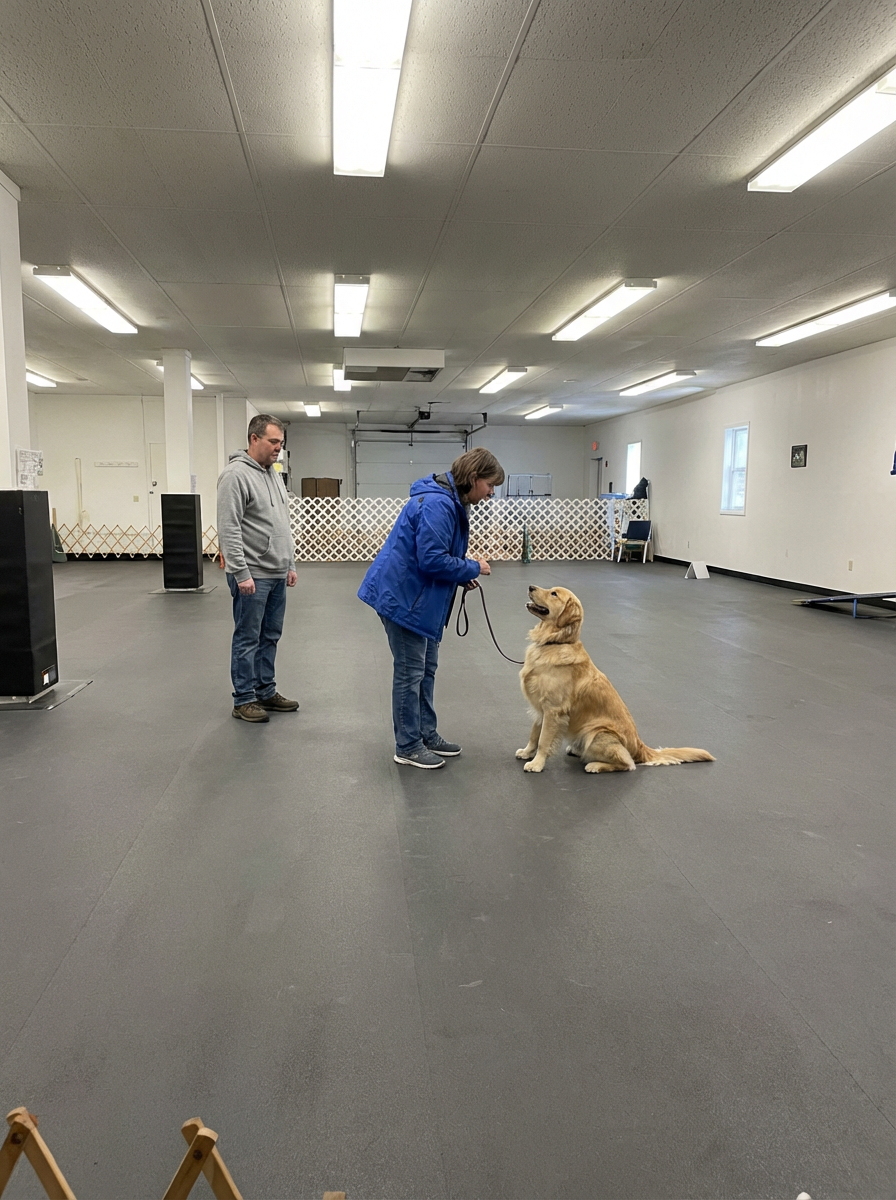
Ran for 95 days, from April 12 to July 16, 2026, the last day Crush saw it.
Run by Linda Williams on Facebook. Crush is not the advertiser and does not verify its claims. See this ad in Meta's Ad Library(opens in a new tab)
Want an ad like this for your product?
Crush makes new ad images for your product from this ad: your logo, your product photo, your offer.
Trials from $19.95 USD, then $79.95 USD a month. Cancel anytime.
About this ad
- Meta Ad Library ID
- 2387554401724525
- Platforms
- Facebook, Instagram, Audience Network, Messenger and Threads
- Relaunches
- 0
- EU reach
- 1,169
Ad text
Fifth trainer in eight months. She watched Bruno lunge at a dog across the street — full force, all four paws off the ground — and said: "Some dogs are just more reactive. We focus on management, not cure." I drove home in silence. Bruno was panting in the backseat. He always pants after an incident. Like his nervous system doesn't know how to come back down. I remember looking at him in the rearview mirror and thinking: I don't know how much longer I can do this. --- I want to tell you exactly what I tried. Because I need you to understand I didn't give up easily. First trainer: counter-conditioning. Treats at threshold. Keep distance. Reward calm. $65 a session, six sessions. He got better. For about two weeks. Second trainer: structure and leadership. Place command. Prong collar. "He needs to know you're in charge." $450 for the package. He got better. For about two weeks. Third trainer told me to see my vet. "This is anxiety. Training can only do so much." My vet prescribed Trazodone. $85 a month. He got better. For about three weeks. Then the lunging came back. "Sometimes we need to add Prozac. It builds over time. Together they're more effective." $140 a month on top of the Trazodone. He got better. For about three weeks. Then the lunging came back. Worse than before. Fifth trainer: "Some dogs are just more reactive. We'll keep working on management." $3,400 spent. Eighteen months gone. Still couldn't walk past another dog without bracing for impact. That night I sat on the kitchen floor and didn't move for a long time. Not because I was sad. I was past sad. Because I couldn't understand it. Prozac is supposed to work. Trazodone is supposed to work. Together they're supposed to be even more effective. So why was my dog still losing his mind on every single walk? --- I started searching things I had never searched before. "Why does dog reactivity medication stop working." "Dog still reactive on Prozac." "Behavioral meds not working anymore." Thousands of results. Thousands of people asking the exact same question. Same story, over and over. Medication worked at first. Wore off. Added another one. That wore off too. Some people had been doing this for three, four, five years. Still reactive. Thousands of dollars gone. No closer to an answer. Then I found a thread that was different. Someone asked: "Why do these medications stop working? Not what do we try next — but why? What's actually happening?" Most replies were the same noise. "Try a behaviorist." "Some dogs are just wired this way." But one woman replied with something I'd never seen before. She said she'd spent two years on the medication treadmill. Then she found a piece written by a veterinary behaviorist — not a blog post, not a supplement ad — an actual explanation of the mechanism. She said it changed everything. I clicked the link. I read it at midnight on my bathroom floor so I wouldn't wake my husband. By the time I finished, I was shaking. --- Here's what it said. 95% of serotonin — the chemical that controls your dog's ability to stay calm, to regulate threat responses, to not see danger in every passing dog — is made in the gut. Not in the brain. The gut. When the gut microbiome is disrupted — by poor diet, by stress, by antibiotics, by processed food — serotonin production drops. The brain doesn't get what it needs to regulate the threat response. Every trigger becomes danger. Every dog, every stranger, every noise — the brain reads it all as a threat because the gut is telling it the world isn't safe. That's why reactive dogs react to everything. It's not a brain problem. It's not a training problem. It's a gut problem wearing a behavioral costume. And here's the part that made me feel sick: Trazodone suppresses the anxiety signal. Prozac tries to stretch the serotonin that exists. But neither one touches production. You are turning off the smoke alarm while the gut keeps setting fires. That's why they work at first — the alarm quiets. That's why they stop working — the dysfunction deepens and you need more suppression just to get back to where you were. That's why every few weeks you're back at the vet asking why it's getting worse again. The medication was never going to fix him. Because nobody was looking at his gut. --- I sat on that bathroom floor for a long time after I finished reading. I thought about the $3,400. The eighteen months. The five trainers. I thought about the Prozac I had been giving Bruno every morning, mixing it into his food like I was doing something. Like I was helping. I thought about how the vet had never once mentioned his gut. How none of the trainers had. How every single person I had paid had looked at Bruno's behavior and never once asked what was happening inside him. They weren't lying to me. They just weren't taught this. But I wasn't going to wait for the system to catch up. --- The article mentioned postbiotic metabolites — the compounds a healthy gut produces to communicate with the brain. You don't need to rebuild the entire microbiome from scratch. You deliver the end-products directly. The nervous system gets what it needs. Serotonin production stabilizes. The threat response comes down. I went to Amazon that night and bought the first postbiotic supplement I found. $34. Good reviews. "Supports gut health and calm behavior." I gave it to Bruno every morning for eight weeks. Nothing changed. He was still lunging. Still panting for an hour after walks. Still impossible around other dogs. I went back to the thread where I'd found the original article and posted: "I tried a postbiotic supplement for two months. No change. Am I doing something wrong?" The woman who had originally replied sent me a direct message. "Which one did you buy?" I told her. She said: "That's the problem. Most of them don't work. Not because the mechanism is wrong — the mechanism is real. But because most supplements on the market are contaminated, underdosed, or completely degraded before they reach your dog." She told me she'd learned this the hard way. Wasted five months on supplements that were doing nothing — or making things worse. She sent me a lab report. --- I read it three times. It was a third-party analysis of eight of the top-rated postbiotic and calming supplements available online. Products with thousands of reviews. "Vet recommended" badges. "Amazon's Choice" labels. Six of the eight were underdosed. Delivering 30% to 60% less active compound than the label claimed. Two had heavy metal contamination. Lead. Above safe limits for dogs. One contained fillers — unlisted on the label — making up over a third of the product. The fillers physically blocked absorption. The product was inert. And the one I'd been giving Bruno for eight weeks? On the list. Underdosed by 44%. I had been giving him less than half of what I thought I was giving him. Every morning for two months. I sat there thinking about how I'd been so careful. How I'd read the reviews. How I'd picked the one that said "vet formulated." All of it meaningless. The woman told me there was one product on that list that had passed. That had come back clean — full dose, no contamination, third-party verified. CalmAxis. She said: "I know it sounds like I'm just telling you to buy something. I'm not. Read their Certificate of Analysis before you order. Ask them for their batch testing data. If they don't send it immediately, don't buy it." I went to the website. Found the testing documentation before I even looked at the product. Six months of batch reports. Independent lab. Pharmaceutical-grade sourcing. I called them. Someone answered on the first ring. I asked every question I could think of. They answered all of them. I ordered that night. --- I want to be honest with you about what happened next. Because I had been burned twice and I wasn't going to oversell this. Week one: nothing obvious. Bruno was still Bruno. I kept walking him at 6 AM before the neighborhood woke up, same as always. Week two: we passed a dog on the other side of the street. Bruno tensed. Started the low growl that always comes before the lunge. And then stopped. He looked at the other dog. Looked at me. And kept walking. I didn't react. I was scared to react. Like if I acknowledged it something would break the spell. We walked another block in silence. I got home and sat down on the front step and just breathed. Week three: I started extending our walks. Taking routes I had avoided for over a year because of the off-leash dog at the end of the cul-de-sac. The dog that had caused Bruno's worst incident — the one that had made me finally accept that I needed to do something different. We walked past. Bruno looked. Didn't stop. Didn't lunge. Week five: I took him to the pet store for the first time in two years. I kept him near the back, away from the other dogs. He sniffed the shelves. Looked around. His tail was up. Not tucked. Not flagging. Up. I stood in the middle of that pet store with tears running down my face and a stranger asked if I was okay. I said yes. I just couldn't explain why I was crying in the dog food aisle. Week seven: I took Bruno off Trazodone. He's still on a reduced Prozac dose — I'm working with my vet to taper it slowly. But the Trazodone is gone. And his behavior is better than it was when he was on both. --- I've told four people about this since it happened. Three of them had reactive dogs. All three have seen the same shift. My neighbor Lisa had a two-year-old rescue mutt named Pepper who had been kicked out of two training programs. "Too reactive to train" is what they told her. She'd given up on walks entirely. Eight weeks on CalmAxis: she texted me a video of Pepper walking past a dog park. On leash. No reaction. My coworker Dan had a five-year-old German Shepherd named Rex. On Prozac for three years. "He's fine, he just needs space," Dan always said. I recognized that voice. It's the voice of someone who has accepted that this is just how it is. Six weeks in: "I don't know what you gave me but Rex just sat calmly while my brother's dog walked through the front door. That has never happened." My sister had been considering returning her dog. A three-year-old Husky named Storm who had bitten her partner twice and couldn't be in the same room as their other dog. She's not returning him. --- I'm not telling you this because I want you to feel hopeful. I'm telling you because I spent eighteen months accepting a lie. The lie that some dogs are just like this. The lie that management is the goal. The lie that if the medication stops working, you just add more. Nobody told me to look at the gut. Not one trainer. Not my vet. Not a single person I paid hundreds of dollars for advice. They weren't wrong. They just weren't taught. But Bruno came within one incident of being a dog I couldn't keep. I think about that. If you're where I was — stacking medications, dreading walks, quietly building your life around managing a problem instead of solving it — read what I found. Not a sales page. The actual mechanism. And don't buy from Amazon. I wasted eight weeks and $34 on a contaminated product that did nothing. CalmAxis is the only brand I've found with real third-party lab verification. 👉 https://trycanislabs.com/products/calmaxis-chews Your trainer isn't wrong. Your vet isn't wrong. They just weren't taught this. But now you know. Bruno's asleep on the couch next to me right now. Heavy. Still. The way he never used to be able to settle. That's what's possible when you stop suppressing and start rebuilding. I hope your dog gets there too. P.S. — The medication doesn't fix the production problem. It suppresses the signal. Every week you stay on the treadmill, the gut dysfunction deepens and the threshold gets lower. By the time the meds stop working entirely, you're not managing reactivity. You're managing a dog one incident away from a decision you don't want to make. P.P.S. — Don't waste months on contaminated supplements like I did. If the brand won't send you a Certificate of Analysis within the hour, don't buy it. CalmAxis sent theirs before I even asked twice.
Where the ad sends people
trycanislabs.com
Everyone told me some dogs are just like this
Nobody told me his gut was the reason he couldn't calm down
Order now: trycanislabs.com(opens in a new tab)