
Inactive· since May 7, 2026
- 52
- days it ran
- 2
- relaunches
Ad copy
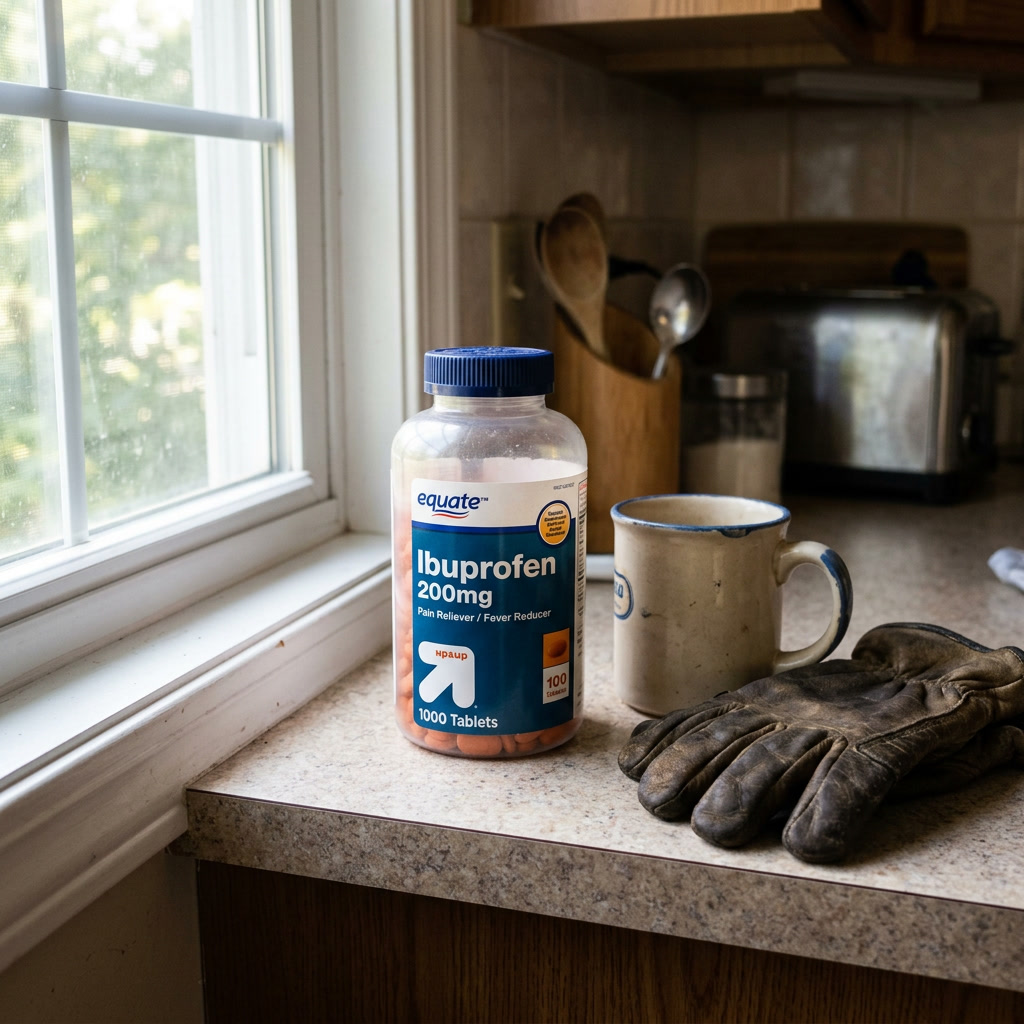
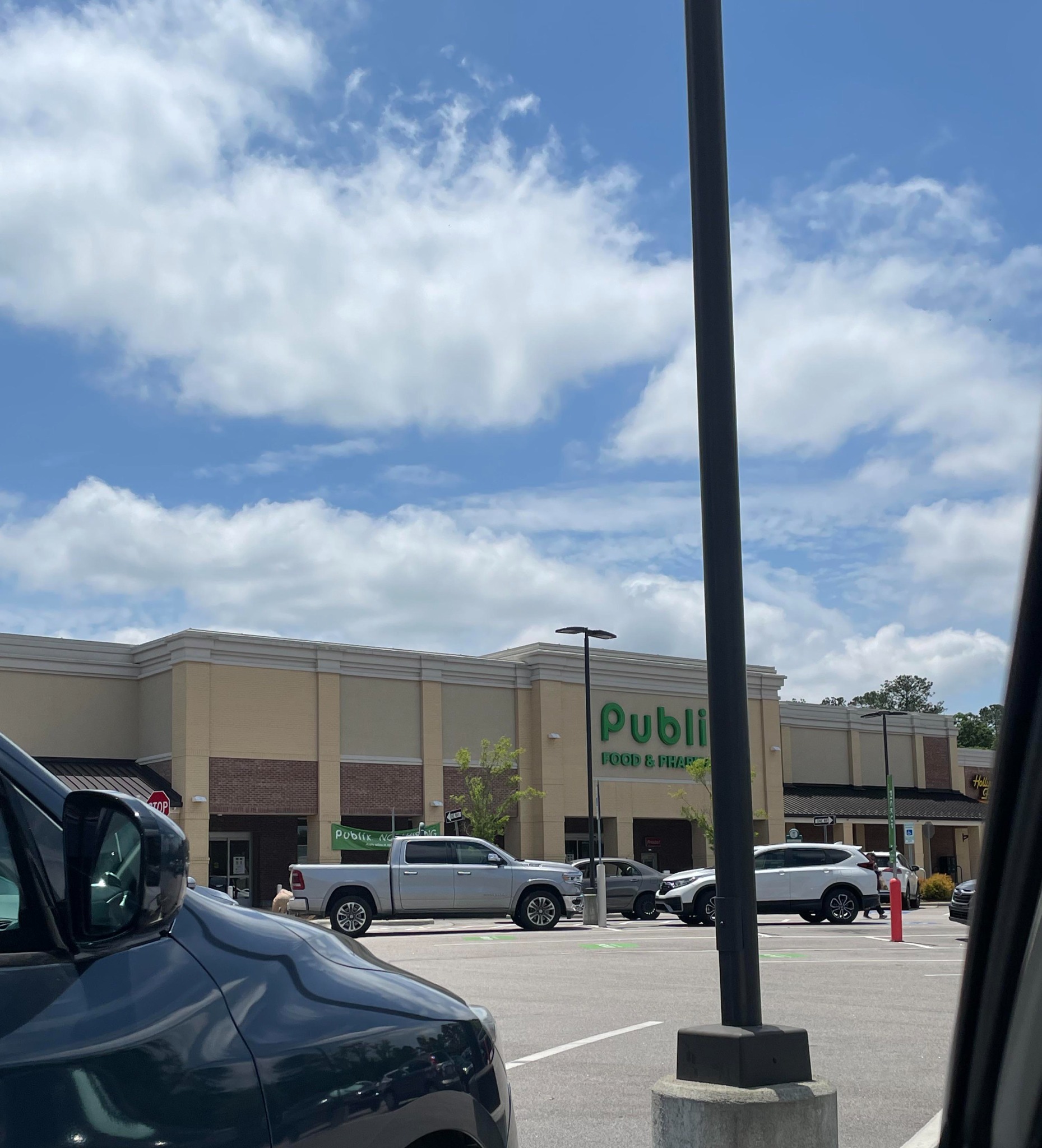
I almost didn't make it through my son's rehearsal dinner. Not because of nerves. Not because of cold feet, his or mine. Not because of the open bar or the speech I'd been writing in my head for 6 weeks on every long drive between Birmingham and the job sites my crew was working over in Tuscaloosa. I almost didn't make it because at 2:47 PM that Friday afternoon, 4 hours and 13 minutes before I was supposed to walk into the Iron City Grill in downtown Birmingham and stand up in front of 60 people and toast my only son's marriage, my back went out so hard in the parking lot of a Publix on Highway 280 that I had to crawl, and I mean crawl, on my hands and knees from the back of my truck to the driver's side door while a woman pushing a cart full of grocery bags pretended not to see me. I want to tell you what happened that night. Because what happened at the dinner that night, and the conversation I had at 11:30 PM with a woman I'd never met before, the mother of the girl my son was about to marry, is the reason I can sit here at my kitchen table at 6:08 in the morning and write this with both hands working and a back that doesn't feel like it's full of broken glass. My name is Curt. I'm 62 years old. I've lived in the same little town outside Birmingham my whole life, a place called Helena, which is far enough out that you can still hear coyotes at night but close enough that I can be at a job site downtown in 35 minutes if traffic is decent, which it never is. I run a small framing crew. Have for 31 years. We do residential framing, mostly custom homes up in the Highland Lakes area and the Greystone neighborhoods. 4 guys including me. We've been the same 4 guys for 14 years now, with one rotation when my old foreman Hank retired and his nephew Bobby took his spot. We've framed maybe 700 houses in 3 decades. I can walk through any of them, even ones I haven't seen since 1998, and tell you exactly where the load bearing walls are. I have one son. His name is Rhett. He's 28. He's an architect, of all things, which still cracks me up because I spent his whole childhood telling him to put down the Legos and come help me hang sheetrock and he'd just stare at me with the same look his mother used to give me when she was disappointed and go back to his Legos. He went to Auburn. Got his degree. Now he draws the houses I would have framed, except he's working at a firm in Atlanta and I'm slowing down and the houses he draws are getting framed by guys 25 years younger than me. He was getting married to a girl named Ainsley. Sweet girl. From Mountain Brook, which if you don't know Birmingham is one of the wealthier zip codes in the state. Her father was a cardiologist. Her mother, Patty, ran a small interior design firm out of the front rooms of the house they'd lived in for 30 years. The rehearsal dinner was at the Iron City Grill. 7:00 PM that Friday. I had a navy blazer pressed and hanging on the back of my closet door. I had a speech printed on three index cards in 14 point font because my reading glasses were getting harder to deal with. I had a pair of dress shoes I'd bought at a Belk in 2009 that I'd polished the night before with a tin of Kiwi polish I found under the bathroom sink. I had everything ready. What I did not have ready was my back. My back had been a problem for 6 years. Started right around the time I turned 56. Lower back, mostly, but it would creep up between my shoulder blades on bad days and one time it went all the way down into my left leg and I lost feeling in my big toe for almost a week. The kind of back that makes you sit on the edge of the bed for 20 minutes in the morning before you can stand up. The kind that makes you decline coffee with the guys at the diner because the booth is too low and you can't get out of it without putting both hands on the table and grunting like an old man. My doctor, Dr. Whitfield, had run an MRI on it back in 2022. Showed me pictures of my own spine on a screen. Said the words "degenerative disc" and "facet arthropathy" and "consistent with your age and the kind of work you've done for 30 years." Gave me a prescription for muscle relaxers I didn't take because they made me too foggy to operate a saw. Gave me a referral to a physical therapist I went to twice and quit. Gave me the most useless advice I've ever heard out of a doctor's mouth, which was, and I'm quoting him, "Curt, at your age and in your line of work, this is just how it's gonna be. Manage it." Manage it. I'd been managing it for 6 years. I'd been managing it with ibuprofen at the level where my pharmacist had quietly mentioned my kidneys to me twice. I'd been managing it with a heating pad I plugged in next to the couch and forgot about so often my wife Karen kept it in a drawer where I couldn't find it without asking her. I'd been managing it by paying my guys an extra 4 dollars an hour so they'd handle the loads I used to handle. I'd been managing it by becoming smaller. By saying no to things. By skipping my niece's wedding 2 years ago because the thought of a 4 hour reception in a folding chair made me feel sick. By not picking up my granddaughter, Rhett's daughter from a previous relationship, who is 5 and weighs 41 pounds and who I have not lifted off the ground in 18 months. So that Friday afternoon, 4 hours before the rehearsal dinner, I went to Publix to pick up a bouquet of flowers for Patty. Karen had told me twice. Yellow roses. Patty's favorite. I had it on a sticky note on the dashboard. I went into the store. Picked out the flowers. Paid. Walked back to my truck. Opened the back to set the flowers on the bench seat. And as I leaned in, something in my lower back popped. I want to be clear about what kind of pop. This wasn't a twinge. This wasn't the usual morning stiffness. This was the kind of pop that sounds like a tree branch breaking inside your body. I went down. Right there, in the parking lot of a Publix, between my Ford F-250 and a silver Honda Pilot. I was on the asphalt for I don't know how long. Could have been 30 seconds. Could have been 5 minutes. The flowers had landed on the ground next to me and a yellow petal blew under the truck. A woman with a cart full of grocery bags walked past about 10 feet away. Slowed down. Looked at me. I made eye contact with her. She looked away and kept pushing her cart. I'll never forget that. I don't blame her. People don't know what to do anymore. I crawled. On my hands and knees, around the back of the truck, to the driver's side door. Pulled myself up using the door handle. Got in. Sat in the driver's seat sweating through my shirt. Looked at the clock. 2:47 PM. I drove home. I will not tell you how I drove home because I don't want to think about it. I drove home. Karen took one look at me coming through the door and said, "Curt, what happened?" I told her. She said, "We're calling Patty. We'll have to send Rhett alone." I said no. I said, "Get me the heating pad and the ibuprofen and a glass of bourbon. I'm going to that dinner if I have to be carried in." She started crying. I wasn't expecting that. Karen doesn't cry. She's a retired ICU nurse, 35 years at UAB, she's seen things you wouldn't sleep again if you knew about. She doesn't cry. But she stood there in the kitchen and she said, "I'm so tired of watching you disappear, Curt." That stopped me. I didn't have anything to say back to her. So I just went into the bedroom and I laid on my back on the floor with the heating pad under me and I stared at the ceiling for an hour and tried to do the breathing exercise the physical therapist had taught me 4 years ago that I'd quit on after 2 sessions. At 5:30 PM I stood up. It took 4 minutes. I put on the navy blazer. The dress shoes from Belk. I took 4 ibuprofen and one of the muscle relaxers I'd been hoarding for emergencies. I drank a finger of Maker's Mark from the bottle Karen kept above the fridge. I drove to the Iron City Grill. Karen drove behind me in her own car so she could watch in case I had to pull over. I made it through the dinner. I will not pretend I made it gracefully. I gripped the back of my chair through the entire toast like it was the railing on a fishing boat in rough water. My voice was steady but my legs were not. I sweated through the navy blazer. I made eye contact with my son and I read the words off my index cards and I told him about the day he was born and the day he hit a home run in Little League and the day he showed me his college acceptance letter and the kind of man I knew he was already and the kind of husband I knew he'd be. I sat down before my legs gave out. The room clapped. Rhett came over and hugged me and I tried not to flinch. After dinner, Karen helped me out to the back patio of the Iron City Grill. There's a little stone wall there where they let smokers go and I'm not a smoker but I needed to sit on something low and not move. It was 11:30 at night. Birmingham in late October. The kind of warm that hangs in the air after the sun's been gone for hours. Patty came out about 10 minutes later. Sat down on the wall next to me. Karen had quietly gone back inside. Patty was 64. I knew that because Karen had told me. She had grey hair she didn't dye, cut short, and the kind of warm tan that women in Mountain Brook seem to keep year round. She'd spent the whole evening floating around her own party making everyone feel welcome, the kind of host I wouldn't know how to be if you held a gun to my head. She sat down. She didn't say anything for a long time. She just looked out at the parking lot. Then she said, "Curt, can I ask you a question that's gonna sound nosy?" I said, "Sure." She said, "How long has your back been like this?" I told her. The truth, not the polite version. 6 years. The MRI. The doctor. The "manage it." The crawling in the Publix parking lot at 2:47 that afternoon. She nodded slowly. Looked at her hands. Then she said, "My husband, Tom, was a cardiologist for 38 years. He retired last year. And the last 5 years of his career, he was in pain every single day. His shoulders, mostly. From standing over patients, from the way cardiologists hold their bodies during procedures. He was on the same path you're on. The pain pills, the muscle relaxers, the 'just manage it.' I watched the man I married disappear into a recliner." She turned and looked at me. "I want to tell you what happened. I'm not selling anything. I'm not in a pyramid scheme. I'm a 64 year old woman whose husband got his life back, and I notice when somebody else is on the same road we were on, and it's my son in law's father, and I'm gonna tell you about it whether you want to hear it or not." I almost laughed. Almost. My back wouldn't let me. I said, "Tell me." She told me about a friend of hers, a woman named Beverly, who'd been a research librarian at UAB. Beverly had a younger sister who'd married into an Indian family in Houston, and the family kept feeding her this fruit Beverly had never heard of. After a few years the sister, who had been a frail kind of person her whole life, started showing up to family events looking different. More color in her face. Walking faster. Sleeping better. Beverly asked her about it. The sister told her it was a fruit called amla. Indian gooseberry. They'd been using it in Ayurvedic medicine for thousands of years. The sister had started taking a standardized extract a friend had recommended. Beverly, being a research librarian, did what research librarians do. She spent 6 months reading the actual studies. The real ones, not the marketing copy. What she found, Patty told me, was that amla wasn't a magic pill. It wasn't a painkiller. It wasn't replacing anything. What it was, was a fruit that seemed to do something quietly useful at the cellular level for the kind of slow, grinding, low grade inflammation that builds up in a body over decades of work and stress and living. Patty had started giving it to Tom about 18 months before that night. She said, "He's 67 now. He woke up this morning at 5:45 and went for a 3 mile walk before the rehearsal. He's inside laughing right now at a joke my brother told. 18 months ago he was a man I was watching turn into a piece of furniture." I didn't say anything for a while. She said, "I'm gonna text you the name of it. The brand we use. Look it up tomorrow. Don't take my word for anything. Just look it up." She did. My phone buzzed in my blazer pocket. I drove home that night feeling more wrung out than I'd ever felt in my life. Karen and I didn't talk on the drive. I lay on the floor again when I got home with the heating pad. I fell asleep there. The next morning, the morning of the wedding, I read about amla for 2 hours before Karen even woke up. Here is what I came to understand, and I want to explain it the way I'd explain framing a wall to a new guy on the crew, because that's how I think. When you've got chronic pain like I had, especially the kind that gets worse over years and that doctors shrug at and call "wear and tear," what's actually happening inside you is a long, slow story about inflammation. Not the acute kind, like when you smash your thumb with a hammer and it swells up. The slow kind. The kind where your body's inflammatory signals never quite turn off. They stay on at a low level. Year after year after year. That low level inflammation does damage to your joints, your tendons, the soft tissue in your spine, and the blood vessels that feed all of those things. It also does damage at the cellular level, to the little engines inside your cells that produce energy, called mitochondria. When those engines get sluggish, you don't just feel pain. You feel tired. You feel old. You feel like you're moving through molasses. Most things you're handed for chronic pain go after the symptom. Painkillers numb the signal. Muscle relaxers loosen the spasm. Steroids shut down the inflammation acutely but with consequences. None of those things address what's actually going on at the level that matters, which is the cellular environment your tissues live in every day. Amla is interesting because the research on it suggests it works on that environment. It's been associated with reductions in inflammatory markers like hs-CRP. It's a powerful antioxidant, partly because of its naturally high vitamin C content but also because of compounds called polyphenols and tannins that show up in good standardized extracts. And it appears to support healthy mitochondrial function, which is the cellular energy piece. In plain English: it doesn't numb the pain. It works on the soil the pain is growing in. That distinction matters because it explains why ibuprofen had been doing less and less for me over the years. Ibuprofen is a Band-Aid on a wound. The wound was getting worse underneath the Band-Aid. Amla, from what I read, was something more like working on the wound itself. Slowly. Quietly. Over weeks and months. I ordered it that morning. I took my first 2 capsules with breakfast on the day of my son's wedding. I got through that wedding. I want to be clear, I got through it on muscle relaxers and ibuprofen and willpower. The amla didn't save the wedding. The amla hadn't even started working yet. But I had something I hadn't had at 2:47 PM the day before. I had a direction. I had a thing to try that wasn't "manage it." Week 1, I felt nothing. Week 2, I noticed I was getting out of bed in the morning in 6 minutes instead of 20. Week 3, I picked up my granddaughter. I want to tell you about that one because it's the moment I knew. It was a Saturday afternoon. Rhett and Ainsley had brought her over for lunch. She came running across the kitchen at me the way 5 year olds do, full speed, no concept of physics, and I caught her under the arms and lifted her up and put her on my hip the way I'd done a hundred times when she was 2 and 3 and the way I'd stopped doing when she got to 4. I didn't even think about it. I just did it. She put her arms around my neck and she said, "Pop Pop, I missed your big arms." Karen was watching from the sink. I caught her eye. She turned around so I couldn't see her face. Week 6, I was carrying lumber on the job site again. Not the way I had at 35. I'm not crazy. But I was carrying 2x6s and not just pointing at where I wanted them put. Week 9, I called Patty. I called her on a Tuesday afternoon and she picked up on the second ring and I said, "Patty. It's Curt. I just wanted to say thank you." She said, "Curt. Is it working?" I said, "I haven't taken an ibuprofen in 17 days." She was quiet. Then she said, "I'm gonna tell Tom. He's gonna be glad to hear that." I'm 9 months in now. I'm not pain free. I want to be straight with you. I'm 62 years old and I've been swinging hammers for 31 years. There are mornings my back tells me what the weather is gonna do before the news does. But the floor of my pain has come up. The bottom isn't where it used to be. The crawling in the Publix parking lot, that's not who I am anymore. I picked up my granddaughter at the wedding reception last weekend, the 1 year anniversary party Rhett and Ainsley threw at their house in Atlanta, and I held her on my hip for the entire 4 minute song they played for the first dance. Karen took a picture of it. It's on the fridge. If you've been managing it for years, I see you. If you've been told it's just your age, I see you. If your wife has cried in the kitchen because she's tired of watching you disappear, I see you. There's a fruit called amla. The brand I take is called Alevia. The product is Alevia Amla. It's made in the United States. It's 2 capsules a day. It's not a painkiller. It's not replacing anything your doctor has you on. It's not a miracle. It's just a quiet, well researched, gentle thing from the other side of the world that decided to be kind to my body when not much else was being kind to it. They have a 90 day money back guarantee. You take it for 3 months. If you feel nothing, you mail the bottle back, you get your money. That's the whole arrangement. I almost didn't believe it when I read it, but Patty told me she'd never had to use it because Tom had been on it for 18 months and so had she by then. P.S. The most expensive thing chronic pain takes from you isn't your money. It's the moments. The wedding you almost missed. The granddaughter you stopped picking up. The booth at the diner you stopped sliding into. Those moments don't come back. But the ability to be present for the next ones, that's the thing that's worth showing up for. That's what Patty gave me on a stone wall at 11:30 at night behind a steakhouse. P.P.S. I want to say this for any guy who's reading this and rolling his eyes. I rolled my eyes too. I rolled them so hard at the words "supplement" and "Indian fruit" that Karen mentioned it to me the next morning. The 90 day guarantee is the only reason I tried it. If you're rolling your eyes, that's fine. The guarantee doesn't care if you rolled your eyes. It just refunds you if it doesn't work. P.P.P.S. Patty called me last week. Tom had a check up. His inflammation markers were the lowest they'd been in a decade. She wasn't bragging. She was just telling me. The way one person tells another. Across a stone wall behind a steakhouse, or across a phone line in Helena, Alabama. 👉 https://alevia.com/amla/33
Like this ad? Make it yours.
Crush rebuilds this exact creative around your product — your brand, your colors, your offer — in about a minute.